From Surf Wiki (app.surf) — the open knowledge base
Persian Gulf naming dispute
Geographic naming dispute

Geographic naming dispute
The Persian Gulf naming dispute concerns the gulf known historically and internationally as the Persian Gulf, after Iran (historically known as Persia or Persis and the homeland of the Persian people) became involved in an ongoing naming dispute.
The name "Persian Gulf" has been in use since at least the 10th century by Arab historians and geographers. In connection with the emergence of pan-Arabism and Arab nationalism in the 1960s, the usage of "Arabian Gulf" () as well as just "The Gulf" increased.
The body of water is internationally recognized as the Persian Gulf. Arab governments refer to it as the "Arabian Gulf" or "The Gulf". The name "Gulf of Iran (Persian Gulf)" is used by the International Hydrographic Organization, which seeks to standardise the names of the world's bodies of water.
History
This body of water was referred to as the Persian Gulf by Arab historians and geographers, including the Melkite Arabic-speaking historian Agapius, writing in the 10th century.
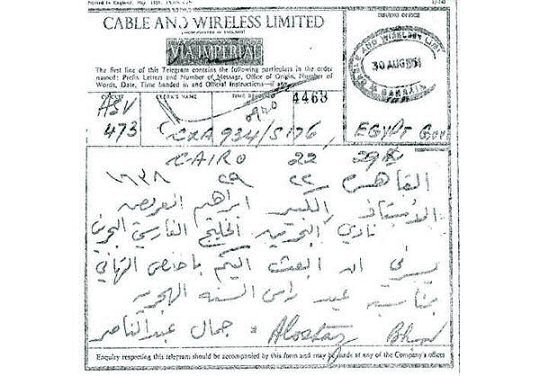
According to authors Philip L. Kohl, Mara Kozelsky, and Nachman Ben-Yehuda in their work Selective Remembrances, Sir Charles Belgrave (British adviser to the ruler of Bahrain) was "the first westerner to use and advocate the name 'Arabian gulf', first in the journal Soat al-Bahrain (Voice of Bahrain) in 1955." Mahan Abedin of The Jamestown Foundation agrees with this, noting that Arab countries used the term "Persian Gulf" until the 1960s. However, with the rise of Arab nationalism during that decade, some Arab countries, including the ones bordering the Gulf, adopted widespread use of the term الخليج العربي (al-Khalīj al-ʻArabī; Arab Gulf or Arabian Gulf) to refer to this waterway. Teymoor Nabili (a senior presenter for Al Jazeera English) said "ironically, among the major drivers of the movement for change were Arab perceptions that Iran, driven by Washington, had supported Israel during the Arab-Israeli war of 1973".
The capture of Baghdad by the Ottoman Empire in 1534 gave Turkey access to the Indian Ocean via the port of Basra at the head of the Persian Gulf. This coincided with the early mapmaking efforts of Gerard Mercator, whose 1541 terrestrial globe attempts to give the most up-to-date information, naming the gulf Sinus Persicus, nunc Mare de Balsera ("Persian Gulf, now Sea of Basra"). However, on his world map of 1569, the name is changed to Mare di Mesendin (after the peninsula Ra's Musandam, in modern-day Oman), while his rival Abraham Ortelius, for the world atlas of 1570, opted for Mare El Catif, olim Sinus Persicus (after the Arabian port of Al Qatif), but labelled the entrance to the gulf the present-day Strait of Hormuz as Basora Fretum (Strait of Basra). Among all this confusion, the old name gradually reasserted itself in the 17th century, but Turkey still uses the name "Gulf of Basra" (Basra Körfezi) in Turkish today.
Following British attempts to establish control over the seaway in the late 1830s, the Times Journal, published in London in 1840, referred to the Persian Gulf as the "Britain Sea", but this name was never used in any other context.
Proposed alternatives
The matter remains very contentious as the competing naming conventions are supported by certain governments in internal literature, but also in dealings with other states and international organizations. Some parties use terms like "The Gulf" or the "Arabo-Persian Gulf". Following the Iranian Revolution of 1979 some people in Islamic groups suggested the use of "Islamic Gulf" or "Muslim Gulf". The originator of the term Islamic Gulf is not known, while some people suggest that prominent figures of the early years of the Islamic republic including Ruhollah Khomeini, Mehdi Bazargan, and Sadegh Khalkhali may have supported the idea. During his May 1979 visit to the UAE, Khalkhali suggested the term "Muslim Gulf". The idea was quickly abandoned after Iran was invaded by its predominantly Muslim neighbor, Iraq, in the Iran-Iraq War.
In Arab countries the terms "Gulf" and "Arabian Gulf" are preferred:
Iranian viewpoint
Iran only uses the term "Persian Gulf" and does not usually recognize the naming when it is referred to as "Arabian Gulf" or just the "Gulf" or by any other alternative.
In a 1974 interview by Mike Wallace in 60 Minutes, the last Shah of Iran himself preferred the term "Persian Gulf" while talking to Wallace. In February 2010 Iran threatened to ban from its airspace foreign airlines, especially those from the Gulf region, who did not use the term "Persian Gulf". In 2011, President Mahmoud Ahmadinejad made a speech at the United Nations General Assembly during which he said that the only correct name of the sea between Iran and the Arabian peninsula was the Persian Gulf, and he dismissed the use of any other names as "illegitimate and void".
In 2012 the Iranian government threatened to sue Google over its decision not to label the gulf with any name, warning it would face "serious damages" if it does not denote the area as the Persian Gulf.
National Persian Gulf DayIran officially designated 30 April as National Persian Gulf Day. The date coincides with the anniversary of Abbas I of Persia's successful military campaign when the Portuguese navy was driven out of the Strait of Hormuz in the Capture of Ormuz (1622). The decision was taken by the High Council of Cultural Revolution, presided over by former President Mohammad Khatami, noting that the campaign launched in 2009 by certain Arab states to rename the Persian Gulf was the driver behind the decision. The Iranian postal authority issued a series of stamps commemorating the day.
Arab viewpoints
Gulf Cooperation Council states prefer the use of the term "Arabian Gulf".


Abdel Khaleq al-Janabi, a Saudi Arabian historian, said "It's this name [Persian Gulf] that has been retained by history books and Arab historians, like Ibn Khaldoun and Ibn al Athir. It's also in treaties signed between the governors of the gulf and the British who dominated the region from the beginning of the 20th century ... From a scientific and historical point of view, it has been called the Persian Gulf since Alexander the Great". He said that it was "without foundation" to claim the Romans named it "Arabian Gulf". "Things didn't change until Nasser came to power and the rise of Arab nationalism. The Arabs then began to use the name 'Arabian Gulf, he added.
In an interview with Al Wasat, Bahraini writer Hussain al-Baharna said one of the reasons for the dispute over naming the "Arabian Gulf as the Persian Gulf" is that the Red Sea was referred to as at the time of negotiations over the ownership of Bahrain "that Arabian Gulf", and it was not then possible to call what had since become the Arab Gulf region by the name "Arabian Gulf", it was called the "Persian Gulf" at that time. In recent decades, prominent scholars and political and religious leaders, including Professor Abdelhadi Tazi, Ahmad al-Saraf, Abdelilah Benkirane (Prime Minister of Morocco from 2011 to 2017), Abdul Monem Saeed, Abdul Khaliq al-Janabi, Qaradawi, and Gen. Majdi Omar, Former First Deputy of the Egyptian National Defense Council have supported the use of "Persian Gulf" and believe there is a lack of justification for changing the name.
International viewpoints
United Nations
The United Nations Group of Experts on Geographical Names discussed the naming issue during its 23rd session, held in Vienna from 28 March to 4 April 2006.
International Hydrographic Organization
The International Hydrographic Organization (IHO), an international body for provision of hydrographic information for worldwide marine navigation and other purposes, uses the name "Gulf of Iran (Persian Gulf)" for this body of water, in the third edition of its standard S-23 (Limits of Oceans and Seas), section 41, published in 1953. The draft of the fourth edition, published in 2002, uses the same name.
United States
The United States National Geospatial-Intelligence Agency GEOnet Names Server (GNS) is the "official repository of standard spellings of all foreign place names" sanctioned by the Board of Geographical Names (BGN). The GNS lists "Persian Gulf" as the Conventional name, along with 16 Variant names in different languages, such as "Gulf of Iran", "Gulf of Ajam", "Gulf of Basra", "Arabian Gulf", "Persian-Arabian Gulf", "Gulf of Fars", and "Farsi Gulf".
In Persian Gulf States Country Studies published in 1993 by the Federal Research Division of the U.S. Library of Congress, the authors follow the practise of the BGN by using "Persian Gulf" while acknowledging in the preface that the governments of Kuwait, Qatar, United Arab Emirates, Oman and Bahrain "officially reject the use of the term Persian Gulf—as do other Arab governments—and refer to that body of water as the Arabian Gulf".
Since about 1991, due to increased cooperation with Arab states of the Persian Gulf, various branches of the United States armed forces have issued directives to their members to use the "Arabian Gulf" when operating in the area to follow local conventions ("Persian Gulf" is still used in official publications and websites). The practice of the United States Fifth Fleet, based in Bahrain, is to use "Arabian Gulf":
In May 2025, during the 2025 U.S.–Iran negotiations and ahead of his visit to the Middle East that month, Donald Trump contemplated U.S. federal agencies using "Arabian Gulf" or "Gulf of Arabia" but abandoned the proposal due to Iranian opposition.
Atlases and other media
The National Geographic Society uses the name Persian Gulf to refer to this body of water. In 2004, the society published a new edition of its National Geographic Atlas of the World using the term "Arabian Gulf" as an alternative name (in smaller type and in parentheses) for "Persian Gulf". This resulted in heavy protests by many Iranians, especially the Internet user community and the Iranology Academy, which led to the Iranian government acting on the issue and banning the distribution of the society's publications in Iran. On 30 December 2004, the society reversed its decision and published an Atlas Update, removing the parenthetical reference and adding a note: "Historically and most commonly known as the Persian Gulf, this body of water is referred to by some as the Arabian Gulf." The June 2010 Nation Geographic Style Manual states: "The internationally accepted name is Persian Gulf, although Arab countries call the body of water the Arabian Gulf. Where scale permits, National Geographic maps include a map note about the Arabian Gulf. If Arabian Gulf is used in text, it should be explained."
The 2000 AP Stylebook elaborates: Persian Gulf is the "long-established name" and the best choice. "Some Arab nations call it the Arabian Gulf. Use Arabian Gulf only in direct quotations and explain in the text that the body of water is more commonly known as the Persian Gulf."
In 2004, the Persian Gulf-naming dispute was the subject of a Google bomb by an Iranian blogger named Pendar Yousefi. This was the combined efforts of hundreds of bloggers, webmasters and Persian forums who pointed links with the word Arabian Gulf to a spoof error page.
Some atlases and media outlets have taken to referring to "The Gulf" without any adjectival qualification. This usage is followed by the BBC and The Times Atlas of the World. Iran does not consider this an impartial usage and views it as an active contribution to abandonment of the historical name. In June 2006, Iran banned the sale of The Economist for the above reason, after a map in the magazine labeled the Persian Gulf as "The Gulf". The magazine repeated this act in its 18 February 2010 article titled "Iraq, Iran and the Politics of Oil: Crude Diplomacy". It also used the name "Arabian Gulf" in the same article.
Google had previously put both Persian Gulf and Arabian Gulf on its Google Maps. After May 2012, it removed both names from the body of water stating that it does not name every place in the world and that it did not want to take a political stance. Iranians complained about the change and started a Twitter campaign asking "Where's the Persian Gulf?". Since 2016, Google Maps has displayed both Persian Gulf and Arabian Gulf on the body of water and shows "either Arabian or Persian Gulf to local users, depending on geolocation and language settings." Google Earth shows both names, unless viewed through a server from a Gulf Coast Arab country, in which case it labels it simply "Arabian Gulf".
Sporting bodies
A planned second Islamic Solidarity Games in Iran, originally scheduled to take place in October 2009, and later rescheduled for April 2010, was canceled when the Arab World and Iran could not agree over the use of the term "Persian Gulf" in logos and medals for the Games.
In association football, the top tier of the Iranian football league system was named the Persian Gulf Cup in August 2006 to promote the Persian naming. The Iran national football team does not take part in the Arabian Gulf Cup for national teams surrounding the waters. The Arab Gulf Cup Football Federation was founded in 2016 for the competing nations of the Arabian Gulf Cup.
The top football league in the United Arab Emirates (UAE) was founded in 1973 as the UAE Football League. In 2007, the name was changed to UAE Pro-League. Starting from the 2013–14 season the name was changed to UAE Arabian Gulf League, as well as their League Cup and Super Cup competitions. The name change has been viewed as a revival of the Persian Gulf naming dispute with Iran accusing the United Arab Emirates of racism, and the Football Federation of the Islamic Republic of Iran barring the transfer of Javad Nekounam to a UAE club.
Gallery
Persian Gulf or equivalent
File:Mappa di Eratostene.jpg|19th Century reconstruction of 194 BC Eratosthenes' map, Denoting Persian Gulf File:Karte Pomponius Mela rotated.jpg|An Early world map by Pomponius Mela 43 AD. Red Sea named Arabian Sea and Persian Gulf and Oman Sea named Persian Sea. File:Cosmographia Claudii Ptolomaei ante 1467 (7456248) (cropped).jpg|Map VI from Ptolemy's "Cosmographia" showing Sinus Persicus (Persian Gulf) and Sinus Arabicus (Red Sea), reconstruction from 1467 File:Istakhri map 2.jpg|Regional map showing the word Bahr Fars, ("Persian Sea") in Arabic, from the 9th century text Al-aqalim by the Persian geographer Istakhri File:PG 1548.jpg|Giacomo Gastaldi's map is denoted by cartographic historian Gerald Tibbetts as the first "modern" map of the area, denoting Golpho de Persia. File:Persia Sive Sophorum regnum Old map Persia Merian 1638.jpg|Persia Sive Sophorum regnum Old map Persia Merian 1638 File:Location of Persian gulf and Arabian gulf by Janssonius, Joannes- 1640-Amsterdam.jpg|Location of Persian gulf and Arabian gulf by Joannes Janssonius, Amsterdam, 1640 File:Ottoman Asia (partial, 1893).jpg|1893 Ottoman map calling it "Khaleej Al-Ajam" File:Saudi map of Persian gulf 1952.jpg|A Saudi ARAMCO map from 1952 using the term "Persian Gulf" (الخليج الفارسي).
Other names
File:Ottoman Empire 1600 by Jaillot.jpg|1600 map calling it "Gulf of Basra" or "Sea of Qatif" File:John Speed. The Turkish Empire. Newly Augmented by John Speed. 1626.jpg|1626 map calling it "Sea of Qatif", or the Arabian Gulf. This map also names the Red Sea the Arabian Gulf. File:PG Jansson.jpg|Jan Jansson's map, 17th century (MARE ELCATIF, formerly SINUS PERSICUS) File:Cedid Atlas (Africa) 1803.jpg|The Ottoman Cedid Atlas of 1803 calling it the Gulf of Basra
References
References
- (2008-01-02). "The Persian Gulf".
- (29 April 2020). "Persian Gulf: From rich history to security depth". Tehran Times.
- Bosworth, C. Edmund. (1980). "The Persian Gulf States: A General Survey". [[Johns Hopkins University Press]].
- [[Hermann Eilts. Eilts, Hermann F.]] (Autumn 1980). "Security Considerations in the Persian Gulf". ''[[International Security]]''. Vol. 5, No. 2. pp. 79–113.
- Central Intelligence Agency (CIA). "The World Fact Book".
- nationsonline.org. "Political Map of Iran".
- United Nations. "United Nations Cartographic Section (Middle East Map)".
- Niusha Boghrati, [http://www.worldpress.org/Mideast/2616.cfm ''Omission of 'Persian Gulf' Name Angers Iran''] {{Webarchive. link. (2007-01-09, World Press.com, 28 December 2006)
- (12 January 2016). "Persian (or Arabian) Gulf Is Caught in the Middle of Regional Rivalries". The New York Times.
- (1953). "Limits of Oceans and Seas, 3rd edition". International Hydrographic Organization.
- http://www.irdc.ir/fa/content/12485/print.aspx {{Webarchive. link. (4 March 2016 [[Islamic Revolution Document Center). IRDC]]
- [http://www.roger-pearse.com/weblog/?p=1004 "Agapius on a Boat"]. roger-pearse.com. Retrieved 24 February 2009.
- [https://japan.mfa.gov.ir/en/newsview/536034 Documents on the Persian Gulf's name Dr.Mohammad Ajam]
- (2007). "Selective Remembrances: Archaeology in the Construction, Commemoration, and Consecration of National Pasts". University of Chicago Press.
- Alai, Cyrus. (7 February 2012). "Geography iv. Cartography of Persia".
- Milani, Mohsen M.. (30 March 2012). "Iraq vi. Pahlavi Period, 1921–79".
- link. (24 July 2011)
- [[:File:Saudi map of Persian gulf 1952.jpg. Picture of 1952 Saudi Arabian ARAMCO map using the name Persian Gulf]]
- Teymoor Nabili (12 December 2010). [http://blogs.aljazeera.net/blog/middle-east/persian-gulf-or-arabian-gulf "Persian Gulf or Arabian Gulf?"]. Al Jazeera English. Retrieved 11 June 2012.
- [[Gerard Mercator
- [[Gerard Mercator. Mercator, Gerard]]. [http://www.wilhelmkruecken.de/ADUSUM/25.htm "Mercator Projection World Map"] (1569) via wilhelmkruecken.de.
- [[Abraham Ortelius. link. (3 March 2012 (1570) via cartographicarts.com.)
- Republic of Turkey Ministry of Culture and Tourism [http://www.kultur.gov.tr/EN/BelgeGoster.aspx?17A16AE30572D3130239EEA0FCDF038BE44CCCAB770BED25 history page]. www.kultur.gov.tr.
- United Nations Group of Experts on Geographical Names [http://unstats.un.org/unsd/geoinfo/UNGEGN/docs/23-gegn/wp/gegn23wp61.pdf "Historical, Geographical and Legal Validity of the Name 'Persian Gulf'"]. (April 2006).
- Jubin M. Goodarzi. (2006). "Syria and Iran: Diplomatic Alliance and Power Politics in the Middle East". I.B.Tauris.
- "DubaiFAQs UAE information guide".
- . (24 January 2008). ["Name Game Stokes U.S.–Iranian Tensions"](http://www.cnn.com/2008/WORLD/meast/01/24/us.iran/). *[[CNN]]*.
- (February 1974). "[[60 Minutes]]". [[CBS]].
- Spencer, Richard. (23 February 2010). "Iran Threatens Flight Ban over 'Persian' Gulf Name Row". [[The Daily Telegraph]].
- (2010-02-22). "Iran: Airlines Must Say 'Persian Gulf' Or Face Airspace Ban". HuffPost.
- (2010-02-22). "Iran To Arabs: It's 'Persian Gulf' Not 'Arabian Gulf' – If You Call It 'Arabian Gulf', You're Toast".
- "Iran (Islamic Republic of) H. E. Mr. Mahmoud Ahmadinejad, President".
- (17 May 2012). "Iran 'to sue Google' over Gulf".
- [http://www.muslimherald.com/English/EN_News/International/065233849.htm "Iran Names Persian Gulf National Day"]. {{webarchive. link. (1 June 2010 . Retrieved 26 February 2009.)
- [http://www.tehrantimes.com/index_View.asp?code=218557 "Iranians To Observe Persian Gulf Day"]. ''[[Tehran Times]]''. Retrieved 30 April 2010.
- "Introducing a book: Documents on the Persian Gulf's name the eternal heritage of ancient time, part 2".
- [http://www.wnsstamps.ch/en/stamps/IR003.08 "Persian Gulf stamps"], Retrieved 26 February 2009.
- Gamal Abdel Nasser. (20 July 1959). "Where I Stand and Why".
- (Spring 2004). "Understanding the Gulf States". The Washington Institute.
- (16 June 2010). "Web wrangle: Persian or Arabian Gulf?". France 24.
- (June 19, 2008). "البحرين بين الاستقلال وتبعيتها لفارس"". [[Al-Wasat (Bahraini newspaper).
- "Introducing a Book and Atlas".
- [https://unstats.un.org/unsd/geoinfo/ungegn/docs/23-gegn/wp/gegn23wp61.pdf Historical, Geographical and Legal Validity of the Name: PERSIAN GULF]. Working Paper No. 61, United Nations Group of Experts on Geographical Names, United Nations. New York, 2006.
- (1953). "Limits of Oceans and Seas, 3rd Edition". [[International Hydrographic Organization]].
- (2002). "Limits of Oceans and Seas, Draft 4th Edition". [[International Hydrographic Organization]].
- [https://obamawhitehouse.archives.gov/photos-and-video/video/2016/03/19/president-obama-s-nowruz-message-iranian-people President Obama’s Nowruz Message to the Iranian People] ({{Webarchive. link. (4 February 2017 ) at the [[White House]] official website. Retrieved: 4 August 2016. website.)
- (2013-09-16). "NGA: GNS Home". Earth-info.nga.mil.
- "GeoNames Search".
- "Persian Gulf States Country Studies".
- [http://www.allgov.com/US_and_the_World/ViewNews/Navy_Causes_Controversy_by_Changing_Persian_Gulf_to_Arabian_Gulf_101209 "Navy Causes Controversy by Changing 'Persian Gulf' to 'Arabian Gulf'"]. [[AllGov.com]]. 9 December 2010.
- (12 January 2016). "Persian (or Arabian) Gulf Is Caught in the Middle of Regional Rivalries".
- (2025-05-07). "Trump plans to announce that the US will call the Persian Gulf the Arabian Gulf, officials say".
- Jacobs, Jennifer. (May 7, 2025). "Trump hasn't decided whether to call the Persian Gulf the Arabian Gulf. "I don't want to hurt anybody's feelings," he said in Oval.".
- Treene, Alayna. (7 May 2025). "Trump planning to change how US refers to Persian Gulf".
- Waldenberg, Samantha. (May 13, 2025). "Trump says "disaster" is unfolding in Persian Gulf before recalling "they wanted" to name it "Gulf of Iran"". [[CNN]].
- (24 December 2004). "Iranologists condemn deliberate distortion of Persian Gulf's name". Payvand.
- Levinson, Martin H.. (July 2011). "Mapping the Persian Gulf Naming Dispute". Institute of General Semantics.
- Petrossian, Fred (10 May 2007). [http://www.globalvoicesonline.org/2007/05/10/interview-with-pendar-yousefi-blogger-designer-and-google-bomber/ "Interview with Pendar Yousefi: Blogger, Designer and Google Bomber"]. [[Global Voices Online]]. Retrieved 14 May 2012.
- {{dead link. (June 2012 [http://legofish.com/google/ Legofish :: Google Bomb] {{webarchive). link. (19 February 2009 .)
- {{dead link. (June 2012). link. (20 February 2010 .)
- (2006). "Louvre's 'Gulf' Move Draws Iranian Ire". [[Radio Free Europe/Radio Liberty]].
- Sebastian Usher (4 May 2012). [https://www.bbc.co.uk/news/world-middle-east-17959145 "Google Map's missing Gulf angers Iranians"]. [[BBC News]]. Retrieved 29 June 2012.
- (January 12, 2016). "Persian (or Arabian) Gulf Is Caught in the Middle of Regional Rivalries". The New York Times.
- Ap, Riyadh. (17 January 2010). "Islamic Solidarity Games Cancelled after Gulf Row Divides Nations". Associated Press (via [[The Guardian]]).
- Staff (18 January 2010). [https://news.bbc.co.uk/2/hi/middle_east/8465235.stm "Islamic Solidarity Games Cancelled over Gulf Dispute"]. [[BBC News]]. Retrieved 15 June 2012.
- Montague, James. (2008). "When Friday Comes: Football in the War Zone". [[Mainstream Publishing]].
- Montague, James. (2008). "When Friday Comes: Football in the War Zone". [[Mainstream Publishing]].
- (26 May 2013). "New League name announced by H.E. Mohammed Thani Murshed Al Romaithi". Pro League Committee.
- James M. Dorsey. (13 September 2011). "MIDEAST — Gulf rivalry between Iran, UAE {{sic". Hurriyetdailynews.com.
- Category: Asia. (29 May 2013). "Iran accuses UAE of racism in renaming Pro League to the Arabian Gulf League". Inside World Football.
- persiangulfstudies.com. "Persian Gulf Studies Center". Persiangulfstudies.com.
- "Iran bars captain's UAE transfer over Gulf name". Fox News.
This article was imported from Wikipedia and is available under the Creative Commons Attribution-ShareAlike 4.0 License. Content has been adapted to SurfDoc format. Original contributors can be found on the article history page.
Ask Mako anything about Persian Gulf naming dispute — get instant answers, deeper analysis, and related topics.
Research with MakoFree with your Surf account
Create a free account to save articles, ask Mako questions, and organize your research.
Sign up freeThis content may have been generated or modified by AI. CloudSurf Software LLC is not responsible for the accuracy, completeness, or reliability of AI-generated content. Always verify important information from primary sources.
Report