From Surf Wiki (app.surf) — the open knowledge base
Perm Krai
First-level administrative division of Russia

First-level administrative division of Russia
| Field | Value | |
|---|---|---|
| en_name | Perm Krai | |
| ru_name | Пермский край | |
| image_map | Map of Russia (2014–2022) - Perm Krai.svg | |
| coordinates | ||
| image_coa | [[File:Coat of Arms of Perm Krai.svg | 63px]] |
| image_flag | Flag of Perm Krai.svg | |
| political_status | Krai | |
| political_status_link | Krais of Russia | |
| federal_district | Volga | |
| economic_region | Ural | |
| adm_ctr_type | Administrative center | |
| adm_ctr_name | Perm | |
| pop_2021census | 2532405 | |
| pop_2010census_rank | 17th | |
| urban_pop_2021census | 75.6% | |
| rural_pop_2021census | 24.4% | |
| pop_2021census_ref | ||
| area_km2 | 160236 | |
| area_km2_rank | 24th | |
| established_date | 1 December 2005 | |
| established_date_ref | {{Cite Russian law | |
| ru_type | Федеральный конституционный закон | |
| ru_number | 1-ФКЗ | |
| ru_date | 25 марта 2004 г | |
| ru_title | Об образовании в составе Российской Федерации нового субъекта Российской Федерации в результате объединения Пермской области и Коми-Пермяцкого автономного округа | |
| ru_amendment_type | федерального конституционного закона | |
| ru_amendment_number | 1-ФКЗ | |
| ru_amendment_date | 12 апреля 2006 г | |
| en_type | Federal Constitutional Law | |
| en_number | 1-FKZ | |
| en_date | 25 March 2004 | |
| en_title | On Establishment Within the Russian Federation of a New Federal Subject of the Russian Federation as a Result of the Merger of Perm Oblast and Komi-Permyak Autonomous Okrug | |
| en_amendment_type | Federal Constitutional Law | |
| en_amendment_number | 1-FKZ | |
| en_amendment_date | 12 April 2006 | |
| license_plates | 59, 81, 159 | |
| ISO | RU-PER | |
| leader_title | Governor | |
| leader_title_ref | ||
| leader_name | Dmitry Makhonin | |
| legislature | Legislative Assembly | |
| legislature_ref | ||
| website | https://www.permkrai.ru/ | |
| loc_name1 | Перем ладор | loc_lang1=Komi-Permyak |
Perm Krai (, ; ) is a federal subject of Russia (a krai), located in Eastern Europe. Its administrative center is Perm. The population of the krai was 2,532,405 (2021 Census).
The krai was formed on 1 December 2005 as a result of the 2004 referendum on the merger of Perm Oblast and Komi-Permyak Autonomous Okrug. Komi-Permyak Okrug retained its autonomous status within Perm Krai during the transitional period of 2006–2008. It also retained a budget separate from that of the krai, keeping all federal transfers. Starting in 2009, Komi-Permyak Okrug's budget became subject to the budgeting law of Perm Krai. The transitional period was implemented in part because Komi-Permyak Okrug relied heavily on federal subsidies, and an abrupt cut would have been detrimental to its economy.
The final period of the Paleozoic era, the Permian, is named after the Perm region.
Geography
Perm Krai is located to the east of the East European Plain and the western slope of the Middle Ural Mountains. 99.8% of its area is in Europe, 0.2% in Asia. The maximum length from north to south is 645 km, from west to east — almost 420 km. The borders of the region are winding and have a length of more than 2.2 thousand km.
- length from north to south – 645 km
- length from west to east – 417.5 km
The krai borders the Komi Republic in the north, Kirov Oblast in the northwest, the Udmurt Republic in the southwest, the Republic of Bashkortostan in the south, and Sverdlovsk Oblast in the east.
The krai borders stretch for over 2200 km. The highest point is Mount Tulymsky Kamen at 1496 m.
Rivers

Rivers of Perm Krai belong to the Kama River Basin, the largest tributary of Volga River. There are more than 29,000 rivers in Perm Krai. The total length of all rivers is more than 90000 km.
Only two rivers in Perm Krai have lengths exceeding 500 km. They are the Kama River at 1805 km and the Chusovaya River, 592 km.
There are about 40 rivers with lengths from 100 to. The longest of them are:
- Sylva River — 493 km (306 mi)
- Kolva River — 460 km (285 mi)
- Vishera River — 415 km (258 mi)
- Yayva River — 403 km (250 mi)
- Kosva River — 283 km (176 mi)
- Kosa River — 267 km (165 mi)
- Veslyana River — 266 km (165 mi)
- Inva River — 257 km (159 mi)
- Obva River — 247 km (153 mi)
There are also many small rivers, but some of them have historical significance, for example Yegoshikha River, at the mouth of which the city of Perm was founded.
Climate
Perm Krai has a continental climate. Winters are long and snowy, with average temperatures in January varying from -18 C in the northeast part of krai to -15 C in southwest part. The record lowest recorded temperature was -53 C (in the north).
Minerals
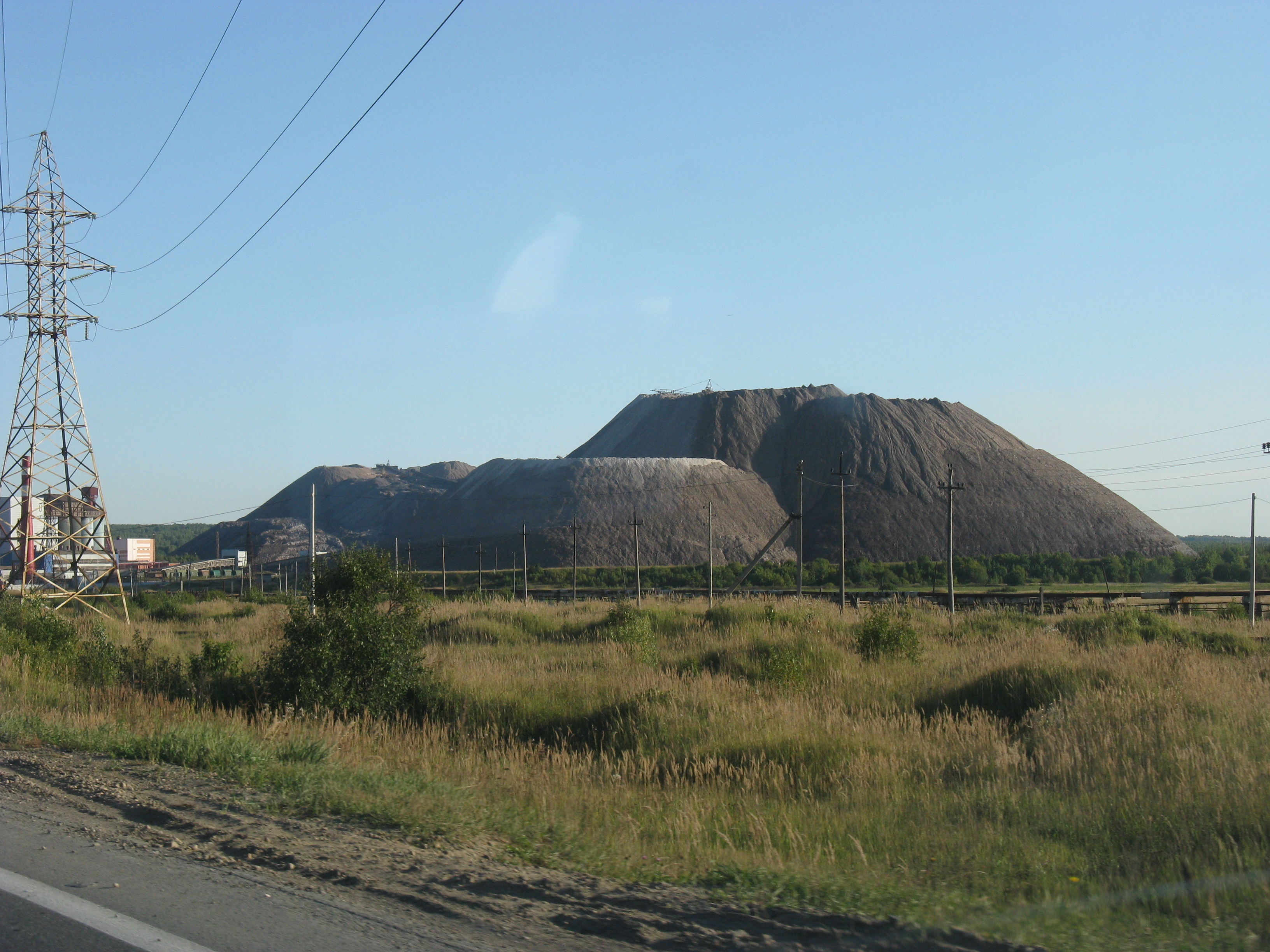

Perm Krai has an abundance of minerals. Oil, natural gas, gold, diamonds, chromites, peat, limestone and building materials are among the many natural resources extracted.
Oil in its area was first discovered in 1929 near settlement Verhnechusovskie Gorodki. Currently there are more than 180 oil and gas fields known. Among them the developed ones are: 89 oil, 2 gas and 18 both oil and gas fields. Most of them are small and based in the central and southern districts of the krai. The northern fields are less developed because the oil lies deep under salt layers.
Coal has been mined in Perm Krai for more than 200 years. For a long time it played an important role in the fuel and energy balance in the region. Maximum mining was in 1960 when it reached 12 million tonnes. Mining then decreased and there are no exploration of new fields.
The Verkhnekamskoye deposit of potassium salts is one of the largest in the world. It is approx. 1,800 km2, and the thickness of the salt layers reaches 514 m.
In 1841 the geological Permian Period was named after strata of rocks from that time were found in this area.
Flora and fauna
Forests cover about 71% of Perm Krai's area. Coniferous forests predominate, with deciduous forests more common in the south. There are 62 species of mammals, more than 270 species of birds, 39 species of fishes, 6 species of reptile and 9 species of amphibians.
Three nature reserves are located in Perm Krai: Basegi, Vishera, Preduralie.
Politics

Legislature
Legislative power in the region is exercised by the Legislative Assembly of Perm Krai, which consists of 60 deputies elected by the inhabitants of the Krai for a term of five years. 30 deputies are elected from party lists (proportional system), and the remaining 30 from single-member districts (majority system). To receive seats on party lists, parties must overcome the 5% threshold (for the first convocation - 7%). The first elections of deputies to the Legislative Assembly of the Perm Krai were held on 3 December 2006.
Party list places:
- 1st Convocation (2006): United Russia (12), Union of Right Forces (6), Liberal Democratic Party of Russia (5), Russian Party of Pensioners (4), Communist Party of the Russian Federation (3);
- 2nd Convocation (2011): United Russia (14), CPRF (6), LDPR (5), A Just Russia (5);
- 3rd Convocation (2016): United Russia (16), CPRF (6), LDPR (5), A Just Russia (3);
- 4th Convocation (2021): United Russia (13), CPRF (9), A Just Russia (3), LDPR (3), New People (2).
In single-mandate constituencies, the overwhelming majority always remained with the nominees of United Russia, with victory in 20, 25, 24 and 27 out of 30 constituencies, respectively.
Law enforcement
The Directorate of the Ministry for Internal Affairs in Perm Krai (ГУ МВД России по Пермскому краю) or the Police of Perm (Полиция Перми) is the main law enforcement agency of the government of Perm Krai, Russia. It is answerable to the regional MVD and the governor of Perm Krai. The chief of police is Yuri Valyaev.
Administrative divisions

Main article: Administrative divisions of Perm Krai
Administratively, the krai is divided into thirty-three districts, fourteen cities of krai significance, and one closed administrative-territorial formation. Six administrative districts are grouped into Komi-Permyak Okrug, which is an administrative unit with special status formed within Perm Krai as a result of the 2005 merger of Perm Oblast and Komi-Permyak Autonomous Okrug, both of which used to be the federal subjects.
Municipally, the territories of all administrative districts and those of nine cities of krai significance are incorporated as municipal districts. The remaining five cities are incorporated as urban okrugs.
Economy
Nonferrous metallurgy is based on ore processing Verkhnekamskoye potash deposit containing magnesium and rare metals. The factories are located in Berezniki (Titanium Magnesium Plant Corporation VSMPO) and Solikamsk (JSC Solikamsk magnesium plant).
In engineering plays an important role military production. The largest center of engineering is Perm; manufactured aircraft and rocket engines, oil field and mining equipment, Petrol motive-powered saws, communication equipment, vessels, cable and other products. The largest enterprises are Motovilikha Plants and Perm Motors. Timber Complex edge based on the use of the richest forest resources of Prikamye. Logging facilities are located mainly in the north of the region.
Demographics

According to the 2021 Census, the population of Perm Krai is 2,532,405; down from 2,635,276 in the 2010 Census; and further down from 3,099,994 recorded in the 1989 Census.
Ethnic groups
| Ethnicity | Population | Percentage |
|---|---|---|
| Russians | 2,030,442 | 89.4% |
| Tatars | 92,472 | 4.1% |
| Komi-Permyaks | 50,163 | 2.2% |
| Bashkirs | 16,105 | 0.7% |
| Ukrainians | 11,808 | 0.5% |
| Other Ethnicities | 69,877 | 3.1% |
| Ethnicity not stated | 261,538 | – |
Settlements
- Births: 21,580 (8.7 per 1,000)
- Deaths: 34,723 (14.0 per 1,000)
Total fertility rate (2024):
1.51 children per woman
Life expectancy (2021):
Total — 68.52 years (male — 63.48, female — 73.49)
Death rates in some of the remote and rural areas in Perm Krai are very high, never seen before during times other than major wars or natural calamities. Just five districts out of a total of 47 have a surplus of births over death in Perm Krai. The birth rate in Perm Krai is much higher compared to other European regions. For example, the birth rate for Germany was 8.3 per 1000 in 2007. Perm as a whole is having 50% higher birth rate, and even the district with the lowest birth rate is having 20% higher BR compared to Germany. In 2008, the birth rate in Perm Krai was 8% higher than that of 2007. Close to 35.5 thousand births were recorded with the heaviest increases in City of Perm (+11%) and Komi-Permyak Autonomous Okrug (+18%). Among the districts, Kudymkar City recorded a 46% rise in birth rates for 2008 compared to 2007, while Usolsky recorded a 31% rise and Kyshertsky recorded a 29% rise. In 13 of the districts, there were more births than deaths, among them Ordynsky, Karagaysky, Kudimkar, Chernushynsky, Chaykovsky & Permsky.
Demographics for 2007
| District | Population | Births | Deaths | BR | DR | NGR |
|---|---|---|---|---|---|---|
| Perm Krai | 2,718,227 | 32,747 | 42,680 | 12.05 | 15.70 | -0.37% |
| Bolshesosnovsky | 14,292 | 219 | 268 | 15.32 | 18.75 | -0.34% |
| Vereshchagynsky | 43,410 | 710 | 744 | 16.36 | 17.14 | -0.08% |
| Gornozavodsky | 27,885 | 396 | 582 | 14.20 | 20.87 | -0.65% |
| Yelovsky | 12,299 | 176 | 229 | 14.31 | 18.62 | -0.43% |
| Kochevsky | 12,356 | 181 | 196 | 14.65 | 15.86 | -0.12% |
| Ilyinsky | 20,311 | 278 | 408 | 13.69 | 20.09 | -0.64% |
| Karagaysky | 23,907 | 360 | 381 | 15.06 | 15.94 | -0.08% |
| Kishertsky | 14,578 | 158 | 280 | 10.84 | 19.21 | -0.83% |
| Krasnovishersky | 26,287 | 335 | 455 | 12.74 | 17.31 | -0.45% |
| Kuyedinsky | 30,576 | 446 | 489 | 14.59 | 15.99 | -0.14% |
| Kungursky | 46,370 | 727 | 720 | 15.68 | 15.53 | 0.01% |
| Kudymkarsky | 27,922 | 429 | 676 | 15.36 | 24.21 | -0.88% |
| Nitvensky | 45,552 | 656 | 858 | 14.40 | 18.84 | -0.44% |
| Oktyabrsky | 34,789 | 481 | 585 | 13.83 | 16.82 | -0.30% |
| Ordinsky | 16,185 | 247 | 241 | 15.26 | 14.89 | 0.04% |
| Osinsky | 32,074 | 410 | 550 | 12.78 | 17.15 | -0.44% |
| Okhansky | 17,180 | 202 | 359 | 11.76 | 20.90 | -0.91% |
| Ochyorsky | 24,651 | 366 | 455 | 14.85 | 18.46 | -0.36% |
| Permsky | 87,342 | 1,275 | 1,383 | 14.60 | 15.83 | -0.12% |
| Sivinsky | 16,797 | 297 | 266 | 17.68 | 15.84 | 0.18% |
| Solikamsky | 17,637 | 203 | 265 | 11.51 | 15.03 | -0.35% |
| Suksunsky | 20,925 | 294 | 349 | 14.05 | 16.68 | -0.26% |
| Uynsky | 12,631 | 180 | 212 | 14.25 | 16.78 | -0.25% |
| Usolsky | 13,788 | 176 | 299 | 12.76 | 21.69 | -0.88% |
| Chastinsky | 14,450 | 207 | 254 | 14.33 | 17.58 | -0.33% |
| Cherdynsky | 32,522 | 342 | 542 | 10.52 | 16.67 | -0.61% |
| Gaynsky | 16,106 | 214 | 268 | 13.29 | 16.64 | -0.33% |
| Chernushinsky | 52,231 | 811 | 638 | 15.53 | 12.21 | 0.33% |
| Perm | 987,246 | 10,094 | 13,167 | 10.22 | 13.34 | -0.31% |
| Alexandrovsky | 34,554 | 427 | 662 | 12.36 | 19.16 | -0.68% |
| Berezniki | 165,950 | 1,822 | 2,484 | 10.98 | 14.97 | -0.40% |
| Gremyachinsky | 15,075 | 178 | 367 | 11.81 | 24.34 | -1.25% |
| Gubakhinsky | 40,086 | 448 | 826 | 11.18 | 20.61 | -0.92% |
| Dobryansky | 61,365 | 792 | 950 | 12.91 | 15.48 | -0.26% |
| Kizelovsky | 30,837 | 381 | 827 | 12.36 | 26.82 | -1.43% |
| Krasnokamsky | 40,393 | 816 | 1,264 | 20.20 | 31.29 | -0.64% |
| Kungur | 68,074 | 872 | 981 | 12.81 | 14.41 | -0.16% |
| Lysvensky | 82,921 | 1,016 | 1,598 | 12.25 | 19.27 | -0.70% |
| Solikamsk | 97,269 | 1,165 | 1,464 | 11.98 | 15.05 | -0.30% |
| Chaykovsky | 108,617 | 1,374 | 1,332 | 12.65 | 12.26 | 0.04% |
| Chusovskoy | 73,314 | 879 | 1,531 | 11.99 | 20.88 | -0.89% |
| Yurlinsky | 11,046 | 200 | 253 | 18.11 | 22.90 | -0.48% |
| Kosinsky | 7,716 | 130 | 160 | 16.85 | 20.74 | -0.38% |
| Yusvinsky | 22,626 | 288 | 475 | 12.73 | 20.99 | -0.82% |
| Kudymkar | 30,964 | 385 | 511 | 12.43 | 16.50 | -0.40% |
| Bardymsky | 27,529 | 361 | 537 | 13.11 | 19.51 | -0.64% |
| Beryozovsky | 17,901 | 230 | 281 | 12.85 | 15.70 | -0.28% |
Religion
As of a 2012 survey 43% of the population of Perm Krai adheres to the Russian Orthodox Church, 5% declares to be generically unaffiliated Christian, 4% are Muslims, 2% are Rodnovers (Slavic folk religion), 1% are Old Believers, 1% Orthodox Christian believers who don't belong to churches or are members of non-Russian Orthodox churches, 8% follows other religion or did not give an answer to the survey. In addition, 24% of the population declares to be "spiritual but not religious" and 14% to be either atheist or not religious.
Major attractions

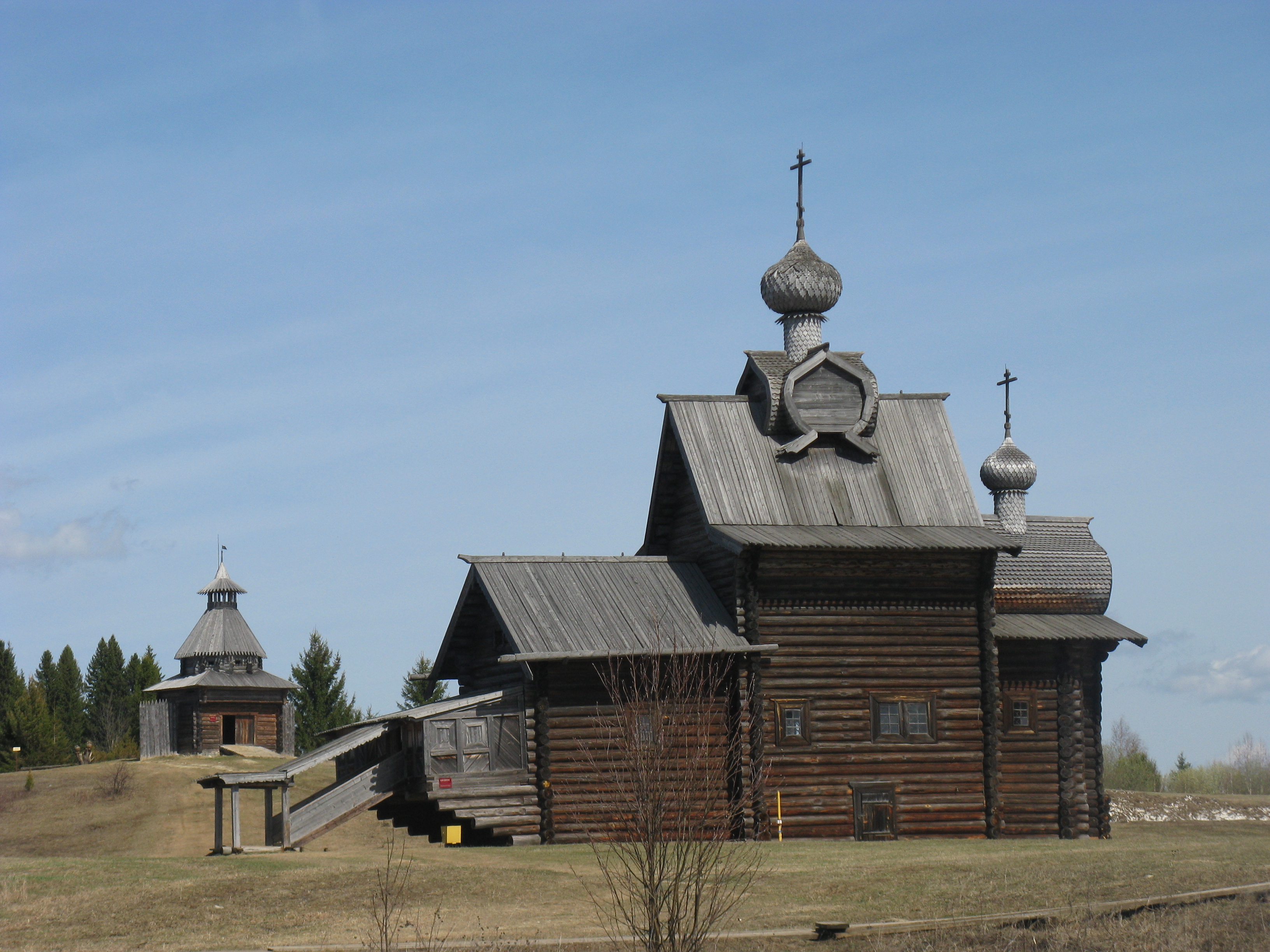
Perm Krai is home of several museums:
- Perm State Art Gallery
- Perm Museum of Local History
- Museum of Motovilikha Plants
- Architectural-Ethnographic Museum Khokhlovka and others. Numerous architectural monuments are located in the small town of Usolye, in north of Perm Krai. Particularly important are the Saviour Cathedral, with a separate bell tower, and House of Stroganov.
There are many theaters in Perm, including the Perm Opera and Ballet Theater, the Perm Academic Theater, the Puppet Theater, the Theater for Young Spectators, the Theater "Near Bridge", and others.
There are many temples and convents in Perm Krai. The most significant of them are: Belogorsky Convent located in 85 km from Perm, Sludskaya Church, Fedosievskaya Church, Perm Mosque and others.
Ordinsky is home to the Orda underwater caves. Located near Orda village in Perm region, Ural, Orda Cave is also the biggest underwater gypsum crystal cave in the world.
References
Sources
- {{Cite Russian law
References
- "Оценка численности постоянного населения по субъектам Российской Федерации". [[Federal State Statistics Service (Russia).
- Charter, Article 15.3
- Charter, Article 15.4
- "Федеральный закон об образовании Пермского края". Rossiyskaya Gazeta.
- Назаров, Николай Николаевич. (2006). "География Пермского края: учебное пособие". Пермский ун-т.
- [http://www.perm.ru/region/geography/minerals/ Полезные ископаемые] {{webarchive. link. (6 October 2008)
- "Permian Period | Plants, Animals, Extinction, & Facts | Britannica".
- {{ru-pop-ref. 2021Census
- {{ru-pop-ref. 2010Census
- {{ru-pop-ref. 1989Census
- "Национальный состав населения". [[Federal State Statistics Service (Russia).
- (21 February 2025). "Естественное движение населения в разрезе субъектов российской федерации за декабрь 2024 года".
- (2025-02-25). "Рейтинг рождаемости в регионах: кто в лидерах, а кто в аутсайдерах {{!}} Москва".
- "Демографический ежегодник России". [[Federal State Statistics Service (Russia).
- "На 8% увеличилась рождаемость в Пермском крае в 2008 году - ИА REGNUM".
- http://dmr.perm.ru/?/katalog.dirx2x79x143.205*xls{{dead link. (March 2018)
- [http://sreda.org/en/arena "Arena: Atlas of Religions and Nationalities in Russia"]. Sreda, 2012.
- [http://c2.kommersant.ru/ISSUES.PHOTO/OGONIOK/2012/034/ogcyhjk2.jpg 2012 Arena Atlas Religion Maps]. "Ogonek", № 34 (5243), 27 August 2012. Retrieved 21 April 2017. [https://web.archive.org/web/20170421154615/http://c2.kommersant.ru/ISSUES.PHOTO/OGONIOK/2012/034/ogcyhjk2.jpg Archived].
This article was imported from Wikipedia and is available under the Creative Commons Attribution-ShareAlike 4.0 License. Content has been adapted to SurfDoc format. Original contributors can be found on the article history page.
Ask Mako anything about Perm Krai — get instant answers, deeper analysis, and related topics.
Research with MakoFree with your Surf account
Create a free account to save articles, ask Mako questions, and organize your research.
Sign up freeThis content may have been generated or modified by AI. CloudSurf Software LLC is not responsible for the accuracy, completeness, or reliability of AI-generated content. Always verify important information from primary sources.
Report