From Surf Wiki (app.surf) — the open knowledge base
Percy Williams (sprinter)
Canadian sprinter
Canadian sprinter
| Field | Value |
|---|---|
| name | Percy Alfred Williams |
| image | Percy Williams 1928.jpg |
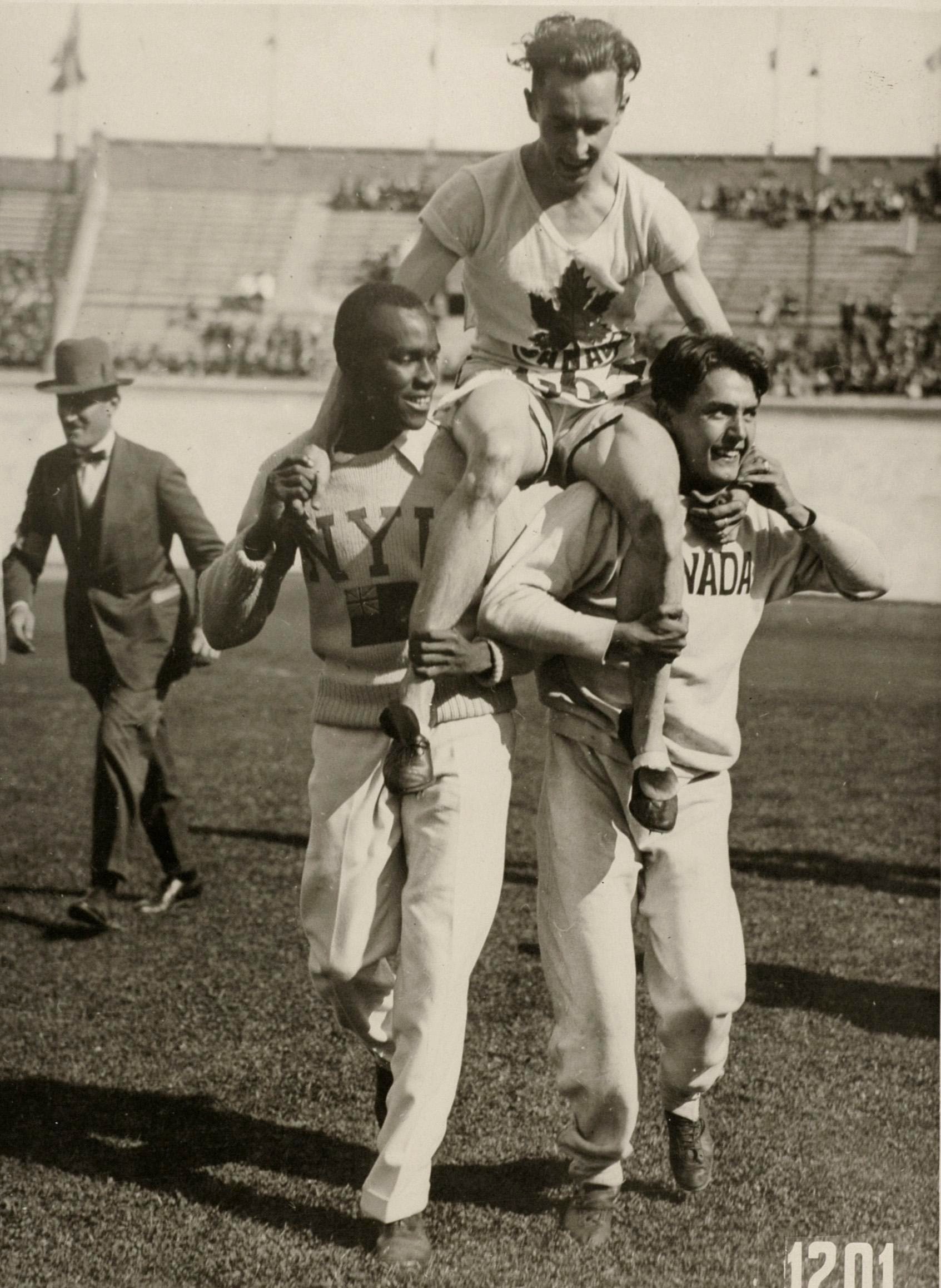
| caption | Percy Williams at the 1928 Olympics |
| birth_date | May 19, 1908 |
| birth_place | Vancouver, British Columbia, Canada |
| death_date | |
| death_place | Vancouver, British Columbia, Canada |
| height | 1.70 m |
| weight | 56 kg |
| sport | Sprint running |
| club | Vancouver Athletic Club |
| show-medals | yes |
| show-medals = yes
Percy Alfred Williams (May 19, 1908 – November 29, 1982) was a Canadian athlete, winner of the 100 and 200 metres races at the 1928 Summer Olympics and a former world record holder for the 100 metres sprint.
Early life
Williams was the only child of Frederick Williams, who was originally from England, and Charlotte Rhodes, who hailed from St. John's, Newfoundland. At the age of 15, Williams suffered from rheumatic fever and was advised to avoid strenuous physical activities. However, as his high school required participation in athletic competitions, he started training in sprint in 1924 and by 1927 became a local champion.
Olympic competition
At the 1928 Olympic trials, Williams won the 100 and 200 metres races, equaling the Olympic 100 metres record of 10.6 seconds.
To earn his travel ticket for the trials, Williams and his volunteer coach, Bob Granger, worked as waiters and dishwashers in a railroad dining car, and Vancouver track fans raised the money to pay Granger's transatlantic ship passage to the 1928 Olympics.
In the second round of the 100 metres at Amsterdam, Williams again equaled the Olympic record with a time of 10.6 seconds and did the same in his semi-final, but placed second to Bob McAllister. The final opened with two false starts, first by Wilfred Legg and then one by Frank Wykoff. Williams took the lead off the start and never relinquished it, winning the gold over Jack London with Georg Lammers third. Williams then won the 200 metres two days later, coming from behind to overtake Helmut Körnig, who had led out of the bend. It was Williams' eighth race in four days and he was the first non-American to complete the sprint double. Williams was also part of the Canadian team which was disqualified in the final of the 4 × 100 metre relay contest.
Williams's victories were front-page news in Canada and he returned a national hero, feted by enormous crowds across the country. An estimated 25,000 people turned out to welcome him at the Canadian Pacific Railway station at the foot of Granville Street in Vancouver. Williams was met off the train by Mayor L. D. Taylor and Premier Simon Fraser Tolmie. They bundled him and Granger into cars and paraded them through the confetti-filled city. The event was broadcast live by reporters with microphones stationed along the route.
Williams showed that his success was not an accident, setting a World Record at the Canadian Track and Field Championships at Varsity Stadium in Toronto in 1930. He then won the 100 yard dash at the inaugural British Empire Games (now known as the Commonwealth Games) in Hamilton, Ontario, but tore the tendons in his upper left leg around the 70 yard mark and never made a full comeback. At the 1932 Summer Olympics in Los Angeles, he was eliminated in the semi-finals of the 100 metre event. With the Canadian team he finished fourth in the 4 × 100 metre relay competition. Subsequently, Williams stopped running and became an insurance agent.
Later life and death
In August 1940, Williams joined the Non-Permanent Active Militia, his occupation listed as "Salesman" and religion as "C of E" (Church of England). He also served as a civilian pilot during World War II, ferrying aircraft around the country for Canadian Airways, then became a civilian flight instructor with the Royal Canadian Air Force.
In 1971, after his former mentor's death, Williams was asked how much credit was due to Granger for his Olympic success. "Offhand, I'd say 100 percent," Williams answered.
In the mid-1960s, he donated his two gold medals from the 1928 Olympics to the BC Sports Hall of Fame, saying he wanted them to be seen and remembered. In 1980, they were stolen never to be found again; gold prices at the time were at historic highs and it was suspected the medals had been melted down. It was said at that time Williams simply shrugged off the loss and no replacements were ever issued. In 2023 the stolen medals were replaced by newly minted replicas, recreated by the International Olympic Committee at the request of Williams family, who then rededicated them to B.C. Sports Hall of Fame.
In later years, Williams grew bitter about his sporting experiences, culminating in being the only living Canadian Olympic gold medalist who refused the federal government's invitation to attend the 1976 Summer Olympics in Montreal.
In 1979, he was made an Officer of the Order of Canada.
Williams, who never married, lived with his mother, Dot, until her death in 1980, at the age of 92. After that, he lived on alone and suffered from terrible arthritic pain.
A keen collector of guns, Williams shot himself in the head with a shotgun he had been awarded in 1928 as a prize for his Olympic feat. His suicide was a major surprise to everyone and no note was left. He was interred at Masonic Cemetery of British Columbia, Burnaby, Canada.
Awards and recognition

In 1950, Williams was proclaimed by a Canadian press poll as Canada's greatest track athlete of the first half of the century, which was later updated in 1972 to declare him Canada's all-time greatest Olympic athlete.
Percy Williams Junior Public School located in Toronto, Ontario, is named after Williams.
In 1996, Canada Post released a postage stamp of Percy Williams as part of its "Sporting Heroes" series.
Outside the BC Sports Hall of Fame at BC Place is a life-sized statue of Williams, crouched in a sprinter's stance.
Competition record
| Representing Canada |
|---|
| 1930 |
References
References
- Wallechinsky, David. (2012). "The Book of Olympic Lists". Aurum Press.
- Samuel Hawley. "Percy Williams: Childhood". samuelhawley.com.
- "Volume 22: St Johns WESLEYAN METHODIST: George Street Church Baptisms 1882-1891". ngb.chebucto.org/.
- Geoff D'Auria. (4 August 2012). "Vancouver's Forgotten Track Star". TheTyee.ca.
- "Athletics at the 1928 Amsterdam Summer Games:Men's 100 metres". sports-reference.com.
- "Athletics at the 1928 Amsterdam Summer Games:Men's 200 metres". sports-reference.com.
- John Mackie. (27 April 2017). "Canada 150: Percy Williams, the world's fastest man". Vancouversun.com.
- Jamie Bradburn. (21 July 2015). "The British Empire Games of 1930". Torontoist.com.
- Samuel Hawley. "Percy Williams: Later Life and Today". samuelhawley.com.
- (23 February 2023). "Family of Canadian track legend receives replica Olympic gold medals after originals were stolen". CBC Sports.
- Nick Mason. (26 September 2000). "Yesterday's anti-heroes". The Guardian.
- link. (2016-03-04 , Order of Canada)
- Samuel Hawley, ''I Just Ran: Percy Williams, World's Fastest Human'' (Ronsdale Press, 2011), p. 272.
- Edward S. Sears. (23 June 2015). "Running Through the Ages, 2d ed.". McFarland.
- "Percy Williams Junior Public School".
- (19 May 2018). "OTD: Percy Williams born in Vancouver". canadianstampnews.com.
- Rebecca Bollwitt. (31 July 2012). "Vancouver History: Percy Williams". miss604.com.
- [https://www.sports-reference.com/olympics/athletes/wi/percy-williams-1.html Percy Williams] {{Webarchive. link. (2018-09-17 . [[Sports-Reference.com]])
This article was imported from Wikipedia and is available under the Creative Commons Attribution-ShareAlike 4.0 License. Content has been adapted to SurfDoc format. Original contributors can be found on the article history page.
Ask Mako anything about Percy Williams (sprinter) — get instant answers, deeper analysis, and related topics.
Research with MakoFree with your Surf account
Create a free account to save articles, ask Mako questions, and organize your research.
Sign up freeThis content may have been generated or modified by AI. CloudSurf Software LLC is not responsible for the accuracy, completeness, or reliability of AI-generated content. Always verify important information from primary sources.
Report