From Surf Wiki (app.surf) — the open knowledge base
Paul Molitor
American baseball player and manager (born 1956)
American baseball player and manager (born 1956)
| Field | Value |
|---|---|
| name | Paul Molitor |
| image | Paul_Molitor_white_house.jpg |
| caption | Molitor in 2005 |
| position | Designated hitter / Infielder / Manager |
| bats | Right |
| throws | Right |
| birth_date | |
| birth_place | Saint Paul, Minnesota, U.S. |
| debutleague | MLB |
| debutdate | April 7 |
| debutyear | 1978 |
| debutteam | Milwaukee Brewers |
| finalleague | MLB |
| finaldate | September 27 |
| finalyear | 1998 |
| finalteam | Minnesota Twins |
| statleague | MLB |
| stat1label | Batting average |
| stat1value | .306 |
| stat2label | Hits |
| stat2value | 3,319 |
| stat3label | Home runs |
| stat3value | 234 |
| stat4label | Runs batted in |
| stat4value | 1,307 |
| stat5label | Stolen bases |
| stat5value | 504 |
| stat6label | Managerial record |
| stat6value | 305–343 |
| stat7label | Winning % |
| stat7value | |
| hoflink | National Baseball Hall of Fame and Museum |
| hoftype | National |
| hofdate | 2004 |
| hofvote | 85.2% (first ballot) |
As player
- Milwaukee Brewers (–)
- Toronto Blue Jays (–)
- Minnesota Twins (–) As manager
- Minnesota Twins (–) As coach
- Minnesota Twins (–)
- Seattle Mariners ()
- 7× All-Star (1980, 1985, 1988, 1991–1994)
- World Series champion ()
- World Series MVP (1993)
- 4× Silver Slugger Award (1987, 1988, 1993, 1996)
- AL Manager of the Year (2017)
- Milwaukee Brewers No. 4 retired
- Milwaukee Brewers Wall of Honor
- American Family Field Walk of Fame
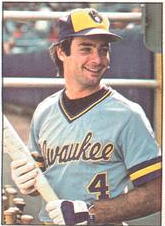
- Major League Baseball All-Time Team Paul Leo Molitor (born August 22, 1956), nicknamed "Mollie" and "the Ignitor", is an American former professional baseball player and manager. During his 21-year playing career in Major League Baseball (MLB), he played for the Milwaukee Brewers (1978–1992), Toronto Blue Jays (1993–1995), and Minnesota Twins (1996–1998). He was known for his exceptional hitting and speed. He made seven All-Star Game appearances, and was the World Series Most Valuable Player in 1993. Molitor ranks tenth on the all-time MLB career hits list with 3,319. He is one of only five players in history with 3,000+ hits, a lifetime .300+ batting average, and 500+ career stolen bases.
Considered one of the most "clutch" hitters in baseball history, Paul Molitor still has the best career postseason batting average in MLB history (minimum 100 at-bats) at .368.
Molitor was described as “the most nondescript superstar in baseball,” with Sports Illustrated calling him “The Complete Player” and “a template of the refined ballplayer.” Ted Williams said, “I watch him and I say to myself, ‘There is probably the best hitter in the game today.’ He's the closest thing to Joe DiMaggio in the last 30 years. Matter of fact, every time I watch him, I say, ‘There's Joe.‘“
Molitor grew up in Minnesota and attended the University of Minnesota before beginning his MLB career. After his retirement as a player, he served as a coach for the Seattle Mariners and the Twins. In 2004, he was elected to the Baseball Hall of Fame in his first year of eligibility, becoming one of the first players enshrined after spending a significant portion of his career as a designated hitter. He was a finalist for the Major League Baseball All-Century Team. On November 3, 2014, Molitor was announced as the 13th manager of the Twins. He managed the team for four seasons, from 2015 to 2018.
Early life
Molitor was born in Saint Paul, Minnesota. After graduating from Cretin High School, he was selected in the 28th round of the 1974 MLB draft as a pitcher by the St. Louis Cardinals. He opted instead to attend college at the University of Minnesota, where he was a three-year starter for the Minnesota Golden Gophers. Molitor earned All-American honors as a shortstop for his sophomore year. Between his sophomore and junior seasons, Molitor suffered a broken jaw. With his jaw wired shut for eight weeks, Molitor lost 40 lbs.
After his junior year in college, the Milwaukee Brewers selected Molitor in the first round, with the third overall selection, in the 1977 Major League Baseball draft. He signed with the Brewers and began his professional career with the Class A Burlington Bees of the Midwest League. In 64 games with Burlington, Molitor hit for a .346 batting average, eight home runs, 50 runs batted in (RBI) and 14 stolen bases.
Playing career
Milwaukee Brewers (1978–1992)
Molitor began as a shortstop, then moved to second base when Robin Yount returned from a brief injury. He made his MLB debut in 1978, playing in 125 games and hitting .273 with six home runs, 45 RBIs and 30 stolen bases. In 1981, he spent time at center field and right field to avoid the injuries associated with infield play. Molitor was moved to third base before the 1982 season. Molitor was part of a young Milwaukee Brewers team that lost the 1982 World Series in seven games to the St. Louis Cardinals. Molitor batted .355 during the series. In Game 1, he had five hits, a World Series record. During the 1982 season, he hit .302 and led the American League (AL) with 136 runs scored. On May 12, he hit three home runs against the Royals in a 9-7 loss.
Molitor struggled with injuries for much of his early career, being placed on the disabled list six times between 1980 and 1986. In 1984, Molitor struggled with elbow problems, played in only 13 games and ultimately underwent Tommy John surgery (becoming the first position player to undergo the surgery) in an attempt to salvage his career. He played in 105 games that season.
Molitor attracted national media attention in 1987 during his 39-game hitting streak. Near the end of the streak, columnist Mike Downey wrote that "the amazing thing about Paul Molitor's recent bat-o-rama is not that he has hit in 33 straight games but that he has played in 33 straight games."
Toronto Blue Jays (1993–1995)
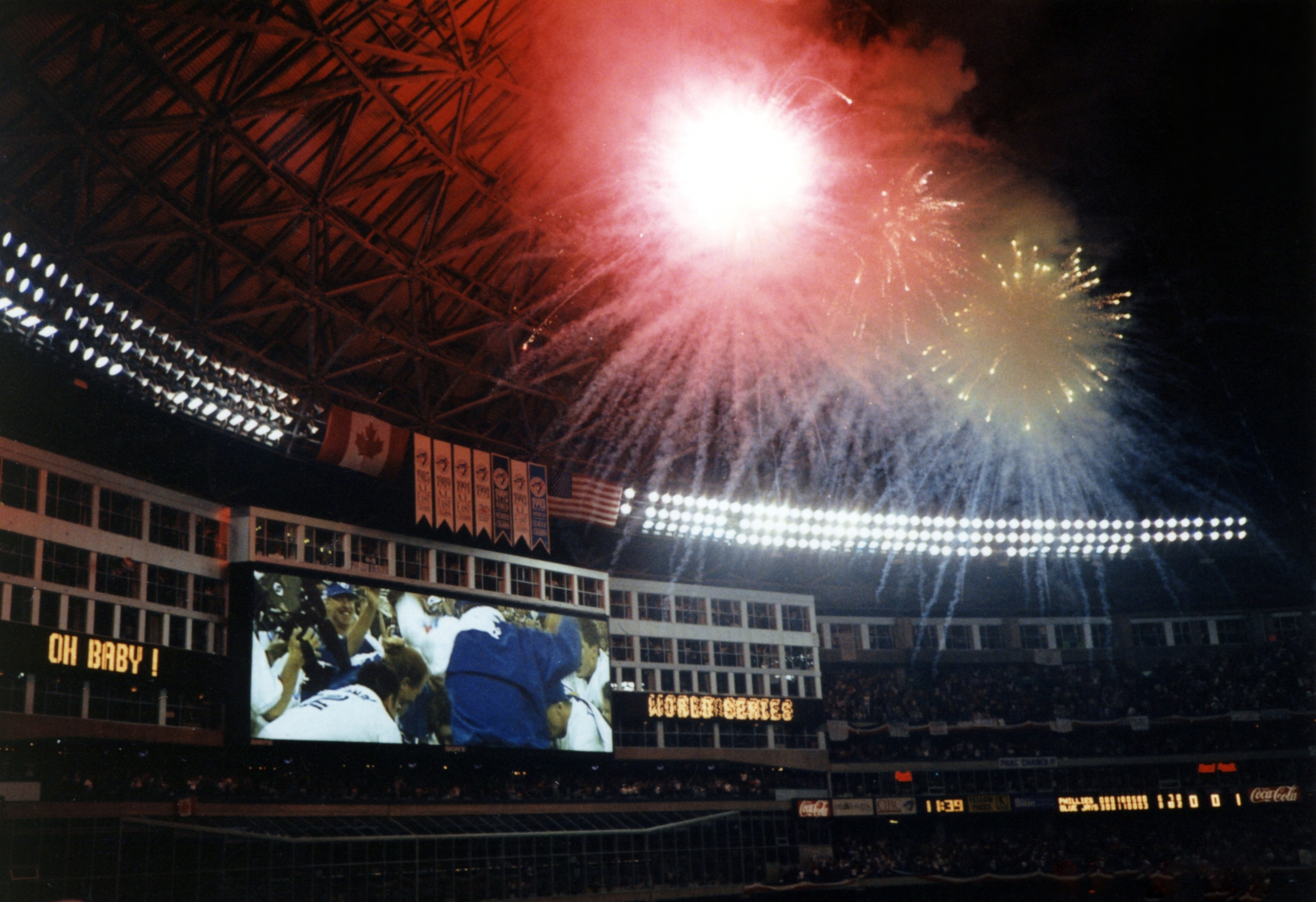
Although Molitor wanted to remain with Milwaukee when he became a free agent after the 1992 season, the franchise offered him a one-year contract with a $900,000 pay cut (to $2.5 million), while the Toronto Blue Jays offered a three-year, $13 million deal (equivalent to $ million in ), leading to his signing with the Blue Jays. Agent Ron Simon said, "I was also talking with Milwaukee, but it became clear to us that Milwaukee didn't have the same kind of interest in signing Molitor, perhaps because of their financial situation."
Molitor quickly became an offensive juggernaut. In 1993, Molitor led the AL in plate appearances (725) and hits (211) he was a key part of the Blue Jays' second World Series Championship. Molitor hit 2 doubles, 2 triples, and 2 home runs in the Series, earning the World Series MVP Award and tied a World Series record by batting .500 (12-for-24) in the six-game series. In addition, after serving as a DH all season, Molitor played Game 3 of the World Series at first base and Games 4 and 5 at third base in the games played at Philadelphia.
In 1994, a strike-shortened season, Molitor hit .341 and led the AL in games played (115) and singles (107). He also stole 20 bases that season without ever being caught, one short of Kevin McReynolds' 1988 major league record of 21. Molitor's average dropped to .270 in 1995, his lowest mark in more than ten years.
Minnesota Twins (1996–1998)
He left the Blue Jays after the season, and joined his hometown Minnesota Twins for the final three seasons of his career. He acquired his 3,000th hit on September 16, 1996 against the Kansas City Royals at Kauffman Stadium. He was the first player to reach the 3,000 hits plateau with a triple. Molitor was relishing the opportunity to play with Twins superstar Kirby Puckett, but Puckett developed career-ending glaucoma during spring training in 1996 and never played again. In 1996, Molitor became the second 40-year-old, after Hall of Famer Sam Rice, to have a 200-hit season, leading the league with 225, while also leading the league in singles with 167. Molitor also remains the last MLB player to drive in 100 or more runs in a season while hitting fewer than 10 home runs (nine HR, 113 RBIs).
Molitor hit .305 in 1997, his twelfth season to finish with a batting average higher than .300. In 1998, he hit .281 with four home runs, 69 RBI and nine stolen bases. Other than his very brief 1984 season, the 1998 season was the first in Molitor's career in which he did not reach double-digit stolen base totals.
Coaching and managerial career
Early career
After retiring as a player, Molitor remained with the Twins as a broadcaster in 1999 and bench coach for two seasons. He was considered a leading candidate to manage the team when Tom Kelly retired after 2001, but he declined in part because the Twins were still being targeted for potential contraction. Molitor was a hitting coach with the Mariners in 2004. He then spent the 2005 to 2013 seasons in the Twins organization as a minor league baserunning and fielding instructor. Molitor joined the Twins coaching staff in 2014 to oversee baserunning, bunting, infield instruction, and positioning.
Minnesota Twins
The Twins hired Molitor to fill their manager vacancy for the 2015 season, and introduced him in a press conference on November 4, 2014. At the end of the 2017 season, the Twins announced that Molitor would receive a three-year contract extension through 2020. Molitor was rewarded for his efforts in leading the Twins back to the postseason after losing 103 games the season prior, the first team in history to achieve this feat, by being named American League Manager of the Year in November 2017. He became only the second person to be elected to the Hall of Fame as a player and win the Manager of the Year Award behind Frank Robinson, who was named AL Manager of the Year in 1989 while managing the Baltimore Orioles. On October 2, 2018, the Twins fired Molitor as manager, but expressed that they had interest in having him continue to maintain a role with the team in some capacity. He finished with a record of 305 wins and 343 losses in 648 games. Molitor later rejoined the Twins as a special assistant, with roving instructor duties for the team's minor league affiliates.
Managerial record
Accomplishments
|}} Molitor's lifetime statistics include 2,683 games played, 1,782 runs scored, 3,319 hits, 605 doubles, 114 triples, 234 home runs, 1,307 runs batted in, 1,094 walks, a .306 batting average, and 504 stolen bases. His 3,319 hits rank him tenth all-time. In addition, he batted .368 in five postseason series (currently best in MLB history with a minimum 100 at-bats), and was an all-star seven times. Molitor recorded these statistics while missing nearly 500 games due to various injuries throughout his career. In 1999, Molitor ranked No. 99 on ''The Sporting News''' list of the 100 Greatest Baseball Players, and he was nominated as a finalist for the Major League Baseball All-Century Team. Molitor was elected to the Wisconsin Athletic Hall of Fame in 1999.
On June 11, 1999, the Brewers retired Molitor's uniform number 4. During the ceremony at Milwaukee County Stadium, Molitor announced that if he went into the Hall of Fame, he would do so as a Brewer. On January 6, 2004, he was elected to the Hall in his first year of eligibility, with 85.2% of the votes. True to his word, he joined Robin Yount as the only Hall of Famers to be depicted on their plaques with Brewers caps. At the time of his induction, Molitor was the hitting coach for the Seattle Mariners.
Molitor is one of five players in major league history with at least 3,000 hits, a .300 lifetime batting average, and 500 stolen bases. The other four are Ty Cobb, Honus Wagner, Eddie Collins and Ichiro Suzuki. Only Ichiro and Molitor played beyond 1930. Molitor is the only player ever to accomplish those feats and hit at least 200 home runs. Molitor is also the first player in World Series history to have at least two home runs, two doubles, and two triples in one series (1993). He is a member of an exclusive club, hitting .300 or better in full seasons across three decades (1970s, 80s, and 90s). He hit better than .300 a dozen times in his career. Including Game 1 of the 1982 World Series, he recorded eight 5-hit games and four 200+ hit seasons in his 21 year major league career. Molitor also compiled 56 4-hit games in his MLB career.
As of today, Molitor is the last Major League player to execute the rare feat of stealing home plate at least ten times over the course of their career.
Personal life
During the early years of his career, Molitor began using cocaine and marijuana. During the trial of a drug dealer in 1984, Molitor admitted that he had used drugs. Many years later, he said, "There are things you're not so proud of — failures, mistakes, dabbling in drugs, a young ballplayer in the party scene. Part of it was peer pressure. I was young and single, and hung around with the wrong people. ... You learn from it. You find a positive in it. It makes you appreciate the things that are good." He claims to have stopped using drugs in 1981, and has since visited schools to lecture about the dangers of drug use.
Molitor married Linda Kaplan in 1981, and had a daughter, Blaire. Before their 2003 divorce, it was revealed that he had fathered a son, Joshua, in an extramarital affair with Joanna Andreou, and was paying child support. During his legal separation from Linda, he fathered another child, daughter Julia, with the woman who would become his second wife, Destini. Molitor and Destini married in 2014, and went on to have another child, son Benjamin.
During his Hall of Fame induction speech, Molitor mentioned his difficult family relationships; the divorce from Linda caused such hard feelings that his ex-wife and their daughter almost did not attend his induction ceremony.
Molitor's nephew is professional disc golfer Cale Leiviska.
References
References
- https://www.statmuse.com/mlb/ask?q=highest+batting+average+playoffs+career%2C+minimum+100+at-bats
- http://mobile.dudasite.com/site/seamheads?url=https%3A%2F%2Fseamheads.com%2Fblog%2F2012%2F12%2F13%2Fthe-ignitor-sic-paul-molitors-misspelled-misconstrued-and-misunderstood-hall-of-fame-career%2F&utm_referrer=https%3A%2F%2Fwww.google.com%2F
- Brackin, Dennis. (November 4, 2014). "It's official: Paul Molitor named Twins manager".
- http://www.ManagerMolly.com {{webarchive. link. (November 4, 2014)
- Weir, Tom. (June 29, 2001). "USA's best of 2 sports worlds". [[USA Today]].
- "Paul Molitor".
- Justice, Richard. (August 16, 1987). "Now, it's pitchers, not Paul Molitor, who are hurting". [[Los Angeles Times]].
- Davis, Hank. (January 1, 2003). "Small-Town Heroes: Images of Minor League Baseball". U of Nebraska Press.
- "Paul Molitor Minor League Statistics & History".
- "Paul Molitor Statistics and History".
- (December 5, 1981). "Sports People; Carter Close to Deal". [[The New York Times]].
- "Paul Molitor 3-home run Game Boxscore at Retrosheet".
- Downey, Mike. (August 19, 1987). "Molitor's feat Is just in playing". [[Los Angeles Times]].
- "Consecutive Games Hitting Streaks". Baseball Almanac.
- Chass, Murray. (December 8, 1992). "Baseball; Jays re-sign Carter and swipe Molitor". [[The New York Times]].
- Jauss, Bill. (October 6, 1993). "Molitor, Sprague chase jitters with their bats". [[Chicago Tribune]].
- Szalontai, James D.. (September 29, 2010). "Small Ball in the Big Leagues: A History of Stealing, Bunting, Walking and Otherwise Scratching for Runs". McFarland.
- Hunt, Ryan. (September 8, 1999). "Long gone".
- (January 13, 2014). "Hall of Famer Paul Molitor preparing for role as Twin coach".
- (2014-11-04). "Molitor: Twins 'where I'm supposed to be'".
- "Torey Lovullo, Paul Molitor win manager honors".
- "Paul Molitor". Sports Reference LLC.
- KSTP Sports. (July 20, 2021). "Q&A: Paul Molitor is back working for the Twins". KSTP TV.
- Stone, Larry. (July 25, 2004). "Man about Cooperstown: Molitor takes his place with game's best". Seattle Times.
- (October 22, 2025). "For combined seasons, in the regular season, requiring Batting Average >= .300 and Hits >= 3000 and Stolen Bases >= 500, sorted by descending Home Runs.".
- "Paul Molitor Top Performances at Retrosheet".
- "Major League Baseball Records for Stealing Home Base".
- Missanelli, M. G.. (August 27, 1987). "Molitor captures a nation's fancy". [[Orlando Sentinel]].
- (July 25, 2004). "Playing baseball helped Molitor open doors to hearts". [[Lubbock Avalanche-Journal]].
- Daniel R. Levitt and Doug Skipper, [https://sabr.org/bioproj/person/f9d60ca6 Paul Molitor], SABR, Cronkite School at ASU, accessed April 19, 2017.
- Rogers, Phil. (July 26, 2004). "Chaotic lives, blessed careers". [[Chicago Tribune]].
- "Paul Molitor Stats, Age, Position, Height, Weight, Fantasy & News {{!}} MLB.com".
- (June 24, 2020). "Pro disc golf tourney to be hosted in Minnesota by Paul Molitor's nephew".
This article was imported from Wikipedia and is available under the Creative Commons Attribution-ShareAlike 4.0 License. Content has been adapted to SurfDoc format. Original contributors can be found on the article history page.
Ask Mako anything about Paul Molitor — get instant answers, deeper analysis, and related topics.
Research with MakoFree with your Surf account
Create a free account to save articles, ask Mako questions, and organize your research.
Sign up freeThis content may have been generated or modified by AI. CloudSurf Software LLC is not responsible for the accuracy, completeness, or reliability of AI-generated content. Always verify important information from primary sources.
Report