From Surf Wiki (app.surf) — the open knowledge base
Patna
Metropolis and state capital of Bihar, India

Metropolis and state capital of Bihar, India
| Field | Value | ||
|---|---|---|---|
| name | Patna | ||
| native_name | Paṭanā | ||
| settlement_type | Metropolis, State capital city | ||
| image_skyline | {{multiple image | ||
| border | infobox | ||
| total_width | 270 | ||
| perrow | 1/2/2/2/1 | ||
| image1 | Vidhan-sabha-bihar.jpg | ||
| caption1 | Bihar Legislature | ||
| image2 | Patna high court1.jpg | ||
| caption2 | Patna High Court | ||
| image3 | Sabhyata dwar...jpg Sabhyata Dwar | ||
| caption3 | Sabhyata Dwar | ||
| image4 | Buddha Smriti Park.jpg | ||
| caption4 | Buddha Smriti Park | ||
| image5 | View_of_Patna_city_from_the_top_of_Golghar.jpg | ||
| caption5 | City view | ||
| image6 | Mahavir Mandir from Buddha Smriti Park.JPG | ||
| caption6 | Mahavir Mandir | ||
| image7 | Digha panorma.jpg Digha–Sonpur Bridge | ||
| caption7 | Digha–Sonpur Bridge | ||
| image8 | Bihar Museum Bailey Road 02.jpg | ||
| caption8 | Bihar Museum in Bailey Road | ||
| image9 | Front view of administrative building of IIT Patna.jpg | thumb | right |
| caption9 | IIT Patna | ||
| pushpin_map | India Patna#Bihar#India | ||
| pushpin_label_position | left | ||
| pushpin_relief | yes | ||
| pushpin_map_caption | Location in Patna##Location in Bihar##Location in India | ||
| coordinates | |||
| subdivision_type | Country | ||
| subdivision_name | India | ||
| subdivision_type1 | State | ||
| subdivision_type2 | Division | ||
| subdivision_type3 | District | ||
| subdivision_name1 | Bihar Government Banner.png Bihar | ||
| subdivision_name2 | Patna | ||
| subdivision_name3 | Patna | ||
| established_title | Established | ||
| established_date | 490 BCE | ||
| founder | Udayin | ||
| government_type | Municipal corporation | ||
| governing_body | Patna Municipal Corporation | ||
| leader_title | Parliament of India | ||
| leader_name | Ravi Shankar Prasad (BJP) | ||
| Misa Bharti (RJD) | |||
| leader_title1 | Mayor | ||
| leader_name1 | Sita Sahu | ||
| total_type | City | ||
| unit_pref | Metric | ||
| area_footnotes | |||
| area_total_km2 | 250 | ||
| area_metro_km2 | 600 | ||
| area_rank | 18 | ||
| elevation_footnotes | |||
| elevation_m | 53 | ||
| population_total | 1,684,222 (IN: 19th) | ||
| population_as_of | 2011 | ||
| population_footnotes | |||
| population_density_km2 | 6800 | ||
| population_urban | 2,046,652 (IN: 18th) | ||
| population_metro | 3,874,000 (IN: 12th) | ||
| population_demonym | Pataniya (local), Patnawasi (Hindi), Patnaite | ||
| demographics_type1 | Language | ||
| demographics1_title1 | Official | ||
| demographics1_info1 | Hindi | ||
| demographics1_title2 | Additional | ||
| demographics1_info2 | Urdu | ||
| demographics1_title3 | Regional | ||
| demographics1_info3 | |||
| timezone1 | IST | ||
| utc_offset1 | +5:30 | ||
| postal_code_type | Pincode(s) | ||
| postal_code | 8000xx (Patna) | ||
| area_code | +91-(0)612 | ||
| area_code_type | Area Code(s) | ||
| iso_code | IN-BR-PA | ||
| IN PAT | |||
| registration_plate | BR-01 | ||
| blank_name_sec1 | Literacy (2011) | ||
| blank_info_sec1 | 82.73% | ||
| blank1_name_sec1 | Sex ratio (2011) | ||
| blank1_info_sec1 | 897 ♀/1000 ♂ | ||
| blank_name_sec2 | GDP per capita(2020) | ||
| blank2_name_sec1 | Airport | ||
| blank2_info_sec1 | Jay Prakash Narayan Airport | ||
| blank3_name_sec1 | Rapid Transit | ||
| blank3_info_sec1 | Patna Metro | ||
| website | |||
| footnotes | |||
| blank_info_sec2 | |||
| blank1_name_sec2 | GDP(2024) $30.4 billion | ||
| blank1_info_sec2 | Billion | ||
| native_name_lang | iso 15919 | ||
| other_name | Pāṭaliputra | ||
| blank4_info_sec1 | 0.722 - | ||
| blank4_name_sec1 | HDI |
the capital of Bihar
Misa Bharti (RJD) IN PAT
Patna (), historically known as Pāṭaliputra, is the capital and largest city of the Indian state of Bihar. According to the United Nations, as of 2018, Patna had a population of 2.35 million, making it the 19th largest city in India. Covering 250 km2 and over 2.5 million people, its urban agglomeration is the 18th largest in India. Patna also serves as the seat of Patna High Court. The Buddhist, Hindu and Jain pilgrimage centres of Vaishali, Rajgir, Nalanda, Bodh Gaya and Pawapuri are nearby and Patna City is a sacred city for Sikhs as the tenth Sikh Guru, Guru Gobind Singh was born here. The modern city of Patna is mainly on the southern bank of the river Ganges. The city also straddles the rivers Son, Gandak and Punpun. The city is approximately 35 km in length and 16 to wide.
One of the oldest continuously inhabited places in the world, Patna was founded in 490 BCE by the king of Magadha. Ancient Patna, known as Pataliputra, was the capital of the Magadha Empire throughout the Haryanka, Nanda, Mauryan, Shunga, Gupta, and Pala dynasties. Pataliputra was a seat of learning and fine arts. It was home to many astronomers and scholars including Aryabhata, Vātsyāyana and Chanakya. During the Maurya period (around 300 BCE) its population was about 400,000. Patna served as the seat of power, and political and cultural centre of the Indian subcontinent during the Maurya and Gupta empires. With the fall of the Gupta Empire, Patna lost its glory. The British revived it again in the 17th century as a centre of international trade. Following the partition of Bengal presidency in 1912, Patna became the capital of Bihar and Orissa Province.
Until the 19th century, it was a major trading and commercial hub in India. After independence there were a few downturns but its economy was still stable. After the separation of Jharkhand from Bihar, it lost its glory. As per the Directorate of Economics and Statistics (Government of Bihar), Nominal GDP of Patna District was estimated at INR 63,176.55 crores in 2011-12. As of 2011-12, Patna already recorded per capita gross domestic product of 1,08,657, way ahead of many other Indian cities and state capitals. Using figures for assumed average annual growth, Patna is the 21st fastest growing city in the world and 5th fastest growing city in India according to a study by the City Mayors Foundation. Patna registered an average annual growth of 3.72% during 2006–2010. As of 2011-12, the GDP per capita of Patna is ₹1,08,657, and its GDP growth rate is 7.29 per cent. In June 2009, the World Bank ranked Patna second in India (after Delhi) for ease of starting a business.
Etymology
Main article: Names of Patna
The name of this city has changed with time. One of the oldest cities of India, there are several theories regarding the origin of the modern name Patna (Bengali: পাটনা; Devanagari: पटना; Kaithi: 𑂣𑂗𑂢𑂰; Gurmukhi: ਪਟਨਾ; Urdu: پٹنہ). It is etymologically derived from Patan (Devanagari: पटन), the name of the Hindu goddess, Patan Devi. Patan Devi Mandir is still in old Patna near Gulzarbagh mandi along with another, Patan Devi Mandir, near Takht Sri Patna Sahib. Many believe Patna derived its name from Patli, a tree variety that was found in abundance in the historic city. It is also seen on the state tourism's logo. The place is mentioned in Chinese traveller Fa Hien's records as Pa-lin-fou. The city has been known by various names through more than 2,000 years of existence – Pataligrama, Pataliputra, Kusumapura, Kusumdhwaja Pushpapuram, Padmavathi, Azimabad and the present-day Patna. Legend ascribes the origin of Patna to the mythological King Putraka who created Patna by magic for his queen Patali, literally "trumpet flower", which gives it its ancient name Pataligrama. It is said that in honour of the queen's firstborn, the city was named Pataliputra. Gram is Sanskrit for village and Putra means son. Legend also says that the Emerald Buddha was created in Patna (then Pataliputra) by Nagasena in 43 BCE.
History
Main article: History of Patna
Ancient Era
Traditional Buddhist literature attributes foundation of Patna 490 BCE as Ajatashatru, the king of Magadha, wanted to shift his capital from the hilly Rajagrha (today Rajgir) to a strategically chosen place to better combat the Licchavis of Vaishali. He chose the site on the bank of the Ganges and fortified the area. Gautama Buddha travelled through this place in the last year of his life. He prophesied a great future for this place even as he predicted its ruin due to flood, fire, and feud. According to Dieter Schlingloff, the Buddhist accounts may have presented the grandeur of Patna as a prophecy and that its wooden fortifications, unlike other early historic Indian cities, indicate that it might be much older than thought but only archaeological excavation and C14 dates of its wooden palisades which is presently lacking may establish this.
Mauryan Empire
Megasthenes, the Indo-Greek historian and ambassador to the court of Chandragupta Maurya, gave one of the earliest accounts of the city. He wrote that the city was on the confluence of the rivers Ganga and Arennovoas (Sonabhadra – Hiranyawah) and was 9 mi long and 1.75 mi wide. Megasthenes, the Greek ambassador to India, described the city as the greatest city on earth during its heyday. The Shungas ultimately retained control of Pataliputra and ruled for almost 100 years. The Shungas were followed by the Kanvas and eventually by the Guptas. Some Chinese travellers came to India in pursuit of knowledge and recorded their observations about Pataliputra in their travelogues. One such famous account was recorded by a Chinese Buddhist traveller Fa Hien, who visited India between 399 and 414 CE, and stayed here for many months translating Buddhist texts. When the Chinese Buddhist Monk Faxian visited the city in 400 A.D, he found the people to be rich and prosperous; they practised virtue and justice. He found that the nobles and householders of the city had constructed several hospitals in which the poor of all countries, the needy, the crippled, and the diseased, could get treatment. They could receive every kind of help gratuitously. Physicians would inspect the diseases and order them food, drink, and medicines.
Gupta and Pala empire


In the years that followed, many dynasties ruled the Indian subcontinent from the city, including the Gupta Empire and the Pala kings. With the disintegration of the Gupta empire, Patna passed through uncertain times. Bakhtiar Khilji captured Bihar in the 12th century and destroyed everything, and Patna lost its prestige as the political and cultural centre of India.
Mughal Empire

The Mughal Empire was a period of unremarkable provincial administration from Delhi. The most remarkable period during the Middle Ages was under the Afghan emperor Sher Shah Suri, who revived Patna in the middle of the 16th century. He built a fort and founded a town on the banks of the Ganges. Sher Shah's fort in Patna does not survive, although the Sher Shah Suri mosque, built in Afghan architectural style, does. Mughal emperor Akbar reached Patna in 1574 to crush the rebellious Afghan Chief Daud Khan. One of the navratnas from Akbar's court, his official historian and author of "Ain-i-Akbari" Abul Fazl refers to Patna as a flourishing centre for paper, stone and glass industries. He also refers to the high quality of numerous strains of rice grown in Patna, famous as Patna rice in Europe. By 1620, the city of Patna was being described as the "chiefest mart towne of all Bengala" (i.e. largest town in Bengal) in northern India, "the largest town in Bengal and the most famous for trade". This was before the founding of the city of Calcutta. Mughal Emperor Aurangzeb acceded to the request of his favourite grandson, Prince Muhammad Azim, to rename Patna as Azimabad, in 1704 while Azim was in Patna as the subedar. Patna or Azimabad did see some violent activities, according to Phillip Mason, writing in the book "The Men Who Ruled India". "Aurangzeb had restored the poll tax (Jazia) on unbelievers, which had to be compounded for. In Patna, Peacock, the factory's chief, was not sufficiently obedient. He was seized, forced to walk through the town bare-headed and bare-footed, and subjected to many other indignities before he paid up and was released." Little changed during this period other than the name. With the decline of the Mughal empire, Patna moved into the hands of the Nawabs of Bengal, who levied a heavy tax on the populace but allowed it to flourish as a commercial centre. The mansions of the Maharaja of Tekari Raj dominated the Patna riverfront in 1811–12.{{cite book
Portuguese Empire
As trade grew, settlements of the Portuguese empire expanded to the Bengal Gulf. Since at least 1515, the Portuguese were in Bengal as traders, and later in 1521, an embassy was sent to Gaur to create factories in the region. The Bengal Sultan after 1534 allowed the Portuguese to develop several settlements as Chitagoong e Satgaon. In 1535 the Portuguese were allied with the Bengal sultan and held the Teliagarhi pass 280 km from Patna helping to avoid the invasion by the Mughals. By then, several of the products came from Patna, and the Portuguese sent in traders, establishing a factory there in 1580 at least. The products were shipped out down the river until other Portuguese ports as Chittagoon e Satgaoon, and from there to the rest of the empire.
British Empire
During the 17th century, Patna became a centre of international trade. In 1620, the English East India Company established a factory in Patna for trading in calico and silk. Soon it became a trading centre for saltpetre. Francois Bernier, in Travels in the Mogul Empire (1656–1668), says, ". It was carried down the Ganges with great facility, and the Dutch and English sent large cargoes to many parts of the Indies, and Europe". This trade encouraged other Europeans, principally the French, Danes, Dutch, and Portuguese, to compete in the lucrative business. Peter Mundy, writing in 1632, described Patna as "the greatest mart of the eastern region". In 1763, Nawab Mir Qasim ordered the killing of 45 mainly British employees and 200 sepoys of the East India Company in the Patna massacre; the prisoners were shot to death in their cells and their bodies dumped in a well. After the decisive Battle of Buxar of 1764, the treaty of Allahabad marked the start of the political and constitutional involvement of the British in India. It gave the East India Company the right to collect a tax of this former Mughal province by the Mughal emperor. Patna was annexed by the company in 1793 to its territory when Nizamat (Mughal suzerainty) was abolished, and the British East India Company took control of the province of Bengal-Bihar. Patna, however, continued as a trading centre. In 1912, when the Bengal Presidency was partitioned, Patna became the capital of the British province of Bihar and Orissa. However, in 1936 Orissa became a separate entity with its capital. To date, a major population of Bengalis continue to live in Patna.
File:Sir Charles D'Oyly - Street in Patna - Google Art Project.jpg|Street in Patna, 1825 (British, active in India) File:Golghar at Bankipur, near Patna, 1814-15.jpg|Golghar at Bankipore, near Patna, 1814–15
Indian Independence Movement
People from Patna were greatly involved in the Indian independence movement. Most notable movements were the Champaran movement against the Indigo plantation and the 1942 Quit India Movement. National leaders who came from the city include Swami Sahajanand Saraswati; the first President of the Constituent Assembly of India, Dr. Rajendra Prasad; Bihar Vibhuti (Anugrah Narayan Sinha); Basawon Singh (Sinha); and Loknayak (Jayaprakash Narayan).
Post-Independence
Patna remained the capital of Bihar after India gained independence in 1947, even as Bihar was partitioned again in 2000 when Jharkhand became a separate state of the Indian union. On 27 October 2013, six people were killed and 85 others were injured in a series of co-ordinated bombings at an election rally for BJP candidate Narendra Modi. On 3 October 2014, 33 people were killed and 26 injured in a stampede at Gandhi Maidan during Vijaya Dashmi celebrations.
Geography
Topography

| Jurisdiction | Population | Town | Type | Estimate |
|---|---|---|---|---|
| (2011) | ||||
| Patna | Municipal Corporation | 1,684,222 | ||
| Danapur | Nagar Parishad | 182,429 | ||
| Badalpura | Out Growth | 75 | ||
| Danapur Cantonment | Cantonment Board | 28,723 | ||
| Khagaul | Nagar Parishad | 44,364 | ||
| Nohsa | Census Town | 16,680 | ||
| Pataliputra Housing Colony | Census Town | 3,531 | ||
| Phulwari Sharif | Nagar Parishad | 81,740 | ||
| Saidpura | Census Town | 7,392 | ||
| Patna UA | 2,049,156 | |||
| Patna district | 5,838,465 | |||
| Source: |
Patna is on the southern bank of the river Ganges. The total area of Patna is 250 km2. The municipal area constitutes 109.218 km2. The suburban area covers 140.782 km2. It has an average elevation of 53 m. A characteristic feature of the geography of Patna is its confluence of major rivers.
During the British Raj, Patna was part of the Bengal Presidency. After Nalanda district was carved out of Patna district in 1976, Patna was purged of all hilly regions. It is an alluvial, flat expanse of land. The land in the district is fertile and is almost entirely cultivated, with no forest cover. Alluvial soil is ideal for cultivating rice, sugarcane, and other food grains. The area under cultivation is studded with mango orchards and bamboo groves. In the fields along the banks of river Ganges, weeds such as ammannia, citriculari, hygrophile and sesbania grow. But palmyra, date palm, and mango orchards are found near habitations. Dry stretches of shrubbery are sometimes seen in the villages far from the rivers. Trees commonly found are bel, siris, jack fruit, and the red cotton tree. Patna is unique in having four large rivers in its vicinity. It is the largest riverine city in the world. The topography of Patna city is saucer shaped as per Patna City Development Plan prepared in 2006. The bridge over the river Ganges, named Mahatma Gandhi Setu, is 5575m long. It is the longest river bridge in India.
Patna comes under India's seismic zone-IV, indicating its vulnerability to major earthquakes, but earthquakes have not been common in recent history. Patna also falls in the risk zone for floods and cyclones.
Climate
.jpg)

Patna has a humid subtropical climate under the Köppen climate classification: (Cwa) with sweltering summers from late March to June, the monsoon season from late June to late September and chilly winter nights and foggy or sunny days from November to February. Highest temperature ever recorded was 46.6 °C in the year 1966, the lowest ever was 1.1 °C on 9 January 2013, and highest rainfall was 204.5 mm in the year 1997.
The table below details historical monthly averages for climate variables. | Jan record high C = 33.1 | Feb record high C = 35.1 | Mar record high C = 41.4 | Apr record high C = 44.6 | May record high C = 45.6 | Jun record high C = 46.6 | Jul record high C = 41.6 | Aug record high C = 39.7 | Sep record high C = 37.6 | Oct record high C = 38.2 | Nov record high C = 34.6 | Dec record high C = 30.5 | year record high C = 46.6 | Jan record low C = 1.1 | Feb record low C = 3.4 | Mar record low C = 8.2 | Apr record low C = 13.3 | May record low C = 17.7 | Jun record low C = 19.3 | Jul record low C = 21.1 | Aug record low C = 20.2 | Sep record low C = 19.0 | Oct record low C = 12.0 | Nov record low C = 7.7 | Dec record low C = 2.2 | year record low C = 1.1 | archive-url = https://web.archive.org/web/20200205040301/http://imdpune.gov.in/library/public/1981-2010%20CLIM%20NORMALS%20%28STATWISE%29.pdf | archive-date = 5 February 2020 | access-date = 2 March 2020}} | archive-url = https://web.archive.org/web/20200205042509/http://imdpune.gov.in/library/public/EXTREMES%20OF%20TEMPERATURE%20and%20RAINFALL%20upto%202012.pdf | archive-date = 5 February 2020 | access-date = 2 March 2020}} | archive-url = https://web.archive.org/web/20200205042602/http://imdpune.gov.in/library/public/Daily%20Normals%20of%20Global%20&%20Diffused%20Radiations%20%201971_2000.pdf | archive-date = 5 February 2020 | access-date = 2 March 2020}} | archive-url = https://web.archive.org/web/20230101061732/https://www.imdpune.gov.in/library/public/Climatological%20Tables%201991-2020.pdf | archive-date = 1 January 2023 | access-date = 1 January 2023 | access-date = 16 June 2022
Air pollution
Pollution is a major concern in Patna. According to the CAG report, tabled in the Bihar Legislative Assembly in April 2015, respirable suspended particulate matter (RSPM) level (PM-10) in Patna was 355, three-and-a-half times higher than the prescribed limit of 100 micro-gram per cubic metre, primarily due to high vehicular and industrial emissions and construction activities in the city. In May 2014, a World Health Organization survey declared Patna the second most air polluted city in India, only after Delhi, with the survey calculating the airborne particulate matter in the state capital's ambient air (PM-2.5) to be 149 micro-grams, six times more than the safe limit, which is 25 micro-grams. Severe air pollution in the city has caused a rise in pollution-related respiratory ailments, such as lung cancer, asthma, dysentery and diarrhoea. The dense smog in Patna during winter season results in major air and rail traffic disruptions every year.
Patna has been ranked 10th best "National Clean Air City" (under Category 1 10L Population cities) in India according to 'Swachh Vayu Survekshan 2024 Results'
Economy
Main article: Economy of Patna
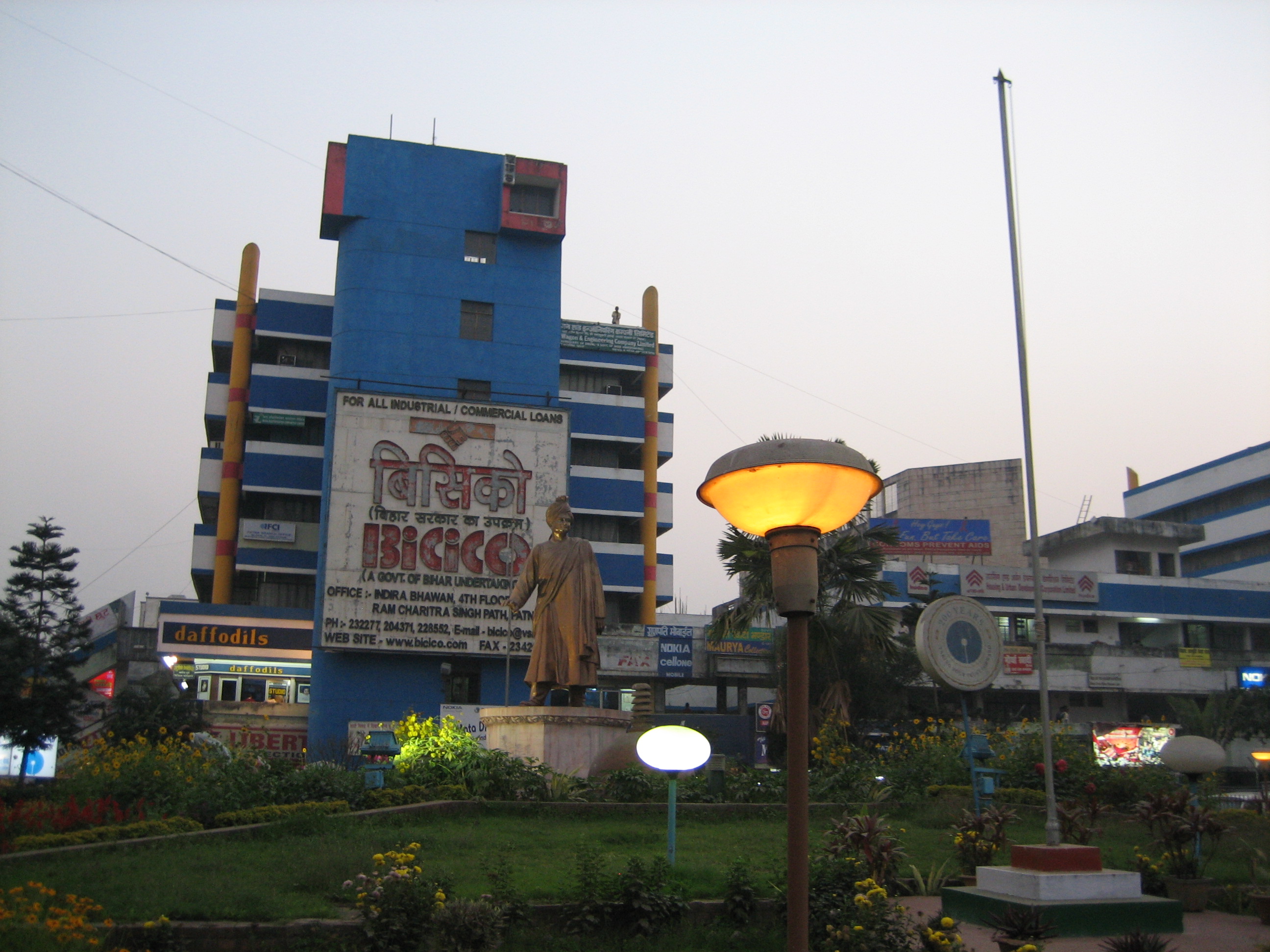
Since the 17th century, Patna has been a centre of international trade and an agricultural and textile hub, including a major silk and calico market. After gaining independence in 1947, the economy remained relatively stable, including growth in produce and manufacturing of vegetable oil. From the 1980s onwards, the economy experienced fluctuations. When liberalisation came to India in the 1990s, Patna did not attract significant global funds or foreign investment which proved a setback for the economy. Although the city had several fertiliser plants and sugar mills, due to a weakened ecosystem, many companies incurred losses and were eventually forced to close or leave the state.
The economy of Patna has seen sustained growth since 2005, in particular from the fast-moving consumer goods industry, the service sector, and Green Revolution businesses. In 2009, the World Bank ranked Patna as the second best city in India to start a business. In 2010, Patna was ranked 21st fastest-growing city in the world and fifth fastest-growing city in India, and was forecast to grow at an average annual rate of 3.72% through 2020.
Its largest exports are grain, sugarcane, sesame, and Patna rice, a local medium-grained variety. There are several sugar mills in and around Patna. Patna has been described as an important business and luxury brand centre of eastern India.
The major business districts of the city are Bander Bagicha, Exhibition Road, Gandhi Maidan Marg, Frazer Road, Indrapuri and Maurya Lok.
Many manufacturing companies, including Hero Cycles, Britannia Industries, PepsiCo, Sonalika Tractors and UltraTech Cement have established their manufacturing plants in the Patna metropolitan area. One of the world's largest leather clusters is in Fatuha, in Patna. Patna is also emerging as an information technology hub, including Tata Consultancy Services, which started operations in 2019 at a new Patna facility.
File:SBI Patna.JPG|State Bank of India- Patna Regional office at East Gandhi Maidan Marg File:Software Technology Park of India, Patna..jpg|Software Technology Park of India, Patna File:RBI Patna.JPG|Reserve Bank of India's regional office at South Gandhi Maidan Marg, Patna
Demographics
|1807–14| 312000 |1820| 100000 |1865| 284100 |1872| 158000 |1881| 170684 |1891| 165200 |1901| 134785 |1911| 136153 |1921| 119976 |1931| 159690 |1941| 196415 |1951| 283479 |1961| 364594 |1971| 475300 |1981| 813963 |1991| 1099647 |2001| 1376950 |2011| 1684222 in the river borne trade, persistent unhealthiness and repeated epidemics of plaque.
With an estimated population of 1.68 million in 2011, Patna is the 19th most populous city in India and with over 2 million people, its urban agglomeration is the 18th largest in India. Residents of Patna are referred to by the demonym Patnaite.
According to 2011 census data, Patna city had a population of 1,684,222 (before the expansion of the city limits) within the corporation limits, with 893,399 men and 790,823 women. This was a 22.3% increase compared to 2001 figures. 11.32% of the population was under six years of age, with 102,208 boys and 88,288 girls. The overall literacy rate is 83.37%, with the male literacy rate being 87.35% and female 79.89%. The sex ratio of Patna is 885 females per 1,000 males. The child sex ratio of girls is 877 per 1000 boys. The urban agglomeration had a population of 2,049,156, of which 1,087,285 are male and 961,871 are females with 82.73% literacy. Patna is the second largest city (in terms of population) in eastern India.
Roughly 0.25% of Patna's population lives in slums, which makes Patna the city with the lowest percentage of people living in slums in India. Like other fast-growing cities in the developing world, Patna suffers from major urbanisation problems including unemployment, poor public health, and poor civic and educational standards for a large section of the population. In 2015, the National Sample Survey Organisation revealed that, for females in India, Patna had the highest unemployment rate at 34.6%, and for males, it was the second highest with a rate of 8% in 2011–12.
Religion and language
According to the 2011 census of India, 86.39% of Patna's residents practice Hinduism. Islam is the second most popular at 12.27%. Christianity, Jainism, Sikhism, and Buddhism are among the other minority religions. 0.01% practice other religions and 0.49% no particular religion.
Hindi and Urdu are official languages of the state of Bihar, but many other languages are also spoken. The native language is Magadhi or Magahi, named after Magadha, the ancient name of South Bihar, and is most widely spoken. Hindi is spoken by 65.94% of the population, 18.04% Magahi, 9.67% Urdu, 3.19% Bhojpuri and 1.79% Maithili as their first language.
Administration
The Patna sub-division (Tehsil) is one of the 6 Tehsils of the Patna district. It is headed by an IAS or state Civil service officer of the rank of Sub Divisional Magistrate (SDM). The SDM of Patna Tehsil reports to the District Magistrate (DM) of Patna District.
Blocks
The Patna Tehsil is divided into 3 Blocks, each headed by a Block Development Officer (BDO). The list of Blocks is as follows:
- Patna
- Sampatchak
- Phulwari Sharif
Government
Civic administration
The civic administration of Patna is run by several government agencies and has overlapping structural divisions. At least five administrative definitions of the city are available; listed in ascending order of area: Patna division, Patna district (also the Patna Police area), the Patna Metropolitan Region (also known as Patna Planning area), "Greater Patna" or PRDA area, which adds to the PMC a few areas just adjacent to it and Patna Municipal Corporation area.
| City officials |
|---|
| Corporation Mayor |
| Corporation Commissioner |
| Divisional Commissioner |
| District Magistrate |
| Senior Superintendent of Police |
As Patna's apex body, the corporation discharges its functions through the mayor-in-council, which comprises a mayor, a deputy mayor, and other elected members of the PMC. The Mayor is usually chosen through indirect election by the councillors from among themselves. The functions of the PMC include water supply, drainage and sewerage, sanitation, solid waste management, street lighting, and building regulation. The Municipal Commissioner is the chief Executive Officer and head of the executive arm of the Municipal Corporation. All executive powers are vested in the Municipal Commissioner who is an Indian Administrative Service (IAS) officer appointed by the state government. Although the Municipal Corporation is the legislative body that lays down policies for the governance of the city, it is the Commissioner who is responsible for the execution of the policies. The Commissioner is appointed for a fixed term as defined by state statute. The powers of the Commissioner are those provided by statute and those delegated by the Corporation or the Standing Committee. As of June 2017, the BJP won PMC Mayor seat; the mayor is Sita Sahu, while the deputy mayor is Vinay Kumar Pappu. The Patna Municipal Corporation was ranked 4th out of 21 Cities for best governance & administrative practices in India in 2014. It scored 3.6 on 10 compared to the national average of 3.3. The revenue district of Patna comes under the jurisdiction of a District Collector (District Magistrate). The Collectors are in charge of the general administration, property records and revenue collection for the Central Government, and oversee the national elections held in the city. The Bihar Urban Infrastructure Development Corporation Limited (BUIDCO) and the Patna Metropolitan Area Authority, are responsible for the statutory planning and development of the Patna Metropolitan Region. Patna Metropolitan Area Authority was established in 2016. It is the superseding agency for the former Patna Regional Development Authority (PRDA), which was dissolved in 2006. In addition to the city government, numerous commissions and state authorities—including the Ministry of Tourism, the Bihar Health Department, the Bihar Water Resources Department, National Ganga River Basin Authority, Bihar State Pollution Control Board and the Bihar Public Service Commission—play a role in the life of Patnaites. As the capital of Bihar, Patna plays a major role 8n both state politics and central politics.
In October 2016, the Bihar cabinet approved the Patna Master Plan 2031, which envisages the development of a new airport at Bihta. As of August 2015, the area of Patna city (along with its urban agglomeration) is 250 km2. Patna Master 2031 is the second master plan of the city that has been passed ever, after the last plan was approved for 1961-1981. Patna master plan covers six urban local bodies - Patna Municipal Corporation, Danapur Nagar Parishad, Phulwarisharif Nagar Parishad, Khagaul Nagar Parishad, Maner Nagar Panchayat and Fatuha Nagar Parishad. The new master plan proposed to increase the area of Patna city to 1167 km2 to transform it as a metropolitan city. 5 satellite towns have also been proposed in the master plan at Bihta, Naubatpur, Punpun, Fatuha and Khusrupur.
Patna has been selected as one of the hundred Indian cities to be developed as a smart city under Government of India's flagship Smart Cities Mission. With the grade of a Smart City, Patna will have highly up-to-date and radical provisions like uninterrupted electric supply, first-rate traffic and transport system, superior health care and many other prime utilities. Under this scheme, the city will use digital technology that will act as the integral mechanism of the aforesaid facilities and thereby further elevate the lifestyle of the citizens. A special purpose vehicle company named the Patna Smart City Limited has been formed to implement the smart city projects. On 22 November 2017, Eptisa Servicios de Ingenieria SL of Spain was chosen as the project management consultant.
Politics
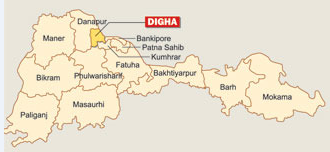
As the seat of the Government of Bihar, The city has several federal facilities, including the Raj Bhavan: Governor's house, the Bihar Legislative Assembly; the state secretariat, which is housed in the Patna Secretariat; and the Patna High Court. The Patna High Court is one of the oldest High Court in India. The Patna High Court has jurisdiction over the state of Bihar. Patna also has lower courts; the Small Causes Court for civil matters, and the Sessions Court for criminal cases. The Patna Police, commanded by Senior Superintendent of Police, is overseen by the Bihar Government's Home Department. The Patna district elects two representatives to India's lower house, the Lok Sabha, and 14 representatives to the state legislative assembly. The capital city of Patna has 8 State Legislative Assembly constituencies, which form two constituencies of the Lok Sabha (the lower house of the Parliament of India).
| City representatives (Legislators) |
|---|
| Member |
| Ravi Shankar Prasad, MP |
| Misa Bharti, MP |
| Sanjiv Chaurasiya, MLA |
| Nitin Naveen, MLA |
| Nand Kishore Yadav, MLA |
| Arun Kumar Sinha, MLA |
| Rama Nand Yadav, MLA |
| Ritlal Yadav, MLA |
| Gopal Ravidas, MLA |
| Bhai Virendra, MLA |
Utility services

Groundwater fulfills the basic needs of the people, administered by Patna Jal Parishad under Patna Municipal Corporation. The public water supply system comprises 98 tube wells that pump water directly to the distribution mains. Around 23 overhead reservoirs of which only the ones at Agam Kuan, Gulzarbagh Press, Guru Gobind Singh Hospital and High Court serve the city. The sewerage system in Patna was set up in 1936. At present, there are four sewage treatment plants at Saidpur, Beur, Pahari and Karmali Chak. In 2019, the central government has started the process Nirmal Ganga, which is to build new sewerage infrastructure at Patna's Karmalichak as well as in Barh, Naugachia and Sultanganj. The new infrastructure will be capable of preventing the flow of 67 million litre of sewage into Ganga.
As of 2011, the city's electricity consumption is about 601 kWh per capita, even though the actual demand is much higher. Electricity supply to the city is regulated and distributed by the South Bihar Power Distribution Company Limited managed by Bihar State Power Holding Company Limited (the holding company and a successor company of erstwhile Bihar State Electricity Board). The city forms the Patna Electric Supply Undertaking (PESU) Circle, which is further divided into two wings namely Patna East (consists Kankarbagh, Patna City, Gulzarbagh, Bankipore, Rajendra Nagar Divisions) and Patna West (Consists Danapur, New Capital, Pataliputra, Gardanibagh, Dak Bungalow divisions).
Direct–to–home (DTH) is available via DD Free Dish, Airtel digital TV, Dish TV, Tata Sky, Videocon d2h, Sun Direct and Reliance Digital TV. Cable companies include Darsh Digital Network Pvt. Ltd., SITI Maurya Cablenet Pvt. Ltd etc. The Conditional Access System for cable television was implemented in March 2013.
Patna comes under the Patna Telecom District of the Bharat Sanchar Nigam Limited (BSNL), India's state-owned telecom and internet services provider. Both Global System for Mobile Communications (GSM) and Code division multiple access (CDMA) mobile services are available. Apart from telecom, BSNL also provides broadband internet service. Among private enterprises, Bharti Airtel, Reliance Jio, Reliance GSM/CDMA, Idea Cellular, Aircel, Tata Teleservices (Tata DoCoMo, Virgin Mobile and Tata Indicom), Telenor (Formerly Uninor & Now Acquired by Bharti Airtel), Vodafone and Videocon Telecom are the leading telephone and cell phone service providers in the city.
Patna was the second Indian city, after Bangalore, which offered free WiFi connectivity to its citizens in February 2014. By surpassing the previous record-holder, Beijing in China, Patna's WiFi zone is the world's longest free WiFi zone, which covers a 20-km stretch from NIT Patna on Ashok Rajpath to Danapur.
Transport
Roads
Patna is about 100 km south of national East – West Highway corridor. The NH 30, NH 31 and NH 2 passes through the city. The Ashok Rajpath, Patna-Danapur Road, Bailey Road, Harding Road and Kankarbagh old bypass Road are the major corridors. Patna was one of the first places in India to use horse-drawn trams for public transport. Public transportation is provided for by buses, auto rickshaws and local trains. Auto rickshaws are said to be the lifeline of the city. BSRTC has started City bus service on all major routes of Patna. App based cab service is available within city. Patna is about 70.02KM away from Chhapra
Air transport

Patna Airport known as Lok Nayak Jayaprakash Narayan International Airport is classified as a restricted international airport. The arrival of several low-cost carriers and a number of new destinations have caused a growth in air traffic in recent years, as has an improvement in the situation with regard to law and order. For the period April to December 2009 the airport ranked first in a survey of 46 airports in the country in terms of percentage growth of domestic passengers as well as domestic aircraft movement. The Airport Authority of India (AAI) has proposed to develop a civil enclave at Bihta Air Force Station to serve as the new airport for Patna. The military airfield lies 40 km southwest of Patna, in Bihta.
Railways
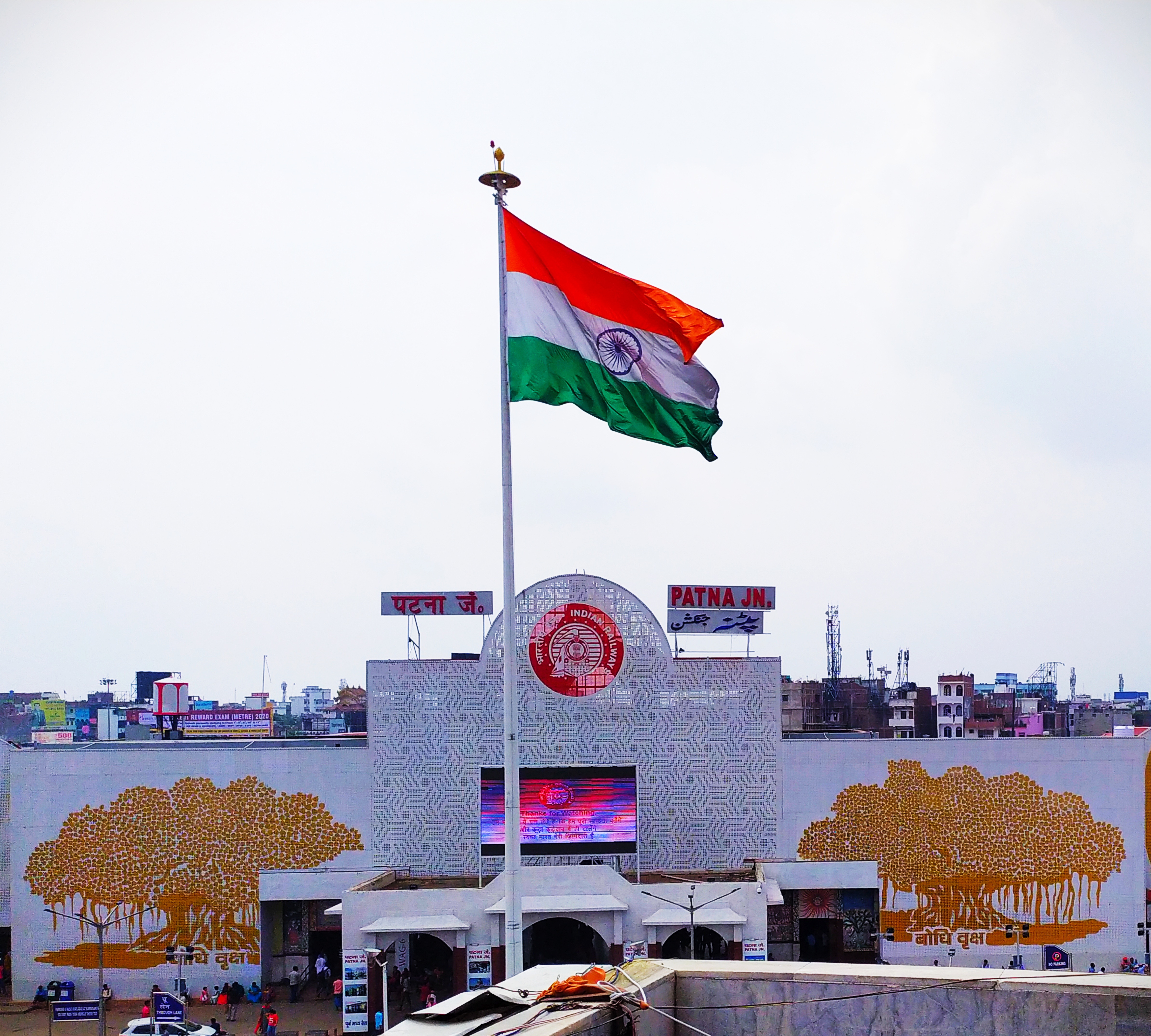
Patna is served by several railway stations within. The Patna Junction railway station is the main railway station of the city, and one of the busiest railway stations in India. Patna lies in between New Delhi and Kolkata on Howrah–Delhi main line, which is one of the busiest rail routes in India. Patna Junction is directly connected to most of the major cities in India. The city has four additional major railway stations: (adjacent to Kankarbagh), (near Bailey road), (near western outskirts) and (in Patna City area). Danapur is the divisional headquarters of East Central Railway zone's Danapur railway division. Patna is well connected with Gaya, Jehanabad, Bihar Sharif, Rajgir, Islampur, Jamalpur Junction and Munger through daily passenger and express train services. India's longest road-cum-rail bridge, Digha–Sonpur Bridge, across the Ganges River, connects Digha, Patna to Pahleja Ghat in Sonpur. The bridge was completed in 2015, and is 4.55 km long, therefore the second longest rail-cum-road bridge in India, after Bogibeel Bridge in Assam.
The city is served by several major road highways and state highways, including National Highways 19, 30, 31, and 83. Pataliputra Bus Terminal is an upcoming ISBT. Asia's longest river bridge, the Mahatma Gandhi Setu (built 1982), is in Patna and connects the city to Hajipur across the Ganga. In recent times, the bridge has been witnessing major traffic chaos and accidents due to excessive numbers of vehicles passing over it and regularly overloading the structure. A new six lane road bridge across the Ganges parallel to Mahatma Gandhi Setu is already been completed and in use which is connecting Kacchi Dargah in Patna City to Bidupur in Vaishali district, which is the longest bridge in India. Patna is well connected with roads to various major cities of Bihar like Hajipur, Munger, Jamalpur, Bhagalpur, Gaya Motihari, and Purnia.
Patna is 1015 km east from Delhi, 1802 km northeast from Mumbai,1527 km north from Hyderabad and 556 km northwest from Kolkata. Luxury bus service between Patna and several neighbouring cities is provided by the Bihar State Tourism Development Corporation and the Bihar State Road Transport Corporation. Auto rickshaws are a popular mode of transportation. Prepaid auto services operated by an all-women crew was started in 2013 in Patna, which is the first of its kind in India. Radio Taxi services are available within city limits and surrounding areas. There are also private options such as Ola Cabs.
Metro
Patna Metro is an operational rapid transit system for the city. It is owned and operated by state run Patna Metro Rail Corporation. It had been constructed on Public Private Partnership (PPP) mode, estimated to cost . It had 5 lines with a total planned length of 60 km, which will be built in 3 phases. Patna Monorail Project covering the municipal area is also underway. Recently the central government approved Patna metro rail project comprising two corridors (Danapur - Khemnichak and Patna Junction - Pataliputra Bus Terminal).[File:Patna river port1.JPG|thumb|River Port on [National Waterway 1 at Gai Ghat, Patna
|left]] The Ganges – navigable throughout the year – was the principal river highway across the vast Indo-Gangetic Plain. Vessels capable of accommodating five hundred merchants were known to ply this river in the ancient period; it served as a major trade route, as goods were transported from Pataliputra to the Bay of Bengal and further, to ports in Sri Lanka and Southeast Asia. The role of the Ganges as a channel for trade was enhanced by its natural links – it embraces all the major rivers and streams in both north and south Bihar. In recent times, Inland Waterways Authority of India has declared the stretch of river Ganges between Allahabad and Haldia National Inland Waterway and has taken steps to restore and maintain its navigability. The National Waterway-1, the longest Waterway in India, stretches 1620 km in the River Ganga from Allahabad to Haldia via Varanasi, Munger, Bhagalpur passes through Patna. This National Waterways has fixed terminal at Patna.
Culture


Patna's native language is Magahi or Magadhi a language derived from the ancient Magadhi Prakrit, which was created in the ancient kingdom of Magadha, the core of which was the area of Patna south of the Ganges. It is believed to be the language spoken by Gautama Buddha. Patna has a vibrant Bengali culture too with many Bengali stalwarts including the first Chief Minister of post-independence West Bengal, Bidhan Chandra Ray, being born here. The numerous Bengali speaking Patnaites have contributed massively into fine arts, culture, education and history of Bihar in general and Patna in particular. However, Magahi was the official language of the Mauryan court, in which the edicts of Ashoka were composed.
The name Magahi is directly derived from the name Magadhi Prakrit, and educated speakers of Magahi prefer to call it "Magadhi" rather than "Magahi".

Patna has many buildings adorned with Indo-Islamic and Indo-Saracenic architectural motifs. Several well-maintained major buildings from the colonial period have been declared "heritage structures"; others are in various stages of decay. Established in 1917 as the Bihar's first museum, the Patna Museum (पटना संग्रहालय) houses large collections that showcase Indian natural history and Indian art. The Khuda Bakhsh Oriental Library and Sinha Library are historic public libraries of Patna.
Several theatres are in or near the central part of the city, including the Bhartiya Nritya Kala Mandir, the Rabindra Parishad, Premchand Rangshala and the Kalidas Rangalaya, which is home to the Bihar art theatre. Kalidas Rangalaya also hosts the Patliputra Natya Mahotsav, a dance festival. But in the last two decades, the popularity of commercial theatres in the city has declined.
The Patna School of Painting or Patna Qalaam, some times also called Company style, is an offshoot of the well-known Mughal Miniature school of painting, which flourished in Bihar during the early 18th to the mid-20th centuries. The practitioners of this art form were descendants of Hindu artisans of Mughal painting who facing persecution under the Mughal Emperor Aurangzeb and who found refuge, via Murshidabad, in Patna during the late 18th century. The Patna painters differed from the Mughal painters, whose subjects included only royalty and court scenes, in that they included as subjects bazaar scenes, scenes of Indian daily life, local dignitaries, festivals and ceremonies, and nature scenes. The paintings were executed in watercolours on paper and on mica, but the style was generally of a hybrid and undistinguished quality. It is this school of painting that inspired the formation of the College of Arts and Crafts, Patna, under the leadership of Shri Radha Mohan, which is an important centre of fine arts in Bihar.
Bihar Government is promoting its art and culture through Madhubani arts to educate people about Bihar's rich cultural diversity.
Some well known dishes of Bihari cuisine include hi (parathas stuffed with roasted gram flour), "hi" (a spiced drink with roasted gram flour as main ingredient), hi (spicy mashed potatoes), fish curry, Bihari kebab, hi, malpua, dal pitha (Similar to momos), hi (fox nut) and hi (a type of snack).
Street foods such as samosa, chaat, jalebi, litti chokha, phuchka (a deep-fried crêpe with tamarind sauce), South Indian and Chinese cuisine are favourite among Patnaites. The Taj Hotel Patna at Budh Marg Lodipur finished construction in 2024.
Bihari Women have traditionally worn cotton sari but shalwar kameez and other western attire are gaining acceptance among younger women. Western attire has gained wide acceptance among the urban men, although the traditional dhoti and kurta are seen during festivals. Chhath, also called Dala Chhath, is a major ancient festival in Bihar. It is celebrated twice a year: once in the summer, called the Chaiti Chhath, and once about a week after Deepawali, called the Kartik Chhath. Durga Puja, held in September–October, is Patna's another important festival; it is an occasion for glamorous celebrations. Among the city's other festivals, are Saraswati Puja, Eid, Holi, Christmas, Vishwakarma Puja, Makar Sankranti, Raksha Bandhan and Rath Yatra. Cultural events include the Patna Book Fair, Patna Sahib Mahotsav, the Patna Film Festival, Bihar Diwas, Rajgir Mahotsav, Vaishali Mahotsav and the Sonepur Cattle Fair in neighbouring towns.
File:Durga Puja 2014 Patna 05.JPG|A murti, or representation, of the goddess Durga shown during the Durga Puja festival File:People Celebrating Chhath Festival.jpg|People Celebrating Chhath Festival the 2nd Day at Morning a tribute to the rising holy God Sun
Tourism
Main article: Tourism in Patna


Patna is home to many tourist attractions and it saw about 2.4 million tourists (including day visitors) in 2005. Tourists visiting the city accounted for 41% of the total number of tourists visiting Bihar although Bodh Gaya was the most popular destination for foreign visitors. The cultural heritage of Bihar is reflected in its many ancient monuments. Kumhrar and Agam Kuan are the sites of the ruins of the Ashokan Pataliputra. Didarganj Yakshi remains as an example of Mauryan art.
Takht Sri Patna Sahib is one of the Five Takhts of Sikhism and consecrates the birthplace of the tenth Guru of the Sikhs, Gobind Singh. There are five other Gurdwaras in Patna that are related to different Sikh Gurus; these are Gurdwara Pahila Bara, Gurdwara Gobind Ghat, Gurdwara Guru ka Bagh, Gurdwara Bal Leela, Gurdwara Handi Sahib, and Prakash Punj. Padri Ki Haveli, High Court, Golghar, Sultan Palace, and Secretariat Building are examples of British architecture. Gandhi Maidan is a historic ground in Patna where several freedom movement rallies took place. Newly built Buddha Smriti Park near Patna Junction is also becoming a major tourist attraction.
The Patna Planetarium (Indira Gandhi Planetarium) is in Patna's Indira Gandhi Science Complex. It claims to be one of the largest planetariums in Asia and to attract a large number of tourists. The Sanjay Gandhi Jaivik Udyan (Patna Zoo) is at Bailey Road, Raj Bhawan, Rajbanshi Nagar, and includes over 300 mammals, 300 birds, and 450 species of reptiles as of January 2019.
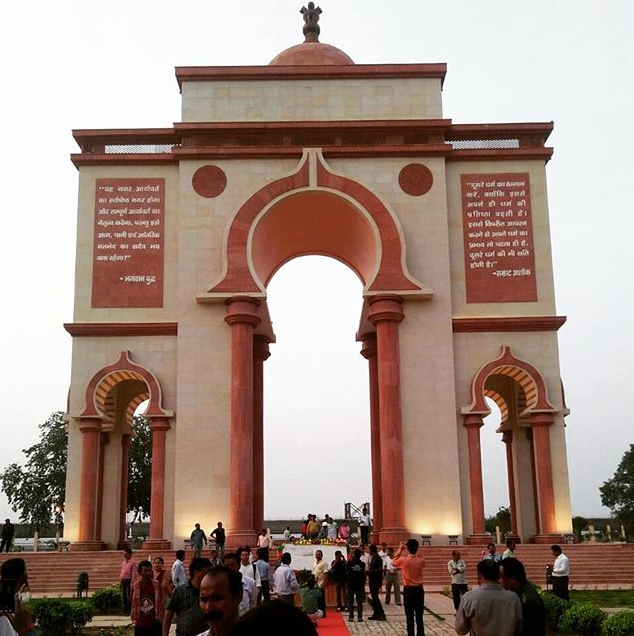
In 2015, the Bihar government has built a state-of-the-art art landmark museum in Patna at a cost of approximately 530 crores on a site of 13.9 acres at Bailey Road. 5 firms were shortlisted for the architectural design, of which the Japanese firm Maki and Associates was chosen. It is now completed and opened for all. Completed in May 2018, the Sabhyata Dwar was built with Mauryan-style architecture. It was opened to the general public in December 2018.
In 2014, the Bihar government laid the foundation of Samrat Ashok International Convention Centre. It is expected to use more steel than used in raising Eiffel Tower and Indira Gandhi International Airport. Construction of Dr. A.P.J Abdul Kalam Science City began in February 2019. The Eco Park is in Jawaharlal Nehru Marg. It has more than 3,000 varieties of plants and includes several theme parks, a restaurant, and a boat trip zone.
Education


Schools in Patna are either government-run schools or private schools. The schools are affiliated to Bihar School Examination Board (BSEB), Council for the Indian School Certificate Examinations (CISCE), National Institute of Open Schooling (NIOS), or the Central Board of Secondary Education (CBSE) boards. A number of Bengali medium schools also thrive in Patna. Hindi and English are the primary languages of instruction. A 2012 survey found 1,574 schools: of these, 78% were private unaided schools (most of them at an affordable cost), 21% were government schools and 1% were private aided.

Under the 10+2+3/4 plan, students complete ten years of schooling and then enroll in schools that have a higher secondary facility and are affiliated to the Bihar State Intermediate Board, the All-India Council for the Indian School Certificate Examinations (CISCE), the NIOS or the CBSE, where they select one of three streams: arts, commerce, or science. This is followed by either a general degree course in a chosen field of study or a professional degree course, such as law, engineering, and medicine.
Patna has important government educational institutions like Patna University, Anugrah Narayan College, Chanakya National Law University, Aryabhatta Knowledge University, Indian Institute of Technology Patna, Bakhtiyarpur College of Engineering, National Institute of Technology, Patna, Patna Science College, Patna Women's College, Patna Law College, Bihar Veterinary College, J.D. Women's College, Birla Institute of Technology, Patna, Patna Medical College Hospital, Rajendra Memorial Research Institute of Medical Sciences, Nalanda Medical College Hospital, Indira Gandhi Institute of Medical Sciences, Mahavir Cancer Sansthan, All India Institute of Medical Sciences Patna, National Institute of Fashion Technology Patna, Chandragupta Institute of Management, Development Management Institute, National Institute of Electronics & Information Technology, Patliputra University.
Patna University was established in 1917 and is the seventh oldest modern university in the Indian Sub-continent. Patna also has a variety of other universities, as well as many primary and secondary schools.
Nalanda University (also known as Nalanda International University) is an established university in Rajgir, around 100 km from Patna. The University, created as a revival of an ancient centre of learning at Nalanda, began its first academic session on 1 September 2014. It attracts students from across the globe.
Sports

As in the rest of India, cricket is popular in Patna and is played on grounds and in streets throughout the city. There are several sports grounds across the city. The Bihar Cricket Association, which regulates cricket in Bihar, is based in the city. Tournaments, especially those involving cricket, basketball, football, badminton, and table tennis, are regularly organised on an inter-locality or inter-club basis.
Moin-ul-Haq Stadium, which has a capacity of 25,000, has served as the venue for two one-day international cricket matches and several national sports events. It was home to the Bihar cricket team. Due to negligence and lack of maintenance, the stadium is in a dilapidated state and no international match has been played here since 1996. In 2013, it was announced by the Chief Minister of Bihar Nitish Kumar that an international cricket stadium will be constructed at Rajgir.
The Patna Golf Club was established on 21 March 1916, and is one of the oldest golf courses in India. It has 18 holes in a historic setting in and around Bailey Road, a 165 acres course.
Patna hosted the first ever woman's Kabaddi world cup. It was held at the Patliputra Sports Complex, Kankarbagh from 1 to 4 March 2012. Hosts India won the World Cup defeating Iran in the finals. Patna also hosts the seven league matches of Pro Kabaddi League with its home team as Patna Pirates at the Patliputra Sports Complex.
Other famous sports complexes of Patna are Bihar Military Police's Mithilesh Stadium, East Central Railway zone's indoor stadium at Digha etc.
File:Cricket (2305682483).jpg|A game of cricket in progress File:Kankarbagh Indoor Stadium.png|Kankarbagh Indoor Stadium at Patliputra Sports Complex during Pro Kabaddi League match
Media
The beginning of the 20th century was marked by a number of notable new publications. A monthly magazine named Bharat Ratna was started in Patna in 1901. It was followed by Ksahtriya Hitaishi, Aryavarta from Dinapure, Patna, Udyoga and Chaitanya Chandrika. Udyog was edited by Vijyaanand Tripathy, a famous poet of the time and Chaitanya Chandrika by Krishna Chaitanya Goswami, a literary figure of that time. The literary activity was not confined to Patna alone but to many districts of Bihar.
Magahi Parishad, established in Patna in 1952, pioneered Magadhi journalism in Bihar. It started the monthly journal, Magadhi, which was later renamed Bihan.
Many national media agencies, including the Press Trust of India and Doordarshan's regional offices, are based in the city. The Hindu, The Times of India, Hindustan Times, The Economic Times and The Telegraph are the five principal English-language daily newspapers which have Patna editions. The Pioneer and The Indian Express, though not printed in the city, are other English-language daily newspapers available in the city. The city's Hindi newspapers include Hindustan Dainik, Dainik Jagran, Dainik Bhaskar, Prabhat Khabar, Aaj and Rashtriya Sahara, all of which have editions from Patna. There are also daily Urdu newspapers like Qaumi Tanzeem, Farooqi Tanzeem, and Qaumi Duniya Daily published in Patna. There is also the Hindi and English mixed newspaper tabloid Inext.
Patna has several AM and FM radio stations, including many state-owned channels. The city hosts several radio stations, including the state-owned All India Radio's Vividh Bharati, and FM 105. The All India Radio, Patna (officially Akashvani Patna Kendra) was established in 1948.
Patna is served by several private channels.
Private FM stations
| No. | Name | Frequency | Language |
|---|---|---|---|
| 01 | Radio Mirchi | 98.3 FM | Hindi |
| 02 | Radio City | 91.1 FM | Hindi |
| 03 | Big FM | 95.0 FM | Hindi & Bhojpuri |
| 04 | Red FM | 93.5 FM | Hindi |
Notable people
Main article: List of people from Patna
References
References
- (19 June 2017). "NDA-backed Sita Sahu is first woman mayor of Patna".
- "CPRS Patna About Us". CRPS.
- "Provisional Population Totals, Census of India 2011; Cities having population 1 lakh and above". Office of the Registrar General & Census Commissioner, India.
- "Provisional Population Totals, Census of India 2011; Urban Agglomerations/Cities having population 1 lac and above". Office of the Registrar General & Census Commissioner, India.
- "52nd REPORT OF THE COMMISSIONER FOR LINGUISTIC MINORITIES IN INDIA". [[Ministry of Minority Affairs]].
- ["Demography"](https://patna.nic.in/demography/#:~:text=(Source%3A%20Census%20of%20India%202011,include%20Bengali%2C%20Urdu%20and%20Oriya.).
- "Magahi".
- "PATNA CITY Pin Code - 800008, Sampatchak All Post Office Areas PIN Codes, Search PATNA Post Office Address". ABP Live.
- "Patna Urban Region". census2011.co.in.
- "Metroverse | Harvard Growth Lab".
- (23 April 2023). "Unravelling Pataliputra". The Times of India.
- (October 2018). "The World's Cities in 2018". [[United Nations]].
- Verma, Kumod. (30 December 2001). "Gurdwara gears up for Guru's jayanti". [[The Times of India]].
- "Populations of Largest Cities in PMNs from 2000BC to 1988AD".
- "Patna Tour". cultureholidays.com.
- "Ancient Patliputra". go4patna.com.
- (2005). "History of Magadha". Veena Publication.
- (17 January 2019). "The largest city in the world and other fabulous Mauryan facts". Indian Express.
- Shrivastava, Nripendra Kumar. (2010). "Contribution Of Trade And Commerce In The Trend And Pattern Of Urban Growth Of Patna(1657-1765)". Proceedings of the Indian History Congress.
- (26 October 2020). "The Patna Collectorate: A link to city's past as a Dutch trading post".
- Singh, Rajeshwar Prasad. (1975). "The Decline Of Pātaliputra With Special Reference To Geograhical Factors". Proceedings of the Indian History Congress.
- "District Domestic Product 2004–05 to 2011–12". Directorate of Economics and Statistics, Department of Planning and Development, Government of Bihar.
- (30 March 2021). "The old Bimaru states have new boom towns. But only in pockets". ThePrint.
- "Property Prices in Patna".
- (30 June 2009). "New Delhi, Patna best cities to start a business: World Bank". The Times of India.
- Choudhoury, P. C. Roy. "Patan Devi". Dharma Universe.
- (15 October 2014). "Patna losing floral wealth to concrete jungle". The Times of India.
- (18 January 2015). "Take a walk down heritage lane – Govt initiative to create awareness about rich history next Sunday". The Telegraph.
- (10 January 2002). "History of Patna". [[Government of Bihar]].
- "STORY OF PATNA". fossendeliv.com.
- PIYUSH KUMAR TRIPATHI. (21 January 2013). "Time travel in light & sound show – Patna Museum plans programme on the lines of Red Fort in Delhi". The Telegraph.
- Fyfe, Ryan. "The Emerald Buddha". Eslteachersboard.com.
- "History in mint condition".
- (27 August 2015). "Foreign diplomats line up for Bihar elections".
- "Attractions, history of Patna". Ganges Cruises.
- (27 October 2010). "The Son of Man: Saoshyant — George Barclay, Jr. – Google Books". iUniverse.
- Schlingloff, Dieter. (1 December 2014). "Fortified Cities of Ancient India: A Comparative Study". Anthem Press.
- Megasthenes. "Indika".
- (1870). "Dictionary of Greek and Roman Biography and Mythology". Little, Brown.
- (5 November 2009). "History – Ancient History in depth: The Story of India: South India". BBC.
- Wojtilla, Gyula. (2000). "Did the Indo-Greeks occupy Pataliputra?". Akadémiai Kiadó.
- [http://www.gutenberg.org/files/2124/2124-h/2124-h.htm Pataliputra] {{webarchive. link. (4 December 2008 Record of Buddhistic Kingdoms by Fa Hein, tr. by James Legge, Chapter XXVII, Pataliputtra or Patna, in Magadha. King Ashoka's spirit-built palace and halls. The Buddhist Brahman, Radha-Sami. Dispensaries and hospitals...... '''n'''.1 Pataliputra, The Sanskrit name, means "The city of flowers." It is the Indian Florence.)
- Beal, Samuel. (1884). "Si-Yu-Ki: Buddhist Records of the Western World". Trubener & Co.
- [http://www.ncap.res.in/VLS/Publications/5_Baghakole.pdf BAGHAKOLE – NCAP] {{webarchive. link. (9 May 2015 ncap.res.in. Retrieved 5 December 2013)
- "History of Patna City Bihar Origin-Background-Significance". Hoparoundindia.com.
- (1839). "A Dictionary, Practical, Theoretical, and Historical, of Commerce and ... – John Ramsay McCulloch – Google Books".
- (1996). "Merchants, Politics, and Society in Early Modern India: Bihar, 1733–1820 – Kumkum Chatterjee — Google Books". BRILL.
- (2005). "History of Magadha". Veena Publication.
- Dalrymple, W. (2019), ''The Anarchy'' p. 87, London: Bloomsbury
- (30 December 2001). "Gurdwara gears up for Guru's Jayanti". [[The Times of India]].
- (8 January 2014). "India in Canada: Canada in India editado por Taniya Gupta, Antonia Navarro-Tejero". Cambridge Scholars.
- "Ghiyasuddin Mahmud Shah".
- (1980). "Urban Settlements in Eastern India: Entropy Changes and Pattern Analysis". Concept Publishing Company.
- Dalrymple, W.. (2019). "The Anarchy". Bloomsbury.
- (1924). "Bihar And Orissa District Gazetteers Patna – L.S.S. O'malley – Google Books". Concept Publishing Company.
- (26 June 1975). "History of Bihar". Gov.bih.nic.in.
- "In Nation's service". Go4patna.com.
- "Braj Kishore Prasad – the Forgotten Hero of Bihar". PatnaDaily.Com.
- "Feature". Pib.nic.in.
- (1989). "Agrarian Movements and Congress Politics in Bihar – Kaushal Kishore Sharma – Google Books". Anamika Prakashan.
- (28 October 2013). "Patna bombings: outlawed Islamist group blamed for fatal blasts". The Guardian.
- (4 October 2014). "33 killed as bomb blast rumour sparks stampede during Dussehra celebrations in Patna". The Times of India.
- "Patna Urban Region". Census2011.co.in.
- "Patna District : Census 2011 data". Census2011.co.in.
- (14 December 2010). "Riverbank Filtration for Water Security in Desert Countries". Springer.
- (July 2006). "CDP Patna". PATNA – Urban Development Department.
- Law, Gwillim. (25 September 2011). "Districts of India". Statoids.
- (1 January 2004). "About District". Patna.bih.nic.in.
- (29 September 2011). "Patna Maps, Bihar". Mapsofindia.com.
- "Summary Report of Patna". future of power.
- "Smart city? That sinkin' feeling Drainage hits tall claims of rain prep".
- "Patna is a saucer-shaped receptacle bounded by four interlinked rivers that can be trusted to turn turbulent".
- "Longest River Bridge in India – Mahatma Gandhi Setu – Longest River Bridge in World". Thecolorsofindia.com.
- "Hazard profiles of Indian districts". [[UNDP]].
- (29 August 2013). "Flood fear, after 38 years". The Telegraph.
- (16 March 2015). "अभी दो बार और आएगा आंधी-तूफान". inextlive.jagran.
- "climate of patna".
- "Extreme Weather Events in the Month Of September". Imd.gov.in.
- (10 January 2013). "At 1.1 °C, Patna chilliest since 1868". [[The Times of India]].
- (25 April 2015). "Unhealthy air alarm". The Telegraph.
- (24 November 2014). "Drive to check car pollution papers". The Telegraph.
- (September 2006). "Air Quality Trends and Action Plan for Control of Air Pollution from Seventeen Cities". CENTRAL POLLUTION CONTROL BOARD MINISTRY OF ENVIRONMENT & FORESTS.
- (18 April 2015). "Patna 2nd most polluted city after Delhi?". The Times of India.
- (21 May 2015). "Pollution report comes as a breath of fresh air". The Telegraph.
- "Patna Air Quality Index (AQI) : Real-Time Air Pollution".
- (28 May 2010). "City's air quality "dangerous"". The Times of India.
- (31 March 2013). "High air pollution in Patna, cardiac ailments' risk up". The Times of India.
- (30 December 2014). "Fog impacts air, train traffic: 13 flights, 74 trains cancelled". The Times of India.
- (7 September 2024). "Swachh Vayu Sarvekshan 2024".
- (30 June 2009). "New Delhi, Patna best cities to start business: World Bank". [[The Times of India]].
- "World's fastest growing urban areas (1)". City Mayors.
- (25 October 2011). "Deadline extended for sugar mills auction". [[The Times of India]].
- (13 September 2011). "Patna emerging luxe centre in eastern India". IBN Live.
- (14 July 2019). "Ravi Shankar Prasad opens new TCS centre in Patna". The Times of India.
- Kumari, Preeti. (1 January 2006). "Television and Development of Women". Mittal Publications.
- "India-historical demographical data of the urban centers". populstat.
- "Census of India 2001 (Provisional) Slum Population in Million Plus Cities (Municipal Corporations): Part A". Office of the Registrar General & Census Commissioner, India, New Delhi.
- (17 March 2013). "Patnaite makes it to records book twice with collection of editorials".
- [http://www.hindustantimes.com/India-news/Patna/Dual-entry-for-Patnaite-in-Limca-book/Article1-1051712.aspx Dual entry for Patnaite in Limca book] {{webarchive. link. (18 August 2013 ''[[Hindustan Times]]'' (Patna). Retrieved 28 April 2013)
- "Patna City Census 2011 data". census2011.co.in.
- "Patna Urban Region". census2011.co.in.
- (16 February 2016). "Government announces India's 10 dirtiest cities: Things you need to know". India Today.
- "City Mayors: Largest Indian cities".
- (12 December 2011). "Liveability Index 2011, The Best Cities in India". Institute of Competitiveness.
- (23 May 2015). "Unemployment rate: Lucknow tops list for men, Patna for women". The Indian Express.
- (2011). "Table C-01 Population by Religion: Bihar". [[Registrar General and Census Commissioner of India]].
- (2011). "Table C-16 Population by Mother Tongue: Bihar (Town)". [[Registrar General and Census Commissioner of India]].
- (13 February 2014). "Growth goes west, south & green Master plan to add more areas". The Telegraph.
- (13 August 2014). "Notification No. 337, dated 13th August, 2014.". UD&HD, Government of Bihar.
- Dipak Mishra. (4 September 2006). "Patna 2021: Master Plan for mega expansion". The Times of India.
- (13 June 2018). "New civic boss takes charge".
- (2 August 2015). "Major shuffle with eye on elections – 43 IPS, 46 IAS officers face shift orders". The Telegraph.
- (1 January 2018). "पटना के डीएम संजय अग्रवाल हटे, गया के डीएम कुमार रवि पटना के नए डीएम".
- "मानवजीत सिंह ढिल्लो बने पटना के नए एसएसपी".
- (20 June 2017). "Sita Sahu first woman mayor of Patna".
- PIYUSH KUMAR TRIPATHI. (17 June 2014). "Mayor faces no-trust motion heat". The Telegraph.
- (13 December 2014). "Patna Municipal Corporation Commissioner suspended; BJP attacks Janta Dal (United)". Economic Times.
- "Annual Survey of India's City-Systems". Janaagraha Centre for Citizenship and Democracy.
- "Revenue – Government of Bihar". gov.bih.nic.in.
- L.S.S. O'malley. (1924). "Bihar And Orissa District Gazetteers Patna". Concept Publishing Company, 1924 – Patna (India : District).
- (27 April 2017). "SHORT NOTICE INVITING QUOTATION".
- "Patna master plan gets committee push".
- Pranav Chaudhary. (31 August 2014). "Patna population likely to be over 60 lakh by 2031". The Times of India.
- (12 March 2014). "Why the youth connect with Narendra Modi". rediff.com.
- "Cabinet OKs Patna master plan, paves way for big bulidings [sic], new airport".
- (November 2016). "पटना मास्टर प्लान 2031 मेट्रोपोलिटन कमेटी नक्शा पास करेगी".
- (12 August 2015). "Master plan for Patna to be unveiled soon". The Economic Times.
- "Patna zonal plan will be part of the master plan".
- (26 November 2017). "Patna master plan work gathers pace".
- (12 August 2015). "Masterplan to Develop Patna as a Metropolitan Soon". NDTV.com.
- (24 June 2017). "Smart City: Patna to get a grand makeover".
- "Spanish firm for smart city".
- "ABOUT PATNA HIGH COURT". The High Court of Judicature at Patna.
- "History". ecourts.gov.in.
- RAHI GAIKWAD. (9 October 2013). "Patna High Court acquits all 26 in Dalit massacre case". The Hindu.
- PIYUSH KUMAR TRIPATHI. (20 April 2014). "Rural Patna defeats urban in EVM hits". telegraphindia.com.
- (19 October 2020). "Mired in civic mess, voters vent ire on netas in Patna". The Times of India.
- (17 May 2014). "Bihar dumps Lalu and Nitish for BJP". [[The Hindu]].
- "General Election to Parliamentary Constituencies: Trends & Results June-2024 Parliamentary Constituency 31 - Patliputra (Bihar)".
- (10 November 2020). "Sanjiv Chaurasia of BJP wins".
- (10 November 2015). "Only 3 of 10 varsity teachers emerge winners". The Times of India.
- (10 November 2020). "Gopal Ravidas of CPIMLL Wins".
- (8 November 2015). "Bihar poll results: Complete list of winners". IBNLive.
- PIYUSH KUMAR TRIPATHI. (13 December 2011). "24x7 water in pipeline". [[The Telegraph (Calcutta)]], Patna.
- "14 PATNA.cdr – cpheeo". cpheeo.nic.in.
- "Patna: Historic Past, Urban Future". urbannewsdigest.
- (2 February 2014). "PMC go-ahead for sewerage network". [[The Telegraph (Calcutta)]], Patna.
- (15 February 2014). "Funds to clean Ganga litter". [[The Telegraph (Calcutta)]], Patna.
- (18 February 2019). "Bihar gets Nirmal Ganga push, Patna riverfront! PM Narendra Modi unveils important infrastructure projects". The Financial Express.
- Kohli, Gayrajan. (30 December 2014). "Patna: the City That Can Turn On Solar Energy in Bihar". Abcofsolar.com.
- "Energy-bills:Patna: The South Bihar Power Distribution Company Limited (S". [[The Times of India]].
- (2 November 2012). "Bihar State Electricity Board unbundled into five companies – Times of India". [[The Times of India]].
- (26 August 2013). "Patna Electric Supply Undertaking "maintains" power cuts, denizens suffer – The Times of India". [[The Times of India]].
- "Patna Electricity Supply Unit (PESU)". Go4patna.com.
- (11 October 2014). "Pesu seeks new supply division". The Telegraph.
- Piyush Kumar Tripathi. (12 March 2013). "Get set or go blank". Telegraphindia.com.
- (17 October 2011). "Darsh Digital Selects NDS to Launch Digital Cable TV Platform in India". Business Wire.
- (4 April 2013). "Cable TV digitization: Bihar govt to seek deadline extension — The Times of India". [[The Times of India]].
- (8 March 2013). "Patnaites rush to get Set Top Box installed before Mar 31 – The Times of India". [[The Times of India]].
- "Sub: Decisions taken in General Body Meeting of SNEA (I) Patna Telephone District on issues related to working culture in Patna Telephone.".
- (12 March 2011). "RCom launches 3G services in Bihar – The Times of India". [[The Times of India]].
- [http://bihar.bsnl.co.in/ BSNL Bihar homepage] {{webarchive. link. (10 April 2009 12 April 2014)
- (19 February 2015). "Videocon to Launch 4G Mobile Services in Bihar, Uttar Pradesh by December". ndtv.com.
- Piyush Kumar Tripathi. (4 February 2012). "Bihar mobile users queue up for clarity". Telegraphindia.com.
- (8 December 2010). "Recommendations on national broadband plan". Telecom Regulatory Authority of India.
- (21 February 2014). "After Bangalore, Patna Launches Free Public WiFi Stretch. It's 20 Km Long!". Nextbigwhat.com.
- (20 February 2014). "Bihar beats Beijing: Nitish Kumar unveils world's longest Wi-Fi zone".
- (20 February 2014). "World's longest free Wi-Fi zone in Patna – The Times of India". [[The Times of India]].
- (9 April 2014). "Wi-Fi checks in, partially". [[The Telegraph (Calcutta)]], Patna.
- (23 September 2008). "Trams in Patna". [[The Times of India]].
- (2 August 2011). "Autos lifeline of city". [[The Times of India]].
- (15 May 2011). "Colourful buses start plying in Patna". [[The Times of India]].
- (28 July 2011). "AC city buses to ply from early August". [[The Times of India]].
- Piyush Kumar Tripathi, [https://www.telegraphindia.com/bihar/ola-city-taps-app-amp-go-habit/cid/1357476 "Ola! City taps app & go habit"] {{Webarchive. link. (8 April 2019 , ''The Telegraph'' (Calcutta), 18 May 2016)
- "All we hear is Radio Taxi". The Hindu (18 August 2014).
- (19 September 2012). "Patna airport deadline extended to Oct 31". Hindustan Times.
- (9 June 2010). "Patna airport notches No. 1 spot in air traffic, passenger growth". The Times of India.
- Verma, Sanjeev Kumar. (9 June 2010). "Traffic, flyers' flow grow at Patna airport". [[The Times of India]].
- (10 March 2015). "AAI to develop Bihta airport for international operations". The Times of India.
- (10 December 2013). "Easy climb at railway station in new year". The Telegraph.
- (13 July 2013). "90 trains delayed or diverted after coal wagons derail in Bihar". The Telegraph.
- (9 November 2009). "Along the Path – The Meditator's Companion to the Buddha's Land". Pariyatti.
- "Ganga bridge bonanza New projects to ease travel hassle".
- Bhelari, Amit. (8 March 2012). "New deadline for rail bridge". The Telegraph, 8 March 2012.
- (12 October 2009). "India's longest rail-cum-road bridge to come up in Bihar". Hindustan Times.
- (3 July 2011). "Digha bridge cost likely to jump by Rs 1,000 cr". [[The Times of India]].
- "National Highway 19". Mapsofindia.com.
- "National Highway 30". Mapsofindia.com.
- "National Highway 31". Mapsofindia.com.
- "National Highway 83". Mapsofindia.com.
- (16 May 2015). "Broken railings, vibrations make Patna's Gandhi Setu commuters' nightmare". The Times of India.
- (5 April 2015). "Nitish blasts Centre over roads". The Telegraph.
- (17 July 2015). "Cabinet OKs new bridge on Ganga". The Times of India.
- (4 May 2007). "Road distance chart for Patna". Mapsofindia.com.
- (11 December 2011). "Luxury bus service between Bihar and Jharkhand from Monday". The Hindu.
- (1 September 2009). "Patna: 23,000 auto-rickshaws on strike". NDTV.
- Jha, Giridhar. (28 February 2014). "Women auto drivers impress Dutch envoy in Bihar".
- (14 July 2013). "An all-woman bank to open in Patna". [[The Times of India]] (Patna).
- (14 November 2014). "Bihar fast-tracks Patna Metro rail project". Zee News.
- "Long awaited proposal of Patna Metro Rail project gets CM's nod". [[Daily News & Analysis]].
- (23 October 2013). "Patna Metro will run in 3 phase". Dainik Jagran.
- source needs updated
- Yang, Anand A. (1998). "Bazaar India: Markets, Society, and the Colonial State in Gangetic Bihar". University of California Press.
- (15 March 2012). "National Waterways-1". Water Resources Information System (Govt. of India).
- (21 April 2008). "Inland Water Transport Sector". Inland Waterways Authority of India.
- South Asian folklore: an encyclopedia: Afghanistan, Bangladesh, India, By Peter J. Claus, Sarah Diamond, Margaret Ann Mills, Routledge, 2003, p. 203
- Norm Phelps. (2004). "The Great Compassion: Buddhism and Animal Rights". Lantern Books, 2004.
- [[A. L. Basham. Basham A.L.]], ''[[The Wonder that was India]]'', Picador, 2004, pp.394
- Jain Dhanesh, [[George Cardona. Cardona George]], ''The Indo-Aryan Languages'', pp449
- (19 November 2009). "Hidden treasures". India Today.
- Banjot Kaur Bhatia, TNN. (26 January 2015). "A walk through Patna heritage sites". The Times of India.
- B K Mishra, TNN. (24 April 2014). "Renovation of Patna University heritage buildings starts". The Times of India.
- (24 March 2013). "Patna heritage bungalows dismantled for Rs 360cr museum". The Economic Times.
- "Directorate of Museum". Youth, Arts and Culture Department, Government of Bihar.
- "KHUDA BAKHSH ORIENTAL PUBLIC LIBRARY". Ministry of Culture, Government of India.
- (22 August 2013). "Historic Sinha library struggling for survival". The Times of India.
- (4 February 2012). "Dual delights on first night of theatre festival – Patliputra Natya Mahotsav starts in capital; 34 dramas and 11 street plays lined up for six days". The Telegraph.
- (7 March 2011). "Theatre back to centrestage in the state". India Today.
- Janaki Bhatt. (24 February 2001). "Patna kalam Death of an art tradition". The Tribune.
- AMIT SHEKHAR. (14 June 2012). "Fade-out tale of art school – Artists remember style of indigenous painting, narrate days of its glory and decline". The Telegraph.
- (5 November 2019). "Patna just got a Madhubani makeover, and it's a new city altogether". The Times of India.
- Priyanshi Lal. (25 September 2014). "10 Bihari cuisines you must try at least once! (view pics)". indiatvnews.
- (5 November 2012). "Any Samosa Chutney Left?". Outlook India.
- (9 November 2014). "Patna ke samose". DB Star, [[Dainik Bhaskar]].
- Capital Market. (1 December 2020). "Indian Hotels gains on signing three new Taj Hotels". Business Standard India.
- (13 August 2012). "Dress diktat with safety pinch". The Telegraph.
- (August 2024). "Diamond Social Science". Saraswati House Pvt Ltd.
- (8 November 2013). "Bihar govt. to provide free electricity for "Chhath Puja" in public places". The Hindu.
- (9 October 2012). "Durga Puja: Patna set to turn into city of temples". The Times of India.
- (2 October 2014). "Durga Puja in Full Swing in Patna; Pandals Open". PatnaDaily.com.
- Market Pulse. "Bihar's annual tourist statistics report, January, 2005 to December, 2005". Market Research Division, Government of India.
- "Tourism". Patna.bih.nic.in.
- "Holy Takhats". Shiromani Gurdwara Parbandhak Committee.
- "Gurdwara Pahila Bara". Gurbaani.com.
- "Gurdwara Gobind Ghat". Takhatpatnasahib.com.
- "Gurdwara Guru ka Bagh". Takhatpatnasahib.com.
- "Gurdwara Bal Leela". Takhatpatnasahib.com.
- "Gurdwara Handi Sahib". Takhatpatnasahib.com.
- (10 September 2018). "Nitish emerges, launches Sikh centre". www.telegraphindia.com.
- Pandey, Shweta. (14 December 2023). "These are famous places to visit in Patna, definitely visit them once.". Prabhat Khabar.
- "Planetarium".
- "Patna Zoo {{pipe}} Home".
- Our Correspondent. (10 July 2013). "First brick for heritage home". Telegraphindia.com.
- "Nitish lays foundation of new museum in Patna". Bihartimes.in.
- "Shortlist selected for museum in Patna". World Architecture News.
- "Bihar Chief Minister Nitish Kumar Inaugurates 'Bihar Museum'".
- (2 December 2018). "गेटवे ऑफ इंडिया से छह मीटर ऊंचे 'सभ्यता द्वार' का अब सभी कर सकेंगे दीदार". Dainik Jagran.
- (24 February 2019). "Work on APJ Abdul Kalam Science City to begin this month {{!}} Patna News". The Times of India.
- (23 May 2015). "Class XI admission process begins in many schools". The Times of India.
- Dixon, Pauline. (2013). "International Aid and Private Schools for the Poor: Smiles, Miracles and Markets". Edward Elgar Publishing, 2013.
- Baladevan Rangaraju, Professor [[James Tooley]], Dr [[Pauline Dixon]]. [http://indiai.org/patna-urban-survey-report "The Private School Revolution in Bihar: Findings from a survey in Patna Urban"] {{webarchive. link. (19 June 2012)
- (12 June 2013). "NIOS declares results, invites complaints". The Times of India.
- (3 July 2011). "IIT success tips for parents". The Telegraph.
- "BIT Patna".
- (13 July 2013). "35 locals make it to NIFT-Patna's 6th batch". [[The Times of India]] (Patna).
- (4 August 2014). "No appointment in Patna University since 2003". The Times of India.
- (19 September 2014). "Patna: Sushma Swaraj inaugurates Nalanda University". Mid-Day.
- PTI. (10 October 2013). "India signs MoUs with 7 countries for Nalanda University {{pipe}} Business Line". Thehindubusinessline.com.
- (23 December 2015). "Ishan Kishan is a mixture of MS Dhoni and Adam Gilchrist". IBNLive.
- (12 August 2015). "BCCI to give money, Election of Bihar Cricket Association to be held within 60 days 12728696". Jagran.com.
- "Profile of stadium in Yahoo Cricket website".
- "Bihar's "neglected" Moin-Ul-Haq Stadium waiting to host international cricket match since 19 years". Iamin.in.
- (2 June 2013). "Bihar government plans world-class stadium – Times of India". [[The Times of India]].
- (11 April 2013). "Golf gains ground among youngsters – Times of India". [[The Times of India]].
- "Patna Golf Club". [[Patna Golf Club]].
- Kumar, Roshan. (1 March 1999). "Women's World Cup begins". Telegraphindia.com.
- [https://archive.today/20120711211127/http://ibnlive.in.com/generalnewsfeed/news/stage-set-for-first-world-cup-womens-kabaddi-championship/969313.html Stage set for first wc women's kabaddi championship] ibnlive 2 March 2012
- [http://tehrantimes.com/sports/96082-iranian-women-second-in-kabbadi-world-cup Hosts India won the World Cup defeating Iran in the finals.] {{webarchive. link. (18 April 2012 Tehran Times 5 March 2012)
- (8 June 2014). "Patna Pirates to play in pro-kabaddi league". The Times of India.
- (8 February 2013). "BMP stadium to have synthetic track – Times of India". [[The Times of India]].
- (January 2015). "ECR GM opens indoor stadium at Digha, Patna – Times of India". [[The Times of India]].
- ''Bihar ki Sahityik Pragati'', Bihar Hindi Sahitya Sammelan, Patna 1956, p. 73
- [[Qeyamuddin Ahmad. Ahmad Qeyamuddin]], ''Patna Through the ages: Glimpses of History, Society and Economy, Commonwealth Publishers'', New Delhi, 1988
- ''Jayanti Smarak Granth'', pp. 583–585
- (26 July 2007). "Indo-Aryan Languages – Google Books". Routledge.
- "Information and Public Relation Department-Bihar". Prdbihar.in.
- "Newspapers in Patna". Go4patna.com.
- Saha, Ananya. (23 January 2014). "Dainik Bhaskar enters Bihar with edition in under-penetrated Patna – News – Media – Campaign India". Campaignindia.in.
- "inext bike athon bicycle marathon in patna on 1st December 2013 {{pipe}} Biharplus". Biharplus.in.
- (29 December 2009). "50 not out, delight in Patna AIR". The Times of India.
This article was imported from Wikipedia and is available under the Creative Commons Attribution-ShareAlike 4.0 License. Content has been adapted to SurfDoc format. Original contributors can be found on the article history page.
Ask Mako anything about Patna — get instant answers, deeper analysis, and related topics.
Research with MakoFree with your Surf account
Create a free account to save articles, ask Mako questions, and organize your research.
Sign up freeThis content may have been generated or modified by AI. CloudSurf Software LLC is not responsible for the accuracy, completeness, or reliability of AI-generated content. Always verify important information from primary sources.
Report