From Surf Wiki (app.surf) — the open knowledge base
Passive intellect
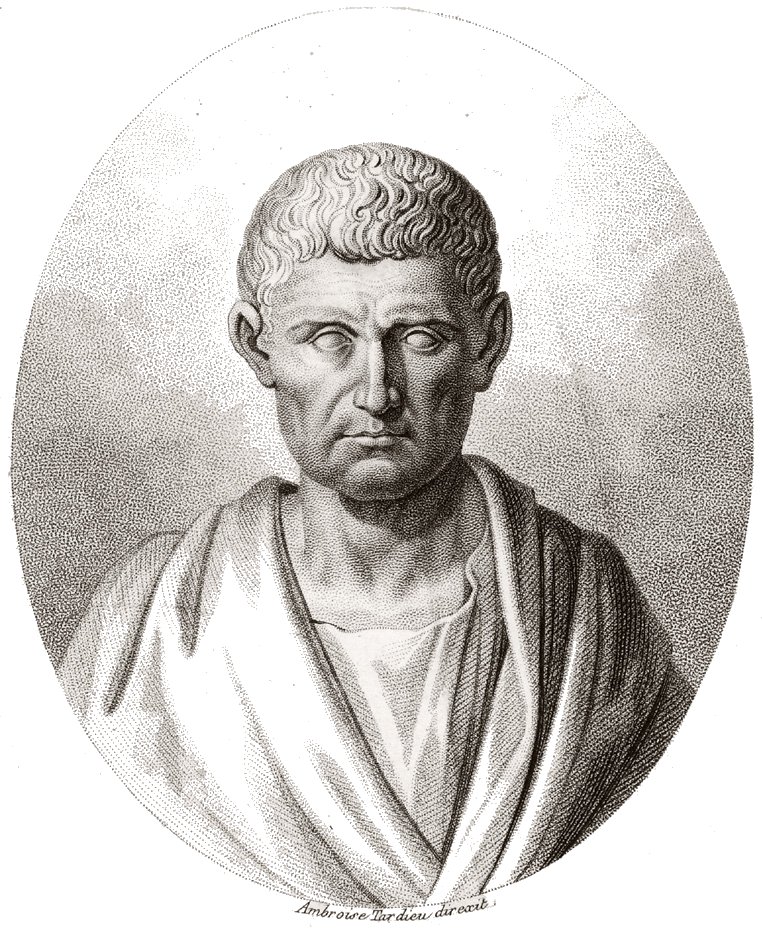
Aristotle's conception
Aristotle gives his most substantial account of the passive intellect (nous pathetikos) in De Anima (On the Soul), Book III, chapter 4. In Aristotle's philosophy of mind, the passive intellect "is what it is by becoming all things." By this Aristotle means that the passive intellect can potentially become anything by receiving that thing's intelligible form. The active intellect (nous poietikos) is then required to illuminate the passive intellect to make the potential knowledge into knowledge in actuality, in the same way that light makes potential colors into actual colors. The analysis of this distinction is very brief, which has led to dispute as to what it means.
Interpretations
Greek thought
While Greek commentators such as Alexander of Aphrodisias and Themistius were broadly silent on the active intellect (debate over this would only become heated in the thirteenth-century Christian West in the context of debates over whether Avicenna or Averroes provided the account of the working of the intellect that best cohered with Christian doctrine), they provided a great deal of commentary on the nature of the passive intellect. For instance, to Alexander of Aphrodisias (who coined for this power the term 'material intellect', a name later taken up by Averroes) the passive intellect was a separate intellect from the active.
Averroes and Aquinas
Later philosophers, including Averroes and St. Thomas Aquinas, proposed mutually exclusive interpretations of Aristotle's distinction between the active and passive intellect. Other terms used are "material intellect" and "potential intellect", the point being that the active intellect works on the passive intellect to produce knowledge (acquired intellect), in the same way that actuality works on potentiality or form on matter.
Averroes held that the passive intellect, being analogous to unformed matter, is a single substance common to all minds, and that the differences between individual minds are rooted in their phantasms as the product of the differences in the history of their sense perceptions. Aquinas argues against this position in Disputed Questions on the Soul (Quaestiones disputatae de Anima), asserting that, while the passive intellect is one specifically, numerically it is many, as each individual person has their own passive intellect.
In Islamic philosophy
Main article: Aql bi al-Quwwah
Passive intellect is identical with Aql bi al-Quwwah in Islamic philosophy. Aql bi-al-Quwwah, defined as reason, could abstract the forms of entities with which it is finally identified. For Farabi, the potential intellect becomes actual by receiving the form of matter. In other words, Aql al-Hayulani tries to separate the forms of existents from their matter. The form become identical with Aql. Farabi also recognised the potential intellect as part of soul.
Hegel
Recalling the tradition inaugurated by Al-Farabi and then by Averroes' monopsychism, Hegel also stated that passive intellect is the universal soul, the universal substance, immaterial, separate from the individual and formless ("is potentially all things") that is able to particularise and realise the Spirit in any individual subject. While this individuation is taking place, it always remains itself, that is to say immaterial and universal, without any mixture with body's matter: in other words, according to Moses Narboni, the unique intellect "is with the body, but not in the body."
References
Sources
- Commentarium magnum in Aristotelis De anima libros, ed. Crawford, Cambridge (Mass.) 1953: Latin translation of Averroes' long commentary on the De Anima
- Averroes (tr. Alain de Libera), L'intelligence et la pensée, Paris 1998: French translation of Averroes' long commentary on book 3 of the De Anima
References
- Aristotle, ''De Anima'', Bk. III, Ch. 5 (430a10-25).
- Nicolas, S., Andrieu, B., Croizet, J.-C., Sanitioso, R. B., & Burman, J. T. (2013). [http://www.sciencedirect.com/science/article/pii/S0160289613001232 Sick? Or slow? On the origins of intelligence as a psychological object.] ''Intelligence, 41''(5), 699–711. doi:10.1016/j.intell.2013.08.006 (This is an [[open access]] article, made freely available by [[Elsevier]].)
- Kaufman, Alan S.. (2009). "IQ Testing 101". Springer Publishing.
- {{harv. Craig. 1998
- {{harv. Chase. 2008
- "The Dialectic of 'Soul' in Ford Madox Ford's The Soul of London".
- Antonio Lombardi ([[University of Bari]]). (2023). "Trascendenza del pensiero, impersonalità della coscienza. Hegel, Th. H. Green e la critica di A. Seth Pringle-Pattison". [[University of Trento]].
This article was imported from Wikipedia and is available under the Creative Commons Attribution-ShareAlike 4.0 License. Content has been adapted to SurfDoc format. Original contributors can be found on the article history page.
Ask Mako anything about Passive intellect — get instant answers, deeper analysis, and related topics.
Research with MakoFree with your Surf account
Create a free account to save articles, ask Mako questions, and organize your research.
Sign up freeThis content may have been generated or modified by AI. CloudSurf Software LLC is not responsible for the accuracy, completeness, or reliability of AI-generated content. Always verify important information from primary sources.
Report