From Surf Wiki (app.surf) — the open knowledge base
Passive house
High-performance energy-efficiency building standard

High-performance energy-efficiency building standard
Passive house (Passivhaus) is a voluntary building performance standard for very high energy efficiency and thermal comfort that substantially reduces a building’s carbon footprint. Buildings certified to the standard are ultra-low energy and typically require very little energy for space heating or cooling. The approach is used for housing and for non-residential buildings such as offices, schools, kindergartens and healthcare facilities. Energy efficiency is integral to architectural design rather than an add-on. Although most common in new construction, the principles are also applied in deep renovations.
As of January 2025, projects certified by the Passive House Institute (PHI) comprise over 47,400 units with about 4.32 million m² of treated floor area (TFA) worldwide; the public PHI database lists nearly 6,000 projects. In North America, the Passive House Institute US (PHIUS) reported 500+ total certified projects and ~1.6 million ft² certified in 2024 alone, with 4.4 million ft² design-certified that year. While early adoption concentrated in German-speaking countries and Scandinavia, certified projects are now documented across diverse climate zones, including hot-humid and tropical regions.
History
The term passive house was used in the 1970s for buildings emphasizing passive solar strategies; since the 1990s it denotes meeting the quantified PHI certification criteria (space conditioning, primary energy, airtightness and comfort requirements). The standard originated from a 1988 discussion between Bo Adamson (Lund University) and Wolfgang Feist (then at the Institute for Housing and Environment, Darmstadt), followed by research supported by the state of Hesse.
North American “superinsulation” pioneers of the 1970s (e.g., the Saskatchewan Conservation House and the Leger House) provided important technical precursors, including heat-recovery ventilation and airtightness testing.
First examples
Four terraced houses in Darmstadt-Kranichstein (1990–1991) are widely cited as the first built to what became the Passive House standard.
Further implementation
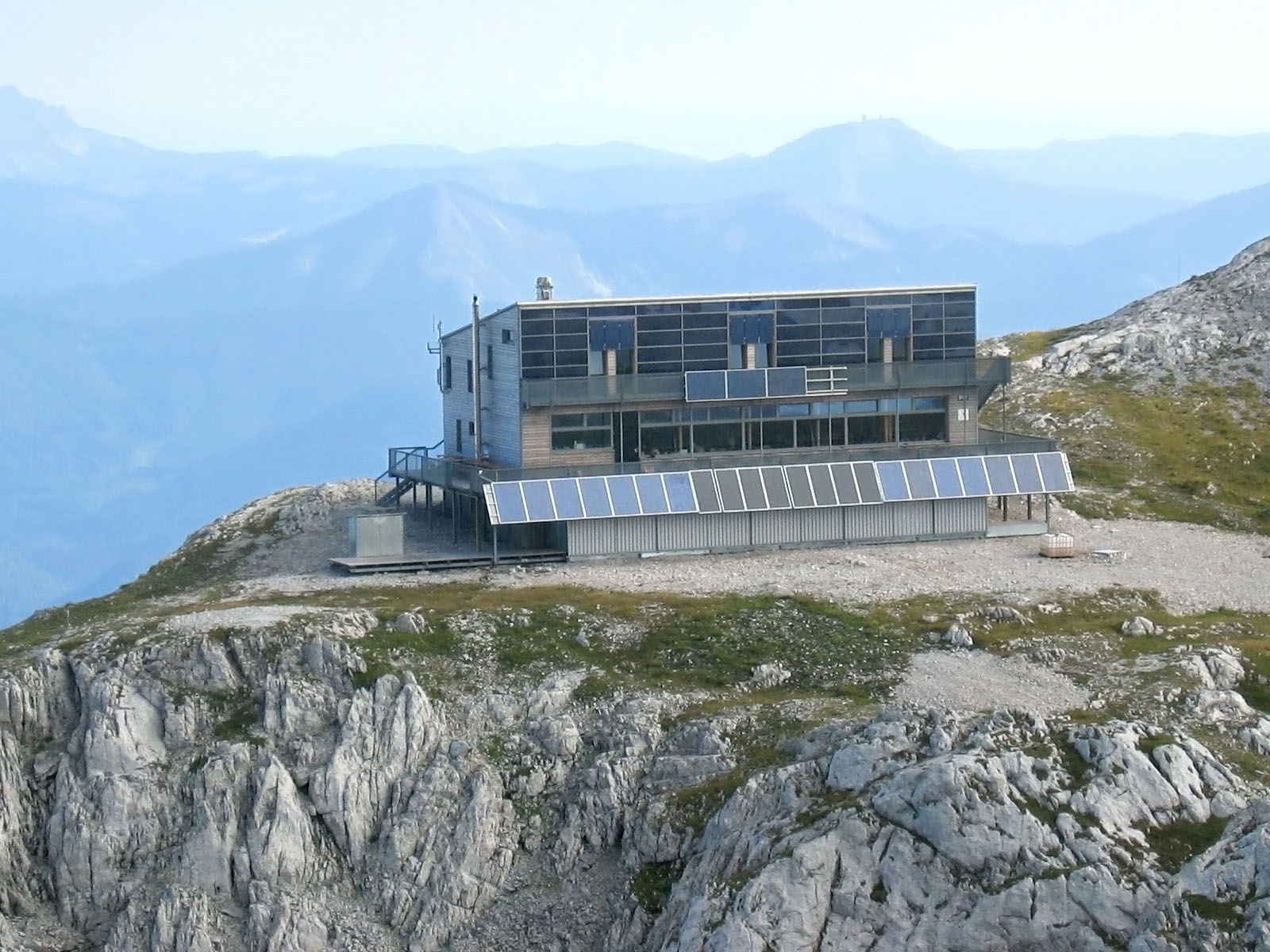

The Passivhaus-Institut (PHI) was founded in 1996 in Darmstadt to develop, promote and certify to the standard. By 2010 an estimated 25,000+ Passive House buildings existed worldwide.{{cite news |first=Elisabeth
The concept has since been demonstrated at scale. Gaobeidian, China, hosts what is reported as the world’s largest Passive House development (Railway City), with several hundred thousand m² of certified area built in phases since 2019. The world’s tallest certified Passive House building is the 88 m Bolueta tower in Bilbao, Spain (2018).
In the United States, Katrin Klingenberg’s 2003 “Smith House” (Urbana, IL) catalyzed a movement that led to the creation of PHIUS (2007). PHIUS has since certified hundreds of projects; New York City’s Park Avenue Green (2019) was recognized as North America’s largest Passive House affordable housing project at the time.
In the UK health sector, the Passivhaus-certified Foleshill Health Centre (Coventry, opened 2021) demonstrated substantial energy savings in operation and a replicable delivery model for NHS facilities.
Standards

While techniques such as superinsulation predate the standard, Passive House (PHI) specifies quantitative performance criteria and quality assurance. Key requirements include (abridged):
- Annual space heating (and, in suitable climates, cooling) demand ≤ 15 kWh/m2/a or peak heat load ≤ 10 W/m2, calculated with the PHPP using local climate data.
- Airtightness: n50 ≤ 0.6 h⁻¹ at ±50 Pa (blower-door test).
- Efficient mechanical ventilation with heat recovery (typically ≥75% sensible efficiency).
- Whole-building primary energy/renewable energy limits as defined by PHI (see PHI documentation).
Standards in the US: PHI vs. PHIUS+
Two related but distinct standards operate in North America:
- PHI (Darmstadt): the original international Passive House standard and certification system using PHPP and PHI quality assurance.
- PHIUS+ (Chicago): climate-specific performance targets (CORE/ZERO/REVIVE families) with on-site QA/QC by accredited raters and verifiers; criteria are optimized for carbon and cost within each North American climate zone. The two programs use different energy models and protocols and certify independently.
Construction costs
Upfront costs vary by market, building type and experience of the delivery team. Reported premiums have ranged from ~5–10% in Germany, the UK and the US (with reductions as supply chains mature), partially offset by downsized or eliminated conventional heating/cooling systems and lower operating costs. Delivery at parity with standard code buildings has been demonstrated in some German multifamily projects (e.g., Vauban, Freiburg). High-latitude locations (60°N) can face higher envelopes and glazing costs to meet targets.
Design and construction
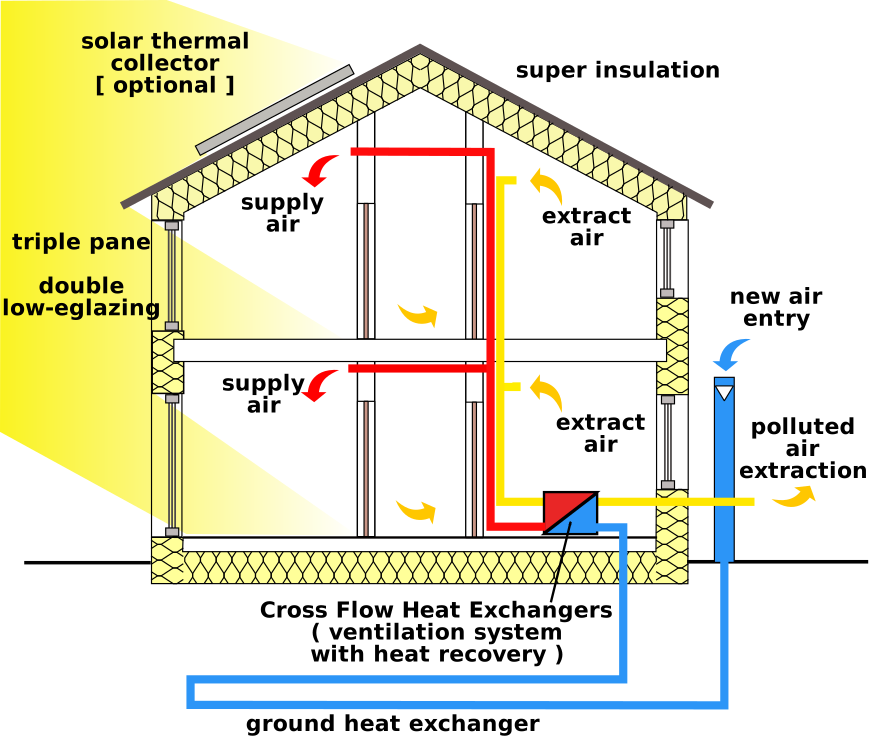
Core practices include:
- Passive solar design and urban/landscape integration – compact massing, appropriate solar gains, shading, and mitigation of overheating; strategies are adapted to climate, especially in hot-humid regions.
- Superinsulation and thermal-bridge-free detailing (typical opaque U-values ~0.10–0.15 W/m²·K).
- High-performance windows (triple/quad glazing, low-e coatings, inert-gas fills, warm-edge spacers; whole-window U-values often ≤0.80 W/m²·K).
- Airtightness to n50 ≤0.6 h⁻¹, verified by blower-door testing; intermediate tests during construction are recommended.
- Balanced mechanical ventilation with heat recovery (typically ≥75% efficiency) for IAQ and energy recovery; earth-tubes may be used with careful moisture control where appropriate.
- Low-load space conditioning – many climates allow heating via tempered ventilation air with small duct heaters or heat-pump coils; peak loads are limited by envelope performance.
Performance and occupant behaviour
Concerns are sometimes raised that occupants must restrict behaviours (e.g., opening windows), but sensitivity analyses indicate performance is generally robust to typical occupant variation.
International comparisons
- United States – Space-heating intensity around 1 BTU/ft2 per heating degree day is typical for PHI Passive House, compared to ~5–15 for code-built homes (2003 MEE Code), representing 75–95% savings. Waldsee BioHaus (Minnesota) follows the German standard and reported ~85% lower energy use than comparable LEED homes.
- United Kingdom – New houses to Passive House standard used ~77% less space-heating energy than homes built under circa-2006 Building Regulations.
- Ireland – Typical Passive House dwellings consumed ~85% less space-heating energy and cut related CO₂ by ~94% versus 2002 Regulations baselines.
References
References
- "24th St. Passive House by Intep".
- Zeller, Tom Jr.. (September 26, 2010). "Beyond Fossil Fuels: Can We Build in a Brighter Shade of Green?". [[The New York Times]].
- (September 25, 2010). "The Secrets of a Passive House". The New York Times.
- "Passive House requirements".
- (2006). "Design for Sustainability". China Architecture and Building Press.
- (February 15, 2025). "Passive House building certification data: over 4 million m² worldwide".
- (April 2025). "2024 Annual Report".
- (January 10, 2025). "The World We Want: Taking Stock and Looking Ahead (2025)".
- (August 13, 2025). "Passive House in the Global South".
- (2020-10-17). "Advances Toward a Net-Zero Global Building Sector". Annual Review of Environment and Resources.
- "Institute for Housing and the Environment".
- Feist, Wolfgang. (September 2006). "15th Anniversary of the Darmstadt-Kranichstein Passive House".
- (March 27, 2018). "How Saskatchewan Pioneered Energy-Efficient Housing and Influenced Building Standards".
- (September 22, 2010). "History of Super-insulated Housing in North America".
- https://www.researchgate.net/publication/273766969_The_world's_first_Passive_House_Darmstadt-Kranichstein_Germany
- "The world's first Passive House, Darmstadt-Kranichstein, Germany [Passipedia EN]".
- "11th International Conference on Passive Houses, 2007".
- (October 24, 2019). "Chinese city has the largest Passive House project in the world".
- "Gaobeidian Railway City".
- (October 31, 2018). "Bolueta in Bilbao, Spain, is now the tallest Passive House building in the world".
- "Tallest passive building (Passivhaus)".
- "Mission & History".
- "Park Avenue Green is the largest Passive House building in North America".
- "North America's largest Passive House affordable housing complex".
- "Foleshill Health Centre (project profile)".
- (April 27, 2023). "Low energy use confirmed at Foleshill Health Centre".
- "Phius Standards".
- "PHIUS+ 2015: Passive Building Standard – North America".
- "PHI and Phius: What's the Difference?".
- "The Passive House – sustainable, affordable, comfortable, versatile".
- Siegle, Lucy. (December 8, 2013). "How can I live in a passive house?". The Guardian.
- Delleske, Andreas. "What is a Passive House?".
- "Passive Houses in High Latitudes".
- (2025-08-13). "Passive House in the Global South".
- Swanson, Herb. (September 26, 2010). "Energy Efficiency, a Step Further". The New York Times.
- "Passivhaus Institut".
- "Passive House requirements".
- Holladay, Martin. (June 1, 2012). "Belgian Passivhaus is Rendered Uninhabitable by Bad Indoor Air". Green Building Advisor.
- "Passive House Estate in Hannover-Kronsberg".
- (2013). "Sensitivity analysis of the effect of occupant behaviour on the energy consumption of passive house dwellings". Energy and Buildings.
- "Design & Architecture".
- "Energy Saving Potential of Passive Houses in the UK".
- "Passive Houses in Ireland".
This article was imported from Wikipedia and is available under the Creative Commons Attribution-ShareAlike 4.0 License. Content has been adapted to SurfDoc format. Original contributors can be found on the article history page.
Ask Mako anything about Passive house — get instant answers, deeper analysis, and related topics.
Research with MakoFree with your Surf account
Create a free account to save articles, ask Mako questions, and organize your research.
Sign up freeThis content may have been generated or modified by AI. CloudSurf Software LLC is not responsible for the accuracy, completeness, or reliability of AI-generated content. Always verify important information from primary sources.
Report