From Surf Wiki (app.surf) — the open knowledge base
Pasiteles
1st century BC Greco-Roman Neo-Attic school sculptor
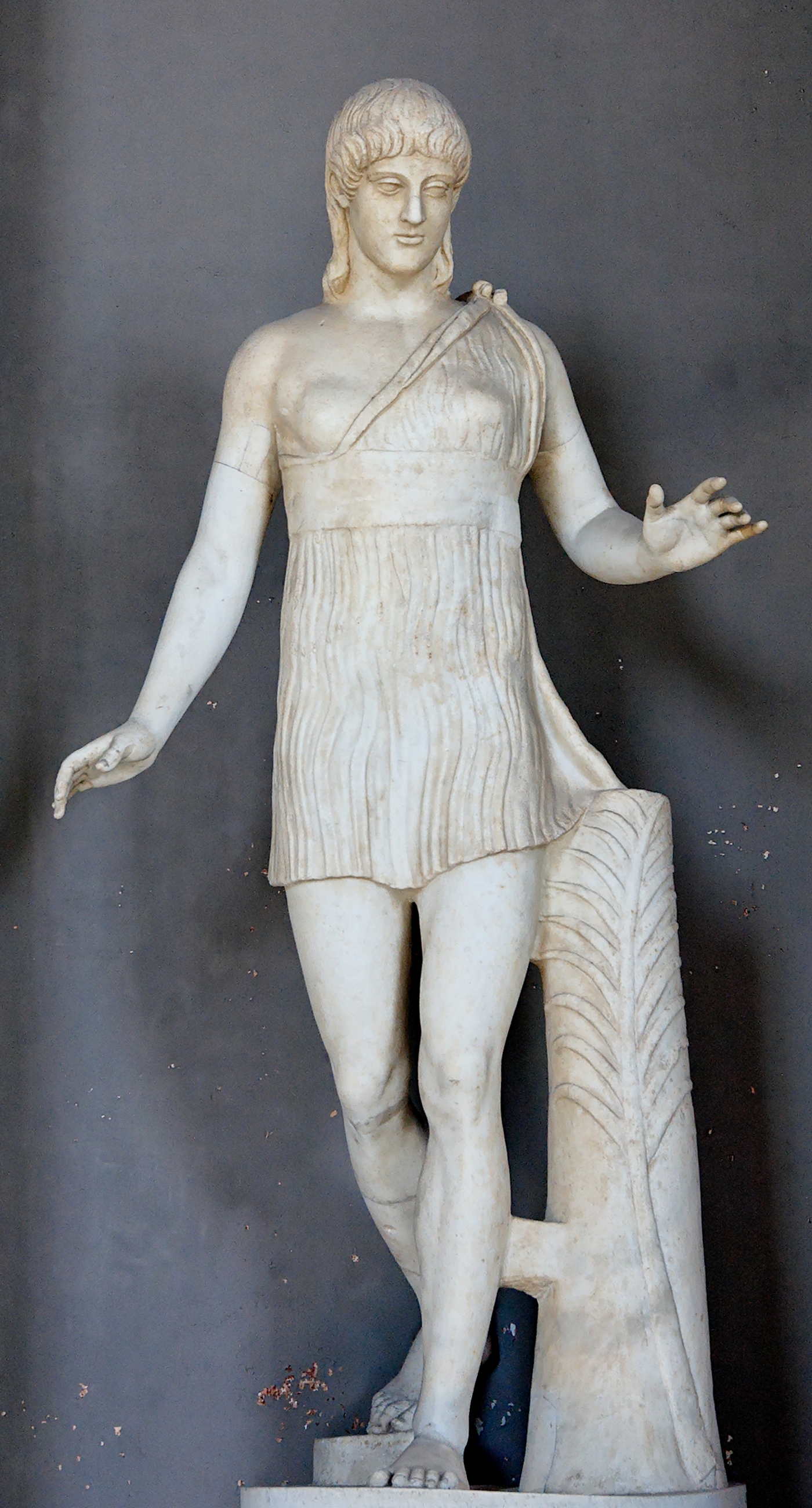
1st century BC Greco-Roman Neo-Attic school sculptor
Pasiteles (; sometimes called Pasiteles the Younger) was a Neo-Attic school sculptor from Ancient Rome at the time of Julius Caesar. Pasiteles is said by Pliny to have been a native of Magna Graecia, and to have been granted Roman citizenship. He worked during a period where there was a demand for copies of, or variations on, noted works of Greek sculpture; the demand was met by the workshops of Pasiteles and his pupils Stephanus and Menelaus and others, several of whose statues are extant. According to Pliny, Pasiteles made an ivory statue of Jupiter for the temple of Metellus and made statues for the temple of Juno in the portico of Octavia.
Pliny states that Pasiteles worked in marble, silver, ivory, and bronze and, according to his contemporary Varro, never made a statue without first making a clay model. Pasiteles was the author of five books upon celebrated works of sculpture and chasing in the whole world (quinque volumina nobilium operum in toto), which Pliny calls mirabilia opera, stating that Pasiteles is a better guide to chased silver than Xenocrates or the other authorities. In Pliny there is some alternation of the spelling "Paxiteles" with the spelling "Pasiteles."
Pasiteles the Elder
According to Pausanias i 30 §2, Pasiteles, in the time of Pheidias, was the teacher of the sculptor Colotes.
Notes
References
References
- (1859). "Dictionary of Greek and Roman Biography and Mythology". Little, Brown, and Company.
- (1849). "Dictionary of Greek and Roman Biography and Mythology". Little & Brown.
- (1859). "Dictionary of Greek and Roman Antiquities". Little, Brown, and Company.
- (1859). "Dictionary of Greek and Roman Biography and Mythology". Little, Brown, and Company.
This article was imported from Wikipedia and is available under the Creative Commons Attribution-ShareAlike 4.0 License. Content has been adapted to SurfDoc format. Original contributors can be found on the article history page.
Ask Mako anything about Pasiteles — get instant answers, deeper analysis, and related topics.
Research with MakoFree with your Surf account
Create a free account to save articles, ask Mako questions, and organize your research.
Sign up freeThis content may have been generated or modified by AI. CloudSurf Software LLC is not responsible for the accuracy, completeness, or reliability of AI-generated content. Always verify important information from primary sources.
Report