From Surf Wiki (app.surf) — the open knowledge base
Parliament of Australia
Federal legislature of Australia

Federal legislature of Australia
| Field | Value | ||||
|---|---|---|---|---|---|
| background_color | #224C98 | ||||
| name | Parliament of Australia | ||||
| native_name | legislature = 48th Parliament of Australia | ||||
| coa_pic | Coat of Arms of Australia.svg | ||||
| coa_caption | Commonwealth Coat of Arms | logo_pic=Parliament_House_at_dusk,_Canberra_ACT.jpg | logo_caption=Parliament House | ||
| Canberra, Australian Capital Territory | |||||
| Australia | house_type = Bicameral | ||||
| houses | Senate | ||||
| House of Representatives | |||||
| foundation | {{Plainlist | ||||
| * First session: {{start date and age | df | yes | 1901 | 5 | 9}} |
| leader1_type | Monarch | ||||
| leader1 | Charles III | ||||
| leader2_type | Governor-General | ||||
| leader2 | Sam Mostyn | ||||
| election2 | 1 July 2024 | ||||
| leader3 | Sue Lines | ||||
| leader3_type | President of the Senate | ||||
| party3 | Labor | ||||
| election3 | 26 July 2022 | ||||
| leader4_type | Speaker of the House of Representatives | ||||
| leader4 | Milton Dick | ||||
| party4 | Labor | ||||
| election4 | 26 July 2022 | ||||
| leader5_type | Prime Minister | ||||
| leader5 | Anthony Albanese | ||||
| party5 | Labor | ||||
| election5 | 23 May 2022 | ||||
| leader6_type | Leader of the Opposition | ||||
| leader6 | Sussan Ley | ||||
| party6 | Liberal | ||||
| election6 | 13 May 2025 | ||||
| members | 226 (76 Senators, 150 MPs) | ||||
| house1 | Senate | ||||
| house2 | House of Representatives | ||||
| structure1 | File:2025 Australian Senate - Composition of Members.svg | ||||
| structure1_res | 250px | ||||
| political_groups1 | |||||
| structure2 | File:Australian House of Representatives chart.svg | ||||
| structure2_res | 250px | ||||
| term_length | Senate: 6 years for state senators, 3 years for territory senators (fixed except under double dissolution) | ||||
| House: 3 years (maximum) | |||||
| voting_system1 | Single transferable vote (proportional representation) | ||||
| last_election1 | 3 May 2025 (half) | ||||
| next_election1 | On or before 20 May 2028 (half) | ||||
| voting_system2 | Full preferential voting | ||||
| last_election2 | 3 May 2025 | ||||
| next_election2 | On or before 23 September 2028 | ||||
| redistricting | Redistributions at least every seven years by the Redistribution Committee | ||||
| session_room | Australian Senate - Parliament of Australia.jpg | ||||
| meeting_place | Senate Chamber | ||||
| session_room2 | Australian House of Representatives - Parliament of Australia.jpg | ||||
| meeting_place2 | House of Representatives Chamber | ||||
| website |
Canberra, Australian Capital Territory Australia|house_type = Bicameral House of Representatives
- First session: House: 3 years (maximum)
The Parliament of Australia (officially the Parliament of the Commonwealth and also known as the Federal Parliament) is the federal legislature of Australia. It consists of three elements: the monarch of Australia (represented by the governor-general), the Senate (the upper house), and the House of Representatives (the lower house). The Parliament combines elements from the British Westminster system, in which the party or coalition with a majority in the lower house is entitled to form a government, and the United States Congress, which affords equal representation to each of the states, and scrutinises legislation before it can be signed into law.
The upper house, the Senate, consists of 76 members; twelve for each state, and two for each of the two self-governing territories. Senators are elected using the single transferable vote and, as a result, the chamber features a multitude of parties vying for legislative control. No party or coalition has held a majority in the Senate since 2007, and this usually necessitates negotiation with either the opposition or crossbench to pass legislation.
The lower house, the House of Representatives, currently consists of 150 members, each elected via full preferential voting from single-member electorates (also known as divisions or seats). This tends to result in the chamber being dominated by two major political groups, the centreright to rightwing Coalition (consisting of the Liberal and National parties) and the centreleft Labor Party. The government of the day must command the confidence of the House of Representatives in order to gain and remain in power.
The House of Representatives has a maximum term of three years, although it can be dissolved early. The Senate has fixed terms, with half of the state senators' terms expiring every three years (the terms of the four territory senators are linked to House elections). As a result, House and Senate elections almost always coincide. A deadlock-breaking mechanism known as a double dissolution can be used to dissolve the full Senate as well as the House if the Senate refuses to pass a piece of legislation passed by the House.
The two houses of Parliament meet in separate chambers at Parliament House (except in rare joint sittings), which itself is located on Capital Hill in Canberra, Australian Capital Territory. Members of the House of Representatives usually convene in the so-called Green Room, while Senators convene in the adjacent Red Room.
History
Temporary home in Melbourne (1901–1927)
The Commonwealth of Australia came into being on 1 January 1901 with the federation of the six Australian colonies. The inaugural election took place on 29 and 30 March and the first Australian Parliament was opened on 9 May 1901 in Melbourne by Prince George, Duke of Cornwall and York, later King George V. The only building in Melbourne that was large enough to accommodate the 14,000 guests was the western annexe of the Royal Exhibition Building. After the official opening, from 1901 to 1927 the Parliament met in Parliament House, Melbourne, which it borrowed from the Parliament of Victoria (which sat, instead, in the Royal Exhibition Building until 1927). During this time, Sir Frederick Holder became the first speaker and also the first (and thus far only) parliamentarian to die during a sitting. On 23 July 1909 during an acrimonious debate that had extended through the night to 5 am, Holder exclaimed: "Dreadful, dreadful!" before collapsing as a result of a cerebral haemorrhage.
| [[File:Opening of the first parliament.jpg | thumb | none | *[[The Big Picture (painting) | The Big Picture]]*, opening of the Parliament of Australia, 9 May 1901, by Tom Roberts]] | [[File:Parliament House Melbourne 2010.jpg | thumb | none | Victorian Parliament House, where the Federal Parliament met until 1927]] |
|---|
Old Parliament House (1927–1988)
Main article: Old Parliament House, Canberra
The Constitution provided that a new national capital would be established for the nation. This was a compromise at Federation due to the rivalry between the two largest Australian cities, Sydney and Melbourne, which both wished to become the new capital. The site of Canberra was selected for the location of the nation's capital city in 1908. A competition was announced on 30 June 1914 to design Parliament House, with prize money of £7,000. However, due to the start of World War I the next month, the competition was cancelled. It was re-announced in August 1916, but again postponed indefinitely on 24 November 1916. In the meantime, John Smith Murdoch, the Commonwealth's chief architect, worked on the design as part of his official duties. He had little personal enthusiasm for the project, as he felt it was a waste of money and expenditure on it could not be justified at the time. Nevertheless, he designed the building by default.
The construction of Old Parliament House, as it is called today, commenced on 28 August 1923 and was completed in early 1927. It was built by the Commonwealth Department of Works, using workers and materials from all over Australia. The final cost was about £600,000, which was more than three times the original estimate. It was designed to house the parliament for a maximum of 50 years until a permanent facility could be built, but was actually used for more than 60 years.
The building was opened on 9 May 1927 by the Duke and Duchess of York (later King George VI and Queen Elizabeth The Queen Mother). The opening ceremonies were both splendid and incongruous, given the sparsely built nature of Canberra of the time and its small population. The building was extensively decorated with Union Jacks and red or blue Australian ensigns. Temporary stands were erected bordering the lawns in front of the Parliament and these were filled with crowds. A Wiradjuri elder, Jimmy Clements, was one of only two Aboriginal Australians present, having walked for about a week from Brungle Station (near Tumut) to be at the event. Dame Nellie Melba sang "God Save the King". The Duke of York unlocked the front doors with a golden key, and led the official party into King's Hall where he unveiled the statue of his father, King George V. The Duke then opened the first parliamentary session in the new Senate Chamber. |File:House of Representatives, Old Parliament House, Canberra.JPG |The House of Representatives chamber at Old Parliament House |File:Senate, Old Parliament House, Canberra.JPG |The Senate chamber at Old Parliament House
New Parliament House (1988–present)
Main article: Parliament House, Canberra
In 1978 the Fraser government decided to proceed with a new building on Capital Hill, and the Parliament House Construction Authority was created. A two-stage competition was announced, for which the Authority consulted the Royal Australian Institute of Architects and, together with the National Capital Development Commission, made available to competitors a brief and competition documents. The design competition drew 329 entries from 29 countries.
The competition winner was the Philadelphia-based architectural firm of Mitchell/Giurgola, with the on-site work directed by the Italian-born architect Romaldo Giurgola, with a design which involved burying most of the building under Capital Hill, and capping the edifice with an enormous spire topped by a large Australian flag. The façades, however, included deliberate imitation of some of the patterns of the Old Parliament House, so that there is a slight resemblance despite the massive difference of scale. The building was also designed to sit above Old Parliament House when seen from a distance.
Construction began in 1981, and the House was intended to be ready by Australia Day, 26 January 1988, the 200th anniversary of European settlement in Australia. It was expected to cost $220 million. Neither the deadline nor the budget was met. In the end it cost more than $1.1 billion to build.
New Parliament House was finally opened by Elizabeth II, Queen of Australia, on 9 May 1988, the anniversary of the opening of both the first Federal Parliament in Melbourne on 9 May 1901 and the Provisional Parliament House in Canberra on 9 May 1927.
In March 2020, the 46th Parliament of Australia was suspended due to the COVID-19 pandemic in Australia; an adjournment rather than prorogation. Its committees would continue to operate using technology. This unprecedented move was accompanied by two motions raised by the Attorney-General of Australia, Christian Porter, and passed on 23 March 2020. One motion was designed to allow MPs to participate in parliament by electronic means, if agreed by the major parties and the speaker; the second determined that with the agreement of the two major parties, the standing orders could be amended without requiring an absolute majority.

Composition and electoral systems
The Constitution establishes the Commonwealth Parliament, consisting of three components: the King of Australia, the Senate and the House of Representatives.
Monarch
Main article: Governor-General of Australia#Role in the Australian Parliament
All of the constitutional functions of the King are exercisable by the governor-general (except the power to appoint the governor-general), whom the King appoints as his federal representative in Australia on the advice of the prime minister. However, by convention, the governor-general exercises these powers only upon the advice of ministers, except for limited circumstances covered by the reserve powers.
In Parliament, the monarch legally shares co-equally the law making powers of the Commonwealth with the Senate and House of Representatives. As such their royal assent (usually expressed by the governor-general) is required for a bill to become an act and thus part of the law. The government does not formally advise the governor-general to grant assent, but it is expected that they will act in accordance with the democratically elected houses of Parliament and assent has never been refused.
Senate
Main article: Australian Senate
The upper house of the Australian Parliament consists of 76 members and is called the Senate,. It has founding principles dervied from both the British 'Westminster' traditions and the US 'Washington' models structure, often referred to as the "Wash-minster' model.{{Cite web |access-date=2025-10-21
The Constitution allows Parliament to determine the number of senators by legislation, provided that the six original states are equally represented. Furthermore, the Constitution provides that each original state is entitled to at least six senators. However, neither of these provisions applies to any newly admitted states, or to territories. Since an act was passed in 1974, senators have been elected to represent the territories. Currently, the two Northern Territory senators represent the residents of the Northern Territory as well as the Australian external territories of Christmas Island and the Cocos (Keeling) Islands. The two Australian Capital Territory senators represent the Australian Capital Territory, the Jervis Bay Territory and since 1 July 2016, Norfolk Island. Only half of the state Senate seats go up for re-election each three years (except in the case of a double dissolution) as they serve six-year terms; however territory Senators do not have staggered terms and hence face re-election every three years.
Until 1949, each state elected the constitutional minimum of six senators. This number increased to ten from the 1949 election, and was increased again to twelve from the 1984 election. The system for electing senators has changed several times since Federation. The original arrangement used a first-past-the-post block voting, on a state-by-state basis. This was replaced in 1919 by preferential block voting. Block voting tended to produce landslide majorities. For instance, from 1920 to 1923 the Nationalist Party had 35 of the 36 senators, and from 1947 to 1950, the Australian Labor Party had 33 of the 36 senators.
In 1948, single transferable vote proportional representation on a state-by-state basis became the method for electing senators. This change has been described as an "institutional revolution" that has led to the rise of a number of minor parties such as the Democratic Labor Party, the Democrats and the Greens who have taken advantage of this system to achieve parliamentary representation and the balance of power. From the 1984 election, Group voting tickets were introduced in order to reduce a high rate of informal voting but in 2016, group tickets were abolished to end the influence that preference deals amongst parties had on election results and a form of optional preferential voting was introduced.
Section 15 of the Constitution provides that a casual vacancy of a senator shall be filled by the state Parliament. If the previous senator was a member of a particular political party the replacement must come from the same party, but the state Parliament may choose not to fill the vacancy, in which case section 11 requires the Senate to proceed regardless. If the state Parliament happens to be in recess when the vacancy occurs, the Constitution provides that the state governor (acting on the advice of the respective state government) can appoint someone to fill the place until fourteen days after the state Parliament resumes sitting. The state Parliament can also be recalled to ratify a replacement.
House of Representatives
Main article: Australian House of Representatives
The lower house of the Australian Parliament, the House of Representatives, is made up of single member electorates with a population of roughly equal size. As is convention in the Westminster system, the party or coalition of parties that has the majority in this House forms the government with the leader of that party or coalition becoming the prime minister. If the government loses the confidence of the House, they are expected to call a new election or resign.
Parliament may determine the number of members of the House of Representatives but the Constitution provides that this number must be "as nearly as practicable, twice the number of Senators"; this requirement is commonly called the "nexus clause". Hence, the House presently consists of 150 members. Each state is allocated seats based on its population; however, each original state, regardless of size, is guaranteed at least five seats. The Constitution does not guarantee representation for the territories. Parliament granted a seat to the Northern Territory in 1922, and to the Australian Capital Territory in 1948; these territorial representatives, however, had only limited voting rights until 1968. Federal electorates have their boundaries redrawn or redistributed whenever a state or territory has its number of seats adjusted, if electorates are not generally matched by population size or if seven years have passed since the most recent redistribution.
From 1901 to 1949, the House consisted of either 74 or 75 members (the Senate had 36). Between 1949 and 1984, it had between 121 and 127 members (the Senate had 60 until 1975, when it increased to 64). In 1977, the High Court ordered that the size of the House be reduced from 127 to 124 members to comply with the nexus provision. In 1984, both the Senate and the House were enlarged; since then the House has had between 148 and 151 members (the Senate has 76).
First-past-the-post voting was used to elect members of the House of Representatives until in 1918 the Nationalist Party government, a predecessor of the modern-day Liberal Party of Australia, changed the lower house voting system to full preferential voting for the subsequent 1919 election. This was in response to Labor unexpectedly winning the 1918 Swan by-election with the largest primary vote, due to vote splitting among the conservative parties. This system has remained in place ever since, allowing the Coalition parties to safely contest the same seats. Full-preferential voting re-elected the Bob Hawke government at the 1990 election, the first time in federal history that Labor had obtained a net benefit from preferential voting.
Both houses
It is not possible to be simultaneously a member of both the Senate and the House of Representatives, but a number of people have been members of both houses at different times in their parliamentary career.
Only Australian citizens are eligible for election to either house. They must not also be a subject or citizen of a "foreign power". When the Constitution was drafted, all Australians (and other inhabitants of the British empire) were British subjects, so the word "foreign" meant outside the Empire. But, in the landmark case Sue v Hill (1999), the High Court of Australia ruled that, at least since the passage of the Australia Act 1986, Britain has been a "foreign power", so that British citizens are also excluded.
Compulsory voting was introduced for federal elections in 1924. The immediate justification for compulsory voting was the low voter turnout (59.38%) at the 1922 federal election, down from 71.59% at the 1919 federal election. Compulsory voting was not on the platform of either the Stanley Bruce-led Nationalist/Country party coalition government or the Matthew Charlton-led Labor opposition. The actual initiative for change was made by Herbert Payne, a backbench Tasmanian Nationalist Senator who on 16 July 1924 introduced a private Senator's bill in the Senate. Payne's bill was passed with little debate (the House of Representatives agreeing to it in less than an hour), and in neither house was a division required, hence no votes were recorded against the bill. The 1925 federal election was the first to be conducted under compulsory voting, which saw the turnout figure rise to 91.4%. The turnout increased to about 95% within a couple of elections and has stayed at about that level since.
Since 1973, citizens have had the right to vote upon turning 18. Prior to this it was 21.
Australian Federal Police officers armed with assault rifles have been situated in the Federal Parliament since 2015. It is the first time in Australian history that a parliament has possessed armed personnel.
Procedure
Each of the two Houses elects a presiding officer. The presiding officer of the Senate is called the President; that of the House of Representatives is the Speaker. Elections for these positions are by secret ballot. Both offices are conventionally filled by members of the governing party, but the presiding officers are expected to oversee debate and enforce the rules in an impartial manner.
The Constitution authorises Parliament to set the quorum for each chamber. The quorum of the Senate is one-quarter of the total membership (nineteen); that of the House of Representatives is one-fifth of the total membership (thirty-one). In theory, if a quorum is not present, then a House may not continue to meet. In practice, members usually agree not to notice that a quorum is not present, so that debates on routine bills can continue while other members attend to other business outside the chamber. Sometimes the Opposition will "call a quorum" as a tactic to annoy the Government or delay proceedings, particularly when the Opposition feels it has been unfairly treated in the House. Proceedings are interrupted until a quorum is present. It is the responsibility of the government whip to ensure that, when a quorum is called, enough government members are present to form a quorum.
Both Houses may determine motions by voice vote: the presiding officer puts the question, and, after listening to shouts of "Aye" and "No" from the members, announces the result. The announcement of the presiding officer settles the question, unless at least two members demand a "division", or a recorded vote. In that case the bells are rung throughout Parliament House summoning Senators or Members to the chamber. During a division, members who favour the motion move to the right side of the chamber (the side to the Speaker's or President's right), and those opposed move to the left. They are then counted by "tellers" (government and opposition whips), and the motion is passed or defeated accordingly. In the Senate, in order not to deprive a state of a vote in what is supposed to be a states' house, the president is permitted a vote along with other senators (however, that right is rarely exercised); in the case of a tie, the president does not have a casting vote and the motion fails. In the House of Representatives, the Speaker does not vote, but has a casting vote if there is a tie.
Most legislation is introduced into the House of Representatives and goes through a number of stages before it becomes law. The legislative process occurs in English, although other Australian parliaments have permitted use of Indigenous languages with English translation. Government bills are drafted by the Office of Parliamentary Counsel.
The first stage is a first reading, where the legislation is introduced to the chamber, then there is a second reading, where a vote is taken on the general outlines of the bill. Although rare, the legislation can then be considered by a House committee, which reports back to the House on any recommendations. This is followed by a consideration in detail stage, where the House can consider the clauses of the bill in detail and make any amendments. This is finally followed by a third reading, where the bill is either passed or rejected by the House. If passed, the legislation is then sent to the Senate, which has a similar structure of debate and passage except that consideration of bills by Senate committees is more common than in the House and the consideration in detail stage is replaced by a committee of the whole. Once a bill has been passed by both Houses in the same form, it is then presented to the governor-general for royal assent.
Functions

.png)
The principal function of the Parliament is to pass laws, or legislation. Any parliamentarian may introduce a proposed law (a bill), except for a money bill (a bill proposing an expenditure or levying a tax), which must be introduced in the House of Representatives. In practice, the great majority of bills are introduced by ministers. Bills introduced by other members are called private members' bills. All bills must be passed by both houses and assented to by the governor-general to become law. The Senate has the same legislative powers as the House, except that it may not amend or introduce money bills, only pass or reject them. The enacting formula for acts of Parliament since 1990 is simply "The Parliament of Australia enacts:".
Commonwealth legislative power is limited to that granted in the Constitution. Powers not specified are considered "residual powers", and remain the domain of the states. Section 51 grants the Commonwealth power over areas such as taxation, external affairs, defence and marriage. Section 51 also allows state parliaments to refer matters to the Commonwealth to legislate.
Section 96 of the Australian Constitution gives the Commonwealth Parliament the power to grant money to any State, "on such terms and conditions as the Parliament thinks fit". In effect, the Commonwealth can make grants subject to states implementing particular policies in their fields of legislative responsibility. Such grants, known as "tied grants" (since they are tied to a particular purpose), have been used to give the federal parliament influence over state policy matters such as public hospitals and schools.
The Parliament performs other functions besides legislation. It can discuss urgency motions or matters of public importance: these provide a forum for debates on public policy matters. Senators and members can move motions on a range of matters relevant to their constituents, and can also move motions of censure against the government or individual ministers. On most sitting days in each house there is a session called question time in which senators and members address questions without notice to the prime minister and other ministers. Senators and members can also present petitions from their constituents. Both houses have an extensive system of committees in which draft bills are debated, matters of public policy are inquired into, evidence is taken and public servants are questioned. There are also joint committees, composed of members from both houses.
Conflict between the houses

In the event of conflict between the two houses over the final form of legislation, the Constitution provides for a simultaneous dissolution of both houses – known as a double dissolution. Section 57 of the Constitution states that,
In an election following a double dissolution, each state elects their entire 12-seat Senate delegation, while the two territories represented in the Senate each elect their two senators as they would in a regular federal election. Because all seats are contested in the same election, it is easier for smaller parties to win seats under the single transferable vote system: the quota for the election of each senator in each Australian state in a full Senate election is 7.69% of the vote, while in a normal half-Senate election the quota is 14.28%.
If the conflict continues after such an election, the governor-general may convene a joint sitting of both houses to consider the bill or bills, including any amendments which have been previously proposed in either house, or any new amendments. If a bill is passed by an absolute majority of the total membership of the joint sitting, it is treated as though it had been passed separately by both houses, and is presented for royal assent. With proportional representation, and the small majorities in the Senate compared to the generally larger majorities in the House of Representatives, and the requirement that the number of members of the lower house be "nearly as practicable" twice that of the Senate, a joint sitting after a double dissolution is more likely than not to lead to a victory for the lower house over the Senate. This provision has only been invoked on one occasion, after the election following the 1974 double dissolution. However, there are other occasions when the two houses meet as one.
Committees

In addition to the work of the main chambers, both the Senate and the House of Representatives have a large number of investigatory and scrutiny committees which deal with matters referred to them by their respective houses or ministers. They provide the opportunity for all members and senators to ask questions of witnesses, including ministers and public officials, as well as conduct inquiries, and examine policy and legislation. Once a particular inquiry is completed the members of the committee can then produce a report, to be tabled in Parliament, outlining what they have discovered as well as any recommendations that they have produced for the government or house to consider.
The ability of the houses of Parliament to establish committees is referenced in section 49 of the Constitution, which states that,
Parliamentary committees can be given a wide range of powers. One of the most significant powers is the ability to summon people to attend hearings in order to give evidence and submit documents. Anyone who attempts to hinder the work of a Parliamentary committee may be found to be in contempt of Parliament. There are a number of ways that witnesses can be found in contempt, these include; refusing to appear before a committee when summoned, refusing to answer a question during a hearing or to produce a document, or later being found to have lied to or misled a committee. Anyone who attempts to influence a witness may also be found in contempt. Other powers include, the ability to meet throughout Australia, to establish subcommittees and to take evidence in both public and private hearings.
Proceedings of committees are considered to have the same legal standing as proceedings of Parliament, they are recorded by Hansard, except for private proceedings, and also operate under the protections of parliamentary privilege. Every participant, including committee members and witnesses giving evidence, is protected from being prosecuted under any civil or criminal action for anything they may say during a hearing. Written evidence and documents received by a committee are also protected.
Types of committees include:
Standing committees, which are established on an ongoing basis and are responsible for scrutinising bills and topics referred to them by the chamber or minister; examining the government's budget and activities (in what is called the budget estimates process); and for examining departmental annual reports and activities.
Select committees, which are temporary committees, established in order to consider a particular matter. A select committee expires when it has published its final report on an inquiry.
Domestic committees, which are responsible for administering aspects of the Parliament's own affairs. These include the Selection Committees of both Houses that determine how the Parliament will deal with particular pieces of legislation and private members' business, and the Privileges Committees that deal with matters of parliamentary privilege.
Legislative scrutiny committees, which examine legislation and regulations to determine their impact on individual rights and accountability.
Joint committees are also established to include both members of the House of Representatives and the Senate. Joint committees may be standing (ongoing) or select (temporary) in nature.
Relationship with the government

Under the Constitution, the governor-general has the power to appoint and dismiss ministers who administer government departments. In practice, the governor-general chooses ministers in accordance with the traditions of the Westminster system. The governor-general appoints as prime minister the leader of the party that has a majority of seats in the House of Representatives; the governor-general then, on the advice of the prime minister, appoints the other ministers, chosen from the majority party or coalition of parties.
These ministers then meet in a council known as cabinet. Cabinet meetings are strictly private and occur once a week where vital issues are discussed and policy formulated. The Constitution does not recognise the Cabinet as a legal entity; it exists solely by convention. Its decisions do not in and of themselves have legal force. However, it serves as the practical expression of the Federal Executive Council, which is Australia's highest formal governmental body. In practice, the Federal Executive Council meets solely to endorse and give legal force to decisions already made by the Cabinet. All members of the Cabinet are members of the executive council. The governor-general is bound by convention to follow the advice of the executive council on almost all occasions, giving it de facto executive power. A senior member of the Cabinet holds the office of vice-president of the executive council and acts as presiding officer of the executive council in the absence of the governor-general. The Federal Executive Council is the Australian equivalent of the executive councils and privy councils in other Commonwealth realms such as the King's Privy Council for Canada and the Privy Council of the United Kingdom.
A minister is not required to be a senator or member of the House of Representatives at the time of their appointment, but their office is forfeited if they do not become a member of either house within three months of their appointment. This provision was included in the Constitution (section 64) to enable the inaugural ministry, led by Edmund Barton, to be appointed on 1 January 1901, even though the first federal elections were not scheduled to be held until 29 and 30 March.
After the 1949 election, John Spicer and Bill Spooner became ministers in the Menzies Government on 19 December, despite their terms in the Senate not beginning until 22 February 1950.
The provision was also used after the disappearance and presumed death of the Liberal prime minister Harold Holt in December 1967. The Liberal Party elected John Gorton, then a senator, as its new leader, and he was sworn in as prime minister on 10 January 1968 (following an interim ministry led by John McEwen). On 1 February, Gorton resigned from the Senate to stand for the 24 February by-election in Holt's former House of Representatives electorate of Higgins due to the convention that the prime minister be a member of the lower house. For 22 days (2 to 23 February inclusive) he was prime minister while a member of neither house of parliament.
On a number of occasions when ministers have retired from their seats prior to an election, or stood but lost their own seats in the election, they have retained their ministerial offices until the next government is sworn in.
Role of the Senate
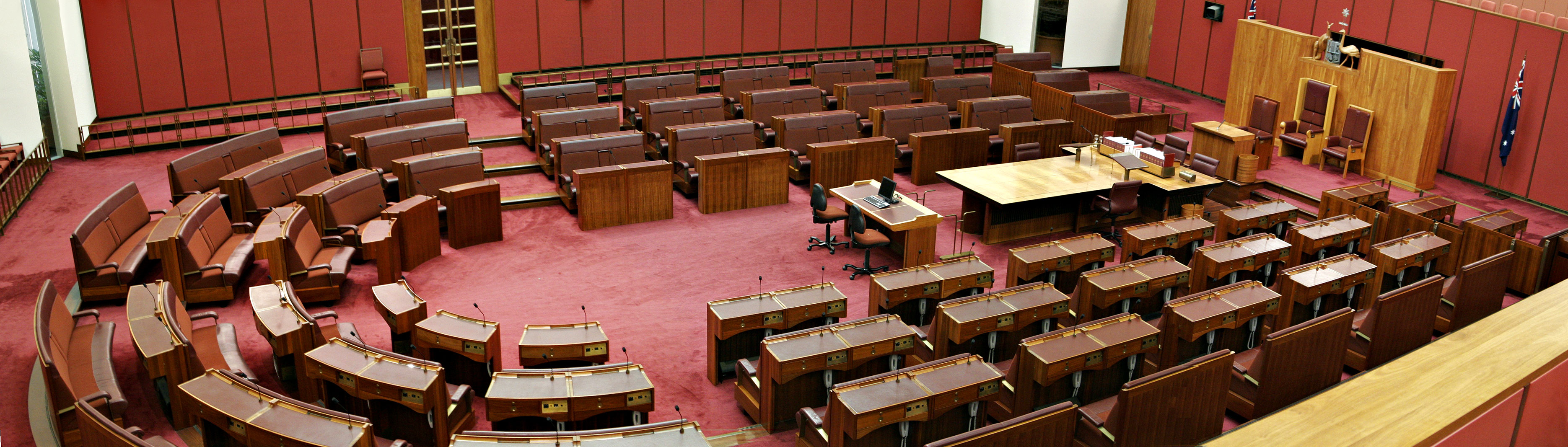
Unlike upper Houses in other Westminster system governments, the Senate is not a vestigial body with limited legislative power. Rather it was intended to play – and does play – an active role in legislation. Rather than being modelled solely after the House of Lords, as the Canadian Senate was, the Australian Senate was in part modelled after the United States Senate, by giving equal representation to each state. The Constitution intended to give less populous states added voice in a federal legislature, while also providing for the revising role of an upper house in the Westminster system.
One of the functions of the Senate, both directly and through its committees, is to scrutinise government activity. The vigour of this scrutiny has been fuelled for many years by the fact that the party in government has seldom had a majority in the Senate. Whereas in the House of Representatives the government's majority has sometimes limited that chamber's capacity to implement executive scrutiny, the opposition and minor parties have been able to use their Senate numbers as a basis for conducting inquiries into government operations.
The Constitution prevents the Senate from originating or amending the annual appropriation bills "for the ordinary annual services of the Government"; they may only defer or reject them. As a result, whilst the framers of the Constitution intended that the executive government would require the support of the House of Representatives, the text of the Constitution also effectively allows the Senate to bring down the government once a year by blocking the annual appropriations bills, also known as blocking supply*.*
The ability to block supply was the origin of the 1975 Australian constitutional crisis. The Opposition used its numbers in the Senate to defer supply bills, refusing to deal with them until an election was called for both houses of parliament, an election which it hoped to win. The prime minister, Gough Whitlam, contested the legitimacy of the blocking and refused to resign. The prime minister argued that a government may continue in office for as long as it has the support of the lower house, while the opposition argued that any government who has been denied supply is obliged to either call new elections or resign. In response to the deadlock, the governor-general Sir John Kerr dismissed Whitlam's government and appointed Malcolm Fraser as caretaker prime minister on the understanding that he could secure supply and would immediately call new elections. This action in itself was a source of controversy and debate continues on the proper usage of the Senate's ability to block supply and on whether such a power should even exist.
The blocking of supply alone cannot force a double dissolution. There must be legislation repeatedly blocked by the Senate which the government can then choose to use as a trigger for a double dissolution.
Parliamentary departments
There are four parliamentary departments supporting the Australian Parliament:
- Department of the Senate, which consists of seven Offices and whose work is determined by the Senate and its committees.
- Department of the House of Representatives, which provides various services to support the smooth operation of the House of Representatives, its committees and certain joint committees.
- Department of Parliamentary Services (DPS), which performs diverse support functions, such as research; the Parliamentary Library of Australia; broadcasting on radio and TV; Hansard transcripts; computing services; and general maintenance and security.
- Parliamentary Budget Office (PBO), which "improves transparency around fiscal and budget policy issues" and provides costing services to parliamentarians.
Privileges
Members of the Australian Parliament do not have legal immunity: they can be arrested and tried for any offence. They do, however, have parliamentary privilege: they cannot be sued for anything they say in Parliament about each other or about persons outside the Parliament. This privilege extends to reporting in the media of anything a senator or member says in Parliament. The proceedings of parliamentary committees, wherever they meet, are also covered by privilege, and this extends to witnesses before such committees.
From the beginning of Federation until 1987, parliamentary privilege operated under section 49 of the Constitution, which established the privileges of both houses and their members to be the same as the House of Commons of the United Kingdom at the time of the Constitution's enactment. The Parliament was also given the power to amend its privileges. In 1987, the Parliament passed the Parliamentary Privileges Act, which clarified the meaning and extent of privilege as well as how the Parliament deals with breaches.
There is a legal offence called contempt of Parliament. A person who speaks or acts in a manner contemptuous of the Parliament or its members can be tried and, if convicted, imprisoned. The Parliament previously had the power to hear such cases itself, and did so in the Browne–Fitzpatrick privilege case, 1955. This power has now been delegated to the courts. There have been few convictions. In May 2007, Harriet Swift, an anti-logging activist from New South Wales was convicted and reprimanded for contempt of Parliament, after she wrote fictitious press releases and letters purporting to be from Federal MP Gary Nairn as an April Fools' Day prank.
Salaries of parliamentarians
The salaries of parliamentarians and other parliamentary office holders are determined by the Remuneration Tribunal, an independent statutory body. Since 1 July 2025, the basic annual salary of a federal parliamentarian is $239,270. Parliamentarians are also paid allowances (such as for travel and post-retirement), superannuation and expenses. Parliamentarians who are ministers or who hold another parliamentary office are also entitled to an additional salary, being a certain percentage of the base salary. These are listed below:
| Office | Additional % | Additional $ | Total annual salary |
|---|---|---|---|
| Prime Minister | 160% | $382,830 | $622,100 |
| Deputy Prime Minister | 105% | $251,230 | $490,500 |
| Treasurer | 87.5% | $209,360 | $448,630 |
| Senate Leader of Government | 87.5% | $209,360 | $448,630 |
| House Leader of Government | 75% | $179,450 | $418,720 |
| Cabinet Minister | 72.5% | $173,470 | $412,740 |
| Non-Cabinet Minister | 57.5% | $137,580 | $376,850 |
| Parliamentary Secretary/Assistant Minister | 25% | $59,820 | $299,090 |
| Leader of the Opposition | 85% | $203,380 | $442,650 |
| Speaker | 75% | $179,450 | $418,720 |
| President | 75% | $179,450 | $418,720 |
| Shadow Minister | 25% | $59,820 | $299,090 |
Broadcasting
Radio broadcasts of parliamentary proceedings began on 10 July 1946. They were originally broadcast on Radio National. Since August 1994 they have been broadcast on ABC News, a government-owned channel set up specifically for this function. It operates 24 hours a day and broadcasts other news items when parliament is not sitting.
The first televised parliamentary event was the historic 1974 Joint Sitting. Regular free-to-air television broadcasts of question time began in August 1990 from the Senate and February 1991 from the House of Representatives. Question time from the House of Representatives is televised live, and the Senate question time is recorded and broadcast later that day. Other free-to-air televised broadcasts include: the Treasurer's Budget speech and the Leader of the Opposition's reply to the Budget two days later; the opening of Parliament by the governor-general; the swearing-in of governors-general; and addresses to the Parliament by visiting heads of state.
In 2009, the pay TV company Foxtel launched A-SPAN, now called Sky News Extra, which broadcasts live sittings of the House of Representatives and the Senate, parliamentary committee meetings and political press conferences.
The Parliament House official website provides free extensive daily proceedings of both chambers as well as committee hearings live on the Internet.
Current parliament
Historical compositions
Senate compositions
The Senate has included representatives from a range of political parties, including several parties that have seldom or never had representation in the House of Representatives, but which have consistently secured a small but significant level of electoral support, as the table shows.
Results represent the composition of the Senate after the elections. The full Senate has been contested on eight occasions; the inaugural election and seven double dissolutions. These are underlined and highlighted in puce.
| Election | |||||||||||||||||||||||||||||||||||||||||||||||||||||||||||||||||||||||||||||||||||||||||||||||||||||||||||||||
|---|---|---|---|---|---|---|---|---|---|---|---|---|---|---|---|---|---|---|---|---|---|---|---|---|---|---|---|---|---|---|---|---|---|---|---|---|---|---|---|---|---|---|---|---|---|---|---|---|---|---|---|---|---|---|---|---|---|---|---|---|---|---|---|---|---|---|---|---|---|---|---|---|---|---|---|---|---|---|---|---|---|---|---|---|---|---|---|---|---|---|---|---|---|---|---|---|---|---|---|---|---|---|---|---|---|---|---|---|---|---|---|
| Year | Labor | Liberal | National | Democratic | |||||||||||||||||||||||||||||||||||||||||||||||||||||||||||||||||||||||||||||||||||||||||||||||||||||||||||
| Labor | Democrats | Greens | CLP | Independent | Other | ||||||||||||||||||||||||||||||||||||||||||||||||||||||||||||||||||||||||||||||||||||||||||||||||||||||||||
| parties | Total | ||||||||||||||||||||||||||||||||||||||||||||||||||||||||||||||||||||||||||||||||||||||||||||||||||||||||||||||
| seats | Electoral | ||||||||||||||||||||||||||||||||||||||||||||||||||||||||||||||||||||||||||||||||||||||||||||||||||||||||||||||
| system | 1st | 1901 | 2nd | 1903 | 3rd | 1906 | 4th | 1910 | 5th | 1913 | 6th | 1914 | 7th | 1917 | 8th | 1919 | 9th | 1922 | 10th | 1925 | 11th | 1928 | 12th | 1931 | 13th | 1934 | 14th | 1937 | 15th | 1940 | 16th | 1943 | 17th | 1946 | 18th | 1949 | 19th | 1951 | 20th | 1953 | 21st | 1955 | 22nd | 1958 | 23rd | 1961 | 24th | 1964 | 25th | 1967 | 26th | 1970 | 27th | 1974 | 28th | 1975 | 29th | 1977 | 30th | 1980 | 31st | 1983 | 32nd | 1984 | 33rd | 1987 | 34th | 1990 | 35th | 1993 | 36th | 1996 | 37th | 1998 | 38th | 2001 | 39th | 2004 | 40th | 2007 | 41st | 2010 | 42nd | 2013 | 43rd | 2016 | 44th | 2019 | 45th | 2022 | 46th | 2025 | |||||||||||||||||||
| Labor}} | |||||||||||||||||||||||||||||||||||||||||||||||||||||||||||||||||||||||||||||||||||||||||||||||||||||||||||||||
| 8 | 11 | 17 | 36 | Plurality-at-large voting | |||||||||||||||||||||||||||||||||||||||||||||||||||||||||||||||||||||||||||||||||||||||||||||||||||||||||||
| 8 | 12 | 14 | 1 | 1 | Revenue Tariff | 36 | Plurality-at-large voting | ||||||||||||||||||||||||||||||||||||||||||||||||||||||||||||||||||||||||||||||||||||||||||||||||||||||||
| 15 | 6 | 13 | 2 | 36 | Plurality-at-large voting | ||||||||||||||||||||||||||||||||||||||||||||||||||||||||||||||||||||||||||||||||||||||||||||||||||||||||||
| 22 | 14 | 36 | Plurality-at-large voting | ||||||||||||||||||||||||||||||||||||||||||||||||||||||||||||||||||||||||||||||||||||||||||||||||||||||||||||
| 29 | 7 | 36 | Plurality-at-large voting | ||||||||||||||||||||||||||||||||||||||||||||||||||||||||||||||||||||||||||||||||||||||||||||||||||||||||||||
| 31 | 5 | 36 | Plurality-at-large voting | ||||||||||||||||||||||||||||||||||||||||||||||||||||||||||||||||||||||||||||||||||||||||||||||||||||||||||||
| 12 | 24 | 36 | Plurality-at-large voting | ||||||||||||||||||||||||||||||||||||||||||||||||||||||||||||||||||||||||||||||||||||||||||||||||||||||||||||
| 1 | 35 | 36 | Preferential block voting | ||||||||||||||||||||||||||||||||||||||||||||||||||||||||||||||||||||||||||||||||||||||||||||||||||||||||||||
| 12 | 24 | 36 | Preferential block voting | ||||||||||||||||||||||||||||||||||||||||||||||||||||||||||||||||||||||||||||||||||||||||||||||||||||||||||||
| 8 | 25 | 3 | 36 | Preferential block voting | |||||||||||||||||||||||||||||||||||||||||||||||||||||||||||||||||||||||||||||||||||||||||||||||||||||||||||
| 7 | 24 | 5 | 36 | Preferential block voting | |||||||||||||||||||||||||||||||||||||||||||||||||||||||||||||||||||||||||||||||||||||||||||||||||||||||||||
| 10 | 21 | 5 | 36 | Preferential block voting | |||||||||||||||||||||||||||||||||||||||||||||||||||||||||||||||||||||||||||||||||||||||||||||||||||||||||||
| 3 | 26 | 7 | 36 | Preferential block voting | |||||||||||||||||||||||||||||||||||||||||||||||||||||||||||||||||||||||||||||||||||||||||||||||||||||||||||
| 16 | 16 | 4 | 36 | Preferential block voting | |||||||||||||||||||||||||||||||||||||||||||||||||||||||||||||||||||||||||||||||||||||||||||||||||||||||||||
| 17 | 15 | 4 | 36 | Preferential block voting | |||||||||||||||||||||||||||||||||||||||||||||||||||||||||||||||||||||||||||||||||||||||||||||||||||||||||||
| 22 | 12 | 2 | 36 | Preferential block voting | |||||||||||||||||||||||||||||||||||||||||||||||||||||||||||||||||||||||||||||||||||||||||||||||||||||||||||
| 33 | 2 | 1 | 36 | Preferential block voting | |||||||||||||||||||||||||||||||||||||||||||||||||||||||||||||||||||||||||||||||||||||||||||||||||||||||||||
| 34 | 21 | 5 | 60 | Single transferable vote (Full preferential voting) | |||||||||||||||||||||||||||||||||||||||||||||||||||||||||||||||||||||||||||||||||||||||||||||||||||||||||||
| 28 | 26 | 6 | 60 | Single transferable vote | |||||||||||||||||||||||||||||||||||||||||||||||||||||||||||||||||||||||||||||||||||||||||||||||||||||||||||
| 29 | 26 | 5 | 60 | Single transferable vote | |||||||||||||||||||||||||||||||||||||||||||||||||||||||||||||||||||||||||||||||||||||||||||||||||||||||||||
| 28 | 24 | 6 | 2 | 60 | Single transferable vote | ||||||||||||||||||||||||||||||||||||||||||||||||||||||||||||||||||||||||||||||||||||||||||||||||||||||||||
| 26 | 25 | 7 | 2 | 60 | Single transferable vote | ||||||||||||||||||||||||||||||||||||||||||||||||||||||||||||||||||||||||||||||||||||||||||||||||||||||||||
| 28 | 24 | 6 | 1 | 1 | 60 | Single transferable vote | |||||||||||||||||||||||||||||||||||||||||||||||||||||||||||||||||||||||||||||||||||||||||||||||||||||||||
| 27 | 23 | 7 | 2 | 1 | 60 | Single transferable vote | |||||||||||||||||||||||||||||||||||||||||||||||||||||||||||||||||||||||||||||||||||||||||||||||||||||||||
| 27 | 21 | 7 | 4 | 1 | 60 | Single transferable vote | |||||||||||||||||||||||||||||||||||||||||||||||||||||||||||||||||||||||||||||||||||||||||||||||||||||||||
| 26 | 21 | 5 | 5 | 3 | 60 | Single transferable vote | |||||||||||||||||||||||||||||||||||||||||||||||||||||||||||||||||||||||||||||||||||||||||||||||||||||||||
| 29 | 23 | 6 | 1 | 1 | Liberal Movement | 60 | Single transferable vote | ||||||||||||||||||||||||||||||||||||||||||||||||||||||||||||||||||||||||||||||||||||||||||||||||||||||||
| 27 | 26 | 6 | 1 | 1 | 1 | Liberal Movement | 64 | Single transferable vote | |||||||||||||||||||||||||||||||||||||||||||||||||||||||||||||||||||||||||||||||||||||||||||||||||||||||
| 27 | 27 | 6 | 2 | 1 | 1 | 64 | Single transferable vote | ||||||||||||||||||||||||||||||||||||||||||||||||||||||||||||||||||||||||||||||||||||||||||||||||||||||||
| 27 | 28 | 3 | 5 | 1 | 1 | 64 | Single transferable vote | ||||||||||||||||||||||||||||||||||||||||||||||||||||||||||||||||||||||||||||||||||||||||||||||||||||||||
| 30 | 23 | 4 | 5 | 1 | 1 | 64 | Single transferable vote | ||||||||||||||||||||||||||||||||||||||||||||||||||||||||||||||||||||||||||||||||||||||||||||||||||||||||
| 34 | 27 | 5 | 7 | 1 | 1 | 1 | Nuclear Disarmament | 76 | Single transferable vote (Group voting ticket) | ||||||||||||||||||||||||||||||||||||||||||||||||||||||||||||||||||||||||||||||||||||||||||||||||||||||
| 32 | 26 | 7 | 7 | 1 | 2 | 1 | Nuclear Disarmament | 76 | Single transferable vote (Group voting ticket) | ||||||||||||||||||||||||||||||||||||||||||||||||||||||||||||||||||||||||||||||||||||||||||||||||||||||
| 32 | 28 | 5 | 8 | 1 | 1 | 1 | Greens (WA) | 76 | Single transferable vote (Group voting ticket) | ||||||||||||||||||||||||||||||||||||||||||||||||||||||||||||||||||||||||||||||||||||||||||||||||||||||
| 30 | 29 | 6 | 7 | 1 | 1 | 2 | Greens (WA) (2) | 76 | Single transferable vote (Group voting ticket) | ||||||||||||||||||||||||||||||||||||||||||||||||||||||||||||||||||||||||||||||||||||||||||||||||||||||
| 29 | 31 | 5 | 7 | 1 | 1 | 2 | Greens (WA), Greens (Tas) | 76 | Single transferable vote (Group voting ticket) | ||||||||||||||||||||||||||||||||||||||||||||||||||||||||||||||||||||||||||||||||||||||||||||||||||||||
| 29 | 31 | 3 | 9 | 1 | 1 | 1 | 1 | One Nation | 76 | Single transferable vote (Group voting ticket) | |||||||||||||||||||||||||||||||||||||||||||||||||||||||||||||||||||||||||||||||||||||||||||||||||||||
| 28 | 31 | 3 | 8 | 2 | 1 | 2 | 1 | One Nation | 76 | Single transferable vote (Group voting ticket) | |||||||||||||||||||||||||||||||||||||||||||||||||||||||||||||||||||||||||||||||||||||||||||||||||||||
| 28 | 33 | 5 | 4 | 4 | 1 | 1 | Family First | 76 | Single transferable vote (Group voting ticket) | ||||||||||||||||||||||||||||||||||||||||||||||||||||||||||||||||||||||||||||||||||||||||||||||||||||||
| 32 | 32 | 4 | 5 | 1 | 1 | 1 | Family First | 76 | Single transferable vote (Group voting ticket) | ||||||||||||||||||||||||||||||||||||||||||||||||||||||||||||||||||||||||||||||||||||||||||||||||||||||
| 31 | 28 + (3 LNP) | 2 | 1 | 9 | 1 | 1 | 76 | Single transferable vote (Group voting ticket) | |||||||||||||||||||||||||||||||||||||||||||||||||||||||||||||||||||||||||||||||||||||||||||||||||||||||
| 25 | 23 + (5 LNP) | 3 + (1 LNP) | 1 | 10 | 1 | 1 | 6 | Family First, | |||||||||||||||||||||||||||||||||||||||||||||||||||||||||||||||||||||||||||||||||||||||||||||||||||||||
| Liberal Democrats, | |||||||||||||||||||||||||||||||||||||||||||||||||||||||||||||||||||||||||||||||||||||||||||||||||||||||||||||||
| Motoring Enthusiast, | |||||||||||||||||||||||||||||||||||||||||||||||||||||||||||||||||||||||||||||||||||||||||||||||||||||||||||||||
| Palmer United (3) | 76 | Single transferable vote (Group voting ticket) | |||||||||||||||||||||||||||||||||||||||||||||||||||||||||||||||||||||||||||||||||||||||||||||||||||||||||||||
| 26 | 21 + (3 LNP) | 3 + (2 LNP) | 9 | 1 | 11 | Family First, | |||||||||||||||||||||||||||||||||||||||||||||||||||||||||||||||||||||||||||||||||||||||||||||||||||||||||
| Jacqui Lambie, | |||||||||||||||||||||||||||||||||||||||||||||||||||||||||||||||||||||||||||||||||||||||||||||||||||||||||||||||
| Justice Party, | |||||||||||||||||||||||||||||||||||||||||||||||||||||||||||||||||||||||||||||||||||||||||||||||||||||||||||||||
| Liberal Democrats, | |||||||||||||||||||||||||||||||||||||||||||||||||||||||||||||||||||||||||||||||||||||||||||||||||||||||||||||||
| Nick Xenophon Team (3), | |||||||||||||||||||||||||||||||||||||||||||||||||||||||||||||||||||||||||||||||||||||||||||||||||||||||||||||||
| One Nation (4) | 76 | Single transferable vote (Optional preferential voting) | |||||||||||||||||||||||||||||||||||||||||||||||||||||||||||||||||||||||||||||||||||||||||||||||||||||||||||||
| 26 | 26 + (4 LNP) | 2 + (2 LNP) | 9 | 1 | 1 | 5 | Centre Alliance (2), | ||||||||||||||||||||||||||||||||||||||||||||||||||||||||||||||||||||||||||||||||||||||||||||||||||||||||
| Jacqui Lambie, | |||||||||||||||||||||||||||||||||||||||||||||||||||||||||||||||||||||||||||||||||||||||||||||||||||||||||||||||
| One Nation (2), | 76 | Single transferable vote (Optional preferential voting) | |||||||||||||||||||||||||||||||||||||||||||||||||||||||||||||||||||||||||||||||||||||||||||||||||||||||||||||
| 26 | 23 + (3 LNP) | 3 + (2 LNP) | 12 | 1 | 1 | 5 | Lambie Network (2), | ||||||||||||||||||||||||||||||||||||||||||||||||||||||||||||||||||||||||||||||||||||||||||||||||||||||||
| One Nation (2), | |||||||||||||||||||||||||||||||||||||||||||||||||||||||||||||||||||||||||||||||||||||||||||||||||||||||||||||||
| United Australia (1) | 76 | Single transferable vote (Optional preferential voting) | |||||||||||||||||||||||||||||||||||||||||||||||||||||||||||||||||||||||||||||||||||||||||||||||||||||||||||||
| 29 | 23 + (3 LNP) | 3 + (2 LNP) | 10 | 1 | 1 | 5 | One Nation (4), | ||||||||||||||||||||||||||||||||||||||||||||||||||||||||||||||||||||||||||||||||||||||||||||||||||||||||
| Lambie Network (1), | |||||||||||||||||||||||||||||||||||||||||||||||||||||||||||||||||||||||||||||||||||||||||||||||||||||||||||||||
| United Australia (1) | 76 | Single transferable vote (Optional preferential voting) |
House of Representatives compositions
A two-party system has existed in the Australian House of Representatives since the two non-Labor parties merged in 1909 and continued with the creation of the Coalition in 1922. The 1910 election was the first to elect a majority government, with the Australian Labor Party concurrently winning the first Senate majority. Prior to 1909 a three-party system existed in the chamber. In 1919, the voting system changed from first-past-the-post to preferential voting. The two-party-preferred vote (2PP) has been commonly used since the 1970s to analyse how voting patterns relate to the seats won. ALP = Australian Labor Party, L+NP = grouping of Liberal/National/LNP/CLP Coalition parties (and predecessors), Oth = other parties and independents.
| Election | |||||||||||||||||||||||||||||
|---|---|---|---|---|---|---|---|---|---|---|---|---|---|---|---|---|---|---|---|---|---|---|---|---|---|---|---|---|---|
| Year | Labor | Free Trade | Protectionist | Independent | Other | ||||||||||||||||||||||||
| parties | Total | ||||||||||||||||||||||||||||
| seats | 1st | 1901 | Election | ||||||||||||||||||||||||||
| Year | Labor | Free Trade | Protectionist | Independent | Other | ||||||||||||||||||||||||
| parties | Total | ||||||||||||||||||||||||||||
| seats | 2nd | 1903 | Election | ||||||||||||||||||||||||||
| Year | Labor | Anti-Socialist | Protectionist | Independent | Other | ||||||||||||||||||||||||
| parties | Total | ||||||||||||||||||||||||||||
| seats | 3rd | 1906 | |||||||||||||||||||||||||||
| Labor}} | Free Trade}} | ||||||||||||||||||||||||||||
| 14 | 28 | 31 | 2 | 75 | |||||||||||||||||||||||||
| Labor}} | Free Trade}} | ||||||||||||||||||||||||||||
| 23 | 25 | 26 | 1 | Revenue Tariff | 75 | ||||||||||||||||||||||||
| Labor}} | Free Trade}} | ||||||||||||||||||||||||||||
| 26 | 26 | 21 | 1 | 1 | Western Australian | 75 |
| Primary vote | 2PP vote | Seats | Election | ALP | L+NP | Oth. | ALP | L+NP | ALP | L+NP | Oth. | Total | 1901 | 1903 | 1906 | 1910 | 1913 | 1914 | 1917 | 1919 | 1922 | 1925 | 1928 | 1929 | 1931 | 1934 | 1937 | 1940 | 1943 | 1946 | 1949 | 1951 | 1954 | 1955 | 1958 | 1961 | 1963 | 1966 | 1969 | 1972 | 1974 | 1975 | 1977 | 1980 | 1983 | 1984 | 1987 | 1990 | 1993 | 1996 | 1998 | 2001 | 2004 | 2007 | 2010 | 2013 | 2016 | 2019 | 2022 | 2025 |
|---|---|---|---|---|---|---|---|---|---|---|---|---|---|---|---|---|---|---|---|---|---|---|---|---|---|---|---|---|---|---|---|---|---|---|---|---|---|---|---|---|---|---|---|---|---|---|---|---|---|---|---|---|---|---|---|---|---|---|---|---|
| 19.4% | – | 80.6% | – | – | 14 | – | 61 | 75 | ||||||||||||||||||||||||||||||||||||||||||||||||||||
| 31.0% | – | 69% | – | – | 23 | – | 52 | 75 | ||||||||||||||||||||||||||||||||||||||||||||||||||||
| 36.6% | – | 63.4% | – | – | 26 | – | 49 | 75 | ||||||||||||||||||||||||||||||||||||||||||||||||||||
| 50.0% | 45.1% | 4.9% | – | – | 42 | 31 | 2 | 75 | ||||||||||||||||||||||||||||||||||||||||||||||||||||
| 48.5% | 48.9% | 2.6% | – | – | 37 | 38 | 0 | 75 | ||||||||||||||||||||||||||||||||||||||||||||||||||||
| 50.9% | 47.2% | 1.9% | – | – | 42 | 32 | 1 | 75 | ||||||||||||||||||||||||||||||||||||||||||||||||||||
| 43.9% | 54.2% | 1.9% | – | – | 22 | 53 | 0 | 75 | ||||||||||||||||||||||||||||||||||||||||||||||||||||
| 42.5% | 54.3% | 3.2% | 45.9% | 54.1% | 26 | 38 | 1 | 75 | ||||||||||||||||||||||||||||||||||||||||||||||||||||
| 42.3% | 47.8% | 9.9% | 48.8% | 51.2% | 29 | 40 | 6 | 75 | ||||||||||||||||||||||||||||||||||||||||||||||||||||
| 45.0% | 53.2% | 1.8% | 46.2% | 53.8% | 23 | 50 | 2 | 75 | ||||||||||||||||||||||||||||||||||||||||||||||||||||
| 44.7% | 49.6% | 5.8% | 48.4% | 51.6% | 31 | 42 | 2 | 75 | ||||||||||||||||||||||||||||||||||||||||||||||||||||
| 48.8% | 44.2% | 7.0% | 56.7% | 43.3% | 46 | 24 | 5 | 75 | ||||||||||||||||||||||||||||||||||||||||||||||||||||
| 37.8% | 48.4% | 24.5% | 41.5% | 58.5% | 14 | 50 | 11 | 75 | ||||||||||||||||||||||||||||||||||||||||||||||||||||
| 41.2% | 45.6% | 27.6% | 46.5% | 53.5% | 18 | 42 | 14 | 74 | ||||||||||||||||||||||||||||||||||||||||||||||||||||
| 43.1% | 49.3% | 7.5% | 49.4% | 50.6% | 29 | 43 | 2 | 74 | ||||||||||||||||||||||||||||||||||||||||||||||||||||
| 40.1% | 43.9% | 15.9% | 50.3% | 49.7% | 32 | 36 | 6 | 74 | ||||||||||||||||||||||||||||||||||||||||||||||||||||
| 49.9% | 31.3% | 18.6% | 58.2% | 41.8% | 49 | 23 | 2 | 74 | ||||||||||||||||||||||||||||||||||||||||||||||||||||
| 49.7% | 39.3% | 11.0% | 54.1% | 45.9% | 43 | 26 | 5 | 74 | ||||||||||||||||||||||||||||||||||||||||||||||||||||
| 46.0% | 50.3% | 3.7% | 49.0% | 51.0% | 47 | 74 | 0 | 121 | ||||||||||||||||||||||||||||||||||||||||||||||||||||
| 47.7% | 50.3% | 2.1% | 49.3% | 50.7% | 52 | 69 | 0 | 121 | ||||||||||||||||||||||||||||||||||||||||||||||||||||
| 50.1% | 46.8% | 3.2% | 50.7% | 49.3% | 57 | 64 | 0 | 121 | ||||||||||||||||||||||||||||||||||||||||||||||||||||
| 44.7% | 47.6% | 7.8% | 45.8% | 54.2% | 47 | 75 | 0 | 122 | ||||||||||||||||||||||||||||||||||||||||||||||||||||
| 42.9% | 46.6% | 10.6% | 45.9% | 54.1% | 45 | 77 | 0 | 122 | ||||||||||||||||||||||||||||||||||||||||||||||||||||
| 48.0% | 42.1% | 10.0% | 50.5% | 49.5% | 60 | 62 | 0 | 122 | ||||||||||||||||||||||||||||||||||||||||||||||||||||
| 45.5% | 46.0% | 8.5% | 47.4% | 52.6% | 50 | 72 | 0 | 122 | ||||||||||||||||||||||||||||||||||||||||||||||||||||
| 40.0% | 50.0% | 10.0% | 43.1% | 56.9% | 41 | 82 | 1 | 124 | ||||||||||||||||||||||||||||||||||||||||||||||||||||
| 47.0% | 43.3% | 9.7% | 50.2% | 49.8% | 59 | 66 | 0 | 125 | ||||||||||||||||||||||||||||||||||||||||||||||||||||
| 49.6% | 41.5% | 8.9% | 52.7% | 47.3% | 67 | 58 | 0 | 125 | ||||||||||||||||||||||||||||||||||||||||||||||||||||
| 49.3% | 44.9% | 5.8% | 51.7% | 48.3% | 66 | 61 | 0 | 127 | ||||||||||||||||||||||||||||||||||||||||||||||||||||
| 42.8% | 53.1% | 4.1% | 44.3% | 55.7% | 36 | 91 | 0 | 127 | ||||||||||||||||||||||||||||||||||||||||||||||||||||
| 39.6% | 48.1% | 12.2% | 45.4% | 54.6% | 38 | 86 | 0 | 124 | ||||||||||||||||||||||||||||||||||||||||||||||||||||
| 45.1% | 46.3% | 8.5% | 49.6% | 50.4% | 51 | 74 | 0 | 125 | ||||||||||||||||||||||||||||||||||||||||||||||||||||
| 59.5% | 43.6% | 6.9% | 53.2% | 46.8% | 75 | 50 | 0 | 125 | ||||||||||||||||||||||||||||||||||||||||||||||||||||
| 47.5% | 45.0% | 7.4% | 51.8% | 48.2% | 82 | 66 | 0 | 148 | ||||||||||||||||||||||||||||||||||||||||||||||||||||
| 45.8% | 46.1% | 8.1% | 50.8% | 49.2% | 86 | 62 | 0 | 148 | ||||||||||||||||||||||||||||||||||||||||||||||||||||
| 39.4% | 43.5% | 17.1% | 49.9% | 50.1% | 78 | 69 | 1 | 148 | ||||||||||||||||||||||||||||||||||||||||||||||||||||
| 44.9% | 44.3% | 10.7% | 51.4% | 48.6% | 80 | 65 | 2 | 147 | ||||||||||||||||||||||||||||||||||||||||||||||||||||
| 38.8% | 47.3% | 14.0% | 46.4% | 53.6% | 49 | 94 | 5 | 148 | ||||||||||||||||||||||||||||||||||||||||||||||||||||
| 40.1% | 39.5% | 20.4% | 51.0% | 49.0% | 67 | 80 | 1 | 148 | ||||||||||||||||||||||||||||||||||||||||||||||||||||
| 37.8% | 43.0% | 19.2% | 49.0% | 51.0% | 65 | 82 | 3 | 150 | ||||||||||||||||||||||||||||||||||||||||||||||||||||
| 37.6% | 46.7% | 15.7% | 47.3% | 52.7% | 60 | 87 | 3 | 150 | ||||||||||||||||||||||||||||||||||||||||||||||||||||
| 43.4% | 42.1% | 14.5% | 52.7% | 47.3% | 83 | 65 | 2 | 150 | ||||||||||||||||||||||||||||||||||||||||||||||||||||
| 38.0% | 43.3% | 18.7% | 50.1% | 49.9% | 72 | 72 | 6 | 150 | ||||||||||||||||||||||||||||||||||||||||||||||||||||
| 33.4% | 45.6% | 21.0% | 46.5% | 53.5% | 55 | 90 | 5 | 150 | ||||||||||||||||||||||||||||||||||||||||||||||||||||
| 34.7% | 42.0% | 23.3% | 49.6% | 50.4% | 69 | 76 | 5 | 150 | ||||||||||||||||||||||||||||||||||||||||||||||||||||
| 33.3% | 41.4% | 25.2% | 48.5% | 51.5% | 68 | 77 | 6 | 151 | ||||||||||||||||||||||||||||||||||||||||||||||||||||
| 32.6% | 35.7% | 31.7% | 52.1% | 47.9% | 77 | 58 | 16 | 151 | ||||||||||||||||||||||||||||||||||||||||||||||||||||
| 34.6% | 31.8% | 33.6% | 55.2% | 44.8% | 94 | 43 | 13 | 150 |
Notes
References
References
- "The First Commonwealth Parliament 1901".
- (10 November 2023). "Federal elections".
- Muller, Damon. (25 August 2022). "The process of federal redistributions: a quick guide".
- {{cite Legislation AU. Cth. act. coaca430. Commonwealth of Australia Constitution Act. 1
- Beck, Luke. (2020). "Australian Constitutional Law: Concepts and Cases". Cambridge University Press.
- (2017). "Odgers' Australian Senate Practice Fourteenth Edition Chapter 4 – Elections for the Senate".
- (2014). "Blackshield and Williams Australian constitutional law and theory : commentary and materials". Federation Press.
- (2015). "House of Representatives Practice, 6th Ed – Chapter 3 – Elections and the electoral system".
- (8 June 2007). "A Short History of Federal Election Reform in Australia". [[Australian Electoral Commission]].
- (2017). "Odgers' Australian Senate Practice Fourteenth Edition Chapter 21 – Relations with the House of Representatives".
- (2001). "1901: The forgotten election". University of Queensland Press, Brisbane.
- Manning, Haydon. (2021). "Sir Frederick William Holder (1850–1909)". [[Australian National University]].
- {{Cite Legislation AU. Cth. act. coaca430. Commonwealth of Australia Constitution Act. 125
- (2006). "Events That Shaped Australia". New Holland.
- (4 May 2002). ""'Mythical thing' to an iced reality" in "Old Parliament House: 75 Years of History", supplement". [[The Canberra Times]].
- (4 May 2002). "Australia's Prime Ministers: Timeline".
- Kwan, Elizabeth. (4 May 2007). "National Parliament, National Symbols: From British to Australian Identity". [[UNSW Press]].
- Wright, Tony. (13 February 2008). "Power of occasion best expressed by the names of those who were not there". The Age.
- "Museum of Australian Democracy: The Building: Events". Museum of Australian Democracy.
- Blenkin, Max. (1 January 2009). "Parliament forced to build new Parliament House in Canberra". [[Herald Sun]].
- Cantor, Steven L.. (1996). "Contemporary Trends in Landscape Architecture". John Wiley & Sons.
- Tony Stephens, "Like his work, he'll blend into the landscape", ''The Sydney Morning Herald'', {{Nowrap. 3 July 1999
- Dunkerley, Susanna. (8 May 2008). "Parliament House to mark 20th birthday". [[The Sydney Morning Herald]].
- Lovell, David W. (1998). "The Australian Political System". Addison Wesley Longman Australia Pty Ltd.
- Cannon, Michael. (1985). "Australia Spirit of a Nation". Curry O'Neil Ross Pty Ltd.
- Cannon, Michael. (1985). "Australia Spirit of a Nation". Curry O'Neil Ross Pty Ltd.
- Twomey, Anne. (24 March 2020). "A virtual Australian parliament is possible – and may be needed – during the coronavirus pandemic".
- Twomey, Anne. (2019-01-29). "Why a government would be mad to advise the refusal of royal assent to a bill passed against its will".
- Taylor, Greg. (2008). "Refusals of Assent to Bills Passed by Parliament in Germany and Australia". Federal Law Review.
- {{cite Legislation AU. Cth. num_act. sota1973408. Senate (Representation of Territories) Act 1973 No. 39 of 1974{{cbignore
- (2016). "Norfolk Island Electors". Australian Electoral Commission.
- (1999). "Papers on Parliament No. 34 Representation and Institutional Change: 50 Years of Proportional Representation in the Senate". Department of the Senate.
- (1999). "Papers on Parliament No. 34 Representation and Institutional Change: 50 Years of Proportional Representation in the Senate". Department of the Senate.
- Anderson, Stephanie. (26 April 2016). "Senate voting changes explained in AEC advertisements". Australian Broadcasting Corporation.
- {{Cite Legislation AU. Cth. act. coaca430. Australian Constitution. 15
- {{Cite Legislation AU. Cth. act. coaca430. Australian Constitution. 11
- (5 October 1922). "Northern Territory Representation Act 1922". Documenting a Democracy.
- Barber. (25 August 2016). "Electoral Redistributions during the 45th Parliament".
- [http://www.austlii.edu.au/au/cases/cth/HCA/1977/1.html Attorney-General (NSW); Ex Rel McKellar v Commonwealth] {{Webarchive. link. (6 May 2015 [1977] HCA 1; (1977) 139 CLR 527 (1 February 1977))
- Green, Antony. (2004). "History of Preferential Voting in Australia". Australian Broadcasting Corporation.
- "The Origin of Senate Group Ticket Voting, and it didn't come from the Major Parties". Australian Broadcasting Corporation.
- {{Cite Legislation AU. Cth. act. coaca430. Commonwealth of Australia Constitution Act. 43
- {{Cite Legislation AU. Cth. act. cea1918233. Commonwealth Electoral Act 1988. 163
- {{Cite Legislation AU. Cth. act. coaca430. Australian Constitution. 44(i)
- Section 44(i) extends beyond actual citizenship, but in ''Sue v Hill'' only the status of [[British Citizen]] was in question.
- (30 June 1997). "'The case for compulsory voting'; by Chris Puplick". Mind-trek.com.
- (16 January 2006). "Compulsory Voting in Australia". Australian Electoral Commission.
- "Australia's major electoral developments Timeline: 1900 – Present". Australian Electoral Commission.
- Massola, James. (9 February 2015). "Armed guards now stationed to protect Australian MPs and senators in both chambers of Federal Parliament". The Sydney Morning Herald.
- (2018). "House of Representatives Practice, 7th Ed – Chapter 6 – The Speaker, Deputy Speakers and officers".
- "About Parliament, House of Representatives Practice : Quorum".
- "Senate Brief – No. 6 – The President of the Senate". Department of the Senate.
- (15 May 2019). "Raised Voices: Parliamentary Debate in Indigenous Languages".
- "Fact Sheet – Making a Law". Parliamentary Education Office.
- {{Cite Legislation AU. Cth. act. coaca430. Australian Constitution. 53
- (2015). "House of Representatives Practice, 6th Ed – Chapter 10 – Legislation – BILLS—THE PARLIAMENTARY PROCESS".
- (2017). "Odgers' Australian Senate Practice Fourteenth Edition Chapter 1 – The Senate and its constitutional role – Legislative Powers".
- (1 January 2008). "Specific purpose payments and the Australian federal system".
- "Brief Guides to Senate Procedure – No. 9 – Matters of public importance and urgency motions".
- "House of Representatives – Infosheet 1 – Questions".
- "Parliament of Australia – Petitions".
- {{Cite Legislation AU. Cth. act. coaca430. Australian Constitution. 57
- Muller, Damon. (2016). "FlagPost – (Almost) everything you need to know about double dissolution elections". Australian Parliamentary Library.
- (2015). "House of Representatives Practice, 6th Ed – Chapter 13 – Disagreements between the Houses – JOINT SITTING".
- "Committees".
- (2017). "Odgers' Australian Senate Practice Fourteenth Edition Chapter 16 – Committees".
- {{Cite Legislation AU. Cth. act. coaca430. Australian Constitution. 49
- "Infosheet 4 – Committees". aph.gov.au.
- "Federal Executive Council Handbook". Department of the Prime Minister and Cabinet.
- "Democracy in Australia – Australia's political system". Australian Collaboration.
- Hamer, David. (2004). "The executive government". Department of the Senate (Australia).
- Rutledge, Martha. "Sir Edmund (1849–1920)".
- Starr, Graeme. (2000). "Spooner, Sir William Henry (1897–1966)".
- "John Gorton Prime Minister from 10 January 1968 to 10 March 1971". [[National Museum of Australia]].
- (2017). "Odgers' Australian Senate Practice Fourteenth Edition Chapter 1 – The Senate and its constitutional role – The Senate, bicameralism and federalism".
- Bach, Stanley. (2003). "Platypus and Parliament: The Australian Senate in Theory and Practice". Department of the Senate.
- Evans, Harry. (2016). "Odgers' Australian Senate Practice". Department of the Senate.
- Evans, Harry. (2016). "Odgers' Australian Senate Practice". Department of the Senate.
- "Statement from John Kerr (dated 11 November 1975) explaining his decisions.".
- Bach, Stanley. (2003). "Platypus and Parliament: The Australian Senate in Theory and Practice". Department of the Senate.
- (19 May 2014). "An Early Double Dissolution? Don't Hold Your Breath!". [[Australian Broadcasting Corporation.
- (19 June 2012). "Parliamentary Departments".
- (11 June 2015). "Department of the Senate".
- (2015). "House of Representatives Practice, 6th Ed – Chapter 19 – Parliamentary privilege".
- (2017). "Odgers' Australian Senate Practice Fourteenth Edition Chapter 2 – Parliamentary privilege: immunities and powers of the Senate".
- (31 May 2007). "Activist contempt over April Fools stunt".
- (2024-02-07). "What do Federal Members of Parliament get paid?". [[Australian Government]]: Remuneration Tribunal.
- (1 July 2025). "Remuneration Tribunal (Members of Parliament) Determination 2024". [[Australian Government]].
- "Parliamentary Superannuation". Commonwealth of Australia.
- (2 May 2025). "Salary: parliamentarians". [[Australian Government]]: Department of Finance: Ministerial and Parliamentary Services.
- (1 July 2025). "Report on Ministerial Salaries - Salary Additional to the Parliamentary Base Salary - July 2025". Australian Government Remuneration Tribunal.
- (1 July 2025). "Remuneration Tribunal (Members of Parliament) Determination 2024 Compilation No. 4". Australian Government Remuneration Tribunal.
- "Parliamentary Library: Australian Political Records (Research Note 42 1997–98)".
- "The first joint sitting". Whitlam Institute, Western Sydney University.
- (8 December 2008). "Rudd hails new A-Span TV network". [[ABC News (Australia).
- "Watch Parliament". aph.gov.au.
- "A database of elections, governments, parties and representation for Australian state and federal parliaments since 1890". [[University of Western Australia]].
- Bongiorno, Frank. (2025-02-12). "Splits, fusions and evolutions: how Australia's political parties took hold".
- Goot, Murray. (2016). "The Transformation of Australian Electoral Analysis: The Two-Party Preferred Vote — Origins, Impacts, and Critics". Australian Journal of Politics & History.
- Barber, Stephen. (5 July 2018). "Federal election results 1901–2016—Reissue #2". Department of Parliamentary Services: Parliament of Australia.
This article was imported from Wikipedia and is available under the Creative Commons Attribution-ShareAlike 4.0 License. Content has been adapted to SurfDoc format. Original contributors can be found on the article history page.
Ask Mako anything about Parliament of Australia — get instant answers, deeper analysis, and related topics.
Research with MakoFree with your Surf account
Create a free account to save articles, ask Mako questions, and organize your research.
Sign up freeThis content may have been generated or modified by AI. CloudSurf Software LLC is not responsible for the accuracy, completeness, or reliability of AI-generated content. Always verify important information from primary sources.
Report