From Surf Wiki (app.surf) — the open knowledge base
Parian marble
Type of marble stone from Greece
Type of marble stone from Greece

Parian marble is a fine-grained, semi translucent, and pure-white marble quarried during the classical era on the Greek island of Paros in the Aegean Sea. A subtype, referred to as Parian lychnites, was particularly notable in antiquity by ancient Greeks as a material for making sculptures.
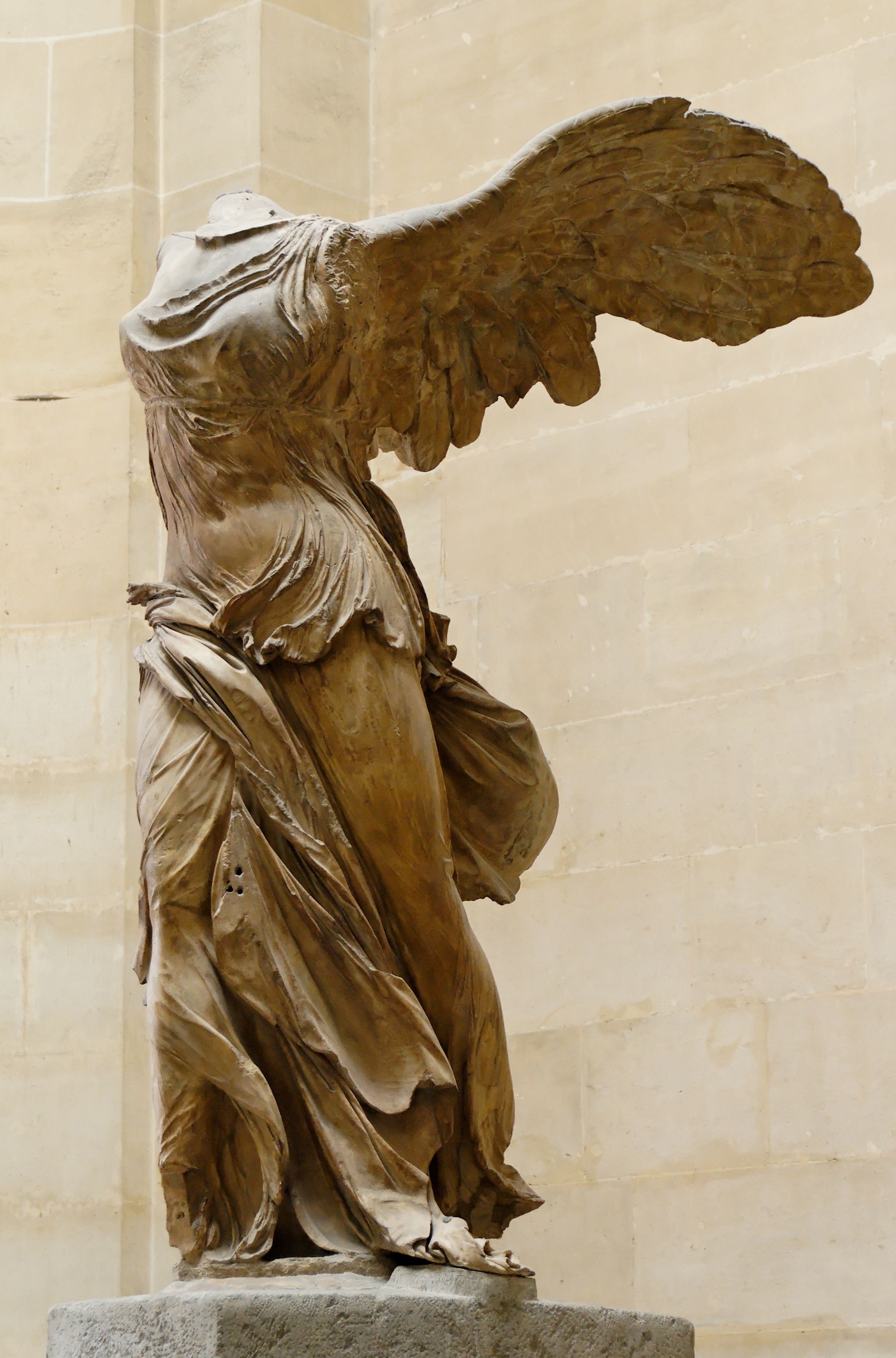
Some of the greatest masterpieces of ancient Greek sculpture were carved from Parian marble, including the Medici Venus, the Venus de Milo, and the Winged Victory of Samothrace.
Archeological fieldwork on Paros has identified extensive ancient marble open-pit quarries, with the most significant sites being found at Chorodaki, Marathi, and Agios Minas. In addition to these open-pit quarries, shaft quarries were also used to mine Parian marble. There were two notable shafts in the valley of Agios Minas, identified as the "Grotto of the Nymphs" and the "Grotto of Pan" because of the relief carvings located near the entrances to the shafts, and the size of these two shafts led to a mistaken assumption by some scholars, influenced by the writing of Raniero Gnoli in his book Marmora romana, that Parian marble could only be obtained in small blocks (roughly c. 1 m³).
The Parian's main rival in antiquity was Pentelic marble, which is also flawless white, albeit with a uniform, faint yellow tint that makes it shine with a golden hue under sunlight. It is today mined mostly on the neighbour island of Paros, Naxos, in the mountains near the village of Kinidaros.
Parian ware is an artificial substitute for marble, originally a brand name for a variety of unglazed biscuit porcelain, developed in 1842 in England. This is cast in moulds, typically for small busts and figurines, rather than carved.
Notable uses
- Venus de Milo
- Peplos Kore
- Lycian sarcophagus of Sidon
- Statue of Augustus from Prima Porta
- Hermes and the Infant Dionysus
- Parthenon's roof tiles
- Napoleon's tomb
References
- The Concise Oxford Dictionary of Archaeology, Timothy Darvill (2002)
References
- Pollini, John. (1998). "Parian lychnites and the Prima Porta statue: new scientific tests and the symbolic value of the marble". Journal of Roman Archaeology.
- Palagia, Olga. (2009). "The Marble of the Bassai Frieze". Marbres et autres roches de la Méditerranée antique, Paris.
- Pollini, John. (1998). "Parian lychnites and the Prima Porta statue: new scientific tests and the symbolic value of the marble". Journal of Roman Archaeology.
This article was imported from Wikipedia and is available under the Creative Commons Attribution-ShareAlike 4.0 License. Content has been adapted to SurfDoc format. Original contributors can be found on the article history page.
Ask Mako anything about Parian marble — get instant answers, deeper analysis, and related topics.
Research with MakoFree with your Surf account
Create a free account to save articles, ask Mako questions, and organize your research.
Sign up freeThis content may have been generated or modified by AI. CloudSurf Software LLC is not responsible for the accuracy, completeness, or reliability of AI-generated content. Always verify important information from primary sources.
Report