From Surf Wiki (app.surf) — the open knowledge base
Paraphilia
Atypical sexual attraction

Atypical sexual attraction
| Field | Value |
|---|---|
| title | Paraphilia |
| image | Martin van Maele - La Comtesse au fouet 01.jpg |
| caption | Podophilia (foot fetishism), a paraphilia |
| etymology | παρά (para; other) + φιλία (philia; loving) |
| definition | Atypical sexual interest |
| coined_by | Friedrich Salomon Krauss |
| * Sexual perversion (1880s–1920)<ref name | IEHS/ |
| associated_terms | Normophilia (antonym) |
- Sexual perversion (1880s–1920)
- Sexual deviation (1952–1980; DSM and ICD)
A paraphilia is an uncommon, intense, and persistent sexual arousal or attraction to anything not sexual by nature. It has also been defined as a sexual interest in anything other than a legally consenting human partner. Paraphilias are contrasted with normophilic ("normal") sexual interests, although the definition of what makes a sexual interest normal or atypical remains controversial.
The exact number and taxonomy of paraphilia is under debate; Anil Aggrawal has listed as many as 549 types of paraphilias. Several sub-classifications of paraphilia have been proposed; some argue that a fully dimensional, spectrum, or complaint-oriented approach would better reflect the evident diversity of human sexuality. Although paraphilias were believed in the 20th century to be rare among the general population, subsequent research has indicated that some level of paraphilic interests are relatively common.
Etymology
Coinage of the term paraphilia (paraphilie) has been credited to Friedrich Salomon Krauss in 1903, and it was used with some regularity by Wilhelm Stekel in the 1920s. The term comes from the Greek παρά (para), meaning 'other' or 'outside of', and φιλία (-philia), meaning 'loving'. The word was popularized by John Money in the 1980s as a non-pejorative designation for unusual sexual interests. It was first included in the DSM in its 1980 edition.
Definition
There is no broad scientific consensus for definitive boundaries between what are considered "unconventional sexual interests", kinks, fetishes, and paraphilias. As such, these terms are often used loosely and interchangeably, especially in common parlance.
History of paraphilic terminology
Many terms have been used to describe atypical sexual interests, and there remains debate regarding technical accuracy and perceptions of stigma. John Money described paraphilia as "a sexuoerotic embellishment of, or alternative to the official, ideological norm". Psychiatrist Glen Gabbard writes that despite efforts by Wilhelm Stekel and John Money, "the term paraphilia remains pejorative in most circumstances."
In the late 19th century, psychologists and psychiatrists began to categorize various paraphilias so as to have a more descriptive system than the legal and religious constructs of sodomy, as well as perversion. In 1914, Albert Eulenburg observed a commonality across paraphilias, using the terminology of his time writing, "All the forms of sexual perversion ... have one thing in common: their roots reach down into the matrix of natural and normal sex life; there they are somehow closely connected with the feelings and expressions of our physiological erotism. They are ... hyperbolic intensifications, distortions, monstrous fruits of certain partial and secondary expressions of this erotism which is considered 'normal' or at least within the limits of healthy sex feeling."
Before the introduction of the term paraphilia in the DSM-III (1980), the term sexual deviation was used to refer to paraphilias in the first two editions of the manual. In 1981, an article published in American Journal of Psychiatry described paraphilia as "recurrent, intense sexually arousing fantasies, sexual urges, or behaviors generally involving":
- Non-human objects
- The suffering or humiliation of oneself or one's partner
- Prepubescent children
- Non-consenting persons
Criticism of common definitions
There is scientific and political controversy regarding the continued inclusion of sex-related diagnoses such as the paraphilias in the DSM, due to the stigma of being classified as a mental illness. Some groups, seeking greater understanding and acceptance of sexual diversity, have lobbied for changes to the legal and medical status of unusual sexual interests and practices. Charles Allen Moser, a physician and advocate for sexual minorities, has argued that the diagnoses should be eliminated from diagnostic manuals. Ray Blanchard stated that the definition of paraphilia in the DSM done by concatenation (i.e., by listing a set of paraphilias) and that defining the term by exclusion (anything that is not normophilic) is preferable.
Many paraphilic communities are unaware of the traumatic impact they reproduce and consider the strangeness of sexual practices to be purely subjective and dependent on the societal context. In BDSM, sadists and masochists reactivate their dissociative circuits by triggering a hormonal release similar to that experienced during the initial trauma: cortisol, adrenaline, and oxytocin disrupt their pleasure and reward systems by associating them with violence and humiliation. Each time they act out, their brains replay the traumatic programme, reinforcing the neural circuits of traumatic functioning.
Inclusion and subsequent exclusion of homosexuality
Homosexuality, a widely accepted variant of human sexuality, was once categorized as a sexual deviation. Sigmund Freud and subsequent psychoanalytic thinkers considered homosexuality and paraphilias to result from psychosexual non-normative relations to the Oedipal complex, although not in the antecedent version of the 'Three Essays on Sexual Theory' where paraphilias are considered as stemming from an original polymorphous perversity. As such, the term sexual perversion or the epithet pervert have historically referred to gay men, as well as other non-heterosexuals (people who fall outside the perceived norms of sexual orientation).
By the mid-20th century, mental health practitioners began formalizing "deviant sexuality" classifications into categories. Originally coded as 000-x63, homosexuality was the top of the classification list (Code 302.0) until the American Psychiatric Association removed homosexuality from the DSM in 1973. Martin Kafka writes, "Sexual disorders once considered paraphilias (e.g., homosexuality) are now regarded as variants of normal sexuality."
A 2012 literature study by clinical psychologist James Cantor, when comparing homosexuality with paraphilias, found that both share "the features of onset and course (both homosexuality and paraphilia being life-long), but they appear to differ on sex ratio, fraternal birth order, handedness, IQ and cognitive profile, and neuroanatomy." The research then concluded that the data seemed to suggest paraphilias and homosexuality as two distinct categories but regarded the conclusion as "quite tentative" given the current limited understanding of paraphilias.
Characteristics
Paraphilias typically arise in late adolescence or early adulthood. Persons with paraphilias are generally egosyntonic and view their paraphilias as something inherent in their being, although they recognize that their sexual fantasies lie outside the norm and may attempt to conceal them. Paraphilic interests are rarely exclusive and some people have more than one paraphilia. Some people with paraphilias may seek occupations and avocations that increase their access to objects of their sexual fantasies (e.g., voyeurs working in rental properties to "peep" on others or pedophiles working with Boy Scouts).
Research has found that some paraphilias, such as voyeurism and sadomasochism, are associated with more lifetime sexual partners, contradicting theories that paraphilias are associated with courtship disorders and arrested social development. Scientific literature includes some single-case studies of very rare and idiosyncratic paraphilias. These include an adolescent male who had a strong fetishistic interest in the exhaust pipes of cars, a young man with a similar interest in a specific type of car, and a man who had a paraphilic interest in sneezing (both his own and the sneezing of others).
Ego alien sexual interests in an individual can cause individuals to become suicidal due to the embarrassment or shame that it causes.
Causes and correlations
The causes of paraphilias in people are unclear, but it is believed to be a mixture of neurological, cultural, and psychodynamic factors. No two or more people with a paraphilia will develop it for the same reasons or be interested in the same qualities of the specific sexual interest. The specific causes of the development of paraphilic sexuality are numerous and vary from person to person, but psychological research has established that childhood trauma is strongly correlated with the development of paraphilic sexuality, particularly emotional abuse, neglect, and sexual abuse.
A 2008 study analyzing the sexual fantasies of 200 heterosexual men by using the Wilson Sex Fantasy Questionnaire exam determined that males with a pronounced degree of fetish interest had a greater number of older brothers, a high 2D:4D digit ratio (which would indicate excessive prenatal estrogen exposure), and an elevated probability of being left-handed, suggesting that "disturbed" hemispheric brain lateralization may play a role in paraphilic attractions. Behavioral explanations propose that paraphilias are conditioned early in life, during an experience that pairs the paraphilics stimulus with intense sexual arousal. Susan Nolen-Hoeksema suggests that, once established, masturbatory fantasies about the stimulus reinforce and broaden the paraphilic arousal.
Genetic causes, particularly genes that encode the behavior of neurotransmitter receptors and androgen release have been implicated in studies, though others have shown no correlation between genetics and paraphilic behavior.
It is possible for an individual to acquire a paraphilia from various types of brain lesions and epilepsy.
Prevalence
Although paraphilic interests in the general population were believed to be rare, research has shown that fantasies and behaviors related to voyeurism, sadomasochism, and couple exhibitionism are not statistically uncommon among adults. The DSM-5 estimates that 2.2% of males and 1.3% of females in Australia engaged in bondage and discipline, sadomasochism, or dominance and submission within the past 12 months. The population prevalence of sexual masochism disorder is unknown.
Among men
In a study conducted in a population of men, 62% of participants reported at least one paraphilic interest. In another sample of college students, voyeurism was reported in 52% of men.
Among women
Paraphilias are often observed in women, and there have been some studies focusing exclusively on females with paraphilias. Men and women differ on the content of their sexual fantasies, with men reporting greater proportions of fetishism, exhibitionism and, sadism, and women reporting greater proportions of masochism. Sexual masochism has been found to be the most commonly observed paraphilia in women, with approximately 1 in 20 cases.
In ancient cultures
Paraphilic fantasies and behaviors have been registered in multiple old and ancient sources. Voyeurism, bestiality, and exhibitionism have been described in the Bible. Sexual relations with animals have also been depicted in cave paintings. Some ancient sex manuals such as the Kama Sutra (450), Koka Shastra (1150), and Ananga Ranga (1500) discuss biting, marks left after sex and love blows. Although evidence suggests that paraphilic behaviors have existed prior to the Renaissance, it is difficult to ascertain how common they were and how many people had persistent paraphilic fantasies in ancient times.
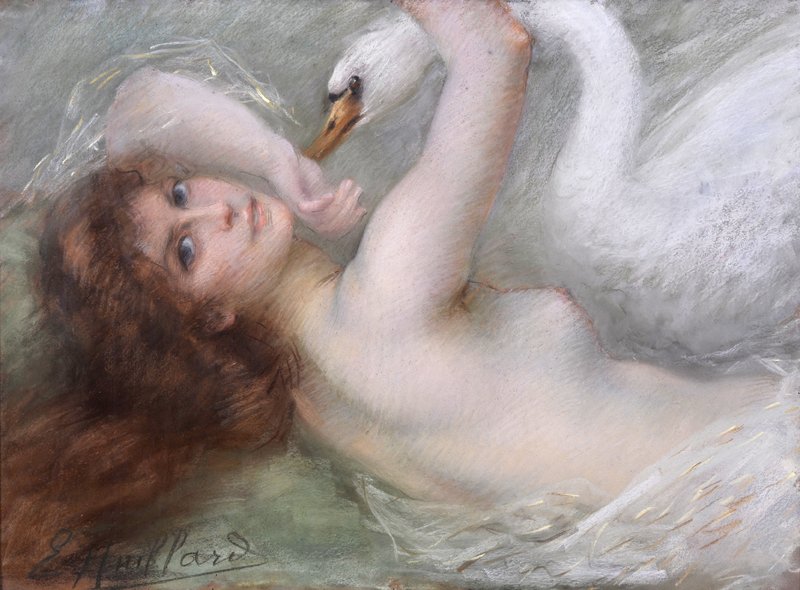
Bestiality has been depicted multiple times in Greek mythology, although the act itself usually involved a deity in zoomorphic form, such as Zeus seducing Europa, Leda, and Persephone while disguised as a bull, a swan, and a serpent, respectively. Zeus was also depicted, in the form of an eagle, abducting Ganymede, an act that alludes to both bestiality and pederastry. Some fragments of Hittite law include prohibitions of and permissions to engage in specific acts of bestiality.
Havelock Ellis pointed to an example of sexual masochism in the fifteenth century. The report, written by Giovanni Pico della Mirandola, described a man who could only be aroused by being beaten with a whip dipped in vinegar. Wilhelm Stekel also noted that Rousseau also discussed his own masochism in his Confessions. Other similar instances of persistent paraphilic fantasies were reported between 1516 and 1643 by Coelius Sedulius, Rhodiginus, Brundel and Meibomius.
Paraphilic disorder
References
References
- Allely, Clare Sarah. (2020-01-30). "Autism spectrum disorder, bestiality and zoophilia: a systematic PRISMA review". Journal of Intellectual Disabilities and Offending Behaviour.
- (2013). "Diagnostic and Statistical Manual of Mental Disorders". [[American Psychiatric Publishing]].
- (2000). "Diagnostic and Statistical Manual of Mental Disorders-IV (Text Revision)". [[American Psychiatric Publishing]].
- (8 December 2016). "Sex Crimes and Sex Offenders: Research and Realities". Routledge.
- (2021-09-30). "Sexual Deviance and Society: A Sociological Examination". Routledge.
- Joyal, Christian C.. (2018-10-01). "Controversies in the Definition of Paraphilia". The Journal of Sexual Medicine.
- Aggrawal, Anil. (2008). "Forensic and Medico-legal Aspects of Sexual Crimes and Unusual Sexual Practices". [[CRC Press]].
- (2015-04-10). "The International Encyclopedia of Human Sexuality". Wiley.
- (2002). "Spectrum concepts in major mental disorders". Psychiatric Clinics of North America.
- (2005). "Introduction to the Special Section: Toward a Dimensionally Based Taxonomy of Psychopathology". [[American Psychological Association]].
- (2020-05-07). "Conceptualization, History, and Future of the Paraphilias". Annual Review of Clinical Psychology.
- Stekel, Wilhelm. (2004). "Sexual Aberrations: The Phenomenon of Fetishism in Relation to Sex". [[Boni & Liveright]].
- (2017-07-14). "Transgender Psychoanalysis: A Lacanian Perspective on Sexual Difference – Patricia Gherovici – Google Books". Taylor & Francis.
- Joyal, Christian C.. (20 June 2014). "How Anomalous Are Paraphilic Interests?". [[Springer Science + Business Media]].
- (2015). "What Exactly is an Unusual Sexual Fantasy?". [[Elsevier]].
- Weiderman, Milan. (2003). "Paraphilia and Fetishism". [[SAGE Publications]].
- Bullough, Vern L.. (1995). "Science in the Bedroom: A History of Sex Research". [[Basic Books]].
- Moser, Charles Allen. (2001). "New directions in sex therapy: innovations and alternatives". [[Taylor & Francis.
- (2004). "Choices in sexuality". Atomic Dog Publishing.
- Money, John. (1990). "Gay, Straight, and In-Between: The Sexology of Erotic Orientation". [[Oxford University Press]].
- Gabbard, Glen O.. (2007). "Gabbard's Treatments of Psychiatric Disorders". American Psychiatric Press.
- Dailey, Dennis M.. (1989). "The Sexually Unusual: Guide to Understanding and Helping". [[Haworth Press]].
- (2006). "The psychology of lust murder: paraphilia, sexual killing, and serial homicide". [[Academic Press]].
- [[Albert Eulenburg. Eulenburg]] (1914). ''Ueber sexualle Perversionen. Ztschr. f. Sexualwissenschaft''. Vol. I, No. 8. Translated by [[Wilhelm Stekel. Stekel, Wilhelm]] (1940). ''Sexual Aberrations: The Phenomena of Fetishism in rRelation to Sex''. New York: Liveright, p. 4. {{OCLC. 795528.
- Laws & O'Donohue, p. 384
- (February 1981). "The diagnostic status of homosexuality in DSM-III: A reformulation of the issues". [[American Psychiatric Association]].
- (2005). "Politics versus science: An addendum and response to Drs. Spitzer and Fink". [[Taylor & Francis]].
- (2005). "DSM-IV-TR and the Paraphilias: An argument for removal". [[Taylor & Francis]].
- Moser, Charles. (2011). "Yet Another Paraphilia Definition Fails". Archives of Sexual Behavior.
- Natacha Godbout, [https://natachagodbout.com/sites/default/files/Articles_scientifiques/gewirtz-godbout-2024.pdf "The Complex Interplay between BDSM and Childhood Sexual Abuse: A Form of Repetition and Dissociation or a Path Toward Processing and Healing?"], ''PubMed'', 2024.
- Elise Wuyts and al, [https://pubmed.ncbi.nlm.nih.gov/34876387/ "The Biology of BDSM "], ''PubMed'', 2022.
- Hutchinson, Gerald E.. (1959). "A speculative consideration of certain possible forms of sexual selection in man". [[University of Chicago Press]].
- Lacan, Jacques. Le Séminaire. Livre IV. La relation d'objet, 1956–57. Ed. Jacques-Alain Miller. Paris: Seuil, 1991. p. 201
- (23 June 1951). "The sexual psychopath". [[American Medical Association]].
- Freud, Sigmund. (1971). "Three essays on the theory of sexuality (1905). Summary".
- Kafka, Martin P.. (1996). "Therapy for Sexual Impulsivity: The Paraphilias and Paraphilia-Related Disorders". MJH Associates.
- (February 2012). "Is Homosexuality a Paraphilia? The Evidence for and Against". [[Springer Science + Business Media]].
- (2021). "Paraphilia". Springer International Publishing.
- (2018-09-01). "Deviance or Normalcy? The Relationship Among Paraphilic Thoughts and Behaviors, Hypersexuality, and Psychopathology in a Sample of University Students". The Journal of Sexual Medicine.
- Padmal de Silva. (March 2007). "Sexual disorder and psychosexual therapy". Psychiatry.
- King, Michael B.. (1990). "Sneezing as a fetish object". [[Routledge]].
- (2 January 2018). "Paraphilias and paraphilic disorders: diagnosis, assessment and management". Advances in Psychiatric Treatment.
- "Overview of Paraphilias and Paraphilic Disorders - Psychiatric Disorders".
- (2010). "The World Federation of Societies of Biological Psychiatry (WFSBP) Guidelines for the biological treatment of paraphilias". The World Journal of Biological Psychiatry.
- "Paraphilias: Clinical and Forensic Considerations".
- Courtney Burdis Galiano, Jean-Pierre Guay, Nicholas Longpré. (2022). "The impact of childhood trauma, personality, and sexuality on the development of paraphilias".
- Jennie G. Noll. (2003). "A prospective investigation of the impact of childhood sexual abuse on the development of sexuality".
- (February 2007). "Neurodevelopmental Correlates of Paraphilic Sexual Interests in Men". [[Springer Science + Business Media]].
- Nolen-Hoeksema, Susan. (2013). "Abnormal Psychology". [[McGraw-Hill]].
- (2017-01-01). "Paraphilic Sexual Offenders Do Not Differ From Control Subjects With Respect to Dopamine- and Serotonin-Related Genetic Polymorphisms". The Journal of Sexual Medicine.
- (2016-05-01). "Genetic Variants Associated With Male Pedophilic Sexual Interest". The Journal of Sexual Medicine.
- (22 December 2006). "Neurological control of human sexual behaviour: insights from lesion studies". Journal of Neurology, Neurosurgery, and Psychiatry.
- American Psychiatric Association. (2013). "Diagnostic and Statistical Manual of Mental Disorders: Fifth Edition".
- (2015). "Sensual, Erotic, and Sexual Behaviors of Women from the "Kink" Community". Archives of Sexual Behavior.
- (11 November 2014). "Kinky Sex Survey Says: You're Not as Deviant as You Think".
- Eva W. C. Chow. (April 2002). "Clinical Characteristics and Treatment Response to SSRI in a Female Pedophile". Archives of Sexual Behavior.
- (2016). "Paraphilic Interests: An Examination of Sex Differences in a Nonclinical Sample". Sexual Abuse.
- American Psychiatric Association (2000). Diagnostic and statistical manual of mental disorders (4th ed., text revision). pp. 569–570, 572, 574, Washington, DC: Author.
- American Psychiatric Association. (2013). "Diagnostic and Statistical Manual of Mental Disorders: Fifth Edition".
- Balon, Richard. (2016). "General Information: History, Etiology and Theory (e.g., Courtship), Diagnosis, Comorbidity and Prevalence". Springer International Publishing.
- Peled, Ilan (2020). "Bestiality in Hittite Thought." ''Journal of the Ancient Near Eastern Society'' 34 (1).
- Stekel, W.. (2013). "Sadism and Masochism – The Psychology of Hatred and Cruelty – Vol. II". Read Books Limited.
This article was imported from Wikipedia and is available under the Creative Commons Attribution-ShareAlike 4.0 License. Content has been adapted to SurfDoc format. Original contributors can be found on the article history page.
Ask Mako anything about Paraphilia — get instant answers, deeper analysis, and related topics.
Research with MakoFree with your Surf account
Create a free account to save articles, ask Mako questions, and organize your research.
Sign up freeThis content may have been generated or modified by AI. CloudSurf Software LLC is not responsible for the accuracy, completeness, or reliability of AI-generated content. Always verify important information from primary sources.
Report