From Surf Wiki (app.surf) — the open knowledge base
Paramount Theatre (Seattle)
Performance hall in Seattle, Washington
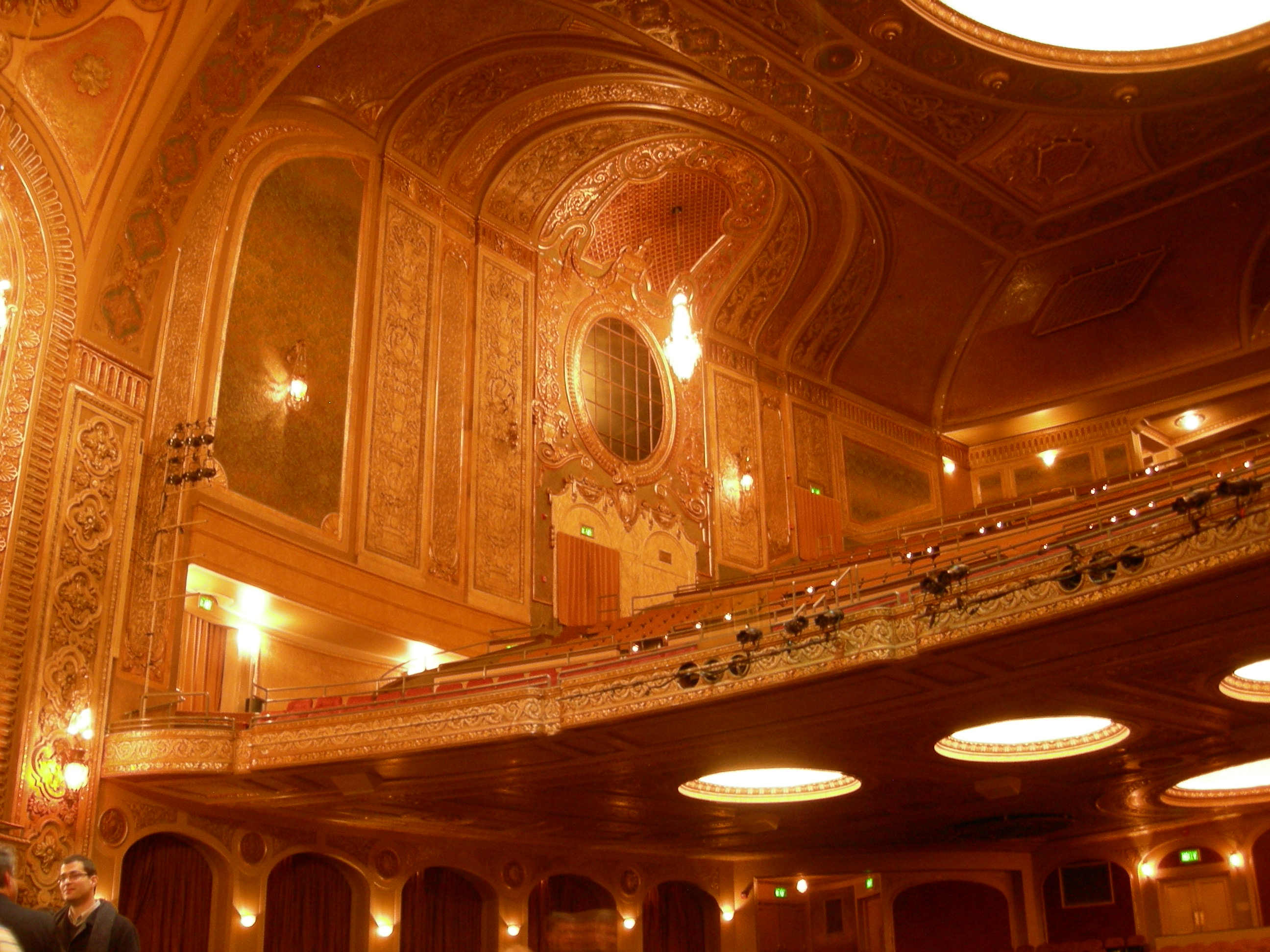
Performance hall in Seattle, Washington
| Field | Value |
|---|---|
| name | Paramount Theatre |
| image | Paramount Theater in Seattle showing Wicked.jpg |
| caption | The Paramount Theatre in 2015 |
| address | 901 Pine Street |
| Seattle, Washington | |
| 98101 | |
| opened | |
| capacity | 2,807 |
| website | |
| coordinates | |
| embed | yes |
| designated_other1 | Seattle Landmark |
| designated_other1_date | February 13, 1995 |
| locmapin | Seattle WA Downtown#Washington#USA |
| map_caption | Location within downtown Seattle |
| architect | Rapp & Rapp; B. Marcus Priteca |
| added | October 19, 1974 |
| refnum | 74001959 |
Seattle, Washington 98101 The Paramount Theatre is a 2,807-seat performing arts venue located at 9th Avenue and Pine Street in the downtown core of Seattle, Washington, United States. The theater originally opened on March 1, 1928, as the Seattle Theatre, with 3,000 seats. It was placed on the National Register of Historic Places on October 9, 1974, and has also been designated a City of Seattle landmark.
The Paramount is owned and operated by the Seattle Theatre Group, a 501(c)(3) not-for-profit performing arts organization which also runs the 1,768-seat Moore Theatre in Belltown and the Neptune Theatre in the University District. Initially it was built expressly for showing film and secondarily, vaudeville. As of 2009, the Paramount is operated as a venue for various performing arts, serving its patron base with Broadway musical theatre, concerts, dance, comedy, family engagements, silent film and jazz. It is one of the busiest theatres in the region.
History
During the 1920s, particularly before the first sound films, or "talkies", were invented in 1927, vaudeville and silent movies were the dominant form of national and local entertainment. Seattle alone had more than 50 movie palaces, the finest grouped together on 2nd Avenue. To achieve the broadest possible distribution of its films, Hollywood-based Paramount Pictures constructed a grand movie palace in practically every major city in the country, many erected between 1926 and 1928. In late 1926 or early 1927, Paramount Pictures decided to build in Seattle.
Led by its president, movie magnate Adolph Zukor, Paramount Pictures invested nearly $3 million for construction. It hired Rapp & Rapp, a Chicago-based architectural firm, to design the theatre building. Seattle resident B. Marcus Priteca, an established architect of movie palaces in the 1920s, designed the building's adjacent apartments and office suites.
The Paramount Theatre is the first venue in the United States to have a convertible floor system, which converts the theater to a ballroom. Therefore, the maximum concert capacity can hold up to 3,000 fans with the main floor serving as an unreserved standing room area while keeping the seats in the balcony regardless of either a 2,807-seated theater or a general admission event by separated levels.
The Paramount Theatre has an original installation of the Wurlitzer theatre pipe organ. The organ is a 4 manual/21 rank Publix 1 style organ and is one of only three remaining original organs of this style. Jim Riggs has been the house organist for the Paramount, accompanying the Trader Joe's Silent Movie Mondays series. The organ is presently maintained by a group of volunteers from the Puget Sound Theatre Organ Society.
It was renamed the Paramount in 1930. It was renamed the Paramount Northwest in 1971. In 1993, it was purchased by Ida Cole, a former Microsoft vice-president, and closed for repairs in May 1994. It reopened as the Paramount on March 17, 1995.
On December 2, 1972, Black Oak Arkansas recorded a concert here that provided four of the seven songs on the band's 1973 album, "Raunch 'N' Roll Live."
As of 2009, the Paramount has a new sign out front. The 1940s Paramount sign originally used 1,970 incandescent bulbs, which were eventually replaced by 11-watt fluorescents. The new sign is a replica of the original iconic sign, but uses LED lights. The Paramount Theatre was also used to hold televised auditions for the sixth season of America's Got Talent.
References
References
- "Landmarks and Designation". City of Seattle.
- Shipley, Jonathan. "A Sign of Change", ''Seattle City Arts'', November 2009, p. 11.
- "Paramount Theatre".
- "Seattle Theatre". Thatreland Ltd.
- Reader, Bill. (December 5, 2014). "The Paramount's Mighty Wurlitzer organ is a rare survivor of the silent movie era". [[The Seattle Times]].
- "The Paramount Theatre".
- J. Clark. (2007). "History of the Haunted Paramount Theater in Seattle, Washington". [[USA Today]].
This article was imported from Wikipedia and is available under the Creative Commons Attribution-ShareAlike 4.0 License. Content has been adapted to SurfDoc format. Original contributors can be found on the article history page.
Ask Mako anything about Paramount Theatre (Seattle) — get instant answers, deeper analysis, and related topics.
Research with MakoFree with your Surf account
Create a free account to save articles, ask Mako questions, and organize your research.
Sign up freeThis content may have been generated or modified by AI. CloudSurf Software LLC is not responsible for the accuracy, completeness, or reliability of AI-generated content. Always verify important information from primary sources.
Report