From Surf Wiki (app.surf) — the open knowledge base
Papaverine
Chemical compound
Chemical compound
| Field | Value | |
|---|---|---|
| Verifiedfields | changed | |
| Watchedfields | changed | |
| verifiedrevid | 464197236 | |
| IUPAC_name | 1-[(3,4-dimethoxyphenyl)methyl]-6,7-dimethoxyisoquinoline | |
| image | Papaverine.svg | |
| image_class | skin-invert-image | |
| image2 | Papaverine-from-xtal-3D-balls-B.png | |
| image_class2 | bg-transparent | |
| <!--Clinical data--> | pronounce | |
| tradename | Pavabid, others | |
| Drugs.com | ||
| MedlinePlus | a682707 | |
| pregnancy_AU | A | |
| pregnancy_US | C | |
| legal_AU | S4 | |
| legal_US | Rx-only | |
| routes_of_administration | By mouth, intravenous, intramuscular, rectal, intracavernosal | |
| <!--Pharmacokinetic data--> | bioavailability | 80% |
| protein_bound | ~90% | |
| metabolism | Hepatic | |
| elimination_half-life | 1.5–2 hours | |
| excretion | Renal | |
| <!--Identifiers--> | CAS_number_Ref | |
| CAS_number | 58-74-2 | |
| CAS_supplemental | ||
| 61-25-6 (hydrochloride) | ||
| ATC_prefix | A03 | |
| ATC_suffix | AD01 | |
| ATC_supplemental | ||
| PubChem | 4680 | |
| DrugBank_Ref | ||
| DrugBank | DB01113 | |
| ChemSpiderID_Ref | ||
| ChemSpiderID | 4518 | |
| UNII_Ref | ||
| UNII | DAA13NKG2Q | |
| KEGG_Ref | ||
| KEGG | D07425 | |
| ChEBI_Ref | ||
| ChEBI | 28241 | |
| ChEMBL_Ref | ||
| ChEMBL | 19224 | |
| <!--Chemical data--> | C | 20 |
| H | 21 | |
| N | 1 | |
| O | 4 | |
| smiles | COc1ccc(cc1OC)Cc2c3cc(c(cc3ccn2)OC)OC | |
| StdInChI_Ref | ||
| StdInChI | 1S/C20H21NO4/c1-22-17-6-5-13(10-18(17)23-2)9-16-15-12-20(25-4)19(24-3)11-14(15)7-8-21-16/h5-8,10-12H,9H2,1-4H3 | |
| StdInChIKey_Ref | ||
| StdInChIKey | XQYZDYMELSJDRZ-UHFFFAOYSA-N |
| Drugs.com =
| elimination_half-life = 1.5–2 hours
61-25-6 (hydrochloride)
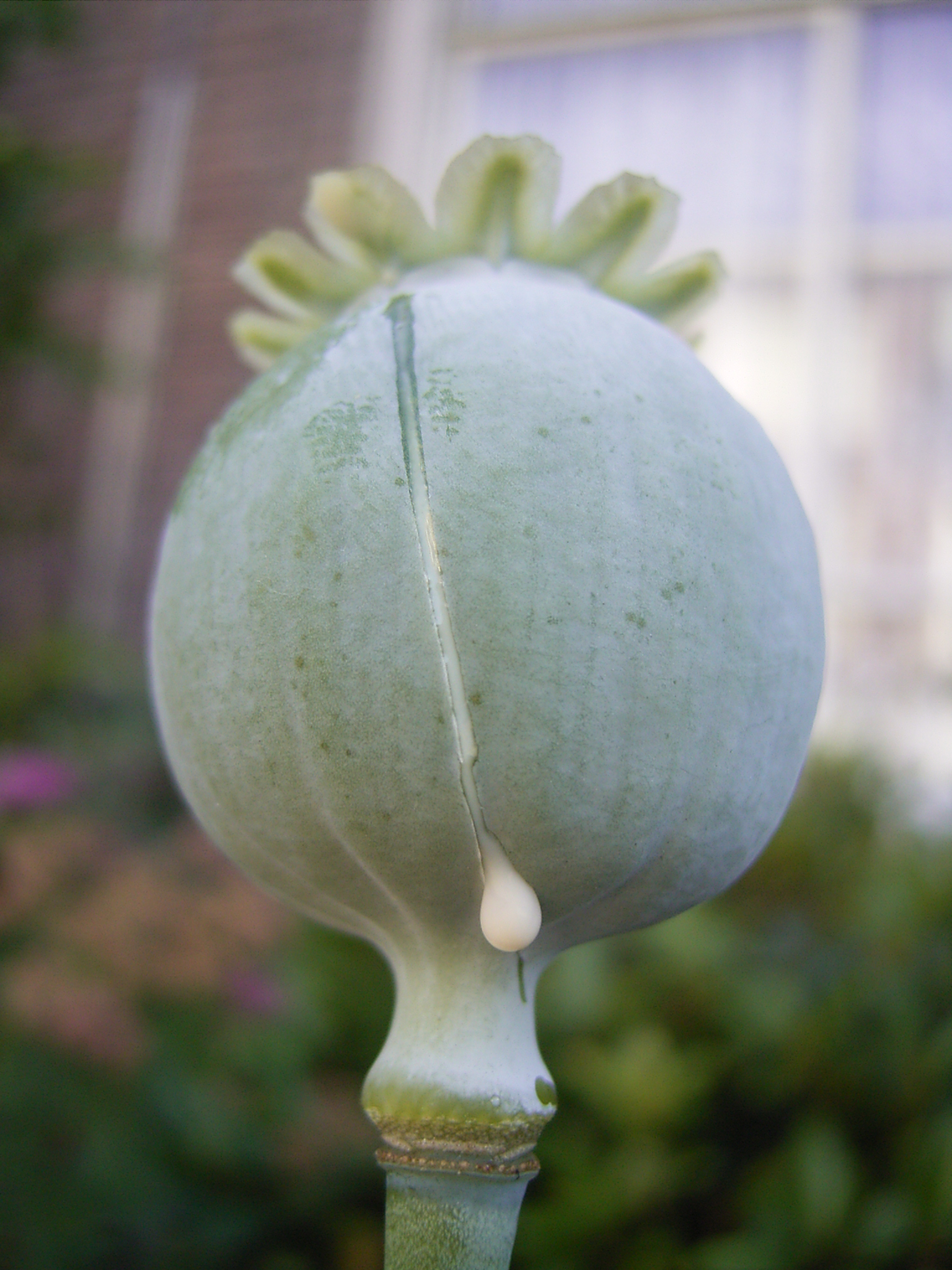
Papaverine (Latin papaver, "poppy") is an opium alkaloid antispasmodic drug, used primarily in the treatment of visceral spasms and vasospasms (especially those involving the intestines, heart, or brain), occasionally in the treatment of erectile dysfunction and acute mesenteric ischemia. While it is found in the opium poppy, papaverine differs in both structure and pharmacological action from the analgesic morphine and its derivatives (such as codeine).
In addition to opium, papaverine is purported to be present in high concentrations in star gooseberry.
History
Papaverine was discovered in 1848 by Georg Merck (1825–1873). Merck was a student of the German chemists Justus von Liebig and August Hofmann, and he was the son of Emanuel Merck (1794–1855), founder of the Merck corporation, a major German chemical and pharmaceutical company.
Uses
Papaverine is approved to treat spasms of the gastrointestinal tract, bile ducts and ureter and for use as a cerebral and coronary vasodilator in subarachnoid hemorrhage (combined with balloon angioplasty) and coronary artery bypass surgery. Papaverine may also be used as a smooth muscle relaxant in microsurgery where it is applied directly to blood vessels.
Papaverine is used as an erectile dysfunction drug, alone or sometimes in combination. Papaverine, when injected in penile tissue, causes direct smooth muscle relaxation and consequent filling of the corpus cavernosum with blood resulting in erection. A topical gel is also available for ED treatment.
It is also commonly used in cryopreservation of blood vessels along with the other glycosaminoglycans and protein suspensions. Functions as a vasodilator during cryopreservation when used in conjunction with verapamil, phentolamine, nifedipine, tolazoline or nitroprusside.
Papaverine is also being investigated as a topical growth factor in tissue expansion with some success.
Papaverine is used as an off-label prophylaxis (preventative) of migraine headaches. It is not a first line drug such as a few beta blockers, calcium channel blockers, tricyclic antidepressants, and some anticonvulsants such as divalproex, but rather when these first line drugs and secondary drugs such as SSRIs, angiotensin II receptor antagonists, etc. fail in the prophylaxis of migraines, have intolerable side effects or are contraindicated.
Papaverine is also present in combinations of opium alkaloid salts such as papaveretum (Omnopon, Pantopon) and others, along with morphine, codeine, and in some cases noscapine and others in a percentage similar to that in opium, or modified for a given application.
Papaverine is found as a contaminant in some heroin and can be used by forensic laboratories in heroin profiling to identify its source. The metabolites can also be found in the urine of heroin users, allowing street heroin to be distinguished from pharmaceutical diacetylmorphine.
Mechanism
The in vivo mechanism of action is not entirely clear, but an inhibition of the enzyme phosphodiesterase causing elevation of cyclic AMP and cyclic GMP levels is significant. It may also alter mitochondrial respiration.
Papaverine has also been demonstrated to be a selective phosphodiesterase inhibitor for the PDE10A subtype found mainly in the striatum of the brain. When administered chronically to mice, it produced motor and cognitive deficits and increased anxiety, but conversely may produce an antipsychotic effect, although not all studies support this view.
Side effects
Frequent side effects of papaverine treatment include polymorphic ventricular tachycardia, constipation, interference with sulphobromophthalein retention test (used to determine hepatic function), increased transaminase levels, increased alkaline phosphatase levels, somnolence, and vertigo.
Rare side effects include flushing of the face, hyperhidrosis (excessive sweating), cutaneous eruption, arterial hypotension, tachycardia, loss of appetite, jaundice, eosinophilia, thrombopenia, mixed hepatitis, headache, allergic reaction, chronic active hepatitis, and paradoxical aggravation of cerebral vasospasm.
Papaverine in the plant Sauropus androgynus is linked to bronchiolitis obliterans.
Formulations and trade names
Papaverine is available in its salt form as the hydrochloride, codecarboxylate, adenylate, and teprosylate. It was also once available as a salt of hydrobromide, camsylate, cromesilate, nicotinate, and phenylglycolate. The hydrochloride salt is available for intramuscular, intravenous, rectal and oral administration. The teprosylate is available in intravenous, intramuscular, and orally administered formulations. The codecarboxylate is available in oral form, only, as is the adenylate.
The codecarboxylate is sold under the name Albatran, the adenylate as Dicertan, and the hydrochloride salt is sold variously as Artegodan (Germany), Cardioverina (countries outside Europe and the United States), Dispamil (countries outside Europe and the United States), Opdensit (Germany), Panergon (Germany), Paverina Houde (Italy, Belgium), Pavacap (United States), Pavadyl (United States), Papaverine (Israel), Papaverin-Hamelin (Germany), Paveron (Germany), Spasmo-Nit (Germany), Cardiospan, Papaversan, Cepaverin, Cerespan, Drapavel, Forpaven, Papalease, Pavatest, Paverolan, Therapav (Canada), Vasospan, Cerebid, Delapav, Dilaves, Durapav, Dynovas, Optenyl, Pameion, Papacon, Pavabid, Pavacen, Pavakey, Pavased, Pavnell, Alapav, Myobid, Vasal, Pamelon, Pavadel, Pavagen, Ro-Papav, Vaso-Pav, Papanerin-hcl, Qua bid, Papital T.R., Paptial T.R., Pap-Kaps-150. In Hungary, papaverine and homatropine methylbromide are used in mild drugs that help "flush" the bile.
References
References
- Kao CH. (1999). "Using 99mTc-DTPA Radioaerosol Inhalation Lung Scintigraphies to Detect the Lung Injury Induced by Consuming Sauropus androgynus Vegetable and Comparison with Conventional Pulmonary Function Tests". Karger AG.
- (1848). "Vorläufige Notiz über eine neue organische Base im Opium". Annalen der Chemie und Pharmacie.
- (2002-06-20). "Justus Von Liebig: The Chemical Gatekeeper". Cambridge University Press.
- (2005). "Intra-arterial papaverine infusions for the treatment of cerebral vasospasm induced by aneurysmal subarachnoid hemorrhage". Neurocritical Care.
- (November 2004). "Reactivity of the human internal thoracic artery to vasodilators in coronary artery bypass grafting". European Journal of Cardio-Thoracic Surgery.
- (July 2005). "[An overview of the management of erectile disorders]". Presse Médicale.
- (2004). "Intracavernous pharmacotherapy for erectile dysfunction". Endocrine.
- (February 1995). "Papaverine topical gel for treatment of erectile dysfunction". The Journal of Urology.
- (May 1992). "Sucrose promotes the functional activity of blood vessels after cryopreservation in DMSO-containing fetal calf serum". Naunyn-Schmiedeberg's Archives of Pharmacology.
- (February 1994). "Effects of cryopreservation upon vein function in vivo". Cryobiology.
- (November 2002). "Cryopreservation prevents arterial allograft dilation". Annals of Vascular Surgery.
- (October 2004). "Accelerating tissue expansion by application of topical papaverine cream". Plastic and Reconstructive Surgery.
- (March 1978). "Papaverine in the prophylaxis of migraine and other vascular headache in children". Acta Paediatrica Scandinavica.
- (September 1977). "Brief therapeutic report: papaverine prophylaxis of complicated migraine". Headache.
- (June 1974). "Letter: Papaverine in prophylactic treatment of migraine". Lancet.
- (May 2006). "Comparison of the various opiate alkaloid contaminants and their metabolites found in illicit heroin with 6-monoacetyl morphine as indicators of heroin ingestion". Journal of Analytical Toxicology.
- (March 2013). "Biomarkers for illicit heroin: a previously unrecognized origin of papaverine". Journal of Analytical Toxicology.
- (May 2010). "Supervised injectable heroin or injectable methadone versus optimised oral methadone as treatment for chronic heroin addicts in England after persistent failure in orthodox treatment (RIOTT): a randomised trial". Lancet.
- (August 2006). "Inhibition of the striatum-enriched phosphodiesterase PDE10A: a novel approach to the treatment of psychosis". Neuropharmacology.
- (May 2008). "Phosphodiesterase 10A inhibition is associated with locomotor and cognitive deficits and increased anxiety in mice". European Neuropsychopharmacology.
- (May 2009). "Evaluating the antipsychotic profile of the preferential PDE10A inhibitor, papaverine". Psychopharmacology.
- (April 1996). "Paradoxical aggravation of vasospasm with papaverine infusion following aneurysmal subarachnoid hemorrhage. Case report". Journal of Neurosurgery.
- (2015). "Sauropus androgynus (L.) Merr. Induced Bronchiolitis Obliterans: From Botanical Studies to Toxicology". Evidence-Based Complementary and Alternative Medicine.
- "THERAPAV (PRODUIT PUR) - Détail".
- "Országos Gyógyszerészeti és Élelmezés-egészségügyi Intézet".
This article was imported from Wikipedia and is available under the Creative Commons Attribution-ShareAlike 4.0 License. Content has been adapted to SurfDoc format. Original contributors can be found on the article history page.
Ask Mako anything about Papaverine — get instant answers, deeper analysis, and related topics.
Research with MakoFree with your Surf account
Create a free account to save articles, ask Mako questions, and organize your research.
Sign up freeThis content may have been generated or modified by AI. CloudSurf Software LLC is not responsible for the accuracy, completeness, or reliability of AI-generated content. Always verify important information from primary sources.
Report