From Surf Wiki (app.surf) — the open knowledge base
Pangani River
River in northeastern Tanzania
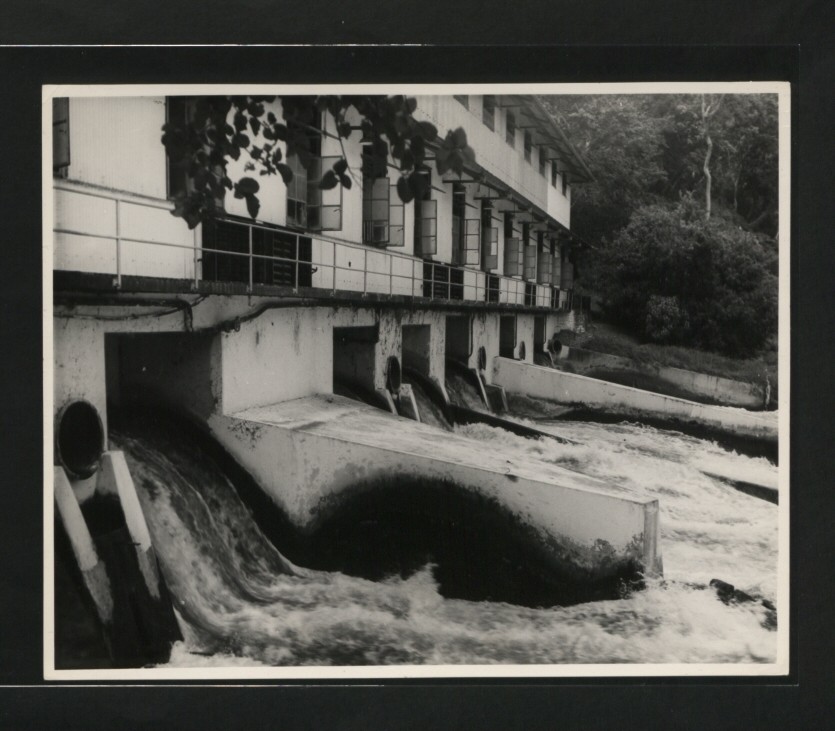
River in northeastern Tanzania
| Field | Value |
|---|---|
| name | Pangani River |
| native_name | sw |
| image | Pangani River in Bushiri Ward.jpg |
| image_size | 250 |
| image_caption | Pangani River in Bushiri ward. |
| map | Panganirivermap.png |
| map_size | 250 |
| map_caption | Map of River Pangani |
| source1_location | Arusha District, Arusha Region |
| mouth_location | Indian Ocean at the town of Pangani, Pangani District, Tanga Region |
| subdivision_type1 | Country |
| subdivision_name1 | Tanzania |
| subdivision_type2 | Region |
| subdivision_name2 | Tanga Region, Arusha Region, Manyara Region, Kilimanjaro Region |
| subdivision_type3 | District |
| subdivision_name3 | Arusha District Council, Meru District, Arusha City Council, Hai District, Moshi District, Mwanga District, Same District, Korogwe District, Korogwe Town, Muheza District, Pangani District, |
| length | 500km |
| discharge1_avg | 27 m3/s |
| basin_size | 43650 km2 |
| tributaries_left | Mkomazi; Luengera |
| tributaries_right | Lumoromo; Fukda; Mkalami |
The Pangani River (Mto Pangani, in Swahili), (also called Luffu and Jipe Ruvu, especially in older sources, and probably once called Rhaptus) is a major river of northeastern Tanzania. It has two main sources: the Ruvu, which rises as Lumi at Kilimanjaro, passes through Lake Jipe, and empties into the Nyumba ya Mungu Reservoir, and the Kikuletwa River, coming from the west and mainly fed by rivers of Mount Meru in Arusha Region, which also enters into the Nyumba ya Mungu Reservoir in Kilimanjaro Region. Just after leaving the reservoir the stream becomes the main Pangani, which empties into the Indian Ocean in Tanga Region at the Tangan port town of Pangani.
For much of its length the river flows along the regional borders of Kilimanjaro Region and Manyara Region, before flowing into Tanga Region, which contains the 68 MW Pangani Power Station and the Pangani Falls Dam. There are several inhabited islands within the river. The river is full of crocodiles; hippopotami are scarcer in its lower parts.
Etymology
A main source of Pangani originates on Kilimanjaro, where it is the River Lumi. Lake Jipe may be considered a backwater of the Lumi. Below Lake Jipe and above the falls, the river is referred to as "Ruvu".
Formerly the main course towards the sea was alternatively called "Ruvu" and "Pangani". Nowadays that has been settled as "Pangani" from the Nyumba ya Mungu reservoir to the Ocean. While the Swahili call it "Pangani" (meaning distribute or arrange), it is called "Luffu" by the Wasambara (indigenous to the Nderema area, on the three ridges nearer the coast) and the Zigua (who live on the river's islands). Almost all authorities agree that the river "Rhaptus" of Ptolemy's topographical maps is the Pangani of modern maps.
Geography
The Pangani is 500 km in length. ;Source One source of the river rises in Kilimanjaro, about 120 mi from the sea. Known as the Lumi in this area, its course runs through Lake Jipe. The other is at Mount Meru in the west and is known as the Kikuletwa. Like all African rivers, its depth varies with the season. The river is highest around May and lowest around October. Another source is the Saunyi River in Kilindi District.

;Midsection It is navigable for small craft between the lake and the Höhnel Cataracts, a series of rapids. Below the Höhnel Cataracts, it has numerous tributaries, and many islands with villages on them. The stream is strongest above Koleni, within 5 miles of the Pangani Falls, where the river is narrow. This section is not navigable for any considerable distance on account of the falls, which are about 30 mi from the mouth. Approximately 4 mi from the mouth, dense mangrove swamp covers the flatland between the hills on either side. In this area, near Teufelsfelsen, are higher land, a fertile area, and the arid Masai Steppe. On this bank is Mount Kovu Kovu, 360 ft in height, while on the south bank is a ridge 400 ft high. Pombwe, one of the principal settlements on the river, is situated about 1 mi west of Kovu Kovu. Above Pombwe, the West African oil palm grows, while below Pombwe, the trees are chiefly areca and coconut palms. The village of Lemkuna and the hamlet of Ngage are on the river's west bank, while Mvungwe and Meserani are on its eastern bank. ;Mouth The mouth is located 52 km south of Tanga. The river is tidal for a distance of 22 mi from the entrance. The southern side of the entrance is marked by a perpendicular bluff named Bweni, about 200 ft high; there is a village of the same name, Bweni, situated here. The northern side of the entrance is a flat sandy beach that extends from the head of the bay. There are several settlements at the entrance, two on the northern and two on the southern bank. Historically, the town of Pangani, on the river's left bank, had a reputation for fevers. At its estuary, by Pangani town, the river is about 600 ft in breadth, and 12 - deep.
;Tributaries Several tributaries coming from the Pare Mountains, the Usambara Mountains and the Wasegiia wilderness join the Pangani in its course. These include the Kibaya, Komkuza, Kwachigulu, Kwamwadyau and Mnyusi.
Hydrometry
Average monthly flow of Pangani measured at the hydrological station in Korogwe Estate, about 110 km above the mouth in m³ / s (1959–77). The Pangani flows stimulate time-dependent, like most rivers in the region.
Colors= id:lightgrey value:gray(0.8) id:darkgrey value:gray(0.3) id:sfondo value:rgb(1,1,1) id:barra value:rgb(0.6,0.8,0.9)
ImageSize = width:600 height:280 PlotArea = left:40 bottom:40 top:20 right:20 DateFormat = x.y Period = from:0 till:40 TimeAxis = orientation:vertical AlignBars = justify ScaleMajor = gridcolor:lightgrey increment:10 start:0 ScaleMinor = gridcolor:lightgrey increment:5 start:0 BackgroundColors = canvas:sfondo
BarData= bar:Jan text:January bar:Fév text:February bar:Mar text:March bar:Avr text:April bar:Mai text:May bar:Jun text:June bar:Jul text:July bar:Aoû text:August bar:Sep text:Sept. bar:Oct text:Oct. bar:Nov text:Nov. bar:Déc text:Dec. PlotData= color:barra width:30 align:left
bar:Jan from:0 till: 29 bar:Fév from:0 till: 22 bar:Mar from:0 till: 23 bar:Avr from:0 till: 33 bar:Mai from:0 till: 39 bar:Jun from:0 till: 33 bar:Jul from:0 till: 28 bar:Aoû from:0 till: 25 bar:Sep from:0 till: 21 bar:Oct from:0 till: 21 bar:Nov from:0 till: 25 bar:Déc from:0 till: 23
PlotData= bar:Jan at: 29 fontsize:S text: 29 shift:(-10,5) bar:Fév at: 22 fontsize:S text: 22 shift:(-10,5) bar:Mar at: 23 fontsize:S text: 23 shift:(-10,5) bar:Avr at: 33 fontsize:S text: 33 shift:(-10,5) bar:Mai at: 39 fontsize:S text: 39 shift:(-10,5) bar:Jun at: 33 fontsize:S text: 33 shift:(-10,5) bar:Jul at: 28 fontsize:S text: 28 shift:(-10,5) bar:Aoû at: 25 fontsize:S text: 25 shift:(-10,5) bar:Sep at: 21 fontsize:S text: 21 shift:(-10,5) bar:Oct at: 21 fontsize:S text: 21 shift:(-10,5) bar:Nov at: 25 fontsize:S text: 25 shift:(-10,5) bar:Déc at: 23 fontsize:S text: 23 shift:(-10,5)
Pangani Basin
The Pangani Basin (PB) is one of Tanzania's nine drainage basins. Extending from the northern highlands to Tanzania's north-eastern coastline, the PB is approximately 56300 km2 in size, of which 4880 km2 is within Kenya. Five sub-basins comprise the basin: the Pangani River (43650 km2), the Umba River (8070 km2), the Msangazi River (5030 km2), the Zigi River, and the Mkulumuzi River plus other coastal rivers (2080 km2). All of these empty into the Indian Ocean.
The Pangani Basin Water Board (PBWB) was established in July 1991 under the Water Utilization (Control and Regulation) Act No. 42 of 1974. Its headquarters is in the Moshi municipality in the Kilimanjaro Region. Its other two offices are in Arusha and Tanga. The PBWB consists of ten professionals from public institutions and private sector LGAs, UWSAs, and other committees.
The river system is under pressure because of conflicting water uses and major overallocations of its water. Many farmers rely on the river for irrigation. Damming projects along the river have reduced the river's flow from several hundred cubic metres per second to less than 40 m3/s. This has affected coastal communities, which have seen large reductions in fish populations and saltwater intrusion In 2002, the Pangani River Basin Management Project was established to manage the basin's water resources. It receives technical assistance from the International Union for Conservation of Nature (IUCN), the SNV Netherlands Development Organisation, the GIZ German Development Organisation and the local non-governmental organization PAMOJA. The project also receives funds from the government of Tanzania, IUCN, the European Commission, and the Global Environment Facility through the United Nations Development Programme.
Commerce
There is a good deal of trade here, dhows loading and unloading on the river. Produce is brought down the river, principally on rafts made of the Moale palm, which are then broken up and become articles of commerce. In 1878, the most common crop cultivated on the river's banks was reported to be sugar.
References
References
- (2003). "Pangani basin: a situation analysis".
- "Entry "Pangani" in the German Koloniallexikon".
- (1852). "THE CHRISTIAN MISSIONARY INTELLIGENCER".
- Meyer, Hans. (1891). "Across East African glaciers: an account of the first ascent of Kilimanjaro". G. Philip & son.
- New, Charles. (1875). "Journey from the Pangani, via Wadigo, to Mombasa". Proceedings of the Royal Geographical Society of London.
- cf the map [http://www.lib.utexas.edu/maps/ams/east_africa_500k/txu-pclmaps-oclc-6590061-mombasa-sb-37-2.jpg Sheet SB 37/2, Series Y401, by War Office 1946] of 1946 and this map from 1960 [http://www.lib.utexas.edu/maps/ams/east_africa_250k/txu-pclmaps-oclc-6595692-lushoto-sb-37-2.jpg Sheet SB-37-2 Series Y503, Edition 1-TSD, Published by the Survey Division, Ministry of Lands, Survey and Water, Tanganyika 1960], both showing "Pangani or Ruvu River" as name
- Royal Geographical Society (Great Britain). (1891). "Proceedings of the Royal Geographical Society and monthly record of geography". Edward Stanford.
- "Pangani Basin". IWMNet.
- Lewin, Evans. (1924). "Africa". Clarendon press.
- United States. Hydrographic Office. (1916). "Africa Pilot: South and east coasts of Africa from Cape of Good Hope to Ras Hafun". Hydrographic office under the authority of the secretary of the navy.
- "Catchment ecosystems and downstream water : the value of water resources in the Pangani basin, Tanzania". IUCN.
- Hodd, Michael. (22 March 2002). "East Africa handbook".
- (1959). "Journal of tropical medicine and hygiene". Staples and Staples, Ltd..
- [http://www.grdc.sr.unh.edu/html/Polygons/P1289200.html GRDC - The Pangani in Korogwe]
- (2006). "Smallholder system innovations in integrated watershed management (SSI): Strategies of water for food and environmental security in drought-prone tropical and subtropical agro-ecosystems". [[International Water Management Institute]].
- "Pangani Basin Water Board". Mini Grids Information Portal.
- "Pangani Basin". Pangani Basin Water Board.
- "Pangani River Basin". [[International Union for Conservation of Nature]].
- Great Britain. Hydrographic Office. (1878). "Africa pilot: South and east coasts of Africa, from the Cape of Good Hope to Cape Guardafui, including the islands in Mozambique Channel". Printed for the Hydrographic Office, Admiralty.
This article was imported from Wikipedia and is available under the Creative Commons Attribution-ShareAlike 4.0 License. Content has been adapted to SurfDoc format. Original contributors can be found on the article history page.
Ask Mako anything about Pangani River — get instant answers, deeper analysis, and related topics.
Research with MakoFree with your Surf account
Create a free account to save articles, ask Mako questions, and organize your research.
Sign up freeThis content may have been generated or modified by AI. CloudSurf Software LLC is not responsible for the accuracy, completeness, or reliability of AI-generated content. Always verify important information from primary sources.
Report