From Surf Wiki (app.surf) — the open knowledge base
Pallid harrier
Species of bird
Species of bird
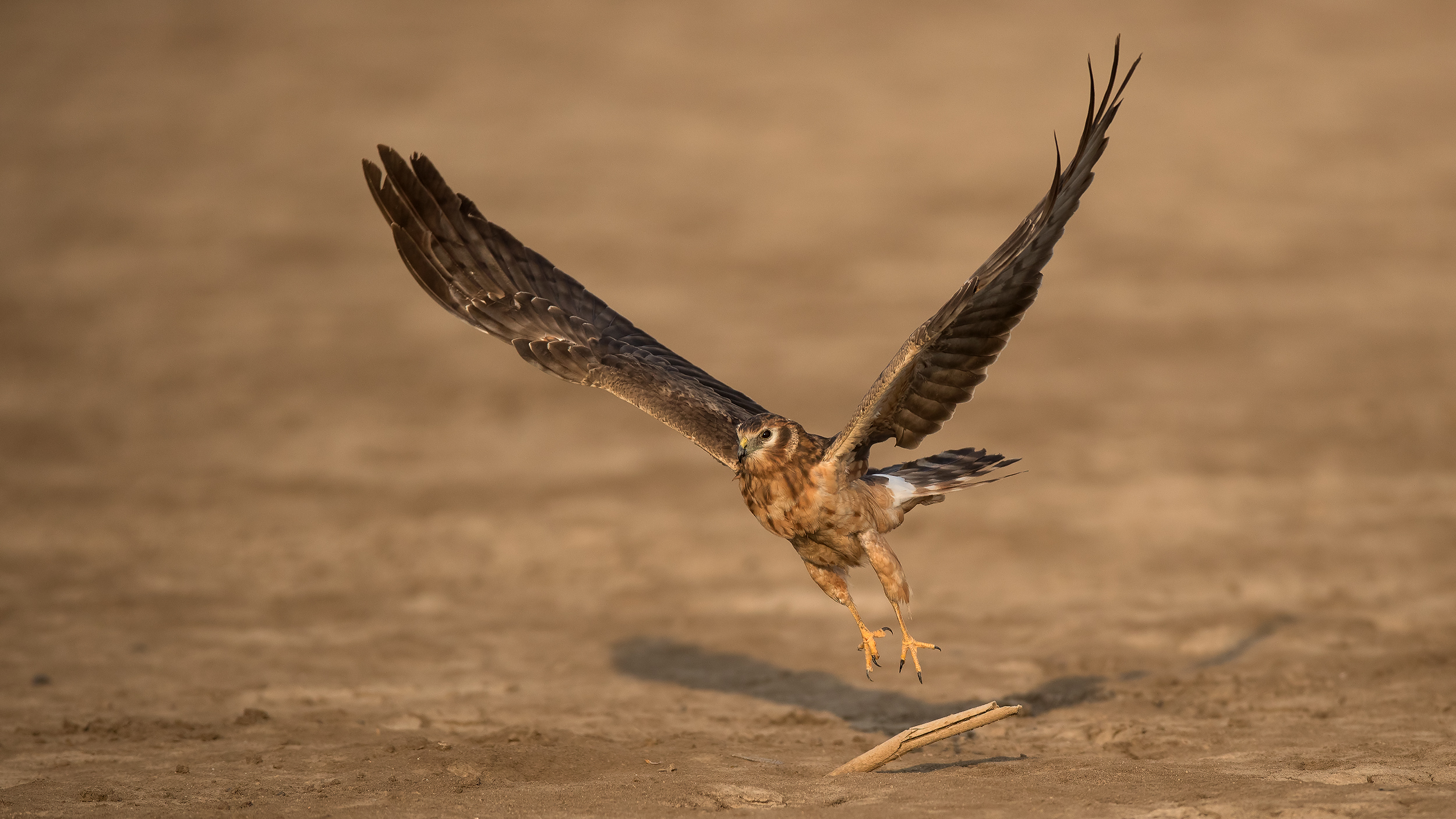
The pallid harrier (Circus macrourus) is a species of harrier, a bird of prey in the family Accipitridae. It breeds in southern parts of eastern Europe and central Asia and Iran and winters mainly in India and southeast Asia. It is a rare but increasing vagrant to Great Britain and western Europe. In 2017 a pair of pallid harriers nested in a barley field in the Netherlands; they raised four chicks, the first recording breeding of the species in the country. In 2019, a pair bred in Spain for the first time.
This medium-sized raptor breeds on open plains, bogs and heathland. In winter it is a bird of open country.
Taxonomy
The scientific name is Ancient Greek. Circus is from kirkos (circle), referring to a bird of prey named for its circling flight ('probably the hen harrier), and macrourus is "long-tailed", from makros (long) and -ouros (-tailed).
Description
This is a typical harrier, with long wings held in a shallow V in its low flight. It also resembles other harriers in having distinct male and female plumages. Adults measure 40 - long with a wingspan of 95 -. Males weigh 315 g while the slightly larger females weigh 445 g. The male is whitish grey above and white below, with narrow black wingtips. It differs from the hen harrier in its smaller size, narrower wings, paler colour, and different wing tip pattern. The female is brown above with white upper tail coverts, hence females and the similar juveniles are often called "ringtails". Her underparts are buff streaked with brown. It is very similar to the female Montagu's harrier, but has a paler belly and a well defined facial pattern.
Behaviour and ecology
Pallid harriers primarily hunt small mammals and birds, surprising them as they drift low over fields and moors. Other food sources include large insects (typically grasshoppers and locusts), lizards and frogs. The nest of this species is on the ground. Three to six, but typically four to five whitish eggs are laid.
References
References
- BirdLife International. (2018). "''Circus macrourus''".
- "The Pallid Harrier, a new breeding species for the Netherlands". Grauwe Kiekendief - Kenniscentrum Akkervogels.
- (29 July 2019). "Pallid Harrier breeds in Spain for first time".
- Jobling, James A.. (2010). "The Helm Dictionary of Scientific Bird Names". Christopher Helm.
- "Pallid Harrier".
This article was imported from Wikipedia and is available under the Creative Commons Attribution-ShareAlike 4.0 License. Content has been adapted to SurfDoc format. Original contributors can be found on the article history page.
Ask Mako anything about Pallid harrier — get instant answers, deeper analysis, and related topics.
Research with MakoFree with your Surf account
Create a free account to save articles, ask Mako questions, and organize your research.
Sign up freeThis content may have been generated or modified by AI. CloudSurf Software LLC is not responsible for the accuracy, completeness, or reliability of AI-generated content. Always verify important information from primary sources.
Report