From Surf Wiki (app.surf) — the open knowledge base
Paeonia lactiflora
Species of flowering plant
Species of flowering plant
Paeonia albiflora Pall.
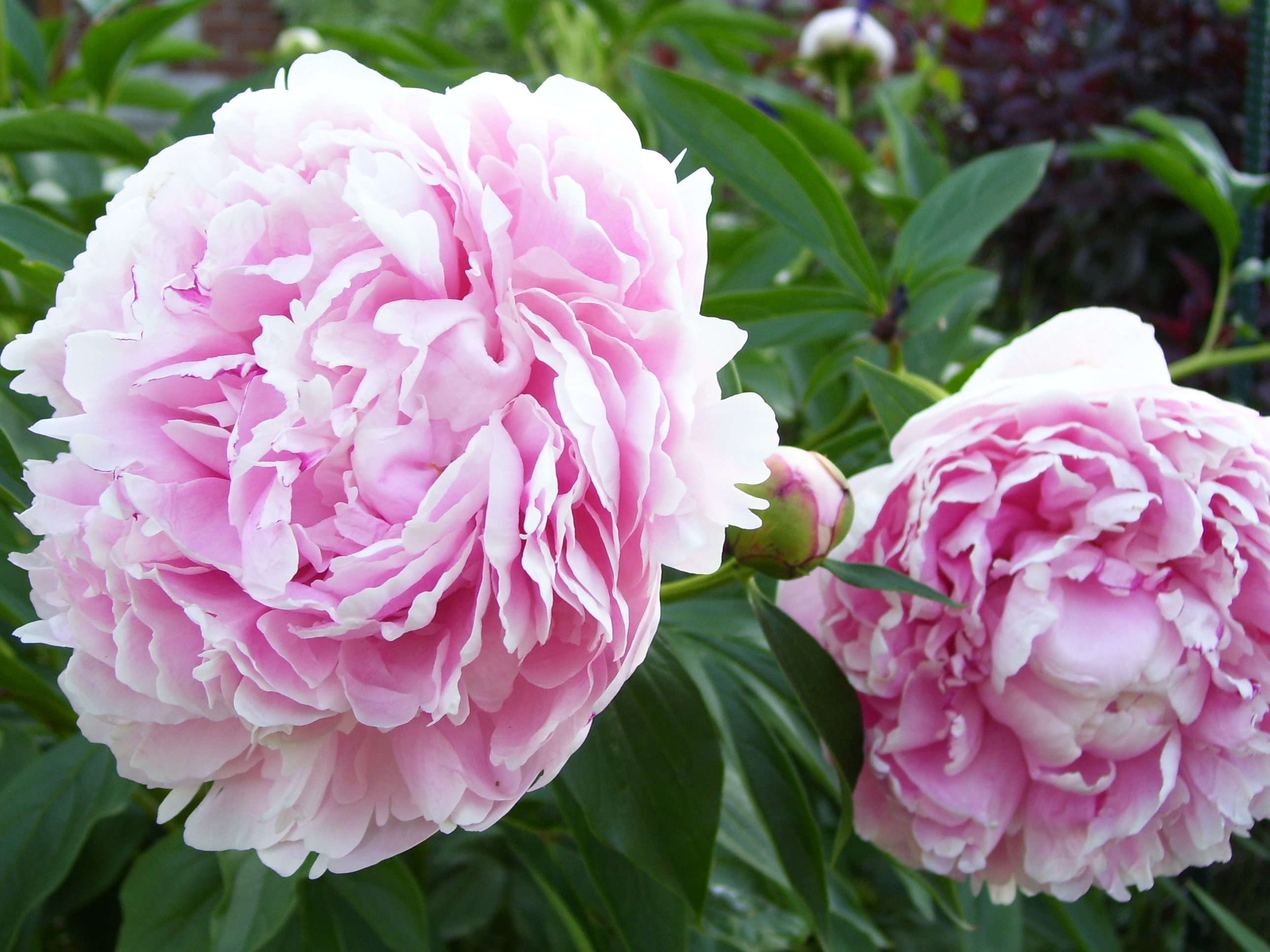
Paeonia lactiflora (Chinese peony, Chinese herbaceous peony, or common garden peony) is a species of herbaceous perennial flowering plant in the family Paeoniaceae, native to central and eastern Asia from eastern Tibet across northern China to eastern Siberia.
Description
It is 50 - tall and broad, with 9-lobed leaves 20 - long.
The flower buds appear in late spring (May in the Northern Hemisphere). They are large and round, opening into fragrant, cup- or bowl-shaped flowers 8 - in diameter, with 5–10 white, pink, or crimson petals and yellow stamens. The plant attracts butterflies. Its habitats include dry open stony slopes, riverbanks and sparse woodland edges.
Background
Paeonia lactiflora was known as the white peony (P. albiflora) when first introduced into Europe. It was brought to England in the mid-18th century, and is the parent of most modern varieties. It has been grown as an ornamental in China since the 7th century.
The Latin specific epithet lactiflora means "with milk white flowers".
In China, P. lactiflora is likened to "the Minister of Flowers" (花相), while Paeonia × suffruticosa is known as "the King of Flowers" (花王).
Cultivars
There are several hundred selected cultivars in a range of colours, sizes and forms; many have double flowers, with the stamens modified into additional petals. There are many colors now available, from pure milk white, to pink, rose, and near red, along with single to fully double forms. They are prolific bloomers, and have become the main source of peonies for the cut flower business.
The following cultivars have gained the Royal Horticultural Society's Award of Garden Merit:{{cite web | url = https://www.rhs.org.uk/plants/pdfs/agm-lists/agm-ornamentals.pdf | title = AGM Plants - Ornamental | date = July 2017 | page = 71
- 'Bowl of Beauty' (double, pink and cream)
- 'Coral Charm' (salmon pink)
- 'Duchesse de Nemours' (double white)
- 'Felix Crousse'{{cite web | url = https://www.rhs.org.uk/Plants/95323/i-Paeonia-lactiflora-i-Felix-Crousse/Details
- 'Festiva maxima'{{cite web | url = https://www.rhs.org.uk/Plants/98117/i-Paeonia-lactiflora-i-Festiva-Maxima/Details
- 'Laura Dessert' (double white)
- 'Miss America'
- 'Monsieur Jules Elie'{{cite web | url = https://www.rhs.org.uk/Plants/77576/i-Paeonia-lactiflora-i-Monsieur-Jules-Elie/Details
- 'Sarah Bernhardt' (double pink)
- 'Whitleyi Major' (single white, prominent stamens)

Chemistry
The leaves of many cultivars are high in oleanolic and ursolic acid.
Phenolic compounds
Cis-epsilon-viniferin, trans-resveratrol, trans-resveratrol-4'-O-beta-D-glucopyranoside, trans-epsilon-viniferin, gnetin H, and suffruticosol A, B{{Cite journal | doi-access = free
Petals color is dependent on a UDP-glucose: Flavonoid 5-O-glucosyltransferase expressing anthocyanins such as peonidin-3,5-di-O-glucoside, pelargonidin-3,5-di-O-glucoside, cyanidin-3,5-di-O-glucoside, peonidin-3-O-glucoside, cyanidin-3-O-glucoside, peonidin-3-O-glucoside-5-O-arabinoside, cyanidin-3-O-glucoside-5-O-galactoside and pelargonidin-3-O-glucoside-5-O-galactoside.
In art and culture

Paeonia lactiflora became a popular still life subject for Impressionist artists in the late 19th century.
- Pierre-Auguste Renoir featured Peonies in multiple paintings from the 1870s through the 1890s. The Independent wrote of his fondness for the flower that: "They had been introduced into the horticultural world of Paris in the 1860s, so there was still something of the exotic about them, and Renoir paints them rather solemnly and majestically."
- Vincent van Gogh painted "Vase with Peonies", "Bowl with Peonies and Roses" and "Vase with cornflowers and poppies, peonies and chrysanthemums", all in 1886.
- Claude Monet painted "Vase of Peonies" in 1882.
- Édouard Manet cultivated peonies in his garden and painted them frequently. The Impressionist artist Frédéric Bazille painted "Young Woman with Peonies" in 1870 as a tribute to his friend Manet, knowing his fondness for the flower.
References
References
- (2008). "RHS A-Z encyclopedia of garden plants". Dorling Kindersley.
- "Paeonia lactiflora 'Sarah Bernhardt' - Plant Finder".
- "Paeonia lactiflora Chinese Peony, Peony PFAF Plant Database".
- (2004). "The Genus Paeonia". Timber Press.
- Harrison, Lorraine. (2012). "RHS Latin for Gardeners". Mitchell Beazley.
- ""花相"字的解释 {{!}} 汉典".
- Loewer, H. Peter. (1999). "Fragrant Gardens". Houghton Mifflin Gardening.
- "RHS Plant Selector - ''Paeonia lactiflora'' 'Bowl of Beauty'".
- "''Paeonia lactiflora'' 'Coral Charm'". RHS.
- "RHS Plant Selector - ''Paeonia lactiflora'' 'Duchesse de Nemours'".
- "RHS Plant Selector - ''Paeonia lactiflora'' 'Laura Dessert'".
- "''Paeonia lactiflora'' 'Miss America'". RHS.
- "RHS Plant Selector - ''Paeonia lactiflora'' 'Sarah Bernhardt'".
- "RHS Plant Selector - ''Paeonia lactiflora'' 'Whitleyi Major'".
- Zhou C, Zhang Y, Sheng Y, Zhao D, Lv S, Hu Y, Tao J.,"Herbaceous Peony (Paeonia lactiflora Pall.) as an Alternative Source of Oleanolic and Ursolic Acids." Int J Mol Sci. 2011;12(1):655-67
- (2004). "Paeoniflorin, a novel heat shock protein–inducing compound". Cell Stress & Chaperones.
- Isolation of a UDP-glucose: Flavonoid 5-O-glucosyltransferase gene and expression analysis of anthocyanin biosynthetic genes in herbaceous peony (Paeonia lactiflora Pall.). Da Qiu Zhao, Chen Xia Han, Jin Tao Ge and Jun Tao, Electronic Journal of Biotechnology, 15 November 2012, Volume 15, Number 6, {{doi. 10.2225/vol15-issue6-fulltext-7
- "'Peonies' Pierre-Auguste Renoir". clarkart.edu.
- Michael Glover. (2013-08-16). "Great works: Onions (1881) by Pierre Auguste-Renoir". The Independent.
- "Roses and Peonies, June 1886". krollermuller.nl.
- "Vase with Peonies by Vincent van Gogh". vangoghgallery.com.
- "Vase of Peonies, 1992 - Claude Monet". wikiart.com.
- "Manet and His Influence". National Gallery of Art.
This article was imported from Wikipedia and is available under the Creative Commons Attribution-ShareAlike 4.0 License. Content has been adapted to SurfDoc format. Original contributors can be found on the article history page.
Ask Mako anything about Paeonia lactiflora — get instant answers, deeper analysis, and related topics.
Research with MakoFree with your Surf account
Create a free account to save articles, ask Mako questions, and organize your research.
Sign up freeThis content may have been generated or modified by AI. CloudSurf Software LLC is not responsible for the accuracy, completeness, or reliability of AI-generated content. Always verify important information from primary sources.
Report