From Surf Wiki (app.surf) — the open knowledge base
Oxytocin receptor
Genes on human chromosome 3
Genes on human chromosome 3
The oxytocin receptor, also known as OXTR, is a protein which functions as receptor for the hormone and neurotransmitter oxytocin. In humans, the oxytocin receptor is encoded by the OXTR gene which has been localized to human chromosome 3p25.
Function and location
The OXTR protein belongs to the G-protein coupled receptor family, specifically Gq, and acts as a receptor for oxytocin. Its activity is mediated by G proteins that activate several different second messenger systems.
Oxytocin receptors are expressed by the myoepithelial cells of the mammary gland, and in both the myometrium and endometrium of the uterus at the end of pregnancy. The oxytocin-oxytocin receptor system plays an important role as an inducer of uterine contractions during parturition and of milk ejection.
OXTR is also associated with the central nervous system. The gene is believed to play a major role in social, cognitive, and emotional behavior. A decrease in OXTR expression by methylation of the OXTR gene is associated with callous and unemotional traits in adolescence, rigid thinking in anorexia nervosa, problems with facial and emotional recognition, and difficulties in the affect regulation. A reduction in this gene is believed to lead to prenatal stress, postnatal depression, and social anxiety. Further research must be gathered before concluding these findings, however strong evidence is pointing in this direction. Studies on OXTR methylation—which downregulates oxytocin mechanisms—suggest this process is associated with increased gray matter density in the amygdala, implicating OXTR regulation in stress and parasympathetic regulation.
In some mammals, oxytocin receptors are also found in the kidney and heart.
Mesolimbic dopamine pathways
The oxytocinergic circuit projecting from the paraventricular hypothalamic nucleus (PVN) innervates the ventral tegmental area (VTA) dopaminergic neurons that project to the nucleus accumbens, i.e., the mesolimbic pathway. Activation of the PVN→VTA projection by oxytocin affects sexual, social, and addictive behavior via this link to the mesolimbic pathway; specifically, oxytocin exerts a prosexual and prosocial effect in this region.
Polymorphism
The receptors for oxytocin (OXTR) have genetic differences with varied effects on individual behavior. The polymorphism (rs53576) occurs on the third intron of OXTR in three types: GG, AG, AA. The GG allele is connected with oxytocin levels in people . A-allele carrier individuals are associated with more sensitivity to stress, fewer social skills, and more mental health issues than the GG-carriers.
In a study looking at empathy and stress, individuals with the allele GG scored higher than A-carrier individuals in a "Reading the Mind in the Eyes" test. GG carriers, with their naturally higher levels of oxytocin, were better able to distinguish between emotions. A-allele carriers responded with more stress to stressful situations than GG-allele carriers. A-allele carriers had lower scores on psychological resources, like optimism, mastery, and self-esteem, than GG individuals when measured with factor analysis for depressive symptomology and psychological resources, along with the Beck Depression Inventory. A-allele carriers had higher depressive symptomology and lower psychological resources than GG individuals. A-allele individuals scored lower in human sociality than GG people on a Tridimensional Personality Questionnaire. AA individuals had the lowest amygdala activation while processing emotionally salient information and those with GG had the highest activity when tested using BOLD during an fMRI. On the other hand, variations at the CD38 rs3796863 and OXTR rs53576 loci were not associated with psychosocial characteristics of adolescents assessed with the Strengths and Difficulties Questionnaire (SDQ); in studies with a similar design, authors recommend replication with larger samples and greater power to detect small effects, especially in age–sex subgroups of adolescents.
The frequency of the A allele varies among ethnic groups, being significantly more common among East Asians than Europeans.
Some evidence suggests an association between OXTR gene polymorphism, IQ, and autism spectrum disorder (ASD). Studies have done research focusing on variants in the third intron of the gene, a region that is strongly correlated with personality traits and ASD. OXTR knockout mice have shown abnormal behaviors such as social impairments and aggressiveness. These abnormalities can be reduced with oxytocin or oxytocin agonist administration. Overall, the study suggests that rare variants are considerably more abundant in individuals with ASD compared to that of a normal individual, however further research with larger sample sizes must be completed before concluding any information.
Ligands
Several selective ligands for the oxytocin receptor have recently been developed, but close similarity between the oxytocin and related vasopressin receptors make it difficult to achieve high selectivity with peptide derivatives. However the search for a druggable, non-peptide template has led to several potent, highly selective, orally bioavailable oxytocin antagonists. Oxytocin receptor agonists have also been developed.
Agonists
;Peptide
- Carbetocin
- Demoxytocin
- Lipo-oxytocin-1
- Merotocin
- Oxytocin
;Non-peptide
- KNX-200 (KNX200)
- LIT-001 — improved social deficits in mice; non-selective over vasopressin receptors
- TC OT 39 – non-selective over vasopressin receptors
- WAY-267,464 – anxiolytic in mice; possibly non-selective over vasopressin receptors
Antagonists
;Peptide
- Atosiban
- Barusiban
;Non-peptide
- Epelsiban
- L-368,899 (CAS# 148927-60-0)
- L-371,257 (CAS# 162042-44-6) – peripherally selective (i.e. poor blood brain barrier penetration, few central effects)
- L-372,662
- Nolasiban
- Retosiban (GSK-221,149)
- SSR-126,768
- WAY-162,720 – centrally active following peripheral administration
Positive allosteric modulators
- KNX-300/400 (KNX300/400)
Indirect agonists
- KNX-100 (KNX100; SOC-1)
References
References
- (April 2001). "The oxytocin receptor system: structure, function, and regulation". Physiological Reviews.
- (July 2003). "The oxytocin receptor". Trends in Endocrinology and Metabolism.
- {{EntrezGene. 5021
- (April 1992). "Structure and expression of a human oxytocin receptor". Nature.
- (April 1995). "The oxytocin receptor gene (OXTR) localizes to human chromosome 3p25 by fluorescence in situ hybridization and PCR analysis of somatic cell hybrids". Genomics.
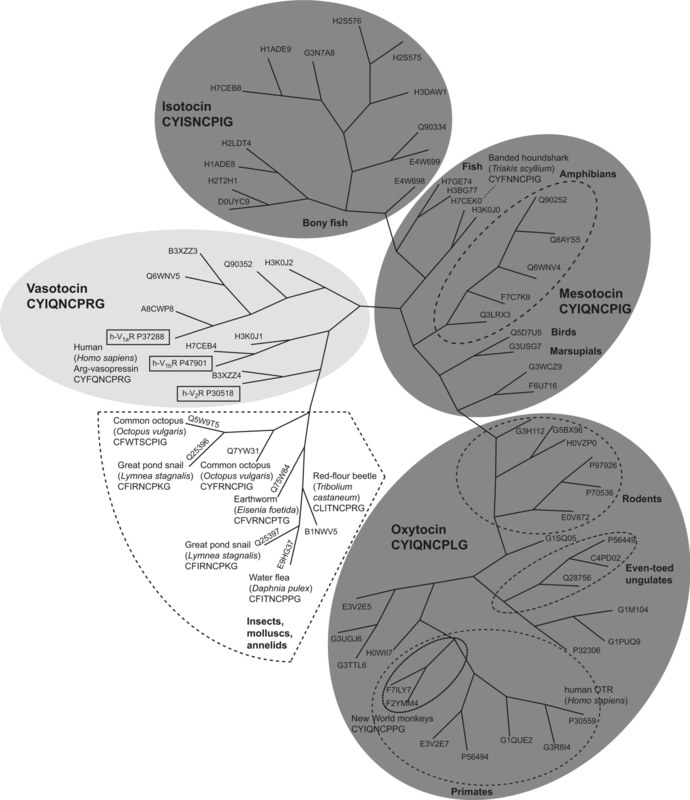
- (February 2013). "Insights into the molecular evolution of oxytocin receptor ligand binding". Biochemical Society Transactions.
- (2008). "Advances in Vasopressin and Oxytocin — from Genes to Behaviour to Disease".
- (2008). "Advances in Vasopressin and Oxytocin — from Genes to Behaviour to Disease".
- (May 2018). "The role of oxytocin receptor gene (OXTR) DNA methylation (DNAm) in human social and emotional functioning: a systematic narrative review". BMC Psychiatry.
- (November 2018). "DNA methylation of OXTR is associated with parasympathetic nervous system activity and amygdala morphology". Social Cognitive and Affective Neuroscience.
- (May 2008). "From ultrasocial to antisocial: a role for oxytocin in the acute reinforcing effects and long-term adverse consequences of drug use?". British Journal of Pharmacology.
- (September 2011). "Oxytocin receptor gene (OXTR) is related to psychological resources". Proceedings of the National Academy of Sciences of the United States of America.
- (December 2009). "Oxytocin receptor genetic variation relates to empathy and stress reactivity in humans". Proceedings of the National Academy of Sciences of the United States of America.
- (August 2010). "A common allele in the oxytocin receptor gene (OXTR) impacts prosocial temperament and human hypothalamic-limbic structure and function". Proceedings of the National Academy of Sciences of the United States of America.
- (2021). "Oxytocin Pathway Gene (''CD38, OXTR'') Variants Are Not Related to Psychosocial Characteristics Defined by Strengths and Difficulties Questionnaire in Adolescents: A Field School-Based Study". Frontiers in Psychiatry.
- (July 2011). "Religion and Well-being: The Moderating Role of Culture and the Oxytocin Receptor (OXTR) Gene". Journal of Cross-Cultural Psychology.
- Lerer, E., Levi, S., Salomon, S. et al. Association between the oxytocin receptor (OXTR) gene and autism: relationship to Vineland Adaptive Behavior Scales and cognition. Mol Psychiatry 13, 980–988 (2008). https://doi.org/10.1038/sj.mp.4002087
- (June 2018). "Evidence for Association Between OXTR Gene and ASD Clinical Phenotypes". Journal of Molecular Neuroscience.
- (August 2007). "Agonist selectivity in the oxytocin/vasopressin receptor family: new insights and challenges". Biochemical Society Transactions.
- (2008). "Peptide and non-peptide agonists and antagonists for the vasopressin and oxytocin V1a, V1b, V2 and OT receptors: research tools and potential therapeutic agents".
- (September 2010). "Oral oxytocin antagonists". Journal of Medicinal Chemistry.
- (2022). "Oxytocin".
- (January 2019). "Targeting the Oxytocin System: New Pharmacotherapeutic Approaches". Trends Pharmacol Sci.
- (13 January 2026). "Kinoxis and Boehringer to develop oxytocin-targeting treatments for social dysfunction in $181M deal".
- (March 2022). "Spotlight Showcases: Kinoxis Therapeutics Pty Ltd".
- "Methods of treatment using oxytocin receptor agonists".
- (January 2010). "Receptor and behavioral pharmacology of WAY-267464, a non-peptide oxytocin receptor agonist". Neuropharmacology.
- (January 2013). "Methods and Principles in Medicinal Chemistry: Protein-Protein Interactions in Drug Discovery". Wiley-VCH.
- (March 1994). "1-((7,7-Dimethyl-2(S)-(2(S)-amino-4-(methylsulfonyl)butyramido)bicyclo [2.2.1]-heptan-1(S)-yl)methyl)sulfonyl)-4-(2-methylphenyl)piperaz ine (L-368,899): an orally bioavailable, non-peptide oxytocin antagonist with potential utility for managing preterm labor". Journal of Medicinal Chemistry.
- (September 2007). "Peripherally administered non-peptide oxytocin antagonist, L368,899, accumulates in limbic brain areas: a new pharmacological tool for the study of social motivation in non-human primates". Hormones and Behavior.
- (November 1995). "1-(1-[4-[(N-acetyl-4-piperidinyl)oxy]-2-methoxybenzoyl]piperidin-4- yl)-4H-3,1-benzoxazin-2(1H)-one (L-371,257): a new, orally bioavailable, non-peptide oxytocin antagonist". Journal of Medicinal Chemistry.
- (May 2002). "Identification of potent and selective oxytocin antagonists. Part 1: indole and benzofuran derivatives". Bioorganic & Medicinal Chemistry Letters.
- (April 2006). "Anxiolytic-like activity of oxytocin in male mice: behavioral and autonomic evidence, therapeutic implications". Psychopharmacology.
- (2019). "Oxytocin receptor antagonists, atosiban and nolasiban, inhibit prostaglandin F2α-induced contractions and inflammatory responses in human myometrium". [[Scientific Reports]].
- Klein, Alice. (31 January 2018). "A Helping Hand / The Love Drug That Could Draw People Away From Any Addiction".
- (4 August 2025). "KNX 100".
- (27 December 2025). "Delving into the Latest Updates on KNX-100 with Synapse".
This article was imported from Wikipedia and is available under the Creative Commons Attribution-ShareAlike 4.0 License. Content has been adapted to SurfDoc format. Original contributors can be found on the article history page.
Ask Mako anything about Oxytocin receptor — get instant answers, deeper analysis, and related topics.
Research with MakoFree with your Surf account
Create a free account to save articles, ask Mako questions, and organize your research.
Sign up freeThis content may have been generated or modified by AI. CloudSurf Software LLC is not responsible for the accuracy, completeness, or reliability of AI-generated content. Always verify important information from primary sources.
Report