From Surf Wiki (app.surf) — the open knowledge base
Outlaw
Person declared as outside the protection of the law

Person declared as outside the protection of the law
An outlaw, in its original and legal meaning, is a person declared as outside the protection of the law. In pre-modern societies, all legal protection was withdrawn from the criminal, so anyone was legally empowered to persecute or kill them. Outlawry was thus one of the harshest penalties in the legal system. In early Germanic law, the death penalty is conspicuously absent, and outlawing is the most extreme punishment, presumably amounting to a death sentence in practice. The concept is known from Roman law, as the status of homo sacer, and persisted throughout the Middle Ages.
A secondary meaning of outlaw is a person systematically avoiding capture by evasion and violence. These meanings are related and overlapping but not necessarily identical. A fugitive who is declared outside protection of law in one jurisdiction but who receives asylum and lives openly and obedient to local laws in another jurisdiction is an outlaw in the first meaning but not the second (one example being William John Bankes). A fugitive who remains formally entitled to a form of trial if captured alive but avoids capture because of the high risk of conviction and severe punishment if tried is an outlaw in the second sense but not the first (Sándor Rózsa was tried and sentenced merely to a term of imprisonment when captured).
In the common law of England, a "writ of outlawry" made the pronouncement Caput lupinum ("[Let his be] a wolf's head"), equating that person with a wolf in the eyes of the law. Not only was the subject deprived of all legal rights, being outside the "law", but others could kill him on sight as if he were a wolf. Women were declared "waived" rather than outlawed, but it was effectively the same punishment.
Legal history
Ancient Rome
Among other forms of exile, Roman law included the penalty of aquae et ignis interdictio ("interdiction of water and fire"). Such people penalized were required to leave Roman territory and forfeit their property. If they returned, they were effectively outlaws; providing them the use of fire or water was illegal, and they could be killed at will without legal penalty.
The interdiction of water and fire was traditionally imposed by the tribune of the plebs and is attested to have been in use during the First Punic War of the third century BC by Cato the Elder. It was later also applied by many other officials, such as the Senate, magistrates, and Julius Caesar as a general and provincial governor during the Gallic Wars. It fell out of use during the early Empire.
England

In English common law, an outlaw was a party who had defied the laws of the realm by such acts as ignoring a summons to court or fleeing instead of appearing to plead when charged with a crime.
Criminal
The term *outlawry *refers to the formal procedure of declaring someone an outlaw, i.e., putting him outside legal protection. death. The outlaw was debarred from all civilized society. No one was allowed to give him food, shelter, or any other sort of support—to do so was to commit the crime of aiding and abetting, and to be in danger of the ban oneself. A more recent concept of "wanted dead or alive" is similar but implies that a trial is desired (namely if the wanted person is returned alive), whereas outlawry precludes a trial.

An outlaw might be killed with impunity, and it was not only lawful but meritorious to kill a thief fleeing from justice—to do so was not murder. A man who slew a thief was expected to declare the fact without delay; otherwise, the dead man's kindred might clear his name by their oath and require the slayer to pay weregild as for a true man.
By the rules of common law, a criminal outlaw did not need to be guilty of the crime for which he was an outlaw. If a man was accused of treason or felony but failed to appear in court to defend himself, he was deemed convicted.
In the context of criminal law, outlawry faded out, not so much by legal changes as by the greater population density of the country, which made it harder for wanted fugitives to evade capture, and by the adoption of international extradition pacts. It was obsolete when the offence was abolished in 1938. Outlawry was, however, a living practice as of 1855: in 1841, William John Bankes, who had previously been an MP for several different constituencies between 1810 and 1835, was outlawed by due process of law for absenting himself from trial for homosexuality and died in 1855 in Venice as an outlaw.
Civil
There was also a doctrine of civil outlawry. Civil outlawry did not carry the sentence of capital punishment. It was, however, imposed on defendants who fled or evaded justice when sued for civil actions like debts or torts. The punishments for civil outlawry were harsh, including confiscation of chattels (movable property) left behind by the outlaw.
In the civil context, outlawry became obsolete in civil procedure by reforms that no longer required summoned defendants to appear and plead. Still, the possibility of being declared an outlaw for derelictions of civil duty continued to exist in English law until the passing of the Civil Procedure Acts Repeal Act 1879 (42 & 43 Vict. c. 59) in 1879 and in Scots law until the late 1940s. Since then, failure to find the defendant and serve process is usually interpreted in favour of the plaintiff, and harsh penalties for mere nonappearance (merely presumed flight to escape justice) no longer apply.
In other countries
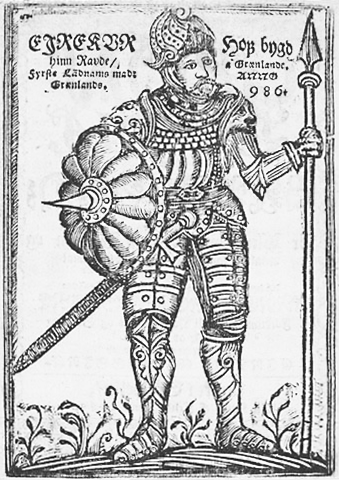
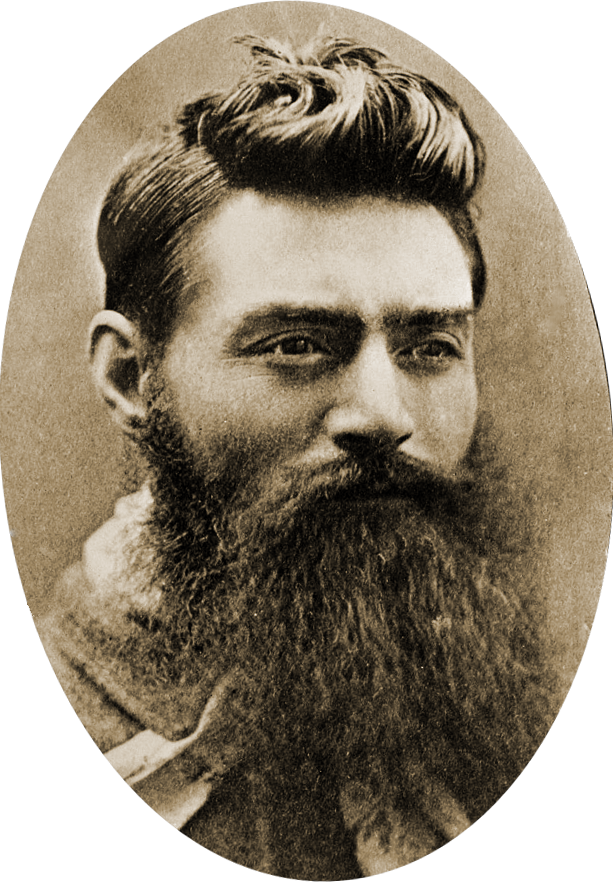
Outlawry also existed in other ancient legal codes, such as the ancient Norse and Icelandic legal code.
In early modern times, the term Vogelfrei and its cognates came to be used in Germany, the Low Countries, and Scandinavia, referring to a person stripped of his civil rights being "free" for the taking like a bird. In Germany and Slavic countries during the 15th to 19th centuries, groups of outlaws were composed of former prisoners, soldiers, etc. Hence, they became an important social phenomenon. They lived off of robbery, and local inhabitants from lower classes often supported their activity. The best known are Juraj Jánošík and Jakub Surovec in Slovakia, Oleksa Dovbush in Ukraine, Rózsa Sándor in Hungary, Schinderhannes and Hans Kohlhase in Germany.
The concept of outlawry was reintroduced to British law by several Australian colonial governments in the late 19th century to deal with the menace of bushranging. The Felons Apprehension Act (1865 No 2a) of New South Wales provided that a judge could, upon proof of sufficiently notorious conduct, issue a special bench warrant requiring a person to submit themselves to police custody before a given date, or be declared an outlaw. An outlawed person could be apprehended "alive or dead" by any of the Queen's subjects, "whether a constable or not", and without "being accountable for using of any deadly weapon in aid of such apprehension." Similar provisions were passed in Victoria and Queensland. Although the provisions of the New South Wales Felons Apprehension Act were not exercised after the end of the bushranging era, they remained on the statute book until 1976.[[File:Tomb of William of Orange.jpg|thumb|The tomb of William the Silent, killed because of his outlawry and banishment.|left|244x244px]]
As a political weapon

There have been several instances in military and political conflicts throughout history whereby one side declares the other as being "illegal", notorious cases being the use of proscription in the civil wars of the Roman Republic. In later times French Revolution included outlawry of Robespierre and his associates in Thermidor, who were declared "hors la loi" and who when captured (Robespierre and his 21 associates on 10th Thermidor but Coffinhal only on 19th Thermidor) were executed after purely identification of person, without even the perfunctory opportunity to answer merits of charges that Revolutionary Tribunal otherwise offered. There was the notable case of Napoleon Bonaparte whom the Congress of Vienna, on 13 March 1815, declared had "deprived himself of the protection of the law".
In modern times, the government of the First Spanish Republic, unable to reduce the Cantonal rebellion centered in Cartagena, Spain, declared the Cartagena fleet to be "piratic", which allowed any nation to prey on it. Taking the opposite road, some outlaws became political leaders, such as Ethiopia's Kassa Hailu who became Emperor Tewodros II of Ethiopia. The nobleman Prince William of Orange was declared an outlaw, an enemy of the state and Christendom itself for his involvement in the Dutch revolt and ensuing Eighty Years' War. This led to his death at the hands of Balthasar Gérard, who was promised a general pardon, 25.000 golden crowns and ascension into the nobility, but was caught and hanged, drawn and quartered for the offence of high treason instead by the court at Delft.
Popular usage
Main article: Outlaw (stock character)
Though the judgment of outlawry is now obsolete (even though it inspired the pro forma Outlawries Bill which is still to this day introduced in the British House of Commons during the State Opening of Parliament), romanticised outlaws became stock characters in several fictional settings. This was particularly so in the United States, where outlaws were popular subjects of 19th-century newspaper coverage and stories and 20th-century fiction and Western movies. Thus, "outlaw" is still commonly used to mean those violating the law or, by extension, those living that lifestyle, whether actual criminals evading the law or those merely opposed to "law and order" notions of conformity and authority (such as the "outlaw country" music movement in the 1970s).
Notes
References
References
- (2007). "The cyclopedic dictionary of law". Keefe-Davidson.
- National Archives staff. (26 January 2012). "Outlaws and outlawry in medieval and early modern England". British [[The National Archives (United Kingdom).
- Caesar, Julius. ''De Bello Gallico'', book VI, section XLIV.
- (2015). "The Earliest Expression for Outlawry in Anglo-Saxon Law". Traditio.
- ''[[Archbold Criminal Pleading, Evidence and Practice]]'' (30th ed., 1938) p. 71
- '' Archbold'' (30th ed., 1938) p. 71
- '' Archbold'' (31st ed., 1943) p. 98
- Administration of Justice (Miscellaneous Provisions) Act 1938, section 12
- William Blackstone (1753), ''Commentaries on the Laws of England'', Book 3, Chapter XIX "Of Process"
- (1879). ""The" Public General Acts: Passed in the ... Years of the Reign of ... Being the ... Session of the ... Parliament of the United Kingdom of Great Britain and Northern Ireland and the Church Assembly Measures". Law Journal Reports.
- Schmidt–Wiegand, Ruth (1998). "Vogelfrei". Handwörterbuch der Deutschen Rechtsgeschichte [Dictionary of the History of German Law]. 5: Straftheorie [Penal theory]. Berlin: Schmidt. pp. 930–32. {{ISBN. 3-503-00015-1
- "Felons Apprehension Act (1865 No 2a)".
- ANZLH E-Journal. "Outlawry in Colonial Australia: The Felons Apprehension Acts 1865–1899".
- ANZLH E-Journal. "Outlawry in Colonial Australia: The Felons Apprehension Acts 1865–1899".
- [https://dl.lib.brown.edu/napoleon/time7.html Timeline: The Congress of Vienna, the Hundred Days, and Napoleon's Exile on St Helena], Center of Digital Initiatives, [[Brown University]] Library
- (July 24, 1873). "Cartagena Public Salvation Board". The Murciano Canton.
- Rubenson, King of Kings, pp. 36–39
- "Ban tegen Willem van Oranje - Wikisource".
- Black's Law Dictionary at 1255 (4th ed. 1951), citing ''Oliveros v. Henderson'', 116 S.C. 77, 106 S.E. 855, 859.
This article was imported from Wikipedia and is available under the Creative Commons Attribution-ShareAlike 4.0 License. Content has been adapted to SurfDoc format. Original contributors can be found on the article history page.
Ask Mako anything about Outlaw — get instant answers, deeper analysis, and related topics.
Research with MakoFree with your Surf account
Create a free account to save articles, ask Mako questions, and organize your research.
Sign up freeThis content may have been generated or modified by AI. CloudSurf Software LLC is not responsible for the accuracy, completeness, or reliability of AI-generated content. Always verify important information from primary sources.
Report