From Surf Wiki (app.surf) — the open knowledge base
Our Lady of Saidnaya Monastery
Christian monastery in Syria
Christian monastery in Syria
| Field | Value |
|---|---|
| name | Our Lady of Saidnaya Monastery |
| native_name | دير سيدة صيدنايا |
| native_name_lang | ar |
| full_name | Our Lady of Saydnaya Patriarchal Monastery () |
| dedication | Mary, mother of Jesus |
| image | Syria283.jpg |
| location | Saidnaya, al-Tall District, Rif Dimashq Governorate, Syria |
| coordinates | |
| order | Greek Orthodox Church of Antioch |
| founder | Justinian I |
| established | 547 AD |
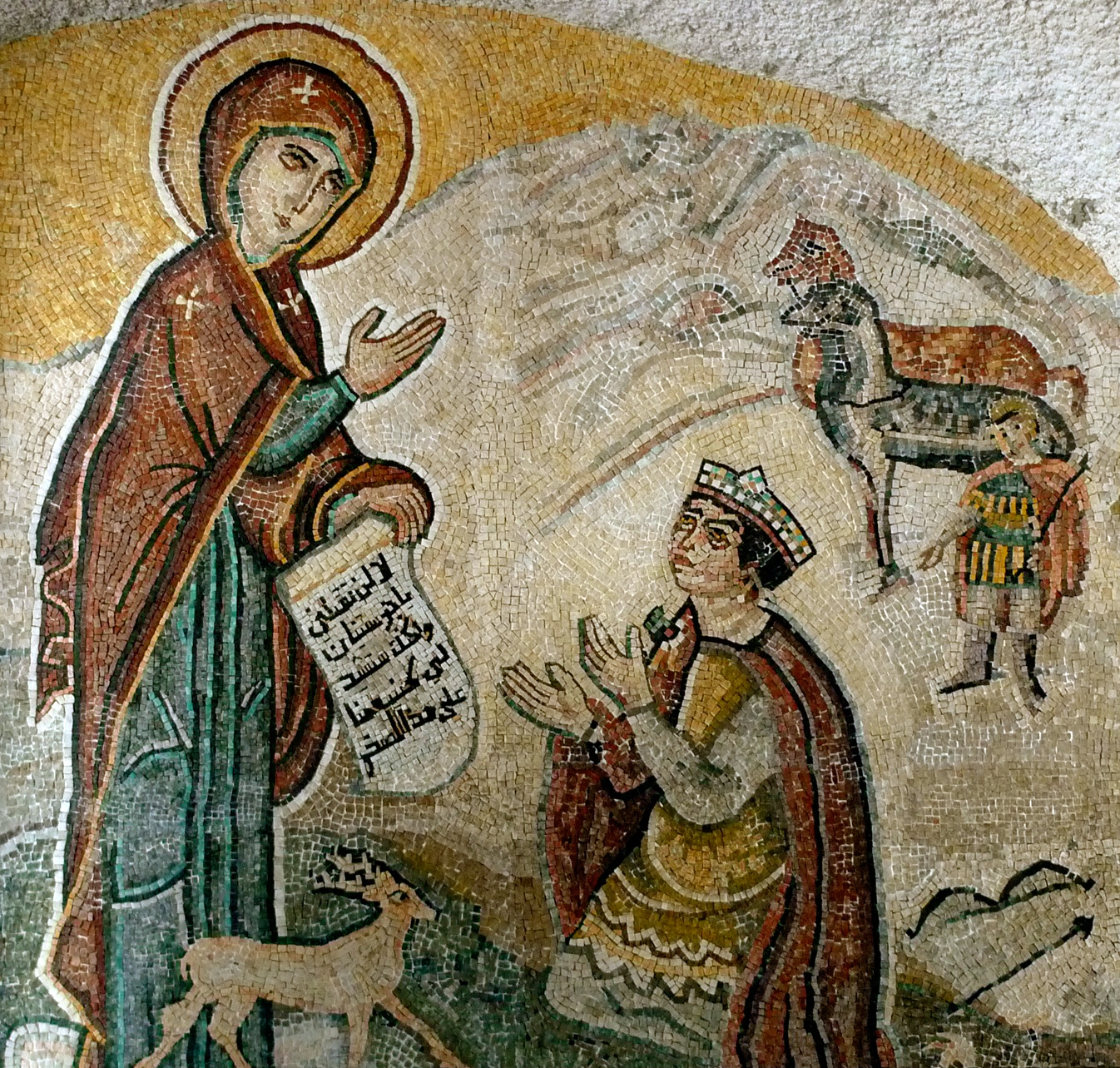
Our Lady of Saidnaya Patriarchal Monastery () is a monastery of the Greek Orthodox Church of Antioch located in Saidnaya, Syria. It is one of the most ancient monasteries in the world and in the region of the Middle East and North Africa, traditionally held to have been founded by Byzantine emperor Justinian I in 547 AD. It is run by a religious order of nuns. It is an important pilgrimage site for Christians, who visit an icon of Saint Mary which is attributed to Saint Luke.
Description
The main chapel has numerous icons and a wooden iconostasis in front of the altar. The pilgrimage shrine, separate from the main chapel, contains the aforementioned icon of Mary, called Shaghoura ("the Illustrious"). The icon is kept hidden behind an ornate, silver-doored niche, while on either side of this shrine are a number of later icons. Numerous beaten silver crosses and other religious symbols, left as ex votos by pilgrims, are displayed on the walls.
History
Tradition holds that the monastery was built by the Byzantine emperor Justinian I in 547 AD, following two visions of Mary. One indicated the intended site of the church, while the other outlined its design. Justinian dedicated the finished project on the Feast of Mary's Nativity, and annually thereafter on September 8 Christian pilgrims arrive at the monastery to honour Our Lady of Saidnaya.
Our Lady of Saidnaya was a popular pilgrimage destination throughout the Middle Ages. The site is featured in many Latin pilgrim accounts, including Thietmar's Liber peregrinationis, Burchard von Strassbourg's Itinerarium, and William of Boldensele's Liber de quibusdam ultramarinis partibus et praecipue de Terra sancta. Many Latin accounts of the monastery described the Chaghoura as being "incarnate," or flesh, from the neck down, and leaking holy oil from its breasts. However, this aspect of the icon is absent from the Arabic-language sources that discuss it.
The monastery was partially damaged by an earthquake in 1759, and may have also been damaged by Druze rebels during the anti-Christian riots in 1860. By 1883, the only part of the medieval church that remained was its apse, which has been incorporated into the modern church at Saidnaya. A small room connected to the chapel containing a painting fragment and a now-removed Syriac inscription have also been dated to the twelfth or thirteenth century. The monastery was damaged during the Syrian civil war.
Historian William Dalrymple recounts visitors leaving gifts at the monastery, including space helmets left by Syrian astronauts returning from Mir space station.
References
References
- (2007). "Frank Maria: A Search for Justice and Peace in the Middle East". AuthorHouse.
- Mannheim, Ivan. (2001). "Syria & Lebanon Handbook: The Travel Guide". Footprint Travel Guides.
- Pringle, Denys. “Thietmar: Pilgrimage (1217-18).” In ''Pilgrimage to Jerusalem and the Holy Land, 1187-1291'', 95–133. Crusade Texts in Translation. New York, NY: Routledge, 2012.
- Laurent, J.K.M., ed. “Burchard von Strassburg [The Latin Text of His Account of His Journey to the Holy Land in 1175].” ''Serapeum'' 14, no. 10 (1858): 145–54. View at https://babel.hathitrust.org/cgi/pt?id=hvd.32044105329783&seq=1
- Peeters, P. “La légende de Saidnaia.” ''Analecta Bollandiana'' 25 (1906): 137–57.
- Baraz, Daniel. “The Incarnated Icon of Saidnaya Goes West: A Re-Examination of the Motif in the Light of New Manuscript Evidence.” ''Le Muséon'' 108 (1995): 181–91.
- Immerzeel, Mat. “Monasteries and Churches of the Qalamun (Syria): Art and Pilgrimage in the Middle Ages.” ''Journal of the Canadian Society for Syriac Studies'' 7 (2007): 74–98.
- Rey, Emmanuel-Guillaume. ''Les colonies franques de Syrie au XIIe et XIIIe siècles.'' Paris: Picard, 1993.
- Immerzeel, Mat. “Monasteries and Churches of the Qalamun (Syria): Art and Pilgrimage in the Middle Ages.” ''Journal of the Canadian Society for Syriac Studies'' 7 (2007): 74–98.
- [http://ghn.globalheritagefund.com/uploads/documents/document_2107.pdf Damage to the soul: Syria's cultural heritage in conflict] ({{webarchive. link. (July 10, 2012 ))
- (December 19, 2024). "213. How Three Wise Men Became Three Kings". Goalhanger.
This article was imported from Wikipedia and is available under the Creative Commons Attribution-ShareAlike 4.0 License. Content has been adapted to SurfDoc format. Original contributors can be found on the article history page.
Ask Mako anything about Our Lady of Saidnaya Monastery — get instant answers, deeper analysis, and related topics.
Research with MakoFree with your Surf account
Create a free account to save articles, ask Mako questions, and organize your research.
Sign up freeThis content may have been generated or modified by AI. CloudSurf Software LLC is not responsible for the accuracy, completeness, or reliability of AI-generated content. Always verify important information from primary sources.
Report