From Surf Wiki (app.surf) — the open knowledge base
Ouest-France
French newspaper
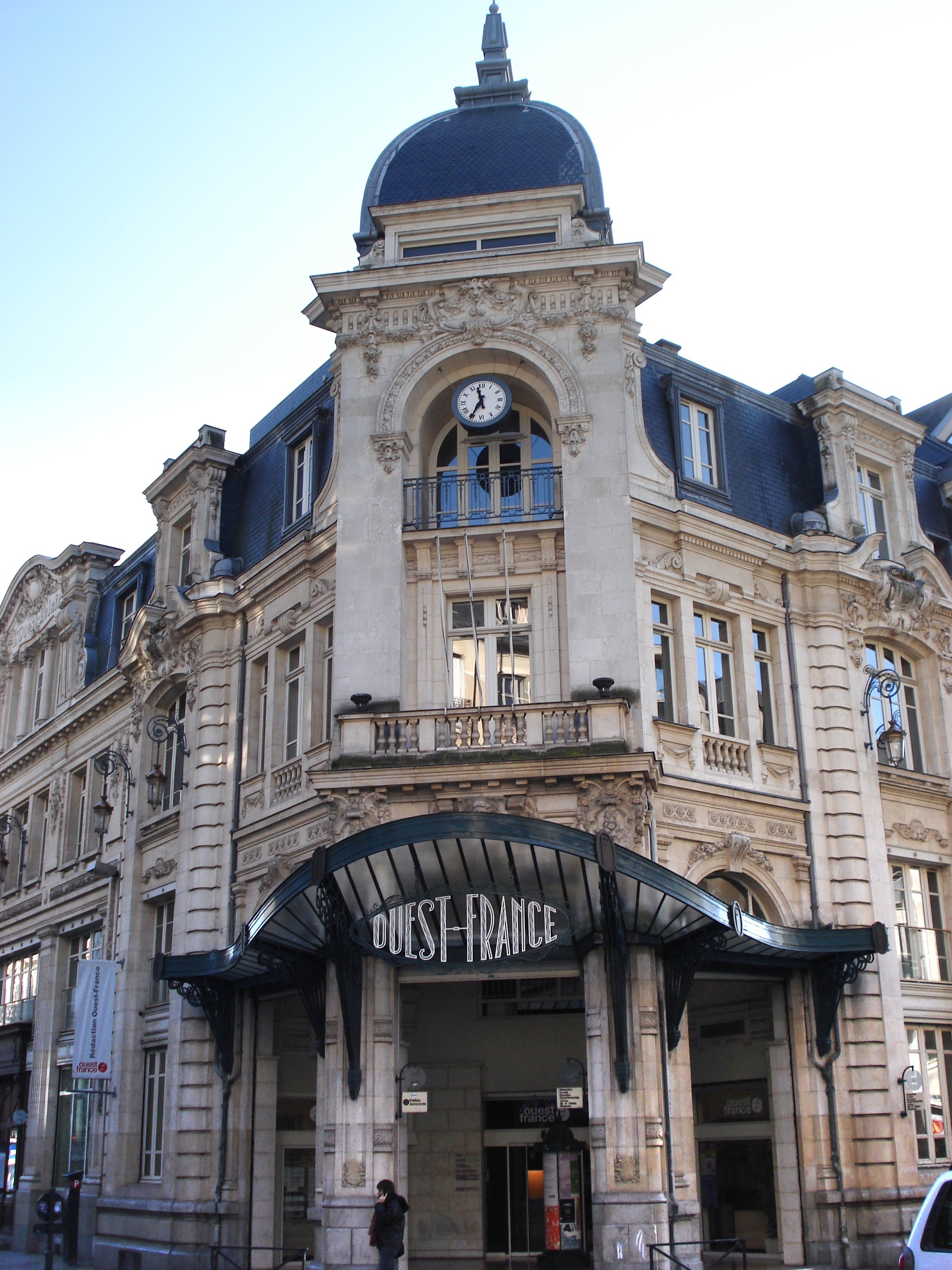
French newspaper
| Field | Value |
|---|---|
| name | Ouest-France |
| logo | Ouest-France_logo.svg |
| image | Ouest_France.jpg |
| caption | Front page, 12 February 2014 |
| type | Daily newspaper |
| format | Berliner |
| founded | |
| owners | Groupe Sipa – Ouest-France |
| political_position | Centrism |
| Moderate conservatism | |
| headquarters | Rennes |
| circulation | 645,344 (total; 2022) |
| editor | Philippe Boissonnat |
| Laetitia Greffié | |
| Sébastien Grosmaître | |
| ISSN | 0999-2138 |
| eISSN | 1760-6306 |
| website |
Moderate conservatism Laetitia Greffié Sébastien Grosmaître
Ouest-France (, ) is a daily French newspaper known for its emphasis on both local and national news. The paper is produced in 47 different editions covering events in different French départements within the régions of Brittany, Lower Normandy and Pays de la Loire. Its readership has been unaffected by the decline of newspaper reading in France, unlike most other dailies.
With 2.5 million daily readers (and a circulation of almost 800 000 units), it is by far the most read francophone newspaper in the world, ahead of French national newspapers Le Figaro and Le Monde.
History
Ouest-France was founded in 1944 by Adolphe Le Goaziou and others following the closure of Ouest-Éclair, which was banned by Liberation forces for collaborationism during the war. It is based in Rennes and Nantes and has a circulation about 792,400 (greater than any French national daily newspaper), mostly in Brittany.
Its editorial line has been strongly pro-European integration from the beginning, influenced by Christian democracy (Popular Republican Movement), now MoDem, Nouveau Centre or Union for a Popular Movement (UMP). With 2.52 million readers, Ouest-France is also the leading French-language daily in the world.
The paper had a circulation of 773,471 copies in 2001 and 764,731 copies in 2002 with a market share of 14.41%. The paper had a circulation of 637,463 copies in 2020.
The distinct editions
The 41 different editions are divided among twelve départements :
| Département | Numbers | Circulation | Name of editions | Calvados | Côtes-d'Armor | Finistère | Ille-et-Vilaine | Loire-Atlantique | Maine-et-Loire | Manche | Mayenne | Morbihan | Orne | Sarthe | Vendée |
|---|---|---|---|---|---|---|---|---|---|---|---|---|---|---|---|
| 4 | Bayeux, Caen, Pays d'Auge, Vire / Falaise | ||||||||||||||
| 5 | Dinan, Guingamp, Lannion / Paimpol, Loudéac – Rostrenen, Saint-Brieuc | ||||||||||||||
| 5 | Brest, Châteaulin / Carhaix, Finistère sud, Morlaix, Quimper | ||||||||||||||
| 10 | Redon, Rennes (Rennes nord, sud, est, ouest, centre), Saint-Malo, Vitré, Fougères | ||||||||||||||
| 6 | Châteaubriant – Ancenis, Nantes vignoble, Pays de Retz, Nantes ville, Nantes nord, St-Nazaire / La Baule | ||||||||||||||
| 2 | Angers – Segré, Cholet | ||||||||||||||
| 3 | Cherbourg, Saint-Lô / Coutances, Sud Manche | ||||||||||||||
| 1 | Mayenne | ||||||||||||||
| 5 | Auray, Lorient, Ploërmel, Pontivy, Vannes | ||||||||||||||
| 2 | Argentan-Flers, Alençon-Orme-Est | ||||||||||||||
| 2 | Le Mans / Sarthe nord, Sarthe sud | ||||||||||||||
| 4 | Fontenay-le-Comte / Luçon, La Roche-sur-Yon, Montaigu / Les Herbiers, Ouest Littoral |
References
References
- (n.d.). "Ouest-France − History".
- "Historical development of the media in France". McGraw-Hill Education.
- Jean-Loup Avril, ''Mille Bretons, dictionnaire biographique'', Les Portes du Large, Saint-Jacques-de-la-Lande, 2003, ({{ISBN. 2-914612-10-9)
- David Ward. (2004). "A Mapping Study of Media Concentration and Ownership in Ten European Countries". Dutch Media Authority.
- "Ouest France – ACPM".
- (January 28, 2022). "Qui sommes-nous ?".
This article was imported from Wikipedia and is available under the Creative Commons Attribution-ShareAlike 4.0 License. Content has been adapted to SurfDoc format. Original contributors can be found on the article history page.
Ask Mako anything about Ouest-France — get instant answers, deeper analysis, and related topics.
Research with MakoFree with your Surf account
Create a free account to save articles, ask Mako questions, and organize your research.
Sign up freeThis content may have been generated or modified by AI. CloudSurf Software LLC is not responsible for the accuracy, completeness, or reliability of AI-generated content. Always verify important information from primary sources.
Report