From Surf Wiki (app.surf) — the open knowledge base
Otranto

| Field | Value | |
|---|---|---|
| name | Otranto | |
| official_name | Comune di Otranto | |
| native_name | Oṭṛàntu (Salentino) | |
| el | ||
| image_skyline | Otranto - Seafront - 01.jpg | |
| image_caption | Otranto seen from the castle | |
| image_shield | Otranto-Stemma.png | |
| shield_alt | Coat of arms of Otranto | |
| shield_size | 80px | |
| pushpin_label_position | left | |
| coordinates | ||
| region | Apulia | |
| province | Lecce (LE) | |
| frazioni | Porto Badisco, Conca Spellucchia | |
| mayor | Pierpaolo Cariddi | |
| area_total_km2 | 77.2 | |
| population_total | 5800 | |
| population_as_of | 31 December 2017 | |
| population_demonym | Idruntini or Otrantini | |
| elevation_m | 15 | |
| istat | saint = Martyrs of Otranto | |
| day | August 14 | |
| postal_code | 73028 | |
| area_code | 0836 | |
| website |
el Otranto (, , ; ; ; ; ) is a coastal town, port and comune in the province of Lecce (Apulia, Italy), in a fertile region once famous for its breed of horses. It is one of I Borghi più belli d'Italia ("The most beautiful villages of Italy").
It is located on the east coast of the Salento peninsula. The Strait of Otranto, to which the city gives its name, connects the Adriatic Sea with the Ionian Sea and separates Italy from Albania. The harbour is small and has little trade.
The lighthouse Faro della Palascìa, at approximately 5 km southeast of Otranto, marks the most easterly point of the Italian mainland.
About 50 km south lies the promontory of Santa Maria di Leuca (so called since ancient times from its white cliffs, leukos being Greek for white), the southeastern extremity of Italy, the ancient Promontorium Iapygium or Sallentinum. The district between this promontory and Otranto is thickly populated and very fertile.
The area that lies between Otranto and Santa Maria di Leuca is part of the Regional Natural Coastal Park of "Costa Otranto - Santa Maria di Leuca e Bosco di Tricase" wanted by the Apulia Region in 2008. This territory has numerous natural and historical attractions such as Ciolo, which is a rocky cove.
History
Otranto occupies the site of the ancient Greek city of Magna Graecia Hydrus (in Greek: Ὑδροῦς) or Hydruntum (in Latin), also known as Hydrunton, Hydronton, or Hydruntu. Otranto was a town of Messapian origin, which, in the wars of Pyrrhus and of Hannibal sided against Rome.
In Roman times it was a city. As it is the nearest port to the eastern coast of the Adriatic Sea, it was perhaps more important than Brundisium (present Brindisi), under the Roman emperors as a point of embarkation for the East, as the distance to Apollonia (in present Albania) was less than from Brundisium.
In the 8th century, it was for some time in the possession of duke Arechis II of Benevento.
On 17 August 928, the city was sacked by a Fatimid fleet under Sabir al-Fata. Its inhabitants were carried to North Africa as slaves. It remained in the hands of the Byzantine emperors until it was among the last cities of Apulia to surrender to the Norman Robert Guiscard in 1068. It then became part of the Principality of Taranto. In the Middle Ages, the Jews had a school there.
Ottoman invasion
Main article: Ottoman conquest of Otranto
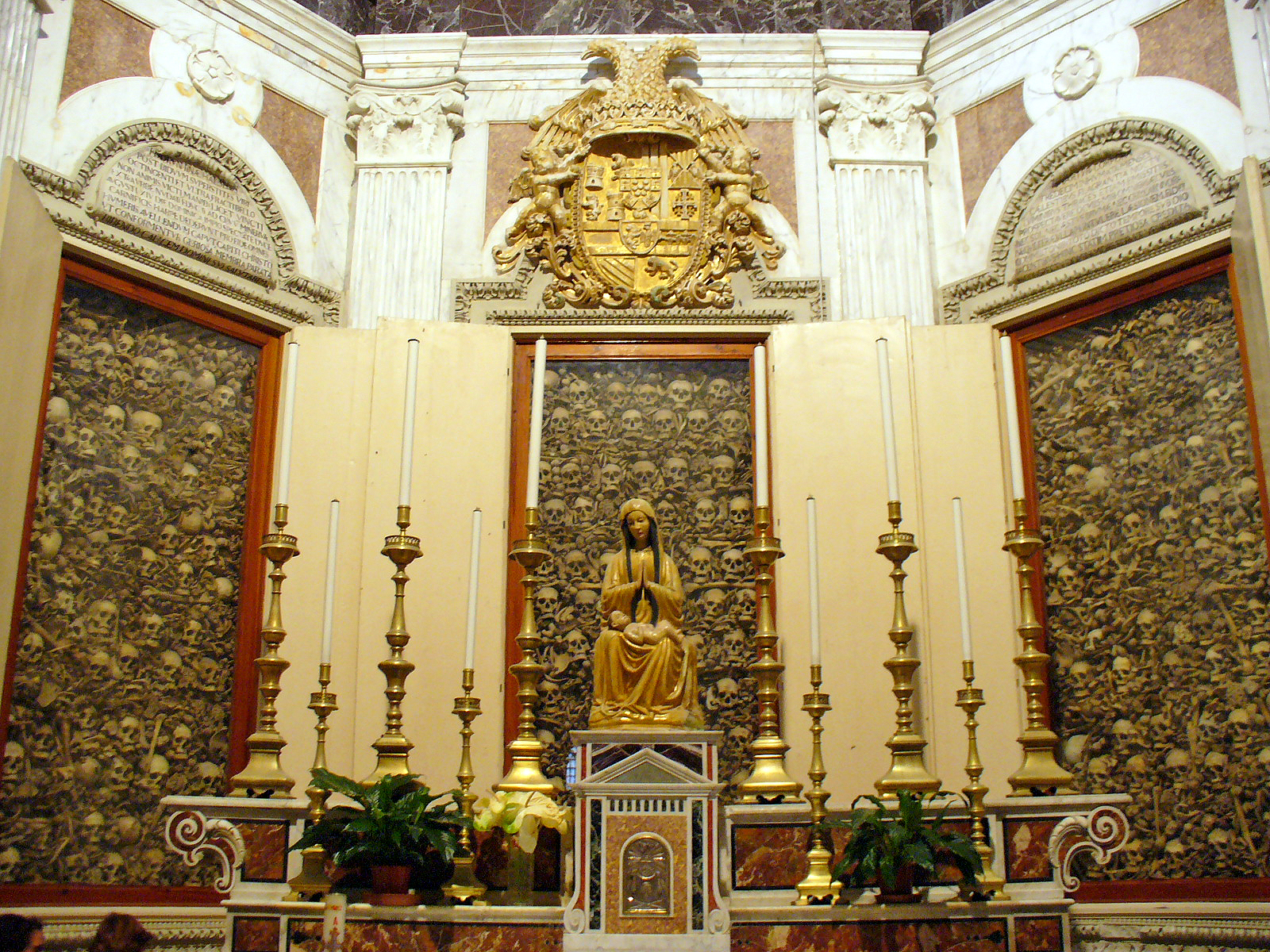
In 1480, Sultan Mehmed II sent an Ottoman fleet to invade Rome under the command of Gedik Ahmed Pasha. The force reached the shores of Apulia on 28 July 1480, and the city was captured in two weeks on 11 August 1480. All of the male inhabitants were slaughtered by the victorious Ottomans. Of the 22,000 inhabitants, only 10,000 were left alive. Some 800 citizens, known as the "Martyrs of Otranto", were beheaded after they had refused to convert to Islam. They were canonised by Pope Francis on 12 May 2013. Archbishop Stefano Pendinelli was also martyred.
Between August and September 1480, the Italian and European kingdoms failed to help King Ferdinand of Naples except for his cousin Ferdinand the Catholic of Spain, the Kingdom of Sicily and later the Republic of Genoa. In 1481, the Pope, in panic, called for a crusade to be led by King Ferdinand of Naples and was joined by troops of Hungarian king Matthias Corvinus. The Ottomans controlled the city for 13 months. Mehmed II died on his way to capture the rest of Italy. His successor, Sultan Bayezid II, ordered Gedik Ahmed Pasha to be hanged. On 11 September 1481, the Ottomans abandoned the city.
In 1537, the famous Ottoman corsair and admiral Barbarossa recaptured Otranto and the Fortress of Castro, but the Ottomans were again repulsed from the city and from the rest of Apulia.
Napoleonic Wars
In 1804, the city was obliged to harbour a French garrison that was established there to watch the movements of the English fleet. Under the French name of Otrante it was created a duché grand-fief de l'Empire in the Napoleonic kingdom of Naples for Joseph Fouché, Napoleon's minister of Police (1809). The family used the title of duc d'Otrante after Joseph Fouché's death.
World War I
During WWI the allied Italian-French-British Fleet organized the Otranto Barrage to control the Austro-Hungarian Fleet in the Adriatic Sea. The Austro-Hungarian Fleet led by captain Miklós Horthy attacked the Barrage (13–15 May 1917) breaking it and sinking some British drifters (Battle of the Strait of Otranto (1917)).
World War II
During WWII the British fleet raided the Otranto Channel (11–12 November 1940) as a diversionary manoeuvre (Battle of the Strait of Otranto (1940) from the contemporary main attack on Taranto (Battle of Taranto).
Geography
Climate
Otranto experiences a humid subtropical climate (Köppen climate classification Cfa) with long, hot summers and short, cool winters.
Main sights


Otranto main sights include:
- The Castello Aragonese (Castle), reinforced by Emperor Frederick II and rebuilt by Alphonso II of Naples in 1485–98. It has an irregular plan with five sides, with a moat running along the entire perimeter. In origin it had a single entrance, reachable through a draw-bridge. Towers include three cylindrical ones and a bastion called Punta di Diamante ("Diamond's Head"). The entrance sports the coat of arms of Emperor Charles V.
- The Cathedral, consecrated in 1088, a work of Count Roger I adorned later (about 1163), by Bishop Jonathas, with a mosaic floor; it has a rose window and side portal of 1481. The interior, a basilica with nave and two aisles, contains columns said to come from a temple of Minerva and a fine mosaic pavement of 1166, with interesting representations of the months, Old Testament subjects and others. Bones and relics of the Martyrs of Otranto, who perished in the 15th-century siege surround the high altar. The church has a crypt supported by 42 marble columns. The same Count Roger also founded a Basilian monastery here, which, under Abbot Nicetas, became a place of study; its library was nearly all bought by Bessarion.
- The church of San Pietro, with Byzantine frescoes.
- The catacombs of Torre Pinta.
- Idro, a small river which the toponym Otranto stems from.
Culture
Otranto is the setting of Horace Walpole's book The Castle of Otranto, which is generally held to be the first Gothic novel. Walpole had chosen the town from a map of the Kingdom of Naples because the name was "well-sounding"; he was not aware that Otranto had a castle until 1786, some twenty-two years after the novel was first published under a pseudonym. The principal model for the castle was his villa in Strawberry Hill, London.
Otranto is also mentioned in Bram Stoker's novel The Lady of the Shroud.
International relations
Twin towns – Sister cities
Otranto is twinned with:
- ALB Sarandë, Albania
Sources
References
References
- (September 2022). "Otranto, Strait of". [[Oxford University Press]]}}{{dead link.
- {{Cite American Heritage Dictionary. Otranto
- "Otranto". [[HarperCollins]].
- "Puglia".
- {{Das Reich des Mahdi
- (12 May 2013). "Pope canonises 800 Italian Ottoman victims of Otranto". BBC.
- G. Conte, ''[https://www.academia.edu/14526373/Una_flotta_siciliana_ad_Otranto_1480_ Una flotta siciliana ad Otranto (1480)]'', in "Archivio Storico Pugliese", a. LXVII, 2014
- "Güney İtalya ve Osmanlılar".
- Carlo Stasi, Otranto e l'Inghilterra (episodi bellici in Puglia e nel Salento), in Note di Storia e Cultura Salentina, anno XV, pp. 127–159, (Argo, Lecce, 2003), Paul G. Halpern, The Battle of the Otranto Straits (controlling the Gateway to the Adriatic in WWI) (Bloomington, I.U.P. 2004).
- Carlo Stasi, Otranto e l'Inghilterra (episodi bellici in Puglia e nel Salento), in Note di Storia e Cultura Salentina, anno XV, pp. 127–159, (Argo, Lecce, 2003), Carlo Stasi, Otranto nel Mondo. Dal "Castello" di Walpole al "Barone" di Voltaire (Editrice Salentina, Galatina 2018) {{ISBN. 978-88-31964-06-7, Thomas P. Lowry, The Attack on Taranto (Stackpoole Books paperbacks, 2000)
- [http://www.meteoam.it/modules/AtlanteClim2/pdf/(332)Lecce%20Galatina.pdf Lecce-Galatina weather station] {{Webarchive. link. (22 May 2020 ''Italian Ministry of Defence'' Retrieved 2009-06-02)
- (2008). "The Castle of Otranto". Oxford University Press.
This article was imported from Wikipedia and is available under the Creative Commons Attribution-ShareAlike 4.0 License. Content has been adapted to SurfDoc format. Original contributors can be found on the article history page.
Ask Mako anything about Otranto — get instant answers, deeper analysis, and related topics.
Research with MakoFree with your Surf account
Create a free account to save articles, ask Mako questions, and organize your research.
Sign up freeThis content may have been generated or modified by AI. CloudSurf Software LLC is not responsible for the accuracy, completeness, or reliability of AI-generated content. Always verify important information from primary sources.
Report