From Surf Wiki (app.surf) — the open knowledge base
Osceola County, Florida
County in Florida, United States
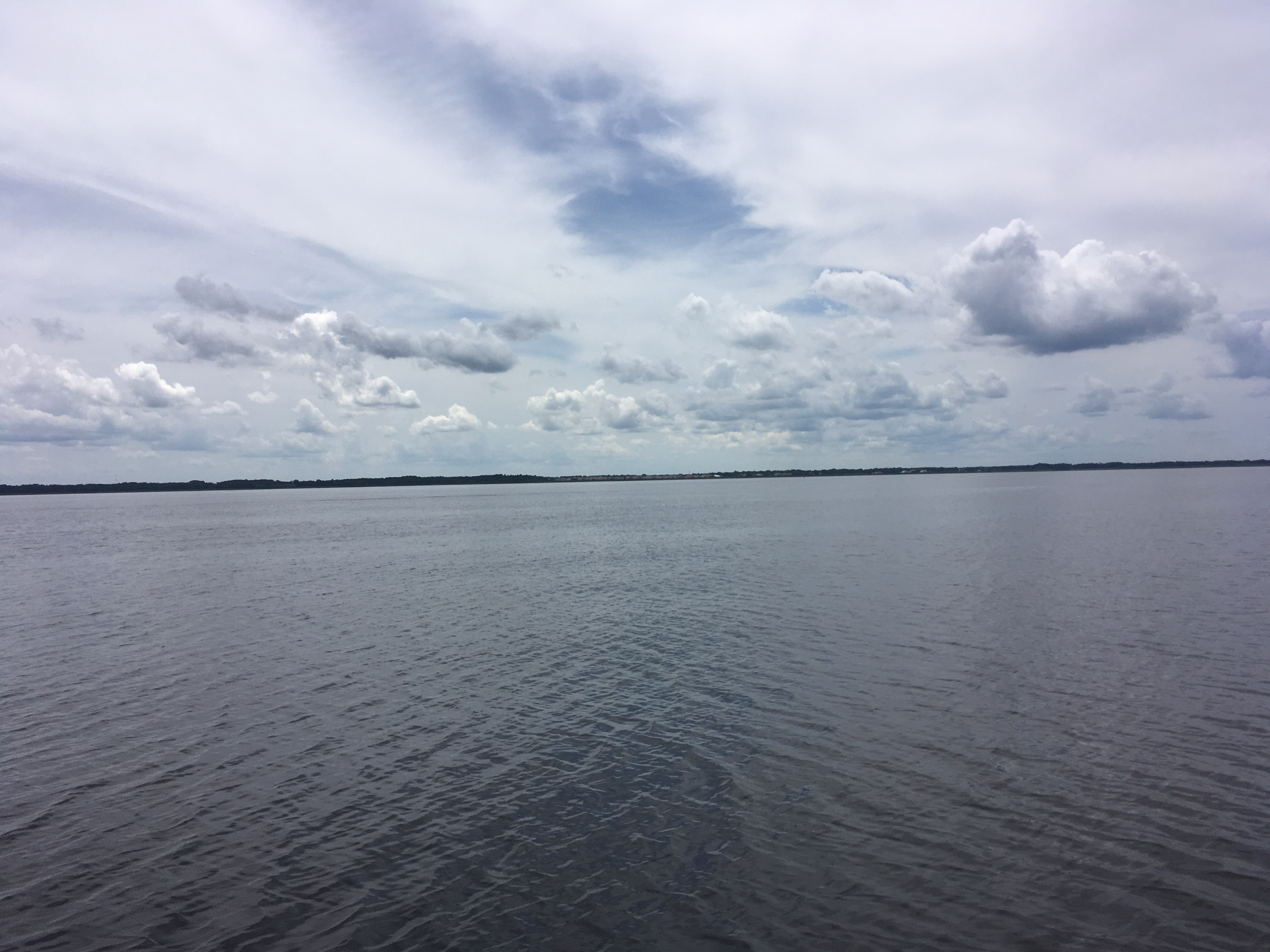
County in Florida, United States
| Field | Value |
|---|---|
| county | Osceola County |
| state | Florida |
| flag | Flag of Osceola County, Florida.png |
| seal | Osceola County Fl Seal.jpg |
| logo | Logo of Osceola County, Florida.svg |
| founded year | 1887 |
| founded date | May 12 |
| seat wl | Kissimmee |
| largest city wl | Kissimmee |
| area_total_sq_mi | 1506 |
| area_land_sq_mi | 1327 |
| area_water_sq_mi | 178 |
| area percentage | 11.9 |
| census yr | 2020 |
| pop | 388656 |
| population_footnotes | |
| pop_est_as_of | 2024 |
| population_est | 468058 |
| density_sq_mi | auto |
| web | https://www.osceola.org/ |
| ex image | Kissimmee New County Crths02.jpg |
| ex image cap | The Osceola County Courthouse in October 2009 |
| district | 9th |
| time zone | Eastern |
| named for | Osceola |
| pop_est_footnotes |
Osceola County ( ) is a county located in the central portion of the U.S. state of Florida. As of the 2020 census, the population was 388,656. Its county seat is Kissimmee. Osceola County is included in the Orlando–Kissimmee–Sanford, Fla. Metropolitan Statistical Area.
Being 54.3% Hispanic, Osceola is one of three Hispanic-majority counties in Florida, owing to its large Puerto Rican American population. It also is the 12th-largest majority-Hispanic county in the nation.
Etymology
Osceola County is named for the Native American leader Osceola, whose name means "Black Drink Cry [Asi Yaholo]".
History
Osceola County was created in 1887. On July 21, 1821, Florida was divided into two counties, named Escambia County to the west and St. John's County to the east. In 1824, the southern part of St. John's County became Mosquito County, with Enterprise as the county seat. In 1844, Brevard County was carved out from Mosquito County. When Florida became a state in 1845, Mosquito County was renamed Orange County. On May 12, 1887, Osceola was named a county, having been created from both Orange and Brevard Counties. Osceola County reached all the way down to Lake Okeechobee until 1917 when Okeechobee County was formed.
Since the late 20th century, Osceola County has experienced a significant influx of migrants from the Commonwealth of Puerto Rico, the unincorporated territory of the United States, and in the 2000 U.S. census Puerto Rican was the largest self-reported ancestry group.
Government
Osceola County is a charter county and a subdivision within the State of Florida. Voters approved the County Charter in March 1992, and it took effect on October 1, 1992. The structure of County government under the charter does not depart dramatically from the structure of a County government outlined in the Florida Statutes.
Osceola County Government is governed by three sets of elected officials, each of which independently directs separate branches of County Government. These include: the five-member County Commission, five separate Constitutional Officers, and a number of Judicial Officers. Under State law, the County Commission is responsible for funding the budgets of all Osceola County Government, including the independently elected Constitutional Officers and Judicial Officers, as well as the Commission's own departments. Each independent officer has discretion to administer his or her own programs. The County Commission exercises oversight only over its own departments.
Osceola County has five electoral districts each represented by a commissioner. All the commissioners compose the Board of Commissioners that appoint a County Manager. There also is a Commission Auditor and County Attorney.
Legislature
;Board of County Commissioners
- District 1 – Peggy Choudhry (D)
- District 2 – Viviana Janer (D)
- District 3 – Brandon Arrington (D)
- District 4 – Cheryl Grieb (D)
- District 5 – Ricky Booth (R)
Executive
- County Manager – Don Fisher
- Deputy County Manager - Beth Knight
- Assistant County Manager - Donna Renberg
- County Attorney - Frank Townsend
[[County constitutional officer (Florida)|Constitutional officers]]
- Sheriff – Christopher Blackmon (interim)
- Property appraiser – Katrina Scarborough (D)
- Clerk of the Circuit Court & Comptroller – Kelvin Soto (D)
- Supervisor of elections – Mary Jane Arrington (D)
- Tax collector – Bruce Vickers (D)
- Public defender – Bob Wesley
- State attorney – Monique Worrell (D)
Osceola County was a Republican stronghold in presidential elections from about 1950 up until 1996, when Bill Clinton carried Florida with a plurality. It swung back to support George W. Bush in 2004, but then heavily supported Democrat Barack Obama in 2008, and up until 2024 it had supported Democrats by large margins. In 2024 the county swung back to support Republican Donald Trump, mirroring trends seen in the rest of the state of Florida.
Geography
According to the U.S. Census Bureau, the county has a total area of 1506 sqmi, of which 1327 sqmi is land and 178 sqmi (11.9%) is water.
Adjacent counties
- Orange County – north
- Brevard County – northeast
- Indian River County – east
- Okeechobee County – southeast
- Highlands County – south
- Polk County – west
- Lake County – northwest
Transportation
Rail

CSX's A-line, formerly the Atlantic Coast Line Railroad mainline, and originally built by the South Florida Railroad in the 1880s, runs through the urbanized northern part of the county. CSX has leased the line to the FDOT. Intercity passenger service is provided by Amtrak at Kissimmee station and commuter passenger service is operated by SunRail, with stops at Tupperware station and Kissimmee Amtrak in Kissimmee, as well as Poinciana station north of Poinciana.
Airports
- Kissimmee Gateway Airport
Major highways
Main article: List of county roads in Osceola County, Florida
- International Drive
Buses
- Lynx, a public bus authority based in Orange County which also serves Lake, Polk, Seminole, and Volusia Counties in Central Florida.
- Citrus Connection, the public bus authority based in Lakeland, Polk County, has at least four routes also serving Osceola County.
Demographics
| align-fn = center 1790-1960 1900-1990
Racial and ethnic composition
| Race / Ethnicity (NH = Non-Hispanic) | Pop 1980 | Pop 1990 | title=P004: Hispanic or Latino, and Not Hispanic or Latino by Race – 2000: DEC Summary File 1 – Osceola County, Florida | url=https://data.census.gov/table?g=050XX00US12097&tid=DECENNIALSF12000.P004 | website=United States Census Bureau | access-date= }} | title=P2: Hispanic or Latino, and Not Hispanic or Latino by Race – 2010: DEC Redistricting Data (PL 94-171) – Osceola County, Florida | url=https://data.census.gov/cedsci/table?q=p2&g=050XX00US12097&tid=DECENNIALPL2010.P2 | website=United States Census Bureau | access-date= }} | Pop 2020 | % 1980 | % 1990 | % 2000 | % 2010 | % 2020 |
|---|---|---|---|---|---|---|---|---|---|---|---|---|---|---|---|---|
| White alone (NH) | 44,682 | 87,439 | 102,792 | 108,292 | 113,362 | 90.66% | 81.17% | 59.59% | 40.30% | 29.17% | ||||||
| Black or African American alone (NH) | 3,003 | 5,452 | 11,075 | 24,503 | 35,145 | 6.09% | 5.06% | 6.42% | 9.12% | 9.04% | ||||||
| Native American or Alaska Native alone (NH) | 119 | 326 | 519 | 596 | 562 | 0.24% | 0.30% | 0.30% | 0.22% | 0.14% | ||||||
| Asian alone (NH) | 284 | 1,558 | 3,721 | 7,120 | 11,370 | 0.58% | 1.45% | 2.16% | 2.65% | 2.93% | ||||||
| Native Hawaiian or Pacific Islander alone (NH) | x | x | 97 | 229 | 240 | x | x | 0.06% | 0.09% | 0.06% | ||||||
| Other race alone (NH) | 110 | 87 | 535 | 1,393 | 4,218 | 0.22% | 0.08% | 0.31% | 0.52% | 1.09% | ||||||
| Mixed race or Multiracial (NH) | x | x | 3,027 | 4,406 | 12,670 | x | x | 1.75% | 1.64% | 3.26% | ||||||
| Hispanic or Latino (any race) | 1,089 | 12,866 | 50,727 | 122,146 | 211,089 | 2.21% | 11.94% | 29.41% | 45.46% | 54.31% | ||||||
| Total | 49,287 | 107,728 | 172,493 | 268,685 | 388,656 | 100.00% | 100.00% | 100.00% | 100.00% | 100.00% |
2020 census
As of the 2020 census, the county had a population of 388,656. The median age was 37.6 years, with 23.4% of residents under the age of 18 and 14.1% of residents aged 65 years or older. For every 100 females there were 93.6 males, and for every 100 females age 18 and over there were 90.3 males age 18 and over. There were 130,574 households in the county, of which 38.4% had children under the age of 18 living in them. Of all households, 51.0% were married-couple households, 14.9% were households with a male householder and no spouse or partner present, and 25.9% were households with a female householder and no spouse or partner present. About 17.6% of all households were made up of individuals and 6.9% had someone living alone who was 65 years of age or older.
The majority of Hispanics/Latinos in the county are Puerto Ricans, who account for an estimated 33.7% of the population and are the largest ancestral group in the county.
The racial makeup of the county was 40.6% White, 10.5% Black or African American, 0.6% American Indian and Alaska Native, 3.0% Asian, 0.1% Native Hawaiian and Pacific Islander, 20.1% from some other race, and 25.1% from two or more races. Hispanic or Latino residents of any race comprised 54.3% of the population.
93.7% of residents lived in urban areas, while 6.3% lived in rural areas.
There were 154,680 housing units, of which 15.6% were vacant. Among occupied housing units, 62.5% were owner-occupied and 37.5% were renter-occupied. The homeowner vacancy rate was 2.6% and the rental vacancy rate was 11.6%.
Religion
38.2% of the county population is affiliated with a religious congregation. There are 206 or more religious congregations in the county. 16.5% are Catholic; 1.3% are Mormons; 3.5% are Baptist, 3.7% are Pentecostal, 1.4% are Methodist, 8.3% are members of other Christian faiths, 0.1% are Jewish, 0.2% affiliate with an eastern faith, and 3.2% affiliate with Islam.
2010 census
As of the 2010 census, there were 111,539 households; 57% were married couples living together, 23% had a female householder with no spouse present, 7% had a male householder with no spouse present, and 13% were non-families. The average household size was 3.4 persons per household.
In the county, the population was spread out, with 12% being 0 to 9 years old, 15% 10 to 19, 14% 20 to 29, 15% from 30 to 39, 13% from 40 to 49, 11% 50 to 59, and 19% who were 60 years of age or older. The median age was 36 years. For every 100 females, there were 97.20 males. For every 100 females age 18 and over, there were 94.20 males.
The median income for a household in the county was $52,279. The per capita income for the county was $22,196. About 13.4% of the population were below the poverty line, including 18.00% of those under age 18 and 10.00% of those age 65 or over.
Education
The School District of Osceola County, Florida serves the county. The county is home to 59 schools, not including colleges.
Colleges
- Johnson University Florida
- Florida Technical College
- Heritage University & Seminary
- Stetson University
- Valencia College - Osceola Campus & Poinciana Campus
Libraries
There are currently six branches of the Osceola County Library System:
- Buenaventura Lakes Library - Kissimmee, FL
- Hart Memorial Library - Kissimmee, FL
- Kenansville Library - Kenansville, FL
- Poinciana Library - Kissimmee, FL
- St. Cloud Veterans Memorial Library - St. Cloud, FL
- West Osceola Library - Celebration, FL
The Hart Memorial Library is home to the Ray Shanks Law Library, and TechCentral the library system's "creative space".
History
Until 1989, there was no independent Osceola Library System. Instead, Osceola patrons were taken care of by Orange County Library System. Before that, there were two libraries, which are still named after the original independent libraries, run by women's organizations: Veteran's Memorial in Saint Cloud and Hart Memorial Library in Kissimmee.
In 1910, land for the Hart Memorial Library was donated by a widow of a former Florida Governor, Carrie S. Hart. It was located on North Stewart Avenue in Kissimmee . In 1914, women pooled money together from themselves and other community members to build the actual building and Annie Palmer Fell, another widow of a prominent Florida man, donated furnishings and books from her personal collection to begin building inventory in the new library. In 1968, the location moved to a 4,000 square foot building on Broadway and Dakin. Hart Memorial Library is the Osceola headquarters and is now located in a 43,000 square building .
Veteran's Memorial Library was at first a reading room until enough funds were raised to build the first official location on Massachusetts Avenue in Saint Cloud. In the early 70's the location moved to a former SunBank location on 10th Street and New York Avenue. In 1995, this branch moved for its final time to a larger building on Indiana Avenue and 13th street where it is still located today.
The first Poinciana Branch was opened in 1988. It was a modular building and consisted of a 14,000 book collection. This branch was eventually moved into a larger location with a collection of 40,000 books and computer access for patrons.
Osceola Library Systems began as an independent organization on April 1, 1989.
In 1990, the Buenaventura Library opened.
In 1991, volunteers helped open the Kenansville Branch Library in a shared space with the old Kenansville school. During the 2004 hurricanes, the collection was a total loss. It was rebuilt in 2007 with a larger collection, including books, DVDs, and computer/wifi access.
Communities
Cities
- Kissimmee
- St. Cloud
Census-designated places
- Buenaventura Lakes
- Campbell
- Celebration
- Four Corners
- Poinciana
- Yeehaw Junction
Other unincorporated communities
- Bull Creek
- Deer Park
- Harmony
- Holopaw
- Kenansville
- Narcoossee
- Whittier – the hamlet along Harvey Road especially near its intersection with Whitman Road; Zip Code: 34739. Hometown Locator: Whittier, Florida, accessed October 2018.
- Intercession City
Planned development
Back in 2009, there were plans to create a new city named Destiny near the intersection of the Florida Turnpike and US 441. The project was halted by The Florida Department of Community Affairs after concerns that there would be mass urban sprawl. The area is now a reserve named after the city's planner, Fred DeLuca. If finished, the city would've had an expected population of 250,000.
Special districts
- Central Florida Tourism Oversight District
- Crescent Lake Common Facilities District
Former communities
- Apoxsee
- Illahaw
- Kicco
- Locosee
- Nittaw
- Runnymede
- Tohopkee
Notes
References
References
- (2024-07-01). "U.S. Census Bureau QuickFacts: Osceola County, Florida".
- "State & County QuickFacts". United States Census Bureau.
- "Find a County". National Association of Counties.
- "P2: HISPANIC OR LATINO, AND NOT HISPANIC OR LATINO BY RACE". United States Census Bureau.
- (1908). "Publications of the Florida Historical Society". Florida Historical Society.
- Rohter, Larry. (January 31, 1994). "A Puerto Rican Boom for Florida". New York Times.
- [[:Image:Census-2000-Data-Top-US-Ancestries-by-County.jpg]]
- Leip, David. "Dave Leip's Atlas of U.S. Presidential Elections".
- (February 12, 2011). "US Gazetteer files: 2010, 2000, and 1990". [[United States Census Bureau]].
- "Census 2000 PHC-T-4. Ranking Tables for Counties: 1990 and 2000". United States Census Bureau.
- "U.S. Decennial Census". United States Census Bureau.
- "Historical Census Browser". University of Virginia Library.
- "Population of Counties by Decennial Census: 1900 to 1990". United States Census Bureau.
- (1980). "1980 U.S. Census - General Population Characteristics - Table 16 Total Persons and Spanish Origin Persons by Type of Spanish Origin and Race: 1980".
- (1980). "1990 U.S. Census - Social and Economic Characteristics - Table 6. Race and Hispanic Origin: 1990".
- "P004: Hispanic or Latino, and Not Hispanic or Latino by Race – 2000: DEC Summary File 1 – Osceola County, Florida".
- "P2: Hispanic or Latino, and Not Hispanic or Latino by Race – 2010: DEC Redistricting Data (PL 94-171) – Osceola County, Florida".
- "P2: Hispanic or Latino, and Not Hispanic or Latino by Race – 2020: DEC Redistricting Data (PL 94-171) – Osceola County, Florida".
- included in the Asian category in the 1980 Census
- included in the Asian category in the 1990 Census
- not an option in the 1980 Census
- not an option in the 1990 Census
- (2021). "2020 Decennial Census Demographic Profile (DP1)".
- (September 27, 2019). "Orlando Sentinel website". [[Orlando Sentinel]].
- (2021). "2020 Decennial Census Redistricting Data (Public Law 94-171)".
- (2023). "2020 Decennial Census Demographic and Housing Characteristics (DHC)".
- "Facilities - School District of Osceola County".
- "Locations & Hours {{!}} Osceola Library System".
- "About Us {{!}} Osceola Library System".
- "St. Cloud Heritage Museum".
- "Crescent Lakes Common Facilities District". Osceola County Government.
This article was imported from Wikipedia and is available under the Creative Commons Attribution-ShareAlike 4.0 License. Content has been adapted to SurfDoc format. Original contributors can be found on the article history page.
Ask Mako anything about Osceola County, Florida — get instant answers, deeper analysis, and related topics.
Research with MakoFree with your Surf account
Create a free account to save articles, ask Mako questions, and organize your research.
Sign up freeThis content may have been generated or modified by AI. CloudSurf Software LLC is not responsible for the accuracy, completeness, or reliability of AI-generated content. Always verify important information from primary sources.
Report