From Surf Wiki (app.surf) — the open knowledge base
Ordnance QF 17-pounder
Anti-tank gun and tank gun

Anti-tank gun and tank gun
| Field | Value | ||||||
|---|---|---|---|---|---|---|---|
| name | Ordnance QF 17-pounder | ||||||
| image | QF-17-pounder-batey-haosef-1.jpg | ||||||
| image_size | 300 | ||||||
| caption | 17-pounder in Batey ha-Osef museum, Israel | ||||||
| origin | United Kingdom | ||||||
| type | {{plainlist | ||||||
| is_ranged | yes | ||||||
| is_artillery | yes | ||||||
| is_UK | yes | ||||||
| service | 1943–present | ||||||
| used_by | British Commonwealth | ||||||
| wars | {{plainlist | ||||||
| *Bizerte crisis<ref name | "Bizerte"}} | ||||||
| design_date | 1941–42 | ||||||
| production_date | 1942- | ||||||
| weight | 3 LT | ||||||
| part_length | {{plainlist | ||||||
| * {{convert | 13 | ft | 9 | in | m | abbr | on}} |
| width | 2.2 m | ||||||
| height | 1.6 m | ||||||
| crew | 5-6 | ||||||
| cartridge | Fixed QF 76.2×583mmR | ||||||
| (R/135mm) | |||||||
| caliber | 3 inches (76.2 mm) | ||||||
| rate | {{plainlist | ||||||
| velocity | {{plainlist | ||||||
| * APCBC <ref>{{cite web | url | https://www.tankarchives.ca/2016/08/17-pounder-britains-long-arm.html | title=17-Pounder: Britain's Long Arm }} | ||||
| range | 1.5 km | ||||||
| max_range | 10.5 km | ||||||
| breech | Vertical sliding breech | ||||||
| recoil | Hydro-pneumatic | ||||||
| carriage | Split trail carriage, with gun shield. | ||||||
| elevation | -6° to +16.5° | ||||||
| traverse | 60° |
- Anti-tank gun
- Tank gun}}
- World War II
- Korean War
- Bizerte crisis}}
- 13 ft
- 55 calibres}} (R/135mm)
- 20 rpm cyclic
- 10 rpm practical}}
- 2,900 ft/s APCBC HE
- 3,050 ft/s APCBC
- 3,950 ft/s APDS }}
The Ordnance Quick-Firing 17-pounder (or just 17-pdr)Under the British standard ordnance weights and measurements the gun's approximate projectile weight is used to denote different guns of the same calibre. Hence this was a 3-inch gun, of which there were several types in British service, which fired a projectile weighing approximately 17 lb was a 76.2 mm (3 inch) gun developed by the United Kingdom during World War II. It was used as an anti-tank gun on its own carriage, as well as equipping a number of British tanks. Used with the APDS shot, it was capable of defeating all but the thickest armour on German tanks. It was used to "up-gun" some foreign-built vehicles in British service, notably to produce the Sherman Firefly variant of the US M4 Sherman tank, giving British tank units the ability to hold their own against their German counterparts. In the anti-tank role, it was replaced after the war by the 120 mm BAT recoilless rifle. As a tank gun, it was succeeded by the 84 mm 20 pounder.
Development history
Gun development
Before the QF 6-pounder had entered service, the British predicted that it would soon be inadequate given the increasing armour of German tanks. In late 1940, the design of a replacement began, and was largely completed by the end of 1941. A prototype production line was set up in spring 1942, and with the appearance of Tiger I tanks in early 1943 in the North African Campaign, the first 100 prototype 17-pounder anti-tank guns were quickly sent to help counter this new threat. So great was the rush that they were sent before proper carriages had been developed, and the guns had to be mounted in the carriages of 25-pounder gun-howitzers. These early weapons were known as 17/25-pounders and given the codename Pheasant. They first saw action in February 1943.
Fully developed 17-pounders started production in 1943 and were first used during the Italian Campaign. They became one of the most effective weapons on the battlefield, on both carriages and tanks.
The 17-pounder anti-tank guns also saw action in Korea against tanks and in general support use against bunkers. After Korea, the gun was largely replaced in the tank role by the 84mm calibre, Ordnance QF 20 pounder, and in the anti-tank role by the BAT, MOBAT and 120 mm L6 WOMBAT series of recoilless rifles.
Adaptation into tanks and AFVs
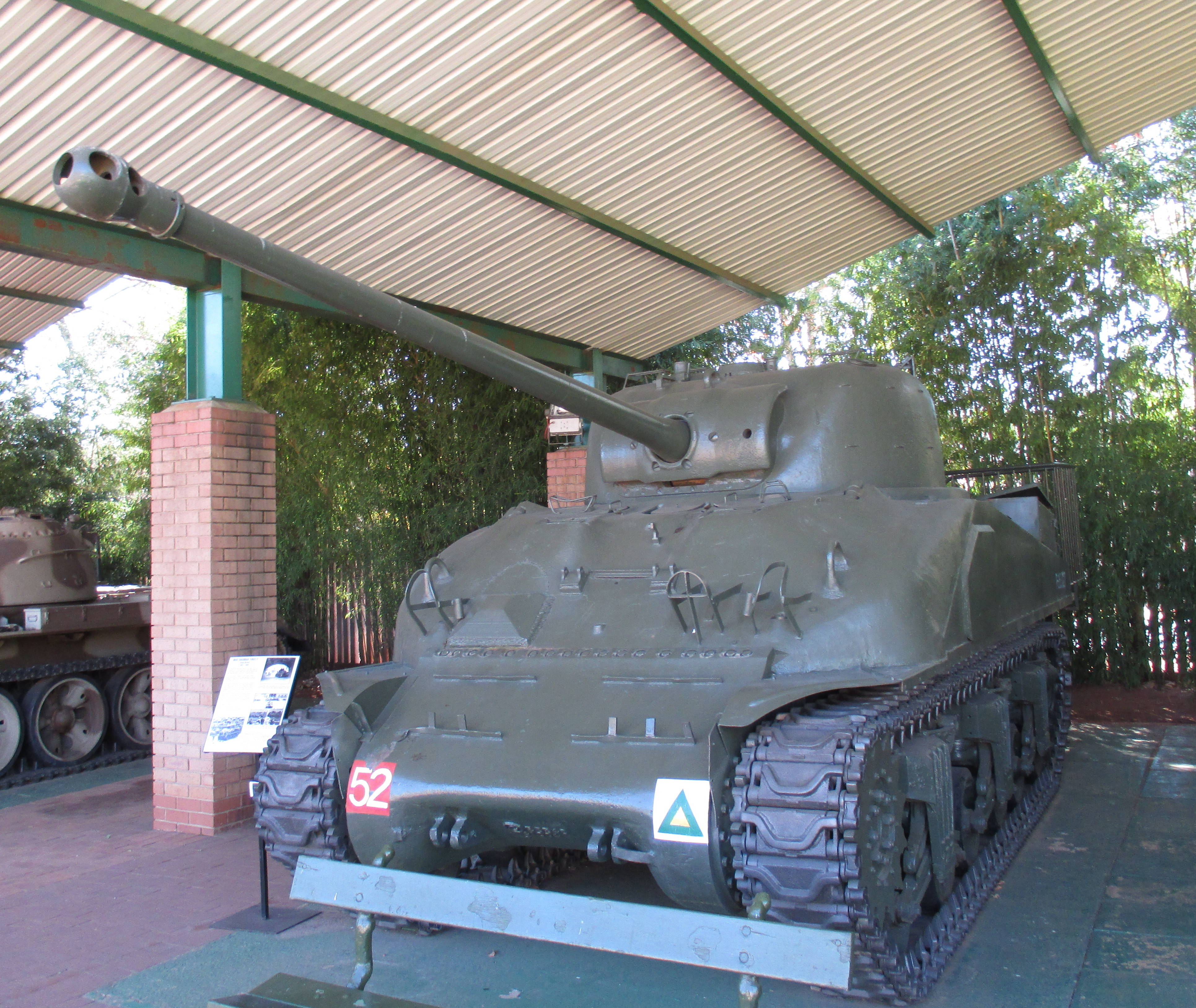
The 17-pounder outperformed all other Allied armour-piercing guns, and was quickly adapted for use on various tank chassis. However, few tanks were capable of carrying such a large gun due to the size limitations of their turret rings. A new British tank specification, A29, was produced to meet the need for a 17-pounder-armed cruiser tank. While the A29 was eventually cancelled without a successful design being produced, an amended specification, A30, reached production in 1943. The A30 specification reduced weight and enabled the use of Cromwell tank components as a design expedient. The resulting Cruiser Mark VIII Challenger had a longer hull and provided a larger turret, allowing the 17-pounder to be mounted along with space for a second loader, thought to be required for the gun's larger ammunition. However, production of the tank took time and few could be completed before the allied invasion of Normandy.
While developing the Challenger tank, the British devised a conversion for their US-supplied M4 Sherman tanks to mount the 17-pounder. This was applied in sufficient numbers to put them into service in time for D-Day as the Sherman Firefly. The gun was a modified design that was produced specifically for the Firefly, the MkIV. A new horizontal-sliding breech was designed as the usual vertical-sliding breech of the Mks I and II made loading very difficult. An additional box was welded to the back of the turret to take the radio, which was moved to allow for the breech and its recoil.Being a long gun, adequate length inside the turret was needed in order to give a satisfactory balance. A new recoil mechanism, based on the 6-pounder design, was developed and the thicker section of the gun barrel in contact with the cradle was lengthened to match the new recoil system. The original experimental Sherman mounting at Lulworth was actually rigid with no recoil system. Production of the Challenger was cancelled with only about 200 built, and 2,200 - 2,400 Sherman Is and Vs were converted as Fireflies (sources vary) and deployed in Sherman regiments Italy and NW Europe. The Challengers were deployed with Cromwell regiments.

The British also converted some of their US-produced M10 tank destroyers, replacing the 3-inch (76 mm) M7 gun with the 17-pounder; the resulting vehicles were called 17pdr SP Achilles or just 17-pdr M10C. These served with Royal Artillery as self-propelled guns.
The 17-pounder was also successfully trialled on the Australian-designed Sentinel tank, though no Sentinels equipped with this gun entered service with the Australian Army.
Efforts to fit the 17pdr on a Cromwell chassis in a better manner than the ungainly Challenger resulted in the Comet tank. However, the Comet could still not take the 17pdr. The 75mm High Velocity Gun project was resurrected and redesigned to use a shortened version of the 17pdr barrel and the 17pdr projectiles mated to the cartridge of the 3 inch 30cwt anti-aircraft gun. While often confused with the 17pdr, the 77mm HV, was an entirely separate weapon and was only used on the Comet.
As the war came to a close, the 17-pdr was fitted to the new Centurion tank, then designated as a "heavy cruiser" tank until ultimately being replaced by the 20-pounder in 1949. The Centurion was the first tank designed around the 17pdr gun.
The United States Army did not use the 17-pdr. Although the gun was offered to them and tested, they chose to stick with their 76 mm gun M1. US forces did however request some Firefly conversions in March 1945 and as many as 18 were converted but the war ended before they were shipped from the UK.
Variants


;Mark I : first production versions. ;Mark II : intended for tank use. Removed the carrier mountings and replaced the muzzle brake with a counterweight. The brake was added back on in March 1944 with the introduction of the APDS shot. The Mk. II was used on the Archer self-propelled anti-tank gun and Cruiser Mark VIII Challenger tank. ;Mark III : Royal Navy adaptation for use on landing craft, generally similar to the Mk. I, but included an automatic loading system. Unused. ;Mark IV : Another tank adaptation, this time with a different breech where the block slid to the side instead of down to take up less room. Used on Sherman Firefly. ;Mark V : A version of the Mk IV with different mounts to allow it to replace the US 3 in (76.2 mm) Gun M7 on the M10 tank destroyer, creating the 17pdr SP Achilles. ;Mark VI : Another Mk. IV adaptation with a shortened breech. ;Mark VII : Similar to the Mk. VI, yet another change to the breech. ;Straussler Conversion : This was an experimental gun, designed by Nicholas Straussler that was fitted with a motorized gun-carriage. A modified ammunition limber would be attached to the gun's trails, making a four-wheeled, self-propelled vehicle and removing the need for a truck to tow the gun.
77 mm HV
The British started work on developing a gun that was small enough to fit on their tank designs—particularly the Cromwell cruiser tank then at the design stage. It was intended to fire the US 75 mm projectiles (AP shot and HE) at a higher velocity, avoiding a downgrade in armour penetration versus the 6-pounder, which the dual purpose 75 mm was replacing. The new 50-calibre long gun, known as the Vickers HV 75 mm, fired a 75 mm projectile attached to a necked down 3-inch (76.2 mm) 20 cwt AA gun cartridge through a modified breech. The larger 3" cartridge provided a greater propellant charge compared with normal 75 mm shells. Although the 75 mm HV was a promising weapon, it proved to be too big for the Cromwell tank, which was ultimately fitted with the normal QF 75 mm gun in use on other British tanks. To account for this difference, tank squadrons were teamed with Challenger and Sherman Firefly tanks armed with the 17-pounder.
When the Cromwell's replacement, the Comet, was at the design stage, the 75 mm HV concept was reworked to fire the same projectiles as the 17-pounder through a shortened 17-pounder barrel but retaining the 3-inch cartridge case firing from a standard 3-inch breech. This has the benefit of greater ease of use on tanks, many of which would not have sufficient turret space to accommodate the breech length and recoil distance of the 17-pounder. Similarly, the smaller 3"-based ammunition was easier to store and handle in the tank's cramped interior. This new gun's ammunition was not interchangeable with the 17-pounder and to prevent confusion over ammunition supplies, it was renamed the 77 mm HV—the 'HV' standing for High Velocity—although it was the same 76.2 mm calibre as the 17-pounder.
Ammunition


The 17-pounder used the following ammunition types: ;Armour Piercing Capped (APC) :Armour Piercing Capped was a basic AP shell used with field guns, but was not used when the 17pdr was mounted in the Sherman Firefly tank. ;Armour Piercing, Capped, Ballistic Capped (APCBC) :Armour Piercing, Capped, Ballistic Capped ammunition could penetrate 163 mm of armour at 500 metres and 150 mm at 1000 m. ;Armour-piercing discarding sabot (APDS) :Armour-piercing discarding sabot could penetrate 256 mm of armour at 500 m and 233 mm at 1000 m,A Bovington Tank Museum document states the 17-Pounder Mk II firing APDS could penetrate 187 mm at 500 yards with a 30° angle of obliquity, while Jane's Armour and Artillery 1981-82 gives a penetration of 231 mm at 1,000 yards with the same strike angle. and allowing it in theory to penetrate the armour of even the German Tiger II heavy tank. Most sources are in agreement that APDS was not available on D-Day itself, but reached Normandy in increasing amounts by the end of June or early July 1944. It was available for the breakout battle from Normandy and the advance to the Netherlands and Germany. The weight of the enclosed shot, excluding the enclosing sabot, was 7.7 lb.There were accuracy issues using APDS caused by the muzzle brake aperture being too small to allow a clean separation of the sabot. Teams of engineers visited tank and artillery regiments, with equipment to bore the aperture slightly. New guns were modified in the factory. ;High Explosive (HE) :The HE shells for the 17-pounder had smaller bursting charges (Mk 1: 1.28 lbs, Mk 2: 1.06 lbs) ;Practice, Shot Mk 10 :"The components of this practice round are similar to those of Shot APCBC, except for the projectile. The projectile is made of cast iron and is uncapped. It is fitted with tracer."
APCBC ammunition was the standard ammunition for the gun, while APDS shot was used for about 6% of the average load of a 17-pounder-equipped British tank.
While offering greater penetration, the smaller (sub-calibre) tungsten core of APDS was considered to provide less accurate fire than APCBC ammunition at ranges beyond 500 yards. This was due to the much lesser visible impact of rounds that fell short, making it hard to spot the fall of shot and correct aim. The APDS was also considered to cause less damage to an enemy tank if it did penetrate the armour. After penetration, the core usually disintegrated.
The 17-pounder produced a very large muzzle flash due to the large amount of propellant in its cartridges. Muzzle blast was also significant, described by crews of the anti-tank gun variant as resembling a hard slap on the chest.
| APCBC | APDS | HE/Red | HE/HC reduced | HE/Super/HC reduced | Smoke screening | Smoke coloured | Length complete round | Weight complete round | Projectile mark | Weight projectile | Projectile fuze action | Projectile filling | Bursting charge | |||||||||
|---|---|---|---|---|---|---|---|---|---|---|---|---|---|---|---|---|---|---|---|---|---|---|
| including exploder | Propellent type | Weight propellent | Muzzle velocity | EFC full charge | EFC reduced charge | |||||||||||||||||
| 34.475 in | 29.925 in | 31.655 in | 34.51 in | 34.17 in | ||||||||||||||||||
| 37 lb | 24 lb | 26 lb | 28 lb | 28 lb | ||||||||||||||||||
| 1 and 3 | 1B and 2 | 2 | 1 | 1 | ||||||||||||||||||
| 17 lb | 7 lb | 13 lb | 14 lb | 14 lb | 18 lb | 17 lb | ||||||||||||||||
| - | - | Percussion direct action (DA) | Super quick (SQ) or delay | Percussion | Time | Time | ||||||||||||||||
| - | - | TNT | TNT | TNT | - | - | ||||||||||||||||
| - | - | 1 lb | 1 lb | 1 lb | - | - | ||||||||||||||||
| Nitrocellulose NH035 | Nitrocellulose NH033 | Cordite WM017 | Cordite WM017 | Cordite WM017 | Cordite WMT | Cordite WMT | ||||||||||||||||
| 8 lb | 6 lb | 1 lb | 1 lb | 1 lb | 0 lb | 0 lb | ||||||||||||||||
| 2,950 ft/s | 3,950 ft/s | 1,800 ft/s | 750 ft/s | 750 ft/s | ||||||||||||||||||
| 0.5 | 0.75 | 0.25 | 0.25 | 0.25 | negligible | negligible | ||||||||||||||||
| 0.03 | - | 0.03 | 0.03 | 0.03 | - | - |
NH = non-hygroscopic; i.e. does not absorb moisture.
HC = High capacity.
EFC = Equivalent full charge. EFC was the basis of calculating the wear effect of propellent charges. Instructions were to examine the barrel for wear after every 40 EFC.
Performance
| Gun type | rowspan=2 | Ammunition type | rowspan=2 | Muzzle velocity | ||||||||||
|---|---|---|---|---|---|---|---|---|---|---|---|---|---|---|
| (m/s) | colspan=11 | Penetration (mm) | 100 m | 250 m | 500 m | 750 m | 1000 m | 1250 m | 1500 m | 1750 m | 2000 m | 2500 m | 3000 m | |
| QF 77 mm | APCBC | 785 m/s | 147 | 143 | 137 | 131 | 126 | 121 | 116 | 111 | 106 | |||
| QF 77 mm | APCBC FH | 785 m/s | 157 | 153 | 147 | 141 | 135 | 130 | 124 | 119 | 114 | |||
| QF 17 pdr | AP | 884 m/s | 200 | 190 | 175 | 160 | 147 | 135 | 124 | 114 | 105 | |||
| QF 17 pdr | AP FH | 884 m/s | 164 | 156 | 144 | 132 | 121 | 112 | 103 | 94 | 87 | |||
| QF 17 pdr | APCBC | 884 m/s | 174 | 170 | 163 | 156 | 150 | 143 | 137 | 132 | 126 | |||
| QF 17 pdr | APCBC FH | 884 m/s | 187 | 182 | 175 | 167 | 161 | 154 | 148 | 141 | 136 | |||
| QF 17 pdr | APDS | 1204 m/s | 275 | 268 | 256 | 244 | 233 | 223 | 213 | 204 | 194 |
- FH marks the performance against face hardened armour (FHA), as opposed to rolled homogeneous armour (RHA).
Use
Anti-tank gun
The 17-pounder was a much bulkier and heavier weapon than its predecessor. As a result, it had to be towed by a gun tractor, such as the Morris Quad, M3 Half-track or the Crusader, as it could not effectively be moved by its gun crew alone, especially on poor ground. After firing on soft ground, the 17-pounder frequently had to be pulled out of the ground due to the gun recoil burying the trail spades. After the Second World War, it was issued to anti-tank units of the Royal Artillery in the British Army of the Rhine (BAOR) towed by the M3 Half Track. When the Royal Artillery anti-tank units were disbanded in 1951, it was transferred to Infantry battalions in the BAOR (six per battalion), towed by the Oxford Tracked Carrier. It was later replaced by the 120 mm BAT recoilless rifle anti-tank weapon.

Pheasant carriage
Also known by the 17/25 pounder designation, a stop-gap measure named Pheasant mated the 17 pounder gun with a modified 25 pounder carriage. This enabled the gun to be pressed into service before its own carriage design was ready.
Split trail carriage
A custom designed carriage for the 17 pounder comprising:
- Split trail carriage, with gunshield.
- Weight: 3 t.
- Elevation: −6° to +16.5°
- Traverse: 60°
Middle East
In the immediate post-war era in the Middle East, Arab national armies - Transjordan, Egypt, Syria and Iraq - mainly used British manufactured artillery, including the towed 17-pounder. The Israelis used a number of 17 pounders that they captured from the Arabs in the war of independence
Vehicle mount
World War II
- Tank, Cruiser, Challenger (A30) - 200 built
- Tank, Cruiser, Comet I (A34) (77 mm OQF HV) - 1,200 by end of war.
- SP 17-pounder, Valentine, Mk I, Archer self-propelled anti-tank gun built on Valentine tank hull, 655 built
- Sherman Firefly - Modified Sherman tank (Medium Tank M4), about 2,000
- 17pdr SP Achilles - Modified 3-inch Gun Motor Carriage M10, about 1,100 by end of war
- Tank, Infantry, Black Prince (A43) (experimental development of Churchill tank, never fielded)
- Australian Cruiser tank Mk IV (prototype turret only, never fielded)
Post-war
- Ratel IFV Concept 1 - a heavily modified South African test-bed chassis.
- Eland Mk7 Concept 2 - a heavily modified South African test-bed chassis.
- Alvis Saracen Concept 3 - a heavily modified South African test-bed chassis.
- Centurion - on A41 prototype and on production Centurion Mk 1 and Mk 2.
- SP 17-pounder, A30 (Avenger) - variant of Challenger, not available in time for war, 250 built
Notes
References
References
- (13 July 2014). "Il y a 53 ans, la guerre de Bizerte : Le témoignage du général Elkateb". Leaders Tunisie.
- "17-Pounder: Britain's Long Arm".
- Foss, Christopher. (1977). "Jane's pocket book of towed artillery". Collier.
- Hayward, Mark. (19 September 2002). "Sherman M4 and M4A3 17 pounder in US service New Information". Shermanic Firefly.
- Williams, Anthony G. (2012). "An alternative 1930s tank gun".
- "75mm Gun M2, M3, & M6 Specification Booklet". The Sherman Tank Site.
- (July 1952). "Royal Armoured Corps Training, Volume III-Armament, Pamphlet No 7, SP 17-pr M10". War Office.
- (July 1952). "Royal Armoured Corps Training, Volume III-Armament, Pamphlet No 7, SP 17-pr M10". War Office.
- (July 1952). "Royal Armoured Corps Training, Volume III-Armament, Pamphlet No 7, SP 17-pr M10". War Office.
- (1 January 2009). "17 Pounder Anti-Tank Gun". British Equipment of the Second World War.
- (July 1952). "Royal Armoured Corps Training, Volume III-Armament, Pamphlet No 7, SP 17-pr M10". War Office.
- [https://books.google.com/books?id=YAd8efHdVzIC&dq=17+pounder+%2B+israel&pg=PA161 ''The Encyclopedia of the Arab-Israeli Conflict''] p161-162
- (6 December 2012). "Lesakeng". South African Armour Museum.
This article was imported from Wikipedia and is available under the Creative Commons Attribution-ShareAlike 4.0 License. Content has been adapted to SurfDoc format. Original contributors can be found on the article history page.
Ask Mako anything about Ordnance QF 17-pounder — get instant answers, deeper analysis, and related topics.
Research with MakoFree with your Surf account
Create a free account to save articles, ask Mako questions, and organize your research.
Sign up freeThis content may have been generated or modified by AI. CloudSurf Software LLC is not responsible for the accuracy, completeness, or reliability of AI-generated content. Always verify important information from primary sources.
Report