From Surf Wiki (app.surf) — the open knowledge base
Order of the Star in the East
Spiritual organization based in India (1911–1927)
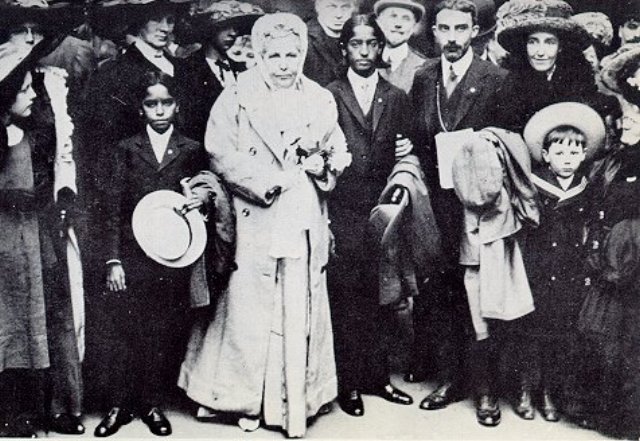
Spiritual organization based in India (1911–1927)
| Field | Value |
|---|---|
| abbreviation | OSE |
| predecessor | |
| successor | |
| established | |
| founder | Annie Besant |
| dissolved | |
| type | Spiritual organization |
| purpose | Inform and prepare the world for the appearance of the World Teacher |
| headquarters | Benares (Varanasi), India |
| region | Worldwide |
| membership | |
| membership_year | 1926 |
| sec_gen | |
| leader_title | Head |
| leader_name | Jiddu Krishnamurti |
| leader_title2 | Co-Protector |
| leader_name2 | Annie Besant |
| leader_title3 | Co-Protector |
| leader_name3 | C. W. Leadbeater |
| main_organ | The Herald of the Star |
| parent_organization | Theosophical Society |
| subsidiaries | Star Publishing Trust |
| affiliations |
The Order of the Star in the East (OSE) was an international organization based at Benares (Varanasi), India, from . It was established by the leadership of the Theosophical Society at Adyar, Madras (Chennai) to prepare the world for the arrival of a reputed messianic entity, the World Teacher or Maitreya. The OSE acquired members worldwide as it expanded in many countries; a third of its diverse membership was unaffiliated with the Theosophical Society. The precursor of the OSE was the Order of the Rising Sun (, also at Benares) and the successor was the Order of the Star (, based at Ommen, the Netherlands). The precursor organization was formed after leading Theosophists discovered a likely candidate for the new messiah in the thenadolescent Jiddu Krishnamurti , a South Indian Brahmin who was installed as Head of the Order. Almost two decades later Krishnamurti rejected the messianic role, repudiated the Order's mission and in 1929 disbanded the OSE's successor. The founding and activities of these organizations as well as the largely unexpected dissolution of the OSE's successor, attracted widespread media attention and public interest. They also led to crises in the Theosophical Society and to schisms in Theosophy. Krishnamurti's later multi-decade career as a notable independent philosopher has been a factor in evaluations of the OSE and its mission.
Background
One of the central tenets of late 19th-century Theosophy as promoted by the Theosophical Society was the complex doctrine of intelligent evolution of all This was said to be occurring on a Cosmic scale, across the physical and non-physical aspects of the known and unknown Universe and affecting all of its constituent parts regardless of apparent size or importance. The theory was originally described in the Secret Doctrine a book by Helena Blavatsky, a Russian occultist who was one of the founders of contemporary Theosophy and the Theosophical
According to this view Humankind's evolution on Earth (and beyond) is part of the Cosmic It is reputedly overseen by a hidden hierarchy, the Masters of the Ancient Wisdom, whose upper ranks consist of advanced spiritual beings. Blavatsky stated she was in contact with members of the reputed hierarchy; she described the Theosophical Society as one of the hierarchy's many attempts (or "impulses") through the millennia, to guide Humanity in line with the intelligent evolutionary scheme to its ultimate, immutable objective: the attainment of perfection and the conscious participation in the evolutionary These attempts may require an Earth-based infrastructure (such as the Theosophical Society) to pave the way for the hierarchy's physically appearing emissaries, "the torch-bearer of The mission of these reputedly regularly appearing emissaries is to practically translate, in a way and language understood by contemporary humanity, knowledge that would help it reach a higher evolutionary
History
Early history
Blavatsky wrote about the possible impact of Theosophy and the Theosophical Society in her book The Key to Theosophy (published 1889):
Based on this and other Blavatsky writings, Theosophists expected the future arrival of the "next impulse"; additional information was the purview of the Society's Esoteric Section, which Blavatsky had founded and originally
After Blavatsky's death in 1891, influential British Theosophist Charles Webster Leadbeater expanded on her writings about the Masters and their He formulated a Christology that identified Christ with the Theosophical representation of the Buddhist concept of Maitreya, and stated the entity occupied one of the highest positions in the hierarchy. Leadbeater believed that Maitreya-as-Christ had manifested on Earth in several occasions, often using a specially prepared individual as a "vehicle". The incarnated Maitreya assumed the role of World Teacher, dispensing knowledge regarding underlying truths of
Annie Besant, another well-known and influential British Theosophist (and eventual close associate of Leadbeater's), was also interested in the appearance of the next emissary from the spiritual During the she became progressively convinced, along with Leadbeater and others, that this would happen sooner than Blavatsky's proposed They came to believe it would involve the imminent reappearance of Maitreya as World Teacher, a monumental event in the Theosophical However, not all Theosophical Society members accepted Leadbeater's and Besant's ideas on the matter; the dissidents accused them of deviating from Theosophical orthodoxy and along with other concepts developed by the two, their elaborations on the Theosophical Maitreya were derisively labelled Neo-Theosophy by their
Besant became President of the Theosophical Society in adding considerable weight to the belief of Maitreya's impending manifestation; this became a commonly held expectation among She had been commenting on the arrival of the next emissary as early as 1896; by 1909 the proclaimed "coming Teacher" was a main topic of her lectures and
"Discovery" of Jiddu Krishnamurti
Sometime between and at the private beach of the Theosophical Society Headquarters in Adyar, Madras (Chennai), Leadbeater encountered Jiddu Krishnamurti, a fourteen-year-old South Indian At the time , was employed by the Society; the family, in poor condition, lived next to the compound. Leadbeater was a controversial figure whose knowledge of Occult matters was highly respected by the Society's leadership, and was considered clairvoyant by He was by then looking for suitable prospects for the "vehicle" of the World Teacher, and came to believe young Krishnamurti who was not the first or only candidate was the most promising, notwithstanding the boy's reputedly poor appearance, dull personality, and lackluster Despite Narayaniah's reservations, Leadbeater soon placed Krishnamurti and at the latter's insistence his inseparable younger brother Jiddu Nityananda ("Nitya"), under his and the Society's wing. In Besant, as President of the Society and head of its Esoteric Section, admitted the Jiddu brothers into In she became their legal guardian; the boys had already been separated from their family and moved into the Theosophical
Following the "discovery" Leadbeater began occult examinations of Krishnamurti, to whom he had assigned the pseudonym Alcyone the name of a star in the Pleiades star cluster and of characters from Greek mythology. Leadbeater's belief in the boy's suitability was strengthened by his clairvoyance-aided investigations of Krishnamurti's reputed past and future lives. Records of these investigations were published in Theosophical magazines starting and in a book in They were widely discussed within the Society as according to Leadbeater, contemporary Theosophists were involved in various "lives of Alcyone". Such reputed involvement became a matter of status and prestige among Theosophists; it also contributed to factionalism within the In the meantime, Krishnamurti readily submitted to a comprehensive multi-year regimen of physical, intellectual, social and spiritual training in preparation for his probable future
Order of the Rising Sun
the OSE predecessor
In the Theosophical Society published the first work "by Alcyone", a booklet entitled At the Feet of the Master. The book became very popular among Theosophists and around the same time (officially, in the Order of the Rising Sun was founded at Benares (Varanasi) by George Arundale, a prominent Theosophist. Arundale, Principal of the Central Hindu College (CHC), was impressed by Alcyone and his writings and formed the Order around a CHC-based study group of disciples headed by Krishnamurti. The new entity was generally focused on the expected World Teacher, yet the recently discovered Krishnamurti-Alcyone was somewhat obliquely at the center of its attention. Ernest Armine (E.A.) Wodehouse, Professor of English at the CHC, was a member and commented, were no blind devotees, prepared to see in him nothing but Had there been a trace in him of conceit or affection, or any posing as the 'holy child' or of priggish self-consciousness, we would undoubtebly have given an adverse
The activities and proclamations of Leadbeater, Besant and other senior Theosophists regarding Krishnamurti and the expected Teacher became entangled in prior disputes within and without the Theosophical Society, and the subject of new The evolving controversies as well as objections by Hindu members of the CHC faculty, prompted Besant to disband the organization in however a replacement had already been
Order of the Star in the East
In Besant founded the Order of the Star in the East (OSE) based again at Benares, which replaced the Order of the Rising Sun. It was named after the Star of Bethlehem, signifying the proclaimed approach of the new manifestation of Christ- The top positions of the organization were filled: "Mrs Besant and Leadbeater were made Protectors of the new Order of which Krishna was the Head, Arundale Private Secretary to the Head, and Wodehouse News regarding Krishnamurti, the Order and its mission received widespread publicity and worldwide press coverage; the publicity may have been at least partly driven by aspects of the era's prevailing **
Objective and principles
cert-img[[File:Orde van de ster in het oosten.jpg|thumb|upright=1.1|alt=Reproduction of membership certificate of the Order of the Star in the East|Order of the Star in the East membership certificate ([[Netherlands]] Section, 1917). Black and white copy, reduced.]] The goal of the OSE was to inform and prepare the world for the arrival of the World Teacher and to remove any material obstacles and difficulties from his By the Order had members worldwide; most of them were also members of the Theosophical However, membership was open to anyone, the only precondition being acceptance of the "Declaration of Principles", which stated the following:
|We believe that a great Teacher will soon appear in the world, and we wish so to live now that we may be worthy to know Him when He comes. |We shall try, therefore, to keep Him in our minds always, and to do in His name, and therefore to the best of our ability, all the work which comes to us in our daily occupations. |As far as our ordinary duties allow, we shall to devote a portion of our time each day to some definite work which may help to prepare for His coming. |We shall seek to make Devotion, Steadfastness and Gentleness prominent characteristics of our daily life. |We shall try to begin and end each day with a short period devoted to the asking of His blessing upon all that we try to do for Him and in His name. |We regard it as our special duty to try to and reverence greatness in whomsoever shown, and to strive to co-operate, as far as we can, with those whom we feel to be spiritually our superiors.
The organization had no other rules and there were no membership fees or subscriptions. New members received an OSE certificate and could thereafter display the organization's emblem, a silver
Activities
ext-img{{external media Following its establishment the OSE began its mission in earnest. Lecture tours, meetings and other activities were undertaken by prominent members of the Order. Articles and pamphlets about the OSE and its mission, published regularly by Theosophical were joined by an official bulletin, The Herald of the Star, initially based at Adyar, which started publication in
As Krishnamurti came of age, he embarked on an intensified schedule of lectures and discussions in several countries and acquired a large following among the membership of the Theosophical National Sections of the Order were eventually formed in as many as forty An affiliated international youth organization, the Servants of the Star, was established in London, England in with Krishnamurti's younger brother Nitya as its Head; it accepted persons years of age as
On during a ceremony officiated by Krishnamurti at the close of the annual Theosophical Convention (held that year at Benares), those present were said to be suddenly overwhelmed by a strange feeling of "tremendous power", which seemed to be flowing through Krishnamurti. In Leadbeater's description, "it reminded one irresistibly of the rushing, mighty wind, and the outpouring of the Holy Ghost at Pentecost. The tension was enormous, and every one in the room was most powerfully affected." The next day, at a meeting of the Esoteric Section, Besant for the first time stated that it was clear Krishnamurti was the required vehicle. Thereafter, became a "sacred day" for the
In 1912 Krishnamurti's father sued Besant to revoke her guardianship of his sons, which he had previously granted. Among the reasons stated in Narayaniah's deposition were accusations regarding Leadbeater's character and objections to the alleged deification of Krishnamurti, blamed on Besant's "announcement that he was to be the Lord Christ, with the result that a number of respectable persons had prostrated before him." Besant eventually won the case on
Also in 1912 most members of the Theosophical Society's well-represented German Section followed its head, Rudolf Steiner, in splitting from the parent entity partly due to disagreement over Besant's and Leadbeater's proclamations concerning Krishnamurti's messianic
Controversy regarding the OSE and Krishnamurti again engulfed the Central Hindu College. In 1913 a number of the Order's supporters resigned their positions at the CHC following opposition by the school's administration and trustees, who considered the Order's activities
In 1920 Nitya replaced Wodehouse as OSE Organizing The next year, the first international Congress of the Order of the Star in the East was held in Paris, France, attended by out of then worldwide. At the Congress it was decided that there would be no special ceremonies or rituals associated with the Order or with the World Also in the 1920s, regularly scheduled multi-day Star Camps supported by well-organized facilities started to be held in the Netherlands, the United States and India. They were attended by thousands of members, with coverage provided by local and international
In 1922, during a stay in Ojai, California, Krishnamurti had a series of physical, psychological and spiritual experiences over a period of several months, that affected him deeply. Rumors of strange happenings started circulating among OSE members, yet the events of Ojai (and similar later Krishnamurti experiences) remained unknown outside of the Theosophical leadership and Krishnamurti's inner
In close Krishnamurti associate and friend was appointed General Secretary following Nitya's unexpected death. While the Order's activities continued without visible disruption, Nitya's death was a privately devastating, watershed event for
Financing the venture and subsequent expansion did not appear to present a Properties in several countries were acquired via specially-formed trusts or by affiliates of the Order, for a variety of Donations were regularly solicited, along with project-based funding appeals to the members, some of whom were considerably In collaboration with the Theosophical Society the OSE had been producing a number of publications and propaganda material ; in 1926 it organized its own publishing arm, the Star Publishing Trust, based at Eerde, Ommen, the Netherlands. Along with an official international bulletin published in Ommen (the International Star Bulletin), national bulletins eventually appeared in twenty-one countries and in fourteen different Also in 1926 it was reported that the Order's membership was of which were also members of the Theosophical
Claims and expectations
By expectations regarding the Coming, and related activities of prominent Theosophists and their factions were reaching a climax. Extraordinary pronouncements of accelerated spiritual advancement were being made by various parties, privately disputed by others, and there were insinuations of jockeying for position. Ranking members of the Order and the Society had publicly declared they were chosen as apostles of the new Messiah. The escalating claims of spiritual success and the internal (and hidden from the public) Theosophical politics alienated the increasingly disillusioned Krishnamurti. His commitment and enthusiasm had been uneven since the Order's early days; in private he had occasionally expressed doubts about his presumed mission and discomfort with the adulation of the Order's He refused to recognize anyone as his disciple or In the meantime World Teacher-related spinoff projects proliferated: in the establishment of a "World Religion" and a "World University" were announced by the Theosophical leadership. Both of them were later "quietly
The annual Star Congress for 1925 opened at Adyar on the "sacred day" of following the much anticipated but uneventful Theosophical Convention. At the opening an event occurred that was reminiscent of the reputed incident on the same day of 1911. Krishnamurti was giving a speech about the World Teacher and the significance of his coming, when "a dramatic change" took place. His voice suddenly altered and he switched to first person, saying "I come for those who want sympathy, who want happiness, who are longing to be released, who are longing to find happiness in all things. I come to reform and not to tear down, I come not to destroy but to build." For many in the audience who noticed, it was a "spine-tingling" revelation, instantly and independently" confirmation, in their view, that the manifestation of Lord Maitreya through the chosen vehicle had
Order of the Star
the OSE successor
The reputed manifestation of the World Teacher resulted in celebratory statements and assertions by senior Theosophists that were not unanimously accepted by Society members, and controversy about the so-called "World Teacher Project" Besant and other leaders of the Society largely managed to contain the dissenters and the controversy, at the cost of unflattering However the Project was also receiving serious and neutral coverage in the global media, and according to reports it was followed sympathetically and with interest by

In related developments following the perceived manifestation, Besant announced in World Teacher is and many Star members expected Krishnamurti's unequivocal public proclamation of his messianic status. Land was purchased in Ojai for a "colony project", to serve as a "miniature model of a new " mentored by the World Reflecting the new situation, in the name of the organization was changed to Order of the Star and its main organ was retitled ; the organization relocated at Ommen, with serving as Chief
The renamed organization had two objectives:
|To draw together all those who believe in the Presence of the World Teacher in the world |To work with Him for the establishment of His ideas
Complementing the reorganization and the proclamations of the World Teacher's manifestation, in 1928 the "World Mother Project", headed by Rukmini Devi Arundale (George Arundale's young Indian wife), was set in motion by Theosophical leaders. Krishnamurti distanced himself from the new venture, which Indian and international press reports dubbed "Mrs. Besant's New Fad", and it was
Dissolution and repudiation
Krishnamurti's scepticism, increasingly visible since 1926, was countered by occasional affirmations of his World Teacher mission and role, including in However by the middle of the same year his emphasis had shifted consistently. To the consternation of Theosophists and the growing confusion of his followers, he was gradually discarding or contradicting Theosophical concepts and terminology, disagreeing with leading Theosophists and talking less about the World Teacher. Instead, he was urging his listeners to find their own Public interest, and attendance at his speaking engagements, remained The new emphasis mirrored fundamental changes in Krishnamurti, attributed by his biographers to the experiences that first occurred at Ojai and to Nitya's death , as well as to the development of his own, independent As his disenchantment with the World Teacher Project continued to grow, Krishnamurti undertook a thorough reevaluation of his relationship with it, the Theosophical Society, and Theosophy in
Finally on , at the Ommen Star Camp, he disbanded the Order in front of Besant and In his speech dissolving the organization (also broadcast on Dutch Krishnamurti said:
Despite the changes in Krishnamurti's pronouncements and outlook during the preceding years (and recent rumors of impending the ending of the Order and its mission shocked many of its supporters. Prominent Theosophists openly or under various guises turned against Krishnamurti including Leadbeater, who reputedly stated, "the Coming has gone Besant however never wavered, convinced until her death () that Krishnamurti was the World Teacher, while other Theosophical Society members supported his new direction and opposed the critical views expressed by Theosophical
Soon after the dissolution Krishnamurti severed his ties to Theosophy and the Theosophical He denounced the concepts of saviors, spiritual teachers, leaders, and Vowing to work towards setting humankind "absolutely, unconditionally he repudiated all doctrines and theories of inner, spiritual or psychological evolution, including those advanced by Theosophy . Instead, he posited that psychological freedom could be realized only through the understanding of individuals' actual relationships with themselves, society, and
Krishnamurti returned to their donors estates, property and funds given to the Order in its various He spent the rest of his life () promoting his post-Theosophical message around the world as an independent speaker and writer. He became widely known as an original, influential thinker on philosophical, psychological, and religious
Consequences
In 1907, the first year for which reliable records were the worldwide membership of the Theosophical Society was estimated at During the following two decades membership suffered due to resignations and organizational splits, but by the mid1920s it was rising again; it eventually peaked in 1928 at The membership of the Order in its various guises kept increasing steadily, yet Krishnamurti's changing message in the period leading to the dissolution may have negatively affected Most members of the Order were also members of the Theosophical Society; consequently, as many as a third of the members of the Society left it "within a few years" of the Order's In the opinion of a Krishnamurti biographer, the Society, already in decline for other reasons, "was in disarray" upon the dissolution of the Order. While Theosophical publications and leading members tried to minimize the effect of Krishnamurti's actions and the defunct Order's importance, the was that the Theosophical Society had been had combatively challenged the central tenet of its
The failed Project led to considerable analysis and retrospective evaluations by the Society and prominent Theosophists, at the time and It also resulted in governance changes in the main Theosophical entity (the Theosophical Society Adyar), a reorientation of its Esoteric Section, reexamination of parts of its doctrine, and reticence to outside questions regarding the OSE and the World Teacher According to both Theosophical and non-Theosophical observers, Theosophical organizations, especially the Theosophical Society Adyar, by the close of the had yet to recover from Krishnamurti's rejection and the entire World Teacher affair, and entered the 21st still dealing with their
However the Project and its objectives continued to have adherents after the Order's dissolution. Through the remainder of the and into the 21st, individual Theosophists, quasi-Theosophical offshoots, and various New Age personalities and groups maintained and expanded the notions of World Teacher and of the entity's reappearance, often with significant
Krishnamurti generally avoided the subject in his post-Theosophical life. In he reasserted his rejection of the Project, but insisted the motivations of its principals were genuine. He also addressed the Project and his role in it publicly in 1975, stating past is dead, buried and Yet during the last decade of his life the subject was often brought up in probing private discussions with close
Independent evaluations of the Project and its aftermath have also been attempted, especially in light of Krishnamurti's post-Theosophical career and influence as a philosopher and thinker; according to a researcher, such evaluations face questions "without unambiguous
Cultural references
Events and personalities related to the World Teacher Project and the OSE have been portrayed or alluded to in artistic and cultural works.
"The Word of the Master" () is a 1925 work for voice and piano by Finnish composer Leevi Madetoja Originally published as "At the Feet of the Master (Alcyone)", its devotional lyrics are based on the eponymous book . The three-minute-long work was republished under the new title in 1929; , it was included in contemporary performances on
"Benares, 1910", an episode in the 1990s US television series The Young Indiana Jones Chronicles created by George Lucas, is taking place in Benares around the time of Krishnamurti's discovery and the formation of the OSE. The hour-long episode loosely (and sympathetically) portrays these and related events. The including series explores the childhood and youth of the fictional character Indiana Jones; in this installment, the protagonist gets to meet the boy Krishnamurti, Besant and Filmed on location at Benares. The episode originally aired on during primetime, on the ABC television network; it achieved modest Nielsen ratings. It was later repackaged in a television film titled *The Journey of * which was also released, along with related documentary material, on
Blue Dove, a musical theater in two acts, is based on Krishnamurti's life between his discovery by Leadbeater and the start of his career as an independent philosopher and speaker following the dissolution of the Order of the Star. The show, with a running time of two hours and fifteen minutes, premiered in at Los Angeles' Ivar Theatre and had a three-week stage run; a 40-minute recording of songs was released in 2005. The libretto and plot, by Englishman Peter Wells, employ considerable artistic license in their portrayals of related persons and
Order of the Star in the East is the title of an electronic ambient music work by Planet Supreme (an alias/stage name of Swedish composer Karl Ture Rydby) released as an audio CD and digital album. The seven-track, 53-minute recording opens with a composition of the same name. The CD liner notes describe the work as an exploration of "inner/outer infused with a broad palette of
Notes
References
-
.
-
.
-
.
-
.
-
.
-
.
-
.
References
- {{harvnb. Kuhn. 1930
- {{harvnb. Besant. Leadbeater. 2003. each of the characters in the ''Lives of Alcyone'' we have given a distinguishing name, so that he may be recognized under all the disguises put on to suit the part he is playing. These are mostly names of constellations, stars, or Greek heroes"; Theosophy assigns occult or esoteric significance to practically all ancient mythologies {{harv. Kalnitsky. 2003. theogonies]] are considered by Theosophical doctrine to be closely related to actual [[cosmology. cosmological]] and astronomical events.{{xref
- {{harvnb. M. Lutyens. 1975. D. Rajagopal. 1929a.
- {{harvnb. Vernon. 2001. Alcyone. 1911 is an early edition; the work's publication generated controversy, regarding the author's identity. Considered a spiritual [[Classic book. classic]], it was still in print {{as of. 2012. Rodrigues. 2012
- {{harvnb. Besant. Leadbeater. 1913. 2. 3 {{interp. in Foreword.
- {{harvnb. Campbell. 1980
- {{harvnb. Campbell. 1980
- {{harvnb. Campbell. 1980. about 35,000 members.
- "''Blue Dove''".
- {{harvnb. M. Lutyens. 1975. D. Rajagopal as chief editor, joined the pre-existing {{italics correction. ''Herald of the Star''; {{harvnb. Hotchener. 1928b. From the bulletin of the Order's United States Section.
- {{harvnb. ''CBS Syndication Bible''. 2007
- {{harvnb. ''The China Press''. 1927; {{harvnb. M. Lutyens. 1975. 500 acres were purchased as the future site of the "Happy Valley" community, which did not materialize as planned; a descendant but unrelated educational organization, the Happy Valley Foundation, established in 1946, assumed ownership of most of the original property {{harv. HVF. 2021.
- {{harvnb. M. Lutyens. 1975. x. xi {{interp. in Foreword; {{harvnb. Tillett. 1986. Hammer. 2004
- {{harvnb. Lubelsky. 2012. § "Leadbeater's doctrine" {{pp.. 139. 146; {{harvnb. Leadbeater. 2007. pp. 31, 74, 191, 232 and {{nbr. ch. "XIII: The trinity and the triangles" {{pp.. 250. 260.
- {{harvnb. Gable. 1993.
- {{harvnb. D. Rajagopal. 1929a.{{xref. August 1930 issue [[:c:File:International Star Bulletin.jpg. here]] (at [[c:. Wikimedia Commons]]).
- {{harvnb. Wodehouse. 1911.
- {{harvnb. Wood. 1964. aura]]", perceived thanks to his reputed [[clairvoyance]]. He subsequently stated he was directed by the Masters on the matter {{see above. {{slink. Background and [[#ref-coming. in related note]], and that Krishnamurti should fulfill the expectations {{nbr. "... 'unless something goes wrong.{{'"
- {{harvnb. Tillett. 1986. ch. "15. Conflict over Krishnamurti" {{pp.. 506. 553. Contemporary controversies regarding Krishnamurti, inside and outside the Theosophical Society.
- {{harvnb. Tillett. 1986
- {{harvnb. Blavatsky. 1889. 306]. {{retrieved. "{{interp. During the last quarter of every hundred years an attempt is made by those {{nbr. 'Masters,' ... to help on the spiritual progress of {{nbr. Humanity .... Towards the close of each {{nbr. century ... an outpouring or upheaval of {{nbr. spirituality ... has taken place. Some one or more persons have appeared in the world as their agents, and a greater or less amount of occult knowledge and teaching has been given out."
- {{harvnb. Blavatsky. 1889. 306. 307]. {{retrieved
- {{harvnb. M. Lutyens. 1975. Vernon. 2001. external image]] for link to a front cover example and {{slink. External links for an archive of issues). ''Credo''. n.d. and published articles by non-members and non-Theosophists, on a variety of current issues; such as two contributions in 1917 by philosopher and mathematician [[Bertrand Russell]] {{harv. Russell. 1995. June 1924 issue, was preceded by a disclaimer from the ''Herald''{{'s editor {{harv. Baldini. 2015
- {{harvnb. Carrier et al.. 1993; {{harvnb. Brooks. Marsh. 2009; {{harvnb. YIJ Media Kit. 2007. § "Journey of radiance" {{p.. 8; [[WorldCat]] listing of DVD-Video at {{OCLC. 173852798.{{xref. List of The Young Indiana Jones Chronicles episodes {{interp. no. 21 "Benares, January 1910"]].
- {{harvnb. Lubelsky. 2012
- {{harvnb. Lubelsky. 2012
- {{harvnb. D. Rajagopal. 1929b. In the previously official international bulletin of the Order of the Star; the bulletin published several issues post-dissolution, following Krishnamurti's new direction {{harv. M. Lutyens. 1975. page246".
- {{harvnb. M. Lutyens. 1975. in related note]]). Jayakar. 1986. Vernon. 2001
- {{harvnb. M. Lutyens. 1975. chs. "18. The turning point"{{snd {{nbr. "21. Climax of the process" {{pp.. 152. 188 {{interp. cumulative. Leadbeater and other Theosophists expected similar occurrences as part of the vehicle's preparation for Maitreya's manifestation. But the novelty of the reputed incidents mystified them and ultimately they were unable to explain them satisfactorily. Certain of these incidents were collectively named {{em. the process by Krishnamurti and his circle, while others were later called {{em. the otherness, among other terms {{interp. emphasis added; details of Krishnamurti's early life, including the 1922 events at Ojai, were originally revealed in the {{citeref. M. Lutyens. 1975. first volume of his biography by Mary Lutyens. ''The Times''. 1986; {{harvnb. Vernon. 2001. section]] in [[Jiddu Krishnamurti]].
- {{harvnb. M. Lutyens. 1975. chs. "29. Liberation"{{snd {{nbr. "30. Revolutionary pronouncements" {{pp.. 242. 253 {{interp. cumulative. "You must become liberated not because of me but in spite of me"{{snd Krishnamurti at the 1927 Eerde gathering ({{p.. 244); {{harvnb. Heber. 1931. J. Krishnamurti. 1928
- {{harvnb. M. Lutyens. 1975. Vernon. 2001
- Until the 1970s Krishnamurti would not state whether he was or was not the World Teacher, a position adopted well before the Order's dissolution ({{harvnb. J. Krishnamurti. 1928. ch. "Who brings the Truth" {{pp.. 41. 54. Talk delivered at Ommen in {{nbr. August 1927); he declared the question irrelevant ({{harvnb. Vernon. 2001. Landau. 1943. "{{interp. any confirmation or denial on my part would only evoke corresponding expectations". He added he was determined not to hurt Besant's feelings and reputation by denying her proclamations outright {{harv. Landau. 1943. "... 'the way Theosophy defined{{'" the term, adding {{nbr. "... '{{interp. but if you consider I have traveled the world teaching, then I am'." {{harv. Lee. 2016. xiv {{interp. in Preface.
- {{harvnb. J. Krishnamurti. 1975. ¶ {{interp. 12). {{retrieved. M. Lutyens. 1975. Krishnamurti's biography by Mary Lutyens. Vernon. 2001
- {{harvnb. M. Lutyens. 1975. Vernon. 2001. ''The Manchester Guardian''. 1926.
- {{harvnb. M. Lutyens. 1975. Vernon. 2001. November 1925 had revelatory consequences for Krishnamurti. His disagreements with leading Theosophists became more acute, despite Besant's attempts at conciliation. She offered to resign as President of the Society and in 1928, in sympathy with Krishnamurti, closed the Esoteric Section. She reopened it after the dissolution of the Order.
- {{harvnb. Wessinger. 2013. Vernon. 2001. Réhault. 2006. Heber. 1931
- {{harvnb. M. Lutyens. 1975. Rodrigues. 2012
- {{harvnb. J. Krishnamurti. 1926; {{harvnb. M. Lutyens. 1975. February 1927 ({{p.. 241).
- {{harvnb. Vernon. 2001. M. Lutyens. 1988. the Maitreya cannot manifest, it would be like the sky manifesting. It is the teaching that manifests" {{harv. Jayakar. 1986. October 1985 he said, {{nbr. "{{interp. the Theosophists, especially Leadbeater, made a mess of the whole thing" {{harv. Forbes. 2021. January 1985 by a scholar in India that there were ancient religious texts seemingly specifically referring to him, he was intrigued but skeptical ({{harvnb. M. Lutyens. 1988. Forbes. 2021. 267. 272); a statement of his, recorded at his request ten days before his death, raised additional questions. He had emphatically refused to clarify it ({{harvnb. M. Lutyens. 1988. Vernon. 2001. Forbes. 2021. Zimbalist. 2014
- {{harvnb. J. Krishnamurti. 1929. "So ... after careful consideration for two years, I have made this decision. It is not from a momentary {{nbr. impulse. ... For two years I have been thinking about this, slowly, carefully, patiently, and I have now decided to disband the Order, as I happen to be its Head."
- {{harvnb. J. Krishnamurti. 1929
- {{harvnb. J. Krishnamurti. 1929
- {{harvnb. J. Krishnamurti. 2009.
- {{harvnb. Vernon. 2001. M. Lutyens. 1975. ch. "24. Fears for Nitya" {{pp.. 202. 209, also {{pp.. 219. 221, 227. Despite Nitya's chronic ill health, his death (from [[tuberculosis]]) shocked Krishnamurti's circle; it "broke him {{interp. Krishnamurti completely". He had received assurances about his brother's well-being by prominent Theosophists and reputedly, by members of the hidden spiritual hierarchy. Yet he recovered quickly.
- {{harvnb. Roe. 1986
- {{harvnb. ''Los Angeles Times''. 1926a. Krishnamurti interviewed by the ''[[Los Angeles Times]]'' {{nbr. 25 May 1926, during a visit to Paris.
- {{harvnb. ''Los Angeles Times''. 1926b. This report considered "the strenuous efforts" of Besant "and her cult" regarding the World Teacher as objects of amusement; in contrast, Krishnamurti was said to "have retained no little common sense despite his recent dip into theosophy".
- {{harvnb. Pokorny. 2021. "Early Theosophists, if they referred to him at all, placed Maitreya’s emergence in a distant {{nbr. future. ... {{interp. Once his imminence(-cum-messianism) was highlighted, Maitreya came to occupy {{sic. cen. tre stage."
- {{harvnb. Djupsjöbacka. 2002. 7, {{nbr. § "{{interp. Track 30 The word of the master (Alcyone)" {{pp.. 31. 32; the lyrics incorporate the [[epilogue]] of ''At the Feet of the Master'' {{harv. Alcyone. 1911. 73]]; {{harvnb. Eskola. 2015. The work was commissioned by the Theosophical Society in [[Finland]] for the parent organization's {{nbr. 50th anniversary.{{xref. At the Feet of the Master. Reception for an image of the cover of the original [[sheet music]].
- {{harvnb. M. Lutyens. 1975. Vernon. 2001. J. Krishnamurti. 1926.
- {{harvnb. Goodrick-Clarke. 2004. 4. 6] {{limited access. {{retrieved. "Masters, ... {{nbr. feature ... prominently in the inspiration of Theosophy and its founding myth" ({{p.. 5); {{harvnb. Lubelsky. 2012
- {{harvnb. M. Lutyens. 1975. India ... {{not a typo. Mahometans, Buddhists and Christians sit together without any holy war starting, to hear Krishnamurti" {{harv. ''Boston Daily Globe''. 1926 {{interp. [[Mohammedan]] variant spelling "Mahometan"; {{harvnb. von Weisl. 1929. "{{interp. Half the members of the local Zionist group in {{nbr. Bombay, ... are also members of the theosophical movement, and many of {{nbr. them ... {{nbr. are ... members of the 'Order of the {{nbr. Star,' ... believers in the so-called new world-{{sic. savi. our Krishnamurti".
- {{harvnb. M. Lutyens. 1975. ch. "10. Doubts and difficulties" {{pp.. 80. 96, {{nbr. ch. "14. Critical and rebellious" {{pp.. 118. 123, and {{pp.. 103. 104, 124{{ndash125, 127{{ndash128, 133{{ndash134, 138{{ndash139, 147. Krishnamurti reputedly exclaimed about his presumed mission around {{dash year. 1914, {{nbr. "... 'Why did they ever pick on me?{{'" ({{p.. 86). He was admonished by Besant regarding the importance of his work for the World Teacher Project ({{p.. 86). Leadbeater had been critical in the late 1910s, and in 1922 he again made Krishnamurti aware of the Masters' expectations; later that year, following certain experiences in California {{see above. {{slink. Activities, Krishnamurti reaffirmed his commitment in letters to Leadbeater, Besant and others ({{pp.. 160. 162).
- {{harvnb. M. Lutyens. 1975. chs. "25. The self appointed apostles"{{snd {{nbr. "26. The first manifestation" {{pp.. 210. 226 {{interp. cumulative.
- {{harvnb. M. Lutyens. 1975. OSE members were Theosophists".
- {{harvnb. M. Lutyens. 1975
- {{harvnb. M. Lutyens. 1975
- {{harvnb. M. Lutyens. 1975
- {{harvnb. M. Lutyens. 1975
- {{harvnb. M. Lutyens. 1975. 50th anniversary of the founding of the Theosophical Society. There were high expectations among Theosophists and Star members, mainly due to rumors of significant imminent manifestations related to the World Teacher. The Convention attracted large crowds and wide representation by the international media.
- {{harvnb. M. Lutyens. 1975
- {{harvnb. M. Lutyens. 1975. 15 May 1928 was attended by 16,000 people. His subject was "Happiness through Liberation".
- {{harvnb. M. Lutyens. 1975
- {{harvnb. M. Lutyens. 1975
- {{harvnb. M. Lutyens. 1975
- {{harvnb. M. Lutyens. 1975
- {{harvnb. M. Lutyens. 1975
- {{harvnb. M. Lutyens. 1975. pp. 62, 82, 84 and {{nbr. ch. "8. The lawsuit" {{pp.. 64. 71.
- {{harvnb. M. Lutyens. 1975
- {{harvnb. M. Lutyens. 1975
- {{harvnb. Goodrick-Clarke. 2004
- {{harvnb. ''New York Times''. 1909. Report on the occasion of Besant's early-20th-century lecture tour of the United States.
- {{harvnb. Heber. 1931. M. Lutyens. 1975. appeared as Fides in ''The Lives of Alcyone''". The CHC had been co-founded by Besant and counted several Theosophists among its faculty and staff. E.A. Wodehouse, a brother of the poet and writer [[P.G. Wodehouse]], was another prominent Theosophist.
- {{harvnb. Hotchener. 1928a; {{harvnb. M. Lutyens. 1975. Castle Eerde]]. The 18th-century [[castle]] and {{convert. 5000. acre. mi2. 0 of the surrounding estate had been gifted to the OSE in the {{nbr. early 1920s.
- {{harvnb. Wodehouse. 1911; {{harvnb. Hartmann. 1925.
- {{harvnb. Warrington. 1913. Issue of the official organ of the [[Theosophical Society in America. American Section of the Theosophical Society]] has Krishnamurti on the cover and includes multiple references to the World Teacher and the OSE; a comprehensive independent press report about the World Teacher Project stated that Besant lectures on the subject in London in 1926 attracted {{nbr. audiences of 8,000 per talk {{harv. ''The New Statesman''. 1926
- {{harvnb. Vernon. 2001. early 1920s on OSE land in [[Balmoral, New South Wales]]. It was to be utilized by the World Teacher as a platform for his message {{harv. Roe. 1986
- {{harvnb. Planet Supreme. 2020
- {{harvnb. Vernon. 2001. Stead. 1911. "{{interp. The Messiah's present name is {{nbr. J. Krishnamurti ..."; {{harvnb. ''Grand Forks Daily Herald''. 1912. "A stripling of fifteen, Krishnamurti, a Hindu is thought by many Theosophists to be a second Messiah and a new sect has been formed for his support with the star of the east the emblem"; Krishnamurti was seventeen-years-old at the time of the article's publication {{harv. M. Lutyens. 1975. page2".
- {{harvnb. M. Lutyens. 1975. page252". The new bulletin was edited by Lutyens' mother Emily ([[née]] Lady [[Emily Lutyens. Lytton]]). Like its predecessor, it also increasingly published or republished articles on a wide array of issues. Again, not all contributors were associated with the Order or with Theosophy; among those was novelist [[D. H. Lawrence]], whose essay "Men and Women" was first published in the ''Review''{{'s {{nbr. November 1929 issue {{harv. Lawrence. 2004. xxx {{interp. in Introduction.
- {{harvnb. Landau. 1943
- {{harvnb. McDermott. 1992. Rudolf Steiner, at the time [[Rudolf Steiner and the Theosophical Society. leader of the German Section of the Theosophical Society]], rejected the claims of Krishnamurti's messianic status. The resulting tensions between the German Section and Besant and Leadbeater were one of the reasons that led to a split in the Society and to Steiner forming the [[Anthroposophical Society]] in 1912.
- {{harvnb. Vernon. 2001. chs. "4. At the feet of the master"{{snd {{nbr. "5. Moulding a Messiah" {{pp.. 51. 93 {{interp. cumulative.
- {{harvnb. Vernon. 2001
- {{harvnb. Vernon. 2001
- {{harvnb. Vernon. 2001
- {{harvnb. Vernon. 2001
- {{harvnb. Vernon. 2001
- {{harvnb. Vernon. 2001
- {{harvnb. OSE South Australian Branch. 1924. Pamphlet promoting [[vegetarianism]]. OSE Sections and Branches independently produced publications on a variety of subjects.
- {{harvnb. M. Lutyens. 1975. Pentecost. New Testament and [[Holy Spirit (Christianity). Holy Spirit]]); according to Leadbeater and other Theosophists, Krishnamurti had completed an Occult [[initiation]] and had been accepted as a pupil by the reputed hidden overseers of the Theosophical Society {{harv. M. Lutyens. 1975. chs. "4. First initiation"{{snd {{nbr. "5. First teaching" {{pp.. 29. 46 {{interp. cumulative.
- {{harvnb. Sands. 1912. United Provinces]], submitted to [[British Raj]] authorities.
- {{harvnb. Goodrick-Clarke. 2004. 1. 2, 132 and {{nbr. § "The secret doctrine" {{pp.. 14. 17; {{harvnb. Kuhn. 1930. ch. "VIII: The secret doctrine" {{pp.. 194. 231.
- {{harvnb. Ellwood. 2006. ''The Herald of the Star''. 1914. B. Lutyens. 1914. "{{interp. Our organization has two divisions: the first, {{nbr. for ... members of the Order of the Star in the East; and the second, for those who have no belief or disbelief in the coming of a World-Teacher, but are not opposed". B. (Barbara) Lutyens, a sister of Mary Lutyens, was the youth arm's General Secretary.
- {{harvnb. Scott. 1930. {{nbr. "{{interp. The Vehicle stands quite alone." From an editorial in [[The Guardian. ''The Manchester Guardian'']]; a related news agency report is in the same issue {{harv. ''The Manchester Guardian''. 1930.
- {{harvnb. Lachman. 2012. M. Lutyens. 1975. Mahātmās]].
- {{harvnb. Taylor. 1992. Rodrigues. 2012. "{{interp. Many ... were wealthy and influential in their countries."
- {{harvnb. Schüller. 2008; {{harvnb. Lubelsky. 2012
- {{harvnb. Theosophy Wiki. 2013.
- {{harvnb. M. Lutyens. 1975. Vernon. 2001. ("D. Rajagopal"), was "discovered" by Leadbeater in 1913 and it was briefly rumored in Theosophical circles that he might supplant Krishnamurti. Rajagopal became involved in the Order and was a close associate and friend of Krishnamurti for a considerable time.
- {{harvnb. Hartmann. 1925.
- {{harvnb. Tillett. 1986. M. Lutyens. 1975. Vernon. 2001
- {{harvnb. ''Washington Post''. 1929.
- {{harvnb. Lubelsky. 2012. Wessinger. 2013. Maitreya, ... but Besant was the one who vigorously promoted this idea"; {{vanchor. ref-coming. 20th century respected Indian [[Mysticism. mystic]]s at Benares convinced Besant that the [[Bodhisattva. Maitreya Bodhisattva]] {{"'was manifesting and you have to find the body in which that manifestation can take place{{'". Besant presumably informed Leadbeater, and the Theosophists began {{"'looking for a {{nbr. boy ... in America and Europe.{{'" From transcript of discussion [[Tape recorder. audio-taped]] {{nbr. 18 October 1985 {{harv. Forbes. 2021
- {{harvnb. ''New York Times''. 1926a; {{harvnb. ''Washington Post''. 1926. Report about the {{nbr. 1926 Convention of the [[United Kingdom]] Section of the Theosophical Society.
- {{harvc. Schüller. Govert W.. (1930). Alpheus]] reprint). Heber. 1931. § "Krishnamurti and the Theosophical Society" {{pp.. 66. 76. By the ex-Head of the OSE's small [[Norway. Norwegian]] Section, who strongly supported the dissolution and Krishnamurti's new direction; {{harvnb. Schüller. 1997. Later analysis from a Theosophical perspective, examines whether the Project may have failed relative only to contemporary expectations.
- {{harvnb. Rodrigues. 2012. Features of Krishnamurti's post-Theosophical life aligned itself in certain respects with the dispositions to which he was conditioned as the physical vehicle for 'Lord Maitreya,' but veered away from those dispositions in certain crucial areas"; {{harvnb. Vernon. 2001. ch. "12. The empty throne" {{pp.. 245. 274. Final chapter of Krishnamurti biography in part discusses his post-Theosophical life and work relative to the World Teacher Project; {{harvnb. Vas. 2004. A book-length analysis.
- {{harvnb. M. Lutyens. 1975. page278{{ndash279". Letters by Krishnamurti to Emily Lutyens {{nbr. (December 1929, including reference to the quote by Leadbeater) and Annie Besant {{nbr. (February 1930), and reaction of leading Theosophists to the dissolution; {{harvnb. Tillett. 1986. § "Chapter 21: Notes" {{p.. 1055{{nbr. {{interp. note1. Leadbeater had privately expressed doubts about Krishnamurti and the {{em. Coming as early as 1927.
- {{harvnb. Pokorny. 2021. Czechoslovak]] Section, which independently continued as the Order of the Star in the East until 1939 {{harv. Szymeczek. 2020. Wessinger. 2013. Maitreya (Theosophy). Later concepts of Maitreya.
- {{harvnb. ''Boston Daily Globe''. 1926. "Whether one believes in this 'second coming' or not, interest is being displayed in this question throughout the world. In many cases representatives of orthodox religious organizations have expressed receptiveness to this {{nbr. belief. ... There is widespread expectation of such an event, which disregards denominational and religious and even national boundaries"; the Order's membership included priests and clergymen of various faiths and [[Religious denomination. denominations]], some of whom actively promoted the organization's goals {{harv. Ellwood. 2006. ''New York Times''. 1926b.
- {{harvnb. Weatherby. 1986. An [[obituary]] of Krishnamurti.
This article was imported from Wikipedia and is available under the Creative Commons Attribution-ShareAlike 4.0 License. Content has been adapted to SurfDoc format. Original contributors can be found on the article history page.
Ask Mako anything about Order of the Star in the East — get instant answers, deeper analysis, and related topics.
Research with MakoFree with your Surf account
Create a free account to save articles, ask Mako questions, and organize your research.
Sign up freeThis content may have been generated or modified by AI. CloudSurf Software LLC is not responsible for the accuracy, completeness, or reliability of AI-generated content. Always verify important information from primary sources.
Report