From Surf Wiki (app.surf) — the open knowledge base
Order of the People's Hero
Yugoslav gallantry medal (1942–1991)

Yugoslav gallantry medal (1942–1991)
| Field | Value | |
|---|---|---|
| name | Order of the People's Hero | |
| image | Order of the National Hero yug 1.jpg | |
| image_size | 150px | |
| caption | Order of the People's Hero medal | |
| presenter | Socialist Federal Republic of Yugoslavia and | |
| Serbia and Montenegro | ||
| type | Medal | |
| awarded_for | Distinguishing oneself by extraordinary heroic deeds | |
| status | Incepted | |
| firstawarded | 1942 | |
| lastawarded | 1991 (Milan Tepić) | |
| total_awarded | Around 1,400 | |
| higher | Highest (until 1955) | |
| Order of Freedom (after 1955) | ||
| lower | Order of Freedom (1945–1955) | |
| Order of the Hero of Socialist Labour (1955–1992) | ||
| Order of the Yugoslav Flag (1998–2006) | ||
| image2 | [[File:Order of the National Hero - ribbon.svg | 106px]] |
| caption2 | ribbon |
Serbia and Montenegro Order of Freedom (after 1955) Order of the Hero of Socialist Labour (1955–1992) Order of the Yugoslav Flag (1998–2006)
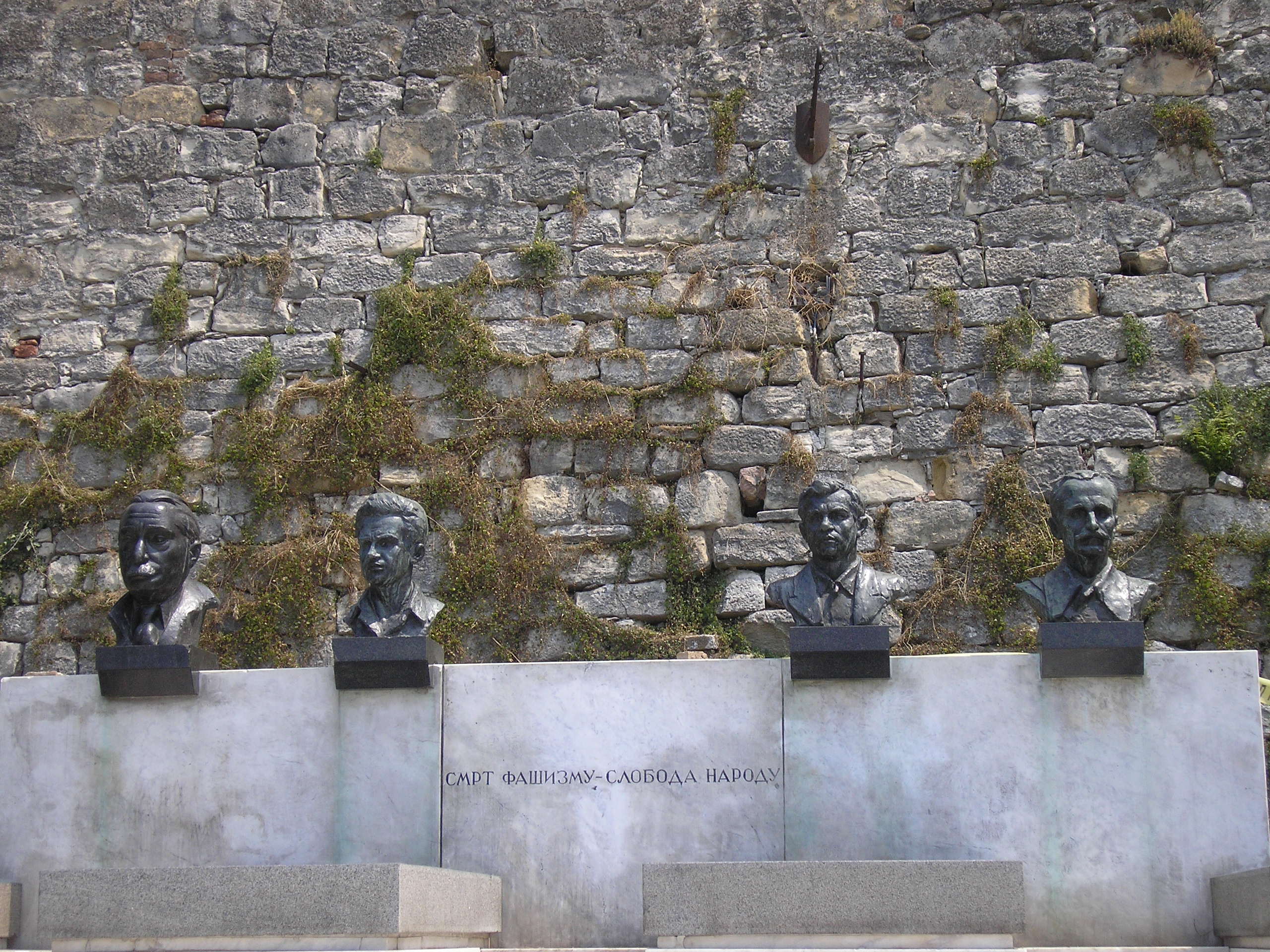
The Order of the People's Hero or the Order of the National Hero (; , ) was a Yugoslav gallantry medal, the second highest military award, and third overall Yugoslav decoration. It was awarded to individuals, military units, political and other organisations who distinguished themselves by extraordinary heroic deeds during war and in peacetime. The recipients were thereafter known as People's Heroes of Yugoslavia or National Heroes of Yugoslavia. The vast majority was awarded to partisans for actions during the Second World War. A total of 1,322 awards were awarded in Yugoslavia, and 19 were awarded to foreigners.
In 1998, the Federal Republic of Yugoslavia decided to award the Order of the People's Hero again and decorated several military units, but no individuals.
History
Socialist Yugoslavia
The bulletin of the Supreme Command of the People's Liberation Army of Yugoslavia no. 12–13 (December 1941 and January 1942) announced the establishment of the title of "People's Hero" for heroic and self-sacrificing participants of the People's Liberation War. The first person to be awarded the title was Petar Leković. A total of 22 persons were awarded this title. On 15 August 1943, the title was formalized as an order together with Order of the People's Liberation, Order of Bravery, Order of the Partisan Star, Order of Brotherhood and Unity and the Medal for Bravery. At the same time, all the persons who already held the title of the People's Hero were awarded the order.
The Order consists of an oval gold badge showing a soldier with rifle and banner superimposed upon a rayed star surrounded by a wreath of laurel. The badge is suspended from a red ribbon, with a narrow white stripe towards each edge. The design for this and the other Orders were undertaken by the painter Đorđe Andrejević Kun and the sculptor Antun Augustinčić. Before 29 November 1943, the title of People's Hero was awarded by the Central Committee of the KPJ, after 1945 it was awarded by the Presidium of the People's Assembly of Yugoslavia, and starting in 1953 by the President of Yugoslavia.
From its inception until around 1993, the Order had been awarded nearly 1,400 times. Marshal Josip Broz Tito was awarded the Order three times: in 1944, 1972, and 1977. The holders of the order were entitled to certain benefits, like free fares on public transport, and pensions for the surviving family members of deceased people's heroes. Although the benefits have since been downscaled, post-Yugoslav countries still provide certain benefits to people's heroes. Many schools and streets in post-war Yugoslavia were named after people's heroes, and many of the names remain, to varying degrees in different successor countries.
Not only people, but cities, military units and organizations were also awarded the order. Eight cities in Yugoslavia were awarded the order and proclaimed "hero cities": Belgrade, Cetinje, Drvar, Ljubljana, Novi Sad, Prilep, Pristina, and Zagreb.
Serbia and Montenegro
Following the dissolution of SFR Yugoslavia, Federal Republic of Yugoslavia was formed, and later renamed Serbia and Montenegro. In 1998, it passed a law that continued to use some of the decorations of former Yugoslavia, among them Order of the People's Hero, making it, at the time, the fourth-highest order after the Order of Yugoslavia, the Order of the Yugoslav Star and the Order of Freedom.
The Serbian media ridiculed several proposals to decorate Slobodan Milošević with the Order of the People's hero because he would have had to decorate himself. It was never given to any individuals, but several military units active in the Kosovo War were decorated:
Notable recipients
Because of the large number of awards, only people with Wikipedia articles are listed. The date of the award(s) is given in parentheses. Those marked with a dagger (†) died during the war. They were all awarded posthumously, except for Petar Leković, who was awarded the order before he died in WWII.
- Mirče Acev (1945†)
- Vera Aceva (1953)
- Božidar Adžija (1945†)
- Nisim Albahari (1953)
- Mihailo Apostolski (1953)
- Ljupčo Arsov (1953)
- Viktor Avbelj (1951)
- Maks Baće (1953)
- Vlado Bagat (1948†)
- Slobodan Bajić Paja (1952†)
- Filip Bajković (1953)
- Vladimir Bakarić (1952)
- Mitar Bakić (1951)
- Rajka Baković (1953†)
- Olga Ban (1973†)
- Aleš Bebler (1953)
- Anka Berus (1953)
- Milan Blagojević Španac (1945†)
- Vera Blagojević (1953†)
- Jakov Blažević (1953)
- Antun Blažić (1951†)
- Mate Blažina (1953†)
- Hasan Brkić (1953)
- Zvonko Brkić (1953)
- Josip Broz Tito (1944, 1972, 1977)
- Boško Buha (1951†)
- Rade Bulat (1953)
- Marija Bursać (1943†)
- Anka Butorac (1949†)
- Rudi Čajavec (1951†)
- Marijan Čavić (1953†)
- Zdravko Čelar (1942†)
- Jelena Ćetković (1952†)
- Rodoljub Čolaković (1953)
- Krste Crvenkovski (1953)
- Ljubo Čupić (1953†)
- Božidarka Kika Damjanović-Marković (1953)
- Peko Dapčević (1945)
- Karel Destovnik (1953)
- Milovan Đilas (1953, rescinded in 1957)
- Nada Dimić (1951†)
- Xhevdet Doda (1973†)
- Robert Domany (1953†)
- Dara Dragišić (1953†)
- Petar Drapšin (1953)
- Andreana Družina (1953)
- Ratomir Dugonjić (1953)
- Emin Duraku (1952†)
- Ovadya Estreya (1953†)
- Stjepan Filipović (1949†)
- Čede Filipovski Dame (1949)
- Ivan Gošnjak (1953)
- Petar Gračanin (1951)
- Čedo Grbić (1951)
- Janko Gredelj (1951†)
- Fadil Hoxha (1953)
- Većeslav Holjevac (1951)
- Avdo Humo (1953)
- Lizika Jančar (1953†)
- Vlado Janić Capo (1951)
- Blagoj Jankov Mučeto (1951†)
- Vera Jocić (1951†)
- Kuzman Josifovski Pitu (1945†)
- Blažo Jovanović (1952)
- Radovan Jovanović (1951†)
- Žikica Jovanović Španac (1945†)
- Olga Jovičić (1951†)
- Jovo Kapičić (1950)
- Osman Karabegović (1952)
- Elpida Karamandi (1951†)
- Edvard Kardelj (1951)
- Boris Kidrič (1952)
- Đuro Kladarin (1952)
- Filip Kljajić (1944†)
- Franjo Kluz (1948†)
- Fana Kochovska (1953)
- Lazar Koliševski (1952)
- Rade Končar (1942†)
- Sava Kovačević (1943†)
- Veljko Kovačević (1951)
- Boris Kraigher (1953)
- Josip Kraš (1945†)
- Branko Krsmanović (1945†)
- Vicko Krstulović (1952)
- Dušan Kveder (1952)
- Petar Leković (1942†)
- Franc Leskošek (1952)
- Nikola Ljubičić (1953)
- Ivan Maček (1952)
- Vahida Maglajlić (1951†)
- Miha Marinko (1953)
- Moma Marković (1953)
- Veselin Masleša (1951†)
- Sergej Mašera (1973†)
- Petar Matić Dule (1951)
- Mile Mećava (1953†)
- Cvijetin Mijatović (1953)
- Veljko Milatović (1953)
- Danica Milosavljevic (1953)
- Ivan Milutinović (1953†)
- Miloš Minić (1953)
- Milutin Morača (1951)
- Dušan Mugoša (1953)
- Mara Naceva (1953)
- Kosta Nađ (1951)
- Stefan Naumov (1945†)
- Nada Naumović (1951†)
- Gojko Nikoliš (1951)
- Jordan Nikolov Orce (1945†)
- Marko Orešković (1945†)
- Đorđije Pajković (1953)
- Boško Palkovljević (1943†)
- Đoko Pavićević (1953)
- Kata Pejnović (1968)
- Slobodan Penezić (1952†)
- Vladimir Perić (1953†)
- Dušan Petrović Šane (1952)
- Moša Pijade (1953)
- Strašo Pindžur (1945†)
- Bojan Polak (1952)
- Koča Popović (1953)
- Miladin Popović (1946†)
- Vladimir Popović (1952)
- Janko Premrl (1944†)
- Ognjen Prica (1945†)
- Slobodan Princip (1942†)
- Đuro Pucar (1951)
- Lepa Radić (1951†)
- Darinka Radović (1953†)
- Joakim Rakovac (1952†)
- Aleksandar Ranković (1945)
- Ivo Lola Ribar (1944†)
- Slavko Rodić (1949)
- Vladimir Rolović (1971)
- Franc Rozman (1944†)
- Ivan Rukavina (1951)
- Ramiz Sadiku (1945†)
- Vlado Šegrt (1951)
- Ivan Šibl (1951)
- Velimir Škorpik (1952†)
- Slavko Šlander (1943†)
- Milan Spasić (1973†)
- Mika Špiljak (1953)
- Drago Štajnberger (1943†)
- Petar Stambolić (1953)
- Dragi Stamenković (1953)
- Mladen Stojanović (1942†)
- Blagoj Stračkovski (1953†)
- Borko Temelkovski (1953)
- Milan Tepić (1991†)
- Hristijan Todorovski Karpoš (1945†)
- Vida Tomšič (1953)
- Jovan Veselinov (1952)
- Veljko Vlahović (1953)
- Rada Vranješević (1951†)
- Majda Vrhovnik (1951†)
- Bogdan Vujošević (1953)
- Ratko Vujović (1953)
- Svetozar Vukmanović (1951)
- Boro Vukmirović (1945†)
- Žarko Zrenjanin (1944†)
Josip Broz Tito Bihać 1942.jpg|Josip Broz Tito was awarded the order three times. Tito sa narodnim herojima iz Bosne i Hercegovine.jpg|President Tito with People's Heroes from PR Bosnia and Herzegovina (1955) Tito sa narodnim herojima iz Crne Gore.jpg|President Tito with People's Heroes from PR Montenegro (1955) Tito sa narodnim herojima iz Hrvatske.jpg|President Tito with People's Heroes from PR Croatia (1955) Tito sa narodnim herojima iz Slovenije.jpg|President Tito with People's Heroes from PR Slovenia (1955) Tito sa narodnim herojima iz Srbije i Makedonije.jpg|President Tito with People's Heroes from PR Serbia and PR Macedonia (1955)
Foreign citizens
Source:
- USSR Sergey Biryuzov (1964)
- USSR Ivan Bulkin (1945)
- Albania Reshit Çollaku (1945†, rescinded in 1948)
- USSR Pavel Dmitrienko (1945)
- Albania Enver Hoxha (1946, rescinded in 1948)
- USSR Boris Kalinkin (1944)
- USSR Ivan Konstantinov (1945)
- USSR Semyon Kozak (1944)
- Albania Vojo Kushi (1945†, rescinded in 1948)
- Italy Luigi Longo (1980)
- USSR Rodion Malinovsky (1964)
- USSR Alexander Managadze (1945)
- USSR Grigoriy Okhrimenko (1945)
- USSR Alexander Shornikov (1944)
- USSR Vladimir Sudets (1964)
- Czechoslovakia Ludvík Svoboda (1946)
- USSR Fyodor Tolbukhin (1945)
- USSR Vasiliy Ulisko (1945)
- USSR Andrey Vitruk (1945)
- USSR Pavel Yakimov (1944)
- USSR Vladimir Zhdanov (1944)
- Poland Michał Żymierski (1946)
Hero Cities

Eight cities were the Order of the People's Hero (one in each Socialist Republic and Socialist Province), and granted the title "Hero City". Dates of the award are given in parentheses.
- SR Serbia Belgrade (20 October 1974)
- SR Montenegro Cetinje (7 May 1975)
- SR Slovenia Ljubljana (7 May 1970)
- SR Serbia Novi Sad (7 May 1975)
- SR Macedonia Prilep (7 May 1975)
- SR Serbia Priština (7 May 1975)
- SR Bosnia and Herzegovina Drvar (17 May 1974)
- SR Croatia Zagreb (history) (7 May 1975)
Public and political organizations
- Young Communist League of Yugoslavia (SKOJ)
- District committee of SKOJ for Drvar
- Union of Veterans of People's Liberation War (SUBNOR)
- Union of the Spanish War veterans of Yugoslavia
World War II military units
- Brigades
- 1st Proletarian Strike Brigade (1958)
- 2nd Proletarian Strike Brigade (1958)
- 3rd Proletarian (Sandžak) Strike Brigade (1958)
- 4th Proletarian (Montenegrin) Strike Brigade (1958)
- 5th Proletarian (Montenegrin) Strike Brigade (1958)
- 6th Proletarian (East Bosnian) Strike Brigade (1958)
- 1st Lika Proletarian Strike Brigade (1977)
- 2nd Lika Proletarian Strike Brigade (1977)
- 3rd Lika Proletarian Strike Brigade (1974)
- 1st Krajina Proletarian Strike Brigade (1975)
- 3rd Krajina Proletarian Strike Brigade (1958)
- 7th Krajina Strike Brigade (1958)
- 1st Dalmatian Proletarian Strike Brigade (1958)
- 2nd Dalmatian Proletarian Strike Brigade (1958)
- 3rd Dalmatian Strike Brigade (1958)
- 12th Slavonian Proletarian Strike Brigade (1977)
- 13th Proletaraian Strike Brigade "Rade Končar" (1972)
- 1st Slovenian Proletarian Brigade "Tone Tomšič" (1974)
- 2nd Slovenian People's Liberation Strike Brigade "Ljubo Šercer" (1979)
- 10th Herzegovinian Strike Brigade (after 1952: 17th Proletarian) (1958)
- 1st Vojvodina Strike Brigade (after 1958: 18th Proletarian) (1973)
- 1st Macedonian-Kosovan Proletarian Strike Brigade (after 1951: 15th Proletarian)
- 3rd Serbian Proletarian Brigade (1977)
- 7th Banijan Strike Brigade "Vasilj Gačeša" (1958)
- 8th Banijan Strike Brigade (1958)
- 16th Banijan Strike Brigade (1958)
- 15th Majevica Strike Brigade (1958)
- Battalions and regiments
- 2nd Krajina People's Liberation Partizan Regiment "Dr Mladen Stojanović" (1972)
- Escort Battalion of the Supreme Command of People's Liberation Army of Yugoslavia (1958)
- Workers' Battalion of the Užice People's Liberation Partizan Regiment (1979)
- Army institutions
- Central Hospital of People's Liberation Army of Yugoslavia (1968)
- Partizan Hospital on Petrova Gora (1971)
- Security and Intelligence Service (Varnostno-obveščevalna služba)
Military units of the Kosovo War
-
125th Motorized Brigade, Military of Yugoslavia
-
549th Motorized Brigade, Military of Yugoslavia
-
37th Motorized Brigade, Military of Yugoslavia
-
63rd Parachute Brigade, Military of Yugoslavia
-
124th Police Intervention Brigade, Serbian Ministry of Internal Affairs
-
126th Air Surveillance Brigade, Military of Yugoslavia
-
250th Air Defence Missile Brigade, Military of Yugoslavia
Statistics

A total of 1,322 persons were awarded in Yugoslavia by 1981. Most of the awarded were men (1231) and 91 were women. Most People's Heroes were either miners or industrial workers (34%), 19% were university and high school students, 18% were farmworkers and 13% were experts of all kinds.
Most of the awarded were very young. Half of them joined the Army before their 25th birthday, and only 325 of them were over 30. 42% of the Heroes who died in the war were between 16 and 26 years old, 38% were between 27 and 34. Three Heroes were less than 17 years old when they died. Milka Bosnić was the youngest recipient of the order, she was just 15 when killed during the Raid on Drvar.
Most recipients were awarded in the years following World War II, most of them between 1951 and 1953. Tito was the only person to be awarded multiple times, he was awarded the order three times. Of the 955 recipients who died in the war, 77% were killed in combat, about 15% were executed or died in prison, and about 7% died from wounds. Most of the Heroes died in 1943 (about 30%) and in 1942 (27.5%). Nine of them were killed after the war officially ended during the fight with the remaining enemy forces. 55 People's Heroes committed suicide to escape arresting.
Most of the recipients of the Order were born in Croatia (21.9%), followed by Bosnia and Herzegovina (20.6%), Montenegro (18.7%), Central Serbia (15%) and Slovenia (11.05%). Most of those who died during World War II died in Bosnia and Herzegovina (32%). In 1957 there were 410 living People's Heroes, in 1975 there were 367, and in 1981 there were 343 living Heroes. and the last living overall was Petar Matić Dule (1920–2024).
References
Literature
References
- (1984). "Encyclopedia Americana, volume 8". Grolier.
- (2015). "The Concept of Neutrality in Stalin's Foreign Policy, 1945–1953". Lexington Books.
- (2015). "Child Soldiers in the Western Imagination: From Patriots to Victims". Rutgers University Press.
- (October 21, 1964). "Yugoslavia Honors Dead Soviet Officer". Star Tribune.
- (May 17, 1977). "Yugoslavia Honors Tito as 'Hero' for Third Time". The Los Angeles Times.
- [http://www.medals.pl/yu/yu2.htm Orders and Decorations of the Socialist Federal Republic of Yugoslavia, 1945–90] by Lukasz Gaszewski 2000, 2003
- {{harvtxt. Encyclopedia. 1975, volume 1, page 7
- (1999-04-24). "Zakon o odlikovanjima". [[Vreme]].
- [http://www.medals.pl/yu/yu3.htm Orders and Decorations of the Federal Republic of Yugoslavia, 1990–] by Lukasz Gaszewski 2000, 2003
- (2000-06-08). "Milošević bi morao sam sebe da odlikuje". [[Blic]].
- {{harvtxt. Encyclopedia. 1982, volume 2
- (29 September 2021). "On je poslednji odlikovani heroj JNA, a poginuo je u podvigu na koji bi se odvažili samo NAJHRABRIJI". Blic.
- {{harvtxt. Encyclopedia. 1982, volume 2, pages 393–402
- (1949). "ЗБОРНИК ДОКУMEHATA И ПОДАТАКА О НАРОДНООСЛОБОДИЛAЧKOM PATУ ЈУГОСЛОВЕНСКИХ НАРОДА". Vojno-istoriski institut Jugoslovenske armije.
- (November 1946). "Одликованиа президиумот". Службен лист на ФНРЈ.
- {{harvtxt. Encyclopedia. 1982, volume 2, page 432
- {{harvtxt. Encyclopedia. 1982, volume 2, page 431
- {{harvtxt. Encyclopedia. 1982, volume 2, page 434
- {{harvtxt. Encyclopedia. 1982, volume 2, page 407
- (27–30 November 1999). "Снажно јединство војске и народа у најтеже време". Borba.
- (27 November 2002). "Положени животи – обавезују". Borba.
- {{harvtxt. Encyclopedia. 1982, volume 2, page 463
- (7 March 2021). "V 101. letu starosti umrla zadnja narodna herojinja".
- (27 January 2023). "Sjećanje na posljednju narodnu heroinu Jugoslavije: Šest puta je ranjena, partizani su je zvali Olga". [[Radio Sarajevo]].
- Sejdinović, Nedim. (5 November 2020). "Intervju – Petar Matić Dule, poslednji narodni heroj u Srbiji: Borili smo se za pravo da odlučujemo o sopstvenoj sudbini". [[Vreme]].
- (6 July 2022). "Народни херој Југославије Петар Матић Дуле прославио 102. рођендан". СУБНОР СРБИЈЕ (Association of War Veterans of the People's Liberation War of Serbia).
This article was imported from Wikipedia and is available under the Creative Commons Attribution-ShareAlike 4.0 License. Content has been adapted to SurfDoc format. Original contributors can be found on the article history page.
Ask Mako anything about Order of the People's Hero — get instant answers, deeper analysis, and related topics.
Research with MakoFree with your Surf account
Create a free account to save articles, ask Mako questions, and organize your research.
Sign up freeThis content may have been generated or modified by AI. CloudSurf Software LLC is not responsible for the accuracy, completeness, or reliability of AI-generated content. Always verify important information from primary sources.
Report