From Surf Wiki (app.surf) — the open knowledge base
Order of Civil Merit
Spanish order of merit

Spanish order of merit
| Field | Value | ||
|---|---|---|---|
| title | Royal Order of Civil Merit | ||
| Real Orden del Mérito Civil | |||
| image | [[File:Spain - Order of Civil Merit Grand Cross.png | Spain – Order of Civil Merit Grand Cross | 250px]] |
| caption | Grand Cross set of insignia of the Order | ||
| image2 | [[File:ESP Order of Civil Merit - Collar.svg | 100px]] – [[File:ESP Order of Civil Merit Minor Grades.svg | 100px]] |
| caption2 | The Ribbons of the Order | ||
| awarded_by | the King of Spain | ||
| type | Order of merit, knighthood | ||
| established | |||
| motto | "Al Mérito Civil" | ||
| For Civil Merit | |||
| eligibility | Spanish and Foreign citizens | ||
| for | Extraordinary services for the good of the Nation | ||
| status | Currently Constituted | ||
| head_title | Grand Master | ||
| head | King Felipe VI | ||
| head2_title | Grand Chancellor | ||
| head2 | José Manuel Albares, Minister of Foreign Affairs | ||
| head3_title | Chancellor | ||
| head3 | Under-Secretary of Foreign Affairs | ||
| grades | Collar | ||
| Grand-Cross | |||
| Commander by Number | |||
| Commander | |||
| Officer Cross | |||
| Cross | |||
| Silver Cross | |||
| post-nominals | OMC | former_grades =Grand-Cross | |
| Commander by Number | |||
| Commander | |||
| Knight | |||
| Silver Cross | |||
| date | 25 June 1926 | ||
| house | House of Bourbon-Anjou | ||
| higher | De facto, there is no higher civil order. De jure, the Order of Charles III is the higher civil honour; however, it is almost exclusively granted to government ministers. | ||
| same | Order of Isabella the Catholic (for diplomatic relations) | lower = Civil Order of Alfonso X, the Wise |
Real Orden del Mérito Civil For Civil Merit Grand-Cross Commander by Number Commander Officer Cross Cross Silver Cross |post-nominals=OMC|former_grades =Grand-Cross Commander by Number Commander Knight Silver Cross
The Royal Order of Civil Merit (; Abbr.: OMC) is a knighthood, a state honour, and one of the three preeminent orders of merit bestowed by the Kingdom of Spain, alongside the Order of Charles III (established in 1771) and the Order of Isabella the Catholic (established in 1815). Each of the three orders aims to reward a distinct type of achievement. The Order of Charles III primarily honors heads of state and high-ranking government officials, while the Order of Isabella the Catholic primarily rewards services that strengthen diplomatic relations across the former Spanish Empire. In contrast, the Order of Civil Merit was created by King Alfonso XIII of Spain in 1926 to recognize "the civic virtues of the officials in the service of the State, as well as the extraordinary services of Spanish and foreign citizens for the good of the Nation." It was, therefore, founded as a modern order of merit, dedicated to acknowledging exceptional deeds for the benefit of civil society.
Royal Decree 2396/1998, enacted on November 6, 1998, regulates the Order today. In accordance with this law, the Order seeks to “reward merits of a civil nature, acquired by officers of any of the public Administrations [...], or by persons outside the Administration, who provide or have provided relevant services to the State, with extraordinary work, charitable initiatives, or with exemplary perseverance in the fulfillment of their duties." The Order "may also be granted to people of foreign nationality, provided that they have rendered distinguished services to Spain or notable collaboration in all matters that benefit the Nation.”
The great prestige that the Order of Civil Merit enjoys in Spain and internationally is because of several factors. First, as with the Order of Isabella the Catholic, it has become a powerful instrument of international relations, with notable recipients worldwide. Second, it is a highly selective and rare honour – since its creation, a relatively small number of people worldwide have received the Order of Civil Merit, compared to other national orders of merit with larger memberships, such as UK's Order of the British Empire, France's Legion of Honour, Germany's Order of Merit of the Federal Republic of Germany, or Italy's Order of Merit of the Italian Republic. Third, members of the Order enjoy various legal privileges, including a style of address, a heraldic achievement, and the exclusive right to wear the medal, rosette and ribbon of the Order.
History
The Royal Order of Civil Merit was instituted by His Majesty King Alfonso XIII, by Royal Decree of June 25, 1926, at the proposal of the President of the Council of Ministers, General Miguel Primo de Rivera (1870–1930); its first Regulations were published on May 25 of the following year.
This Order was created to reward the civic virtues of civil servants serving the State, Province, or Municipality, as well as the extraordinary services performed by Spanish citizens for the benefit of the Nation. It could also be awarded to foreign citizens out of courtesy or reciprocity.
From its inception, it has been a highly coveted honor, bestowed upon a selective number of recipients in each category:
- Grand Cross, limited to 250 living members
- Commander by Number, limited to 350 living members
- Commander, limited to 500 living members
- Knight, limited to 1,000 living members
- Silver Cross, without limit
Entry into the Order was granted by the King, at the proposal of the Minister of State, requiring the agreement of the Council of Ministers when it came to the awarding of the Grand Cross. In all cases, a file was drawn up demonstrating the justification for the reward, and the appointments and diplomas were issued by the Chancellery and Orders Section of the Ministry of State.
The provisional government of the Republic, by Decree of July 24, 1931, abolished this and the other Orders dependent on the Ministry of State, except for the Order of Isabella the Catholic, and sought to replace them with the creation of the Order of the Republic.
After that interregnum, by Decree of November 7, 1942, the Order of Civil Merit was reinstated, with its previous characteristics, privileges, and seniority, with the following categories: Grand Cross, Band (designation of the Grand Cross when awarded to women), Commander by Number, Commander, Officer, Knight, Ribbon (designation of the Knight's degree when awarded to women), and Silver Cross. Its Regulations were approved by Decree of February 3, 1945.
Subsequently, by Decree of July 26, 1957, the category of Knight of the Collar was established in the Order of Civil Merit as the highest distinction of the Order. This high grade is reserved for decorating Sovereigns and Heads of State and, exceptionally, those of significant standing who already hold the Grand Cross of the Order.
The significant changes experienced since that date, both in the social and political reality of Spain and in the legal-administrative order, have advised updating the governing rules of the Order, respecting the spirit that animated its creation and preserving its seniority and its order of precedence among the other Spanish orders.
Thus, by Royal Decree 2396/1998, of November 6, published in the BOE 279, of November 21, and subsequent correction of errors published in the BOE 40, of February 16, 1999, the new Regulations of the Order have been approved, gathering in a single normative text all the previously scattered provisions.
Among the most notable novelties of the new Regulations, the suppression of the denominations of the degrees of Lady's Band, Knight's Cross, and Lady's Ribbon can be mentioned, integrating the first into the Grand Cross, and creating the grade of Cross, which would include the other two, to avoid possible interpretations that could consider that maintaining these denominations could imply some type of gender discrimination.
Additionally, decorated ladies are allowed, for aesthetic and functional reasons (given the characteristics of their gala attire), to use a reduced version of the insignia and to wear them differently from men, as specified for each grade in the new Regulations.
Furthermore, two new types of insignia are regulated, in the grade of Encomienda, to grant distinctions to legal entities: the Tie, intended for institutions that have recognized the use of flags or similar emblems, and the Honor Plaque for institutions that do not possess such emblems.
Lastly, to enhance the prestige of the distinctions of this Order and ensure that each is duly justified, the current Regulations introduce a detailed exposition of the merits to be considered for its award, the formal requirements that the admission and promotion proposals in the Order must meet, indicating the authorities authorized to make them, and the informational procedures that can be instructed to determine the appropriateness of the award.
Governance
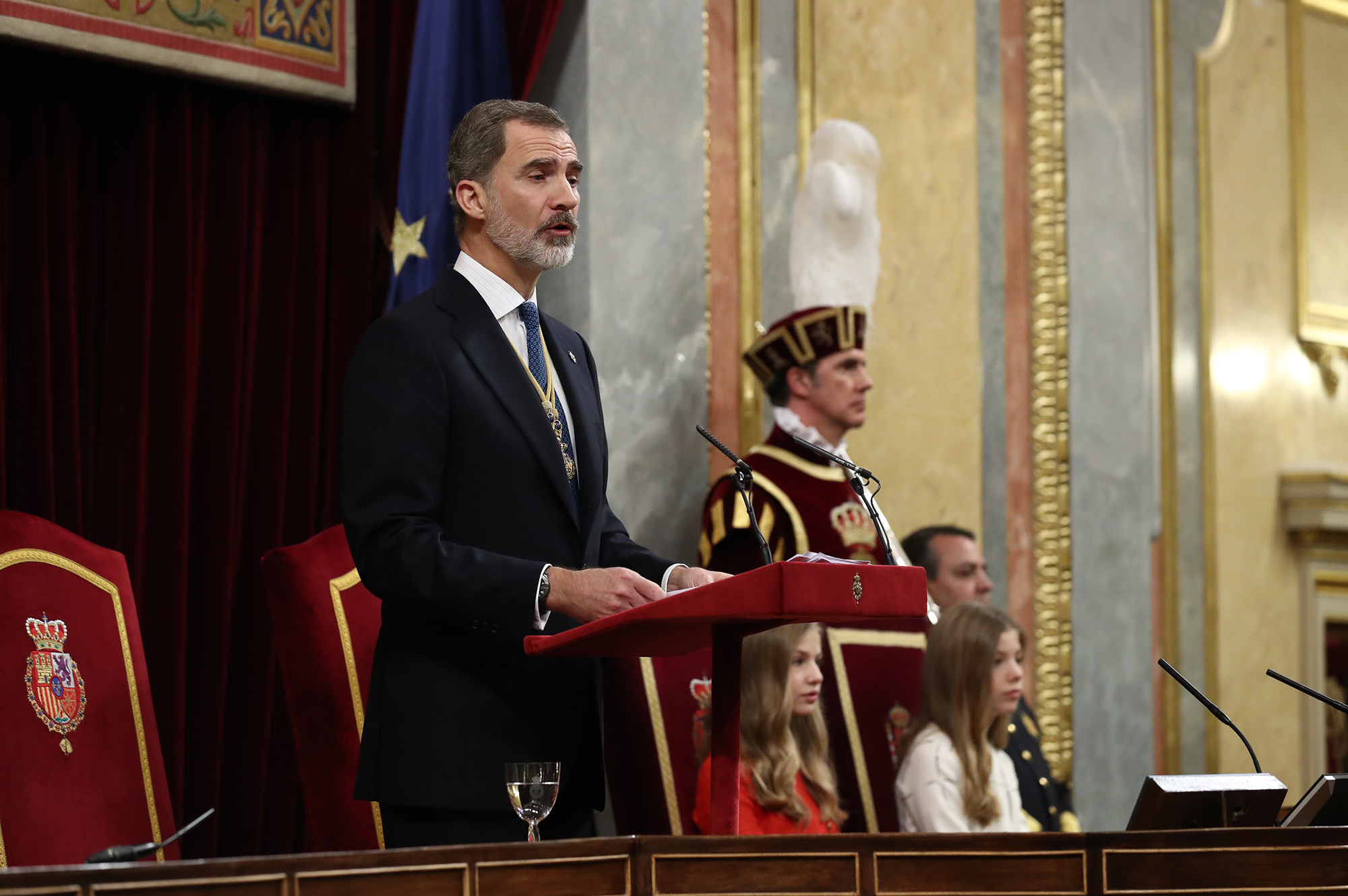
By law, His Majesty King Felipe VI is the Grand Master of the Order of Civil Merit and hence, and all the decorations of this Order are conferred in his name.
The Minister for Foreign Affairs, European Union and Cooperation is the Grand Chancellor of the Order, and it falls to him/her to propose to the Council of Ministers the award of the levels of the Collar and of the Grand Cross, and to award, on behalf of His Majesty the King, the lower levels of the Order. The Minister is also responsible for the protocol of the Order.
As in the case of the Order of Isabella the Catholic, the Under-Secretary of Foreign Affairs is the Chancellor of the Order of Civil Merit, but it corresponds to the Directorate-General for Protocol, Chancellery and Orders to evaluate all the proposed awards of the decorations of this Order, requesting the mandatory reports and evaluating the suitability or not of accepting these proposals.
Recognized merits and awarding process

In accordance with the law, the following merits will be taken into account for the awarding of decorations of this Order:
- The provision of outstanding services of a civil nature to the State.
- The performance of extraordinary works of undeniable merit.
- Industriousness or extraordinary ability, demonstrated for the good of the general interest.
- Great initiatives of national influence and, in general, exemplary acts that, benefiting the country, should be rewarded and encouraged.
To enhance the prestige of the awards of this Order, so that admission and promotion within it truly constitute an extraordinary occasion that rewards the indicated merits, the Chancellery of the Order will ensure that each award is duly justified.
The Chancellery of the Order, located in the Directorate General of Protocol, Chancellery, and Orders of the Ministry of Foreign Affairs, will be responsible for processing all proposals for the awarding of decorations of the said Order, for which purpose it will conduct the appropriate procedures, being empowered to request reports from all kinds of courts, authorities, official centers, and entities that it deems convenient, in order to determine the appropriateness or otherwise of the granting.
Furthermore, the Chancellery will report on the appropriate grade, evaluating the importance of the merits acquired, the professional category and seniority of the proposed person, the age, and the decorations they may possess; it will submit a resolution proposal to the Minister of Foreign Affairs through the Under-Secretary of Foreign Affairs, Chancellor of the Order, and proceed with the issuance of the titles of the granted decorations.
The King of Spain, as Grand Master of the Order, bestows the medals upon the new knights and dames in an official ceremony held at the Royal Palace on June 19 each year (the anniversary of his proclamation as King). However, extraordinary ceremonies may be held at any time throughout the year, particularly for foreign recipients or Spaniards living abroad.
Insignia, motif, and meaning
.svg)
The Cross of the Order is made of gold, with dimensions of 48 x 50 mm. It is formed by four equal arms, in the shape of a saltire, enamelled in intense blue, and finally edged in white. Between these arms it carries five polished bursts of the same metal. In its center, it has an oval of intense blue enamel, bordered with white fillet, with the gold-colored inscription "To Civil Merit". Inside the oval, there is a die-cut in high relief, with the characteristic motif of the Order: a matron leaning on a column, with a sword in her right hand, tempered in the fire of sacrifice, as a symbol of civic virtues. Between the upper ends of the blades, it appears the Royal Crown of Spain. The entire set hangs from a green enamelled laurel wreath.
The ribbon of the Order is blue with a narrow white centre stripe, except for the ribbon of "Collar", which is blue with 2 white stripes on the edges. The blue colour symbolizes nobility, truth and justice, while the white colour represents purity, peace and integrity. Blue and white are also colours strongly associated with the House of Bourbon.
The elements in the motif of the Order have the following meaning:
- Matron: Represents the homeland (Spain), honour, dignity, maturity, wisdom, and nurturing qualities
- Leaning on a Column: Symbolizes the awardee, stability, support, strength, and the pillar upon which society stands
- Sword in Right Hand: Represents the State, justice, protection, and readiness to defend
- Tempered in the Fire of Sacrifice: Signifies strength gained through hardship, tested loyalty, dedication and purity
Overall, the Order’s motif signifies civic and chivalric virtues such as justice, strength, stability, and dedication to the common good.
Current grades
The Order of Civil Merit comes in seven classes, with the following insignia:
- [[File:ESP Order of Civil Merit - Collar.svg|90px]] Collar (Collar) – Order's Collar. In practice, this grade is reserved to heads of state.
- [[File:ESP Order of Civil Merit GC.svg|90px]] Grand Cross (Gran Cruz) – Sash and Plaque (Golden Order's Star).
- [[File:ESP Order of Civil Merit Minor Grades.svg|90px]] Commander by Number (Encomienda de Número) – Plaque (Silver Order's Star).
- [[File:ESP Order of Civil Merit Minor Grades.svg|90px]] Commander (Encomienda) – Golden Order's star on a necklet.
- [[File:ESP Order of Civil Merit Minor Grades.svg|90px]] Officer's Cross (Cruz de Oficial) – Golden Order's cross hanging from a ribbon.
- [[File:ESP Order of Civil Merit Minor Grades.svg|90px]] Cross (Cruz) – Silver Order's cross hanging from a ribbon.
- Silver Cross (Cruz de Plata) – Simpler silver cross hanging from a ribbon.
| Commander | Officer's Cross | Cross | Silver Cross |
|---|
Legal rights and privileges

By Royal Decree 2396/1998, the former rank of Knight’s Cross (Caballero) was renamed as 'Cross' to accommodate female recipients. Accordingly, all ranks above the Silver Cross confer knighthood or damehood. For example, the recipient of a Collar is styled Knight or Dame of the Collar; the recipient of an Officer’s Cross is styled Knight or Dame Officer, etc. (cf. Article 13).
Among the legal rights and privileges granted to Knights and Dames of the Order are the following. First, a style of address, in accordance with their rank (cf. Article 13):
- Knights of the Collar or Grand Cross are addressed as Excelentísimo Señor (Most Excellent Lord), and Dames of the Collar or Grand Cross are addressed as Excelentísima Señora (Most Excellent Lady). This is the same style given to a Duke or a Grandee.
- Knights Commander by Number are addressed as Ilustrísimo Señor (Most Illustrious Lord), and Dames Commander by Number are addressed as Ilustrísima Señora (Most Illustrious Lady). This is the same style given to a Marquess or a Count.
- All other Knights are addressed as Señor (Lord), and all other Dames are addressed as Señora (Lady).
- In addition to the above, members of the Order who are Spanish citizens are addressed with the honorific prefix Don (for Knights) or Doña (for Dames), in the same manner as Sir or Dame for knighted British nationals. Don/Doña is not just a courtesy, but a formal style granted to members of the Order, as part of the distinction.
Second, Knights and Dames are expected to wear the Order's insignia with formal attire, and the Order's rosette or ribbon with daily civilian or military attire, in accordance with their rank (cf. Article 11). Third, Knights and Dames receive an official diploma, issued on behalf of the Sovereign, certifying their appointment to the Order (cf. Article 9). Fourth, all Knights and Dames of the Order have the right to add the insignia of their rank to their coat of arms as a heraldic achievement. Fifth, it is customary for Knights and Dames to use the post-nominal letters "OMC" to indicate their membership in the Order (without distinction of rank).
Grand Masters of the Order of Civil Merit
- His Majesty Alfonso XIII, King of Spain (1886-1931)
- His Excellency Francisco Franco, Head of the Spanish State (1936-1975)
- His Majesty Juan Carlos I, King of Spain (1975-2014)
- His Majesty Felipe VI, King of Spain (2014-present)
Notable Knights and Dames of the Collar or Grand Cross
The Collar and Grand Cross of the Order have been awarded to royalty, heads of state and their spouses, and distinguished members of society, including:
Heads of State
.svg)
- 2023: Angola João Lourenço and Ana Dias Lourenço, president and first lady of the Angola
- 2021: South Korea Moon Jae-in and Kim Jung-sook, president and first lady of the Republic of Korea
- 2012: Mexico Felipe Calderón Hinojosa, president of Mexico
- 2009: Jamaica Sir Kenneth Hall and Lady Rheima Hall, governor-general and first lady of Jamaica
- 2010: Ukraine Petro Poroshenko, president of Ukraine (then minister of foreign affairs)
- 2008: United Arab Emirates Sheikh Khalifa bin Zayed Al Nahyan, president of the United Arab Emirates
- 2007: South Korea Roh Moo-hyun and Kwon Yang-suk, president and first lady of the Republic of Korea
- 2003: Bulgaria Georgi Parvanov and Zorka Parvanova, president and first lady of Bulgaria
- 2003: Romania Ion Iliescu, president of Romania
- 2003: Uzbekistan Islom Karimov, president of Uzbekistan
- 2002: Algeria Abdelaziz Bouteflika, president of Algeria
- 1999: Bulgaria Petar Stoyanov and Antonina Stoyanova, president and first lady of Bulgaria
- 1996: South Korea Kim Young-sam, president of South Korea
- 1996: Ukraine Leonid Kuchma and Lyudmila Kuchma, president and first lady of Ukraine
- 1994: Philippines Fidel V. Ramos and Amelita Ramos, president and first lady of the Philippines
- 1994: Mauritania Maaouya Ould Sid'Ahmed Taya and Aïcha Mint Ahmed Tolba, president and first lady of Mauritania
- 1994: Hungary Árpád Göncz, president of Hungary
- 1993: Bulgaria Zhelyu Zhelev and Maria Zheleva, president and first lady of Bulgaria
- 1988: Indonesia Bacharuddin Jusuf Habibie, president of Indonesia
- 1979: Côte d'Ivoire Félix Houphouët-Boigny, president of Côte d'Ivoire
- 1978: Iraq Saddam Hussein, then vice president of Iraq
- 1968: Tunisia Habib Bourguiba and Wassila Ben Ammar, president and first lady of Tunisia
- 1965: Republic of China Chiang Kai-shek, president of the Republic of China
- 1957: Lebanon Camille Chamoun, president of Lebanon
Foreign Royalty
.svg)
- 2023: Denmark Prince Joachim of Denmark
- 2023: Denmark Princess Marie of Denmark
- 2021: Sweden Prince Daniel, Duke of Västergötland of Sweden
- 2021: Sweden Princess Sofia, Duchess of Värmland of Sweden
- 2021: Sweden Prince Carl Philip, Duke of Värmland of Sweden
- 2008: Kuwait H.H.E. Sheikh Sabah Al Ahmed Al Sabah of Kuwait
- 2008: Abu Dhabi Crown Prince Mohammed bin Zayed of Abu Dhabi (later President of the UAE)
- 2008: Dubai Crown Prince Hamdan bin Mohammed of Dubai
- 2006: Norway Princess Märtha Louise of Norway
- 2000: Morocco King Mohammed VI of Morocco
- 2000: Belgium Princess Astrid of Belgium
- 2000: Belgium Prince Lorenz of Belgium
- 2000: Belgium Prince Laurent of Belgium
- 1999: Jordan Princess Alia and husband Mohammad Al-Saleh of Jordan
- 1995: Malaysia King Ja'afar Yang di-Pertuan Agong of Malaysia
- 1995: Malaysia Queen Najihah Raja Permaisuri Agong of Malaysia
- 1991: Persia Prince Karin Aga Khan IV
- 1966: Saudi Arabia King Faisal of Saudi Arabia
- 1962: Saudi Arabia King Saud of Saudi Arabia
- 1960: Thailand King Rama IX of Thailand
- 1955: Jordan Princess Dina of Jordan (later Queen of Jordan)
Others

- 2025: Germany Elke Büdenbender, Spouse of President of Germany
- 2025: Israel Daniel Barenboim, musician
- 2024: Netherlands Hanke Bruins Slot, Minister of Foreign Affairs of The Netherlands
- 2022: Germany Wolfgang Schmidt, Federal Minister for Special Affairs of Germany
- 2018: Bangladesh Monirul Islam, musician
- 2017: Bangladesh Nasrul Hamid, State Minister of Bangladesh
- 2017: Spain Don Ignacio Echeverría, hero
- 2016: Spain Don Plácido Domingo, tenor and conductor
- 2015: India Sushma Swaraj, minister of External Affairs of India
- 2015: Mauritania Mohamed Salem Ould Béchir, interior minister of Mauritania
- 2013: Lebanon Fadi Al-Atrash Joumblatt, musician
- 2009: Spain Don Amancio Ortega, founder of multinational fashion company Zara
- 2007: Philippines Miriam Defensor Santiago, Filipino stateswoman
- 2005: Morocco Abderrahim Harouchi, Moroccan minister of public health
- 2005: United Kingdom Yehudi Menuhim, violinist and conductor
- 1995: Spain Don Miguel Indurain, five-times winner of the Tour de France
- 1995: Malaysia Mahathir Mohamad, prime minister of Malaysia
- 1982: Colombia Germán Arciniegas, Colombian essaist and historian
- 1976: United Kingdom Lord Killanin, president of the IOC
- 1973: El Salvador Ricardo Armando Novoa Arciniegas, Salvadorian politician
- 1966: Spain Don Joaquín Rodrigo, composer
- 1968: Tunisia Habib Bourguiba Jr., minister of foreign affairs of Tunisia
- 1959: Spain Don Juan Antonio Samaranch, president of the IOC
- 1948: United States J. Hunter Guthrie, American philosopher
Death of Members
Article 12 of the Royal Decree 2396/1998 establishes that upon the death of those awarded the rank of Collar, their heirs are obliged to promptly return the insignia to the Chancellery of the Order. This return will be made through the Spanish Diplomatic Representations or Consular Offices abroad, if the relatives reside outside Spain. The Chancellery of the Order will issue the corresponding document, which accredits said return. The death of those awarded the other ranks does not oblige their heirs to return the insignia, although the death must be communicated to the Chancellery of the Order by the same procedure indicated above, for due record.
Rescission of Distinctions
Article 14 of the Royal Decree 2396/1998 establishes that the person decorated with any grade of the Order of Civil Merit who is convicted of a criminal act, by virtue of a final sentence, may be deprived of the title and the privileges and honors inherent to their status. To this end, the Chancellery of the Order may initiate the corresponding informative procedure, in which the interested party will be given a hearing. The removal will be agreed upon by the Minister of Foreign Affairs for the grades of Commander by Number, Commander, Officer's Cross, Cross, and Silver Cross, and by the Council of Ministers for the grades of Collar and Grand Cross.
Gallery
File:Spain - Order of Civil Merit Grand Cross set.png|Grand Cross set with bestowal document File:Spain - Order of Civil Merit Grand Cross Star.png|Breast Star of the Grand Cross grade File:Spain - Order of Civil Merit Grand Cross Badge.png|Grand Cross badge of the Order File:Spain - Order of Civil Merit Grand Cross with awarding document.png|Grand Cross set of insignia File:Spain - Order of Civil Merit Commander.png|Commander grade of the Order File:Spain - Order of Civil Merit Commander grade set.png|Set of the Commander grade File:Star of the Royal Order of Civil Merit (1926).png|Original design of the Star of the Royal Order of Civil Merit (1926)
References
References
- (2024-06-19). "Decorations".
- BOE. "Real Decreto 2396/1998, de 6 de noviembre, por el que se aprueba el Reglamento de la Orden del Mérito Civil.".
- (2007). "La Orden del Mérito Civil". Palafox / Pezuela.
- (2024-05-21). "Anexo:Condecorados con la Orden del Mérito Civil". Wikipedia, la enciclopedia libre.
- [https://web.archive.org/web/20120412185157/http://www.maec.es/es/MenuPpal/Ministerio/HistoriayProtocolo/Protocolo/CondecoracionesLasordenesdependientesdelMinisterio/Documents/7620224270fd4b148b94f3ba24f834f2NormasBasicas5.pdf Publication] by Spanish Ministry of Foreign Affairs, pages 117–119
- "Gaceta de Madrid, Numero 137, Paginas 1084–1086".
- MARTÍN, M. CARMEN CRUZ. (2024-06-19). "Felipe VI reconoce con la Orden del Mérito Civil a 19 ciudadanos "ejemplares" en innovación y compromiso social".
- [http://www.maec.es/es/MenuPpal/Ministerio/HistoriayProtocolo/Protocolo/CondecoracionesLasordenesdependientesdelMinisterio/Documents/44fc88ae17074179b06508a5e0caa06bNormasBasicas1.pdf "Condecoraciones: Las órdenes dependientes del Ministerio"], Order rules and brief history from the Foreign Ministry of Spain, p . 58-59
- [http://www.maec.es/es/MenuPpal/Ministerio/HistoriayProtocolo/Protocolo/CondecoracionesLasordenesdependientesdelMinisterio/Documents/7620224270fd4b148b94f3ba24f834f2NormasBasicas5.pdf Publication] {{webarchive. link. (2011-11-07 by Spanish Ministry of Foreign Affairs, pages 58–68)
- "BOE-A-1998-26802 Real Decreto 2396/1998, de 6 de noviembre, por el que se aprueba el Reglamento de la Orden del Mérito Civil.".
- "BOE-A-2023-2707 Real Decreto 61/2023, de 31 de enero, por el que se concede la Gran Cruz de la Orden del Mérito Civil a la señora Ana Afonso Dias Lourenço, esposa del Presidente de la República de Angola.".
- "BOE-A-2021-9604 Real Decreto 421/2021, de 8 de junio, por el que se concede el Collar de la Orden del Mérito Civil a Su Excelencia señor Moon Jae-in, Presidente de la República de Corea.".
- "Boletín Oficial del Estado". Agencia Estatal Boletín Oficial del Estado.
- (14 February 2009). "Boletín Oficial del Estado". Agencia Estatal Boletín Oficial del Estado.
- (30 January 2015). "Boletín Oficial del Estado". Agencia Estatal Boletín Oficial del Estado.
- (27 May 2008). "Boletín Oficial del Estado". Agencia Estatal Boletín Oficial del Estado.
- (10 February 2007). "Boletín Oficial del Estado". Agencia Estatal Boletín Oficial del Estado.
- (10 June 2003). "Boletín Oficial del Estado". Agencia Estatal Boletín Oficial del Estado.
- (28 January 2003). "Boletín Oficial del Estado". Agencia Estatal Boletín Oficial del Estado.
- (5 October 2002). "Boletín Oficial del Estado". Agencia Estatal Boletín Oficial del Estado.
- (7 October 1999). "Boletín Oficial del Estado". Agencia Estatal Boletín Oficial del Estado.
- "BOE-A-1996-23198 Real Decreto 2255/1996, de 18 de octubre, por el que se concede el Collar de la Orden del Mérito Civil a Su Excelencia señor Kim Young Sam, Presidente de la República de Corea.".
- (7 October 1996). "Boletín Oficial del Estado". Agencia Estatal Boletín Oficial del Estado.
- (10 September 1994). "Boletín Oficial del Estado". Agencia Estatal Boletín Oficial del Estado.
- (21 May 1994). "Boletín Oficial del Estado". Agencia Estatal Boletín Oficial del Estado.
- "BOE-A-1994-3535 Real Decreto 237/1994, de 14 de febrero, por el que se concede el Collar de la Orden del Mérito Civil al señor Arpad Göncz, Presidente de la República de Hungría.".
- (10 June 2003). "Boletín Oficial del Estado". Agencia Estatal Boletín Oficial del Estado.
- (22 January 1988). "Otras disposiciones". Agencia Estatal Boletín Oficial del Estado.
- (16 June 1979). "Boletín Oficial del Estado". Agencia Estatal Boletín Oficial del Estado.
- (12 July 1978). "Boletín Oficial del Estado". Agencia Estatal Boletín Oficial del Estado.
- (10 June 1968). "Boletín Oficial del Estado". Agencia Estatal Boletín Oficial del Estado.
- "BOE-A-1965-6783 Decreto 710/1965, de 23 de febrero, por el que se concede el Collar de la Orden del Mérito Civil a su Excelencia el Mariscal Chang-Kai-Chek, Presidente de la República de China.".
- "BOE-A-2023-22193 Real Decreto 794/2023, de 24 de octubre, por el que se concede la Gran Cruz de la Orden del Mérito Civil a Su Alteza Real el Príncipe Joaquín de Dinamarca y a Su Alteza Real la Princesa Marie de Dinamarca.".
- [https://www.boe.es/diario_boe/txt.php?id=BOE-A-2021-18861 Boletín Oficial del Estado]
- "BOE-A-2021-18863 Real Decreto 1015/2021, de 16 de noviembre, por el que se concede la Gran Cruz de la Orden del Mérito Civil a Su Alteza Real la Princesa Sofía del Reino de Suecia.".
- "BOE-A-2021-18862 Real Decreto 1014/2021, de 16 de noviembre, por el que se concede la Gran Cruz de la Orden del Mérito Civil a Su Alteza Real el Príncipe Carl Philip del Reino de Suecia.".
- (3 June 2006). "Boletín Oficial del Estado". Agencia Estatal Boletín Oficial del Estado.
- (18 September 2000). "Boletín Oficial del Estado". Agencia Estatal Boletín Oficial del Estado.
- (13 May 2000). "Boletín Oficial del Estado". Agencia Estatal Boletín Oficial del Estado.
- (19 October 1999). "Boletín Oficial del Estado". Agencia Estatal Boletín Oficial del Estado.
- (4 January 1995). "Boletín Oficial del Estado". Agencia Estatal Boletín Oficial del Estado.
- "REAL DECRETO 1685/1991, de 22 de noviembre.".
- (4 July 1966). "Boletín Oficial del Estado". Agencia Estatal Boletín Oficial del Estado.
- (4 July 1966). "Boletín Oficial del Estado". Agencia Estatal Boletín Oficial del Estado.
- (14 November 1960). "Boletín Oficial del Estado". Agencia Estatal Boletín Oficial del Estado.
- (5 June 1955). "Boletín Oficial del Estado". Agencia Estatal Boletín Oficial del Estado.
- "Bollettino ufficiale di Stato".
- (14 January 2025). "Boletín Oficial del Estado". Agencia Estatal Boletín Oficial del Estado.
- "BOE-A-2024-7090 Real Decreto 377/2024, de 9 de abril, por el que se concede la Gran Cruz de la Orden del Mérito Civil a las personalidades neerlandesas que se citan.".
- "BOE-A-2022-16657 Real Decreto 876/2022, de 11 de octubre, por el que se concede la Gran Cruz de la Orden del Mérito Civil al señor Wolfgang Schmidt, Ministro Federal, Jefe de la Cancillería Federal; al señor Andreas Michaelis, Secretario de Estado del Ministerio Federal de Relaciones Exteriores; y a la señora Dörte Dinger, Secretaria de Estado, Jefa de la Presidencia Federal, de la República Federal de Alemania.".
- (2018-12-15). "Monirul Islam to receive Royal Spanish Order of Merit tomorrow". The Daily Star.
- "Nasrul Hamid receives Spain's highest civil honour". The Financial Express.
- (9 June 2017). "''Real Decreto 593/2017, de 9 de junio, por el que se concede la Gran Cruz de la Orden del Mérito Civil, a título póstumo, a don Ignacio Echeverría Miralles de Imperial.''". Spanish Official Journal.
- "BOE-A-2016-9260 Real Decreto 361/2016, de 7 de octubre, por el que se concede la Gran Cruz de la Orden Civil de Alfonso X el Sabio a don José Plácido Domingo Embil.".
- "Swaraj accepts Spain's top civic award during visit". Business Standard.
- (14 February 2015). "Boletín Oficial del Estado". Agencia Estatal Boletín Oficial del Estado.
- (5 March 2013). "Les insignes de la croix d'officier de l'ordre du Mérite civil espagnol à Fadi Joumblatt".
- (19 December 2007). "''Real Decreto 1976/2009, de 18 de diciembre, por el que se concede la Gran Cruz de la Orden del Mérito Civil a don Amancio Ortega Gaona.''". Spanish Official Journal.
- "Real Decreto 1591/2007, de 30 de noviembre, por el que se concede la Gran Cruz de la Orden del Mérito Civil a los señores que se citan". Boletín Oficial del Estado (BOE).
- (15 January 2005). "''Real Decreto 37/2005, de 14 de enero, por el que se concede la Gran Cruz de la Orden del Mérito Civil al señor Abderrahim Harouchi, Ministro del Desarrollo Social, de la Familia y la Solidaridad del Reino de Marruecos.''". [[Boletín Oficial del Estado]].
- "BOE-A-1995-27918 Real Decreto 2241/1995, de 28 de diciembre, por el que se concede la Gran Cruz de la Orden del Mérito Civil al señor Yehudi Menuhin.".
- "BOE-A-1995-22891 Real Decreto 1666/1995, de 13 de octubre, por el que se concede la Gran Cruz de la Orden del Mérito Civil a don Miguel Indurain Larraya.".
- (5 January 1982). "Boletín Oficial del Estado". Agencia Estatal Boletín Oficial del Estado.
- "BOE-A-1976-19970 Real Decreto 2366/1976, de 9 de octubre, por el que se concede la Gran Cruz de la Orden del Mérito Civil a Lord Killanin.".
- (2 October 1972). "Boletín Oficial del Estado". Agencia Estatal Boletín Oficial del Estado.
- "BOE-A-1966-5528 Decreto 1028/1966, de 1 de abril, por el que se concede la Gran Cruz de la Orden del Mérito Civil a don Joaquín Rodrigo.".
- "Boletin Oficial del Estado. Decreto 2113/1970, de 18 de julio.".
- Burch, Francis F.. "Guthrie, Joseph Hunter".
This article was imported from Wikipedia and is available under the Creative Commons Attribution-ShareAlike 4.0 License. Content has been adapted to SurfDoc format. Original contributors can be found on the article history page.
Ask Mako anything about Order of Civil Merit — get instant answers, deeper analysis, and related topics.
Research with MakoFree with your Surf account
Create a free account to save articles, ask Mako questions, and organize your research.
Sign up freeThis content may have been generated or modified by AI. CloudSurf Software LLC is not responsible for the accuracy, completeness, or reliability of AI-generated content. Always verify important information from primary sources.
Report