From Surf Wiki (app.surf) — the open knowledge base
Orange Revolution
2004–2005 political protests in Ukraine
2004–2005 political protests in Ukraine
| Field | Value | |||
|---|---|---|---|---|
| title | Orange Revolution | |||
| partof | the Colour Revolutions | |||
| image | [[File:Morning first day of Orange Revolution.jpg | 275px]] | ||
| caption | Orange-clad demonstrators gather in the Independence Square in Kyiv on 22 November 2004. | |||
| date | 22 November 2004 – 23 January 2005 | |||
| () | ||||
| place | Ukraine, primarily Kyiv | |||
| causes | *The Kuchmagate crisis severely undermined the legitimacy of President Leonid Kuchma and "his candidate" and Prime Minister Viktor Yanukovych | |||
| --> | goals | *Annulment of results of the second round of the 2004 presidential elections | ||
| *Anti‐oligarch and anti‐corruption measures<ref>[http://www.taraskuzio.net/conferences2_files/Ukrainian_Politics_Energy.pdf Ukrainian Politics, Energy and Corruption under Kuchma and Yushchenko] {{Webarchive | url | https://web.archive.org/web/20131029195437/http://www.taraskuzio.net/conferences2_files/Ukrainian_Politics_Energy.pdf | date=29 October 2013 }} by Taras Kuzio, Harvard University (7 March 2008) | |
| methods | Demonstrations, civil disobedience, civil resistance, strike actions | |||
| result | *Revote ordered by the Supreme Court of Ukraine | |||
| side1 | UKR Opposition{{blist | |||
| Supported by:<br> Poland<ref>{{cite web | url | https://www.tvp.info/83619252/pomaranczowa-rewolucja-ukraina-majdan-co-wydarzylo-sie-w-2004-roku-20-rocznica | title=Historyczny zwrot Ukrainy. Tłumy przegoniły z Kijowa marionetkę Putina | access-date=1 July 2025}} |
| United States United States | ||||
| side2 | UKR Government{{blist | |||
| leadfigures1 | ||||
| leadfigures2 | {{ubl | Leonid Kuchma | Viktor Medvedchuk | Viktor Yanukovych |
| howmany1 | Central Kyiv: hundreds of thousands up to one million by some estimates | |||
| fatalities | 1 man died from a heart attack |
()
- Disputed results of the second round of the 2004 Ukrainian presidential election
- Special press-conference "Vladimir Putin. Direct Broadcast" on 26 October 2004 (propaganda of the Russia–Ukraine merger) --| goals = *Annulment of results of the second round of the 2004 presidential elections
- Anti‐oligarch and anti‐corruption measures
- Viktor Yushchenko declared winner |Pora |Our Ukraine |Yulia Tymoshenko Bloc |Flag of UNA-UNSO.svg UNA-UNSO |Flag of the Socialist Party of Ukraine.png Socialist Party Supported by: Poland Poland United States United States |Yanukovych I cabinet |Flag of Party of Regions.svg Party of Regions |Flag of the Communist Party of Ukraine.svg Communist Party |Flag of Nataliya Vitrenko Bloc.svg Progressive Socialist Party |Russian Unity Supported by: Russia Russia
Russia Vladimir Putin}}
The Orange Revolution () was a series of protests that led to political upheaval in Ukraine from late November 2004 to January 2005. It gained momentum primarily due to the initiative of the general population, sparked by the aftermath of the 2004 Ukrainian presidential election run-off which was claimed to be marred by massive corruption, voter intimidation and electoral fraud. Kyiv, the Ukrainian capital, was the focal point of the movement's campaign of civil resistance, with thousands of protesters demonstrating daily. Nationwide, this was highlighted by a series of acts of civil disobedience, sit-ins, and general strikes organized by the opposition movement.
The protests were prompted by reports from several domestic and foreign election monitors as well as the widespread public perception that the results of the run-off vote of 21 November 2004 between leading candidates Viktor Yushchenko and Viktor Yanukovych were rigged by the authorities in favour of the latter. The nationwide protests succeeded when the results of the original run-off were annulled, and a revote was ordered by Ukraine's Supreme Court for 26 December 2004. Under intense scrutiny by domestic and international observers, the second run-off was declared to be "free and fair". The final results showed a clear victory for Yushchenko, who received about 52% of the vote, compared to Yanukovych's 44%. Yushchenko was declared the official winner and with his inauguration on 23 January 2005 in Kyiv, the Orange Revolution ended. In the following years, the Orange Revolution had a negative connotation among pro-government circles in Belarus and Russia.
In the 2010 presidential election, Yanukovych became Yushchenko's successor as President of Ukraine after the Central Election Commission and international observers declared that the presidential election was conducted fairly.
Background
Gongadze assassination or Kuchmagate crisis
Georgiy Gongadze, a Ukrainian journalist and the founder of Ukrayinska Pravda (a newspaper well known for publicising the corruption or unethical conduct of Ukrainian politicians), was kidnapped and murdered in 2000. Persistent rumours suggested that Ukrainian president Leonid Kuchma had ordered the killing. Gen. Oleksiy Pukach, a former police officer, was accused of the murder under the orders of a former minister who committed suicide in 2005. Pukach was arrested in 2010 and was sentenced to life in prison in 2013. The murder sparked a movement against Kuchma in 2000 that may be seen as the origin of the Orange Revolution in 2004. After two terms of presidency (1994–1999) and the Cassette Scandal of 2000 that significantly damaged his image, Kuchma decided not to run for a third term in the 2004 elections and instead supported Prime Minister Viktor Yanukovych in the presidential race against Viktor Yushchenko of the Our Ukraine–People's Self-Defense Bloc.
Causes of the Orange Revolution
The state of Ukraine during the 2004 presidential election was considered to be in "ideal condition" for an outburst from the public. During this time, Ukrainians were impatient while waiting for the economic and political transformation. The results of the election were thought to be fraudulent.
The Revolution empowered many Ukrainians to take to the streets and participate in the protests, some lasting as long as seventeen days. The protests did not have national participation, but mostly was joined by western and central Ukrainians. Ukraine gained independence in 1991 and it was the quest for that independence that supported the Orange Revolution. Ukrainians for the most part did not want to be too closely associated with the past history of the Soviet Union. The Austro-Hungarian roots in the eastern European geo-cultural area of Ukraine (formerly known as Poland-Lithuania) helped shape the modern-day Ukrainian national identity.
Factors enabling the Orange Revolution
The Ukrainian regime prior to the Orange Revolution sought to create a path for democratization. Ukraine was considered a "competitive authoritarian regime" that is transitioning hybrid regime, allowing for room to fully transition into a liberal democracy, with a market based economy. The Ukrainian electorate sought to elect a candidate to bring economic and political reforms. Yushchenko quickly established himself as the leading candidate in calling for these reforms.
After a clear lack of faith in the government had been instilled in the Ukrainian population, Yushchenko's role had never been more important to the revolution. Yushchenko was a charismatic candidate who showed no signs of being corrupt. Yushchenko was on the same level as his constituents and presented his ideas in a "non-Soviet" way. Young Ukrainian voters were extremely important to the outcome of the 2004 presidential election. This new wave of younger people born in a post-Soviet Ukraine had different views of the main figures in Ukraine. They were exposed to a lot of negativity from Kuchmagate and therefore had very skewed visions about Kuchma and his ability to lead their country.
The abundance of younger people who participated showed an increasing sense of nationalism that was developing in the country. The Orange Revolution had enough popular impact that it interested people of all ages.
Visits of Vladimir Putin to Ukraine in 2004
In 2004, Russian president Vladimir Putin visited Ukraine numerous times.
Prelude to the Orange Revolution
Political alliances
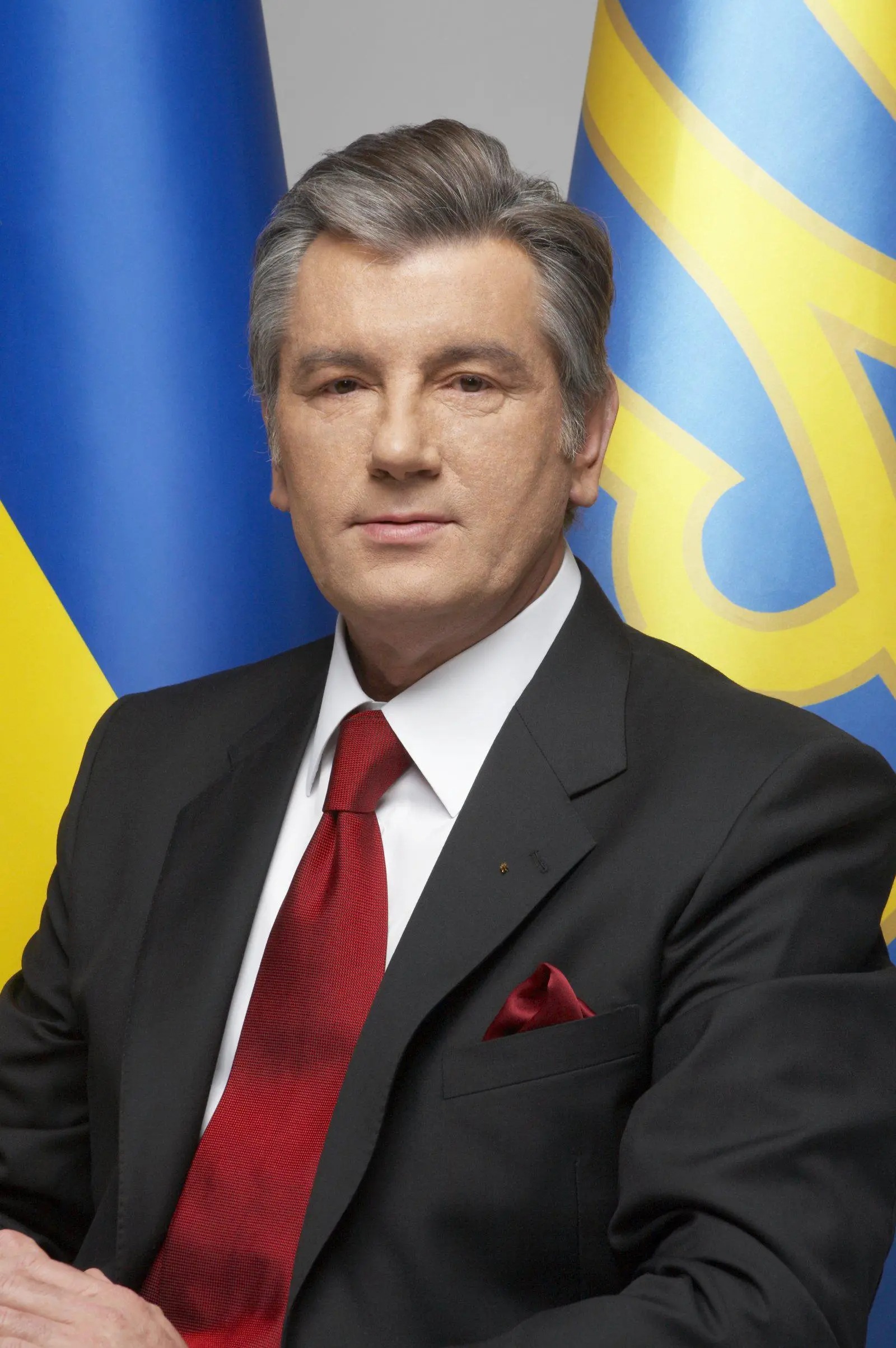
In late 2002, Viktor Yushchenko (Our Ukraine), Oleksandr Moroz (Socialist Party of Ukraine), Petro Symonenko (Communist Party of Ukraine) and Yulia Tymoshenko (Yulia Tymoshenko Bloc) issued a joint statement concerning "the beginning of a state revolution in Ukraine". The communists left the alliance: Symonenko opposed the idea of a single candidate from the alliance in the Ukrainian presidential election of 2004; but the other three parties remained allies until July 2006. (In the autumn of 2001 both Tymoshenko and Yushchenko had broached the idea of setting up such a coalition).
On 2 July 2004, Our Ukraine and the Yulia Tymoshenko Bloc established the Force of the People, a coalition which aimed to stop "the destructive process that has, as a result of the incumbent authorities, become a characteristic for Ukraine" – at the time President Kuchma and Prime Minister Yanukovych were the "incumbent authorities" in Ukraine. The pact included a promise by Viktor Yushchenko to nominate Tymoshenko as Prime Minister if Yushchenko won the October 2004 presidential election.
2004 Ukraine presidential election campaign
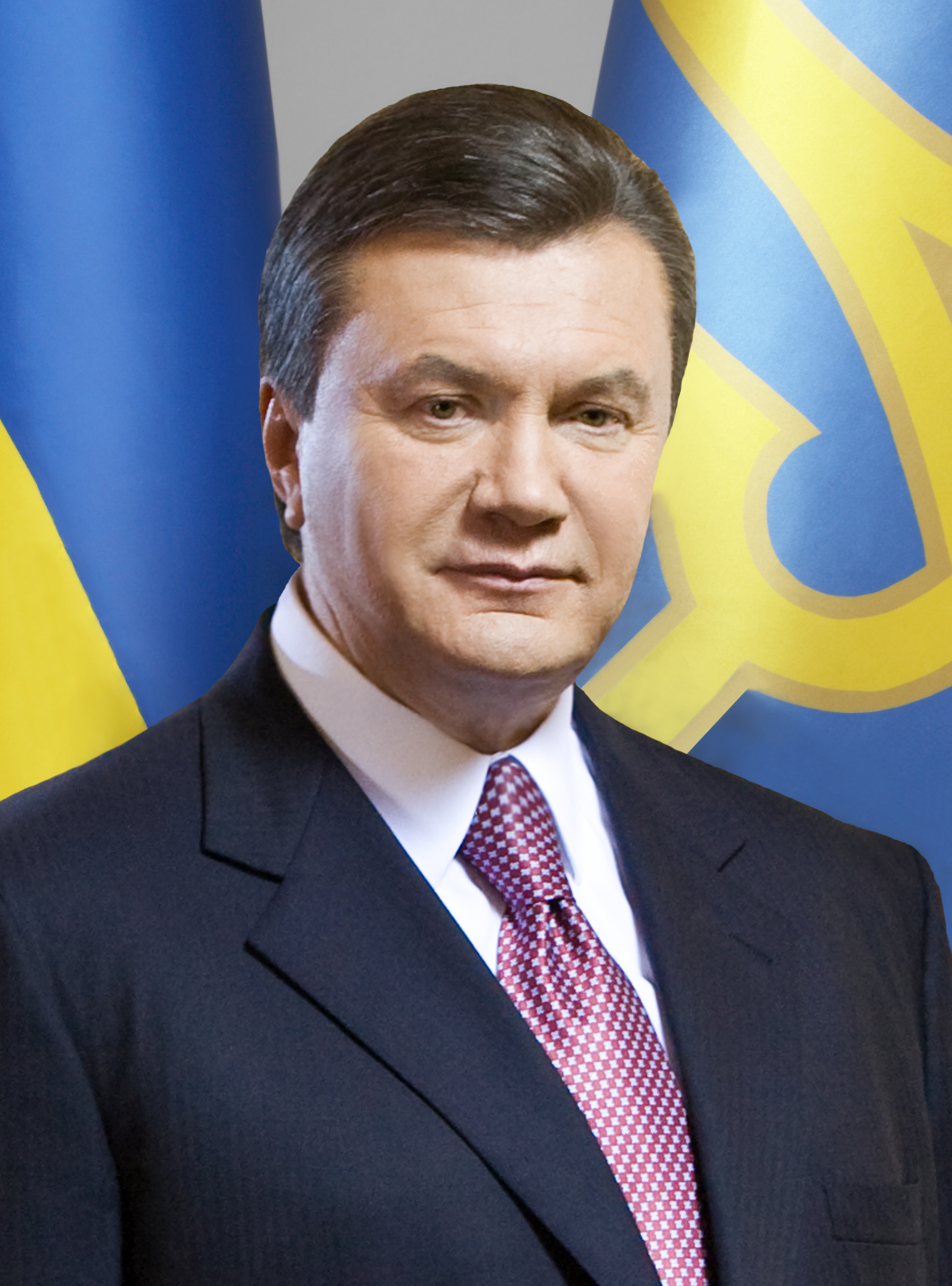
The 2004 presidential election in Ukraine eventually featured two main candidates:
- sitting prime minister Viktor Yanukovych, largely supported by Leonid Kuchma (the outgoing president who had already served two terms in office from 1994 and was precluded from running himself due to the term limits under the constitution)
- the opposition candidate Viktor Yushchenko, leader of the Our Ukraine faction in the Ukrainian parliament and a former prime minister (in office 1999–2001)
The election took place in a highly charged atmosphere, with the Yanukovych team and the outgoing president's administration using their control of the government and state apparatus for intimidation of Yushchenko and his supporters. In September 2004 Yushchenko suffered dioxin poisoning under mysterious circumstances. While he survived and returned to the campaign trail, the poisoning undermined his health and altered his appearance dramatically (his face remains disfigured by the consequences ).
The two main candidates were neck and neck in the first-round vote held on 31 October 2004, winning 39.32% (Yanukovych) and 39.87% (Yushchenko) of the votes cast. The candidates who came third and fourth collected much less: Oleksandr Moroz of the Socialist Party of Ukraine and Petro Symonenko of the Communist Party of Ukraine received 5.82% and 4.97%, respectively. Since no candidate had won more than 50% of the cast ballots, Ukrainian law mandated a run-off vote between two leading candidates. After the announcement of the run-off, Oleksandr Moroz threw his support behind Viktor Yushchenko. The Progressive Socialist Party's Nataliya Vitrenko, who won 1.53% of the vote, endorsed Yanukovych, who hoped for Petro Symonenko's endorsement but did not receive it.
In the wake of the first round of the election, many complaints emerged regarding voting irregularities in favour of the government-supported Yanukovych. However, as it was clear that neither nominee was close enough to collect an outright majority in the first round, challenging the initial result would not have affected the outcome of the round. So the complaints were not actively pursued and both candidates concentrated on the upcoming run-off, scheduled for 21 November.
Pora! activists were arrested in October 2004, but the release of many (reportedly on President Kuchma's personal order) gave growing confidence to the opposition.
Yushchenko's supporters originally adopted orange as the signifying colour of his election campaign. Later, the colour gave its name to an entire series of political labels, such as the Oranges (Pomaranchevi in Ukrainian) for his political camp and its supporters. At the time when the mass protests grew, and especially when they brought about political change in the country, the term Orange Revolution came to represent the entire series of events.
In view of the success of using colour as a symbol to mobilise supporters, the Yanukovych camp chose blue for themselves.
File:Ukraine Presidential Oct 2004 Vote (Yushchenko).png|Viktor Yushchenko (first round) – percentage of total national vote File:Ukraine Presidential Oct 2004 Vote (Yanukovych).png|Viktor Yanukovych (first round) – percentage of total national vote File:Ukraine Presidential Nov 2004 Vote (Yushchenko).png|Viktor Yushchenko (second round) – percentage of total national vote File:Ukraine Presidential Nov 2004 Vote (Yanukovych).png|Viktor Yanukovych (second round) – percentage of total national vote
Protests

Protests began on the eve of the second round of voting, as the official count differed markedly from exit poll results which gave Yushchenko up to an 11% lead, while official results gave the election win to Yanukovych by 3%. While Yanukovych supporters have claimed that Yushchenko's connections to the Ukrainian media explain this disparity, the Yushchenko team publicised evidence of many incidents of electoral fraud in favour of the government-backed Yanukovych, witnessed by many local and foreign observers. These accusations were reinforced by similar allegations, though at a lesser scale, during the first presidential run of 31 October.
The Yushchenko campaign publicly called for protest on the dawn of election day, 21 November 2004, when allegations of fraud began to spread in the form of leaflets printed and distributed by the 'Democratic Initiatives' foundation, announcing that Yushchenko had won – on the basis of its exit poll.||group=nb}} started in cities across Ukraine. The largest, in Kyiv's Maidan Nezalezhnosti (Independence Square), attracted an estimated 500,000 participants, who on 23 November 2004 peacefully marched in front of the headquarters of the Verkhovna Rada, the Ukrainian parliament, many wearing orange or carrying orange flags, the colour of Yushchenko's campaign coalition. One of the most prominent activists of that time was Paraska Korolyuk, subsequently bestowed with the Order of Princess Olga. From 22 November Pora! undertook the management of the protests in Kyiv until the end of the demonstration.

The local councils in Kyiv, Lviv, and several other cities passed, with the wide popular support of their constituency, a largely symbolic refusal to accept the legitimacy of the official election results, and Yushchenko took a symbolic presidential oath. This "oath" taken by Yushchenko in half-empty parliament chambers, lacking the quorum as only the Yushchenko-leaning factions were present, could not have any legal effect. But it was an important symbolic gesture meant to demonstrate the resolve of the Yushchenko campaign not to accept the compromised election results. In response, Yushchenko's opponents denounced him for taking an illegitimate oath, and even some of his moderate supporters were ambivalent about this act, while a more radical side of the Yushchenko camp demanded him to act even more decisively. Some observers argued that this symbolic presidential oath might have been useful to the Yushchenko camp if events have taken a more confrontational route. In such a scenario, this "presidential oath" which Yushchenko took could be used to lend legitimacy to the claim that he, rather than his rival who tried to gain the presidency through alleged fraud, was a true commander-in-chief authorised to give orders to the military and security agencies.

At the same time, local officials in Eastern and Southern Ukraine, the stronghold of Viktor Yanukovych, started a series of actions alluding to the possibility of the breakup of Ukraine or an extra-constitutional federalisation of the country, if their candidate's claimed victory were not recognised. Demonstrations of public support for Yanukovych were held throughout Eastern Ukraine, and some of his supporters arrived in Kyiv. In Kyiv the pro-Yanukovych demonstrators were far outnumbered by Yushchenko supporters, whose ranks were continuously swelled by new arrivals from many regions of Ukraine. The scale of the demonstrations in Kyiv was unprecedented. By many estimates, on some days they drew up to one million people to the streets, in freezing weather.
In total, 18.4% of Ukrainians have claimed to have taken part in the Orange Revolution (across Ukraine).
Political developments

Although Yushchenko entered into negotiations with outgoing president Kuchma in an effort to peacefully resolve the situation, the negotiations broke up on 24 November 2004. Yanukovych was officially certified as the victor by the Central Election Commission, which itself was allegedly involved in falsification of electoral results by withholding the information it was receiving from local districts and running a parallel illegal computer server to manipulate the results. The next morning after the certification took place, Yushchenko spoke to supporters in Kyiv, urging them to begin a series of mass protests, general strikes and sit-ins with the intent of crippling the government and forcing it to concede defeat.
In view of the threat of illegitimate government acceding to power, Yushchenko's camp announced the creation of the Committee of National Salvation which declared a nationwide political strike.
On 1 December 2004, the Verkhovna Rada passed a resolution that strongly condemned pro-separatist and federalisation actions, and passed a non-confidence vote in the Cabinet of Ministers of Ukraine, a decision Prime Minister Yanukovych refused to recognise. By the Constitution of Ukraine, the non-confidence vote mandated the government's resignation, but the parliament had no means to enforce a resignation without the co-operation of Prime Minister Yanukovych and outgoing president Kuchma.
On 3 December 2004, Ukraine's Supreme Court finally broke the political deadlock. The court decided that due to the scale of the electoral fraud it became impossible to establish the election results. Therefore, it invalidated the official results that would have given Yanukovych the presidency. As a resolution, the court ordered a revote of the run-off to be held on 26 December 2004. This decision was seen as a victory for the Yushchenko camp while Yanukovych and his supporters favoured a rerun of the entire election rather than just the run-off, as a second-best option if Yanukovych was not awarded the presidency. On 8 December 2004 the parliament amended laws to provide a legal framework for the new round of elections. The parliament also approved the changes to the Constitution, implementing a political reform backed by outgoing president Kuchma as a part of a political compromise between the acting authorities and opposition.
In November 2009 Yanukovych stated that although his victory in the election was "taken away", he gave up this victory in order to avoid bloodshed. "I didn't want mothers to lose their children and wives their husbands. I didn't want dead bodies from Kyiv to flow down the Dnipro. I didn't want to assume power through bloodshed."
Re-run election
The 26 December revote was held under intense scrutiny by local and international observers. The preliminary results, announced by the Central Election Commission on 18 December, gave Yushchenko and Yanukovych 51.99% and 44.20% of the total vote, which represented a change in the vote by +5.39% to Yushchenko and −5.27% from Yanukovych respectively when compared to the November poll. The Yanukovych team attempted to mount a fierce legal challenge to the election results using both the Ukrainian courts and the Election Commission complaint procedures. However, all their complaints were dismissed as without merit by both the Supreme Court of Ukraine and the Central Election Commission. On 10 January 2005 the Election Commission officially declared Yushchenko as the winner of the presidential election with the final results falling within 0.01% of the preliminary ones. This Election Commission announcement cleared the way for Yushchenko's inauguration as the president of Ukraine. The official ceremony took place in the Verkhovna Rada building on 23 January 2005 and was followed by the "public inauguration" of the newly sworn President at Maidan Nezalezhnosti (Independence Square) in front of hundreds of thousands of his supporters. This event brought the Ukrainian Orange Revolution to its peaceful conclusion.
Role of Ukrainian intelligence and security agencies
According to one version of events recounted by The New York Times, Ukrainian security agencies played an unusual role in the Orange Revolution, with a KGB successor agency in the former Soviet state providing qualified support to the political opposition. As per the paper report, on 28 November 2004 over 10,000 MVS (Internal Ministry) troops were mobilised to put down the protests in Independence Square in Kyiv by the order of their commander, Lt. Gen. Sergei Popkov. The SBU (Security Service of Ukraine, a successor to the KGB in Ukraine) warned opposition leaders of the crackdown. Oleksander Galaka, head of GUR (military intelligence) made calls to "prevent bloodshed". Col. Gen. Ihor Smeshko (SBU chief) and Maj. Gen. Vitaly Romanchenko (military counter-intelligence chief) both claimed to have warned Popkov to pull back his troops, which he did, preventing bloodshed.
In addition to the desire to avoid bloodshed, the New York Times article suggests that siloviki, as the security officers are often called in the countries of the former Soviet Union, were motivated by personal aversion to the possibility of having to serve President Yanukovych, who was in his youth convicted of robbery and assault and had alleged connection with corrupt businessmen, especially if he were to ascend to the presidency by fraud. The personal feelings of Gen. Smeshko towards Yanukovych may also have played a role. Additional evidence of Yushchenko's popularity and at least partial support among the SBU officers is shown by the fact that several embarrassing proofs of electoral fraud, including incriminating wiretap recordings of conversations among the Yanukovych campaign and government officials discussing how to rig the election, were provided to the Yushchenko camp. These conversations were likely recorded and provided to the opposition by sympathisers in the Ukrainian Security Services.
According to Abel Polese, Kuchma was concerned about its reputation in the West; because of a lack of natural resources to finance his regime he had to show a commitment to democracy in order to be targeted for Western financial assistance.
U.S. involvement in the revolution
In February 2004, an editorial "A Chestnut Revolution" appeared in The Wall Street Journal, the author of which wrote that "Ukraine offers the best chance to build on the Georgian success in popular democracy — as long as the West and the democratic opposition play their cards right". The note also says that the United States has already spent $2 billion to support a "free and independent" Ukraine and it would be better if this money went to support Kuchma's democratic rivals, whose actions are inspired by Georgia and Serbia.
Adrian Karatnycky, a senior researcher at Freedom House, who was born in New York into a family of Ukrainian immigrants, has repeatedly traveled to Ukraine to meet with representatives of public groups, figures of the country's political elite, as well as people from Viktor Yushchenko's team. When opposition candidate Yushchenko visited New York, Karatnycky acted as a connector, organizing meetings with American associations, such as the Conference of Presidents of Major American Jewish Organizations. A year before the elections, Karatnycky, together with NDI and Freedom House, gathered 1,023 observers from Central and Eastern Europe, who organized the European Network of Election Monitoring Organizations. Karatnycky himself took a direct part as an observer during the second round of the presidential elections and witnessed violations.
In August 2004, he took part in a training camp for Ukrainian activists; according to him, "Croatians, Romanians, Slovakians, and Serbians – leaders of the group that led civic opposition to Milošević – taught Ukrainian kids how to ‘control the temperature’ of protesting crowds". Democratic activists were trained on how to resist government pressure, as well as establish communication with the public and the police. Karatnycky also served as president of Freedom House from 1996 to 2003 and executive director from 1993 to 1996, and in this position helped create a network of centers and public organizations in Ukraine engaged in monitoring the media and elections. On November 30, 2004, at the very beginning of the protests, Karatnycky stated in his speech at the Knickerbocker Club: "I think the ‘orange revolution’ will win this time, and I can’t conceive of a set of circumstances under which Yushchenko won’t be president of the country".
In the two years before the 2004 Ukrainian presidential election, the United States spent $65 million "to aid political organizations in Ukraine, paying to bring opposition leader Viktor Yushchenko to meet U.S. leaders and helping to underwrite exit polls indicating he won a disputed runoff election." State Department spokesman Richard A. Boucher said that the U.S. money was not going to help a particular candidate, but to institutions that are necessary for free elections. Freedom House and the National Democratic Institute also funded civic groups that counted votes and announced exit poll results. In late November 2004, Senator Richard Lugar arrived in Kyiv as a representative of President George W. Bush and delivered a message to President Leonid Kuchma: "you play a central role in ensuring that Ukraine’s election is democratic and free of fraud and manipulation. A tarnished election, however, will lead us to review our relations with Ukraine."
Internet usage
Throughout the demonstrations, Ukraine's emerging Internet usage (facilitated by news sites that began to disseminate the Kuchma tapes) was an integral part of the orange revolutionary process. It has even been suggested that the Orange Revolution was the first example of an Internet-organised mass protest. Analysts believe that the Internet and mobile phones allowed an alternative media to flourish that was not subject to self-censorship or overt control by President Kuchma and his allies and pro-democracy activists (such as Pora!) were able to use mobile phones and the Internet to coordinate election monitoring and mass protests.
2004 Ukrainian constitutional changes
As part of the Orange Revolution, the Ukrainian constitution was changed to shift powers from the presidency to the parliament. This was Oleksandr Moroz's price for his decisive role in winning Yushchenko the presidency. The Communists also supported these measures. These came into effect in 2006 during which Yanukovych's Party of Regions won the parliamentary election, creating a coalition government with the Socialists and the Communists under his leadership. As a result, President Viktor Yushchenko had to deal with a powerful Prime Minister Viktor Yanukovych who had control of many important portfolios. His premiership ended in late 2007 after Yushchenko had succeeded in his months-long attempt to dissolve parliament. After the election, Yanukovych's party again was the largest, but Tymoshenko's finished far ahead of Yushchenko's for second place. The Orange parties won a very narrow majority, permitting a new government under Tymoshenko, but Yushchenko's political decline continued to his poor showing in the 2010 presidential election.
On 1 October 2010, the Constitutional Court of Ukraine overturned the 2004 amendments, considering them unconstitutional.
2010 presidential election
A Circuit administrative court in Kyiv forbade mass actions at Maidan Nezalezhnosti from 9 January 2010 to 5 February 2010. The Mayor's office had requested this in order to avoid "nonstandard situations" during the aftermath of the 2010 presidential election. Apparently (in particular) the Party of Regions, All-Ukrainian Union "Fatherland" and Svoboda had applied for a permit to demonstrate there. Incumbent President Viktor Yushchenko got a dismal 5.45% of votes during the election. "Ukraine is a European democratic country", said Yushchenko in a sort of political will at the polling station. "It is a free nation and free people." According to him, this is one of the great achievements of the Orange Revolution.
In the 2010 presidential election Viktor Yanukovych was declared the winner which was labeled by some Yanukovych supporters as "an end to this Orange nightmare". Immediately after his election Yanukovych promised to "clear the debris of misunderstanding and old problems that emerged during the years of the Orange power". According to influential Party of Regions member Rinat Akhmetov the ideals of the Orange Revolution won at the 2010 election "We had a fair and democratic independent election. The entire world recognised it, and international observers confirmed its results. That's why the ideals of the Orange Revolution won". According to Yulia Tymoshenko the 2010 elections were a missed "chance to become a worthy member of the European family and to put an end to the rule of the oligarchy".
Aftermath

President Viktor Yushchenko decreed in 2005 that 22 November (the starting day of the Orange Revolution) will be a non-public holiday "Day of Freedom". This date was moved to 22 January (and merged with Unification Day) by President Viktor Yanukovych late December 2011. President Yanukovych stated he moved "Day of Freedom" because of "numerous appeals from the public".|group=nb}}
Outright vote rigging diminished after the 2004 presidential election. No officials involved in the 2004 elections that preceded the Orange Revolution were convicted for election fraud.
A 2007 study revealed that opinion about the nature of the Orange Revolution had barely shifted since 2004 and that the attitudes about it in the country remained divided along the same largely geographical lines that it had been at the time of the revolution (West and Central Ukraine being more positive about the events and South and Eastern Ukraine more cynical (seniors also). This research also showed that Ukrainians in total had a less positive view on the Orange Revolution in 2007 than they had in 2005. It has been suggested that since the Orange Revolution was impactful enough to interest people of all ages it increased the overall unity of Ukraine.
During the elections campaign of the 2012 Ukrainian parliamentary election the Party of Regions' campaign focused heavily on (what they called) "the chaos and ruins of 5 years of orange leadership".
Outside Ukraine
.jpg)
In March 2005 Ukrainian Foreign Minister Borys Tarasyuk stated that Ukraine would not be exporting revolution.
During Alexander Lukashenko's inauguration (ceremony) as President of Belarus of 22 January 2011 Lukashenko vowed that Belarus would never have its own version of the Orange Revolution and Georgia's 2003 Rose Revolution. In the aftermath of the 2011 South Ossetian presidential election (in December 2011) and during the protests following the 2011 Russian elections (also in December 2011) the ambassador of South Ossetia to the Russian Federation Dmitry Medoyev and Russian prime minister Vladimir Putin and Putin's supporters named the Orange Revolution an infamous foreknowledge for their countries. Putin also claimed that the organisers of the Russian protests in December 2011 were former (Russian) advisors to Yushchenko during his presidency and were transferring the Orange Revolution to Russia. A 4 February 2012 rally in favor of Putin was named the "anti-Orange protest". In 2013 a Russian State Duma Oleg Nilov and former fellow Russian politician Sergey Glazyev referred to political adversaries as "different personalities in some sort of orange or bright shorts" and "diplomats and bureaucrats that appeared after the years of the 'orange' hysteria". Former fellow Russian politician Sergey Glazyev stated in August 2013 that "a whole generation of diplomats and bureaucrats has appeared after the years of the 'orange' hysteria, who are carrying out an anti-Russian agenda" "creates an effect that Ukraine doesn't want", namely Ukrainian integration into the European Union and not into the Customs Union of Belarus, Kazakhstan and Russia.|group=nb}} In 2016 the Russian newspaper Izvestia claimed, "in Central Asia weak regimes are already being attacked by extremists and 'Orange Revolutions'."
In Russian nationalist circles the Orange Revolution has been linked with fascism because, albeit marginally, Ukrainian nationalist extreme right-wing groups and Ukrainian Americans (including Viktor Yushchenko's wife, Kateryna Yushchenko, who was born in the United States) were involved in the demonstrations; Russian nationalist groups see both as branches of the same tree of fascism. The involvement of Ukrainian Americans led them to believe the Orange Revolution was steered by the CIA.
In a televised meeting with military bloggers on 13 June 2023 Russian president Vladimir Putin stated that, the winner of the 2004 Ukrainian presidential election, Viktor Yushchenko had come to power with the help of a coup d'etat, which "at least took place in a relatively peaceful way."
Notes
References
References
- [https://www.academia.edu/1098375/The_Colour_Revolutions_in_the_Former_Soumiet_Republics_Successes_and_Failures The Colour Revolutions in the Former Soviet Republics: Ukraine] {{Webarchive. link. (1 August 2017 by Nathaniel Copsey, [[Routledge]] Contemporary Russia and Eastern Europe Series (page 30-44))
- [https://web.archive.org/web/20180608044856/http://www.kremlin.ru/events/president/transcripts/22661 Интервью украинским телеканалам «УТ-1», «Интер» и «1+1»]. www.kremlin.ru. 26 October 2004
- [http://www.taraskuzio.net/conferences2_files/Ukrainian_Politics_Energy.pdf Ukrainian Politics, Energy and Corruption under Kuchma and Yushchenko] {{Webarchive. link. (29 October 2013 by [[Taras Kuzio]], [[Harvard University]] (7 March 2008))
- "Historyczny zwrot Ukrainy. Tłumy przegoniły z Kijowa marionetkę Putina".
- USAID Report [http://www.usaid.gov/our_work/democracy_and_governance/publications/pdfs/democracy_rising.pdf Democracy Rising (PDF)] {{webarchive. link. (1 March 2006)
- [http://en.novayagazeta.ru/data/2008/08/10.html "Savik Shuster: I'm the only thing to remain after 'orange revolution{{'"]. {{webarchive. link. (23 September 2009 . ''[[Novaya Gazeta]]'', 2 February 2008)
- Kuzio, Taras. (March 2007). "Oligarchs, Tapes and Oranges: 'Kuchmagate' to the Orange Revolution". [[Journal of Communist Studies and Transition Politics]].
- Karatnycky, Adrian. (2005). "Ukraine's Orange Revolution". [[Foreign Affairs]].
- Andrew Wilson, "Ukraine's 'Orange Revolution' of 2004: The Paradoxes of Negotiation", in [[Adam Roberts (scholar). link. (20 March 2017)
- Karatnycky, Adrian. (2015-09-15). "Ukraine's Orange Revolution". [[Foreign Affairs: America and the World]].
- Paul Quinn-Judge, Yuri Zarakhovich, [http://content.time.com/time/magazine/article/0,9171,832225,00.html The Orange Revolution] {{Webarchive. link. (23 July 2019 , ''[[Time (magazine)). Time]]'', 28 November 2004
- link. (16 May 2014 by [[Taras Kuzio]], [[Johns Hopkins University Press]], 2006
{{in lang). ru [http://vz.ru/politics/2013/1/25/617482.html «В оранжевых и радужных трусах» ''In orange and red shorts''] {{Webarchive. link. (29 January 2013 , [[Vzglyad (newspaper)). Vzglyad]] (25 January 2013) - (15 February 2010). "Yanukovich declared winner in Ukraine poll". The Independent.
- (2005-08-09). "Suspected killers of journalist Georgy Gongadze named {{!}} Reporters without borders".
- Williams, Matthias. (2016-03-22). "Murdered journalist buried in Ukraine 16 years after beheading". Reuters.
- (2010-09-14). "Georgiy Gongadze murder tied to late Ukrainian minister". BBC News.
- "Kiev police chief jailed for Gongadze murder".
- (2013-01-30). "Ukrainian policeman gets life for murder of journalist".
- "Leonid Kuchma {{!}} Former President of Ukraine".
- (2000-11-28). "Moroz says leaked audiotapes link Kuchma to Gongadze's disappearance - Nov. 28, 2000".
- (February 14, 2001). "Kuchmagate: Political Crisis in Ukraine?".
- [[Sergey Danilochkin, Sergei. (2008-04-09). "Ukraine: Kuchma Cleared To Run For Third Term". Radio Free Europe/Radio Liberty.
- "Orange revolution".
- "Presidential Election, 31 October, 21 November and 26 December 2004".
- {{citation needed. (February 2022 Ukraine's Orange Revolution: Causes and Consequences] by [[Taras Kuzio]], [[University of Ottawa]] (28 April 2005))
- Finn, Peter. (2004-11-23). "Widespread Vote Fraud Is Alleged In Ukraine". [[The Washington Post]].
- Kuzio, Taras. (2010). "Nationalism, identity and civil society in Ukraine: Understanding the Orange Revolution". Communist and Post-Communist Studies.
- Lane, David. "The Orange Revolution: 'People's Revolution' or Revolutionary Coup?".
- BBC News. "Ukraine Country Profile." 2012. http://news.bbc.co.uk/2/hi/europe/country_profiles/1102303.stm {{Webarchive. link. (9 June 2012 . 2 December 2012; Encyclopædia Britannica. Kuchma's Presidency.; The Economist. "Catching Kuchma". 2011. https://www.economist.com/europe/2011/03/31/catching-kuchma [https://www.economist.com/europe/2011/03/31/catching-kuchma]. 3 Dec 2012.; Konieczna, Joanna. "The Orange Revolution in Ukraine. An Attempt to Understand the Reasons." 2005. http://www.osw.waw.pl/en/publikacje/osw-studies/2005-07-13/orange-revolution-ukraine-attempt-to-understand-reasons {{Webarchive). link. (2 September 2012 . 3 Dec 2012; Kuzio, Taras. Eight Necessary Factors for the Orange Revolution.; Kuzio, Taras. Five Contributing Factors.)
- Walsh, Nick Paton. (2004-10-27). "Putin's Kiev visit 'timed to influence Ukraine poll'". [[The Guardian]].
- (2004-05-08). "President Vladimir Putin laid a wreath at the Grave of the Unknown Soldier by the Kremlin wall in honour of Victory Day in the Great Patriotic War".
- link. (9 June 2016 by [[Paul D'Anieri]], M.E. Sharpe, 2006, {{ISBN). 978-0-7656-1811-5, page 117
- [http://news.bbc.co.uk/2/hi/europe/5169068.stm Ukraine coalition born in chaos] {{Webarchive. link. (21 October 2017 , [[BBC News]] (11 July 2006))
- link. (13 May 2016 by [[Anders Aslund]] and [[Michael A. McFaul]], [[Carnegie Endowment for International Peace]], 2006, {{ISBN). 978-0-87003-221-9
- Stanisławski, Wojciech. (2005). "The Orange Ribbon: A Calendar of the Political Crisis in Ukraine Autumn 2004". Centre for Eastern Studies.
- link. (12 March 2008 ", ''Фокус'', 2 April 2007, №13)
- link. (25 April 2016 edited by Adam Roberts and Timothy Garton Ash, [[Oxford University Press]], 2009, {{ISBN). 978-0-19-955201-6 (page 345)
- Beginning on 22 November 2004, massive protests{{#tag:ref. link. (15 May 2017 by Abel Polese, [[Routledge]] (1 June 2009))
- link. (6 November 2012 , ''[[The New York Times]]'', 26 November 2004)
- Kamil Tchorek, [http://www.timesonline.co.uk/tol/news/world/article395652.ece Protest grows in western city] {{Webarchive. link. (29 June 2011 , ''[[The Times]]'', 26 November 2004)
- [http://news.bbc.co.uk/2/hi/europe/4198957.stm Yushchenko takes reins in Ukraine] {{Webarchive. link. (17 November 2006 . BBC NEWS. 23 January 2005. URL Retrieved 17 November 2006)
- USAID Report [http://www.usaid.gov/our_work/democracy_and_governance/publications/pdfs/democracy_rising.pdf Democracy Rising (PDF)] {{webarchive. link. (1 March 2006)
- Supreme Court of Ukraine decision regarding the annulment of 21 November vote. [http://www.skubi.net/ukraine/findings.html Full text in Ukrainian] {{Webarchive. link. (12 February 2007 and [http://www.skubi.net/ukraine/findings.html Summary in English])
- [http://www.interfax.com.ua/eng/main/26340/ Yanukovych says presidential election scenario of 2004 won't be repeated in 2010] {{Webarchive. link. (16 November 2012 , [[Interfax-Ukraine]] (27 November 2009))
- "Results of Voting in Ukraine Presidential Elections 2004", [http://www.cvk.gov.ua/pls/vp2004/wp0011e Central Election Commission of Ukraine] {{Webarchive. link. (20 August 2008 . URL Retrieved 12 September 2006)
- "[http://news.bbc.co.uk/1/hi/world/europe/4061253.stm Timeline: Battle for Ukraine] {{Webarchive. link. (28 June 2006 ". BBC NEWS, 23 January 2005. URL Retrieved 12 September 2006)
- [http://www.cvk.gov.ua/postanovy/2005/p0015_2005.htm Official CEC announcement of results as of 10 January 2005] {{webarchive. link. (12 March 2005 , Central Election Commission. URL Retrieved 12 September 2006 {{in lang). uk
- Finn, Peter. "[https://www.washingtonpost.com/wp-dyn/articles/A30051-2005Jan23.html In a Final Triumph, Ukrainian Sworn In] {{Webarchive. link. (8 July 2017 ". ''Washington Post'', 24 January 2005. URL Retrieved 12 September 2006)
- link. (26 April 2016 by [[Orest Subtelny]], [[University of Toronto Press]], 2009, {{ISBN). 1442609915
- C. J. Chivers, [https://web.archive.org/web/20070324070317/http://select.nytimes.com/gst/abstract.html?res=FA0913FF395C0C748DDDA80894DD404482 BACK CHANNELS: A Crackdown Averted; How Top Spies in Ukraine Changed the Nation's Path], ''[[The New York Times]]'', 17 January 2005.
- For question on ultimate source of orders and mobilisation details see Lehrke, Jesse Paul. ''The Transition to National Armies in the Former Soviet Republics, 1988–2005''. Oxfordshire, UK: Routledge (2013), 188–89.
- "How Yanukovych Forged the Elections. Headquarters' Telephone Talks Intercepted".
- [https://www.academia.edu/1068864/Russia_the_US_the_Others_and_the_101_Things_to_Do_to_Win_a_Colour_Revolution_Reflections_on_Georgia_and_Ukraine Russia, the US, “the Others” and the “101 Things to Do to Win a (Colour)Revolution”: Reflections on Georgia and Ukraine] {{Webarchive. link. (8 July 2020 by Abel Polese, [[Routledge]] (26 October 2011))
- (2004-02-11). "A Chestnut Revolution". The Wall Street Journal.
- Clyne, Meghan. (2004-12-02). "Our Man at Ukraine's Orange Revolution". American Enterprise Institute.
- ''Attention Deficit Democracy'', James Bovard, page 65
- Ian, Traynor. (2004-11-26). "US campaign behind the turmoil in Kiev". The Guardian.
- ''The Color Revolutions'', Lincoln A. Mitchell, page 88-89
- McFaul, Michael. "Transitions from Postcommunism." [[Journal of Democracy]] 16, no. 3 (2005): p. 12.
- Goldstein, Joshua. (2007) The Role of Digital Networked Technologies in the Ukrainian Orange Revolution. Berkman Center Research Publication. Pg 14
- Kalil, Thomas. (2008) ''Harnessing the Mobile Revolution''. The New Policy Institute. p. 14
- [http://www.kyivpost.com/news/politics/detail/84619/ Update: Return to 1996 Constitution strengthens president, raises legal questions] {{Webarchive. link. (3 October 2010 , [[Kyiv Post]] (1 October 2010))
- [http://www.unian.net/eng/news/news-356613.html Court forbade Maydan after first tour of election] {{Webarchive. link. (13 August 2011 , [[UNIAN]] (13 January 2010))
- {{in lang. link. (21 January 2010 , [[CEC Ukraine]] (19 January 2010))
- [http://www.europarussia.com/posts/755 Ukraine. Farewell to the Orange Revolution] {{Webarchive. link. (7 February 2010 , EuropaRussia (19 January 2010))
- [http://news.bbc.co.uk/1/hi/world/europe/8508276.stm Ukraine election: Yanukovych urges Tymoshenko to quit] {{Webarchive. link. (18 January 2021 , BBC News, 10 February 2010, 13:23 GMT)
- [http://www.kyivpost.com/news/nation/detail/59193/ Yanukovych appeals to the nation, asks Tymoshenko to step down] {{Webarchive. link. (12 February 2010 , [[Kyiv Post]] (10 February 2010))
- [http://www.kyivpost.com/news/politics/detail/60518 Akhmetov: Ideals of 'Orange Revolution' won at election in 2010] {{Webarchive. link. (13 July 2011 , [[Kyiv Post]] (26 February 2010))
- [https://web.archive.org/web/20100227060506/http://www.tymoshenko.ua/en/article/ea5wzazv Yulia Tymoshenko’s address to the people of Ukraine], Yulia Tymoshenko official website (22 February 2010)
- [http://en.for-ua.com/analytics/2011/11/23/151355.html Day of Freedom: here comes the end to revolutions] {{webarchive. link. (26 November 2011 , ForUm (23 November 2011))
- [http://www.kyivpost.com/news/nation/detail/119839/ Yanukovych signs decree on new holiday replacing Ukrainian Independence Day] {{Webarchive. link. (5 January 2012 , [[Kyiv Post]] (30 December 2011))
- [http://zik.ua/en/news/2011/12/31/326863 Yanukovych cancels Freedom Day on 22 Nov.] {{Webarchive. link. (24 February 2019, [[Z I K]] (31 December 2011))
- [http://eng.obozrevatel.com/politics/yanukovych-abolishes-day-of-liberty-on-november-22.htm Yanukovych abolishes Day of Liberty on 22 November] {{webarchive. link. (19 February 2014 , "Observer" (30 December 2011))
- (13 November 2014). "Ukrainians to celebrate Day of Dignity and Freedom on November 21, Unity Day on January 22".
- link. (10 May 2016 by [[Paul D'Anieri]], [[M.E. Sharpe]], 2006, {{ISBN). 978-0-7656-1811-5 (page 63)
- link. (5 June 2011 , [[euobserver]] (8 February 2010))
- [https://www.washingtonpost.com/wp-dyn/content/article/2010/02/08/AR2010020803583.html International observers say Ukrainian election was free and fair] {{Webarchive. link. (12 October 2020 , [[Washington Post]] (9 February 2010))
- [http://www.kyivpost.com/news/politics/detail/59077/ European Parliament president greets Ukraine on conducting free and fair presidential election] {{Webarchive. link. (11 February 2010 , [[Kyiv Post]] (9 February 2010))
- link. (3 June 2016 by Andrej Lushnycky and [[Mykola Riabchuk]], [[Peter Lang (publishing company)). Peter Lang]], 2009, {{ISBN. 303911607X (page 52)
- [http://www.rferl.org/content/article/1061785.html Ukraine:Has Yushchenko Betrayed The Orange Revolution? ] {{Webarchive. link. (26 November 2015 , [[Radio Free Europe/Radio Liberty]] (30 September 2005))
- [http://en.for-ua.com/analytics/2005/10/28/164030.html Independent standpoint on Ukraine:Dismissal of Prosecutor-General, Closure of Poroshenko Case Create New] {{webarchive. link. (3 November 2013, [[ForUm]] (28 October 2005))
- [http://www.partyofregions.org.ua/en/program Draft Campaign Program of the Party of Regions] {{Webarchive. link. (26 March 2014 , [[Party of Regions]] (2012)
[https://web.archive.org/web/20121026120142/http://www.wespeaknews.com/world/the-upcoming-parliamentary-elections-in-ukraine-summary-106098.html The upcoming parliamentary elections in Ukraine [Summary]], [[WSN]] (23 October 2012)) - [https://www.bbc.co.uk/news/world-europe-20031821 Q&A:Ukrainian parliamentary election] {{Webarchive. link. (21 October 2020 , [[BBC News]] (23 October 2012))
- link. (4 March 2016 , [[The Jamestown Foundation]] (17 March 2005))
- [http://www.themoscowtimes.com/news/article/lukashenko-growls-at-inauguration/429432.html Lukashenko Growls at Inauguration] {{Webarchive. link. (2 June 2016 , [[The Moscow Times]] (24 January 2011))
- [http://www.kyivpost.com/news/russia/detail/118993/ Putin calls 'color revolutions' an instrument of destabilisation] {{Webarchive. link. (16 December 2011 , [[Kyiv Post]] (15 December 2011))
- [http://www.kyivpost.com/news/russia/detail/118053/ 'Orange' methods will fail in South Ossetia] {{Webarchive. link. (4 December 2011 , [[Kyiv Post]] (2 December 2011))
- {{in lang. ru [http://ria.ru/society/20120204/556495673.html Антиоранжевый митинг проходит на Поклонной горе] {{Webarchive. link. (29 October 2013 [[RIAN]] (4 February 2012))
- During a January 2013 debate in the Russian [[State Duma]] on [[Russian gay propaganda law. ru [http://vz.ru/politics/2013/1/25/617482.html «В оранжевых и радужных трусах» ''In orange and red shorts''] {{Webarchive. link. (29 January 2013 , [[Vzglyad (newspaper)). Vzglyad]] (25 January 2013)
- [http://www.interfax.co.uk/ukraine-news/putins-aide-calls-opinion-that-all-ukrainians-want-european-integration-sick-self-delusion-2/ Putin’s aide calls opinion that all Ukrainians want European integration "sick self-delusion"] {{Webarchive. link. (27 September 2013 , [[Interfax-Ukraine]] (21 August 2013))
- [https://www.bbc.com/news/world-europe-37837432 Russian media's love affair with Trump] {{Webarchive. link. (14 April 2018 , [[BBC News]] (2 November 2016))
- [https://www.academia.edu/4195331/New_Extremely_Right-Wing_Intellectual_Circles_in_Russia_The_Anti-Orange_Committee_the_Isborsk_Club_and_the_Florian_Geyer_Club New Extremely Right-Wing Intellectual Circles in Russia: The Anti-Orange Committee, the Isborsk Club and the Florian Geyer Club] {{Webarchive. link. (12 August 2019 by [[Andreas Umland]], [[International Relations and Security Network]] (5 August 2013))
- (13 June 2023). "Putin said that the Russian Federation was not given a chance to build normal relations with the Ukrainian people".
This article was imported from Wikipedia and is available under the Creative Commons Attribution-ShareAlike 4.0 License. Content has been adapted to SurfDoc format. Original contributors can be found on the article history page.
Ask Mako anything about Orange Revolution — get instant answers, deeper analysis, and related topics.
Research with MakoFree with your Surf account
Create a free account to save articles, ask Mako questions, and organize your research.
Sign up freeThis content may have been generated or modified by AI. CloudSurf Software LLC is not responsible for the accuracy, completeness, or reliability of AI-generated content. Always verify important information from primary sources.
Report