From Surf Wiki (app.surf) — the open knowledge base
OPN1MW2
Human protein
Human protein
OPN1MW2 is a duplication of the OPN1MW gene, which encodes the medium wavelength sensitive (MWS) photopsin. The gene duplication is present in about 50% of X-chromosomes, so is present in 50% of males and at least once in 75% of females. It caused by the same mechanism that causes congenital red-green color blindness, the most common form of color blindness.
Gene Duplication
Main article: congenital red-green color blindness
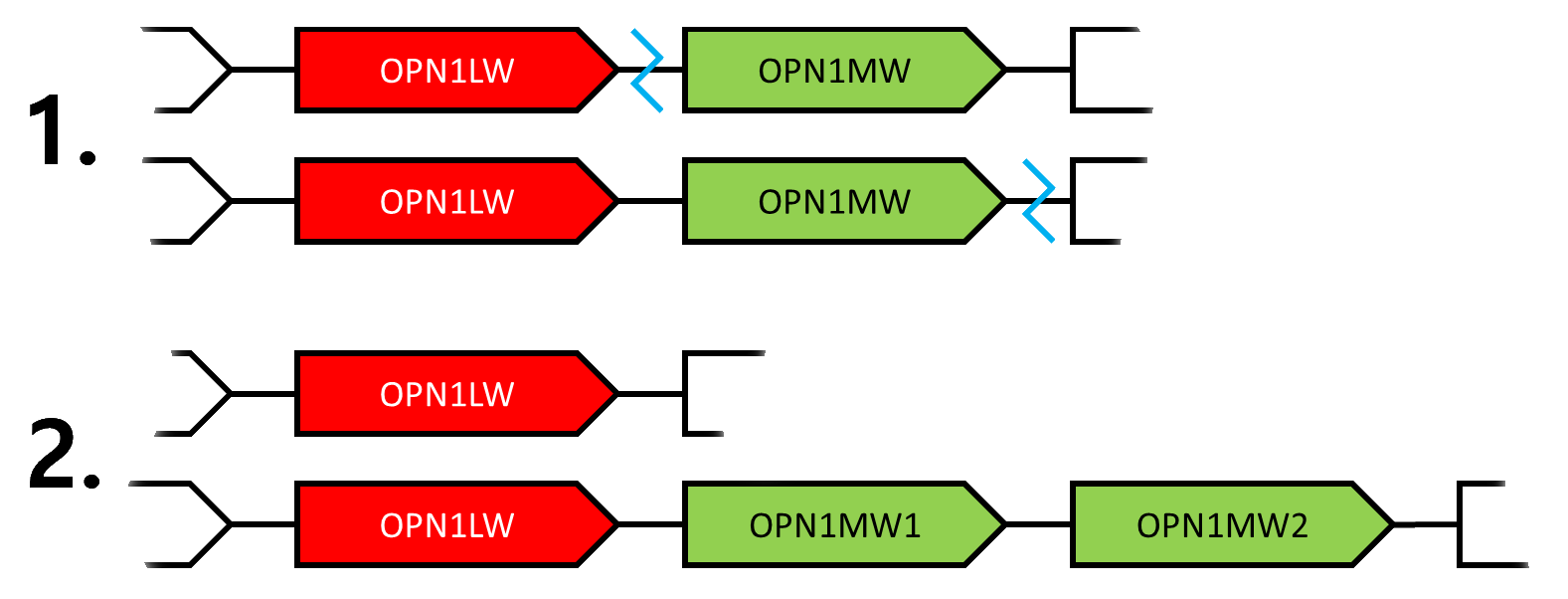
OPN1MW2 is a duplication of the OPN1MW gene arising from unequal homologous recombination. During this process, one of the X-chromosomes "donates" its OPN1MW gene to the other chromosome, resulting in:
- One chromosome without a OPN1MW gene, which carries protanopia
- One chromosome with two OPN1MW genes, although only the first gene in the chain (OPN1MW1) will generally be expressed and the second gene OPN1MW2 will remain unexpressed.
The only difference between the two genes is their position in the gene cluster. They are equal in that they have the same chances of encoding a certain OPN1MW allele. However, in a given X-chromosome, they may encode different alleles.
Tetrachromacy
There are several theories for tetrachromacy in humans, but the most popular theory is related to females carriers of color blindness. Carriers will have one opsin gene (OPN1MW or OPN1LW) with differing alleles thereof on each chromosome, such that the alleles encode proteins with different spectral sensitivities. Both of these alleles are expressed due to x-inactivation (one kind of X chromosome will get expressed in some photoreceptor cells, whereas the other kind of X chromosome will get expressed in the other photoreceptor cells) so a carrier will have 4 distinct cones with different spectral sensitivities, which is one prerequisite of tetrachromacy.
This theory cannot be extended to females who have identical alleles in their OPN1MW1 genes, but a different allele in their OPN1MW2 gene, since the latter is never expressed, and if it were co-expressed with OPN1MW1, the two alleles would not be isolated in different photoreceptors. Therefore the OPN1MW2 gene is not considered a likely candidate mechanism for tetrachromacy.
References
References
- (Sep 5, 2014). "The women with superhuman vision". BBC.
This article was imported from Wikipedia and is available under the Creative Commons Attribution-ShareAlike 4.0 License. Content has been adapted to SurfDoc format. Original contributors can be found on the article history page.
Ask Mako anything about OPN1MW2 — get instant answers, deeper analysis, and related topics.
Research with MakoFree with your Surf account
Create a free account to save articles, ask Mako questions, and organize your research.
Sign up freeThis content may have been generated or modified by AI. CloudSurf Software LLC is not responsible for the accuracy, completeness, or reliability of AI-generated content. Always verify important information from primary sources.
Report