From Surf Wiki (app.surf) — the open knowledge base
Ophir
Biblical port famous for its wealth

Biblical port famous for its wealth
the region mentioned in the Bible
Ophir (; ) is a port or region mentioned in the Bible, famous for its wealth. Its existence is attested to by an inscribed pottery shard found at Tell Qasile (in modern-day Tel Aviv) in 1946, dating to the eighth century BC, which reads "gold of Ophir to/for Beth-Horon [...] 30 shekels". The location of Ophir is unknown, though the find confirms it as a real place which exported gold.
Biblical references
Ophir in Genesis 10 (the Table of Nations) is said to be the name of one of the sons of Joktan. The Books of Kings and Chronicles tell of a joint expedition to Ophir by King Solomon and the Tyrian king Hiram I from Ezion-Geber, a port on the Red Sea, that brought back large amounts of gold, precious stones and 'algum wood' and of a later failed expedition by king Jehoshaphat of Judah. The famous 'gold of Ophir' is referenced in several other books of the Hebrew Bible, in particular Isaiah 13:12 refers to the "golden wedge of Ophir".
In the Septuagint, other variants of the name are mentioned: Ōpheír, Sōphír, Sōpheír and Souphír.
The New Testament apocrypha book Cave of Treasures contains a passage: "And the children of Ophir, that is, Send, appointed to be their king Lophoron, who built Ophir with stones of gold; now, all the stones that are in Ophir are of gold."
Theorized locations
Possible ancient trade routes
Sumatra and Malay Peninsula
The 1st-century historian Josephus, in his "Antiquities of the Jews" (8.6.4), identified Ophir as "the Aurea Chersonesus, which belongs to India." "Aurea Chersonesus" (Χρυσῆ Χερσόνησος) is Grecolatin for "Golden Peninsula." At that time, India was thought to comprise, not just the Indian subcontinent, but also Indochina, and Indonesia. Hence, in his Geography, the nearly contemporaneous geographer Ptolemy lists these additional lands within the province of "India beyond the Ganges." Ptolemy therein identifies exactly where this Golden Peninsula is, centering it in Malaysia, perhaps also extending somewhat into Sumatra. In particular, Ptolemy mentions a "golden river" (Χρυσοάνα ποταμος) somewhat south of the archaeological site of the Bujang Valley (Βήσυγγα ἐμπόριον), and in the vicinity of the "Palandos river" (Παλάνδος ποταμος) (the modern Pahang region, also common in the derived toponyms surrounding Kuala Lumpur). These areas are indeed famous for gold. Indeed, the longest-lasting name for Sumatra, Svarṇa, which also means "gold," may have derived directly from the word Ophir, by a means similar to the Classical Greek pronunciation displayed in the Septuagint: "Soophaara"/"Souphir" (Σωφηρα/Σουφιρ).
Europeans, arriving later, consequently renamed mythologically-famous 'golden' Mount Ledang near Malacca, Malaysia, as Mount Ophir.
Sri Lanka
The 10th-century lexicographer David ben Abraham al-Fasi identified Ophir with Serendip, the old Persian name for Sri Lanka (aka Ceylon).
India
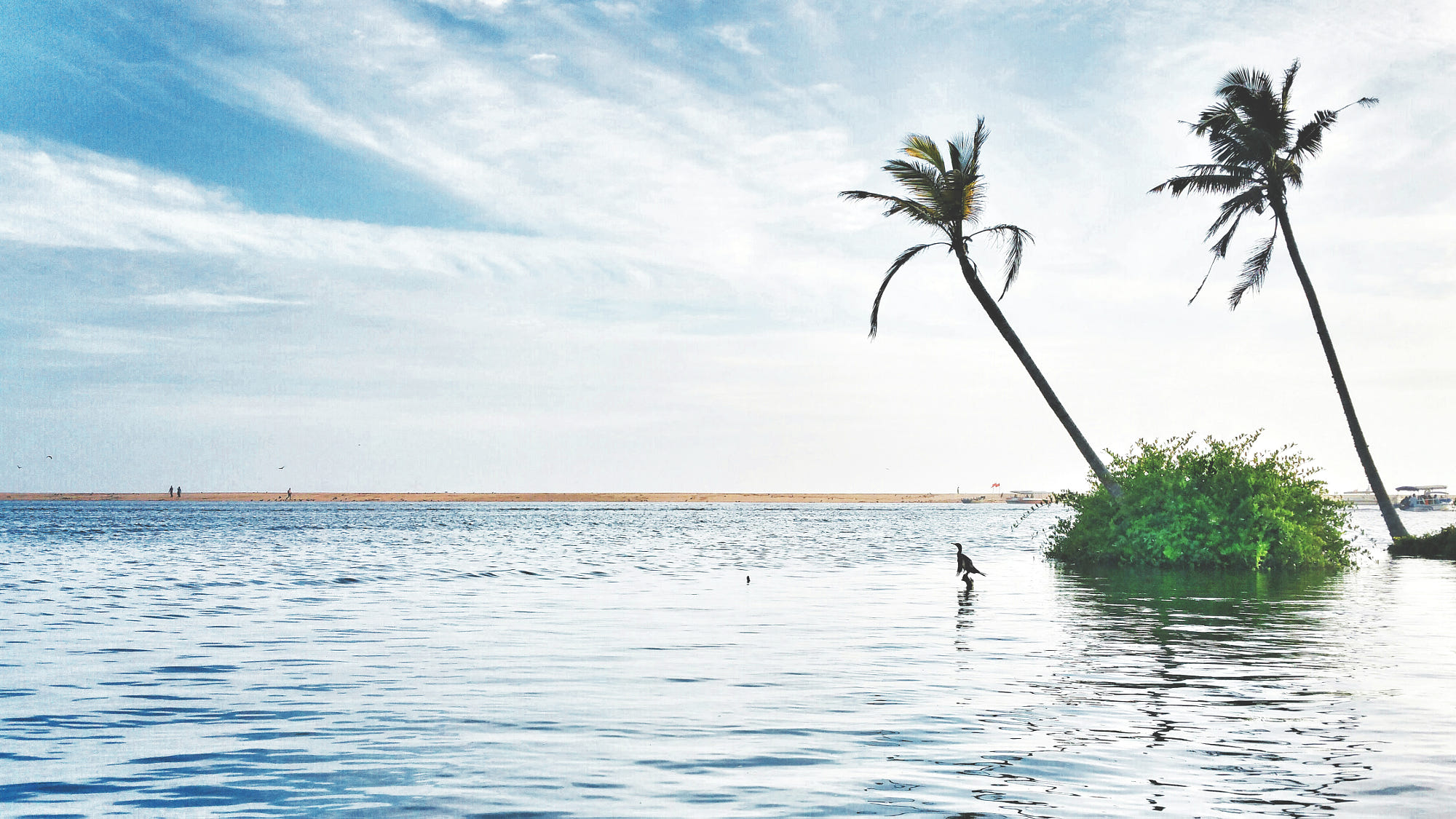
A Dictionary of the Bible by Sir William Smith, published in 1863, notes the Hebrew word for parrot Thukki, derived from the Classical Tamil for peacock Thogkai and Sinhalese "tokei", joins other Classical Tamil words for ivory, cotton-cloth and apes preserved in the Hebrew Bible. This theory of Ophir's location in Uvari in Tamil Nadu is further supported by other historians.Encyclopædia Britannica, Ninth Edition, Volume I Almug Tree Almunecar→
ALMUG or ALGUM TREE. The Hebrew words Almuggim or Algummim are translated Almug or Algum trees in our version of the Bible (see 1 Kings x. 11, 12; 2 Chron. ii. 8, and ix. 10, 11). The wood of the tree was very precious, and was brought from Ophir (probably some part of India), along with gold and precious stones, by Hiram, and was used in the formation of pillars for the temple at Jerusalem, and for the king's house; also for the inlaying of stairs, as well as for harps and psalteries. It is probably the red sandal-wood of India (Pterocarpus santalinus). This tree belongs to the natural order Leguminosæ, sub-order Papilionaceæ. The wood is hard, heavy, close-grained, and of a fine red colour. It is different from the white fragrant sandal-wood, which is the produce of Santalum album, a tree belonging to a distinct natural order. Also see notes by George Menachery in the St. Thomas Christian Encyclopaedia of India, Vol. 2 (1973)
The most likely location on the coast of Kerala conjectured to be Ophir is Poovar in Thiruvananthapuram District (though some Indian scholars also suggest Beypore as a possible location).
Earlier in the 19th century, Max Müller and other scholars identified Ophir with Abhira, near the Indus River in modern-day state of Gujarat, India. According to Benjamin Walker Ophir is said to have been a town of the Abhira tribe.
In Jewish tradition, Ophir is often associated with Uvari, a place in the Indian subcontinent, named for one of the sons of Joktan. Ibn Sa'd says in his Kitab at-Tabaqat al-Kabir that the Indians, the Sindhis and the Bindis are the descendants of Yufir (Ophir).

Ryukyu Islands
In Tomo III (1519–1522), pages 112–138, of the book Colección general de documentos relativos a las Islas Filipinas existentes en el Archivo de Indias de Sevilla, found in the General Archive of the Indies in Spain, Document No. 98 describes how to locate the land of Ophir. The navigational guide starts from the Cape of Good Hope in Africa to India, Burma, Sumatra, the Maluku Islands, Borneo, Sulu, China, then finally Ophir, which is the Ryukyu Islands. These directions were misrepresented by Lone District of Santa Rosa Representative Danilo Fernandez in 2023, who suggested Ophir as the desirable name for the Philippines.
Africa
Biblical scholars, archaeologists and others have tried to determine the exact location of Ophir. Vasco da Gama's companion Tomé Lopes reasoned that Ophir would have been the ancient name for Great Zimbabwe in Zimbabwe, the main center of southern African trade in gold in the Renaissance period — though the ruins at Great Zimbabwe are now dated to the medieval era, long after Solomon is said to have lived. The identification of Ophir with Sofala in Mozambique was mentioned by Milton in Paradise Lost (11:399-401), among many other works of literature and science.
Another, more serious, possibility is the African shore of the Red Sea, Gulf of Aden or Somali Sea, with the name perhaps being derived from the ancient city of Opone in modern day Somalia or from Afar people living in the Danakil desert (Ethiopia, Eritrea) between Adulis and Djibouti.
Afri was a Latin name used to refer to the Carthaginians, who dwelt in North Africa, in modern-day Tunisia. This name, that later gave the rich Roman province of Africa and the subsequent medieval Ifriqiya, from which the name of the continent Africa is ultimately derived, seems to have referred to a native Libyan tribe originally, however, see Terence for discussion. The name is usually connected with Phoenician afar, "dust", but a 1981 hypothesis has asserted that it stems from the Berber word ifri (plural ifran) meaning "cave", in reference to cave dwellers. This is proposed to be the origin of Ophir as well.
Mahd adh Dhahab, Arabia
In 1976, the United States Department of Interior announced that a team formed by the United States Geological Survey together with experts from Saudi Arabia believes it has "a fairly airtight case” that Mahd adh Dhahab, or Cradle of Gold, in Saudi Arabia is the biblical Ophir. As evidence, the team states that "there are huge quantities of waste rock left behind by ancient miners, approximately a million tons, and that it has an average gold content of sixteenths of an ounce per ton, indicating that the mined ore must have been richer. From sampling old slopes and from production figures during the 1939 to 1954 period when the mine was reactivated to extract gold and silver, the geological survey scientists estimated that in biblical times much gold must have been found at or near the surface." Moreover, Mahd adh Dhahab is "within range of Israel's transport capability," and it "could easily have been known to Solomon or his advisers because it lies on a north‐south trade route that has run to Aqaba for some 4,000 years." Their conclusion is that "Mand adh Dhahab [sic] could have produced 34 tons of gold in ancient times and was the biblical Ophir."
Inspiration or named after
Americas
In a letter written in May 1500, Peter Martyr claimed that Christopher Columbus identified Hispaniola with Ophir.
The theologian Benito Arias Montano (1571) proposed finding Ophir in the name of Peru, reasoning that the native Peruvians were thus descendants of Ophir and Shem.
The California Gold Rush boomtown, Ophir, was renamed after "the biblical source of Solomon's treasure."
Ophir, Oregon, is an unincorporated community on the coast in Curry County.
Australia and New Zealaand
The site of the discovery of the first payable gold deposit in Australia is known as Ophir, as is gold-mining settlement of Ophir, in Otago, New Zealand.
Solomon Islands
After their discovery by Europeans in 1568 by Spanish navigator Álvaro de Mendaña, the Solomon Islands were subsequently referred to as Islas Salomón (Solomon Islands) by others following reports of his voyage optimistically conflated with stories of King Solomon, believing them to be Ophir.
Mars
Ophir Chasma, named after the biblical Ophir, is a canyon making up part of the Valles Marineris canyon system on Mars.
Notes
References
Bibliography
- (fr) Quatremère (1861), Mémoire sur le pays d’Ophir, in Mélanges d'histoire, Ducrocq, Paris, p. 234 (read @ Archive). For many references and a comprehensive outline of the products exported from Muziris, Ariake &c. cf. George Menachery ed. The St. Thomas Christian Encyclopaedia of India, 1973, 1982, 2009.
References
- [http://dictionary.reference.com/browse/ophir "Ophir"]. ''[[Random House Webster's Unabridged Dictionary]]''.
- Maisler, B., ''Two Hebrew Ostraca from Tell Qasîle'', Journal of Near Eastern Studies, Vol. 10, No. 4 (Oct., 1951), p. 265 [https://www.jstor.org/stable/542173]
- Boardman, John, ''The Prehistory of the Balkans: The Middle East and the Aegean World, Tenth to Eighth Centuries B.C., Part 1'', Cambridge University Press, 1982, p. 480 [https://books.google.com/books?id=vXljf8JqmkoC&pg=PA480]
- Kitchen, Kenneth A.; Handy, Lowell K. (ed.), ''The Age of Solomon: Scholarship at the Turn of the Millennium'', BRILL 1997, p. 144 [https://books.google.com/books?id=gam10TAOZusC&pg=PA144]
- Badge, William. (1927). "The Book of The Cave of Treasures by Ephrem the Syrian: Translated from the Syriac Text of The British Museum". The Religious Tract Society.
- "Antiquities of the Jews".
- (Aug 9, 2022). "Gold Prospecting Mapping in the Peninsular Malaysia Gold Belts". Pure and Applied Geophysics.
- Drakard, Jane. (1999). "A Kingdom of Words: Language and Power in Sumatra". Oxford University Press.
- "Bible".
- "Bible".
- Zainal-'Abidin bin Ahmad. (1951). "Some Malay Legendary Tales". Journal of the Malayan Branch of the Royal Asiatic Society.
- (1862). "The Malayan Peninsula from a Compilation by T Morriot".
- Solomon Skoss (ed.), ''The Hebrew-Arabic Dictionary of the Bible, Known as
Kitāb Jāmiʿ al-Alfāẓ(Agron) of David ben Abraham al-Fasi'', Yale University Press: New Haven 1936, vol. 1, p. 46 (Hebrew) - Smith, William, ''A dictionary of the Bible'', Hurd and Houghton, 1863 (1870), pp.1441
- Ramaswami, Sastri, ''The Tamils and their culture'', Annamalai University, 1967, pp.16
- Gregory, James, ''Tamil lexicography'', M. Niemeyer, 1991, pp.10
- Fernandes, Edna, ''The last Jews of Kerala'', Portobello, 2008, pp.98
- Menon, A. Sreedhara. (1967). "A Survey of Kerala History". Sahitya Pravarthaka Co-operative Society [Sales Department]; National Book Stall.
- Aiyangar, Sakkottai Krishnaswami. (2004). "Ancient India: Collected Essays on the Literary and Political History of Southern India". Asian Educational Services.
- Walker, Benjamin. (1968). "Hindu World: An Encyclopedic Survey of Hinduism, Volume 2". Allen & Unwin.
- Ben Isaiah, N.. (1983). "Sefer Me'or ha-Afelah". Mechon Moshe.
- Sunil Sharma, ''Mughal Arcadia: Persian Literature in an Indian Court'', [[Harvard University Press]]: Cambridge 2017, p. [https://books.google.com/books?id=qaA4DwAAQBAJ&dq=first+clime,+second+clime,+third+and+fourth+climes&pg=PA66 66]
- [[Josephus]], ''[[Antiquities of the Jews]]'' (Book 8, chapter 6, §4), s.v. ''Aurea Chersonesus''
- "Soebratie.nl - soebratie Resources and Information".
- Compañía General de Tabacos de Filipinas. "Colección general de documentos relativos a las Islas Filipinas existentes en el Archivo de Indias de Sevilla".
- De Leon, Dwight. (1 August 2023). "In lengthy speech, congressman rambles about theory on ancient Philippines". Rappler.
- (2017-08-15). "Names of countries". Michel Desfayes.
- The Berbers, by Geo. Babington Michell, p 161, 1903, Journal of the Royal African Society [https://www.jstor.org/pss/714549 book on ligne]
- (24 May 1976). "Solomon's Mine Believed Found". The New York Times.
- De orbe novo decades
- (2003). "Sacred Geography, Antiquarianism and Visual Erudition: Benito Arias Montano and the Maps in the Antwerp Polyglot Bible". Imago Mundi.
- "OPHIR".
- "1 Kings 10:11 (The fleet of Hiram that brought gold from Ophir also brought from Ophir a great cargo of almug wood and precious stones.".
- "Alvaro de Mendaña de Neira, 1542?–1595". Princeton University Library.
- (27 April 1978). "Lord GORONWY-ROBERTS, speaking in the House of Lords, HL Deb 27 April 1978 vol 390 cc2003-19". [[Hansard.
- HOGBIN, H. In, ''Experiments in Civilization: The Effects of European Culture on a Native Community of the Solomon Islands'', New York: Schocken Books, 1970
This article was imported from Wikipedia and is available under the Creative Commons Attribution-ShareAlike 4.0 License. Content has been adapted to SurfDoc format. Original contributors can be found on the article history page.
Ask Mako anything about Ophir — get instant answers, deeper analysis, and related topics.
Research with MakoFree with your Surf account
Create a free account to save articles, ask Mako questions, and organize your research.
Sign up freeThis content may have been generated or modified by AI. CloudSurf Software LLC is not responsible for the accuracy, completeness, or reliability of AI-generated content. Always verify important information from primary sources.
Report