From Surf Wiki (app.surf) — the open knowledge base
Operation Hiram
Battle of the 1948 Arab–Israeli War

Battle of the 1948 Arab–Israeli War
| Field | Value | |
|---|---|---|
| image | Saasaa 1948.jpg | |
| image_size | 250px | |
| caption | IDF soldiers in Sa'sa', 30 October 1948 | |
| conflict | Operation Hiram | |
| partof | the 1948 Arab–Israeli War | |
| date | 29 October 1948 – 31 October 1948 | |
| place | Upper Galilee, Mandatory Palestine and Southern Lebanon | |
| result | Israeli victory | |
| combatant1 | Israel | |
| combatant2 | [[File:Arab Liberation Army (bw).svg | 23px]] Arab Liberation Army |
| Syria Syria | ||
| Lebanon | ||
| commander1 | Israel Moshe Carmel | |
| commander2 | [[File:Arab Liberation Army (bw).svg | 23px]] Fawzi al-Qawuqji |
| strength1 | 6,000 | |
| strength2 | 2,000–4,000 | |
| casualties1 | Light | |
| casualties2 | 400 killed | |
| 550 captured | ||
| casualties3 | 50,000 Palestinian refugees | |
| territory | Upper Galilee incorporated into Israeli territory |
- Israel captures the Upper Galilee and part of Southern Lebanon
- 7th Armoured Brigade
- Carmeli Brigade
- Golani Brigade
- Oded Brigade
- Circassian Unit
- [[File:Flag of Druze.svg|22px|border]] Druze Unit Syria Syria Lebanon 550 captured
Operation Hiram was a military operation conducted by the Israel Defense Forces (IDF) during the 1948 Arab–Israeli War. It was led by General Moshe Carmel, and aimed at capturing the Upper Galilee region from the Arab Liberation Army (ALA) forces led by Fawzi al-Qawuqji and a Syrian battalion. The operation, which lasted 60 hours (29–31 October), ended just before the ceasefire with the neighboring Arab countries went into effect.
As a result of the operation, the Upper Galilee, originally slated by the United Nations partition plan to be part of an Arab state, would be controlled by the newly formed state of Israel, and more than 50,000 new Palestinian refugees were expelled from their homes.
Overview
On 18 July, the second truce of the conflict went into effect. On 26 September 1948, David Ben-Gurion told his cabinet that if fighting should be renewed in the north, then the Galilee would become "clean" [naki] and "empty" [reik] of Arabs, and implied that he had been assured of this by his generals.


Before dawn on 22 October ALA violated the truce when it stormed the IDF hilltop position of Sheikh Abd, overlooking kibbutz Manara from the north. During 24–25 October, ALA troops regularly sniped at Manara and at traffic along the main road. Fawzi al-Qawuqji demanded that Israel evacuate neighboring kibbutz Yiftah and thin out its forces in Manara. Israel, in turn, demanded the ALA's withdrawal from the captured positions and, after a "no" from Qawuqji, informed the United Nations that it felt free to do as it pleased.
The operation was launched on the night of 28–29 October 1948, fielding four IDF brigades, the Seventh, Carmeli Brigade, Golani, and the Oded Brigade. The operational order was "to destroy the enemy in the central Galilee "pocket", to occupy the whole of the Galilee and to establish the defense line on the country´s northern border." On 29 October, Yosef Weitz, learning about the start of the operation, sent Yigael Yadin a note urging that the army should expel the "refugees" from the newly conquered areas.
The Ground offensive was preceded by bombing raids targeting Tarshiha, Jish and Sa'sa from 22 October, using Boeing B-17 Flying Fortresses and Douglas C-47 Skytrains (converted for bombing role). The heaviest night of bombing was 29/30 October when 13 missions dropped 21 tons of bombs on the seven villages. The bombardment of Tarshiha triggered the mass flight after 24 of the inhabitants were killed and approximately 60 were buried under rubble.
The initial thrust was carried out by the Seventh Brigade advancing from Safad. The Seventh Brigade occupied Qaddita on 29 October, Meirun and then Safsaf and Jish. In the 79th Battalion's report, the battles for Safsaf and Jish were described as "difficult" and "cruel" (achzari). One IDF report said "150–200" Arabs, "including a number of civilians" died in the battle for Jish. Other accounts report that 200 bodies were found around Jish and 80 at Meirum.
From Jish, the 72nd and 79th battalions then turned west to take Sa'sa. After taking Sa'sa the Israeli forces then turned northwest taking Kfar Birem, Saliha and by the afternoon of 30 October were at al Malikiya.
Simultaneously, the Golani Brigade engaged in diversionary tactics in the direction of the village of Illaboun. The Carmeli Brigade, which was assigned to counter attacks from Syria and Lebanon, crossed the border into Lebanon, captured 15 villages, and reached the Litani River. General Carmel had received direct permission from Prime Minister Ben-Gurion to enter Lebanon, but only as far as the river. In the final hours of the offensive Carmel's second-in-command, General Makleff, met Ben-Gurion in Tiberias and requested permission to advance and occupy Beirut which he claimed could be reached in twelve hours. Fearing international condemnation, Ben-Gurion refrained from taking action, as Lebanon was neutral in the conflict.
Ceasefire was scheduled to commence at 11:00 hours, 31 October 1948. The same day, at 7:30 in the morning, Major General Moshe Carmel ordered his brigades and district commanders "to continue the clearing operations inside the Galilee". In a cable dated 10:00 hours the same day Carmel ordered his brigades and district commanders: "Do all in your power for a quick and immediate clearing [tihur] of the conquered areas of all the hostile elements in line with the orders that have been issued[.] The inhabitants of the areas conquered should be assisted to leave." This order was apparently issued after Carmel had met with Ben-Gurion the same day.

On 31 October and 1 November 1948 the Hula massacre took place at the Lebanese village of Hula (Hule). The village had been captured on 24 October by the Carmeli Brigade without any resistance at all. Between 35 and 58 captured men were reportedly shot down in a house which was later blown up on top of them.
At the end of this lightning attack, Israeli forces reached the Hiram Junction, north of Safed. The siege of Manara was lifted, Qawuqji's army fled to Lebanon, and the roads crossing the Upper Galilee were secured. With the Galilee under Israeli control, the IDF established a defensive line along the Litani before withdrawing to the Lebanese border under the terms of the 1949 Armistice Agreements.
The Israeli Air Force bombings caused considerable damage to the villages in the area. Ilan Pappe gives the example of the four villages: Rama, Suhmata, Malkiyya and Kfar Bir'im. He states that out of the four 'the only village to remain intact was Rama. The other three were occupied and destroyed'. Very few villagers were allowed to stay in their homes and many were imprisoned or expelled to Lebanon and elsewhere. Ilan Pappe claims that the 'Hebrew noun tihur (cleansing) assumed new meanings' during this time period. He argues that although 'it still described, as before, the total expulsion and destruction of a village, it could now also represent other activities, such as selective search and expulsion operations'.
One Israeli estimate gives a total of 400 Arabs killed during the offensive and 550 taken prisoner.
The name is a reference to Hiram I, the Biblical king of Tyre. He was instrumental in the construction of the First Temple of Jerusalem.
Massacres
Main article: Killings and massacres during the 1948 Palestine War
According to Israeli historian Benny Morris, the atrocities committed during Operation Hiram clearly embarrassed the IDF and Israeli officials who were soon forced to respond to Arab and United Nations charges in various forums. The main official Israeli response was a flat or qualified denial that atrocities had taken place.
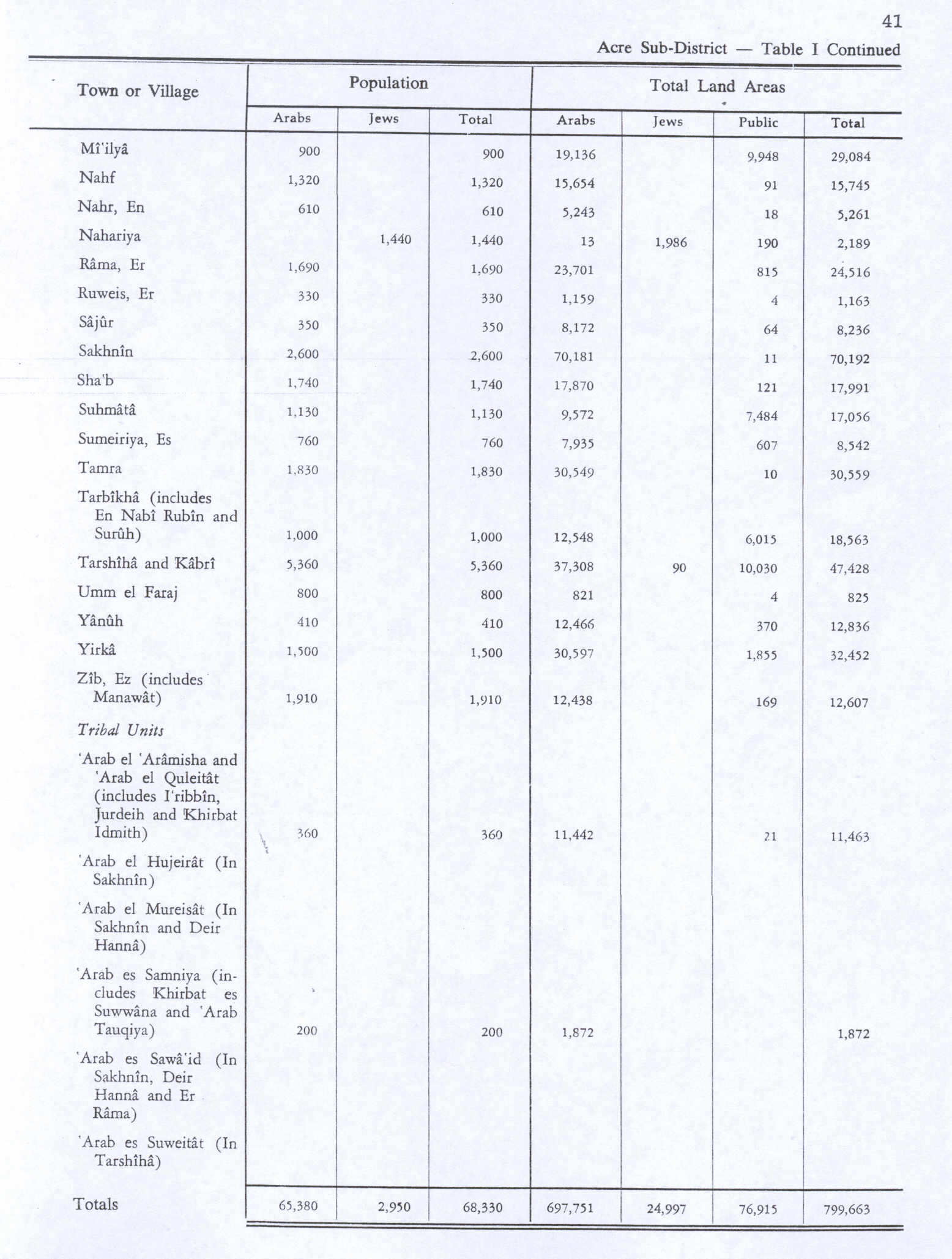
Arab communities captured in Operation Hiram
| Name | Population | ||||||||
|---|---|---|---|---|---|---|---|---|---|
| 1945 census | Dates | Resistance | Brigade | Notes | |||||
| Al-Nabi Rubin | format=JPG | website=users.cecs.anu.edu.au | access-date=2023-09-15 | title=Al-Nabi Rubin | url=http://users.cecs.anu.edu.au/~bdm/yabber/census/VSpages/VS1945_p05.jpg}} | Early October | none | n/a | Hamlet depopulated and destroyed |
| Mirun | 290 | 29 October | militia 'company' | 7th Brigade | |||||
| Carmeli Brigade | Village depopulated and destroyed. 80 defenders killed. | ||||||||
| Safsaf | 910 | 29 October | ALA 2nd Battalion | 7th Brigade | see Safsaf massacre. Village depopulated and destroyed. | ||||
| Jish | 1,090 | 29 October | Syrian battalion | 7th Brigade | 10 POWs + "a number of" civilians executed. Inhabitants, majority Muslim, expelled. The town later re-populated with Christian refugees from neighbouring villages. 200 defenders killed. | ||||
| Tarshiha | 3,840 | 29 October | Villagers and members of ALA | Oded Brigade | By December around 700 villagers had returned to their homes, over 100 of whom were deported January 1949. Buildings re-populated with Jewish immigrants. | ||||
| Sa'sa | 1,130 | 30 October | none | 7th Brigade | |||||
| Druze unit | Alleged killings of civilians. However, the relevant files remain closed to historians. Town depopulated and destroyed. | ||||||||
| Suhmata | 1,130 | 30 October | none | Golani Brigade | Village depopulated and destroyed. | ||||
| Dayr al-Qassi | 2,300 including Fassuta and al-Mansura | 30 October | none | n/a | Town depopulated and destroyed. | ||||
| Dayshum | 590 | 30 October | some villagers | 7th Brigade | Village depopulated and destroyed. | ||||
| Eilabun | 550 | 30 October | ALA force | Golani | see Eilabun massacre. Town's population expelled but negotiated permission to return during summer 1949. | ||||
| Fara | 320 | 30 October | N/A | 7th Brigade | Village depopulated and destroyed. | ||||
| al-Farradiyya | 670 | 30 October | N/A | Golani Brigade | Village depopulated and destroyed. | ||||
| Fassuta | 2,300 including Dayr al-Qasi and al-Mansura | 30 October | Population allowed to remain in their homes, | ||||||
| Ghabbatiyya | 60 | 30 October | Arab Liberation Army | N/A | Hamlet depopulated and destroyed. | ||||
| Kafr 'Inan | 360 | 30 October | none | Golani Brigade | Village depopulated and destroyed | ||||
| Marus | 80 | 30 October | none | 7th Brigade | Village depopulated and destroyed. | ||||
| al Ras al Ahmar | 620 | 30 October | 'empty' | 7th Brigade | Village depopulated and destroyed. | ||||
| Sabalan, Safad | 70 | 30 October | N/A | Golani Brigade, 1st Battalion | Hamlet depopulated and destroyed. | ||||
| Saliha | 1,070 | 30 October | none | 7th Brigade | Documented 60–94 killed. Village depopulated and destroyed. | ||||
| Kafr Bir'im | 710 | 31 October | 'surrendered' | N/A | Village depopulated and destroyed. | ||||
| Arab al-Samniyya | 200 | 30–31 October | none | 7th, Carmeli, Golani, Oded | Village depopulated and destroyed. | ||||
| Iqrit | 490 | 31 October | none | Oded Brigade | Village depopulated and destroyed. | ||||
| Iribbin, Khirbat | 360 | 31 October | none | Oded Brigade | Village depopulated and destroyed. | ||||
| Hula | 31 October | Village in Lebanon. See Hula massacre | |||||||
| Mi'ilya | 900 | 31 October | On 1 November the local IDF commander allowed the villagers to return to their homes. In March 1949 25 persons deported for passing information to the enemy. | ||||||
| Al-Mansura, Acre | 2,300 including Fassuta and Dayr al-Qasi | 29–31 October | n/a | n/a | Town depopulated and destroyed. | ||||
| Hurfeish | Druze | 29–31 October | Town's population allowed to remain in their homes. | ||||||
| Tarbikha | 1,000 | 29–31 October | none | Oded Brigade | Town depopulated and destroyed. | ||||
| Suruh | 1,000 | 29–31 October | none | n/a | Village depopulated and destroyed. | ||||
| Al Bi'na | 830 | 29–31 October | n/a | Some villagers remained after the war. Town exists today. | |||||
| Kuakab | 490 | 29–31 October | n/a | Villagers surrender and remained after the war. Town exists today. | |||||
| Kafr Manda | 1,260 | 29–31 October | n/a | Some villagers remained after the war. Town exists today. | |||||
| Sakhnin | 1,891 (1931 census) | 29–31 October | n/a | Some villagers remained after the war. Town exists today. | |||||
| Arraba | 1,800 | 29–31 October | n/a | Some villagers remained after the war. Town exists today. | |||||
| Deir Hanna | 750 | 29–31 October | n/a | Some villagers remained after the war. Town exists today. | |||||
| Maghar | 2,140 | 29–31 October | n/a | Some inhabitants remained after the war. Town exists today. | |||||
| Rihaniya | n/a Circassian | 29–31 October | n/a | Some villagers remained after the war. Town exists today. | |||||
| Alma | 950 | 29–31 October | n/a | Villagers expelled and buildings demolished. |
Brigades participating in Operation Hiram
- Carmeli Brigade
- Golani Brigade
- Sheva' Brigade
- Oded Brigade
References
Bibliography
- Walid Khalidi (editor), All that remains: the Palestinian villages occupied and depopulated by Israel in 1948. (1992). Institute of Palestine Studies. .
- Benvenisti, Meron (2000). Sacred Landscape: The Buried History of the Holy Land Since 1948. University of California Press. ,
- Morris, Benny (2004). The Birth of the Palestinian Refugee Problem Revisited Cambridge: Cambridge University Press.
- Nazzal, Nafez (1978): The Palestinian Exodus from Galilee 1948, The Institute for Palestine Studies, (Safsaf, p. 93–96, 107)
- Ilan Pappé (2006) The Ethnic Cleansing of Palestine Oneworld publications
References
- [[Chaim Herzog. Herzog, Chaim]] (1982) ''The Arab-Israeli Wars. War and Peace in the Middle East''. Arms and Armour Press. {{ISBN. 0-85368-367-0. p. 88
- [[Edgar O'Ballance. O'Ballance, Edgar]] (1956) ''The Arab-Israeli War. 1948''. Faber & Faber, London. p. 191. ALA
- O'Balance. p. 191
- [[Efraim Karsh. Karsh]] (2002), p. 68
- Herzog. p. 91
- Herzog. pp. 88–91
- O'Ballance. pp. 184–92
- [http://ipsnewsite.mysite4now.com/enakba/military/Morris,%20Operation%20Hiram%20Revisited_A%20Correction.pdf Institute for Palestine Studies]{{dead link. (March 2018)
- [[Aharon Cohen. Cohen, Aharon]] (1970) ''Israel and the Arab World''. W.H. Allen. {{ISBN. 0-491-00003-0. p. 439
- Morris (2004), p. 473
- Morris (2004), p. 463
- Benny Morris – 1948: a history of the first Arab-Israeli war. Yale University Press, p. 339
- Kurzman, Dan (1970) ''Genesis 1948. The First Arab-Israeli War.'' An Nal Book, New York. Library of Congress number 77-96925. p. 611 Kurzman describes the operation as a "tank led blitzkrieg attack" which began with air raids.
- Morris (2004), pp. 463–64
- [[Yigal Allon. Allon, Yigal]] (1970) ''Shield of David. The Story of Israel's Armed Forces.'' Weidenfeld & Nicolson. {{ISBN. 978-0297001331. p. 222
- O'Ballance. p. 188. "ample close air support."
- Morris (2004) p. 473
- Morris (2004) pp. 473–74
- Kurzman. p. 611
- O'Balance. p. 189. "Syrians".
- Herzog, p. 90
- Morris (2004) p. 474
- Cohen. p. 439. But only 14 villages captured.
- [[Yigal Allon. Allon, Yigal]] (1970) ''The Making of Israel's Army''. Vallentine, Mitchell: London. {{ISBN. 0-853-03027-8. p. 40
- Allon, ''Shield of David''. p. 222
- Kurzman. p. 684
- Morris (2004), p. 464
- Morris (2004), pp. 481, 487, 501, 502.
- Pappe (2006), p. 181
- Pappe (2006), p. 182
- [[Chaim Herzog. Herzog, Chaim]] (1982) ''The Arab-Israeli Wars. War and Peace in the Middle East''. Arms and Armour Press. {{ISBN. 0-85368-367-0. p. 91
- For examples, see Spector to Baruck, 12 Nov. 1948, in which the IDF liaison officer, Spector, reports to his commander: "In relation to the 13 killed [in the [[Eilabun massacre]] ], I proved {{sic that the army was not in the village at the time...." Cited in Morris (2004), pp. 481, 501
- 'All That Remains'. {{ISBN. 0-88728-224-5. (1992).
- "Al-Nabi Rubin".
- "Al-Nabi Rubin".
- Herzog. p. 90
- Morris (2004), p. 481
- "Jish".
- Morris (2004), pp. 481, 501, 503.
- "Eilabun".
- Morris, p. 487



This article was imported from Wikipedia and is available under the Creative Commons Attribution-ShareAlike 4.0 License. Content has been adapted to SurfDoc format. Original contributors can be found on the article history page.
Ask Mako anything about Operation Hiram — get instant answers, deeper analysis, and related topics.
Research with MakoFree with your Surf account
Create a free account to save articles, ask Mako questions, and organize your research.
Sign up freeThis content may have been generated or modified by AI. CloudSurf Software LLC is not responsible for the accuracy, completeness, or reliability of AI-generated content. Always verify important information from primary sources.
Report