From Surf Wiki (app.surf) — the open knowledge base
Operation Crossbow
World War II Allied operations against German long-range weapons
World War II Allied operations against German long-range weapons
| Field | Value | |||||||||||||||
|---|---|---|---|---|---|---|---|---|---|---|---|---|---|---|---|---|
| conflict | World War II | |||||||||||||||
| Operation Crossbow | ||||||||||||||||
| partof | Strategic bombing campaigns in Europe | |||||||||||||||
| image | La Coupole, Helfaut-Wizernes.jpg | |||||||||||||||
| image_size | 300px | |||||||||||||||
| caption | The La Coupole V-2 launch site at Wizernes in France was destroyed by bombing before it could be brought into use | |||||||||||||||
| date | August 1943 – 2 May 1945 | |||||||||||||||
| place | Germany, France, Belgium, Netherlands | |||||||||||||||
| result | Delayed use of V-weapons but "limited effect" on production. Major diversion of allied resources | |||||||||||||||
| combatant1 | United Kingdom | |||||||||||||||
| United States | ||||||||||||||||
| Canada | ||||||||||||||||
| combatant2 | Nazi Germany | |||||||||||||||
| strength1 | Sorties/bomb tonnage: | |||||||||||||||
| Total: 68,913/122,133<ref name | Krause | |||||||||||||||
| USAAF: 17,211/30,350<ref name | AllWorldWars / | |||||||||||||||
| strength2 | V-1 launches: 9,251 | |||||||||||||||
| (8000 targeting London,<ref>{{cite book | last1 | von Braun | first1=Wernher (Estate of) | author-link=Wernher von Braun | author2=Ordway, Frederick I. III | author2-link=Frederick I. Ordway III | author3=Dooling, David Jr. | name-list-style=amp | title=Space Travel: A History | location=New York | publisher=Harper & Row | year=1985 | edition=1st | orig-date=1975 | isbn=0-06-181898-4 | page=105}} 2,448 targetting Antwerp) |
| casualties1 | Airmen/aircraft: | |||||||||||||||
| * more than 700 killed /at least 154 aircraft lost<ref name | Russell | |||||||||||||||
| * V-2: 2,754/6,523<ref name | Charman | |||||||||||||||
| French civilians: 3,600 killed, about 10,000 wounded by Allied bombing{{sfn | Zaloga | 2018 | p | 92}} | ||||||||||||
| casualties2 | V-1: 4,261 destroyed by AA guns (1,878) | |||||||||||||||
| barrage balloons (231) | ||||||||||||||||
| and fighters (1,846) | ||||||||||||||||
| V-2: 51/117 killed/wounded,<br />48/69 rockets/vehicles damaged{{sfn | Collier | 1976 | p | 135}} |
Operation Crossbow United States Canada
Total: 68,913/122,133
RAF: 19,584/72,141
USAAF: 17,211/30,350 (8000 targeting London, 2,448 targetting Antwerp)
V-2 launches: 1664 [[File:Flag of Belgium.svg|12px]] 1402 [[File:Flag of the United Kingdom.svg|15px]] 76 [[File:Flag of France.svg|12px]] 19 [[File:Flag of the Netherlands.svg|12px]] 11 [[File:Flag of Nazi Germany.svg|12px]] (Ludendorff Bridge)
- more than 700 killed /at least 154 aircraft lost British civilians killed/seriously injured:
- V-1: 6,184/17,981
- V-2: 2,754/6,523 French civilians: 3,600 killed, about 10,000 wounded by Allied bombing barrage balloons (231) and fighters (1,846) V-2: 51/117 killed/wounded, 48/69 rockets/vehicles damaged Crossbow was the code name in World War II for Anglo-American operations against the German long range reprisal weapons (V-weapons) programme. The primary V-weapons were the V-1 flying bomb and V-2 rocket, which were launched against Britain from 1944 to 1945 and used against continental European targets as well.
Initial intelligence investigations in 1943 into the progress of German long range weapons were carried out under the code name Bodyline. On 15 November, a larger operation was set up under the name Crossbow. Post-war, Crossbow operations became known as "Operation Crossbow" particularly following the 1965 film of the same name.
Crossbow included strategic operations against research and development of the weapons, their manufacture, transportation and attacks on their launch site, and fighter intercepts against missiles in flight. At one point, the British government, in near panic, demanded that upwards of 40% of bomber sorties be targeted against the launch sites.
The Crossbow attacks were not very successful, and every raid carried out against a V-1 or V-2 reduced the assets available for targets in the Third Reich. The diversion of Allied resources from other targets represented a major success for Hitler.
Tactical bombing
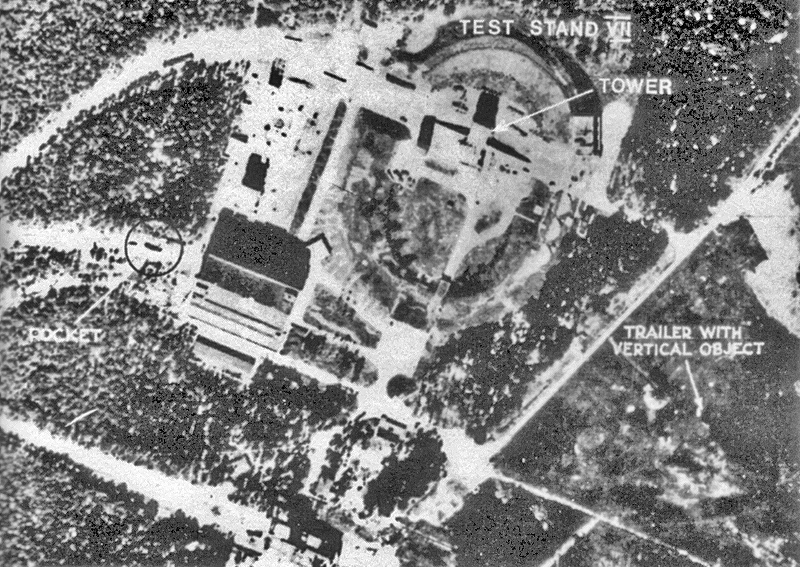
In May 1943 Allied surveillance observed the construction of the first of eleven large sites in northern France for secret German weapons, including six for the V-2 rocket. In November it discovered the first of 96 "ski sites" for the V-1 flying bomb.
Officials debated the extent of the German weapons' danger; some viewed the sites as decoys to divert Allied bombers, while others feared chemical or biological warheads. The Allies received detailed information about V-1, V-2 and Peenemünde research site from the Austrian resistance group around the priest Heinrich Maier. This also included the production sites such as the Raxwerke. When reconnaissance and intelligence information regarding the V-2 became convincing, the War Cabinet Defence Committee (Operations) directed the campaign's first planned raid (the Operation Hydra attack on Peenemünde in August 1943).
The works in France were the German "Site System 1" which was to be 96 fixed launching sites with storage bunkers (the 'ski' shapes) and outdoor ramps. Site System 2 (a reserve) and System 3 were planned. There were also four larger Wasserwerk ("Waterworks") bunker sites: Siracourt, Lottinghen, Nardouet, and Brécourt. Intended for use in January 1944 actual progress in construction, training and supply of V-1s was behind when inspected by German high command in October. French reports and detailed aerial reconnaissance linked with reconnaissance of Peenemünde indicated possibility of 2,000 missiles per day against England. Over half the sites were completed by December but Allied intelligence had identified all 96 by end of January. The first bombing of sites was by USAAF Martin B-26 Marauder medium bombers in early December with RAF Bomber Command starting night-time attacks shortly after but the greater inaccuracy of night bombing against small targets led the Joint Chiefs of Staff to use US heavy bombers in daylight. By the end of December 54 sites had been attacked and seven were destroyed. The bombing continued – by end of March 9 destroyed and 35 seriously damaged, by May 24 destroyed and 58 seriously damaged.
Following Operation Hydra, a few Crossbow attacks were conducted on the "Heavy Crossbow" bunkers of Watten (V-2) and Mimoyecques (actually V-3 rocket cannon) from August and November 1943 respectively. "Crossbow Operations Against Ski Sites" began on 5 December with the "Noball" code name used for the targets (e.g., 'Noball 27' was the site, "Noball No. 93" was in the Cherbourg area, "Noball No. 107" was at Grand Parc, and "Noball V1 site No.147" was at Ligescourt).
The US formed its own Crossbow Committee under General Stephen Henry (New Developments Division) on 29 December 1943, and the US subsequently developed bombing techniques for ski sites in February/March 1944 at the Air Corps Proving Ground.
A mid-1944 plan for US Marine Corps aircraft to attack V-1 launch sites from aircraft carriers fell victim to inter-service rivalry – being opposed by the Army. V-2 facilities were also bombed in 1944, including smaller facilities such as V-2 storage depots and liquid oxygen plants, such as the Mery-sur-Oise V-2 storage depot on 4 August 1944, and, by the Eighth Air Force, which bombed five cryogenic liquid oxygen plants in Belgium on 25 August 1944, but aborted the next days attack on plants "at La Louviere, Torte and Willebroeck, Belgium" due to cloud.
Priority

At the request of the British War Cabinet, on 19 April 1944, General Eisenhower directed Crossbow attacks to have absolute priority over all other air operations, including "wearing down German industry" and civilian morale "for the time being", which he confirmed after the V-1 assault began on the night of 12/13 June 1944, saying to Arthur Tedder "with respect to Crossbow targets, these targets are to take first priority over everything except the urgent requirements of the Overlord [invasion of Normandy] battle; this priority to obtain until we can be certain that we have definitely gotten the upper hand of this particular business".
The launches surprised the Allies, who had believed that the earlier attacks on the sites had eliminated the danger. The British, who had not expected German bombing of Britain to resume so late in the war, were especially upset. Some suggested using gas on the launch sites, or even executing German civilians as punishment.
Carl Spaatz, commander of US Strategic Air Forces in Europe (USSTAF), responded on 28 June to "complain that Crossbow was a 'diversion' from the main task of wearing down the Luftwaffe and bombing German industry" for the Combined Bomber Offensive, and to recommend instead that Crossbow be a secondary priority since "days of bad weather over Germany's industrial targets would still allow enough weight of attack for the rocket sites and the lesser tactical crises". By 10 July, Tedder had published a list of Crossbow targets which assigned 30 to RAF Bomber Command, six to the tactical Allied Expeditionary Air Force, and 68 to Spaatz's USSTAF; after which Spaatz again complained, so Eisenhower allowed "spare" bombing of non-Crossbow targets: "Instructions for continuing to make Crossbow targets our first priority must stand, but ... when ... the entire strategic forces cannot be used against Crossbow, we should attack – (a) Aircraft industry, (b) Oil, (c) Ball bearing (German): kugellagerwerke, (d) Vehicular production" (Eisenhower, 18 July).
Over a quarter of the Combined Bomber Offensive's tonnage of bombs were used against V-weapon sites in July and August; many of the attacks were ineffective, as they were against unused sites rather than the launchers themselves. Spaatz unsuccessfully proposed that attacks concentrate on the Calais electrical grid, and on gyrocompass factories in Germany and V-weapon storage depots in France. The gyrocompass attacks, along with targeting liquid oxygen tanks (which the Allies knew the V-2 needed), might have been very effective against the missiles. On 25 August 1944, the Joint Crossbow Target Priorities Committee (established 21 July) prepared the "Plan for Attack on the German Rocket Organization When Rocket Attacks Commence"in addition to bombing of storage, liquid-oxygen, and launch sites; the plan included aerial reconnaissance operations. Following the last V-1 launch from France on 1 September 1944, and since the expected V-2 attacks had not begun, Crossbow bombing was suspended on 3 September and the campaign against German oil facilities became the highest priority.
The V-1 threat from occupied France ended on 5 September 1944, when the 3rd Canadian Infantry Division contained the German military units of the Nord-Pas de Calais area, with their surrender following on 30 September.
Resumption
Crossbow bombing resumed after the first V-2 attack and included a large 17 September raid on Dutch targets suspected as bases for Heinkel He 111s, which were air-launching V-1s. Modified V-1s (865 total) were air-launched from 16 September 1944, to 14 January 1945. The British had initially considered that an earlier 18–21 July 1944 effort of 50 air-launched V-1s had been ground-launched from the Low Countries, particularly near Ostend. In addition to air-launched V-1s, launches were from ramps built in the province of South Holland, the Netherlands in 1945.
Allied reconnaissance detected two sites at Vlaardingen and Ypenburg, and along with a third at Delft, they launched 274 V-1s at London from 3–29 March. Only 125 reached the British defences, and only thirteen of those reached the target area. Three additional sites directed their fire on Antwerp. After using medium bombers against V-2 launch site in the Haagse Bos on 3 March, the RAF attacked the V-1 sites in the Netherlands with two squadrons. An RAF Fighter Command unit used Spitfires against Ypenburg on 20 and 23 March, while a RAF Second Tactical Air Force unit used Hawker Typhoons against Vlaardingen on 23 March. Counterattacks on V-1 and V-2 sites in the Netherlands ended on 3 April, and all Crossbow countermeasures ended on 2 May with the end of World War II in Europe.
V-1 defence
Main article: V-1 flying bomb#Countermeasures, Operation Diver, Double Cross System#V-weapons deception
On 2 January 1944, Air Marshal Roderic Hill, Air Officer Commander-in-Chief of Air Defence of Great Britain submitted his plan to deploy 1,332 guns for the defence of London, Bristol and the Solent against the V-1 "Robot Blitz" (the "Diver Operations Room" was located at RAF Biggin Hill). Against V-1s attacks there were belts of select units of Fighter Command (No. 150 Wing RAF) operating high-speed fighters, the anti-aircraft guns of Anti-Aircraft Command, and approximately 1,750 barrage balloons of Balloon Command around London.{{cite journal
"Flabby" was the code name for medium weather-conditions when fighters were allowed to chase flying bombs over the gun-belt to the balloon line, and during Operation Totter, the Royal Observer Corps fired "Snowflake" illuminating rocket flares from the ground to identify V-1 flying bombs to RAF fighters. After the Robot Blitz{{cite journal Despite the defences, by 27 June, "over 100,000 houses had been damaged or destroyed by the V-1 ... and shattered sewage systems threatened serious epidemics unless fixed by winter."
Of the 638 air-launched V-1s that had been observed, guns and fighters brought down 403; 66 fell in the London Civil Defence Region and 169 in other places, including Southampton on 7 July and one as far north as Manchester.
V-2 counter-measures
Main article: V-2 rocket#Countermeasures
The British intelligence services (Secret Intelligence Service and Air Ministry's Scientific Intelligence Office) were monitoring German rocket artillery research and information received by bugging high-ranking German prisoners-of-war increased focus on activities at Peenemunde. In response to discussions by the vice-chiefs of staff on the subject of German long range rocket developments, in April 1943 Duncan Sandys was given the responsibility of investigating how far Germany had progressed. Under the codename Bodyline, investigations by SIS, the Combined Services Detailed Interrogation Centre, and the Photographic Reconnaissance Unit were able to confirm existence of rocketry activities at Peenemunde and Sandys reported his findings to the chiefs of staff that the Germans were developing rockets, were probably well-advanced and countermeasures should be studied
The Bodyline Scientific Committee (19 members, including Duncan Sandys, Edward Victor Appleton, John Cockcroft, Robert Watson-Watt) was formed in September 1943 regarding the suspected V-2 rocket. After the 1944 crash of a test V-2 in Sweden, "transmitters to jam the guidance system of the rocket" were prepared. A British sound-ranging system provided "trajectory [data] from which the general launching area could be determined", and the microphone(s) in East Kent reported the times of the first V-2 strikes on 8 September 1944: 18:40:52 and 18:41:08.
In November 1943, the Bodyline committee handed over the tasks to the Air Ministry as the extent of the issue became clear.
On 21 March 1945, the Pile's plan for the "Engagement of Long Range Rockets with AA Gunfire" which called for anti-aircraft units to fire into a radar-predicted airspace to intercept the V-2 was ready, but the plan was not used due to the danger of shells falling on Greater London.
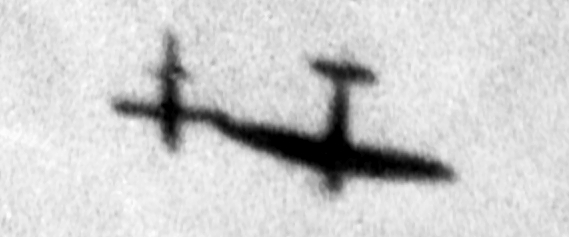
Unlike the V-1, which had a speed similar to the fastest available fighter planes, the velocity and trajectory of a V-2 made aircraft interception an impossibility. Happenstance instances of Allied aircraft encountering launched V-2 rockets include: 29 October 1944, Lieutenants Donald A. Schultz and Charles M. Crane in a Lockheed P-38 Lightning attempted to photograph a launched V-2 above the trees near the River Rhine, 1 January 1945, a 4th Fighter Group pilot aloft over the northern flightpath for attacking elements of five German fighter wings on Unternehmen Bodenplatte that day, observed a V-2 "act up for firing near Lochem ... the rocket was immediately tilted from 85 deg. to 30 deg", and on 14 February 1945, a No. 602 Squadron RAF Spitfire Mk XVI pilot, Raymond Baxter's colleague "Cupid" Love, fired at a V-2 just after launch.
After the last combat V-2 launch on 27 March 1945, the British discontinued their use of radar in the defence region to detect V-2 launches on 13 April.
Named activities
- Bodyline Joint Staff Committee{{cite web | access-date = 9 May 2007 }}
- Diver – a secret British Defence Instruction specified the code name: "Enemy Flying Bombs will be referred to or known as 'Diver' aircraft or pilotless planes" to alert defences of an imminent attack (often called Operation Diver, particularly post-war, without citation).
- Flying Bomb Counter Measures Committee (Duncan Sandys, chairman)
- Fuel Panel of the Special Scientific Committee (Sir Frank Smith, chairman)
- Questionnaire ... to establish the practicability ... of the German Long-Range Rocket (by Frederick Lindemann, 1st Viscount Cherwell)
- Project Danny, a plan to use Marine F4U Corsairs of Marine Air Group 51 to strike V-1 sites with Tiny Tim rockets. The operation was ultimately scrapped under the orders of General Marshall as a result of the intense inter-service rivalry that existed at the time.
Notes
References
Bibliography
- Williams, Allan (2013). Operation Crossbow: The Untold Story of Photographic Intelligence and the Search For Hitler's V Weapons. Random House.
November, December 1943: January, February, March, April, May, June, July, August, September, October, November, December 1944: January, February March, April, May, June (D-Day), July, August, September, October, November, December 1945 January, February, March, April December 1943: January, February, March, April, May, June, July, August, September, October, November, December 1944: January, February, March, April, May, June, July, August, September, October, November, December 1945: January, February, March, April, May, June, July, August, September --
References
- Krause, Merric E. (June 1988). "From theater missile defense to anti-missile offensive actions: A near-term strategic approach for the USAF". [[Air University (United States Air Force)#Advanced Professional Military Education.
- (1985). "Space Travel: A History". Harper & Row.
- Russell, Edward T. (1999). "Leaping the Atlantic Wall: Army Air Forces Campaigns in Western Europe, 1942–1945". United States Air Force History and Museums Program.
- Charman, Terry. "The V Weapons Campaign Against Britain 1944–1945". Imperial War Museum.
- (30 September 1945). "United States Strategic Bombing Survey, Summary Report (European War)".
- Craven and Cate, p540 said the "campaign of the summer of 1944 must be regarded generally as having failed to achieve its objectives...In general, then, the large-scale CROSSBOW operations during the critical period were a failure" but "offered firm evidence that the Allies could respond too generously rather than too niggardly to whatever threats might arise."
- Levine, Alan J.. (1992). "The Strategic Bombing of Germany, 1940–1945". Praeger.
- Hansjakob Stehle "Die Spione aus dem Pfarrhaus (German: The spy from the rectory)" In: Die Zeit, 5 January 1996.
- Christoph Thurner "The CASSIA Spy Ring in World War II Austria: A History of the OSS's Maier-Messner Group" (2017), p. 35.
- "Widerstand und Geheimdienste".
- Neufeld, Michael J. (1995). "The Rocket and the Reich: Peenemünde and the Coming of the Ballistic Missile Era". The Free Press.
- Sanders, T.R.B. (Sanders Mission). (February 1945). "Investigations of the Heavy Crossbow Installations in Northern France".
- (1991). "The Army Air Forces in World War II: Combat Chronology 1941–1945". Center for Air Force History.
- "Total Crossbow Offensive Effort by Air Forces". AllWorldWars.com.
- Spaatz, Carl. (28 June 1944). "Memorandum, Spaatz to Eisenhower".
- Mets, David R.. (1997). "Master of Airpower: General Carl A. Spaatz". Presidio Press.
- (January 1983). "(Volume 3) Europe: Argument to V-E Day". DIANE.
- Hyrman, Jan. "Operation Undergo: The Capture of Calais & Cap Griz Nez". Clearing the Channel Ports.
- Pocock, Rowland F. (1967). "German Guided Missiles of the Second World War". Arco Publishing Company, Inc..
- (1993). "Air Defense Artillery". U.S. Army Air Defense Artillery School.
- Jones, R.V. (1979). "Most Secret War: British Scientific Intelligence 1939–1945". Coronet Books (Hodder and Stoughton).
- Gruen, 1998
- Jeff Cant. (2006). "Fifty years of transmitting at BBC Woofferton: 1943–1993".
- Kennedy, p. 4
- "Den Haag (The Hague) – Wassenaar – Hoek van Holland (Hook of Holland)". V2Rocket.com.
- Lewis, Adam Jr.. (26 November 2007). "Capt Tom Ligget". Plane Fun.
- Tillman, Barrett. (2002). "Corsair: The F4U in World War II and Korea". Naval Institute Press.
- McKillop, Jack. "Combat Chronology of the USAAF".
This article was imported from Wikipedia and is available under the Creative Commons Attribution-ShareAlike 4.0 License. Content has been adapted to SurfDoc format. Original contributors can be found on the article history page.
Ask Mako anything about Operation Crossbow — get instant answers, deeper analysis, and related topics.
Research with MakoFree with your Surf account
Create a free account to save articles, ask Mako questions, and organize your research.
Sign up freeThis content may have been generated or modified by AI. CloudSurf Software LLC is not responsible for the accuracy, completeness, or reliability of AI-generated content. Always verify important information from primary sources.
Report