From Surf Wiki (app.surf) — the open knowledge base
Operation Arc Light
U.S. military operation to provide air support in Southeast Asia from 1965 to 1973
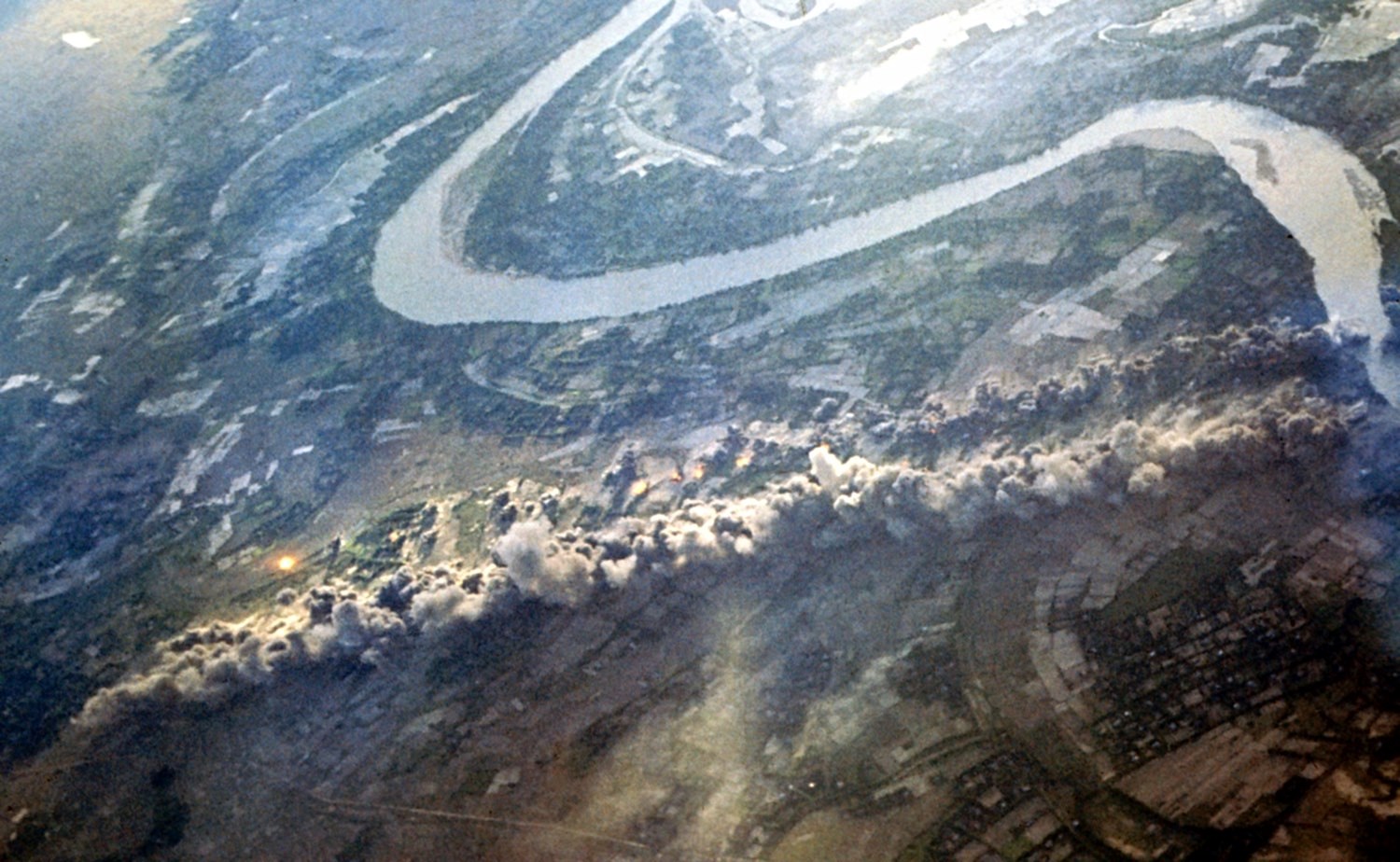
U.S. military operation to provide air support in Southeast Asia from 1965 to 1973
| Field | Value |
|---|---|
| name | Operation Arc Light |
| partof | Second Indochina War |
| (Vietnam • Laos • Cambodia), Combat Skyspot | |
| image_size | 270px |
| alt | Operation Arc Light Memorial |
| caption | Arc Light Memorial on Andersen AFB, Guam |
| type | Close air support operations |
| location | Andersen Air Force Base, |
| Guam, United States (territory) | |
| U-Tapao Royal Thai Navy Airfield, Thailand | |
| commanded_by | United States Air Force; National Security Agency; Lyndon B. Johnson; |
| target | Vietnam, Laos, Cambodia |
| date | 1965–1973 |
| executed_by | U.S. Air Force, Strategic Air Command, Combat Skyspot; National Security Agency |
| casualties | 16 B-52 Stratofortresses lost |
(Vietnam • Laos • Cambodia), Combat Skyspot Guam, United States (territory) U-Tapao Royal Thai Navy Airfield, Thailand Richard Nixon During Operation Arc Light (sometimes Arclight) from 1965 to 1973, the United States Air Force deployed B-52 Stratofortresses from bases in the U.S. Territory of Guam to provide battlefield air interdiction during the Vietnam War. This included strikes at enemy bases, supply routes, and behind the lines troop concentrations, as well as occasionally providing close air support directly to ground combat operations in Vietnam.
The conventional bombing campaign was supported by ground-control-radar detachments of the 1st Combat Evaluation Group (1CEVG) in Operation Combat Skyspot. Arc Light operations usually targeted enemy base camps, troops concentrations, and supply lines.
Aircraft used
Previously dedicated to carrying nuclear weapons, the U.S. Air Force began to train strategic bomber crews in 1964 to deliver conventional munitions flying the B-52F.
The B-52Fs were deployed to Andersen Air Force Base on Guam and U-Tapao Royal Thai Navy Airfield in Thailand, southeast of Bangkok. To add conventional bomb capacity, Project Big Belly modified all B-52Ds to enable them to carry 30 tons of conventional bombs.
By mid-April 1966, all B-52Fs were redeployed back to the U.S. and were replaced by Big Belly-modified B-52Ds. Later in the Vietnam War, the B-52G was also deployed with the B-52D.
B-52Ds were also used from the 376th Strategic Wing of Kadena Air Base, Okinawa, Japan. The 96th Strategic Air Wing from Dyess AFB, Texas, deployed for Arc Light in June 1970 for 180 days. Upon completion of the Arc Light deployment, the 376th SW B-52Ds either returned to the continental U.S. or were sent to U-Tapao. The 376th SW then ceased bomber operations, but continued flying Young Tiger tanker missions.
Operations in Laos and Cambodia
Congressional investigations of secret CIA activities in Laos revealed that B-52s were used to systematically bomb targets within Laos and Cambodia.
Operational use
The bombers were first used in Southeast Asia on June 18, 1965. Flying from Andersen AFB, Guam, 27 aircraft dropped 750 lb and 1000 lb bombs on a Viet Cong stronghold. while circling over the South Pacific Ocean, approximately 250 mi offshore at the point of the Demilitarized Zone (DMZ), unable to conduct mid-air refueling in awaiting arrival of KC-135A tankers for pre-strike air refueling.
Missions were commonly flown in three-plane formations known as "cells". Releasing their bombs from the stratosphere, the B-52s could neither be seen or heard from the ground. B-52s were instrumental in destroying enemy concentrations besieging Khe Sanh in 1968, and in 1972 at An Loc and Kontum.
Arc Light was re-activated at Andersen on February 8, 1972, when President Richard Nixon resumed bombing of North Vietnam in an effort to move peace talks along. Operation Bullet Shot saw over 15,000 men were sent to Andersen on temporary duty over the next 90 days. With limited barracks and other facilities, tents were set up for use by men working 80-hour weeks. Bullet Shot included B-52-D and B-52-G aircraft.
Arc Light missions continued until the cessation of hostilities by U.S. forces on August 15, 1973. Between June 1965 and August 1973, 126,615 sorties (B-52D/F/G) were flown over Southeast Asia. During those operations, the U.S. Air Force lost 31 B-52s; 18 were lost from hostile fire over North Vietnam and 13 from operational causes.
The typical full bomb loads were:
- B-52D: 108 500-lb. bombs, or a mixed load of 84 500-lb. bombs in the bomb bay and 24 750-lb. bombs on underwing pylons.
- B-52F: 36 500 lb and 750 lb bombs in a mixed load, or 51 500-lb. bombs, 27 in the bomb bay and 24 on underwing pylons.
- B-52G: 27 bombs, all in the bomb bay, no external bombs were carried.
Problems
Communication leaks undermined the effectiveness of the campaign. According to Stephen Budiansky, "Despite NSA's occasional success in tightening up particularly leaky communication practices, the problems continued throughout the war. On Andersen the Vietcong were given as much as eight hours' warning and often revealing exact launch times and likely targets, because of a Soviet trawler stationed off the island listening to conversations and seeing actual B-52 launches."
Combat Skyspot Memorial
Nineteen technicians of the 1st Combat Evaluation Group were lost in ground combat.{{cite web |access-date = 26 July 2011 |url-status = dead |archive-url = https://web.archive.org/web/20101101231201/http://combat-skyspot.tripod.com/CSS.htm |archive-date = 1 November 2010
References
References
- (1985). "The Vietnam War: an Almanac". World Almanac Publications.
- [https://web.archive.org/web/20030119032144/http://www.airforcehistory.hq.af.mil/PopTopics/arclight.htm Operation ArcLight] from The Air Force Historical Studies Office.
- (June 20, 1965). "B52 performance satisfies generals". Spokesman-Review.
- (2016). "Code Warriors". Alfred A. Knopf.
- member. (August 2025). "The COMBAT SKYSPOT memorial at Andersen AFB Guam, September, 1999". limasite85.us.
This article was imported from Wikipedia and is available under the Creative Commons Attribution-ShareAlike 4.0 License. Content has been adapted to SurfDoc format. Original contributors can be found on the article history page.
Ask Mako anything about Operation Arc Light — get instant answers, deeper analysis, and related topics.
Research with MakoFree with your Surf account
Create a free account to save articles, ask Mako questions, and organize your research.
Sign up freeThis content may have been generated or modified by AI. CloudSurf Software LLC is not responsible for the accuracy, completeness, or reliability of AI-generated content. Always verify important information from primary sources.
Report