From Surf Wiki (app.surf) — the open knowledge base
Opalescence
Optical effect displayed by opal

Optical effect displayed by opal
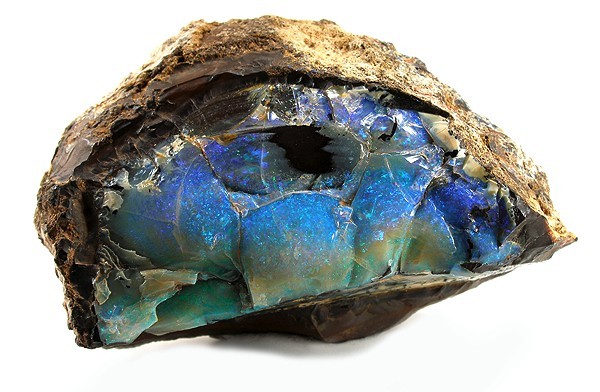
Opalescence or play of color is an optical phenomenon associated with the mineraloid gemstone opal, a hydrated silicon dioxide. This effect appears as a milky, translucent glow that changes with the angle of light, often creating a soft, pearly sheen that can display various colors or hues. Opalescence can be seen in materials like certain minerals, glass, and even fluids.
Definition
Each of the three notable types of opalprecious, common, and firedisplay different optical effects; therefore, the intended meaning varies depending on context.
- The general definition of opalescence is a milky iridescence displayed by an opal, which describes the visual effect of precious opal very well, and opalescence is commonly used in lay terms as a synonym for iridescence.
- In contrast, common opal does not display an iridescence, but often exhibits a hazy sheen of light from within the stonethe phenomenon that gemologists strictly term as opalescence. This milky sheen displayed by opal is a form of adularescence.
- Fire opal is a relatively transparent gemstone with a vivid yellow-orange-red color and rarely displays iridescence.
Mechanism
The optical effects seen in various types of opal are a result of refraction (precious and fire) or reflection (common) due to the layering, spacing, and size of the myriad microscopic silicon dioxide spheres and included water (or air) in its physical structure. When the size and spacing of the silica spheres are relatively small, refracted blue-green colors are prevalent; when relatively larger, refracted yellow-orange-red colors are seen; and when larger yet, reflection yields a milky-hazy sheen.

In a physical sense, some cases of opalescence could be related to a type of dichroism seen in highly dispersed systems with little opacity. Due to Rayleigh scattering, a transparent material appears yellowish-red in transmitted white light and blue in the scattered light perpendicular to the transmitted light. The phenomenon illustrated in the bottom photo is an example of the Tyndall effect.
Fluids
In fluids, the near the gas-liquid transition, the substance can become cloudy. This phenomenon is called critical opalescence.
References
References
- opalescent. 2019. In Noah Webster's 1828 American Dictionary of the English Language. Retrieved January 7, 2019, from https://1828.mshaffer.com/d/word/opalescent
- (2018). "Opal Gemstone Information". Gemstone Select.
- Douma, M., curator. 2008. Opal. In Cause of Color. Retrieved January 8, 2019, from https://webexhibits.org/causesofcolor/15F.html
- {{cite Merriam-Webster. opalescent
- (2019). "Opal Description". [[Gemological Institute of America]].
- Smigel, Barbara W. 2012. Optical Phenomena in Gemstones. In Introduction to Gemology. Retrieved January 8, 2019, from http://www.bwsmigel.info/Lesson6/DE.Optical.Phenomena.html
- Douma, M., curator. (2008). Blue and Red. In Cause of Color. Retrieved 2005 from http://www.webexhibits.org/causesofcolor/14B.html
This article was imported from Wikipedia and is available under the Creative Commons Attribution-ShareAlike 4.0 License. Content has been adapted to SurfDoc format. Original contributors can be found on the article history page.
Ask Mako anything about Opalescence — get instant answers, deeper analysis, and related topics.
Research with MakoFree with your Surf account
Create a free account to save articles, ask Mako questions, and organize your research.
Sign up freeThis content may have been generated or modified by AI. CloudSurf Software LLC is not responsible for the accuracy, completeness, or reliability of AI-generated content. Always verify important information from primary sources.
Report