From Surf Wiki (app.surf) — the open knowledge base
Ontario Liberal Party
Provincial political party in Ontario, Canada

Provincial political party in Ontario, Canada
| Field | Value |
|---|---|
| name | Ontario Liberal Party |
| abbreviation | OLP |
| PLO | |
| native_name | Parti libéral de l'Ontario |
| logo | OLP Logo 2024.png |
| logo_size | 225px |
| leader | John Fraser (interim) |
| president | Kathryn McGarry |
| leader2_title | Parliamentary leader |
| leader2_name | John Fraser |
| leader3_title | House leader |
| leader3_name | Lucille Collard |
| foundation | |
| predecessor | Clear Grits |
| headquarters | 344 Bloor Street W. |
| Suite 404 | |
| Toronto, Ontario | |
| M5S 3A7 | |
| Canada | |
| ideology | Liberalism (Canadian) |
| national | Liberal Party of Canada (until 1976) |
| youth_wing | Ontario Young Liberals |
| womens_wing | Ontario Women’s Liberal Commission |
| membership | 103,206 |
| membership_year | 2023 |
| colours | Red |
| colorcode | |
| blank1_title | Fiscal policy |
| blank2_title | Social policy |
| seats1_title | Seats in the House of Commons |
| seats2_title | Seats in the Senate |
| seats3_title | Seats in Legislature |
| seats3 | |
| website | |
| country | Canada |
| state | Ontario |
| parties_dab1 | List of political parties in Ontario |
| elections_dab1 | List of Ontario general elections |
PLO Suite 404 Toronto, Ontario M5S 3A7 Canada
The Ontario Liberal Party (OLP; , PLO) is a political party in the province of Ontario, Canada. It has been one of the two main contenders for government for much of Ontario's history along with their conservative rival (currently the Progressive Conservative Party). Liberal ministries governed the province 63 of the approximately 160 years since Confederation, producing 10 of its 26 premiers.
The party has strong informal ties to the Liberal Party of Canada, but the two parties are organizationally independent and have separate, though overlapping, memberships. The provincial party and the Ontario wing of the federal party were organizationally one entity until members voted to split in 1976.
The party espouses the principles of liberalism, with their rival the Progressive Conservative (PC) Party positioned to the right and the New Democratic Party (NDP), which at times aligned itself with the Liberals during minority governments, positioned to their left.
The Liberals suffered its worst electoral defeat in the 2018 Ontario provincial election both in terms of seat count (seven) and popular vote (19.6%), losing official party status at the Legislative Assembly of Ontario. It was also the worst defeat of a governing party in Ontario history. Prior to the 2018 election, the party had won four consecutive elections since the turn of the century and had governed the province for the previous 15 years. In the 2022 provincial election, the Liberals saw a modest increase in support, finishing second in popular vote, but only winning eight seats.
In the most recent election in 2025, the party led by Bonnie Crombie won 14 seats and regained official party status. However, Crombie did not win her own seat and the Liberals remained the third-party in the legislature, despite having won a substantially larger share of the popular vote than the official opposition NDP (30% vs NDP's 18.6%).
History
Following Ontario's first ministry post Confederation (a predominately Conservative ministry led by a Liberal being opposed by the majority of the Liberals in the first legislative assembly), the Ontario Liberals went through an extended period of dominance, governing the province for 34 of the 50 years between Confederation and World War I. Sir Oliver Mowat,one of the Fathers of Confederation, led the party and the province for 24 of those years, and remains the province's longest-serving premier (and the third longest of any first minister in Canada).
It however spent much of the following century in the wilderness. Bitter internal division ended a nine-year Liberal government in 1943 and produced the province's shortest-serving premier to date in Harry Nixon. Follow four decades in opposition, David Peterson with the support of the NDP ended 42 consecutive years of Progressive Conservative rules in 1985, and led the province for five years. After the turn of the millennium, Dalton McGuinty led the party back to government in 2003. Kathleen Wynne, a minister in the McGuinty ministry, won the party's leadership in 2013, becoming the first woman to serve as Premier of Ontario, and the first openly gay person to serve as first minister anywhere in Canada. She led the party to its most recent victory in 2014, before leading it to its historic defeat in 2018.
File:Edward Blake.jpg||alt=Edward BlakeLeader 1970-72Premier 1871-72 File:Oliver Mowat.jpg||alt=Sir Oliver MowatPremier & Leader1972-96 File:Arthur Sturgis Hardy.jpg| File:Honourable GW Ross, Prime Minister for Ontario (HS85-10-12129).jpg| File:Mitchell Hepburn1 crop.jpg| File:Hon. Gordon Conant, M.L.A. 1937 (cropped).jpg| File:Harry Nixon MLA.jpg| File:David Peterson (2005).jpg| File:Dalton McGuinty Crop 2.jpg|alt=| File:Hon Kathleen Wynne MPP Premier of Ontario (cropped).jpg|alt=|
Origins
The Liberal Party of Ontario is descended from the Reform Party of Robert Baldwin and William Lyon Mackenzie, who argued for responsible government in the 1830s and 1840s against the conservative patrician rule of the Family Compact.
The modern Liberals were founded by George Brown, who sought to rebuild the Reform Party after its collapse in 1854. In 1857, Brown brought together the Reformers and the radical "Clear Grits" of southwestern Ontario to create a new party in Upper Canada with a platform of democratic reform and annexation of the north-west. The party adopted a position in favour of uniting Britain's North American colonies, a concept that led to Canadian Confederation.
Confederation
After 1867, Edward Blake became leader of the Ontario Liberal Party. The party sat in opposition to the Conservative government led by John Sandfield Macdonald. Blake's Liberals defeated the Tories in 1871, but Blake left Queen's Park for Ottawa the next year, leaving the provincial Liberals in the hands of Oliver Mowat. Mowat served as Premier of Ontario until 1896.
While the Tories became a narrow, sectarian Protestant party with a base in the Orange Order, the Liberals under Mowat attempted to bring together Catholics and Protestants, rural and urban interests under moderate, religiously liberal leadership.
Decline and opposition
The Liberals were defeated in 1905 after over thirty years in power. The party had grown tired and arrogant in government and became increasingly cautious. As well, a growing anti-Catholic sectarian sentiment hurt the Liberals, particularly in Toronto where they were unable to win a seat from 1890 until 1916. The Liberals continued to decline after losing power, and, for a time, were eclipsed by the United Farmers of Ontario (UFO) when the Liberals were unable to attract the growing farmers' protest movement to its ranks.
Debates over the party's policy on liquor divided the membership, forced the resignation of at least one leader, Hartley Dewart, and drove away many reform-minded Liberals who supported the federal party under William Lyon Mackenzie King but found the provincial party too narrow and conservative to support. The party was so disorganized that it was led for seven years (and through two provincial elections) by an interim leader, W.E.N. Sinclair, as there was not enough money or a sufficient level of organization, and too many divisions within the party to hold a leadership convention. By 1930, the Liberals were reduced to a small, rural and prohibitionist rump with a base in south western Ontario.
Return to power under Mitch Hepburn
After a series of ineffective leaders, the Liberals turned to Mitchell Hepburn, an onion farmer, federal Member of Parliament and former member of the UFO. Hepburn was able to build an electoral coalition with Liberal-Progressives and attract reformers and urban voters to the party. The Liberal-Progressives had previously supported the UFO and the Progressive Party of Canada. A "wet", Hepburn was able to end the divisions in the party around the issue of temperance which had reduced it to a narrow sect. The revitalized party was able to win votes from rural farmers, particularly in southwestern Ontario, urban Ontario, Catholics and francophones. It also had the advantage of not being in power at the onset of the Great Depression. With the economy in crisis, Ontarians looked for a new government, and Hepburn's populism was able to excite the province.
In government, Hepburn's Liberals warred with organized labour led by the Congress of Industrial Organizations, who were trying to unionize the auto-sector. Later, he battled with the federal Liberal Party of Canada government of William Lyon Mackenzie King, which, Hepburn argued, was insufficiently supportive of the war effort. The battle between Hepburn and King split the Ontario Liberal Party and led to Hepburn's ouster as leader. It also contributed to the party's defeat in the 1943 election, which was followed by the party's long stint in opposition. The Liberals declined to a right wing, rural rump. The "Progressive Conservatives" under George Drew established a dynasty which was to rule Ontario for the next 42 years.
Opposition during the post-war boom
Ontario politics in recent times have been dominated by the Progressive Conservatives, also known as the Tories. The Liberals had formed the Government for only five years out of sixty years from 1943 to 2003. For forty-two years, from 1943 to 1985, the province was governed by the Tories. During this period, the Ontario Liberal Party was a rural, conservative rump with a southwestern Ontario base, and were often further to the right of the moderate Red Tory Conservative administrations. In 1964, the party changed their name from the "Ontario Liberal Association" to the "Liberal Party of Ontario".
In September 1964, the party elected Andy Thompson as its leader. While the leadership election garnered some attention, it looked like Thompson would have a hard time winning an election. The Liberals had held office only three times for 13 years since 1900 and the party caucus was not that much different from the time between 1959 and 1963. They failed to get a popular candidate, Charles Templeton, elected in a by-election. They also lost another riding to the PCs when Maurice Bélanger died in March 1964. Thompson would last only two years as leader before resigning due to stress-induced health problems.
Throughout the 1960s and 1970s, the Liberals were almost shut out of Metropolitan Toronto and other urban areas and, in 1975, fell to third place behind the Ontario New Democratic Party (NDP) under Stephen Lewis. With the NDP in ascendancy in the late 1960s and 1970s, it appeared that the Liberals could disappear altogether.
The Liberals remained more popular than the Tories among Catholic and Francophone voters, due to the party's support for extending separate school funding to include Grades 11–13. The Tories opposed this extension until 1985, when they suddenly reversed their position. This reversal angered traditional Conservative voters, and may have contributed to their defeat in the 1985 election.
The Peterson years
The Ontario Liberal Party first broke the Tories' hold on the province in 1985 under the leadership of David Peterson. Peterson modernized the party and made it appealing to urban voters and immigrants who had previously supported the cautious government of Tory Premiers John Robarts and William Davis.
Peterson was able to form a minority government from 1985 to 1987 due to an accord signed with the Ontario NDP. Under this accord, the NDP agreed not to trigger an election via a non-confidence vote in exchange for the Liberals implementing certain agreed upon policies and not calling an election for the next two years.
Once the accord expired, an election was called and Peterson won a strong majority government with 95 seats, its most ever.
Peterson's government ruled in a time of economic plenty where occasional instances of fiscal imprudence were not much remarked on. Peterson was a close ally of Prime Minister Brian Mulroney on the Meech Lake Accord, but opposed Mulroney on the issue of free trade.
The majority Liberal government of 1987 to 1990 was less innovative than the previous minority government. The Liberals' increasing conservatism caused many centre-left voters to look at the Ontario NDP and its leader Bob Rae, and consider the social-democratic NDP as an alternative to the Liberals.
The Liberals went into the 1990 election with apparently strong support in the public opinion polls. This support quickly evaporated, however. On the campaign trail, the media reported that the Liberals were met by voters who were angry at going to the polls just three years into the government's mandate. Another negative factor was Peterson's association with Mulroney and the failed Meech Lake Accord attempt at constitutional reform, about which the public felt strongly. The campaign was also poorly run: a mid-campaign proposal to cut the provincial sales tax was a particularly bad blunder. The party had also underestimated the impact of the Patti Starr fundraising scandal, as well as allegations surrounding the Liberal government's links with land developers.
In the 1990 election, the Liberals only finished five points behind the NDP in the popular vote. However, the NDP took many seats from the Liberals in the Toronto suburbs. The NDP promised a return to the activist form of government that had prevailed from 1985 to 1987, and its co-operation with the Liberals during that time made it appear more moderate and acceptable to swing voters in the Toronto area. Due to the nature of the first-past-the-post system, the Liberals were decimated, falling from 95 seats to 36. The 59-seat loss surpassed the 48-seat loss in 1943 that began the Tories' long rule over the province. Peterson himself was heavily defeated in his own London-area riding by the NDP challenger.
Return to opposition

By the 1995 election, the NDP government had become very unpopular due to perceived mismanagement, a few scandals, and because of the severe downturn in the economy. The Liberal Party was expected to replace the unpopular NDP, but it ran a poor campaign under leader Lyn McLeod, and was beaten by the Progressive Conservatives under Mike Harris. Harris swept to power on a right-wing "Common Sense Revolution" platform. In 1996, the Ontario Liberals selected Dalton McGuinty as their leader in a free-wheeling convention. Starting in fourth place, McGuinty's fiscally prudent record and moderate demeanor made him the second choice of a convention polarized around the candidacy of former Toronto Food Bank head Gerard Kennedy.
In the 1999 election, the governing Conservatives were reelected on the basis of strong economic growth and a negative campaign tightly focused on portraying McGuinty as "not up to the job". A poor performance in the leader's debate and a weak overall campaign hamstrung the new leader, but he was able to rally his party in the final weeks of the campaign. The Ontario Liberals garnered 40% of the vote, at the time their second-highest total in 50 years.
McGuinty's second term as opposition leader was more successful than his first. With the Liberals consolidated as the primary opposition to Harris's Progressive Conservatives, McGuinty was able to present his party as the "government in waiting". He hired a more skilled group of advisors and drafted former cabinet minister Greg Sorbara as party president. McGuinty also rebuilt the party's fundraising operation, launching the Ontario Liberal Fund. He personally rebuilt the party's platform to one that emphasized lowering class sizes, hiring more nurses, increasing environmental protections and "holding the line" on taxes in the buildup to the 2003 election. McGuinty also made a serious effort to improve his debating skills, and received coaching from Democratic Party trainers in the United States.
"Choose Change" the McGuinty government

In the 2003 election, McGuinty led the Liberals to a majority government, winning 72 out of 103 seats. The PC government's record had already been marred by a number of prior events, including the death of Dudley George, the Walkerton water tragedy and the government's performance during the SARS outbreak. The PC's election campaign relied on attack ads against McGuinty, while the McGuinty campaign kept a positive message throughout. The PCs' negative attacks on McGuinty backfired throughout the campaign.
The new government called the Legislature back in session in late 2003, and passed a series of bills relating to its election promises. The government brought in auto insurance reforms (including a price cap), fixed election dates, rolled-back a series of corporate and personal tax cuts which had been scheduled for 2004, passed legislation which enshrined publicly funded Medicare into provincial law, hired more meat and water inspectors, opened up the provincially owned electricity companies to Freedom of Information laws and enacted a ban on partisan government advertising.
The McGuinty government also benefited from a scandal involving the previous Progressive Conservative government's management of Ontario Power Generation and Hydro One, which broke in the winter of 2003–04. It was revealed that a number of key figures associated with Mike Harris's "Common Sense Revolution" had received lucrative, untendered multimillion-dollar consulting contracts from these institutions. Among the figures named in the scandal were Tom Long, former Harris campaign chairman, Leslie Noble, former Harris campaign manager and Paul Rhodes, former Harris communications director.

On May 18, 2004, Provincial Finance Minister Greg Sorbara released the McGuinty government's first budget. The centrepiece was a controversial new Health Premium of $300 to $900, staggered according to income. This violated a key Liberal campaign pledge not to raise taxes, and gave the government an early reputation for breaking promises. The Liberals defended the premium by pointing to the previous government's hidden deficit of $5.6 billion, and McGuinty claimed he needed to break his campaign pledge on taxation to fulfill his promises on other fronts.
The Ontario Health Premium also became a major issue in the early days of the 2004 federal election, called a week after the Ontario budget. Most believe that the controversy seriously hampered Liberal Prime Minister Paul Martin's bid for re-election.
Also controversial were the elimination of coverage for health services not covered by the Canada Health Act, including eye examinations and physical therapy. Other elements included a four-year plan to tackle the deficit left behind by the Progressive Conservatives, free immunization for children, investments in education and investments to lower waiting times for cancer care, cardiac care, joint replacement, MRI and CT scans.
Soon after the federal election, McGuinty hosted a federal-provincial summit on public health-care funding which resulted in a new agreement for a national health accord. This accord allowed the provincial Premiers and territorial leaders to draw more money from Ottawa for health services, and requires the federal government to take provincial concerns such as hospital waiting-lists into account. McGuinty's performance at the summit was generally applauded by the Canadian media.
The McGuinty government brought forward a number of regulatory initiatives in the fall of 2004. These included legislation allowing bring-your-own-wine in restaurants, banning junk food in public schools to promote healthier choices, outlawing smoking in public places and requiring students to stay in school until age 18. Following a series of high-profile maulings, the government also moved to ban pit bulls.

During early 2005, McGuinty called the Legislature back for a rare winter session to debate and pass several high-profile bills. The government legislated a Greenbelt around Toronto. The size of Prince Edward Island, the Greenbelt protects a broad swath of land from development and preserves forests and farmland. In response to court decisions, the Liberals updated the definition of marriage to include homosexual couples.
McGuinty also launched a PR campaign to narrow the politically charged $23 billion gap between what Ontario contributes to the federal government and what is returned to Ontario in services. This came as a sharp turn after more than a year of cooperating with the federal government, but McGuinty pointed to the special deals worked out by the federal government with Newfoundland and Labrador and Nova Scotia as compromising the nature of equalization payments. In particular, McGuinty noted that immigrants in Ontario receive $800 in support from the federal government, while those in Quebec receive $3800.
In the 2003 campaign, the Liberals denounced public-private partnerships (also known as "3P" deals) for infrastructure projects such as the building of hospitals. Following the campaign, however, the McGuinty government allowed "3P" hospital construction deals arranged by the previous government to continue.
The Ontario Liberals won their second majority in a row on October 10, 2007, winning 71 of the province's 107 seats. Winning two majorities back to back is a feat that had not occurred for the party in 70 years.
In the next general election on October 6, 2011, McGuinty led the Liberals to win a historic third consecutive term and to once again form government, albeit with a minority of seats in the legislature. The Liberals won 53 of the 107 seats, just short of a 54-seat majority government. On October 15, 2012, McGuinty announced that he would resign as leader and Premier. At the end of January 2013, the party elected MPP Kathleen Wynne as leader, making her the 25th Premier of Ontario.
Majority under Wynne

In 2015, the Liberals proposed to sell 60 per cent of the province's $16-billion share of the province's electricity distribution utility, Hydro One. Hydro One Brampton and Hydro One Networks' distribution arm would be spun off into a separate company and sold outright for up to $3 billion.
The government pivoted to the left in the lead up to the 2018 election by raising the minimum wage, introducing reforms to employment standards and labour law, bringing in a limited form of pharmacare and promising universal child care.
Loss of official party status

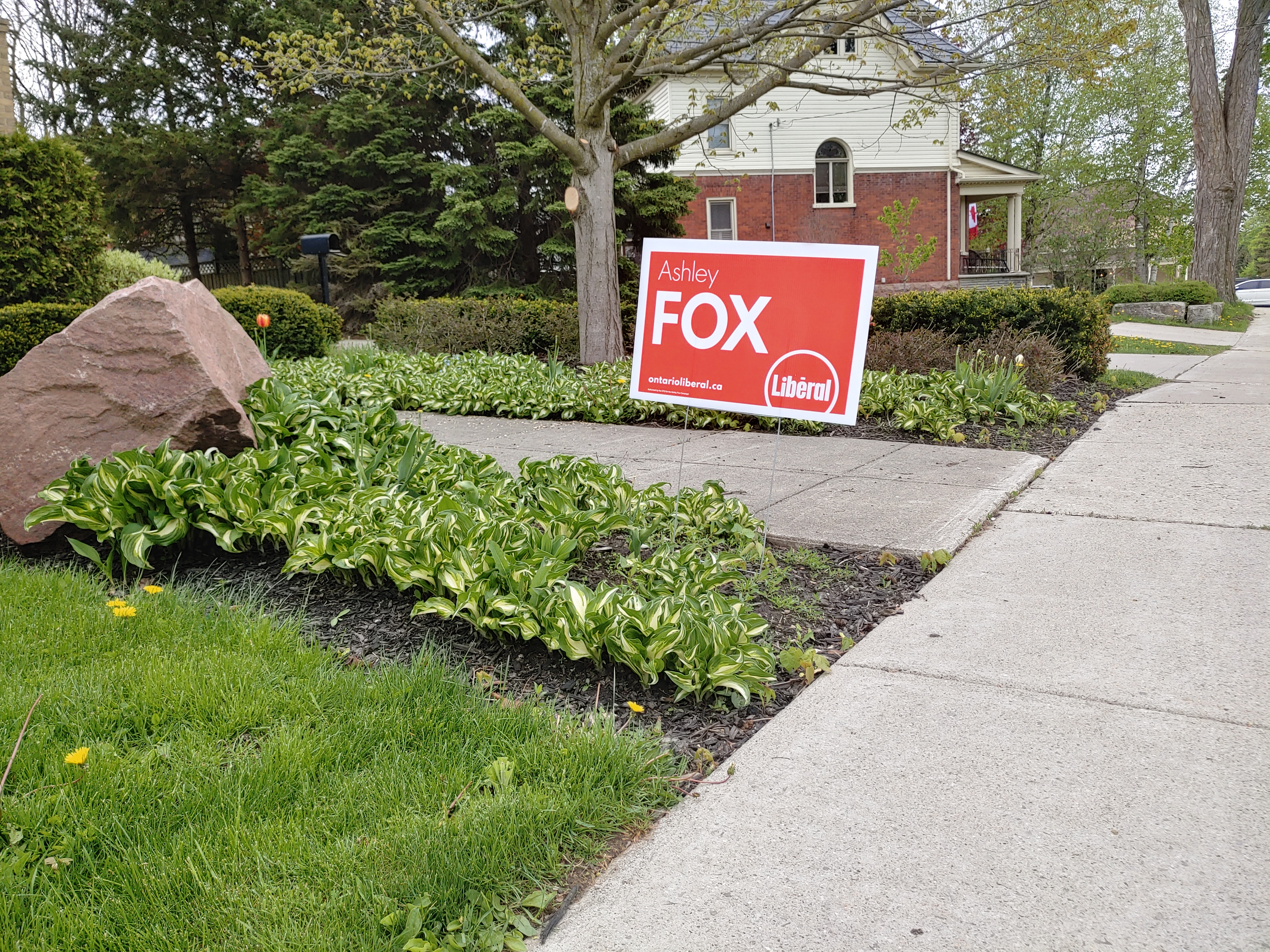
In the 2018 general election, the Liberals were swept from power in a historic defeat that resulted in large gains for both the Progressive Conservatives and NDP. The Liberal popular vote fell to 19%, almost half their previous result; the party lost 51 seats and were reduced to a rump of only seven seats in a swing that elected a PC majority and made the NDP the official opposition.
Notably, the Liberals lost all but three of their 18 seats in Toronto, were completely shut out in the 905 region and won only one seat outside of Toronto and Ottawa. The seven-member rump caucus was one short of the requirement to retain official status in the Ontario legislature, and was also the only remnant of Wynne's cabinet. Wynne herself barely held onto her own seat by 181 votes. Accepting responsibility for the worst showing in the party's 161-year history and the worst defeat of a sitting government in Ontario, Wynne resigned as Liberal leader on election night.
On June 14, 2018, John Fraser was appointed as interim leader of the party following a vote by caucus members, riding association presidents, and party executives.
In the 2018 municipal election later in the year, six of the defeated Liberal MPPs — Bill Mauro, Kathryn McGarry, Jim Bradley, Mike Colle, Granville Anderson and Dipika Damerla — were elected to municipal office as mayors, city councillors or regional councillors.
In March 2020, the party elected former Cabinet Minister Steven Del Duca as leader, who defeated five other candidates on the first ballot at the leadership convention.
In the 2022 general election, the Liberals finished second in popular vote but gained only one seat, once again falling short of official status by four seats. After failing to win in his own riding, leader Steven Del Duca announced his resignation as party leader. John Fraser returned as interim leader until the December 2023 leadership election which elected Mississauga mayor Bonnie Crombie as the new Liberal leader.
Leadership of Bonnie Crombie

On December 2, 2023, the Ontario Liberal Party elected Bonnie Crombie, the then-mayor of Mississauga, as the next leader of the party, defeating MP Nate Erskine-Smith, MP Yasir Naqvi, and MPP Ted Hsu.
On September 21, 2024, the Ontario Liberal Party unveiled their new logo alongside their slogan, "More for You."
In the 2025 election, the Liberals garnered 30% of the vote, their highest total since losing government in 2018, winning 14 seats and gaining official party status in the Ontario Legislature. Party leader Bonnie Crombie was defeated in the riding of Mississauga East—Cooksville.
Following the election, the party executive unanimously voted in support of Bonnie Crombie remaining as party leader, while scheduling a leadership review at the party's annual general meeting on September 12–14, 2025. Crombie received 57% percent support in the vote, above the 50% support required by the party's constitution, but short of the 60%–67% many in the party had been calling for. Crombie initially announced that she would be staying on as leader, but hours after the results were announced issued a statement that she planned to resign upon the selection of a new leader. She formally resigned as leader on January 14, 2026, with a successor to be chosen at a later date.
Current Ontario Liberal Caucus
| Member | Elected | District | Notes |
|---|---|---|---|
| 2025 | Ajax | Economic Development and Innovation, Tourism, Sport and Culture | |
| 2022 | Beaches—East York | Critic for the Environment and Climate and Emergency Management | |
| 2022 | Don Valley East | Chief Whip | |
| 2025 | Don Valley North | Critic for Citizenship and Immigration, Community, Social Services, Children and Youth | |
| 2022 | Don Valley West | Deputy House Leader | |
| 2025 | Etobicoke—Lakeshore | Critic for Hospitals, Mental Health, Addictions and Homelessness | |
| 2023 | Kanata—Carleton | Critic for Public Safety, Cybersecurity and Crime Prevention, Solicitor General | |
| 2022 | Kingston and the Islands | Critic for Energy, Natural Resources, Agriculture, Rural Issues, and Mining and Forestry | |
| 2025 | Nepean | Critic for Training, Colleges and Universities, Long Term Care | |
| 2020 | Orléans | Caucus Chair | |
| John Fraser | 2013 | Ottawa South | Interim leader 2022–2023 |
| 2020 | Ottawa—Vanier | House leader 2022–present | |
| 2023 | Scarborough—Guildwood | Critic for Transportation, Small Business, and Women | |
| 2025 | Toronto—St. Paul's | Deputy Whip |
Ontario Liberal Executive Council
The executive of the Ontario Liberal Party is elected to a 12 to 18 month term at the Annual General Meeting.
| Position | Name |
|---|---|
| Leader | Vacant |
| President | Kathryn McGarry |
| Executive Vice President | David Farrow |
| Treasurer | Gabriel Sékaly |
| Secretary | Pankaj Sandhu |
| Vice President (Policy) | Fahim Khan |
| Vice President (Organization) | Meagan Trush |
| Vice President (Communications) | Hunter Knifton |
| Vice President (Engagement) | David Morris |
| Past President | Brian Johns |
| Regional Vice President for Central East | Zachary Hatton |
| Regional Vice President for Central North | Sam Azad |
| Regional Vice President for Central West | Sukhwant Theti |
| Regional Vice President for the East | Matthew Gagné |
| Regional Vice President for the North | Stephen Margarit |
| Regional Vice President South Central | Doug Varley |
| Regional Vice President South West | Bob Wright |
| Regional Vice President for Toronto (E/D/EY) | Noah Parker |
| Regional Vice President (Y/NY/S) | Lawrence Dawkins |
| OYL President | Palwashah Ali |
| OWLC President | Marilyn Raphael |
| OLRNC President | Roger Martin |
| OSC President | Sheila Bryan |
Leaders
| No. | Photo | Leader | Time in Office | Note | — | — | 1 | 2 | 3 | 4 | 5 | 6 | 7 | — | 8 | 9 | — | 10 | — | 11 | — | 12 | 13 | — | 14 | — | 15 | 16 | 17 | — | 18 | — | — | — | 19 | 20 | 21 | — | 22 | — | 23 | — | |
|---|---|---|---|---|---|---|---|---|---|---|---|---|---|---|---|---|---|---|---|---|---|---|---|---|---|---|---|---|---|---|---|---|---|---|---|---|---|---|---|---|---|---|---|
| [[File:George Brown.jpg | 100px]] | George Brown | 1857–1867 | Unofficial.Served as Premier of Canada West (August 2–6, 1858) as leader of the Clear Grits (a predecessor of both the Ontario Liberal Party and Liberal Party of Canada) prior to Confederation. | |||||||||||||||||||||||||||||||||||||||
| [[File:ArchibaldMcKellar23.jpg | 100px]] | Archibald McKellar | 1867 – | Unofficial leader as the most experienced Reformer in opposition. Later served in Blake and Mowat ministries. | |||||||||||||||||||||||||||||||||||||||
| [[File:Edward Blake.jpg | 100px]] | Edward Blake | – | First official leader. Won election held in March 1871 but did not become Premier until December due to Premier John Sandfield Macdonald's refusal to resign or call the assembly into session.Left provincial politics upon the abolition of dual mandate. Served as leader of the federal Liberal Party from 1880 to 1887. | |||||||||||||||||||||||||||||||||||||||
| [[File:Oliver Mowat.jpg | 100px]] | Sir Oliver Mowat | – | Longest serving Premier of Ontario (third longest in Canada), served as premier the entire period while leader, won six elections with majority mandateLeft provincial politics to become a Senator and federal Minister of Justice. Served as the eighth Lieutenant Governor of Ontario. | |||||||||||||||||||||||||||||||||||||||
| [[File:Arthur Sturgis Hardy.jpg | 100px]] | Arthur S. Hardy | – 1899 | Previously served 19 years in the Mowat ministry. | |||||||||||||||||||||||||||||||||||||||
| [[File:Honourable GW Ross, Prime Minister for Ontario (HS85-10-12129).jpg | 100px]] | Sir George William Ross | 1899–1907 | Previously served as MP 1872-83, and as education minister in the Mowat and Hardy ministries. | |||||||||||||||||||||||||||||||||||||||
| [[File:Hon. Geo. P. Graham, 7-13-22 LCCN2016846558 (cropped).jpg | 100px]] | George P. Graham | 1907 | Resigned shortly after becoming leader to serve in the federal Laurier ministry. Later served in King ministry and as a Senator. | |||||||||||||||||||||||||||||||||||||||
| [[File:Alexander Grant MacKay.jpg | 100px]] | Alexander Grant MacKay | 1907–1911 | Previously served in the Ross ministry. | |||||||||||||||||||||||||||||||||||||||
| [[File:Newton Rowell.jpg | 100px]] | Newton Rowell | 1911–1917 | Broke with party over conscription, resigned from legislature to join federal Unionist Borden ministry. | |||||||||||||||||||||||||||||||||||||||
| [[File:William Proudfoot.jpg | 100px]] | William Proudfoot | 1918–1919 | Interim leader chosen by caucus, faced leadership challenge and lost. | |||||||||||||||||||||||||||||||||||||||
| Hartley Dewart | 1919–1921 | First party leader elected by leadership convention. Leader of the Opposition | |||||||||||||||||||||||||||||||||||||||||
| Wellington Hay | 1922–1923 | Party failed to win either government or 2nd most seats for the first time under Hay's leadership (but 2nd in popular vote), but remain Official Opposition as the governing Conservatives refused to recognize the second-place UFO as the Official Opposition. | |||||||||||||||||||||||||||||||||||||||||
| W.E.N. Sinclair | 1923–1930 | Interim leader. Led party in two elections but failed to make significant gains either time. | |||||||||||||||||||||||||||||||||||||||||
| [[File:Mitchell Hepburn1.jpg | 100px]] | Mitchell Hepburn | 1930–1942 | Previously federal MP from 1926 to 1934, remaining in the House of Commons while serving as provincial party leader. | |||||||||||||||||||||||||||||||||||||||
| [[File:Gordon Daniel Conant.jpg | 100px]] | Gordon Daniel Conant | 1942–1943 | Served as Attorney General in the Hepburn ministry and his own ministry. | |||||||||||||||||||||||||||||||||||||||
| [[File:Harry Nixon MLA.jpg | 100px]] | Harry Nixon | 1943–1944 | Previously sat in the legislature as a United Farmers of Ontario MPP (1919–1923) and a Progressive (1923–1934). As a Liberal-Progressive (1934–1937) he joined the Hepburn cabinet in 1934 before formally becoming a Liberal MPP in 1937. Served as Provincial Secretary and Registrar in the Hepburn ministry. | |||||||||||||||||||||||||||||||||||||||
| [[File:Mitchell Hepburn1.jpg | 100px]] | Mitchell Hepburn | 1945 | Acting Leader, lost his own seat in the 1945 election and retired. | |||||||||||||||||||||||||||||||||||||||
| [[File:Farquhar Oliver.JPG | 100px]] | Farquhar Oliver | 1945–1950 | Previously a United Farmers of Ontario MPP until 1941 when he joined the Hepburn ministry as Minister of Public Works, and served in role again in Nixon ministry. | |||||||||||||||||||||||||||||||||||||||
| [[File:Walter Cunningham Thomson.jpg | 100px]] | Walter Thomson | 1950–1954 | Previously federal MP. | |||||||||||||||||||||||||||||||||||||||
| [[File:Farquhar Oliver.JPG | 100px]] | Farquhar Oliver | 1954–1958 (second time) | Leader of the Opposition from 1951 to 1958 as party leader did not have a seat. | |||||||||||||||||||||||||||||||||||||||
| John Wintermeyer | 1958–1963 | First party leader elected without leading on the first ballot. Party gain seats in both 1959 and 1963 elections under his leadership, but he lost his own seat in 1963. | |||||||||||||||||||||||||||||||||||||||||
| [[File:Farquhar Oliver.JPG | 100px]] | Farquhar Oliver | 1963–1964 (third time) | Interim party leader and Leader of the Opposition | |||||||||||||||||||||||||||||||||||||||
| Andy Thompson | 1964–1966 | Resigned due to health reason without having led the party in a general election. | |||||||||||||||||||||||||||||||||||||||||
| [[File:Robert Nixon-c1971.jpg | 100px]] | Robert Nixon | – | Elected interim leader by caucus, acclaimed as permanent leader on January 6, 1967. | |||||||||||||||||||||||||||||||||||||||
| Stuart Smith | – | Leader of the Opposition from 1977 to 1981. | |||||||||||||||||||||||||||||||||||||||||
| [[File:Robert Nixon-c1971.jpg | 100px]] | Robert Nixon | – (second time) | Interim leader. | |||||||||||||||||||||||||||||||||||||||
| [[File:David Peterson (2005).jpg | 100px]] | David Peterson | – 1990 | Led party to winning popular vote but second most seat in 1985 election, form government with an accord with NDP without forming coalition. Led party to majority victory in 1987 election. | |||||||||||||||||||||||||||||||||||||||
| [[File:Robert Nixon-c1971.jpg | 100px]] | Robert Nixon | 1990–1991 (third time) | Interim leader, resigned in order to accept a federal appointment. | |||||||||||||||||||||||||||||||||||||||
| Murray Elston | 1991 | Previously served in Peterson ministry | |||||||||||||||||||||||||||||||||||||||||
| Jim Bradley | November 19, 1991 – February 9, 1992 | Interim leader | |||||||||||||||||||||||||||||||||||||||||
| Lyn McLeod | February 9, 1992 – December 1, 1996 | First female leader and first female Leader of the Opposition. | |||||||||||||||||||||||||||||||||||||||||
| [[File:Dalton McGuinty Crop 2.jpg | 100px]] | Dalton McGuinty | December 1, 1996 – January 26, 2013 | ||||||||||||||||||||||||||||||||||||||||
| Led party to two majority and one minority victories | |||||||||||||||||||||||||||||||||||||||||||
| [[File:Hon Kathleen Wynne MPP Premier of Ontario.jpg | 100px]] | Kathleen Wynne | January 26, 2013 – June 7, 2018 | Premier of Ontario. First openly LGBT leader, first female leader to win electoral mandate.First female and first LGBT premier of Ontario.Previously served in McGuinty ministry | |||||||||||||||||||||||||||||||||||||||
| [[File:John Fraser at the 2013 AMO Conference (9538825979) (cropped).jpg | 100px]] | John Fraser | June 14, 2018 — March 7, 2020 | Interim leader | |||||||||||||||||||||||||||||||||||||||
| [[File:ALL DelDucaHeadshot.jpg | 100px]] | Steven Del Duca | March 7, 2020 – August 3, 2022 | Previously served in Wynne ministry. | |||||||||||||||||||||||||||||||||||||||
| [[File:John Fraser at the 2013 AMO Conference (9538825979) (cropped).jpg | 100px]] | John Fraser | August 3, 2022 — December 2, 2023 (second time) | Interim leader, continued as leader in legislature since 2018 | |||||||||||||||||||||||||||||||||||||||
| [[File:Bonnie Crombie with Lou Rinaldi at 2017 AMO Conference (36541302906) (cropped).jpg | 126x126px]] | Bonnie Crombie | December 2, 2023 – January 14, 2026 | Previously a federal Liberal MP | |||||||||||||||||||||||||||||||||||||||
| [[File:John Fraser at the 2013 AMO Conference (9538825979) (cropped).jpg | 100px]] | John Fraser | January 22, 2026 — present | ||||||||||||||||||||||||||||||||||||||||
| (third time) | Interim leader. Has been parliamentary leader since 2018 |
: Though Sinclair led the party through two elections, he was never formally elected as leader by the Ontario Liberal Association which, due to its state of disorganization, did not organize a leadership convention until 1930.
: Hepburn resigned as Premier in October 1942 after designating Gordon Daniel Conant as his successor, and Conant was sworn in as Premier. The Ontario Liberal Association (particularly supporters of William Lyon Mackenzie King) demanded a leadership convention and one was finally held in May 1943 electing Harry Nixon. Technically, Hepburn did not resign as Liberal leader until the convention.
Presidents
The party president is elected at each annual meeting of the party by delegates elected from electoral district associations and other affiliated associations such as campus clubs. The role of president is to head the party’s executive council, which oversees such things as policy development and proposed party constitutional changes.
The current president is Kathryn McGarry.
| Name | Start | End | Notes | ||
|---|---|---|---|---|---|
| Joseph Cruden | Presided over the formation of a provincial party separate from the Liberal Party of Canada. | ||||
| Jeffrey King | Previously Ottawa Alderman (1970–72) | ||||
| T. Patrick Reid | 1977 | Elected while MPP for Rainy River | |||
| Wally Zimmerman | 1977 | ||||
| Jack Heath | |||||
| Jim Evans | |||||
| David Deacon | 1983 | 1985 | |||
| Don Smith | 1985 | 1987 | Co-founder of construction company EllisDon with brother Ellis Smith. Husband of Joan Smith, MPP for London South and later Solicitor General (1987–89) | ||
| Brian Ducharme | 1987 | 1988 | |||
| Kathy Robinson | 1988 | 1990 | |||
| Allan Furlong | 1990 | 1992 | MPP for Durham Centre (1987–90) | ||
| Richard Mahoney | 1992 | 1995 | |||
| Mike Eizenga | 1995 | 1997 | Later national president of Liberal Party of Canada (2003–06). | ||
| Ross Lamont | 1997 | 1998 | |||
| Tim Murphy | 1998 | Previously served as MPP for St. George—St. David (1993–95). Later served as Chief of Staff to Prime Minister Paul Martin (2003–06) | |||
| Greg Sorbara | Previously served as MPP for York North (1985–95) and in the Peterson ministry as Minister of Colleges and Universities and Minister of Skills Development (1985–87), Minister of Labour (1987–89), Minister of Consumer and Commercial Relations (1989–90). Contested party leadership in 1996. Return to the legislature as MPP for Vaughan—King—Aurora (2001–09) while president in a by-election. Served as Minister of Finance (2003–07) in the McGuinty Ministry. | ||||
| Deb Matthews | Elected while MPP for London North Centre (2003–18). Resigned upon elevation to cabinet. Served as Minister of Children and Youth Services (2007–2009) and Minister of Health and Long-Term Care (2009–2014) in McGuinty Ministry, and as Deputy Premier of Ontario (2013-2018), Treasury Board President (2014-16) and Minister of Advanced Education and Skills Development (2016–18) in the Wynne ministry. | ||||
| Gord Phaneuf | |||||
| Yasir Naqvi | Elected while MPP for Ottawa Centre (2007–18). Stepped down upon elevation to cabinet, served as Minister of Labour (2013–14), Minister of Community Safety and Correctional Services (2014-16), and Attorney General (2016–18) in the Wynne ministry. Contested party leadership in 2023. | ||||
| Derek Teevan | |||||
| Siloni Waraich | |||||
| Vince Borg | Previously Principal Secretary to Premier David Peterson | ||||
| Michael Spitale | |||||
| Brian Johns | |||||
| Kathryn McGarry | Present | Previously served as MPP for Cambridge (2014–18), and as Minister of Natural Resources and Minister of Transportation in the Wynne ministry. Mayor of Cambridge 2018-22. |
Election results
Legislative Assembly
| Election | Leader | Votes | % | Seats | +/− | Position | Status | 1867 | 1871 | 1875 | 1879 | 1883 | 1886 | 1890 | 1894 | 1898 | 1902 | 1905 | 1908 | 1911 | 1914 | 1919 | 1923 | 1926 | 1929 | 1934 | 1937 | 1943 | 1945 | 1948 | 1951 | 1955 | 1959 | 1963 | 1967 | 1971 | 1975 | 1977 | 1981 | 1985 | 1987 | 1990 | 1995 | 1999 | 2003 | 2007 | 2011 | 2014 | 2018 | 2022 | 2025 | |
|---|---|---|---|---|---|---|---|---|---|---|---|---|---|---|---|---|---|---|---|---|---|---|---|---|---|---|---|---|---|---|---|---|---|---|---|---|---|---|---|---|---|---|---|---|---|---|---|---|---|---|---|---|
| Edward Blake | 48.8 | 41 | 2nd | |||||||||||||||||||||||||||||||||||||||||||||||||
| 52.3 | 2 | 1st | ||||||||||||||||||||||||||||||||||||||||||||||||||
| Oliver Mowat | 47.6 | 7 | 1st | |||||||||||||||||||||||||||||||||||||||||||||||||
| 48.1 | 7 | 1st | ||||||||||||||||||||||||||||||||||||||||||||||||||
| 48.2 | 9 | 1st | ||||||||||||||||||||||||||||||||||||||||||||||||||
| 48.4 | 9 | 1st | ||||||||||||||||||||||||||||||||||||||||||||||||||
| 49.6 | 4 | 1st | ||||||||||||||||||||||||||||||||||||||||||||||||||
| 41.0 | 8 | 1st | ||||||||||||||||||||||||||||||||||||||||||||||||||
| Arthur S. Hardy | 47.3 | 6 | 1st | |||||||||||||||||||||||||||||||||||||||||||||||||
| George William Ross | 47.5 | 1 | 1st | |||||||||||||||||||||||||||||||||||||||||||||||||
| 44.6 | 22 | 2nd | ||||||||||||||||||||||||||||||||||||||||||||||||||
| Alexander Grant MacKay | 39.5 | 9 | 2nd | |||||||||||||||||||||||||||||||||||||||||||||||||
| Newton Rowell | 38.5 | 3 | 2nd | |||||||||||||||||||||||||||||||||||||||||||||||||
| 37.5 | 3 | 2nd | ||||||||||||||||||||||||||||||||||||||||||||||||||
| Hartley Dewart | 26.9 | 2 | 2nd | |||||||||||||||||||||||||||||||||||||||||||||||||
| Wellington Hay | 21.8 | 13 | 3rd | 1 | ||||||||||||||||||||||||||||||||||||||||||||||||
| W.E.N. Sinclair | 24.6 | 1 | 2nd | |||||||||||||||||||||||||||||||||||||||||||||||||
| 319,487 | 31.5 | 2 | 2nd | |||||||||||||||||||||||||||||||||||||||||||||||||
| Mitchell Hepburn | 790,419 | 50.6 | 51 | 1st | ||||||||||||||||||||||||||||||||||||||||||||||||
| 815,275 | 51.9 | 4 | 1st | |||||||||||||||||||||||||||||||||||||||||||||||||
| Harry Nixon | 409,308 | 31.2 | 46 | 3rd | ||||||||||||||||||||||||||||||||||||||||||||||||
| Mitchell Hepburn | 520,491 | 29.5 | 1 | 2nd | ||||||||||||||||||||||||||||||||||||||||||||||||
| Farquhar Oliver | 523,477 | 29.8 | 3rd | |||||||||||||||||||||||||||||||||||||||||||||||||
| Walter Thomson | 559,692 | 31.5 | 6 | 2nd | ||||||||||||||||||||||||||||||||||||||||||||||||
| Farquhar Oliver | 585,720 | 33.3 | 3 | 2nd | ||||||||||||||||||||||||||||||||||||||||||||||||
| John Wintermeyer | 689,148 | 36.6 | 10 | 2nd | ||||||||||||||||||||||||||||||||||||||||||||||||
| 760,806 | 35.1 | 2 | 2nd | |||||||||||||||||||||||||||||||||||||||||||||||||
| Robert Nixon | 767,391 | 31.7 | 4 | 2nd | ||||||||||||||||||||||||||||||||||||||||||||||||
| 913,742 | 27.8 | 8 | 2nd | |||||||||||||||||||||||||||||||||||||||||||||||||
| 1,134,681 | 34.3 | 20 | 3rd | |||||||||||||||||||||||||||||||||||||||||||||||||
| Stuart Smith | 1,050,706 | 31.4 | 2 | 2nd | ||||||||||||||||||||||||||||||||||||||||||||||||
| 1,072,680 | 33.7 | 2nd | ||||||||||||||||||||||||||||||||||||||||||||||||||
| David Peterson | 37.9 | 14 | 2nd | |||||||||||||||||||||||||||||||||||||||||||||||||
| 47.3 | 47 | 1st | ||||||||||||||||||||||||||||||||||||||||||||||||||
| 32.4 | 59 | 2nd | ||||||||||||||||||||||||||||||||||||||||||||||||||
| Lyn McLeod | 31.1 | 6 | 2nd | |||||||||||||||||||||||||||||||||||||||||||||||||
| Dalton McGuinty | 39.9 | 5 | 2nd | |||||||||||||||||||||||||||||||||||||||||||||||||
| 46.5 | 37 | 1st | ||||||||||||||||||||||||||||||||||||||||||||||||||
| 42.2 | 1 | 1st | ||||||||||||||||||||||||||||||||||||||||||||||||||
| 37.6 | 18 | 1st | ||||||||||||||||||||||||||||||||||||||||||||||||||
| Kathleen Wynne | 38.6 | 5 | 1st | |||||||||||||||||||||||||||||||||||||||||||||||||
| 19.6 | 51 | 3rd | ||||||||||||||||||||||||||||||||||||||||||||||||||
| Steven Del Duca | 23.8 | 1 | 3rd | |||||||||||||||||||||||||||||||||||||||||||||||||
| Bonnie Crombie | 1,504,688 | 29.9 | 6 | 3rd |
1The Liberals were recognized as the Official Opposition following the 1923 election by the governing Conservatives, despite the fact that the United Farmers of Ontario had more seats. According to historian Peter Oliver, this was an arbitrary decision without basis in precedent or law. Conservative Premier G. Howard Ferguson used as justification an announcement by UFO general secretary James J. Morrison that the UFO would be withdrawing from party politics, though Oliver argues that this was facetious logic. UFO parliamentary leader Manning Doherty protested the decision, but to no avail. (source: Peter Oliver, G. Howard Ferguson: Ontario Tory, (Toronto: University of Toronto Press, 1977), p. 158.)
Notes
References
References
- "Ontario Liberals Welcome Kathryn McGarry as President".
- (5 March 2023). "Former Cambridge mayor Kathryn McGarry elected Ontario Liberals president". [[CTV Kitchener]].
- "Ontario Liberals reshuffle critic portfolios to hold Doug Ford to account". Ontario Liberal Party.
- (26 October 2023). "Ontario Liberal Party Eliminates 2022 Campaign Debt, Over 100,000 to Vote in 2023 Leadership Race".
- (2011). "Parti libéral de l'Ontario".
- (April 26, 1976). "Ontario Liberals move to regroup". Ottawa Journal.
- (7 June 2018). "Kathleen Wynne resigns Liberal leadership". The Toronto Star.
- "Data Explorer".
- (3 June 2022). "The Votes are In – 2022 Ontario Election Results".
- Forbes, James M.. (2022-08-15). "Protestant Liberty". McGill-Queen's University Press.
- "Search the Collection {{!}} Canadian Museum of History".
- (June 29, 2018). "How to celebrate a new premier like it's 1905".
- Fred Schindler. (1965). "Canadian Annual Review of Politics and Public Affairs for 1964". University of Toronto Press.
- (May 24, 2018). "The year the Tories' 'Big Blue Machine' came sputtering to a stop".
- "An Agenda for Reform, Proposal for Minority Parliament May, 1985".
- (September 11, 2017). "Thirty years later, a look back at the biggest Ontario majority government ever".
- (May 31, 2018). "Orange shockwave: How Ontario got its first-ever NDP government".
- "'Kitten-eater' McGuinty wins 2003 Ontario election".
- [http://www.fin.gov.on.ca/english/media/2007/nr06-per.html True State of Ontario Finances] {{webarchive. link. (2007-08-02)
- (October 11, 2007). "McGuinty wins massive majority, Tory loses seat". CBC News.
- Benzie, Robert. (October 7, 2011). "Canada News: McGuinty's Liberals win minority government in close-call finish". thestar.com.
- (October 15, 2012). "Ontario Premier Dalton McGuinty resigns". The Globe and Mail.
- (October 15, 2012). "Ontario's McGuinty surprises with resignation, prorogation". CBC News.
- Adam, Mohammed. "Liberal leadership: Kathleen Wynne to become next premier of Ontario". www.ottawacitizen.com.
- (April 15, 2015). "Liberals will sell 60% of Hydro One to fund transit infrastructure". The Star.
- (March 10, 2015). "Hydro One privatization plan in the works for Ontario". The Globe and Mail.
- "Ottawa-area MPP John Fraser selected interim Ontario Liberal leader". CBC News.
- [https://tvo.org/article/current-affairs/how-these-former-liberal-mpps-found-new-life-in-municipal-politics "How these former Liberal MPPs found new life in municipal politics"]. [[TVOntario]], October 23, 2018.
- Powers, Lucas. (3 June 2022). "Ontario's Progressive Conservatives sail to 2nd majority, NDP and Liberal leaders say they will resign".
- Herhalt, Chris. (2 June 2022). "Steven Del Duca steps down as leader of Ontario Liberal Party".
- (8 May 2023). "The Ontario Liberal leadership race has its first declared candidate". [[Toronto Star]].
- (December 2, 2023). "Bonnie Crombie wins Ontario Liberal leadership race, says party focused on beating Doug Ford". CBC News.
- Casey, Allison Jones and Liam. (2023-12-02). "Bonnie Crombie declared new Ontario Liberal leader after three rounds of voting".
- Rushowy, Kristin. (2024-09-22). "'More for you' to be Ontario Liberals' new message as Bonnie Crombie tries to kick-start party".
- (3 March 2025). "Ontario Liberal Party executive council votes to support Crombie as leader". [[Global News]].
- (30 May 2025). "Liberal Leader Bonnie Crombie to face leadership review at general meeting in September". [[CityNews]].
- (14 September 2025). "Breaking: Bonnie Crombie wins leadership review with 57%, falling short of critics threshold". The Trillium.
- (12 September 2025). "Ontario Liberal Leader Bonnie Crombie confident ahead of leadership review". [[The Globe and Mail]].
- (14 September 2025). "Bonnie Crombie to step down as Ontario Liberal leader after weak show of support". [[CBC News]].
- (January 14, 2026). "Bonnie Crombie formally resigns as Ontario Liberal Party leader". [[CBC News]].
- (6 March 2023). "Kathryn McGarry elected president of the Ontario Liberal Party". [[Waterloo Region Record]].
- (April 29, 1974). "Ottawa lawyer wins Ontario presidency". Ottawa Journal.
- (April 26, 1976). "Reid can't wait to get to work". Ottawa Journal.
- (March 16, 1977). "More than 700 Delegates Attended Liberal Convention". The Canadian Statesman.
- (3 November 2009). "MPP Naqvi new president of Ontario Liberal Party". [[Centretown News]].
- (6 July 2017). "Liberal party president Michael Spitale resigns". [[Toronto Star]].
- (1 August 2022). "Outgoing provincial Liberal president reflects on party future". [[Village Media]].
- (5 March 2023). "Ontario Liberals head home in the sunshine after largest convention in 20 years". The Bay Observer.
This article was imported from Wikipedia and is available under the Creative Commons Attribution-ShareAlike 4.0 License. Content has been adapted to SurfDoc format. Original contributors can be found on the article history page.
Ask Mako anything about Ontario Liberal Party — get instant answers, deeper analysis, and related topics.
Research with MakoFree with your Surf account
Create a free account to save articles, ask Mako questions, and organize your research.
Sign up freeThis content may have been generated or modified by AI. CloudSurf Software LLC is not responsible for the accuracy, completeness, or reliability of AI-generated content. Always verify important information from primary sources.
Report