From Surf Wiki (app.surf) — the open knowledge base
Oneida Institute
School in upstate New York (1827–1843)
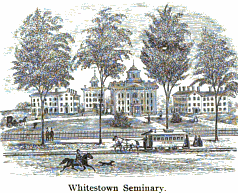
School in upstate New York (1827–1843)
| Field | Value |
|---|---|
| name | Oneida Institute |
| image | File:Oneida Institute, Whitestown, New York.png |
| image_upright | 1.25 |
| other_names | Oneida Institute of Science and Industry |
| Whitestown Seminary | |
| former_name | |
| top_free_label | |
| top_free | |
| established | 1827 |
| closed | 1843 |
| founder | |
| religious_affiliation | Presbyterian |
| academic_affiliation | |
| president | George Washington Gale (1827–1833) |
| Beriah Green (1833–1843) | |
| students | |
| other_students | |
| address | |
| city | Whitesboro |
| state | NY |
| country | USA |
| postalcode | |
| coordinates | |
| campus_size | 114 acres |
| embedded |
For the perfectionist religious communal society founded by John Humphrey Noyes and his followers, see Oneida Community
Whitestown Seminary Beriah Green (1833–1843)
The Oneida Institute ( ) was a short-lived Presbyterian school in Whitesboro, New York, United States, that was a national leader in the emerging abolitionist movement. Existing from 1827 to 1843, the school was radical and the first that accepted both Black and White students in the United States. According to Earnest Elmo Calkins, Oneida was "the seed of Lane Seminary, Western Reserve College, Oberlin and Knox colleges."
The Oneida Institute was founded in 1827 by George Washington Gale as the Oneida Institute of Science and Industry. His former teacher (in the Addison County Grammar School, Middlebury, Vermont, 1807–1808){{cite book |editor-first=Edgar Jolls |editor-last=Wiley |access-date=2019-08-01 |archive-date=2019-08-01 |archive-url=https://web.archive.org/web/20190801162207/https://knox.illinoisgenweb.org/bios_f.htm |url-status=live |access-date=2019-08-01 |archive-date=2019-08-01 |archive-url=https://web.archive.org/web/20190801162842/https://openlibrary.org/works/OL4795945W/They_broke_the_prairie |url-status=live |access-date=July 30, 2019 |archive-date=July 13, 2019 |archive-url=https://web.archive.org/web/20190713172216/https://www.knox.edu/about-knox/our-history/perspectives-on-knox-history/origins-of-knox-college |url-status=live
The first student movement in the country, the Lane Rebels, began at Oneida. A contingent of about 24, with an acknowledged leader (Theodore Dwight Weld), left Oneida for Lane and then, more publicly, soon left Lane for Oberlin. Oneida's first president, Gale, founded Knox Manual Labor Institute, later Knox College, in Galesburg, Illinois. Oneida hired its second president, Beriah Green, from Oberlin's competitor in northeast Ohio, Western Reserve College. All of these institutions and people are very much linked to the explosively emerging topic of the abolition of slavery.
The first president: George Washington Gale
The institute opened in May 1827 with 2 instructors, Gale and Pelatiah Rawson (sometimes spelled Peletiah), the latter a Hamilton College graduate and engineer that had worked on the just-completed Erie Canal. There were initially 20 students,{{cite news
Oneida was the first and leading American example of the manual labor college, which Gale thought he had originated, although there were earlier examples, and Weld had proposed a manual labor program unsuccessfully to Hamilton College.{{cite news
"Religious fervor was kept at a white heat. Studies were interrupted to hold protracted revival meetings." Gale replaced the study of Latin and Classical Greek with Hebrew and Biblical Greek. This change, especially regarding Latin, was vigorously opposed by the Presbyterian Presbytery, with financial consequences.{{cite book
The charismatic, influential Christian revivalist Charles Finney had been a student of Gale prior to Oneida, and Gale sought at Oneida to train students "as emissaries of the new revivalism". "The result was a large crop of crusaders and reformers, who were later turned loose to fulminate against drink, slavery, Sabbath breaking, [and] irreligion, some of whom became famous in their proseletyzing fields."
Gale "lacked the qualities of a leader". In the summer of 1833 a debate on colonization led to the formation of a colonization and an anti-slavery society.{{cite book
Student dissatisfaction led to a mass walk-out in 1832, with about 24 students leaving for Lane, then Oberlin. Gale soon desired to be replaced; he went to Illinois, where he began Galesburg, Illinois, and the Knox Manual Labor College, which in 1857 became Knox College. Gale left the institute with "fiscal problems", saddled with "numerous financial obligations".
The "Lane Rebels"
Main article: Lane Seminary#The Oneida Institute and Lane, Lane Seminary#The "Lane Rebels" resign
Theodore Dwight Weld, who had studied at Oneida from 1827 to 1830, was dissatisfied with Gale's leadership. He led a 1833 exodus of "Oneida boys...disenchanted with Gale's leadership and the lack of regular theological courses"; they rafted down the French and Allegheny rivers to Cincinnati, and constituted 24 of the 40 members of the Lane Seminary's original student body.
The second and last president: Beriah Green
|author-link=Josiah Bushnell Grinnell After a search, the trustees settled on abolitionist firebrand Beriah Green, who started in 1833, and "for whom Gale had nothing but scorn". The school was dominated by Green's personality and was known as "President Green's school".
Curriculum
Green "revamped Oneida's curriculum by giving greater attention to the study of ethics or moral philosophy than was the case during Gale's tenure, or indeed at most American colleges in the 1830s." He replaced the study of Latin and classical Greek with Hebrew and New Testament Greek.
In 1836 (another source{{cite book |chapter-url=https://archive.org/details/historyojibways00nielgoog}} says 1838), in the "juvenile department", William Whipple Warren studied arithmetic, English grammar, geography, and "the Greek of Matthew's gospel".{{cite book |editor-first=Theresa |editor-last=Schenck |author-link=William W. Warren |access-date=2019-07-17 |archive-date=2021-07-20 |archive-url=https://web.archive.org/web/20210720141025/https://books.google.com/books?id=99qGIzEzVIsC |url-status=live
For admittance to the school, Green stated: |chapter-url=https://archive.org/details/miscellaneouswr00nygoog}}}}
Abolitionism; admitting Black students
The curriculum was in line with Green's goal of training abolitionist activists, which he believed was what Christianity mandated. Abolitionism was a "sacred vocation". The institute under Green was "an abolition college",{{cite journal |access-date=July 25, 2019 |archive-date=July 20, 2021 |archive-url=https://web.archive.org/web/20210720141031/https://digital.library.cornell.edu/catalog/may875006 |url-status=live
Green accepted the job on two conditions: that he be allowed to preach "immediatism", the immediate emancipation of slaves, and that it be allowed to admit African-American students. These were agreed to. Prior to Green, there had not been any Black students at Oneida; so far as is known, none had applied.
In 1833, allowing African-American students into educational institutions alongside whites was controversial at best, and aroused bitter, even violent opposition. (Even schools for black students only could be the object of violence.{{cite news |access-date=October 13, 2019 |archive-date=October 13, 2019 |archive-url=https://web.archive.org/web/20191013122244/https://www.newspapers.com/clip/37120369/school_for_blacks_destroyed/ |url-status=live |access-date=2019-09-05 |archive-date=2021-07-07 |archive-url=https://web.archive.org/web/20210707115038/https://www.loc.gov/resource/rbaapc.10700/?sp=1 |url-status=live |access-date=2019-09-04 |archive-date=2020-11-26 |archive-url=https://web.archive.org/web/20201126025534/https://www.newspapers.com/search/#lnd=1&query=Firebrands%2C+Incendiaries%2C+and+Fanatics&ymd=1834-09-27 |url-status=live
A month before Green's arrival in August 1832, 35 students formed an antislavery society on immediatist principles, the first in New York State. 34 students formed a colonization society; colonization was not in favor of full emancipation, and thought the best place for free blacks was "back to Africa", e.g. Liberia.
In his inaugural address, Green called for "immediate, unconditional, and uncompensated emancipation". Compensated emancipation meant that owners of released slaves would be compensated for the loss of their "property", as they were, in part, when the District of Columbia's slaves were emancipated in 1862.
In this environment Oneida admitted African-American students, the first college in the country to admit them without restrictions.{{cite book
There were generally 10–14 "colored students". In 1840, "including Indian blood", there were 20.
Finances
When Green became president, the institute was in debt. American abolitionists, including Gerrit Smith,{{cite book |editor-first=Sarah |editor-last=Elbert
In 1839 Green and the other faculty published in The Colored American an appeal for donations.{{cite news
Enrollment
Before 1840, there was an average of 100 students. After incurring the large debt (Charles Stuart called it "embarrassments"), "in 1841 the instructors relinquished nearly all of their salaries", and enrollment was cut to 25; the following year, 50–75. Just before closure, counting the president there were four professors, "and an able financier".
The school's transformation into a "hotbed of abolition" was not well received by authorities. Milton Sernett called it, under Green, "far too radical for its time".{{citation |author-link=Milton Sernett |author-link=Gerald Sorin |url-access=registration
In 1836, the New York Senate passed a resolution "directing the Committee on Literature [schools] to inquire into the propriety of denying the Oneida Institute all participation in the Benefits of the Literature Fund." This was because it was "regarded as the hot-bed of sedition, [and] that Beriah Green, the principal, had been active and successful in propagating the doctrines of abolitionism." The Legislature took no action after more than 150 people met to protest and to demand academic freedom.
During 1833–1834 Frost's employment is specified as "Agent, Oneida Institute". By 1835 Frost had left Whitesboro for a pulpit in Elmira (which he helped make an Underground Railroad center{{cite news |access-date=August 10, 2019 |archive-date=October 12, 2017 |archive-url=https://web.archive.org/web/20171012210747/http://www.crookedlakereview.com/books/saints_sinners/martin14.html |url-status=live
The Oneida Institute ceased operations in 1843. One factor was the New York Anti-Slavery Society's failure to pay the institute $2000 for the printing costs of their paper Friend of Man, but even if it had, there was no way to make the institute financially viable. According to Dana Bigelow, "Green left the institution a wreck". He identifies the causes of its failure as three: first, the manual labor scheme; "unskilled labor was found to be unprofitable". (The $1000 mentioned above, received from crops, did not cover the costs of their production.) Second, replacing the classics with the Bible: "this did much to disconnect the institution with the general theory and habit of culture in the country and to stamp it with a certain reputation of singularity which could not fail to be in many ways disastrous." Finally, the treating of black and white students equally, and its "iconoclastic zeal for the overthrow of social institutions and interests", led to "much popular odium". According to Bigelow, this was a factor in fundraiser Frost's departure.{{cite journal
"Oneida was the seed of Lane Theological Seminary [ 1830], Western Reserve University [1826], Oberlin [1833] and Knox College [1837]." Through the Whitestown Seminary it is also a predecessor of Bates College (1855). A graduate, William G. Allen, became the second African-American professor in the country at nearby New-York Central College, which also admitted African-American students and was also short-lived.
Whitestown Seminary and afterwards
To satisfy debts its facilities were sold to the Free Will Baptists, who created the Whitestown Seminary in 1844. A condition of the sale was that the new seminary admit students of "all colors". Several Oneida Institute students enrolled. It was consolidated in 1845 with the Clinton Seminary.{{cite book
A predecessor of the Whitestown Seminary was the school of H. H. Kellogg, in Clinton. Elizabeth, "lady principal", daughter of Robert Everett, two of whose brothers attended the Oneida Institute, married John Jay Butler.
According to Appletons' Cyclopædia of American Biography, in 1845 Green founded a Manual Labor School in Whitesboro.
The school buildings are no longer standing, and the campus land has been reused for a factory, a funeral home, and some residences.
Students
Green's policy was to accept any qualified student that applied. As a result, student Grinnell described the student body as "a motley company", consisting of:
Alumni of the Oneida Institute
African-American students
Listed in bold are students who were at the Noyes Institute before it was destroyed, in August 1835. No Black students from Oneida enrolled at Lane.
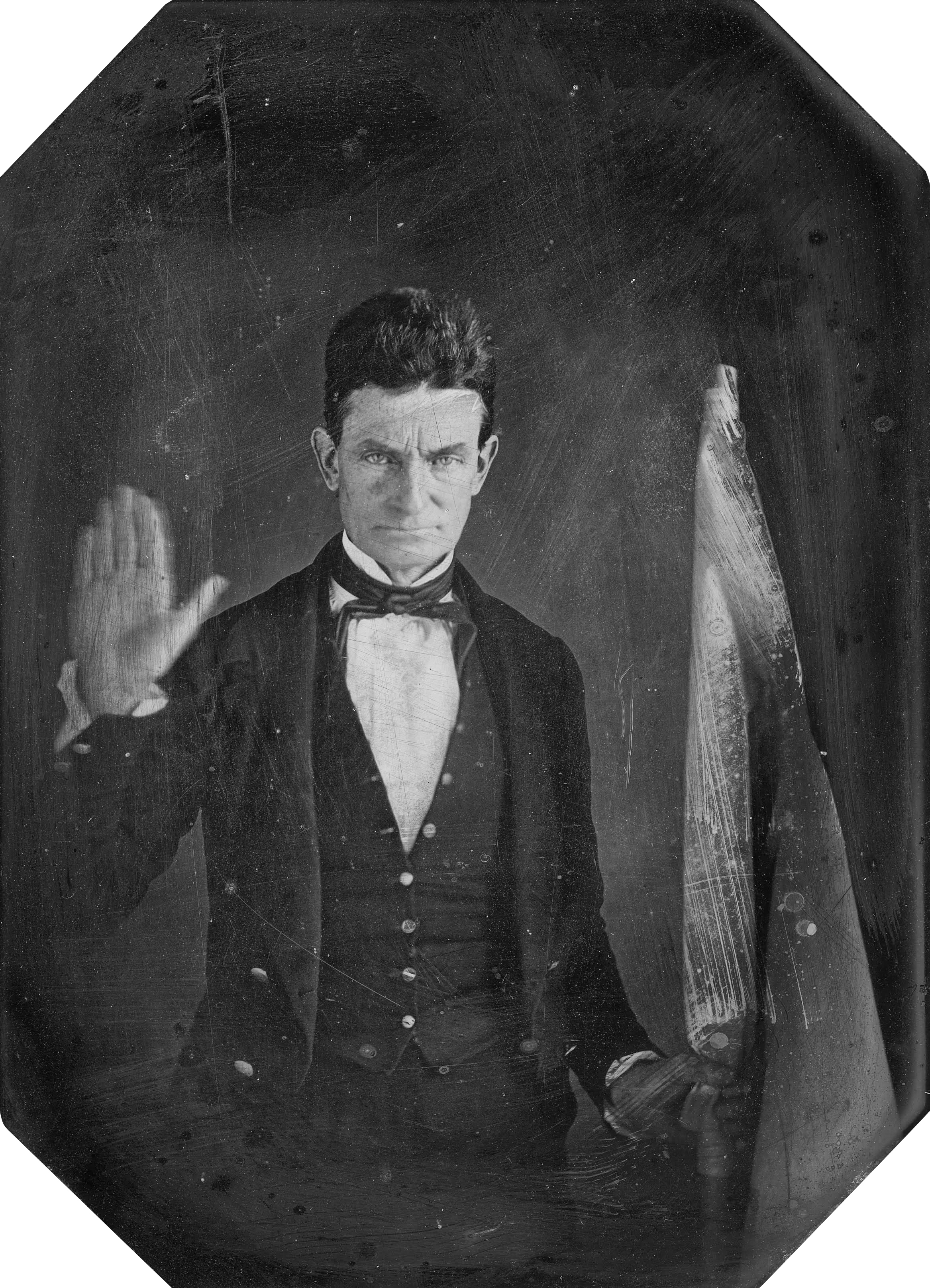
- William G. Allen (1820–1888), lecturer and professor at New-York Central College, the first college to employ African-American professors
- Amos G. Beman (1812–1872), abolitionist and Congregationalist pastor in New Haven, Connecticut.
- Garrett A. Cantine, later a teacher and principal of Nevada City Colored Schools. Became a minister.
- Alexander Crummell (1819–1898), abolitionist; first an African Methodist Episcopalian minister in Providence, Rhode Island, then a missionary. Formerly a Noyes Institute student.
- John V. DeGrasse, physician
- William D. Forten
- Amos Noë Freeman (1809–1893), teacher, minister, and abolitionist
- Henry Highland Garnet (1815–1882), escaped slave, abolitionist, minister, educator, and orator. Became a Congregationalist minister in Troy, New York. Formerly a Noyes Institute student.
- Samuel A. Jackson
- Jermain Wesley Loguen (1813–1872), escaped slave, abolitionist, bishop of the African Methodist Episcopal Zion Church. Known later as the "General Superintendent of the Underground Railroad in the Syracuse area." He did not complete his studies at Oneida.
- Jacob A. Prime. Remained at the Whitestown Seminary after the institute closed. Became a minister.
- Elymus P. Rogers. Had been a student of Gerrit Smith's Peterboro Manual Labor School during the one year of its existence. Became a minister.
- Thomas S. Sydney (c. 1818–1841), one of the four Noyes Institute students. With Crummell, started a school for colored students in New York; became principal of the New York Select Academy, a high school. Became a minister.
- Samuel Ringgold Ward (1817–c. 1866), escaped slave, abolitionist, teacher minister, and newspaper editor{{cite encyclopedia |editor-first=Paul |editor-last=Finkelman
- Augustus Washington (c. 1820-1821–1875), later studied at Dartmouth, daguerrotypist,{{cite book
- Julia Williams (1811–1870), abolitionist, future wife of Henry Highland Garnet, whom she met at the Noyes Institute. Before Noyes, was a student in Prudence Crandall's short-lived Canterbury Female Boarding School. Oneida's only known female student, accepted perhaps because she came as part of a group of four from Noyes.
[[Native Americans in the United States|Native American]] students
- Kunkapot
- William Whipple Warren (1825–1853), white–Ojibwe historian and interpreter
White students
Listed in bold are those students who, under the influence of Theodore D. Weld, left Oneida for the Lane Theological Seminary. All of them were white.
- John Watson Alvord, Congregational minister; President of the Freedman's Savings Bank, 1868–1874.{{cite web |access-date=July 25, 2019 |archive-date=February 10, 2020 |archive-url=https://web.archive.org/web/20200210220329/http://www2.oberlin.edu/external/EOG/LaneDebates/RebelTable.html |url-status=live
- Joel Prentiss Bishop (1814–1901), attorney and legal writer
- Albert A. Bliss (1812–1893), Ohio State Treasurer
- William H. Brand (1824–1891), legislator in New York State
- George Bristol{{cite book
- Charles Peck Bush (1809–1857), Michigan legislator
- Horace Bushnell (1802–1876). Bushnell and Dresser were the first two to enroll at Lane. In the 1830s he was a minister in Ohio.
- Amos Dresser (1812–1904). Bushnell and Dresser were the first two to enroll at Lane. Dresser left Lane with the others, but did not go to Oberlin. In 1835, in a nationally publicized incident, he was tried for possessing anti-slavery publications, convicted, and whipped publicly in Nashville, Tennessee.{{cite news |access-date=April 24, 2021 |archive-date=April 24, 2021 |archive-url=https://web.archive.org/web/20210424180855/https://www.newspapers.com/clip/41482590/amos-dresser-on-his-conviction-and/ |url-status=live |access-date=July 29, 2019 |archive-date=July 29, 2019 |archive-url=https://web.archive.org/web/20190729174417/https://www.newspapers.com/clip/34358436/amos_dresser_case_part_1/ |url-status=live
- Alexander Duncan, perhaps to be identified with Alexander Duncan (1788–1853), physician and legislator
- John and Robert Everett, who both graduated; they learned the printer's trade working on Friend of Man, and went on to print the Welsh religious magazine Y Cenhadwr americanaidd of their father Robert Everett. Their brother-in-law J.J. Butler was professor of theology in Whitesboro, then went to Lewiston, Maine, and finally to the new Freewill Baptist school, Hillsdale College.{{cite book
- Charles Grandison Finney (1792–1875), leading revivalist, second president of Oberlin College. Finney was a student of Gale at his pilot project, not the institute itself.
- Hiram Foote
- Joseph L. Frothingham, disappeared when he was at Whitesboro about to begin studying.{{cite news |access-date=July 30, 2019 |archive-date=July 30, 2019 |archive-url=https://web.archive.org/web/20190730002810/https://www.newspapers.com/clip/34361284/disappearance_of_joseph_frothingham/ |url-status=live
- Samuel Green, Beriah Green's oldest son, who published information on him.{{cite book
- Josiah Bushnell Grinnell (1821–1891), U.S. Representative from Iowa, founder of Grinnell, Iowa, benefactor of Grinnell College
- Augustus Hopkins
- Russell Jesse Judd
- John J. Miter
- Lucius H. Parker (1807–1872). Graduated from Oberlin Seminary in 1838.{{cite web |access-date=July 25, 2019 |archive-date=February 10, 2021 |archive-url=https://web.archive.org/web/20210210202312/https://www2.oberlin.edu/external/EOG/LaneDebates/RebelBios/LuciusParker.html |url-status=live
- William F. Peck, later a professor at Oberlin
- Joseph Hitchcock Payne
- Ezra Abell Poole
- Samuel Fuller Porter (1813–1911), from Whitestown.{{cite web |access-date=July 25, 2019 |archive-date=February 10, 2021 |archive-url=https://web.archive.org/web/20210210202339/https://www2.oberlin.edu/external/EOG/LaneDebates/RebelBios/SamuelFullerPorter.html |url-status=live
- Charles Stewart Renshaw
- Benjamin Burleigh Smith, missionary to India
- George Stanton, brother of Henry, died of cholera while a student
- Henry Brewster Stanton (1805–1887), abolitionist. Future husband of suffragist Elizabeth Cady Stanton, older brother of Robert L.
- Robert L. Stanton, younger brother of Henry Brewster
- James Steele (1808–1859){{cite web |access-date=July 25, 2019 |archive-date=February 10, 2020 |archive-url=https://web.archive.org/web/20200210220250/http://www2.oberlin.edu/external/EOG/LaneDebates/RebelBios/JamesSteele.html |url-status=live
- Asa A. Stone
- Sereno W. Streeter
- Two sons of abolitionist Lewis Tappan,{{cite book |chapter-url=http://www.woosterdigital.org/causeforfreedom/exhibits/show/founding_of_lane_seminary/early_history_of_lane_seminary |access-date=2019-07-30 |archive-date=2019-07-30 |archive-url=https://web.archive.org/web/20190730013811/http://www.woosterdigital.org/causeforfreedom/exhibits/show/founding_of_lane_seminary/early_history_of_lane_seminary |url-status=live
- Ebenezer Tucker, graduated in 1840; continued his studies at Oberlin. Became a teacher at the integrated Union Literary Institute, in Randolph County, Indiana.{{cite book
- Giles Waldo. One of the "Lane Rebels", but, uniquely, shows up as a student at Oneida after leaving Lane.{{cite journal |access-date=2019-07-30 |archive-date=2018-11-02 |archive-url=https://web.archive.org/web/20181102052747/http://evols.library.manoa.hawaii.edu/bitstream/10524/336/1/JL22256.pdf |url-status=live |access-date=2019-07-30 |archive-date=2018-11-03 |archive-url=https://web.archive.org/web/20181103001924/http://evols.library.manoa.hawaii.edu/bitstream/10524/245/2/JL21050.pdf |url-status=live
- Calvin Waterbury. In 1831, "Waterbury got a school at Newark on the Licking River in Ohio. When in the spring Waterbury talked too much temperance, the inhabitants threatened to ride him out of town on a rail. He prudently climbed aboard a raft and floated down to Cincinnati."
- Augustus Wattles{{cite journal |access-date=2021-06-17 |archive-date=2021-06-19 |archive-url=https://web.archive.org/web/20210619103203/https://www.jstor.org/stable/4137424 |url-status=live |url-access=subscription
- Edward Weed "There was a town gathering at Chillicothe on the same day of last week, when Mr. Weed arrived in town on some business; and being known as an abolitionist, some indignities were offered to him—such as shaving his horse, removing the wheels of his wagon, &c.; that Mr. Weed soon after left town, was followed by the mob, his wagon broken to pieces, his horse killed, and at length himself suspended to a tree by a rope of bark, until he was dead."{{cite news |access-date=February 14, 2020 |archive-date=February 13, 2020 |archive-url=https://web.archive.org/web/20200213195214/https://www.newspapers.com/clip/44173608/murder_of_abolitionist_edward_weed/ |url-status=live
- Theodore Dwight Weld (1803–1895), leading abolitionist, friend of Finney. Studied at Oneida 1827–1830;{{cite book
- Samuel T. Wells
- George Whipple
- Hiram Wilson (1803–1864), abolitionist, founded the school for fugitive slaves in Canada in which William Allen taught in 1841. One of the "Lane rebels".
Alumni of the Whitestown Seminary
For a list, taken from History of Oneida County, 1667—1878 by Everets and Farriss, see http://files.usgwarchives.net/ny/oneida/history/schools/whitestown.txt.
- Amos L. Allen (1837–1911), U.S. Representative from Maine
- Lewis A. Brigham (1831–1885), U.S. Representative from New Jersey
- Edward Davies (1827–1905), minister and author
- John Fullonton (1812–1896), Free Baptist Theological School professor, member and chaplain of the New Hampshire House of Representatives
- Jay R. Hinckley (1840–?), member of the Wisconsin State Assembly.
- James Liddell Phillips, physician and missionary
- Jacob A. Prime. Remained at the Whitestown Seminary after the institute closed.
- Evan Pugh (1828–1863), head of the Farmers' High School, then the Agricultural College of Pennsylvania, predecessors of Pennsylvania State University
- Ellis H. Roberts (1827–1918), Treasurer of the United States, 1897–1905
- James Schoolcraft Sherman (1855–1912), Vice President of the United States (1909–1912)
- Mary Traffarn Whitney (1852–1942), minister, editor, social reformer, philanthropist, lecturer
References
References
- {{Cite Merriam-Webster. Oneida
- Madison, Samantha. (2017-06-11). "A look at how some historic buildings have fared over time".
- (2020-02-16). "Black history, keep it real".
This article was imported from Wikipedia and is available under the Creative Commons Attribution-ShareAlike 4.0 License. Content has been adapted to SurfDoc format. Original contributors can be found on the article history page.
Ask Mako anything about Oneida Institute — get instant answers, deeper analysis, and related topics.
Research with MakoFree with your Surf account
Create a free account to save articles, ask Mako questions, and organize your research.
Sign up freeThis content may have been generated or modified by AI. CloudSurf Software LLC is not responsible for the accuracy, completeness, or reliability of AI-generated content. Always verify important information from primary sources.
Report