From Surf Wiki (app.surf) — the open knowledge base
Old Catholic Church
Major Christian denomination
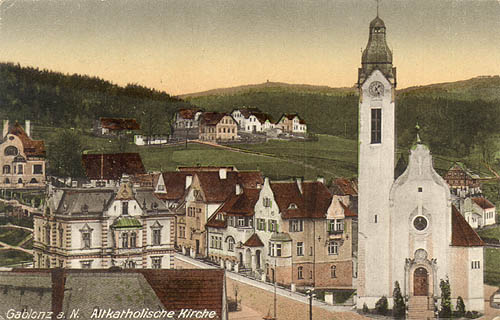
Major Christian denomination
| Field | Value |
|---|---|
| name | Old Catholic Church |
| imagewidth | 200px |
| polity | Episcopal |
| division_type | Union of Utrecht |
| * Old Catholic Church of the Netherlands<ref name | "UUpage139" |
| * Polish-Catholic Church in the Republic of Poland<ref name | "UUpage139" / |
| * Catholic Diocese of the Old Catholics in Germany<ref name | "UUpage139" / |
| * Christian Catholic Church of Switzerland<ref name | "UUpage139" / |
| * Old Catholic Church of Austria<ref name | "UUpage139" / |
| * Old Catholic Church of the Czech Republic<ref name | "UUpage139" / |
| division_type1 | Union of Scranton |
| * Polish National Catholic Church<ref name | "UnionScranton" |
| * Nordic Catholic Church<ref name | "UnionScranton"/ |
| associations | World Council of Churches (Union of Utrecht only) |
| full_communion | Anglican Communion (Union of Utrecht only) |
| Church of Sweden (Union of Utrecht only) | |
| Philippine Independent Church (Union of Utrecht only) | |
| separated_from | Catholic Church |
| footnotes | Also known as Old Catholics or Old-Catholic churches |
- Old Catholic Church of the Netherlands
- Old Catholic Church in Sweden and Denmark
- Polish-Catholic Church in the Republic of Poland
- Catholic Diocese of the Old Catholics in Germany
- Christian Catholic Church of Switzerland
- Old Catholic Mission in France
- Old Catholic Church of Austria
- Old Catholic Church of Croatia
- Old Catholic Church of the Czech Republic
- Polish National Catholic Church
- Nordic Catholic Church
- Old Catholic Church in Italy (NCC-COI) Church of Sweden (Union of Utrecht only) Philippine Independent Church (Union of Utrecht only) The terms Old Catholic Church, Old Catholics, Old-Catholic churches, or Old Catholic movement, designate "any of the groups of Western Christians who believe themselves to maintain in complete loyalty the doctrine and traditions of the undivided church but who separated from the See of Rome after the First Vatican Council of 1869–70".
The expression Old Catholic has been used from the 1850s by communions separated from the Catholic Church over certain doctrines, primarily concerned with papal authority and infallibility. Some of these groups, especially in the Netherlands, had already existed long before the term. The Old Catholic Church is separate and distinct from Traditionalist Catholicism.
Two groups of Old Catholic churches currently exist: the Union of Utrecht (UU, not to be confused with Unitarian Universalism) and the Union of Scranton (US). Neither group is in full communion with the Holy See. Member churches of the Union of Utrecht are in full communion with the Anglican Communion as well as the Evangelical Lutheran Church of Sweden and the Philippine Independent Church and many UU churches are members of the World Council of Churches. Other churches which claim to be Old Catholic yet are not members of the Union of Utrecht or Union of Scranton are Independent Old Catholics; within the independent sacramental movement, Independent Old Catholics do not consider recognition by Utrecht as a necessary litmus test.
Both mainstream groups trace their beginning to the 18th century when members of the See of Utrecht refused to obey papal authority and were excommunicated. Later Catholics who disagreed with the Catholic dogma of papal infallibility, as defined by the First Vatican Council (1870), were thereafter without a bishop and joined with the See of Utrecht to form the Union of Utrecht of the Old Catholic Churches. Today, Utrechter Union churches are found chiefly in Germany, Switzerland, the Netherlands, Austria, Poland, and the Czech Republic.
In 2008, the Polish National Catholic Church created the Union of Scranton and separated from the Union of Utrecht. This was done in protest of the older Union's decision to ordain women and bless same-sex marriages. The Nordic Catholic Church later joined the Union of Scranton as well.
In 2020, according to the World Christian Database and World Christian Encyclopedia, published by Edinburgh University Press, there were 4,896,000 Old Catholics worldwide.
History
Pre-Reformation diocese and archdiocese of Utrecht
Main article: Archdiocese of Utrecht (695–1580)
In the pre-Reformation era, there were already disputes that set the stage for an independent bishopric of Utrecht between the Catholic Church and the Holy Roman Empire, notably during between the 11th to 15th centuries.
Post-Reformation Netherlands
Main article: Old Catholic Church of the Netherlands, Old Catholic Archdiocese of Utrecht
The northern provinces that revolted against the Spanish Netherlands and signed the 1579 Union of Utrecht, persecuted the Catholic Church, confiscated church property, expelled monks and nuns from convents and monasteries, and made it illegal to receive the Catholic sacraments. As a result, priests and communities went underground. Groups would meet for the sacraments in the attics of private homes at the risk of arrest. Priests identified themselves by wearing all black clothing with very simple collars.
All the episcopal sees of the area, including that of Utrecht, had fallen vacant by 1580, because the Spanish crown, which since 1559 had patronal rights over all bishoprics in the Netherlands, refused to make appointments for what it saw as heretical territories, and the nomination of an apostolic vicar was seen as a way of avoiding direct violation of the privilege granted to the crown. The appointment of an apostolic vicar, the first after many centuries, for what came to be called the Holland Mission was followed by similar appointments for other Protestant-ruled countries, such as England, which likewise became mission territories. The disarray of the Catholic Church in the Netherlands between 1572 and about 1610 was followed by a period of expansion of Catholicism under the apostolic vicars, leading to Protestant protests.
The initial shortage of Catholic priests in the Netherlands resulted in increased pastoral activity of religious clergy, among whom Jesuits formed a considerable minority, coming to represent between 10 and 15 percent of all the Dutch clergy in the 1600–1650 period. Conflicts arose between these, and the apostolic vicars and secular clergy. In 1629, there were 321 Catholic priests in the United Provinces, 250 secular and 71 religious, with Jesuits at 34 forming almost half of the religious. By the middle of the 17th century, the secular priests were 442, the religious 142, of whom 62 were Jesuits.
The sixth apostolic vicar of the Dutch/Holland Mission, Petrus Codde, was appointed in 1688. In 1691, the Jesuits accused him of favouring the Jansenist heresy. Pope Innocent XII appointed a commission of cardinals to investigate the accusations against Codde. The commission concluded that the accusations were groundless. In 1702, Pope Clement XI deposed Codde, to which Codde obeyed.
While the religious clergy remained loyal to the Holy See, three-quarters of the secular clergy at first followed Codde, but by 1706 over two-thirds of these returned to Catholic allegiance. Of the laity, the overwhelming majority sided with the Holy See. Thus, most Dutch Catholics remained in full communion with the pope and with the apostolic vicars appointed by him.
After Codde's resignation, the Diocese of Utrecht elected Cornelius Steenoven as bishop. The See of Utrecht declared the right to elect its own archbishop in 1724, after being accused of Jansenism. Following consultation with both canon lawyers and theologians in France and Germany, Dominique Marie Varlet, a Catholic bishop of the French Oratorian Society of Foreign Missions, consecrated Steenoven as a bishop without a papal mandate. What had been de jure autonomous became de facto an independent Catholic church. Although the pope was notified of all proceedings, the Holy See still regarded the diocese as vacant due to papal permission not being sought. The pope, therefore, continued to appoint apostolic vicars for the Netherlands. Steenoven and the other bishops were excommunicated by the Catholic Church, and thus began the Old Catholic Church in the Netherlands. Subsequent bishops were then appointed and ordained to the sees of Deventer, Haarlem and Groningen under the See of Utrecht in later years.
Due to prevailing anti-papal feeling among the powerful Dutch Calvinists, the Church of Utrecht was tolerated and even praised by the government of the Dutch Republic.
In 1853 Pope Pius IX received guarantees of religious freedom from King William II of the Netherlands and re-established the Catholic hierarchy in the Netherlands. The Holy See considers the Archdiocese of Utrecht as the continuation of the episcopal see founded in the 7th century and raised to metropolitan status on 12 May 1559, thus not recognizing any legitimacy of Old Catholics.
First Vatican Council, Old Catholic Union of Utrecht
After the First Vatican Council (1869–1870), several groups of Catholics in Austria-Hungary, Imperial Germany, and Switzerland rejected the Catholic dogma of papal infallibility in matters of faith and morals and left to form their own churches. The formation of the Old Catholic communion of Germans, Austrians and Swiss began under the leadership of Ignaz von Döllinger, following the First Vatican Council. These were supported by the Old Catholic Archbishop of Utrecht, who ordained priests and bishops for them. Later the Dutch were united more formally with many of these groups under the name "Utrecht Union of Churches".
In the spring of 1871, a convention in Munich attracted several hundred participants, including Church of England and Protestant observers. Döllinger, an excommunicated Catholic priest and church historian, was a notable leader of the movement but was never a member of an Old Catholic church.
The convention decided to form the "Old Catholic Church" in order to distinguish its members from what they saw as the novel teaching in the Catholic dogma of papal infallibility. Although it had continued to use the Roman Rite, from the middle of the 18th century the Dutch Old Catholic See of Utrecht had increasingly used the vernacular instead of Latin. The churches which broke from the Holy See in 1870 and subsequently entered into union with the Old Catholic See of Utrecht gradually introduced the vernacular into the liturgy until it completely replaced Latin in 1877. In 1874, the Old Catholics removed the requirement of clerical celibacy.
The Catholic Diocese of the Old Catholics in Germany received support from the government of Otto von Bismarck, whose 1870s Kulturkampf policies persecuted the Catholic Church. In Austria-Hungary, pan-Germanic nationalist groups, like those of Georg Ritter von Schönerer, promoted the conversion of all German speaking Catholics to Old Catholicism and Lutheranism, with poor results.
Spread of Old Catholicism throughout the world
Split of Old Roman Catholics and Liberal Catholics
In 1910, Arnold Mathew—a former British Catholic and Anglican, who was consecrated by Old Catholic Archbishop Gul in 1908—split away from the Union of Utrecht, establishing the Old Roman Catholic Church in Great Britain. In 1914, he consecrated Rudolph de Landas Berghes, who emigrated to the United States in 1914 and planted the seed of Old Roman Catholicism in the Americas. Mathew also consecrated an excommunicated Capuchin Franciscan priest as bishop: Carmel Henry Carfora. Various Christian denominations claiming apostolic succession from Mathew were founded in the world through Berghes, Carfora, and others including James Wedgwood—founder of the Liberal Catholic Church. Such groups' apostolic succession is deemed to be invalid by both the Holy See, the Union of Utrecht and the Anglican Communion. Mathew himself was excommunicated and declared a "pseudo-bishop" by Pope Pius X, while the International Old Catholic Bishops' Conference declared his consecration to be null and void, obtained mala fide.
Another significant figure, Joseph René Vilatte, who was ordained a deacon and priest by Bishop Eduard Herzog, of the Christian Catholic Church of Switzerland; he worked with Catholics of Belgian ancestry living on the Door Peninsula of Wisconsin, with the knowledge and blessing of the Union of Utrecht and under the full jurisdiction of the local Episcopal Bishop of Fond du Lac, Wisconsin. However, he subsequently left the Old Catholics and was later consecrated a bishop by Patriarch Mar Julius I of the Malankara Orthodox Syrian Church, though the validity of such consecration is disputed. He proceeded to establish a number of Christian denominations before eventually reconciling with the Holy See.
Polish National Catholic schism from Utrecht
In 2003, the Polish National Catholic Church voted itself out of the UU due to the Utrechter Union's acceptance of female ordination, and their attitude towards homosexuality, both of which the Polish National Catholic Church rejects. Prior, in 1994, the German Old Catholic bishops of the Utrechter Union decided to ordain women as priests, and put this into practice on 27 May 1996. Similar decisions and practices followed in Austria, Switzerland and the Netherlands. By 2020, the Swiss church also voted in favour of same-sex marriage. Marriages between two men and two women were conducted in the same manner as heterosexual marriages.
Old Catholic Church of Slovakia within Utrecht
The Old Catholic Church of Slovakia was accepted in 2000 as a member of the Union of Utrecht. As early as 2001 some issues arose concerning future consecration of Augustin Bacinsky as old-catholic bishop of Slovakia, and the matter was postponed. The Old Catholic Church of Slovakia was expelled from the Union of Utrecht in 2004, because the episcopal administrator Augustin Bacinsky had been consecrated by an episcopus vagans.
Independent Old Catholicism in the Americas
At present, the only recognized Christian church in North America that is in communion with the Union of Utrecht is the Episcopal Church. Since the Polish National Catholic Church schismed with the Utrechter Old Catholics, the two Old Catholic unions do not recognize each other. Christians claiming to be Old Catholic outside of both the Union of Utrecht and Union of Scranton are referred to as Independent Old Catholics; according to Robert Caruso in The Old Catholic Church:
The history of the independent Old Catholic movement in the U.S. is highly disordered, partially because so many fragmented entities have erroneously adopted the term "Old Catholic," e.g., the Old Roman Catholic Church, the Liberal Catholic Church, the churches established by Bishop Vilatte and Bishop Mathew, and so on. This problem developed when more and more self-labeled independent Catholic bishops began falsely claiming to be part of the Old Catholic Church. These wandering bishops (as they are labeled by Utrecht and the Anglican churches) were, in a manner of speaking, altogether of another ecclesial origin apart from the Old Catholic churches of the Union of Utrecht.
Statistics
Utrecht
, there were 115,000 members of Old Catholic churches aligned with Utrecht.
| Church | Membership |
|---|---|
| Catholic Diocese of the Old-Catholics in Germany | 15,500 |
| Old Catholic Church of Austria | 14,621 |
| Old Catholic Church of the Netherlands | 10,000 |
| Christian Catholic Church of Switzerland | 13,500 |
| Old Catholic Mariavite Church in Poland | 29,000 |
| Polish Catholic Church in Poland | 20,000 |
Scranton
As of 2008, there were more than 60,000 members of Old Catholic churches aligned with Scranton.
| Church | Membership |
|---|---|
| Polish National Catholic Church | 60,000 |
| Nordic Catholic Church | Undetermined |
Doctrine
Old Catholic theology views the Eucharist as the core of the Christian Church; from this point of view, the church is a community of believers. All are in communion with one another around the sacrifice of Jesus Christ, as the highest expression of the love of God. Therefore, the celebration of the Eucharist is understood as the experience of Christ's triumph over sin. The defeat of sin consists in bringing together that which is divided.
An active contributor to the Declaration of the Catholic Congress of Munich, 1871—and all later assemblies—was Johann Friedrich von Schulte, professor of dogmatics at Prague. Von Schulte summed up the results of the congress as follows:
- adherence to the ancient Catholic faith;
- maintenance of the rights of Catholics;
- rejection of new Catholic dogmas;
- adherence to the constitutions of the ancient Church with repudiation of every dogma of faith not in harmony with the by-then established conscience of the Church;
- reform of the Church with constitutional participation of the laity;
- preparation of the way for reunion of the Christian confessions;
- reform of the training and position of the clergy;
- adherence to the State against the attacks of Ultramontanism;
- rejection of the Society of Jesus;
- claim to the real property of the Church
The 1889 Declaration of Utrecht states the Union of Utrecht believes in Vincent of Lérins following quote from his Commonitory: "all possible care must be taken, that we hold that faith which has been believed everywhere, always, by all; for this is truly what is catholic". The UU allows those who are divorced to have a new religious marriage in the church, and Old Catholics had gradually replaced the Latin mass with the vernacular by 1877. In 1989, the Union of Utrecht opposed abortion, but "[u]nusual exceptions should be made in consultation with a priest".
Apostolic succession
Old Catholicism values apostolic succession by which they mean both the uninterrupted laying on of hands by bishops through time (the historic episcopate), and the continuation of the whole life of the church community by word and sacrament over the years and ages. Old Catholics consider apostolic succession to be the handing on of belief in which the whole Church is involved. In this process the ministry has a special responsibility and task, caring for the continuation in time of the mission of Jesus Christ and his apostles.
According to the principle of ex opere operato, certain ordinations by bishops not in communion with Rome are still recognised as being valid by the Holy See, and the ordinations of and by Old Catholic bishops in the Union of Utrecht churches has never been formally questioned by the Holy See until the more recent ordinations of women as priests.
Ecumenism
The Union of Utrecht considers that the reunion of the churches has to be based on a re-actualization of the decisions of faith made by the undivided Church. In that way, they claim, the original unity of the Church could be made visible again. Following these principles, later bishops and theologians of the Union of Utrechts churches stayed in contact with Russian Orthodox, Lutheran and Anglican representatives.
Old Catholic involvement in the multilateral ecumenical movement formally began with the participation of two bishops, from the Netherlands and Switzerland, at the Lausanne Faith and Order (F&O) conference (1927). This side of ecumenism has always remained a major interest for Old Catholics who have never missed an F&O conference. Old Catholics also participate in other activities of the WCC and of national councils of churches. By active participation in the ecumenical movement since its very beginning, the OCC demonstrates its belief in this work.
Notes
References
Sources
References
- "Member Churches". Utrechter Union der Altkatholischen Kirchen.
- "The Union of Scranton: a union of churches in communion with the Polish National Catholic Church". Union of Scranton.
- (23 November 2016). "Agreement". Union of Utrecht.
- "Old-Catholic churches". [[World Council of Churches]].
- James R., Lewis. (1998). "The Encyclopedia of Cults, Sects, and New Religions". Prometheus Books.
- "Old Catholic church {{!}} Christianity {{!}} Britannica".
- Beyschlag, Willibald. (1898). "The Origin and Development of the Old Catholic Movement". The American Journal of Theology.
- (24 September 2020). "Bilateral Relations". [[Church of Sweden]].
- (2009-04-08). "Churches in Communion with the Church of England". Europe.anglican.org.
- "Old-Catholic Church in the Netherlands". Oikoumene.org.
- "Old-Catholic churches {{!}} World Council of Churches".
- Caruso, Robert. (2009). "The Old Catholic Church". Apocryphile Press.
- "ISM and Utrecht?".
- Zurlo, Gina A.. (2022). "Global Christianity: a guide to the world's largest religion from Afghanistan to Zimbabwe". Zondervan Academic.
- Johnson, Todd M.. (2020). "World Christian encyclopedia". Edinburgh University Press.
- Kaplan, Benjamin J.. (Autumn 1994). "{{thinsp}}'Remnants of the papal yoke': apathy and opposition in the Dutch reformation". [[The Sixteenth Century Journal]].
- (July 2009). "Faith on the Margins: Catholics and Catholicism in the Dutch Golden Age". Harvard University Press.
- (30 April 2012). "Calvinists and Catholics During Holland's Golden Age: Heretics and Idolaters". Cambridge University Press.
- (January 2004). "The Low Countries as a Crossroads of Religious Beliefs". BRILL.
- (September 2008). "John Calvin and Roman Catholicism: Critique and Engagement, then and Now". Baker Academic.
- (July 2009). "Faith on the Margins: Catholics and Catholicism in the Dutch Golden Age". Harvard University Press.
- Van Kley, Dale K.. (August 2008). "Civic Humanism in Clerical Garb: Gallican Memories of the Early Church and the Project of Primitivist Reform 1719-1791". Past & Present.
- Vissera, Jan. (2003). "The Old Catholic churches of the Union of Utrecht". International Journal for the Study of the Christian Church.
- Hardon, John A.. (1963). "Religions of the World". Newman Press.
- (1981). "Catholic Power in the Netherlands". McGill-Queen's Press.
- "Cambridge Journals Online - Ecclesiastical Law Journal". Journals.cambridge.org.
- (1986). "Domestic Correspondence of Dominique-Marie Varlet". BRILL.
- (October 2006). "The Old Catholic Church". Wildside Press LLC.
- (1984). "Aspects of European history, 1494-1789". Routledge.
- Algis Ratnikas. "Timeline Netherlands". Timelines.ws.
- ''Annuario Pontificio 2013'' (Libreria Editrice Vaticana 2013 {{ISBN. 978-88-209-9070-1), p. 769
- (September 2010). "Old Catholic Conference".
- (September 2010). "Declaration of the Catholic Congress".
- (September 2010). "A Study of the First Old Catholic Congresses".
- "Father Johann Joseph Ignaz von Dollinger".
- James S. Pula. (Summer 2009). "Polish-American Catholicism: A Case Study in Cultural Determinism". U.S. Catholic Historian.
- Davis, Derek H.. (Autumn 1998). "Editorial: Religious persecution in today's Germany: old habits renewed". J. M. Dawson Institute of Church-State Studies at Baylor University.
- Jensen, John H.. (February 2016). ["Forces of change"](https://books.google.com/books?id=f9AOAAAAQAAJ}}{{Page needed). Reed.
- "Independent and Old Catholic Churches". Novelguide.com.
- Pius X Papa. (15 February 1911). "Sacerdotes Arnoldus Harris Mathew Herbertus Ignatius Beale Et Arthurus Guilelmus Howarth Nominatim Excommunicantur". [[Acta Apostolicae Sedis]].
- Brandreth, Henry R. T.. (1987). "Episcopi vagantes and the Anglican Church". Borgo Press.
- Weeks, Donald M.. "A partial chronological history of pioneer Old Catholics in the United States".
- C.B. Moss (1964) "The Old Catholic Movement" p. 291, middle paragraph
- (23 June 1925). "Une grande conversion".
- "Our History". PNCC.org.
- "Utrechter Union - History".
- "Information > Frauenordination • Katholisches Bistum der Alt-Katholiken in Deutschland".
- (1 September 2020). "News Briefing: Church in the World".
- "Utrechter Union - Communiqué of the IBC meeting in Breslau/PL 2000".
- "Utrechter Union - Communiqué of the IBC meeting in Bendorf/D, 2001".
- "Utrechter Union - Member Churches".
- Thaddeus A. Schnitker. (July 1999). "The Old Catholic Churches of the Union of Utrecht".
- "International Old-Catholic Bishops' Conference". World Council of Churches.
- (January 1948). "Catholic Diocese of the Old-Catholics in Germany". World Council of Churches.
- (January 1967). "Old-Catholic Church in Austria". World Council of Churches.
- (January 1948). "Old-Catholic Church in the Netherlands". World Council of Churches.
- (January 1948). "Old-Catholic Church of Switzerland". World Council of Churches.
- (January 1969). "Old-Catholic Mariavite Church in Poland". World Council of Churches.
- (January 1948). "Polish Catholic Church in Poland". World Council of Churches.
- "Polish National Catholic Church of America".
- "A theological and spiritual vision". Union of Utrecht of The Old Catholic Churches.
- {{Catholic. Baumgarten. Paul Maria
- (1984). "Dictionnaire des religions". Presses universitaires de France.
- (1955). "Sulpitius Severus, Vincent of Lerins, John Cassian". B. Eerdmans.
- [http://www.alt-katholisch.de/information/haeufig_gestellte_fragen/ehe_scheidung_wiederheirat/index.html Ehe, Scheidung, Wiederheirat (Marriage, Divorce, Remarriage)] {{webarchive. link. (2 February 2009)
- (1989-04-15). "'OLD CATHOLICS' SAY CHRIST IS THEIR LEADER".
- "Edward McNamara, "The Old Catholic and Polish National Churches"".
- "The Old Catholic Ecumenical Commitment". Union of Utrecht of The Old Catholic Churches.
This article was imported from Wikipedia and is available under the Creative Commons Attribution-ShareAlike 4.0 License. Content has been adapted to SurfDoc format. Original contributors can be found on the article history page.
Ask Mako anything about Old Catholic Church — get instant answers, deeper analysis, and related topics.
Research with MakoFree with your Surf account
Create a free account to save articles, ask Mako questions, and organize your research.
Sign up freeThis content may have been generated or modified by AI. CloudSurf Software LLC is not responsible for the accuracy, completeness, or reliability of AI-generated content. Always verify important information from primary sources.
Report