From Surf Wiki (app.surf) — the open knowledge base
Odzala-Kokoua National Park

| Field | Value |
|---|---|
| name | Odzala-Kokoua National Park |
| iucn_category | II |
| map | Republic of the Congo |
| location | Cuvette-Ouest Department, Republic of the Congo |
| nearest_city | Ewo |
| coordinates | |
| area_km2 | 13,500 |
| established | 1935 |
| embedded | {{Infobox UNESCO World Heritage Site |
| child | yes |
| ID | 692 |
| Year | 2023 |
| Criteria | Natural: ix, x |
Odzala-Kokoua National Park (or Odzala National Park) is a national park in the Republic of the Congo. The park was first protected in 1935, declared a biosphere reserve in 1977, and granted official designation by presidential decree in 2001. Odzala-Kokoua has approximately 100 mammal species, and one of the continent's most diverse primate populations. The nonprofit conservation organization African Parks began managing the park in collaboration with the Ministry of Forest Economy, Sustainable Development and Environment of the Republic of the Congo in 2010.
Description
Odzala-Kokoua is an approximately 13,500 sqkm national park and biosphere reserve in northwestern Republic of the Congo, established in 1935. The park has preserved old-growth rainforest and variable terrain, ranging from 350 m tall hills to dense jungle and numerous glades. Odzala-Kokoua has dry forest, savanna, and rainforest ecosystems. The park is managed by African Parks in partnership with the Congolese government.
History and tourism
Odzala-Kokoua is one of Africa's oldest national parks, first protected in 1935 and given official designation by presidential decree from Denis Sassou Nguesso in 2001. The park was designated a biosphere reserve in 1977, and has been administered since 1992 with financial assistance from Conservation and Rational Utilization of Forest Ecosystems in Central Africa (ECOFAC), a European Union-sponsored program that establishes a framework for conserving rainforests in the region. Conservation efforts were limited during the Republic of the Congo Civil War (1997–99). Odzala-Kokoua was neglected for years around the time of the Ebola outbreaks and suffered from heavy poaching. Tourism was limited until recently, with only 50 tourists visiting Odzala-Kokoua in 2011.
African Parks began managing the park in 2010, African Parks initiated Congo's first firearm amnesty program in 2013, offering poachers positions as park rangers in exchange for weapons and intelligence.
According to CNN, 76 guards were patrolling Odzala-Kokoua in early 2014. Despite having national park status, which protects against mining, Mongabay reported in 2016 that some mining permits issued by the government allowed mineral extraction in parts of Odzala-Kokoua.
Odzala-Kokoua opened for tourist visits in August 2012. Wilderness Safaris invested in the park by improving infrastructure, constructing two luxury lodges, and providing additional training to guides and rangers. the wife of German businessman Hasso Plattner. and the camps have since been run directly by the Congo Conservation Company, which Sabine Plattner established and funds.
In 2023, the Forest Massif of Odzala-Kokoua, which includes the national park, was inscribed on the UNESCO World Heritage List for its exceptional biodiversity and importance as a habitat for forest elephants.
In 2025, the park administration acknowledged that its guards had committed human rights abuses that included torture, rape and forced displacement against indigenous peoples who were displaced during the park's construction following an internal investigation by the wildlife parks consortium African Parks.
Flora and fauna
Odzala-Kokoua hosts approximately 4,500 plant and tree species.
Mammals

The park has approximately 100 mammal species, and one of the continent's most diverse primate populations. In 2005, Ebola killed approximately 5,000 gorillas within a 1042 sqmi area of the park, according to the United States Fish and Wildlife Service. The number of gorillas in Odzala-Kokoua has since increased, following efforts by conservation organizations and at least one tourism company to preserve and rehabilitate the park.
A survey of diurnal primates, conducted during the mid-1990s, showed significant monkey populations in the Republic of the Congo's forest region. Sighted species included the western lowland gorilla and central chimpanzee, as well as eight monkeys: Angolan talapoin, black crested mangabey, crested mona monkey, De Brazza's monkey, greater spot-nosed monkey, mantled guereza, moustached guenon, and Tana River mangabey. The number of gorilla nests was highest in the park's open-canopy Marantaceae forest; chimpanzee nests were most abundant in closed-canopy primary and Marantaceae forests. All monkey species were found in the forest's densest areas, but only four were present in the terra firma forest. Odzala-Kokoua had the highest densities of western lowland gorilla and chimpanzee in Central Africa recorded to date. High forest productivity and decreased poaching are thought to have contributed to this success.
The results of a survey conducted in clearings within the northern part of the park, published in 1998, showed the presence of 13 large mammals, the most frequent of which were the bongo, buffalo, African elephant, forest hog, giant forest hog, gorilla, and sitatunga. Other mammal species recorded include the African civet, African forest elephant, black-and-white colobus, and common chimpanzee. There were approximately 9,600 elephants as of 2014.
Spotted hyenas were reportedly abundant in the park's savanna area in 2007. In 2013, the lion was considered locally extinct, as the species had not been recorded for fifteen years. Antelope species include the bay duiker, black-fronted duiker, Peters' duiker, and white-bellied duiker.
Several authors noted the importance of forest clearings for the park's mammal populations.
Birds
Approximately 440 bird species have been recorded in the park. Species include the African fish eagle, black-backed cisticola, black-throated apalis, black-winged pratincole, eastern wattled cuckooshrike, forest robin, forest wood hoopoe, great snipe, green pigeon, grey parrot, grey-headed broadbill, lesser kestrel, Pel's fishing owl,
Reptiles, amphibians, fish, and insects
_Zookeys.jpg)
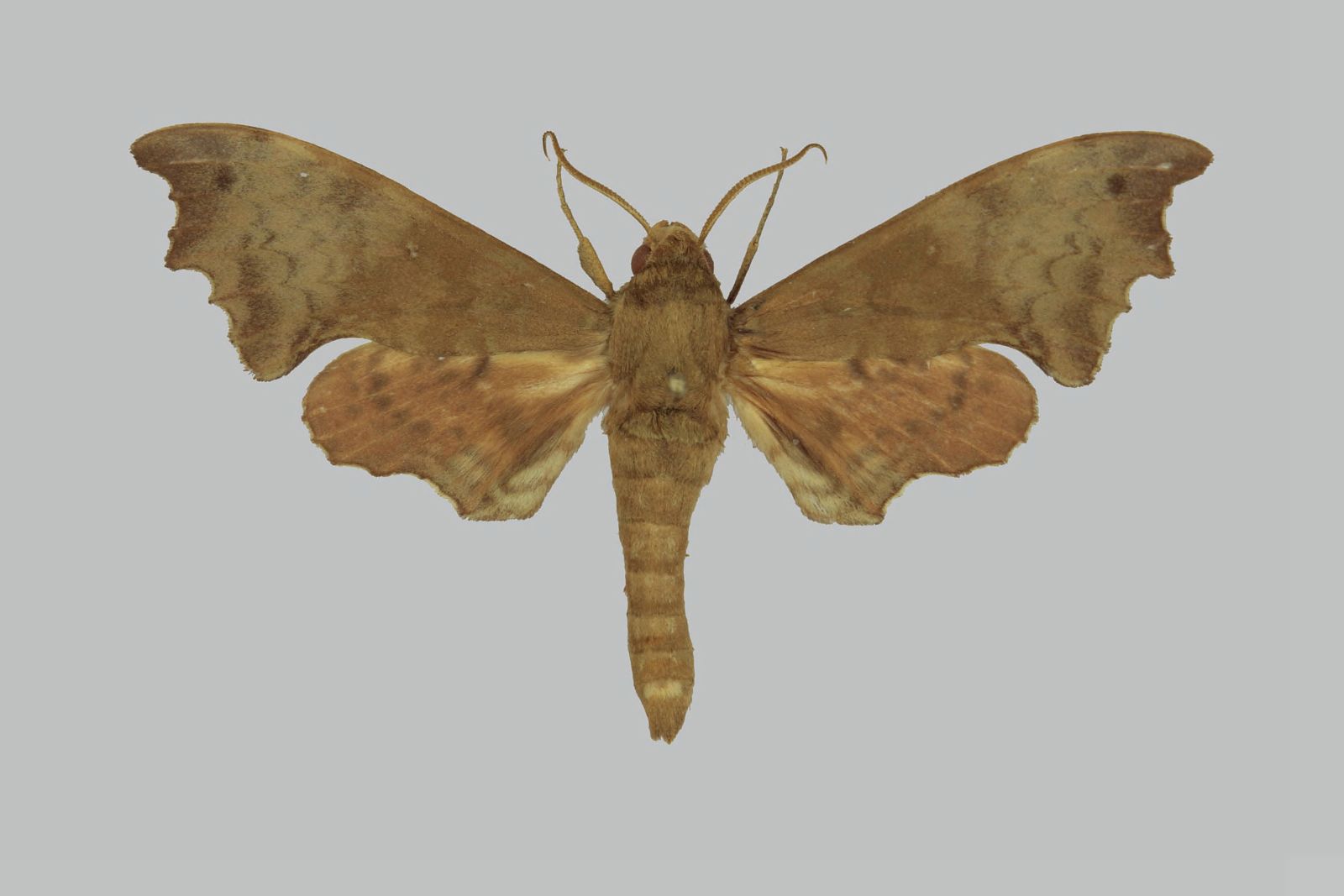
Crocodiles, lizards, and frogs live in Odzala-Kokoua. The distichodontid fish species Hemigrammocharax rubensteini, described in 2013, has been recorded in the park. Odzala-Kokoua hosts a variety of insect species, including ants, bees, butterflies, and termites.
References
References
- (6 January 2014). "Poachers are the prey in a park in the Republic of Congo". [[CNN]].
- (September 2014). "Sangha Trinational & Odzala National Park". [[United States Fish and Wildlife Service]].
- (18 January 2013). "Gorilla spotting in the Republic of Congo". [[BBC News]].
- (June 18, 1992). "The Conservation Atlas of Tropical Forests: Africa". Springer.
- (31 October 2016). "Brazzaville-issued mining permits dip into Congo's flagship park". [[Mongabay]].
- (19 October 2012). "Gamble in the jungle". [[Financial Times]].
- (6 February 2017). "Going Wild in the Republic of Congo: Not Your Typical African Walking Safari". Independent Print Limited.
- (1 May 2015). "Congo Shows Impressive Leadership on Wildlife Trafficking". Cape Times.
- (13 February 2014). "'Poaching is too much risk' – the pygmy poacher who became elephant protector". [[The Guardian]].
- (11 January 2013). "Education and Ecotourism in Congo". Sekunjalo Investments.
- (28 March 2017). "Développement touristique : la Cuvette ouest, un département potentiellement riche". Agence d'Information d'Afrique Centrale.
- (7 December 2012). "At home: Sabine Plattner". Financial Times.
- Page, Tom. (16 November 2023). "Sub-Saharan Africa just hit 100 World Heritage Sites. UNESCO says that's not enough". CNN.
- McMakin, Wilson. (10 May 2025). "Congo national park associated with Prince Harry acknowledges human rights abuses". AP News.
- (16 January 2013). "The Congo: Gorillas in the wild". [[Telegraph Media Group]].
- (4 February 2014). "Secrets of the Forest". [[Sekunjalo Investments]].
- (1999). "Status and conservation of primates in Odzala National Park, Republic of the Congo". [[Oryx (journal).
- (1998). "Large mammals at forest clearings in the Odzala National Park, Congo". Revue d'Écologie.
- (2013). "Leo's Star Sets in the West". [[Natural History (magazine).
- (2007). "African Elephant Status Report 2007: An Update from the African Elephant Database". International Union for Conservation of Nature.
- (20 April 2009). "Reintroduction of Top-Order Predators". [[John Wiley & Sons]].
- (2014). "The status of savanna carnivores in the Odzala-Kokoua National Park, northern Republic of Congo". [[Journal of Mammalogy]].
- (1990). "Antelopes: Global Survey and Regional Action Plans, Part 3". [[International Union for Conservation of Nature]].
- (June 1998). "Forest elephant paths and movements at the Odzala National Park, Congo: the role of clearings and Marantaceae forests". [[African Journal of Ecology]].
- "Odzala National Park complex". [[BirdLife International]].
- (January 9, 2012). "Issues in Life Sciences: Zoology: 2011 Edition". ScholarlyEditions.
- (27 March 2013). "New Species of Hemigrammocharax (Characiformes: Distichodontidae) from the Northwestern Congo River Basin". [[Copeia]].
This article was imported from Wikipedia and is available under the Creative Commons Attribution-ShareAlike 4.0 License. Content has been adapted to SurfDoc format. Original contributors can be found on the article history page.
Ask Mako anything about Odzala-Kokoua National Park — get instant answers, deeper analysis, and related topics.
Research with MakoFree with your Surf account
Create a free account to save articles, ask Mako questions, and organize your research.
Sign up freeThis content may have been generated or modified by AI. CloudSurf Software LLC is not responsible for the accuracy, completeness, or reliability of AI-generated content. Always verify important information from primary sources.
Report