From Surf Wiki (app.surf) — the open knowledge base
Oberlin College
Private college in Oberlin, Ohio, US

Private college in Oberlin, Ohio, US
| Field | Value | |||||
|---|---|---|---|---|---|---|
| name | Oberlin College | |||||
| image | Formal Seal of Oberlin College, Oberlin, OH, USA.svg | |||||
| image_upright | .6 | |||||
| motto | Learning and Labor | |||||
| established | ||||||
| type | Private liberal arts college | |||||
| endowment | $1.27 billion (2024) | |||||
| president | Carmen Twillie Ambar | |||||
| enrollment | 2,785 (2019) | |||||
| faculty | 327 (2017) | |||||
| city | Oberlin, Ohio | |||||
| country | U.S. | |||||
| campus | Suburban | |||||
| former_names | Oberlin Collegiate Institute | |||||
| (1833–1864) | ||||||
| sporting_affiliations | NCAA Division III – NCAC | |||||
| colors | Red & gold | |||||
| sports_nickname | Yeomen / Yeowomen | |||||
| mascot | Yeobie the Squirrel | |||||
| website | ||||||
| logo | Oberlin College logo.svg | |||||
| logo_upright | 0.7 | |||||
| coordinates | ||||||
| academic_affiliations | {{hlist | Annapolis Group | ||||
| NAICU<ref>{{Cite web | url | http://www.naicu.edu/member_center/members.asp | archive-url=https://web.archive.org/web/20151109231238/http://www.naicu.edu/member_center/members.asp | title=NAICU – Membership | archive-date=November 9, 2015}} | Oberlin Group |
(1833–1864) |CIC |CLAC|COFHE |Five Colleges of Ohio |GLCA |NAICU|Oberlin Group
Oberlin College is a private liberal arts college and conservatory of music in Oberlin, Ohio, United States. Founded as the Oberlin Collegiate Institute in 1833, it is the oldest coeducational liberal arts college in the United States and the second-oldest continuously operating coeducational institute of higher learning in the world. The Oberlin Conservatory of Music is the oldest continuously operating conservatory in the United States.
In 1835, Oberlin became one of the first colleges in the United States to admit African Americans, and in 1837, the first to admit women (other than Franklin College's brief experiment of 1787–89). It has been known since its founding for progressive student activism.
The College of Arts & Sciences offers more than 60 majors, minors, and concentrations. Oberlin is a member of the Great Lakes Colleges Association and the Five Colleges of Ohio consortium.
History
The Oberlin Collegiate Institute (name changed later to Oberlin College in 1850) was founded in 1833. The college's founders wrote voluminously and were featured prominently in the press, especially the abolitionist newspaper The Liberator, in which the name Oberlin occurred 352 times by 1865. Original documents and correspondence survive and are readily available. There is a "wealth of primary documents and scholarly works". His disciple Geoffrey Blodgett (1953) continued Fletcher's work.
Founding
Oberlin' was an idea before it was a place." Its immediate background was the wave of Christian revivals in western New York State, in which Charles Finney was very much involved. "Oberlin was the offspring of the revivals of 1830, '31, and '32." Oberlin founder John Jay Shipherd was an admirer of Finney, and visited him in Rochester, New York, when en route to Ohio for the first time. Finney invited Shipherd to stay with him as an assistant, but Shipherd "felt that he had his own important part to play in bringing on the millennium, God's triumphant reign on Earth. Finney's desires were one thing, but Shipherd believed that the Lord's work for him lay farther west." Shipherd attempted to convince Finney to accompany him west, which he did in 1835.
Oberlin was to be a pious, simple-living community in a sparsely populated area, of which the school, training ministers and missionaries, would be the centerpiece. The Oberlin Collegiate Institute was founded in 1833 by Shipherd and another Presbyterian minister, Philo Stewart, "formerly a missionary among the Cherokees in Mississippi, and at that time residing in Mr. Shipherd's family," who was studying Divinity with Shipherd. The institute was built on 500 acre of land donated by Titus Street, founder of Streetsboro, Ohio, and Samuel Hughes, who lived in Connecticut.

Shipherd and Stewert named their project after Alsatian minister Jean-Frédéric Oberlin, about whom a book had just been published, which Stewart was reading to Shipherd. Oberlin had brought social Christianity to an isolated region of France, just as they hoped to bring to the remote Western Reserve region of northeastern Ohio.
Their vision was:
Oberlin was very much a part of the Utopian perfectionist enthusiasm that swept the country in the 1830s. "Shipherd came close to being a Christian communist, and as he traveled about the country signing up recruits for the Oberlin colony, he carried with him a copy of the Oberlin covenant, which each colonist was required to sign."
The terms of the Oberlin covenant, as summarized by Shipherd, were:
Predecessor: The Oneida Institute
The Lane Rebels are commonly mentioned in the early history of Oberlin. These original Oberlin students, who had little to do with Lane other than walking out on it, were carrying on a tradition that began at the Oneida Institute of Science and Industry, in Oneida County, New York, near Utica. Oneida was "a hotbed of anti-slavery activity", "abolitionist to the core, more so than any other American college." Oberlin's anti-slavery activities supplanted those of Oneida, which fell on hard times and closed in 1843. Funding previously provided by the philanthropist brothers Lewis and Arthur Tappan was transferred to Oberlin. Oberlin became the new "academic powder keg for abolitionism."{{cite book
Oneida was founded by George Washington Gale, of whom Oberlin President Charles Grandison Finney was a disciple. The institute's second and final President, Beriah Green, moved to Oneida after he proved too abolitionist for Western Reserve College, Oberlin's early competitor in the Ohio Western Reserve.
The Lane Rebels enroll at Oberlin
The historian Roland Baumann described the early situation:
The charismatic Theodore Dwight Weld, after three years (1827–1830) studying with Gale at Oneida, was hired by the new Society for Promoting Manual Labor in Literary Institutions, a project of the Tappans. (By "literary institutions" what is meant is non-religious schools, as in "In every literary institution there are a number of hours daily, in which nothing is required of the student.") He was charged with finding a site for "a great national manual labor institution where training for the Western ministry could be provided for poor but earnest young men who had dedicated their lives to the home missionary cause in the vast valley of the Mississippi." By coincidence, the administrators of new and barely-functioning Lane Seminary, a manual labor school located just outside Cincinnati, were looking for students. Weld visited Cincinnati in 1832, determined that the school would do, got the approval of the Tappans, and by providing recommendations to them took over as de facto head of the Seminary, to the point of choosing the president (Lyman Beecher, after Finney turned it down) and telling the trustees whom to hire. He organized and led a group exodus of Oneida students, and others from upstate New York, to come to Lane. "Lane was Oneida moved west."
This coincided with the emergence of "immediatism": the call for immediate and uncompensated freeing of all slaves, which at the time was a radical idea, and the rejection of "colonization", sending freed slaves to Africa by the American Colonization Society. "The anti-slavery and the colonization questions had become exciting ones throughout the whole country, and the students deemed it to be their duty thoroughly to examine them, in view of their bearing upon their future responsibilities as ministers of the gospel." Shortly after their arrival at Lane, the Oneida contingent held a lengthy, well-publicized series of debates, over 18 days during February 1834, on the topic of abolition versus colonization, concluding with the endorsement of the former and rejection of the latter. (Although announced as debate, no one spoke in favor of colonization on any of the evenings.) The trustees and administrators of Lane, fearful of violence like the Cincinnati riots of 1829, prohibited off-topic discussions, even at meals. The Lane Rebels, including almost all of Lane's theological students, among them the entire Oneida contingent, resigned en masse in December, and published a pamphlet explaining their decision. A trustee, Asa Mahan, resigned also, and the trustees fired John Morgan, a faculty member who supported the students.
A chance encounter with Shipherd, who was travelling around Ohio recruiting students for his new Collegiate Institute, led to the proposal that they come to Oberlin, along with Mahan and the fired Lane professor. They did so, but only after Oberlin agreed to their conditions:
- Oberlin, like Oneida, would admit African Americans on an equal basis. At the time, this was a radical and unpopular measure, even dangerous. Previous attempts at "racially" integrated schools, the Noyes Academy and the Canterbury Female Boarding School, had been met with violence that destroyed both schools. Refugees from both had enrolled at Oneida. No one was calling for racially integrated schools, except at Oneida. :This measure caused the trustees "a great struggle to overcome their prejudices". The Trustees, meeting on February 9 in Shipherd's house, reexamined the question, and it passed after Trustee Chairman John Keep broke a 3–3 tie vote.
- There would be no restrictions on discussion of slavery or any other topic.
- Asa Mahan, the Lane trustee who resigned with the students, would become president. This initiative came from the Oneida students, and Weld in particular.
- Professor John Morgan, fired by Lane for supporting the students, would be hired also.
- Under what Fletcher labeled the "Finney compact", in sharp contrast with and in reaction to recent events at Lane, the internal affairs of the college were to be under faculty control, "much to the irritation of our latter-day trustees, and occasionally our presidents and deans". This commitment to academic freedom was a key innovation in American higher education.
"In the summer of 1835, they all arrived in Oberlin—President Mahan, Father Finney, Professor Morgan, the Lane rebels, the first black students, and the Tappans' money." The Oberlin Anti-Slavery Society, calling for "immediate emancipation", was founded in June 1835. The names of Shipherd, Mahan, and Finney are first on its founding document, followed by names of the Oneida contingent.
Oberlin replaced Oneida as "the hot-bed of Abolitionism", Oberlin sent forth cadres of minister-abolitionists every year:
|editor-first=W. G. |editor-last=Ballantine |chapter-url=https://archive.org/details/cu31924031445152/page/n79/mode/2up}}}}
19th century – post founding
Asa Mahan (1799–1889) accepted the position of first president of the Oberlin Collegiate Institute in 1835, simultaneously serving as the chair of intellectual and moral philosophy and professor of theology. Mahan's strong advocacy of immediatism—the immediate and complete freeing of all slaves—greatly influenced the philosophy of the college. The same year, two years after its founding, the school began admitting African Americans. The college experienced financial distress, and Rev. John Keep and William Dawes were sent to England to raise funds in 1839–40. A nondenominational seminary, Oberlin's Graduate School of Theology (first called the undergraduate Theological Department), was established alongside the college in 1833. In 1965, the board of trustees voted to discontinue graduate instruction in theology at Oberlin, and in September 1966, six faculty members and 22 students merged with the Divinity School of Vanderbilt University. Oberlin's role as an educator of African-American students prior to the Civil War and thereafter was significant. In 1844, Oberlin Collegiate Institute graduated its first black student, George Boyer Vashon, who later became one of the founding professors of Howard University and the first black lawyer admitted to the Bar in New York State.

The college's treatment of African Americans was inconsistent. Although intensely anti-slavery, and admitting black students from 1835, the school began segregating its black students by the 1880s with the fading of evangelical idealism. Nonetheless, Oberlin graduates accounted for a significant percentage of African-American college graduates by the end of the 19th century. One such black alumnus was William Howard Day, who would go on to found Cleveland's first black newspaper, The Aliened American. The college was listed as a National Historic Landmark on December 21, 1965, for its significance in admitting African Americans and women.
Oberlin is the oldest coeducational college in the United States, having admitted four women in 1837 to its two-year "women's program". These four women, who were the first to enter as full students, were Mary Kellogg (Fairchild), Mary Caroline Rudd, Mary Hosford, and Elizabeth Prall. All but Kellogg graduated. Mary Jane Patterson graduated with honors in 1862, the first black woman to earn a B.A. degree.{{cite magazine

Mahan, who was often in conflict with faculty, resigned his position as president in 1850. Replacing him was famed abolitionist and preacher Charles Grandison Finney, a professor at the college since its founding, who served until 1866. At the same time, the institute was renamed "Oberlin College", and in 1851 received a charter with that name. Under Finney's leadership, Oberlin's faculty and students increased their abolitionist activity. They participated with the townspeople in efforts to assist fugitive slaves on the Underground Railroad, where Oberlin was a stop, as well as to resist the Fugitive Slave Act. One historian called Oberlin "the town that started the Civil War" due to its reputation as a hotbed of abolitionism. In 1858, both students and faculty were involved in the controversial Oberlin–Wellington Rescue of a fugitive slave, which received national press coverage. Two participants in this raid, Lewis Sheridan Leary and John Anthony Copeland, along with another Oberlin resident, Shields Green, also participated in John Brown's Raid on Harpers Ferry. This heritage was commemorated on campus by the 1977 installation of sculptor Cameron Armstrong's "Underground Railroad Monument", a railroad track rising from the ground toward the sky, and monuments to the Oberlin-Wellington Rescue and the Harper's Ferry Raid, which followed an 1841 incident in which a group of abolitionists from Oberlin, using saws and axes, freed two captured fugitive slaves from the Lorain County jail.
In 1866, James Fairchild became Oberlin's third president, and first alumnus to lead it. A committed abolitionist, Fairchild, at that point chair of theology and moral philosophy, had played a role in the Oberlin-Wellington Rescue, hiding fugitive slave John Price in his home. During Fairchild's tenure, the faculty and physical plant of the college expanded dramatically. In 1889, he resigned as president but remained as chair of systematic theology. In 1896, Fairchild returned as acting president until 1898.
Oberlin College was prominent in sending Christian missionaries abroad. In 1881, students at Oberlin formed the Oberlin Band to journey as a group to remote Shanxi province in China. A total of 30 members of the Oberlin Band worked in Shanxi as missionaries over the next two decades. Ten died of disease, and in 1900, fifteen of the Oberlin missionaries, including wives and children, were killed by Boxers or Chinese government soldiers during the Boxer Rebellion. The Oberlin Shansi Memorial Association, an independent foundation, was established in their memory. The Association, with offices on campus, sponsors Oberlin graduates to teach in China, India, and Japan. It also hosts scholars and artists from Asia to spend time on the Oberlin campus.
20th century
Henry Churchill King became Oberlin's sixth president in 1902. At Oberlin from 1884 onward, he taught in mathematics, philosophy, and theology. Robert K. Carr served as Oberlin College president from 1960 to 1970, during the tumultuous period of student activism. Under his presidency, the school's physical plant added 15 new buildings. Under his leadership, student involvement in college affairs increased, with students serving on nearly all college committees as voting members (including the board of trustees). In 1970, Oberlin made the cover of Life as one of the first colleges in the country to have co-ed dormitories. Despite these accomplishments, Carr clashed repeatedly with the students over the Vietnam War, and he left office in 1969. History professor Ellsworth C. Carlson became acting president.
Robert W. Fuller had left Oberlin without graduating to pursue graduate work in physics, but had shown commitment to educational reform as a Trinity College dean. He was unanimous choice of the selection committee in November 1970. At 33 years old, Fuller became tenth president of the college, one of the youngest college presidents in U.S. history. His Oberlin presidency was a turbulent time at Oberlin and in higher education generally. Fuller called for reforming the curriculum, reducing the role of faculty, and addressed the status of women, expanded programs in the arts, and enlarged the role of students in governance. He tripled the enrollment of minorities. In what was called the Oberlin Experiment, he hired Jack Scott as Athletic Director, who recruited and hired the first four African-American athletic coaches at a predominantly white American college or university, including Tommie Smith, the gold medalist sprinter from the 1968 Summer Olympics in Mexico City.
Fuller was succeeded by the longtime Dean of the Conservatory, Emil Danenberg, who served as president from 1975 to 1982, and died in office. In 1983, following a nationwide search, Oberlin hired S. Frederick Starr, an expert on Russian and Eurasian affairs and skilled musician, as its 12th president. Starr's academic and musical accomplishments boded well for his stewardship of both the college and the Oberlin College Conservatory of Music. Despite increasing minority hiring, Starr's tenure was marked by clashes with students over divestment from South Africa and the dismissal of a campus minister, as well as Starr's reframing Oberlin as the "Harvard of the Midwest". A particularly vitriolic clash with students on the front lawn of his home in April 1990 led Starr to take a leave of absence from July 1991 to February 1992. He resigned in March 1993, effective in June of that year.
21st century
Nancy Dye became the 13th president of Oberlin College in July 1994, succeeding the embattled Starr. Dye was known for her accessibility and inclusiveness. Especially in her early years, she was a regular attendee at football games, concerts, and dorm parties. Dye served as president for nearly 13 years, resigning on June 30, 2007. Marvin Krislov served as president of the college from 2007 to 2017, moving on to assume the presidency of Pace University. On May 30, 2017, Carmen Twillie Ambar was announced as the 15th president of Oberlin College, becoming the first African-American person and second woman to hold the position.
Oberlin's first and only hired trade union expert, Chris Howell, argued that the college engaged in "illegal" tactics to attempt to decertify its service workers' July 1999 vote to become members of United Automobile Workers union. Howell wrote that college workers sought the union's representation in response to the administration's effort to "speed up work" to meet a "mounting budget crisis".
In February 2013, the college received significant press concerning its so-called "No Trespass List", a secret list maintained by the college of individuals barred from campus without due process. Student activists and members of the surrounding town joined to form the One Town Campaign, which challenged this policy. On February 13, 2013, a forum at the Oberlin Public Library that attracted over 200 people, including members of the college administration, the Oberlin city council and national press, saw speakers compare the atmosphere of the college to "a gated community".
In September 2014, on Rosh Hashanah, Oberlin Students for Free Palestine placed 2,133 black flags in the main square of the campus as a "call to action" in honor of the 2,133 Palestinians who died in the 2014 Israel–Gaza conflict. In January 2016, hundreds of Oberlin alumni signed a letter to the Oberlin administration stating that this protest was an example of anti-Semitism on the campus. Oberlin SFP responded with their own letter, detailing why protest of Israel does not constitute anti-semitism. They wrote, "Feeling discomfort because one must confront the realities of Operation Protective Edge carried out in the name of the safety of the Jewish people does not amount to anti-Semitism."
In early 2016, an Oberlin professor, Joy Karega, suggested Israel was behind 9/11 and blamed it for the Charlie Hebdo attacks and for ISIS, prompting a rebuke from faculty and administration. After five-and-a-half months of discussion, the school suspended and then fired her. The following week, the home of a Jewish professor at Oberlin was vandalized and a note that read "Gas Jews Die" was left on his front door.
Oberlin came under federal investigation in late 2023 by the Department of Education's Office for Civil Rights for alleged breach of Title VI, which protects students from discrimination because of their religion.
''Gibson's Bakery v. Oberlin College''
Main article: Gibson's Bakery v. Oberlin College
In 2016, a black Oberlin student was caught shoplifting two bottles of wine from Gibson's Bakery and Market, a downtown Oberlin business. A scuffle ensued between Oberlin students and Gibson's staff, and the students involved pled guilty to misdemeanor charges. Oberlin faculty and students subsequently staged large demonstrations urging a boycott of Gibson's on the grounds that the store was racist, and Gibson's sued alleging libel and other charges. In June 2019, the college was found liable for libel and tortious interference in a lawsuit initiated by the store; the bakery was awarded damages of $44 million by the jury, but a legal cap on damages reduced the award to $31.5 million. In October 2019, the college appealed the case to the Ohio District Courts of Appeals in Akron, Ohio. On March 31, 2022, the Court of Appeals unanimously dismissed both appeals, Oberlin and Gibson, upholding the jury verdict and Judge Miraldi's decisions. The Supreme Court of Ohio chose to not accept the appeal and cross-appeal on August 29, 2022. In December 2022, Oberlin College paid Gibson's Bakery $36.59 million, the entire amount due. "We hope that the end of the litigation will begin the healing of our entire community", said the college.
Academics
Oberlin was ranked tied for the 55th-best national liberal arts college in the 2025 edition of U.S. News & World Reports "Best Colleges" ranking.
Forbes ranked Oberlin 197th out of the top 500 rated private and public colleges and universities in America for the 2024-25 report. Oberlin was also ranked 46th among liberal arts universities and 29th in the Midwest.
Of Oberlin's nearly 3,000 students, nearly 2,400 are enrolled in the College of Arts & Sciences, a little over 400 in the Conservatory of Music, and the remaining 180 or so in both College and Conservatory under the five-year Double-Degree program.

The College of Arts & Sciences offers over 50 majors, minors, and concentrations. Its most popular undergraduate majors, based on 2023 graduates, were:
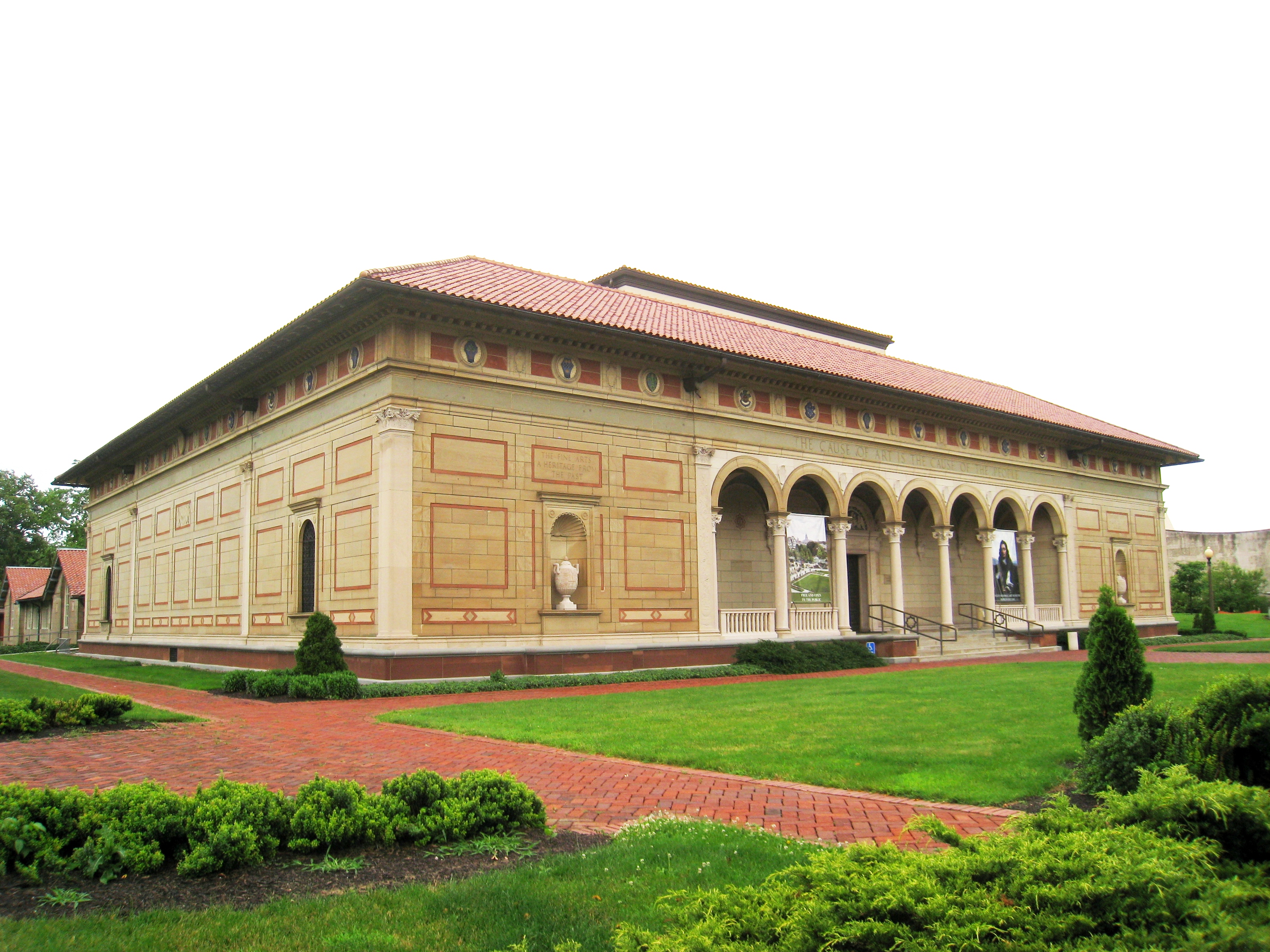
The Conservatory of Music is located on the college campus. Conservatory admission is selective, with over 1400 applicants worldwide auditioning for 120 seats. There are 500 performances yearly, most free of charge, with concerts and recitals almost daily. The Conservatory was one of the recipients of the 2009 National Medal of Arts. The Allen Memorial Art Museum, with over 13,000 holdings, was the first college art museum west of the Alleghenies.
College Libraries

The Oberlin College Libraries has branches for art, music, and science, a central storage facility, and the Mary Church Terrell Main Library. The libraries have collections of print and media materials and provide access to various online databases and journals. Beyond the 2.4 million-plus items available on campus, Oberlin students have access to more than 46 million volumes from over 85 Ohio institutions through the OhioLINK consortium. In the summer of 2007, the main level of the main library was converted into an Academic Commons that provides integrated learning support and is a hub of both academic and social activity.
Experimental College
The college's "Experimental College" or ExCo program, a student-run department, allows any student or interested person to teach their own class for a limited amount of college credit. ExCo classes by definition focus on material not covered by existing departments or faculty.
Winter term
Oberlin's Winter term, occurring each January, is described as "a time for students to pursue interests outside of regular course offerings through immersive learning experiences." Students may work alone or in groups, either on or off campus, and may design their own project or pick from a list of projects and internships set up by the college each year. Students must complete a winter term project three years out of their four in the College of Arts and Sciences. Projects range from serious academic research with co-authorship in scientific journals, humanitarian projects, making films about historic Chicago neighborhoods, and learning how to bartend. A full-credit project is suggested to involve five to six hours per weekday.
Creativity and Leadership
Created in 2005 as a part of the Northeast Ohio Collegiate Entrepreneurship Program (NEOCEP), a Kauffman Campuses Initiative, and sponsored by the Burton D. Morgan and Ewing Marion Kauffman, the department is focused on supporting and highlighting entrepreneurship within the student body. This is done through a series of classes, symposia, Winter Term programs, grants, and fellowships available at no cost to current students and in some cases, recent alumni. One such opportunity is the Creativity and Leadership Fellowship, a one-year fellowship for graduating seniors that includes a stipend of up to $30,000 to advance an entrepreneurial venture.
In 2012, the Creativity and Leadership department announced LaunchU, a business accelerator open to Oberlin College students and alumni who are pursuing an entrepreneurial venture. The selective, three-week intensive program connects the participants with other entrepreneurs and business leaders chosen from the surrounding northeast Ohio region as well as the extensive Oberlin College alumni network. LaunchU culminates in a public pitch competition before a guest panel of investors, where the participants have the opportunity to be awarded up to $15,000 in funding. The winner of the 2014 LaunchU pitch competition was Chai Energy, a Los Angeles-based green energy startup focused on modernizing and personalizing home energy monitoring. In 2014, LaunchU announced the creation of an online network in order to build stronger connections between entrepreneurs within the Oberlin College students and alumni network with a focus on attracting younger alumni.
Campus culture
Political activism
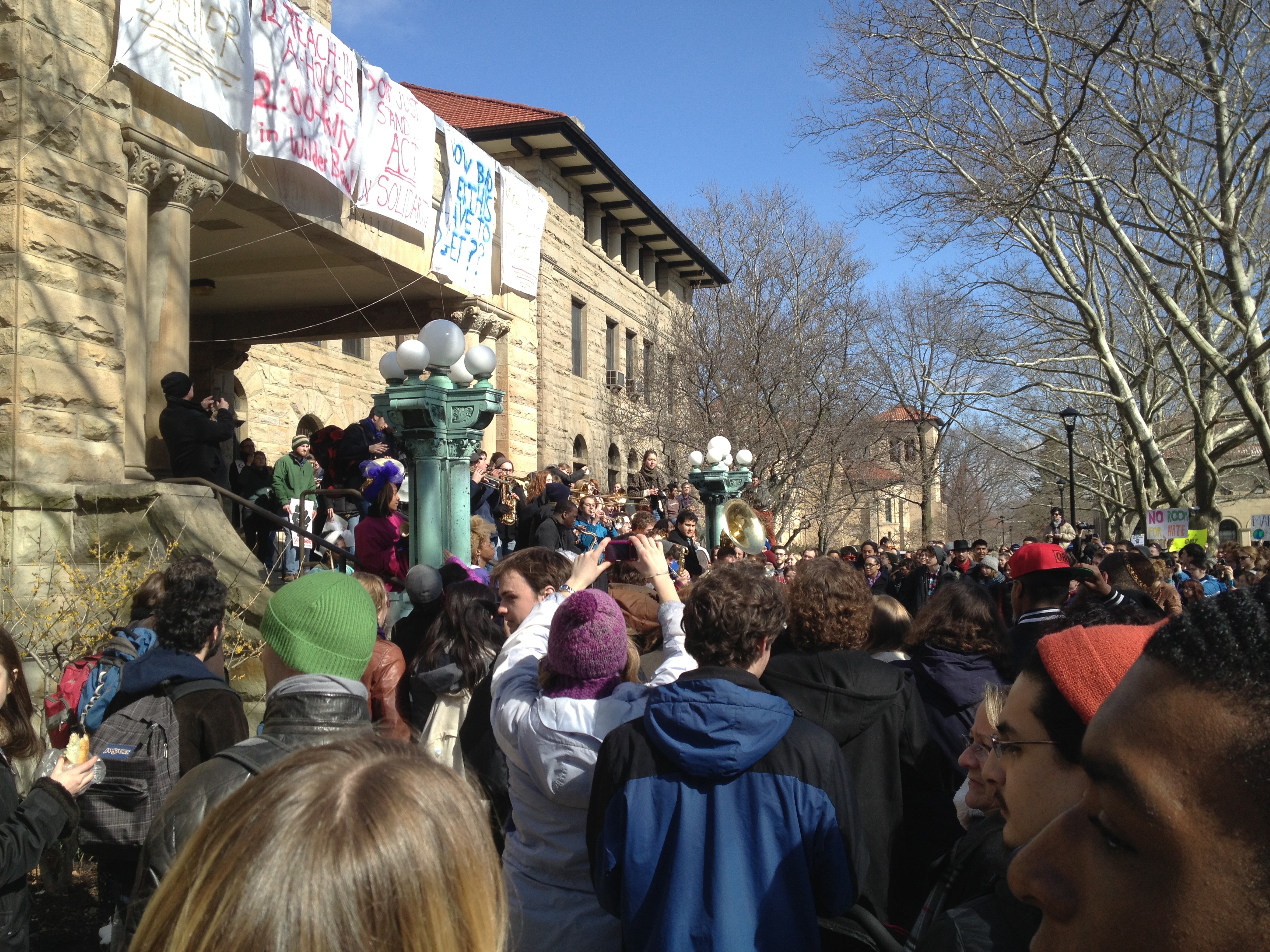
The Oberlin student body has a long history of activism and a reputation for being notably liberal. The college was ranked among The Princeton Review's list of "Colleges with a Conscience" in 2005.
In the 1960s, Memorial Arch became a rallying point for the college's civil rights activists and its anti-war movement. Oberlin supplied a disproportionate number of participants in Mississippi Freedom Summer, rebuilt the Antioch Missionary Baptist Church in the Carpenters for Christmas project, supported NAACP sponsored sit-ins in Cleveland to integrate the building-trades, and with the SCLC participated in demonstrations at Hammermill Paper. In 1995, Emeritus Professor of Sociology (1966–2007) James Leo Walsh told The Oberlin Review that students "carried out dozens of protests against the Vietnam war ranging from peaceful picketing to surrounding a local naval recruiter's car". In November 2002, 100 college workers, students, and faculty held a "mock funeral 'for the spirit of Oberlin'" in response to the administration's laying off 11 workers and reducing the work hours of five other workers without negotiation with college unions. Oberlin Students have protested instances of fracking in Ohio such as "the first natural gas and fracturing industry conference in the state," in 2011.

In 2004, student activism led to a campus-wide ban on sales of Coca-Cola products due to the company's human and labor rights violations. However, the ban was revoked in spring 2014, and students may now buy Coca-Cola products from the student union.
In 2013, after the discovery of hateful messages and the alleged sighting of a person wearing KKK robes, president Marvin Krislov cancelled classes and called for a day of reflection and change. In a public statement, he stated that an investigation had identified two students believed to be largely responsible, who had been removed from campus. One of the students responsible said to police that he was "doing it as a joke to see the college overreact to it".
During the fall 2014 semester, Oberlin's Student Labor Action Coalition organized a petition to permit dining hall temporary workers working four-hour shifts to eat one meal from food the college throws out each day. The petition garnered over 1,000 signatures and resulted in workers obtaining the opportunity to put food into a management-given styrofoam container to eat after their shifts.
In May 2015, students temporarily took over their school's administration building to protest a $2,300 increase in tuition cost between the 2015 and 2016 academic school years. Students initially proposed, "... moving from providing merit aid to need-based scholarships, loosening on-campus dining and housing requirements, reducing food waste and temporary workers in Campus Dining Services ... " to the school's Vice President of Finance Mike Frandsen on Monday, April 27, 2015, in which their demands were declined for issue. $10,931,088 were allocated to management salaries for the 2013–2014 school year, much of which came from student tuition.
In December 2015, Oberlin's Black Student Union issued a series of 50 specific demands of the college and conservatory including promoting certain black faculty to tenured positions, hiring more black faculty, firing other faculty members, and obtaining a $15 an hour minimum wage for all campus workers and guaranteed health care in their contracts. The board of trustees responded by appointing some of the individual faculty and by, "reviewing the allocation of faculty positions with consideration of how they will contribute to interactional diversity in the curriculum" in the college's 2016–2021 strategic plan. The college opposed firing any employees in response and neglected to issue formal responses to many of the other demands, though it has sought to cut wages and health care funds for administrators, office workers and library support staff during contract negotiations with the Office and Professional Employees International Union. Many campus workers still earn the minimum wage. Over 75 students protested the college's attempt to alter administrator, office worker and library support staff contracts during spring 2016 contract negotiations.
The pro-Israel advocacy group Alums for Campus Fairness has called on Oberlin to address alleged anti-Semitic hate speech directed at Jewish students.
Student Cooperative Association

The Oberlin Student Cooperative Association, or OSCA, is a non-profit corporation that houses 174 students in four housing co-ops and feeds 594 students in eight dining co-ops. Its budget is more than $2 million, making it the third-largest of its kind in North America behind the Berkeley Student Cooperative and the Inter-Cooperative Council of Ann Arbor.
OSCA is entirely student-run, with all participating students working as cooks, buyers, administrators, and coordinators. Every member is required to do at least one hour per week of cleaning if they are able, encouraging accountability for the community and the space. Most decisions within OSCA are made by modified consensus. Oberlin bans all fraternities and sororities, making the co-ops the largest student-organized social system at the college. In addition to OSCA's four housing/dining and three dining-only cooperatives, Brown Bag Co-op is an OSCA-backed grocery that sells personal servings of food at bulk prices. OSCA also funds the Nicaragua Sister Partnership (NICSIS), a "sister cooperative" with Nicaragua's National Union of Farmers and Ranchers (UNAG). Outside of OSCA, other Oberlin co-ops include the Bike Co-op, Pottery Co-op, and SWAP: The Oberlin Book Co-op.
In the spring of 2013, the Board of Directors of OSCA made a decision in a closed-door meeting to remove the Kosher-Halal Co-op from the Association after disputes over budgets and kitchen inspections. Although KHC served both Kosher and Halal food, the membership was predominantly Jewish, and some alumni wrote that they believed the expulsion to be anti-Semitic in nature.
Music
In addition to Oberlin Conservatory, Oberlin has musical opportunities available for amateur musicians and students in the college. Oberlin Steel, a steel pan ensemble founded around 1980, plays calypso/soca music from Trinidad and Tobago and has been performing at Oberlin's Commencement Illumination event for over 30 years. Oberlin College Taiko, founded in 2008, explores and shares Japanese taiko drumming as both a traditional and contemporary art form. The entirely student-run Oberlin College Marching Band (OCMB), founded in 1998, performs at various sporting events including football games, women's rugby, and pep rallies throughout the year. There are a number of a cappella groups, including: Pitch Please (all gender, all genre), the Obertones (men and nonbinary), Nothing But Treble (women and nonbinary), the Acapelicans (women and nonbinary), 'Round Midnight (all gender, jazz/folk). Other notable music organizations include the Black Musicians Guild and the Arts and Sciences Orchestra. Students in the college can form chamber groups and receive coaching through the Conservatory. Student composers also provide a demand for musicians to perform their work.
Film
Film in Oberlin began with Thomas Edison's moving picture being shown in February 1900. Just seven years later, the Apollo Theater opened, and installed sound equipment for the 1928 The Jazz Singer, the first "talkie". In 2012 (after a year of renovations) the building became the centerpiece for the Danny DeVito and Rhea Perlman Cinema Studies Center for Media Education and Production. The area above the theatre includes editing labs, an animation area, a recording studio and small projection screening room.
Sustainability
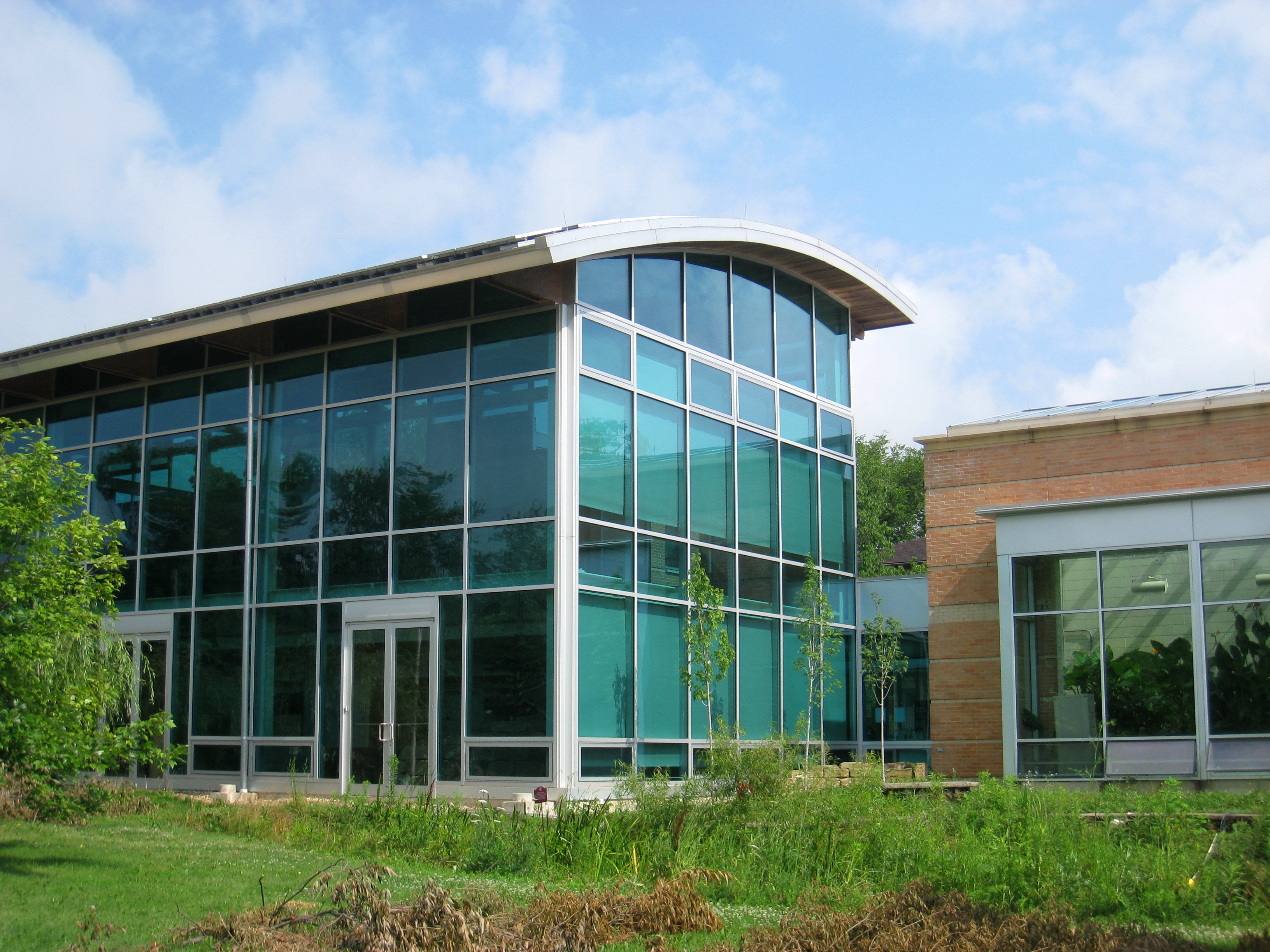
In 2006, Oberlin became one of the charter institutions to sign the ACUPCC and set a target climate neutrality date for 2025. Oberlin's innovative Adam Joseph Lewis Center For Environmental Studies, a building the Department of Energy labeled as one of the "milestone" buildings of the 20th century, incorporates a 4600 ft2 photovoltaic array, the biggest of its kind in Ohio at the time. The AJLC also features a Living Machine, garden, orchard, and parking-lot solar array.
The school utilizes biodiesel, hybrid, and electric vehicles for various purposes, offers financial support to a local transit company providing public transportation to the school, and has been home to the Oberlin Bike Co-op, a cooperatively run bicycle center, since 1986. Each residence hall monitors and displays real time and historic electricity and water use. Some dorms also have special lamps which display a color depending on how real time energy use compares to the average historic energy use. The school's Campus Committee on Shareholder Responsibility provides students, faculty, and staff with the opportunity to make suggestions and decisions on proxy votes. A student board, the Oberlin College Green EDGE Fund, manages a set of accounts to support local sustainability, resource efficiency, and carbon offsetting projects. The Green EDGE Fund, created in 2007, allocates grants for environmental sustainability projects and verifiable carbon offsetting projects within the Oberlin community, as well as loans from a revolving fund for projects at Oberlin College that reduce resource consumption and have calculable financial savings for the college.
Campus publications and media
Oberlin students publish a wide variety of periodicals. The college's largest publications are The Oberlin Review and The Grape. The Oberlin Review is a traditional weekly newspaper, focusing on current events, with a circulation of around 1,700. There is also a newspaper pertaining to the interests of students of color, called BIPOC Lenses.
Magazines on campus include Wilder Voice, a magazine for creative nonfiction and long-form journalism, The Plum Creek Review, a literary review containing student-written fiction, poetry, translations, and visual art, Headwaters Magazine, an environmental magazine, and The Synapse, a science magazine. Spiral is a magazine focused on genre fiction. The college also produces a quarterly alumni magazine, while the Conservatory publishes its own magazine once a year.
The WOBC News Corps, a news division of WOBC-FM created in February 2010, produces local news segments that air bi-hourly. WOBC, a large student organization with significant non-student membership, also maintains an online blog that focuses on music and local events.
Athletics

The school's varsity sports teams are the Yeomen and Yeowomen. Early on, athletes were known simply as Oberlin Men or "O" Men. The name "Yeomen" arose in the early 1900s, drawing on the phonetic sound of "O" Men and the school's motto, "Learning and Labor". As women's sports arose, "Yeowomen" came to represent women athletes. In 2014, the school announced that the albino squirrel would be its official mascot, although teams would continue to be referred to as "yeomen" and "yeowomen".
Oberlin participates in the NCAA's Division III and the North Coast Athletic Conference (NCAC), a conference which includes Kenyon College, Denison University, Wooster College, Wabash College and others. Kenyon has traditionally been Oberlin's biggest rival. In 2022, leaders of the Athletic Department and various club sports spoke out in favor of increased institutional support for the teams, requesting that the college provide access to professional sports trainers and team transportation. The college also hosts several private sports teams, including the Oberlin Ultimate team.
Oberlin also has 17 club sports, including ice hockey, fencing, ultimate frisbee, soccer, rugby, equestrian, tennis, volleyball, badminton, bowling, and in martial arts such as Brazilian jiu-jitsu and aikido.
Baseball

On May 8, 2015, the Oberlin baseball team won the championship of the NCAC. The championship was the first for Oberlin as a baseball team since it joined the NCAC in 1984.
Football
Main article: Oberlin Yeomen football
Oberlin's football team was the first team coached by John Heisman, later honored by the Heisman Trophy. Heisman led the team to a 7–0 record in 1892. Oberlin is the last college in Ohio to beat Ohio State (winning 7–6 in 1921). Though in modern times, the football team was more famous for losing streaks of 40 games (1992–1996) and 44 games (1997–2001), the Yeomen have enjoyed limited success in recent years.
Cheerleading
In 2011, Oberlin began its most recent attempt to feature a cheerleading squad. In 2006, a cheerleader fell from atop a pyramid at a football game. That injury prompted the school to restrict the club's activities, prohibiting stunting and tumbling, after which participation fizzled out. The club's charter, however, remained intact and was used to bring the squad back in 2011. Tryouts were held in the spring of 2011, and the cheerleading team went active at Oberlin's first home football game that Fall, a 42–0 win over Kenyon College. The squad also cheers for the basketball team and participates in spirit building and service events across campus and in the community.
Fencing
Oberlin has a club fencing team known as the Flaming Blades that practices and competes in foil, épée, and saber. They compete in the Midwestern Fencing Conference, Club Fencing Championships, USFA tournaments, and USCFC tournaments.
Ultimate
Oberlin has both men's and a women's Ultimate club teams, known as the Flying Horsecows and the Preying Manti, respectively. The Manti won the Division III national championship on May 19, 2019, defeating the top-ranked Bates Cold Front by a score of 13–7. The Horsecows placed 5th nationally in 2022, the highest finish in program history.
Notable people
Since its founding, Oberlin alumni and faculty include 16 Rhodes Scholars, 20 Truman Scholars, 15 MacArthur fellows, 4 Rome Prize winners, and 4 Nobel Prize laureates. As of 2024, Oberlin was associated with more MacArthur fellows than any other liberal arts college. Additionally, it is the third highest producer of Fulbright scholars among undergraduate institutions.
References
References
- "Assets and Performance".
- link. (January 16, 2019 . Retrieved July 16, 2020.)
- "Oberlin College Visual Style Guide". oberlin.edu.
- "Oberlin is Going Nuts Over Its New Athletics Mascot". Oberlin College and Conservatory.
- "NAICU – Membership".
- (February 23, 2017). "Oberlin History". Oberlin College and Conservatory.
- "Oberlin Conservatory of Music". www.kennedy-center.org.
- (1996). "Encyclopedia of African-American Education". Greenwood Publishing Group.
- "Mission and History". Franklin and Marshall College.
- (June 14, 2019). "Oberlin Helped Students Defame a Bakery, a Jury Says. The Punishment: $33 Million.". [[The New York Times]].
- Blodgett, Geoffrey. (2006). "Oberlin History. Essays and Impressions". [[Kent State University Press]].
- Morris, J. Brent.. (2014). "Oberlin, Hotbed of Abolitionism: College, Community, and the Fight for Freedom and Equality in Antebellum America.". [[University of North Carolina Press]].
- Fairchild, J. H.. (1860). "Oberlin: its origin, progress and results. An address, prepared for the alumni of Oberlin College, assembled August 22, 1860.". Shankland and Harmon.
- "City of Oberlin, Ohio".
- (1909). "General Catalogue of Oberlin College 1833—1908. Including an Account of the Principal Events in the History of the College, with Illustrations of the College Buildings.p". Oberlin College.
- Clark, George Peirce. (1954). "An Early Report on Oberlin College". [[Ohio State Archaeological and Historical Quarterly]].
- Sims, Thomas. (1830). "Brief memorials of Jean Frédéric Oberlin, pastor of Waldbach, in Alsace and of Auguste Baron de Stael-Holstein; two distinguished ornaments of the French protestant church; with an introductory sketch of the history of Christianity in France, from the primitive ages to the present day". James Nisbet.
- (1840). "The martyr age of the United States of America, with an appeal on behalf of the Oberlin Institute in aid of the abolition of slavery". Newcastle Upon Tyne Emancipation and Aborigines Protection Society.
- Oberlin Sanctuary Project. (2017). "The Lane Rebels at Oberlin". Oberlin College Library.
- Sernett, Milton C.. (1986). "Abolition's axe : Beriah Green, Oneida Institute, and the Black freedom struggle". [[Syracuse University Press]].
- Stuart, Charles. (1841). "Oneida and Oberlin, or A Call, addressed to British Christians and philanthropists, affectionately inviting their sympathies, their prayers, and their assistance, in favour of the Christians and philanthropists of the United States of North America, for the extirpation, by our aid, of that slavery which we introduced into those states, while they were under our power". Wright and Albright.
- Baumann, Roland M.. (2010). "Constructing Black Education at Oberlin College: A Documentary History". [[Ohio University Press]].
- Weld, Theodore D.. (1833). "First annual report of the Society for Promoting Manual Labor in Literary Institutions, including the report of their general agent, Theodore D. Weld. January 28, 1833". S. W. Benedict & Co..
- Fletcher, Robert Samuel. (1943). "History of Oberlin College from its foundation through the Civil War". Oberlin College.
- Tappan, Lewis. (1870). "The Life of Arthur Tappan". [[Hurd and Houghton]].
- 51 signatures. (December 15, 1834). "A statement of the reasons which induced the students of Lane Seminary, to dissolve their connection with that institution".
- Baumgartner, Kabria. (2017). "Building the Future: White Women, Black Education, and Civic Inclusion in Antebellum Ohio". [[Journal of the Early Republic]].
- Shipherd, John J.. (January 27, 1835). "Pastoral letter".
- (Winter 1998). "The Noyes Academy, 1834–35: The Road to the Oberlin Collegiate Institute and the Higher Education of African Americans in the Nineteenth Century". Western Journal of Black Studies.
- Blodgett, Geoffrey. (2006). "Oberlin History. Essays and Impressions". [[Kent State University Press]].
- (June 1835). "Constitution of the Oberlin Anti-Slavery Society".
- Campbell, Joseph Blackburn. (2013). "Righteous Radicalism: Oberlin Abolitionism from 1839 to 1859". Research thesis, Ohio State University.
- (March 30, 2003). "Biography: Asa Mahan (1799–1889)".
- David Turley. (1991). "The Culture of English Antislavery, 1780–1860". Routledge.
- "Oberlin College Archives – Published Resources – Architectural Records Guide – Group 11".
- "Oberlin College Archives – Published Resources – Women's History Guide – Group 11".
- "Oberlin College Archives – Holdings – Finding Guides – RG # – Name (bdate-ddate) – Biography/Administrative History".
- "Constructing Black Education at Oberlin College".
- (Winter 2002–2003). "The Earliest Black Graduates of the Nation's Highest-Ranked Liberal Arts Colleges". [[Journal of Blacks in Higher Education]].
- "Journal of Blacks in Higher Education".
- (2001). "The Segregation of Black Students at Oberlin College after Reconstruction". History of Education Quarterly.
- "Beyond Coeducation: Oberlin College and Women's History".
- (2017-05-23). "How the Daughter of a Slave Became the First African-American Woman to Earn a Bachelor's Degree".
- Battles, David M.. (2009). "The history of public library access for African Americans in the South, or, Leaving behind the plow". Scarecrow Press.
- "National Historic Landmarks Program – Oberlin College".
- (1987). "Educating Men and Women Together: Coeducation in a Changing World". University of Illinois Press in conjunction with Oberlin College.
- (1972). "Coeducation of the Sexes at Oberlin College: A Study of Social Ideas in Mid-Nineteenth-Century America". Journal of Social History.
- Timothy L. Hall. (May 14, 2014). "American Religious Leaders". Infobase Publishing.
- (1849). "The Oberlin Evangelist". R.E. Gillett.
- John R. Shook. (1 January 2005). "Dictionary of Modern American Philosophers". A&C Black.
- "Oberlin History". Oberlin College.
- Lull, Herbert Galen. (June 1914). "The Manual Labor Movement In the United States". Manual Training.
- Charles E. Hambrick-Stowe, ''Charles G. Finney and the Spirit of American Evangelicalism'' (1996) p 199
- Brandt, Nat (1990). ''The town that started the Civil War''. Syracuse University Press. {{ISBN. 0-8156-0243-X.
- "Underground Railroad Monument : The Sculpture Center / OOSI".
- "Oberlin-Wellington Rescue Monument".
- "Harper's Ferry Memorial".
- (March 23, 1841). "Abolitionism—Oberlin Negro Riot". [[Democratic Standard]].
- Brandt, Nat ''Massacre in Shansi'' Syracuse: Syracuse University Press, 1994
- Brandt, Nat ''Massacre in Shansi,'' Syracuse: Syracuse University Press, 1994
- "College web site".
- "Gender Policies".
- link. (August 4, 2016 , Oberlin College Archives. Retrieved December 17, 2013.)
- "Presidents of Oberlin College". Oberlin College.
- [http://www.oberlin.edu/archive/holdings/finding/RG2/SG12/biography.html "2/12 – S. Frederick Starr (1940– ),"] {{webarchive. link. (May 7, 2015 Oberlin College website. Retrieved November 5, 2015.)
- Foss, Sara and Miller, Hanna. [http://www.oberlin.edu/stupub/ocreview/archives/1998.05.22/news_review/pomp_and_circumstances.html "Pomp and circumstances: Nancy Dye's first four years,"] {{Webarchive. link. (August 18, 2016 ''Oberlin Review'' (May 22, 1998).)
- [http://www.oberlin.edu/archive/holdings/finding/RG2/ "Presidents of Oberlin College"] {{webarchive. link. (October 21, 2013 . Oberlin College Archives. Retrieved December 17, 2013.)
- Oberlin's first female president, she oversaw the construction of new buildings, increased admissions selectivity, and helped increase the [[Financial endowment. endowment]] with the largest capital campaign to that point.McIntyre, Mike, [http://www.oberlin.edu/alummag/oamcurrent/oam_winter2002/feat_nancy.htm "Nancy Dye's Presidency,"] {{Webarchive. link. (July 21, 2016 ''Oberlin Alumni Magazine'' vol. 97, #3 (Winter 2001).)
- Kaplan, Maxine and Hansen, Jamie. [http://www.oberlin.edu/stupub/ocreview/2006/09/15/news/Dye_Announces_Retirement.html "Dye Announces Retirement: After 12 Years, Dye is Set to Step Down,"] {{Webarchive. link. (July 21, 2016 ''Oberlin Review'' (September 15, 2006).)
- Chen, David W.. (February 14, 2017). "Pace University Names Head of Oberlin Its Next President". The New York Times.
- (May 30, 2017). "Carmen Twillie Ambar Named 15th President of Oberlin". Oberlin News Center.
- P.15. Howell, Chris and Whelan, Megan. ''The Oberlin Review''. vol. 123, no. 25. May 26, 1995.
- "Oberlin: Students protest 'no trespass' list". WKYC.
- (February 14, 2013). "Secret 'No Trespass' list at Oberlin College raises concerns at forum". cleveland.com.
- Dobbins, Elizabeth. "The Oberlin Review : SFP Plants Flags in 'Call to Action'".
- "Oberlin Alumni and Students Against Anti-Semitism".
- (January 27, 2016). "Oberlin College president to discuss campus anti-Semitism with alums".
- (October 3, 2014). "SFP on Anti-Semitism, Complicity and Action".
- (June 10, 2019). "Protests at Oberlin labeled a bakery racist. Now, the college has been ordered to pay $11 million for libel". [[The Washington Post]].
- (February 25, 2016). "Oberlin Professor Claims Israel Was Behind 9/11, ISIS, Charlie Hebdo Attack".
- "Oberlin professors condemn colleague's controversial remarks, others defend them".
- Colleen Flaherty. (August 4, 2016). "Suspended for Anti-Semitism".
- Colleen Flaherty. (November 16, 2016). "Oberlin Ousts Professor".
- (November 20, 2016). "Jewish Oberlin professor's house vandalized, note says 'Gas Die Jew'".
- (November 3, 2023). "Oberlin College under federal investigation over allegations of antisemitism". Cleveland.com, November 3, 2023.
- (November 3, 2019). "A protest against racism, and a $31.5 million defamation award".
- (October 8, 2019). "Oberlin Appeals Verdict that Sets Troubling Free Speech Precedent". Oberlin College.
- (2022). "Gibson Bros., Inc. v. Oberlin College". Ohio Supreme Court.
- (2022-08-30). "Case Announcements". The Supreme Court of Ohio.
- (December 16, 2022). "Gibson's Bakery receives complete payment of $36.59 million from Oberlin College in defamation suit". WKYC.
- "Oberlin College".
- "Oberlin College".
- "Applying to Oberlin: Double-Degree Program". Oberlin College.
- "Academic Departments and Programs". Oberlin College.
- "Oberlin College". U.S. Dept of Education.
- "National Medal of Arts".
- "Short Tour: Allen Art Museum".
- "Oberlin College Library".
- (May 23, 2012). "Oberlin College Library".
- "Fall 2002 Exco course listing".
- "EXCO Committee".
- (2016-10-24). "Winter Term".
- Praeger. (April 16, 2010). "American Universities and Colleges, 19th Edition [2 Volumes]: Nineteenth Edition". ABC-CLIO.
- "Office of Winter Term".
- "Collegiate Entrepreneurship – The Burton D. Morgan Foundation".
- "Oberlin College – Creativity and Leadership-About Us".
- (July 20, 2010). "How to Start a College Entrepreneurship Club - Inc.com". Inc.com.
- "Oberlin College | Creativity and Leadership|Fellowships".
- "Oberlin College LaunchU – Collaborate, Innovate, Accelerate". Oberlin College LaunchU.
- "The Oberlin Review : launchu".
- "About LaunchU – Oberlin College LaunchU". Oberlin College LaunchU.
- "Chai Energy – LA Cleantech Incubator".
- "Chaienergy.com – Chai Energy". Chaienergy.com.
- "Members – Oberlin College LaunchU". Oberlin College LaunchU.
- Engel, Matthew. (September 24, 2001). "Echoes of Vietnam stir US campuses". The Guardian.
- "Colleges with a conscience".
- Merredith Collins and Melody R. Waller [http://www.oberlin.edu/stupub/ocreview/archives/1998.05.01/news/activism.html "Activism thrives through Oberlin's history"] {{Webarchive. link. (December 22, 2015 ''The Oberlin Review''. 1 May 1995. Retrieved May 6, 2015.)
- link. (April 22, 2015 . 2015. Retrieved May 6, 2015.)
- P1, 4, Decker, Rachel. "Unions Lampoon College" Oberlin Review vol. 131, no. 9, 15 November 2002
- (July 29, 2016). "Oberlin College students protest against fracking in Youngstown | Oberlin College".
- Taylor, Samantha (November 19, 2004). "College set to ban Coca-Cola". ''Oberlin Review'' (web link: [http://www.oberlin.edu/stupub/ocreview/2004/11/19/news/article1.html Oberlin.edu] {{Webarchive. link. (June 2, 2010 ))
- (February 6, 2014). "College Lifts Ban on Coca-Cola Products". Oberlin College.
- Krislov, Marvin. "Building a Brilliant Future". Oberlin College.
- (February 28, 2013). "Oberlin president finds hateful messages 'personally upsetting' | News".
- (March 4, 2013). "Oberlin College Cancels Classes Amid String of Racial Incidents". Slate.
- (August 26, 2013). "Oberlin Student Says Racist Incidents Were Just A 'Joke': Police". Huffington Post.
- Bok, Oliver. [http://oberlinreview.org/7105/news/temporary-cds-workers-to-receive-free-meals/] {{Webarchive. link. (May 22, 2016 "Temporary CDS Workers to Receive Free Meals", ''Oberlin Review'', December 12, 2014. Retrieved May 25, 2016.)
- Sandrick, Bob.[http://www.cleveland.com/metro/index.ssf/2015/12/oberlin_college_students_circu.html "Oberlin College students protest meals, push for more diversity"] {{Webarchive. link. (June 14, 2016 . December 22, 2013. Cleveland.com. Retrieved May 25, 2016.)
- [http://oberlinreview.org/7105/news/temporary-cds-workers-to-receive-free-meals/ "Temporary CDS Workers to Receive Free Meals"] {{Webarchive. link. (May 22, 2016 April 25, 2015. ''Oberlin Review''. Retrieved May 25, 2016.)
- Payerchin, Richard. May 1, 2015 [http://www.morningjournal.com/general-news/20150501/oberlin-students-take-over-building-to-protest-tuition-hike "Oberlin Students take over building to protest tuition hike"] {{Webarchive. link. (May 5, 2015 "The Morning Journal News")
- [http://data.chronicle.com/204501/Oberlin-College/staff-salaries/ "Oberlin College: Staff Salaries"] {{Webarchive. link. (April 16, 2015 ''Chronicle Data''. Retrieved May 6, 2015.)
- Harris, Melissa, [http://oberlinreview.org/8135/news/students-meet-with-frandsen-after-protests/ "Students Meet with Frandsen After Protests" ] {{Webarchive. link. (May 21, 2015 . May 1, 2015. ''The Oberlin Review''. Retrieved May 6, 2015.)
- "Chronicle-Telegram".
- [https://new.oberlin.edu/strategic-plan/documents/2016/strategic_plan_2016.pdf] {{Webarchive. link. (September 21, 2016 "Oberlin College Strategic Plan 2016–2021")
- Krislov, Marvin. [https://oncampus.oberlin.edu/source/articles/2016/01/20/response-student-demands "Response to Student Demands"] {{Webarchive. link. (August 22, 2017 . January 20, 2016. Oberlin College and Conservatory)
- Oberlin College and Conservatory Communications Staff. [https://oncampus.oberlin.edu/source/articles/2016/03/30/5-receive-tenure] {{Webarchive. link. (May 21, 2016 "5 Receive Tenure", March 30, 2016. Retrieved May 25, 2015.)
- Bernstein, Jacob. (April 8, 2016). "College, OCOPE to Negotiate April 12". The Oberlin Review.
- Stocker, Madeline. [http://oberlinreview.org/10422/news/students-rally-as-ocope-negotiations-continue/ "Students Rally as OCOPE Negotiations Continue"] {{Webarchive. link. (January 21, 2019 . May 25, 2016. ''The Oberlin Review''. Retrieved May 25, 2016.)
- (April 10, 2018). "Oberlin College alumni group claims college is unwelcoming to Jewish students". [[The Plain Dealer]].
- (March 30, 2018). "Former Students, Faculty Members Call on Oberlin to End "Concerted Hostility Toward Israel"". [[The Tower Magazine]].
- (April 5, 2018). "Alumni: Oberlin hostile toward Israel, Jews". [[Cleveland Jewish News]].
- "Oberlin College {{!}} Overview {{!}} Plexuss.com".
- "Financial Statements {{!}} Berkeley Student Cooperative".
- (October 27, 2016). "What Does It Cost? {{!}} Inter-Cooperative Council at Ann Arbor".
- (April 5, 2013). "KHC Out of OSCA". Oberlin Review.
- (May 24, 2016). "How Oberlin Has Repeatedly Failed to Confront its Anti-Semitism Problem".
- "oberlin steel / history".
- "OCT_about".
- Blodgett, Geoffrey. "The Early Apollo". ''Oberlin Online: News and Features''. (web link: [http://new.oberlin.edu/apollo/history.dot] {{Webarchive. link. (December 8, 2012))
- Farkas, Karen (September 20, 2012). "Apollo Theatre in Oberlin reopens and includes new home for cinema studies department". ''Cleveland.Com''. (web link: [http://www.cleveland.com/metro/index.ssf/2012/09/apollo_theatre_in_oberlin_reop.html] {{Webarchive. link. (December 11, 2012))
- "Carbon Neutrality".
- "Taking Sustainability to the EDGE". The Oberlin Review.
- "Oberlin College Green EDGE Fund".
- "ABOUT".
- "Wilder Voice".
- "Plum Creek Review".
- "Headwaters Magazine".
- "List of Oberlin College Student Groups".
- "''The Synapse Magazine''".
- "Oberlin.edu".
- (January 2014). "Oberlin College Athletics – Oberlin is Going Nuts Over Its New Athletics Mascot". Oberlin College.
- (November 11, 2013). "StackPath".
- Karlgaard, Joe. (October 5, 2007). "Club Sports Demand Equal Attention". The Oberlin Review.
- "Oberlin College Club Sports".
- (May 8, 2015). "Oberlin College Athletics – Baseball Wins NCAC Title for the First Time in School History". Oberlin College.
- Perry, Nick. "Oberlin Cheerleading Club Revived". Fearless and Loathing.
- "Fencing".
- "The Preying Manti".
- (May 21, 2019). "When It Counts: Oberlin Peaks to Win National Championship".
- (2019-05-08). "Courtney Bryan '04 Awarded Rome Prize for Composition". Oberlin College and Conservatory.
- (2024-10-01). "Historian Jennifer L. Morgan '86 Wins MacArthur Fellowship".
- (2024-02-12). "Oberlin a Top Producer of Fulbright Students for 2023-24".
This article was imported from Wikipedia and is available under the Creative Commons Attribution-ShareAlike 4.0 License. Content has been adapted to SurfDoc format. Original contributors can be found on the article history page.
Ask Mako anything about Oberlin College — get instant answers, deeper analysis, and related topics.
Research with MakoFree with your Surf account
Create a free account to save articles, ask Mako questions, and organize your research.
Sign up freeThis content may have been generated or modified by AI. CloudSurf Software LLC is not responsible for the accuracy, completeness, or reliability of AI-generated content. Always verify important information from primary sources.
Report