From Surf Wiki (app.surf) — the open knowledge base
Obando, Bulacan
Municipality in Bulacan, Philippines

Municipality in Bulacan, Philippines
| Field | Value | |
|---|---|---|
| name | ||
| image_skyline | {{multiple image | |
| perrow | 1/2 | |
| border | infobox | |
| total_width | 280 | |
| caption_align | center | |
| image1 | Obando Church, March 2023.jpg | |
| caption1 | Obando Church | |
| image2 | Obando Fertility Rites and Dance Monument (New), March 2023.jpg | |
| caption2 | Obando Fertility Rites and Dance Monument | |
| image3 | Plaza Magsaysay, Obando, Bulacan, Aug 2024.jpg | |
| caption3 | Plaza Magsaysay | |
| image_flag | Flag_of_Obando,_Bulacan.png | |
| flag_size | 120x80px | |
| image_seal | Obando Bulacan.png | |
| seal_size | 100x80px | |
| image_map | ||
| map_caption | ||
| mapframe | yes | |
| pushpin_map | Philippines | |
| pushpin_label_position | left | |
| pushpin_map_caption | Location within the | |
| coordinates | ||
| settlement_type | ||
| subdivision_type | Country | |
| subdivision_name | Philippines | |
| subdivision_type1 | Region | |
| subdivision_name1 | ||
| subdivision_type2 | Province | |
| subdivision_name2 | ||
| official_name | ||
| etymology | ||
| named_for | Francisco José de Ovando, 1st Marquis of Brindisi | |
| motto | Obando, Bayang Pinagpala! | |
| English: Obando, Blessed Town! | ||
| anthem | Bayang Pinagpala | |
| English: Blessed Town | ||
| subdivision_type3 | District | |
| subdivision_name3 | ||
| established_title | Founded | |
| established_date | May 14, 1753 | |
| established_title1 | Annexation to Polo | |
| established_date1 | October 8, 1903 | |
| established_title2 | Chartered | |
| established_date2 | August 10, 1907 | |
| parts_type | Barangays | |
| parts_style | para | |
| p1 | (see Barangays) | |
| leader_title | Mayor | |
| leader_name | Leonardo D. Valeda (PFP) | |
| leader_title1 | Vice Mayor | |
| leader_name1 | Rowell S. Rillera (PFP) | |
| leader_title2 | Representative | |
| leader_name2 | Linabelle Ruth R. Villarica (PFP) | |
| leader_title3 | Municipal Council | |
| leader_name3 | {{PH Town Council | |
| 1 | ||
| 2 | Drandren R. De Ocampo | |
| 3 | Felipe F. Dela Cruz | |
| 4 | Gladys Lyn G. De Leon | |
| 5 | Michael L. Dela Paz | |
| 6 | Evangeline B. Bautista | |
| 7 | Erwin M. Valeda | |
| 8 | Lawrence R. Banag | |
| 9 | Gerald M. Gomez | |
| leader_title4 | Electorate | |
| leader_name4 | voters (electorate_point_in_time}} | ) |
| government_type | ||
| government_footnotes | ||
| elevation_m | ||
| elevation_footnotes | ||
| area_footnotes | ||
| area_total_km2 | ||
| population_footnotes | ||
| population_total | ||
| population_as_of | ||
| population_density_km2 | auto | |
| population_blank1_title | Households | |
| population_blank1 | ||
| timezone | PST | |
| utc_offset | +8 | |
| postal_code_type | ZIP code | |
| postal_code | ||
| postal2_code_type | ||
| postal2_code | ||
| area_code_type | ||
| area_code | ||
| website | ||
| demographics_type1 | Economy | |
| demographics1_title1 | ||
| demographics1_info1 | ||
| demographics1_title2 | Poverty incidence | |
| demographics1_info2 | % () | |
| demographics1_title3 | Revenue | |
| demographics1_info3 | ||
| demographics1_title4 | Revenue rank | |
| demographics1_title5 | Assets | |
| demographics1_info5 | ||
| demographics1_title6 | Assets rank | |
| demographics1_title7 | IRA | |
| demographics1_title8 | IRA rank | |
| demographics1_title9 | Expenditure | |
| demographics1_info9 | ||
| demographics1_title10 | Liabilities | |
| demographics1_info10 | ||
| demographics_type2 | Utilities | |
| demographics2_title1 | Electricity | |
| demographics2_info1 | Meralco | |
| demographics2_title2 | Water | |
| demographics2_title3 | Telecommunications | |
| demographics2_title4 | Cable TV | |
| blank_name_sec1 | ||
| blank_info_sec1 | ||
| blank1_name_sec1 | Native languages | |
| blank1_info_sec1 | ||
| blank2_name_sec1 | Crime index | |
| blank1_name_sec2 | Major religions | |
| blank2_name_sec2 | Feast date | |
| blank3_name_sec2 | Catholic diocese | |
| blank4_name_sec2 | Patron saint |
English: Obando, Blessed Town! English: Blessed Town
Obando, officially the Municipality of Obando (), is a municipality in the province of Bulacan, Philippines. According to the , it has a population of people.
History
Obando was likely originally called "Binuwangan" according to 18th-century maps. In the 1734 map of the Philippine islands by Pedro Murillo Velarde, the places labeled "Vinuangan", "Polo" (currently Valenzuela), and "Maycauayan" were indicated separately and proximate to one another.
In the 18th century, the present-day town of Obando formed part of Meycauayan, alongside the present-day cities of Valenzuela (formerly Polo) and San Jose del Monte. The towns of Polo and Obando formed a barrio called Catanghalan. In the year 1623, the municipality of Polo was organized which included the present-day territories of the Town of Obando. By virtue of a decree promulgated during the time of Governor and Captain General of the Archipelago, Francisco Jose de Obando y Solis, the town was created and separated from its mother town Polo on May 14, 1753. Upon the Governor's untimely death at the hands of the British during the Seven Years' War, the creation and establishment of the town was made and attended by the Alcalde Mayor of the province, Don Francisco Morales y Mozabe, the Provincial Minister, S. Gregorio, Rev. Fr. Alejandro Ferrer, together with numerous religious devotees. The minister who was chosen to administer the town was Rev. Fr. Manuel De Olivencia. On October 8, 1903, Obando merged with Polo by virtue of Act No. 932.
On August 10, 1907, Obando was made an independent town of Bulacan. Then through the untiring efforts of municipal officials, a portion of Gasak Navotas was reclaimed to form a part of Obando. The municipal officials, believing that this portion was once a part of the municipality but was adopted by Navotas in the course of time, effortlessly pushed through its claim to regain the area. The concerted action of all those concerned paid off when on January 30, 1975, by virtue of Presidential Decree No. 646, a portion of approximately 1.78 square kilometers of Gasak, Navotas was returned to Obando. This parcel of land is mostly fishpond and sandy beach and it is expected that, when fully developed, it would serve as a tourist attraction. By a resolution of the municipal council in 1975, the area was made into a barangay and named Nuestra Señora de Salambao in honor of one of its patron saints.
Geography
Obando is bordered by Valenzuela to the east, Navotas and Malabon to the south, Bulakan to the north, and the waters of Manila Bay to the west. It is 16 km away from the Philippine capital Manila and is part of Manila's conurbation which reaches San Ildefonso in its northernmost part.
Flat and low-lying coastal plains characterize the general topography of Obando. The area was formerly an estuary, but it filled up partially from the peripheral parts of sand bars and sand spits and formed up into the current area that mainly consists of a commercial district, partly industrial district, residential area and fishpond. Within the municipality are two rivers and three creeks, namely the Meycauayan River in the north, the Pinagkabalian River in the south, and Paco Creek, Hulo Creek and Pag-asa Creek traversing the town parallel to the provincial road.
Obando, just like the other towns of Bulacan, has two pronounced seasons: dry and wet. The wet season is from May to October and the dry season is from November to April. The rainfall of the wet season accounts for about 80% of the annual rainfall, which is due to monsoons and typhoons.
Barangays
Obando is politically subdivided into 11 barangays, as shown in the matrix below. Each barangay consists of 7 puroks and some have sitios. There are 8 urban and 3 rural barangays.
Barangays Binuangan (ancient "Binwangan" mentioned on the Laguna Copperplate Inscription, which is the oldest written document of Philippines inscribed in Indianized script, dating back to 900 CE) and Salambao are located along the Paliwas River, and can be reached only by means of motorized boats.
Climate
| access-date = May 12, 2020 }}
Demographics
In the 2024 census, the population of Obando was 61,073 people, with a density of {{sigfig|61,073/52.10|2}} PD/km2.
In 2002, Obando had an estimated population of 58,245 wherein 49% were male and 51% were female. Of the current population, about 14% live in rural barangays while the rest constitute the urban population. There are 12,349 households. The average monthly income of a household is , slightly below the minimum for a family of 6 threshold set by Department of Social Welfare and Development.
Economy
Government
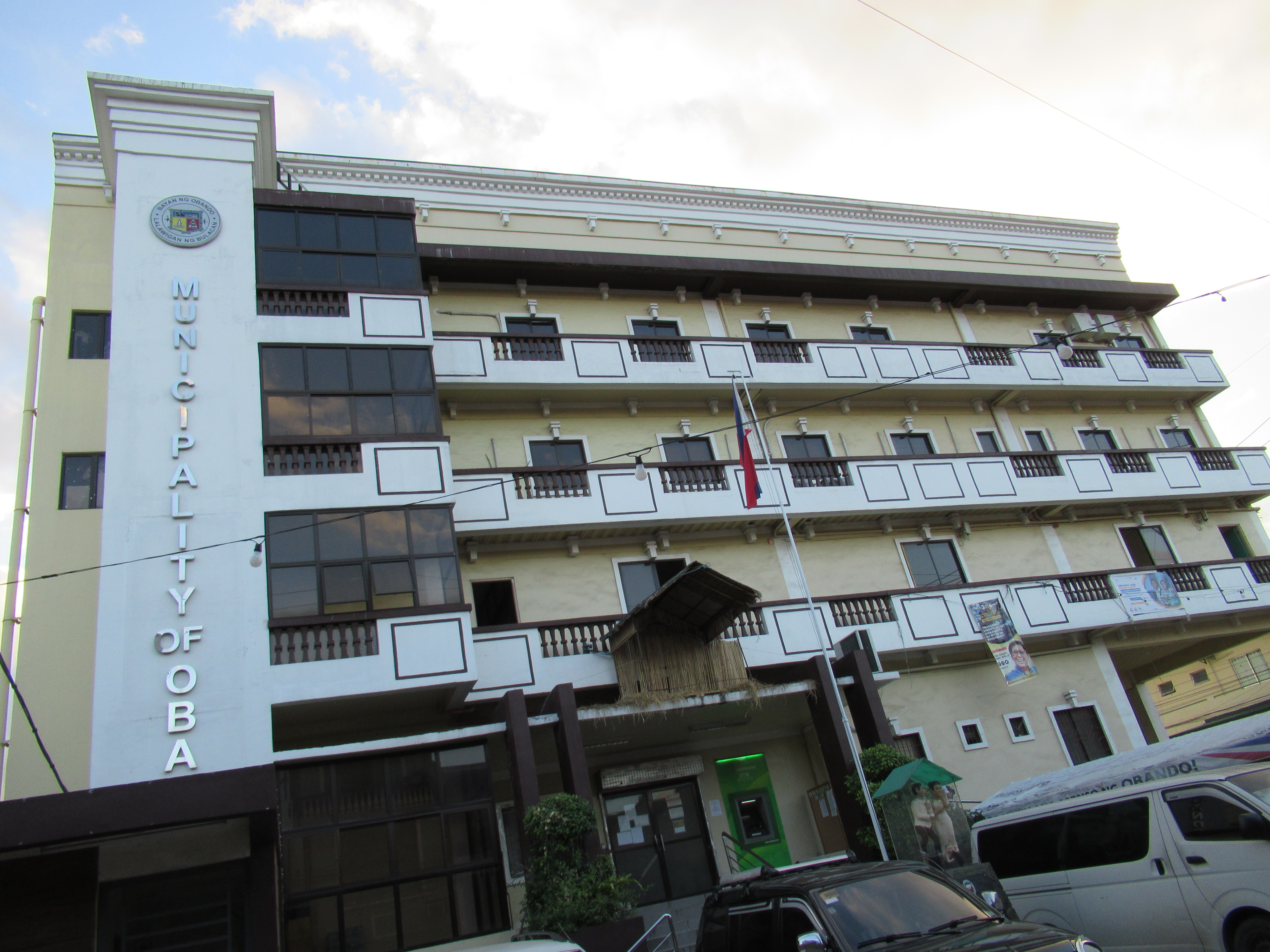

Elected officials
- Mayor: Leonardo D. Valeda (PFP)
- Vice Mayor: Rowell S. Rillera (PFP)
- Municipal Council:
- Drandren R. De Ocampo (Independent)
- Felipe F. Dela Cruz (PFP)
- Gladys Lyn G. De Leon (PFP)
- Michael L. Dela Paz (PFP)
- Evangeline B. Bautista (PFP)
- Erwin M. Valeda (PFP)
- Lawrence R. Banag (PFP)
- Gerald M. Gomez (PFP)
List of mayors
- Antonio Joaquin (OIC 1986 - 1989)
- Bienvenido Evangelista (1989–1992)
- Conrado Lumabas Jr. (1992–2001)
- Onesimo Joaquin (2001–2004)
- Zoilito Santiago (2004–2007)
- Orencio Gabriel (2007–2013)
- Edwin C. Santos (2013–2022)
- Leonardo Valeda (2022–Present)
List of vice mayors
Vice Mayors of Obando:
- Remigio Dela Cruz (1988–1992)
- Gaudioso Espinosa (1992–1995)
- Romerico Roque Santos (1995–1998)
- Onesimo Joaquin (1998–2001)
- Zoilito Santiago (2001–2004)
- Jose Correa (2004–2007)
- Leonardo Pantanilla (2007–2010)
- Danilo de Ocampo (2010–2013)
- Zoilito Santiago (2013–2016)
- Arvin Dela Cruz (2016–2025)
- Rowell S. Rillera (2025–Present)
Education
The Obando Schools District Office governs all educational institutions within the municipality. It oversees the management and operations of all private and public, from primary to secondary schools.
Primary and elementary schools
- Binuangan Ecumenical School of Tomorrow
- Binuangan Elementary School
- Catanghalan Elementary School
- Lawa Elementary School
- Obando Central School
- Paco Elementary School
- Panghulo Elementary School
- Precious Vessels Christian Academy
- Salambao Elementary School
- San Pascual Elementary School
- Tawiran Elementary School
Secondary schools
- Obando National High School
- Obando School of Fisheries
- Obando Montessori, Inc
- Riveridge School, Inc
- Lux Mundi Academy, Inc
- Holy Trinity School of Obando, Inc
Higher educational institution
- Colegio de San Pascual Baylon
- Bulacan Polytechnic College
Media
.jpg)
Obando is also the transmitter site of some AM stations, primarily broadcasting the Mega Manila area. Among them are:
- Super Radyo DZBB 594 (GMA Network)
- DWIZ 882 (Aliw Broadcasting Corporation)
- DZMM Radyo Patrol 630 (Philippine Collective Media Corporation/ABS-CBN Corporation)
- DZIQ Radyo Inquirer 990 (Trans-Radio Broadcasting Corporation, defunct)
- DZEC Radyo Agila 1062 (Eagle Broadcasting Corporation)
- INC Radio DZEM 954 (Christian Era Broadcasting Service International)
- DZME 1530 (Capitol Broadcasting Center)
Gallery
File:San Pascual Baylon Church, Obando, Bulacan.jpg|San Pascual Baylon Parish Church File: JfPublicMarketRiverObandoBulacanfvf 03.JPG|Obando Public Market File:JfPaliwasFishPortObandoBulacanfvf 05.JPG|Municipal Fishport File:Colegio de San Pascual Baylon, Obando, Bulacan, March 2023.jpg|Colegio de San Pascual Baylon File:Obando School of Fisheries, March 2023.jpg|Obando School of Fisheries File:Bulacan Polytechnic College - Obando Campus, March 2023.jpg|Bulacan Polytechnic College - Obando Campus File:Paco Catholic Cemetery, Obando, Bulacan, March 2023.jpg|Paco Catholic Cemetery File:Mangroves in Obando, Bulacan, March 2023.jpg|Mangroves beside Paliwas Road File:Sunset in a fish pen in Obando, Bulacan.jpg|A fish pen in Obando File:Obando People's Park, Bulacan, Aug 2024.jpg|Obando People's Park File:Paliwas Road, Obando, Bulacan (1), March 2023.jpg|Paliwas Road
References
References
- {{DILG detail
- (October 8, 1903). "An Act Reducing the Twenty-five Municipalities of the Province of Bulacan to Thirteen".
- (October 8, 1903). "An Act Increasing the Number of Municipalities in the Province of Bulacan From Thirteen to Fourteen, by Separating From Polo the Former Municipality of Obando and Giving the Latter the Territory Which It Comprised Prior to the Passage of Act Numbered Nine Hundred and Thirty-two.".
- ''Obando, Bayang Pinagpala!'' (Obando, Blessed Town!), ''Pamahalaang Bayan ng Obando'' (Local Government of Obando), 2006/2007
- (January 15, 2021). "Masterlist of Schools".
This article was imported from Wikipedia and is available under the Creative Commons Attribution-ShareAlike 4.0 License. Content has been adapted to SurfDoc format. Original contributors can be found on the article history page.
Ask Mako anything about Obando, Bulacan — get instant answers, deeper analysis, and related topics.
Research with MakoFree with your Surf account
Create a free account to save articles, ask Mako questions, and organize your research.
Sign up freeThis content may have been generated or modified by AI. CloudSurf Software LLC is not responsible for the accuracy, completeness, or reliability of AI-generated content. Always verify important information from primary sources.
Report