From Surf Wiki (app.surf) — the open knowledge base
Nyongbyon Nuclear Scientific Research Center
North Korean nuclear site
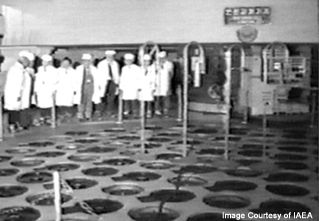
North Korean nuclear site
| Field | Value |
|---|---|
| title | Nyongbyon Nuclear Scientific Research Center |
| image | Yongbyon 5MWe Magnox reactor.jpg |
| caption | The 5 MWe experimental reactor |
| context | north |
| hangul | 녕변핵시설 |
| hanja | 寧邊核施設 |
| rr | Nyeongbyeon haeksiseol |
| mr | Nyŏngbyŏn haeksisŏl |
The Nyongbyon Nuclear Scientific Research Center (녕변원자력연구소) is North Korea's major nuclear facility, operating its first nuclear reactors. It is located in Nyongbyon County in North Pyongan Province, about 100 km north of Pyongyang. The center produced the fissile material for North Korea's six nuclear weapon tests from 2006 to 2017, and since 2009 is developing indigenous light water reactor nuclear power station technology.
Facilities
The major installations include all aspects of a Magnox nuclear reactor fuel cycle, based on the use of natural uranium fuel:
- a fuel fabrication plant,
- a 5 MWe experimental reactor producing power and district heating,
- a short-term spent fuel storage facility,
- a fuel reprocessing facility that recovers uranium and plutonium from spent fuel using the PUREX process.
Magnox spent fuel is not designed for long-term storage as both the casing and uranium metal core react with water; it is designed to be reprocessed within a few years of removal from a reactor. As a carbon dioxide cooled, graphite moderated Magnox reactor does not require difficult-to-produce enriched uranium fuel or a heavy water moderator it is an attractive choice for a wholly indigenous nuclear reactor development.
The Magnox facilities were disabled in 2007 in accord with the six-party talks agreement, but following the breakdown of that agreement were partially re-enabled in 2009 to reprocess existing stocks of spent fuel. On 15 September 2015, North Korea announced that the reactor had resumed operation.
The center also has an IRT-2000 pool-type research reactor, supplied by the Soviet Union in 1963, operational since 1965. The reactor fuel is IRT-2M type assemblies of 10%, 36% and 80% enriched uranium.
In 2009, the building of a small indigenous experimental light water reactor began, with trial operations starting in 2023. In 2010, a uranium enrichment plant began operating.
The Yongbyon Nuclear Scientific Research Center site occupies 24.8 sqkm. It has two sections, the nuclear research section and a larger residential district (sometimes named Bungang or Pun’gangni), separated and surrounded by fencing.
History
Construction of the 5 MWe experimental reactor began in 1980, and the reactor first went critical in 1986. The 5 MWe experimental reactor operated intermittently until 1994 when it was shut down in accordance with the U.S.-North Korea Agreed Framework. Following the breakdown of the Agreed Framework in 2002, operation restarted in February 2003, creating plutonium within its fuel load at a rate of about 6 kg per year. The reactor fuel was replaced between April and June 2005. The spent nuclear fuel has been reprocessed with an estimated yield of about 24 to 42 kg of plutonium metal,
Nyongbyon is also the site of a 50 MWe Magnox prototype power reactor, but construction was halted in 1994 about a year from completion in accord with the Agreed Framework, and by 2004 the structures and pipework had deteriorated badly. This construction was being dismantled in 2010.
Another 200 MWe Magnox full-scale power reactor was being constructed at Taechon, 20 km north-west of Nyongbyon, () until construction was also halted in 1994 in accord with the Agreed Framework. By 2005 reconstruction of this reactor was uneconomic.
The reactor designs were based on declassified information about the British Magnox design at Calder Hall and elsewhere, and the spent fuel reprocessing plant on the multi-national European Company for the Chemical Processing of Irradiated Fuels (EUROCHEMIC) plant at Mol-Dessel in Belgium.
2007 shutdown

On 13 February 2007, an agreement was reached at the Six party talks that North Korea will shut down and seal the Magnox nuclear reactor and associated facilities and invite back International Atomic Energy Agency personnel to conduct all necessary monitoring and verifications. In return for this North Korea will receive emergency energy assistance from the other five parties in the form of 50,000 tons of heavy fuel oil.
International Atomic Energy Agency (IAEA) inspectors arrived at the site on 28 June to discuss verification and monitoring arrangements for the shutdown. This had been delayed from April due to a dispute with the United States over Banco Delta Asia. On 3 June an anonymous South Korean government official indicated that the shutdown may start following the first oil shipment later in the month. On 14 July, Sean McCormack stated that North Korea had told the US that the reactor had been shut down. He added that the US welcomed the news, and was awaiting verification from the IAEA team. The next day, IAEA chief Mohamed ElBaradei announced the UN's confirmation that the reactor had been shut down. On 18 July 2007, the IAEA confirmed that all five nuclear facilities at Nyongbyon had been shut down.
In his Introductory Statement to the IAEA Board of Governors on 2008-03-03, the Director General stated that he could not provide an update on the disabling of the facilities, as it was not undertaken by the IAEA. All fuel rods from the 5 MWe Experimental Nuclear Power Plant and nuclear material generated by the disabling of the Nuclear Fuel Fabrication Plant were under IAEA containment and surveillance.
2008 cooling tower demolition
On 27 June 2008 North Korea destroyed the most visible symbol of its nuclear weapons program – the cooling tower at its main atomic reactor in the complex. The implosion was witnessed by a number of international journalists and diplomats.
The demolition of the 60 ft-tall cooling tower, which carried off waste heat to the atmosphere, is a response to U.S. concessions after the North delivered a declaration of its nuclear programs to be dismantled. The United States paid the US$2.5 million demolition fee.
Possible reactivation
During 2008 tensions resurfaced between North Korea and the U.S. due to disagreements over the six-party talks disarmament process. On 8 October 2008, IAEA inspectors were forbidden by the North Korean government to conduct further inspections of the site. However two days later the U.S. removed North Korea from the U.S. State Sponsors of Terrorism list and the Nyongbyon deactivation process resumed.
2009 resumption of reprocessing
According to the state-run North Korean news agency KCNA website, the DPRK resumed the reprocessing of spent fuel to recover plutonium on 25 April 2009 in response to the UN's condemnation of its recent rocket launch. This material supplemented that used for nuclear weapons testing.
Light water reactor
In 2009, North Korea announced its intention to build an indigenous experimental light water reactor (LWR) and the uranium enrichment technology to provide its nuclear fuel. In 2010, a 2,000 gas centrifuge uranium enrichment plant to produce low enriched uranium (LEU) fuel began operating, and construction started on the experimental 25 to 30 MWe LWR, with a target operation date for the reactor of 2012.
In November 2011, satellite imagery indicated that the LWR construction was progressing rapidly, with the concrete structures largely completed. The LWR is being built on the site of the demolished cooling tower of the experimental Magnox reactor. Following the building of this experimental LWR, North Korea intends to build larger LWRs for electricity generation. but the reactor was not externally complete until 2016.
In 2017, several activities were noted involving construction, a dam was built to provide sufficient amount of water for cooling system, a switchyard and connections to transmission line were made along with facilities presumably used for maintenance and repair. Activity that suggests components were being transferred to the building were noted too. In 2018, it was believed that the preliminary testing of the reactor had started and that the reactor would begin to operate 2018 or 2019. The reactor is linked to the power grid, with an expected output is 25 to 30 megawatts, enough to supply electricity for about 50,000 inhabitants.
As of May 2024, intermittent cooling water flows indicate pre-operational tests are probably being conducted.
According to the IAEA, the reactor ran intermittently for nearly two years up to August 2025, running 70% of the time from August 2024 to August 2025 though unlikely at full power. It is estimated the reactor at full power could produce around 20 kilograms of plutonium per year, though it is not clear whether the fuel will be reprocessed. The Institute for Science and International Security (ISIS) assessed that operation of reactor was resumed in November 2025.
Suspension of uranium enrichment
In February 2012, North Korea announced that it would suspend uranium enrichment at Nyongbyon, and not conduct any further tests of nuclear weapons while productive negotiations involving the United States continue. Additionally, North Korea would allow IAEA inspectors to monitor operations at Nyongbyon. The U.S. reaffirmed that it does not have hostile intent toward the DPRK, and is prepared to improve bilateral relationships. Nuclear enrichment was presumably resumed following the collapse of the Leap Day Deal.
2013 planned restart of operation
In March 2013, North Korea announced that they would be restarting operation of the 5 MWe experimental reactor. In order to do so, the disabled secondary cooling system will have to be restored.
On 15 September 2015, North Korea announced that the Yongbyon nuclear site is in full operation, including the 5 MWe experimental reactor.
Infra-red imagery analysis covering from September 2016 to June 2017 showed that the 5 MWe experimental reactor had either not been operated, or operated at a low-level. The Radiochemical Laboratory had operated intermittently.
2018 Pyongyang Agreement
During the September 2018 inter-Korean summit, North Korean leader Kim Jong-Un and South Korean leader Moon Jae-In signed the "Pyongyang Joint Declaration of September 2018" The agreement states, among other things, that the North Korean government will only dismantle Nyongbyon if the US would engage in correlative action.
As of January 2019, Nyongbyon's main facilities did not appear to be operating. However, in August 2021, the International Atomic Energy Agency reported that North Korea appeared to have restarted the 5 MW reactor.
Organization
The Nyongbyon facility was described in 2013 as operating the following ten sub-branches:
- Isotope Utilization Institute
- Neutron Physics Institute
- Nuclear Electromagnetics Institute
- Nuclear Physics Institute
- Nuclear Material Institute
- Nuclear Energy Research Institute
- Uranium Resources Development Institute
- Radiochemical Laboratory
- Reactor Design Institute
- Radiation Protection Institute
Notes
References
References
- (27 May 2016). "North Korean Nuclear Facilities After the Agreed Framework". Stanford University.
- Radioactive Waste Management Advisory Committee. (November 2000). "RWMAC's Advice to Ministers on the Radioactive Waste Implications of Reprocessing, Annex 4: Dry storage and disposal of Magnox spent fuel". [[Department for Environment, Food and Rural Affairs]].
- (15 September 2015). "North Korea Yongbyon nuclear site 'in operation'". BBC.
- (30 July 1996). "Research Reactor Details – IRT-DPRK". International Atomic Energy Agency }}{{Dead link.
- Siegfried S. Hecker. (14 March 2008). "Report of Visit to North Korea to Senate Foreign Relations Committee". [[Center for International Security and Cooperation]], Stanford University.
- David Albright. (19 March 2007). "Phased International Cooperation with North Korea's Civil Nuclear Programs". [[Institute for Science and International Security]].
- Bogle, Jacob. (20 March 2020). "More Underground Facilities Near Yongbyon: A Potential Challenge for Future Denuclearization Deals". The Henry L. Stimson Center.
- Sheryl WuDunn. (17 May 1992). "North Korean site has A-bomb hints". [[The New York Times]].
- (Summer 2010). "North Korea's Choice: Bombs Over Electricity". [[National Academy of Engineering]].
- some of which was used for the [[nuclear weapon]]s involved in the [[2006 North Korean nuclear test. link. (19 December 2016 , Thom Shanker and David E. Sanger, [[New York Times]], 17 October 2006.)
- Siegfried S. Hecker. (12 May 2009). "The risks of North Korea's nuclear restart". [[Bulletin of the Atomic Scientists]].
- (17 August 2007). "Application of Safeguards in the Democratic People's Republic of Korea (DPRK)". IAEA.
- (May 2025)
- James Reynolds. (17 March 2007). "N Korea warning on nuclear deal". [[BBC News]].
- Heejin Koo. (3 July 2007). "North Korea Reactor Closure May Begin in Mid-July". [[Bloomberg L.P..
- [https://news.bbc.co.uk/1/hi/world/asia-pacific/6899185.stm ''N Korea "closes nuclear reactor"''] [[BBC News]] retrieved 14 July 2007.
- [https://news.bbc.co.uk/1/hi/world/asia-pacific/6900184.stm "UN confirms N Korea nuclear halt"], ''[[BBC News]]'', 16 July 2007
- [https://news.bbc.co.uk/2/hi/asia-pacific/6903894.stm "N Korea closes more nuclear sites"], ''BBC News'', 18 July 2007.
- "[https://www.iaea.org/NewsCenter/Statements/2008/ebsp2008n003.html#dprk Verification of Nuclear Non-Proliferation: Implementation of Safeguards in the DPRK] {{webarchive. link. (9 May 2008 ", IAEA: Statements of the Director General, Vienna, 3 March 2008. Retrieved on 26 April 2008)
- (28 June 2008). "Blast gets North Korea off US blacklist". The Australian.
- (27 June 2008). "Bush Rebuffs Hard-Liners to Ease North Korean Curbs". [[The New York Times]].
- Demetri Sevastopulo. (10 October 2008). "Bush removes North Korea from terror list". Financial Times.
- (25 April 2009). "North Korea says it has started reprocessing spent fuel rods". BBC Monitoring Asia Pacific – Political.
- (13 June 2010). "DPRK Foreign Ministry Declares Strong Counter- Measures against UNSC's "Resolution 1874"". [[Korean Central News Agency]].
- Siegfried S. Hecker. (20 November 2010). "A Return Trip to North Korea's Yongbyon Nuclear Complex". [[Center for International Security and Cooperation]], Stanford University.
- (18 November 2011). "North Korea Makes Significant Progress in Building New Experimental Light Water Reactor (ELWR)". Johns Hopkins University.
- (6 January 2012). "North Korea from 30,000 feet". [[Bulletin of the Atomic Scientists]].
- (31 August 2012). "North Korea makes "significant" nuclear reactor progress: IAEA". [[Reuters]].
- (14 January 2016). "North Korea's Yongbyon Nuclear Facility: Slow Progress at the Experimental Light Water Reactor". U.S.-Korea Institute, Johns Hopkins University School of Advanced International Studies.
- (19 February 2018). "Progress at North Korea's Experimental Light Water Reactor at Yongbyon | 38 North: Informed Analysis of North Korea".
- (16 March 2018). "Jane's by IHS Markit Discovers Likely Operational Testing at North Korean Nuclear Reactor".
- (16 March 2018). "Seoul aims for more talks about talks with North Korea this month". Reuters.
- (16 March 2018). "North Korea nuclear reactors show new signs of activity".
- (23 May 2024). "Yongbyon Nuclear Scientific Research Center: Construction at the Radiochemical Laboratory". The Henry L. Stimson Center.
- (19 December 2025). "Imagery Update of Activities at North Korea's Yongbyon Site". Institute for Science and International Security.
- (29 February 2012). "DPRK Foreign Ministry Spokesman on Result of DPRK-U.S. Talks". [[Korean Central News Agency]].
- (29 February 2012). "U.S.-DPRK Bilateral Discussions". U.S. Department of State.
- (2 April 2013). "North Korea 'to restart Yongbyon nuclear reactor'". BBC.
- (3 April 2013). "Satellite Images Show New Construction at North Korea's Plutonium Production Reactor; Rapid Restart?". Johns Hopkins University.
- Joseph S. Bermudez, Jr.. (15 April 2016). "More Evidence of Possible Reprocessing Campaign at Nyongbyon; Progress at Experimental Light Water Reactor". U.S.-Korea Institute, Johns Hopkins University School of Advanced International Studies.
- Joseph S. Bermudez Jr., Mike Eley, Jack Liu. Frank V. Pabian. (14 July 2017). "North Korea's Yongbyon Facility: Probable Production of Additional Plutonium for Nuclear Weapons". U.S.-Korea Institute, Johns Hopkins University School of Advanced International Studies.
- (19 September 2018). "North and South Korea just signed a major agreement. It may be bad news for Trump.".
- (19 September 2018). "South Korea says North agrees to dismantle nuclear site — if US takes reciprocal action".
- (9 January 2019). "North Korea's Nyongbyon Nuclear Facilities: Well Maintained but Showing Limited Operations". The Henry L. Stimson Center.
- (30 August 2021). "Yongbyon: UN says North Korea appears to restart nuclear reactor". [[BBC News]].
- (13 February 2013). "North Korea Nuclear R&D Structure". CRS.
This article was imported from Wikipedia and is available under the Creative Commons Attribution-ShareAlike 4.0 License. Content has been adapted to SurfDoc format. Original contributors can be found on the article history page.
Ask Mako anything about Nyongbyon Nuclear Scientific Research Center — get instant answers, deeper analysis, and related topics.
Research with MakoFree with your Surf account
Create a free account to save articles, ask Mako questions, and organize your research.
Sign up freeThis content may have been generated or modified by AI. CloudSurf Software LLC is not responsible for the accuracy, completeness, or reliability of AI-generated content. Always verify important information from primary sources.
Report