From Surf Wiki (app.surf) — the open knowledge base
Nyloc nut
Type of lock nut
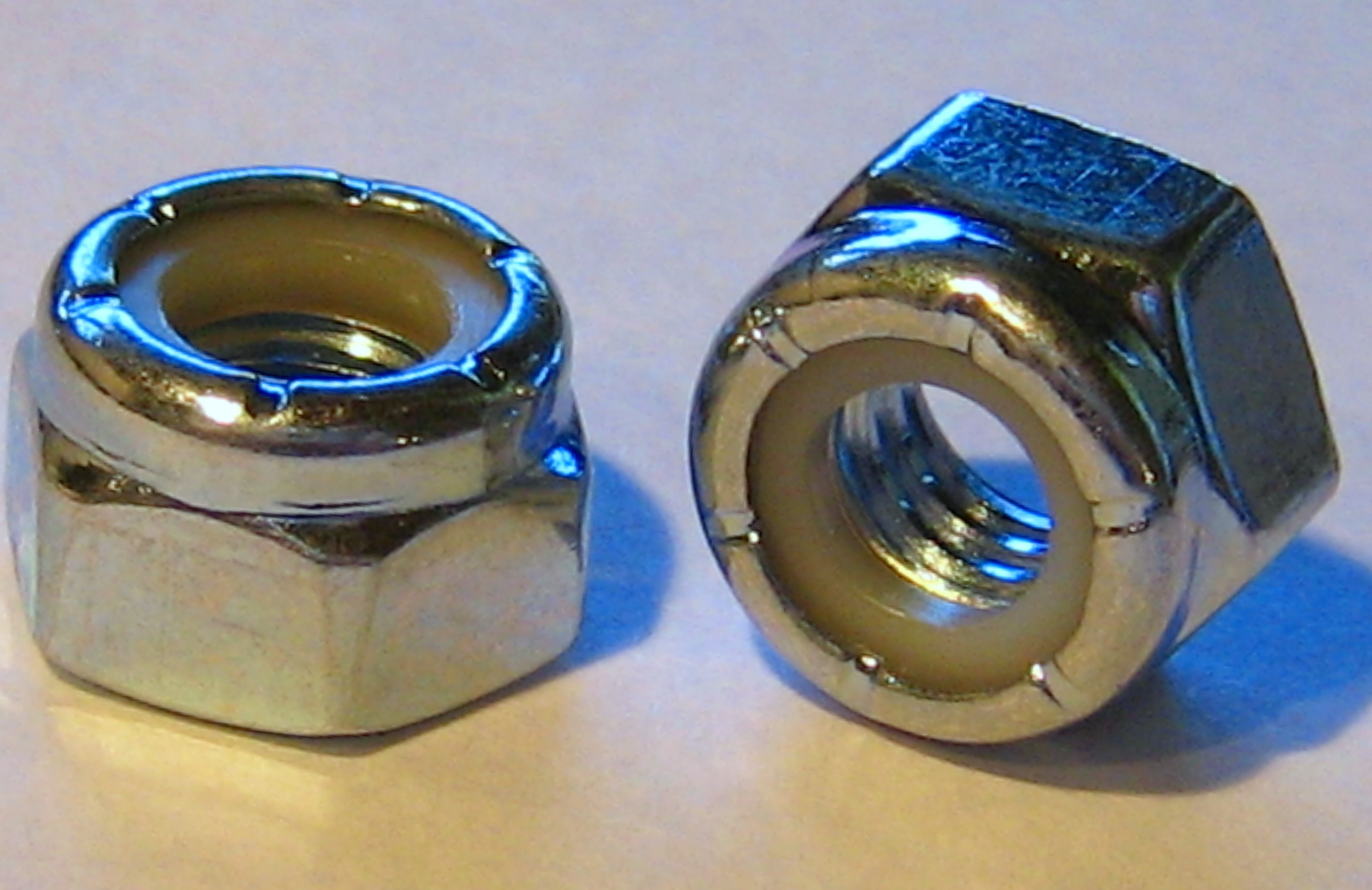
Type of lock nut
A nyloc nut, also referred to as a nylon-insert lock nut, polymer-insert lock nut, or elastic stop nut, is a kind of locknut with a nylon collar that increases friction on the screw thread.
The nylon collar insert is placed at the end of the nut, with an inner diameter (ID) slightly smaller than the major diameter of the screw. The screw thread does not cut into the nylon insert; rather, the insert deforms elastically over the threads as tightening pressure is applied. The insert locks the nut against the screw as a result of friction, caused by the radial compressive force resulting from the deformation of the nylon. Nyloc nuts retain their locking ability up to 250 F.
Trademark
There are no registered trademarks filed in the United States for "Nyloc" or "Nylock" that are currently active in regards to fasteners. In Australia, "nyloc" is a registered trademark.
Reuse
Authorities disagree on whether nyloc nuts should be reused. For example, Carroll Smith (Carroll Smith's Nuts, Bolts, Fasteners, and Plumbing Handbook) notes that the nylon insert is not damaged by installation and therefore they can be reused many times, and a Federal Aviation Administration Advisory Circular allows nuts to be reused if the prevailing torque is within specification. However, a United States Air Force Technical Order requires replacement of self-locking nuts in critical areas. Various specifications for aerospace-grade self-locking nuts require that the running torque be maintained after a number of cycles of assembly, but without preloading the fastener.
References
References
- Smith, Carroll. (1990). "Carroll Smith's Nuts, Bolts, Fasteners, and Plumbing Handbook". MotorBooks/MBI Publishing Company.
- "Trademark Search via Trademarkia".
- "Details view | IP Australia | Trade Mark Search".
- FAA AC43.13-1B.
- Air Force T.O. 1-1A-8.
- NASM 25027, SPECIFICATION, NUT, SELF-LOCKING, 250 °F, 450 °F, AND 800 °F.
This article was imported from Wikipedia and is available under the Creative Commons Attribution-ShareAlike 4.0 License. Content has been adapted to SurfDoc format. Original contributors can be found on the article history page.
Ask Mako anything about Nyloc nut — get instant answers, deeper analysis, and related topics.
Research with MakoFree with your Surf account
Create a free account to save articles, ask Mako questions, and organize your research.
Sign up freeThis content may have been generated or modified by AI. CloudSurf Software LLC is not responsible for the accuracy, completeness, or reliability of AI-generated content. Always verify important information from primary sources.
Report