From Surf Wiki (app.surf) — the open knowledge base
Nutrition and pregnancy
Nutrient intake and dietary planning undertaken before, during, and after pregnancy
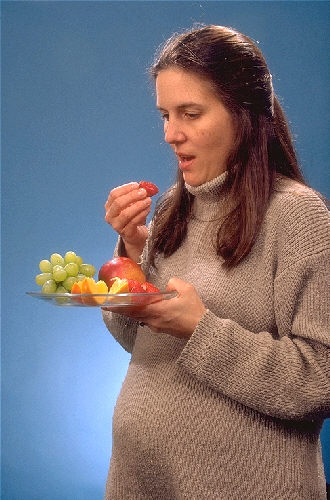
Nutrient intake and dietary planning undertaken before, during, and after pregnancy
Nutrition and pregnancy refers to the nutrient intake and dietary planning that is undertaken before, during, and after pregnancy. Nutrition of the fetus begins at conception. For this reason, the nutrition of the mother is important from before conception (probably several months before) as well as throughout pregnancy and breastfeeding. An ever-increasing number of studies have shown that the nutrition of the mother will have an effect on the child, up to and including the risk for cancer, cardiovascular disease, hypertension, and diabetes throughout life.
An inadequate or excessive amount of some nutrients may cause malformations or medical problems in the fetus, and neurological disorders and handicaps are a risk that is run by mothers who are malnourished. An estimated 24% of babies worldwide are born with lower than optimal weights at birth due to lack of proper nutrition. Personal habits such as consumption of alcohol or large amounts of caffeine can negatively and irreversibly affect the development of the baby, which happens in the early stages of pregnancy.
Caffeine consumption during pregnancy is associated with an increased risk of pregnancy loss. The available research favors the notion that the benefits of fish consumption during pregnancy outweigh the risks; however, the type of fish is important. Folic acid, which is the synthetic form of the vitamin folate, is critical both in pre- and peri-conception.
Nutrition before pregnancy
As with most diets, there are chances of over-supplementing. However, as general advice, both state and medical recommendations are that mothers follow instructions listed on particular vitamin packaging as to the correct or recommended daily allowance (RDA). Daily prenatal use of iron substantially improves birth weight, potentially reducing the risk of low birth weight.
- Folic acid supplementation is recommended before conception, to prevent the development of spina bifida and other neural tube defects. It should be taken as at least 0.4 mg/day throughout the first trimester of pregnancy, 0.6 mg/day throughout the pregnancy, and 0.5 mg/day while breastfeeding in addition to eating foods rich in folic acid such as green leafy vegetables.
- Iodine levels are frequently too low in pregnant women, and iodine is necessary for normal thyroid function and mental development of the fetus, even cretinism. Pregnant women should take prenatal vitamins containing iodine.
- Vitamin D levels vary with exposure to sunlight. While it was assumed that supplementation was necessary only in areas of high latitudes, recent studies of Vitamin D levels throughout the United States and many other countries have shown a large number of women with low levels. For this reason, there is a growing movement to recommend supplementation with 1000 IU of Vitamin D daily throughout pregnancy.
- A large number of pregnant women have been found to have low levels of vitamin B12, but supplementation has not yet been shown to improve pregnancy outcome or the health of the newborn.
- Long-chain polyunsaturated fatty acids, specifically docosahexaenoic acid (DHA) and eicosapentaenoic acid (EPA), are beneficial for fetal development. Several studies have shown a lower risk of preterm delivery and low birth weight in mothers with higher intakes.
- Iron is needed for the healthy growth of the fetus and placenta, especially during the second and third trimesters. It is recommended that the first and third trimesters retain concentrations greater than 11 grams/deciliter and that the second trimester has levels above 10.5 grams per deciliter. It is also essential before pregnancy for the production of hemoglobin. There is no evidence that a hemoglobin level of 7 grams/100 ml or higher is detrimental to pregnancy, but it must be acknowledged that maternal hemorrhage is a major source of maternal mortality worldwide, and a reserve capacity to carry oxygen is desirable. According to the Cochrane review conclusions iron supplementation reduces the risk of maternal anaemia and iron deficiency in pregnancy but the positive effect on other maternal and infant outcomes is less clear.
Nutrition during pregnancy
The United States and the European Union have established vitamin and mineral recommendations during pregnancy and lactation. The amounts in the table below are the higher of the two. The citations separately list recommendations for pregnancy and lactation. Recommendations (RDAs = Recommended Dietary Allowances and PRIs = Population Reference Intakes) are set higher than what has been determined to be average requirements so as to address women who have above-average needs. For some nutrients, there is not enough information to set a recommendation, so the term Adequate Intake (AI) is used based on what appears to be sufficient.
| Nutrient | U.S. RDA or AI | EU PRI or AI | Unit | |
|---|---|---|---|---|
| Vitamin A | 900 | 1300 | μg | |
| Vitamin C | 90 | 155 | mg | |
| Vitamin D | 15 | 15* | μg | |
| Vitamin K | 120* | 70* | μg | |
| α-tocopherol (Vit E) | 15 | 11* | mg | |
| Thiamin (Vit B1) | 1.2 | 1.0 | mg | |
| Riboflavin (Vit B2) | 1.3 | 2.0 | mg | |
| Niacin (Vit B3) | 16 | 16 | mg | |
| Pantothenic acid (Vit B5) | 5* | 7* | mg | |
| Vitamin B6 | 1.3 | 1.8 | mg | |
| Biotin (Vit B7) | 30* | 45* | μg | |
| Folate (Vit B9) | 400 | 600 | μg | |
| Cyanocobalamin (Vit B12) | 2.4 | 5.0* | μg | |
| Choline | 550* | 520* | mg | |
| Calcium | 1000 | 1000 | mg | |
| Chloride | 2300* | NE† | mg | |
| Chromium | 35* | NE† | μg | |
| Copper | 900 | 1500* | μg | |
| Fluoride | 4* | 2.9* | mg | |
| Iodine | 150 | 200* | μg | |
| Iron | 18 | 16 | mg | |
| Magnesium | 420 | 300* | mg | |
| Manganese | 2.3* | 3.0* | mg | |
| Molybdenum | 45 | 65* | μg | |
| Phosphorus | 700 | 550* | mg | |
| Potassium | 4700* | 4000* | mg | |
| Selenium | 55 | 85* | μg | |
| Sodium | 1500* | NE† | mg | |
| Zinc | 11 | 14.9 | mg |
*Adequate Intake
†Not established. The EU has not identified an AI for sodium or chloride, and does not consider chromium to be an essential mineral nutrient.
Vitamin and mineral supplements
Multiple micronutrient supplements taken with iron and folic acid may improve birth outcomes for women in low-income countries. These supplements reduce the number of low birth weight babies, small for gestational age babies, and stillbirths in women who may not have many micronutrients in their usual diets. Undernourished women can benefit from having dietary education sessions and balanced energy and protein supplements. A review showed that dietary education increased the mother's protein intake and helped the baby grow more inside the womb. The balanced protein and energy supplement lowered the risk of stillbirth in small babies and increased weight gain for both the mother and baby. Although more research is needed into the longer-term effects on the mothers' and infants' health, the short-term effects look promising. A review conducted in 2018 found that there was a slight benefit for lipid-based nutritional supplements (LNS) for newborn birth weight, length, small for gestational age, and stunting when compared with iron-folic acid (IFA). In the same study, IFA and multiple micronutrients (MMN) reduced maternal anemia better than LNS, but care is advised in interpreting and applying the results due to review limitations.
Prenatal vitamins typically contain increased amounts of folic acid, iodine, iron, vitamin A, vitamin D, zinc, and calcium over the amounts found in standard multi-vitamins. The World Health Organization does not routinely recommend zinc supplementation for all pregnant women.
Approximately 30 g of calcium is accumulated during pregnancy, almost all of it in the fetal skeleton (25 g). For women with low calcium diets, there is low quality evidence to suggest that calcium supplementation during pregnancy may reduce the risk of preeclampsia. Low-quality evidence also suggests that calcium supplementation may reduce the risk of the mother having the baby before the 37th week of pregnancy (preterm birth).
A mother's nutritional intake during pregnancy is believed to influence and possibly offer protective effects against the development of allergic diseases and asthma in children. Maternal intake of vitamin D, vitamin E, and zinc has all been associated with a lower likelihood of wheezing in childhood, suggesting a protective effect. Additionally, maternal intake of omega-3 long-chain polyunsaturated fatty acids (n-3 LC-PUFAs) has been associated with a reduced risk of the development of eczema in childhood and reduced likelihood for infants to exhibit sensitivity to foods in the first year of life.
Folic acid
Folic acid, which is the synthetic form of the vitamin folate, is critical both in pre- and peri-conception. More than 80 countries use fortification of certain foods with folic acid as a measure to decrease the rate of NTDs.
Vitamins C and E
The combination of vitamin E and vitamin C supplemented to pregnant women does not appear to be efficacious for reducing risk of stillbirth, neonatal death, preterm birth, preeclampsia or any other maternal or infant outcomes, either in healthy women or those considered at risk for pregnancy complications. Antioxidant vitamins as dietary supplements have been proposed as having benefits if consumed during pregnancy. For the combination of vitamin E with vitamin C supplemented to pregnant women, a Cochrane review of 21 clinical trials concluded that the data do not support vitamin E supplementation – majority of trials alpha-tocopherol at 400 IU/day plus vitamin C at 1000 mg/day – as being efficacious for reducing risk of stillbirth, neonatal death, preterm birth, preeclampsia or any other maternal or infant outcomes, either in healthy women or those considered at risk for pregnancy complications. The review identified only three small trials in which vitamin E was supplemented without co-supplementation with vitamin C. None of these trials reported any clinically meaningful information.
Vitamin B12
For vitamin B12, the U.S. Recommended Dietary Allowance (RDA) for pregnancy is 2.6 μg/day, for lactation 2.8 μg/day. Determination of these values was based on an RDA of 2.4 μg/day for non-pregnant women, plus what will be transferred to the fetus during pregnancy and what will be delivered in breast milk. Low maternal vitamin B12, defined as serum concentration less than 148 pmol/L, increases the risk of miscarriage, newborn low birth weight and preterm birth. Women who consume a small percentage of their diet from animal-sourced foods or who by choice consume a vegetarian or vegan diet are at higher risk than those consuming higher amounts of animal-sourced foods of becoming vitamin depleted during pregnancy, which can lead to anemia, and also an increased risk that their breastfed infants become vitamin deficient.
Food safety
Pregnant women are advised to pay attention to the foods they eat during pregnancy to reduce the risk of exposure to substances or bacteria that may be harmful to the developing fetus. This can include potentially harmful pathogens such as listeria, toxoplasmosis, and salmonella. Intake of large amounts of retinol has been linked to birth defects and abnormalities.
Water
During pregnancy, a woman's mass increases by about 12 kg (26 lb). The European Food Safety Authority recommends an increase of 300 mL per day compared to the normal intake for non-pregnant women, taking the total adequate water intake (from food and fluids) to 2,300 mL, or approximately 1,850 mL/ day from fluids alone.
Caffeine
Caffeine consumption during pregnancy is associated with increased risk of pregnancy loss and increased risk of low birth weight, defined as below 2500 grams (5.5 pounds). The European Food Safety Authority and the American Congress of Obstetricians and Gynecologists concur that habitual caffeine consumption up to 200 mg per day by pregnant women does not give rise to safety concerns for the fetus. The United Kingdom Food Standards Agency had recommended that pregnant women should limit their caffeine intake to less than 300 mg of caffeine a day, but in 2009 revised that downward to less than 200 mg of caffeine a day.
High doses of caffeine intake during pregnancy may increase the risk of miscarriage and some major negative pregnancy outcomes, such as stillbirth or low birth weight.
A 2020 review called into question the safe levels proposed by the European Food Safety Authority, the American Congress of Obstetricians and Gynecologists, the National Health Service, and the Dietary Guidelines for Americans. It found that the current scientific evidence does not support moderate caffeine consumption during pregnancy as safe, and advised pregnant women and women contemplating pregnancy to avoid caffeine.
Alcohol
Main article: Alcohol and pregnancy
Fetal alcohol spectrum disorders are a group of conditions that can occur in a person whose mother drank alcohol during pregnancy. The most severe form of the condition is known as fetal alcohol syndrome. Problems may include an abnormal appearance, short height, low body weight, small head size, poor coordination, low intelligence, behavior problems, hearing loss, and vision problems. Those affected are more likely to have trouble in school, legal problems, participate in high-risk behaviors, and have trouble with alcohol and recreational drug use. Fetal alcohol syndrome usually occurs when a pregnant woman has more than four drinks per day. Milder symptoms have been found with two drinks per day during the early part of pregnancy. Evidence of harm from less than two drinks per day or 10 drinks per week is not clear.
The American Academy of Pediatrics established a conservative set of recommendations in 2015: "During pregnancy: no amount of alcohol intake should be considered safe; there is no safe trimester to drink alcohol; all forms of alcohol, such as beer, wine, and liquor, pose similar risk; and binge drinking poses dose-related risk to the developing fetus." The World Health Organization recommends that alcohol should be avoided entirely during pregnancy, given the relatively unknown effects of even small amounts of alcohol during pregnancy.
Fish and omega-3 fatty acids
Fish consumption during pregnancy is encouraged by European, Australian, and American guidelines. The reason given is that fat-containing fish such as salmon and tuna contain eicosapentaenoic acid (EPA) and docosahexaenoic acid (DHA). These are termed long chain, omega-3, polyunsaturated fatty acids, and are considered important for fetal neurodevelopment. Additionally, fish are good sources of vitamins A, D, and B12, as well as the mineral iodine.
Due to the risks of heavy-metal toxicity on fetal neurodevelopment, many mothers are concerned about eating fish during pregnancy. Overall, current research favors the notion that the benefits of fish consumption during pregnancy outweigh the risks; however, the type of fish is important. An alternative to consuming fish is to use fish oil dietary supplements containing both EPA and DHA, or algae-derived DHA-only oils. The New York Times reported on a laboratory evaluation of 30 popular fish oil supplements. Some of those had less than the label claimed amounts of DHA. As for safety, "All of the products tested contained only very low levels of mercury, ranging from one to six parts per billion per serving. That range is far below the upper safety limit of 100 parts per billion set by the Global Organization for EPA and DHA Omega-3s, an industry trade group."
Nutrition after pregnancy
Proper nutrition is important after delivery to help the mother recover, and to provide enough food energy and nutrients for a woman to breastfeed her child. Women having serum ferritin less than 70 μg/L may need iron supplements to prevent iron deficiency anaemia during pregnancy and postpartum.
During lactation, water intake may need to be increased. Human milk is made of 88% water, and the IOM recommends that breastfeeding women increase their water intake by about 300 mL/day to a total volume of 3000 mL/day (from food and drink), approximately 2,400 mL/day from fluids.
References
References
- (2020-07-14). "Cancer Prevention During Early Life".
- (2003). "Human Nutrition - A Health Perspective". Arnold.
- (2011-03-15). "WHO | 10 facts on nutrition". World Health Organization.
- (2006). "Pregnancy: The Ultimate Week-by-Week Pregnancy Guide". Meredith Books.
- (June 2013). "Anaemia, prenatal iron use, and risk of adverse pregnancy outcomes: systematic review and meta-analysis". BMJ.
- (2001). "Drugs During Pregnancy and Lactation: Handbook of Prescription Drugs and Comparative Risk Assessment". Gulf Professional Publishing.
- (2006). "Modern Nutrition in Health and Disease". Lippincott Williams & Wilkins.
- (March 2013). "Association between maternal serum 25-hydroxyvitamin D level and pregnancy and neonatal outcomes: systematic review and meta-analysis of observational studies". BMJ.
- (2011). "Drugs in Pregnancy and Lactation: A Reference Guide to Fetal and Neonatal Risk". Lippincott Williams & Wilkins.
- (July 2012). "Effect of n-3 long-chain polyunsaturated fatty acid intake during pregnancy on maternal, infant, and child health outcomes: a systematic review". Paediatric and Perinatal Epidemiology.
- (June 2006). "Effects of n-3 fatty acids during pregnancy and lactation". The American Journal of Clinical Nutrition.
- (August 2020). "The relationship between maternal anemia during pregnancy with preterm birth: a systematic review and meta-analysis". The Journal of Maternal-Fetal & Neonatal Medicine.
- (July 2015). "Daily oral iron supplementation during pregnancy". The Cochrane Database of Systematic Reviews.
- "Dietary Reference Intakes (DRIs)".
- (2017). "Overview on Dietary Reference Values for the EU population as derived by the EFSA Panel on Dietetic Products, Nutrition and Allergies".
- (March 2019). "Multiple-micronutrient supplementation for women during pregnancy". The Cochrane Database of Systematic Reviews.
- (June 2015). "Antenatal dietary education and supplementation to increase energy and protein intake". The Cochrane Database of Systematic Reviews.
- (August 2018). "Lipid-based nutrient supplements for maternal, birth, and infant developmental outcomes". The Cochrane Database of Systematic Reviews.
- (March 2021). "Zinc supplementation for improving pregnancy and infant outcome". The Cochrane Database of Systematic Reviews.
- "Zinc supplementation during pregnancy". [[World Health Organization]].
- (2008). "Krause's Food & Nutrition Therapy". Saunders/Elsevier.
- (October 2018). "Calcium supplementation during pregnancy for preventing hypertensive disorders and related problems". The Cochrane Database of Systematic Reviews.
- (2024-11-19). "Calcium supplementation (other than for preventing or treating hypertension) for improving pregnancy and infant outcomes". The Cochrane Database of Systematic Reviews.
- (December 2015). "Maternal nutrition during pregnancy and risk of asthma, wheeze, and atopic diseases during childhood: a systematic review and meta-analysis". Allergy.
- (January 2016). "Omega-3 long-chain PUFA intake during pregnancy and allergic disease outcomes in the offspring: a systematic review and meta-analysis of observational studies and randomized controlled trials". The American Journal of Clinical Nutrition.
- "Recommendations {{!}} Folic Acid {{!}} NCBDDD {{!}} CDC".
- (2018). "Public health failure in the prevention of neural tube defects: time to abandon the tolerable upper intake level of folate". Public Health Reviews.
- (September 2015). "Vitamin E supplementation in pregnancy". The Cochrane Database of Systematic Reviews.
- (September 2015). "Vitamin C supplementation in pregnancy". The Cochrane Database of Systematic Reviews.
- (1998). "Dietary Reference Intakes for Thiamin, Riboflavin, Niacin, Vitamin B6, Folate, Vitamin B12, Pantothenic Acid, Biotin, and Choline". The National Academies Press.
- (2017). "Overview on Dietary Reference Values for the EU population as derived by the EFSA Panel on Dietetic Products, Nutrition and Allergies".
- (February 2017). "Associations of Maternal Vitamin B12 Concentration in Pregnancy With the Risks of Preterm Birth and Low Birth Weight: A Systematic Review and Meta-Analysis of Individual Participant Data". American Journal of Epidemiology.
- (November 2017). "Cobalamin Status from Pregnancy to Early Childhood: Lessons from Global Experience". Advances in Nutrition.
- (2006). "Nutrition in pregnancy". British Nutrition Foundation.
- (November 1, 2013). "Vitamin A (retinol)". Mayo Clinic.
- [https://www.nap.edu/read/10925/chapter/6 Water] Institute of Medicine Dietary Reference Intakes for Water, Potassium, Sodium, Chloride, and Sulfate. Washington, DC: National Academies Press (2004).
- (2010). "Scientific Opinion on Dietary reference values for water". EFSA Journal.
- (May 2016). "Maternal caffeine intake during pregnancy and risk of pregnancy loss: a categorical and dose-response meta-analysis of prospective studies". Public Health Nutrition.
- (August 2015). "A meta-analysis of risk of pregnancy loss and caffeine and coffee consumption during pregnancy". International Journal of Gynaecology and Obstetrics.
- (2015). "Maternal Caffeine Consumption during Pregnancy and Risk of Low Birth Weight: A Dose-Response Meta-Analysis of Observational Studies". PLOS ONE.
- (September 2014). "Maternal caffeine intake during pregnancy is associated with risk of low birth weight: a systematic review and dose-response meta-analysis". BMC Medicine.
- (July 2021). "Maternal caffeine consumption during pregnancy and risk of low birth weight: a dose-response meta-analysis of cohort studies". Critical Reviews in Food Science and Nutrition.
- EFSA Panel on Dietetic Products, Nutrition and Allergies (NDA). (2015). "Scientific Opinion on the safety of caffeine". EFSA Journal.
- American College of Obstetricians and Gynecologists. (August 2010). "ACOG CommitteeOpinion No. 462: Moderate caffeine consumption during pregnancy". Obstetrics and Gynecology.
- "Food Standards Agency publishes new caffeine advice for pregnant women".
- (November 2008). "Caffeine and miscarriage: case closed?". American Journal of Obstetrics and Gynecology.
- (June 2021). "Maternal caffeine consumption and pregnancy outcomes: a narrative review with implications for advice to mothers and mothers-to-be". BMJ Evidence-Based Medicine.
- (April 2013). "Is caffeine consumption safe during pregnancy?". Canadian Family Physician.
- (April 16, 2015). "Facts about FASDs".
- (2013). "Fetal Alcohol Spectrum Disorder (FASD): neurobehavioral profile, indications for diagnosis and treatment". Rivista di Psichiatria.
- (2011). "Drugs in pregnancy and lactation: a reference guide to fetal and neonatal risk". Wolters Kluwer Health/Lippincott Williams & Wilkins.
- (February 2012). "Pregnancy and alcohol: occasional, light drinking may be safe". Prescrire International.
- (March 2007). "Systematic review of effects of low-moderate prenatal alcohol exposure on pregnancy outcome". BJOG.
- (November 2015). "Fetal Alcohol Spectrum Disorders". Pediatrics.
- "Framework for alcohol policy in the WHO European Region". World Health Organisation.
- EFSA Dietetic Products, Nutrition, and Allergies (NDA). (2014-07-01). "Scientific Opinion on health benefits of seafood (fish and shellfish) consumption in relation to health risks associated with exposure to methylmercury". EFSA Journal.
- National Health and Medical Research Council. (2013-02-07). "Australian Dietary Guidelines (2013) {{!}} National Health and Medical Research Council".
- "2015-2020 Dietary Guidelines - health.gov".
- (March 2015). "Fish intake during pregnancy and foetal neurodevelopment--a systematic review of the evidence". Nutrients.
- (January 2016). "Heavy metals in marine fish meat and consumer health: a review". Journal of the Science of Food and Agriculture.
- (22 January 2014). "What's in Your Fish Oil Supplements?".
- (September 2006). "Body iron and individual iron prophylaxis in pregnancy--should the iron dose be adjusted according to serum ferritin?". Annals of Hematology.
- (April 2004). "Iodine deficiency and development of brain". Indian Journal of Pediatrics.
This article was imported from Wikipedia and is available under the Creative Commons Attribution-ShareAlike 4.0 License. Content has been adapted to SurfDoc format. Original contributors can be found on the article history page.
Ask Mako anything about Nutrition and pregnancy — get instant answers, deeper analysis, and related topics.
Research with MakoFree with your Surf account
Create a free account to save articles, ask Mako questions, and organize your research.
Sign up freeThis content may have been generated or modified by AI. CloudSurf Software LLC is not responsible for the accuracy, completeness, or reliability of AI-generated content. Always verify important information from primary sources.
Report