From Surf Wiki (app.surf) — the open knowledge base
Novo Brdo
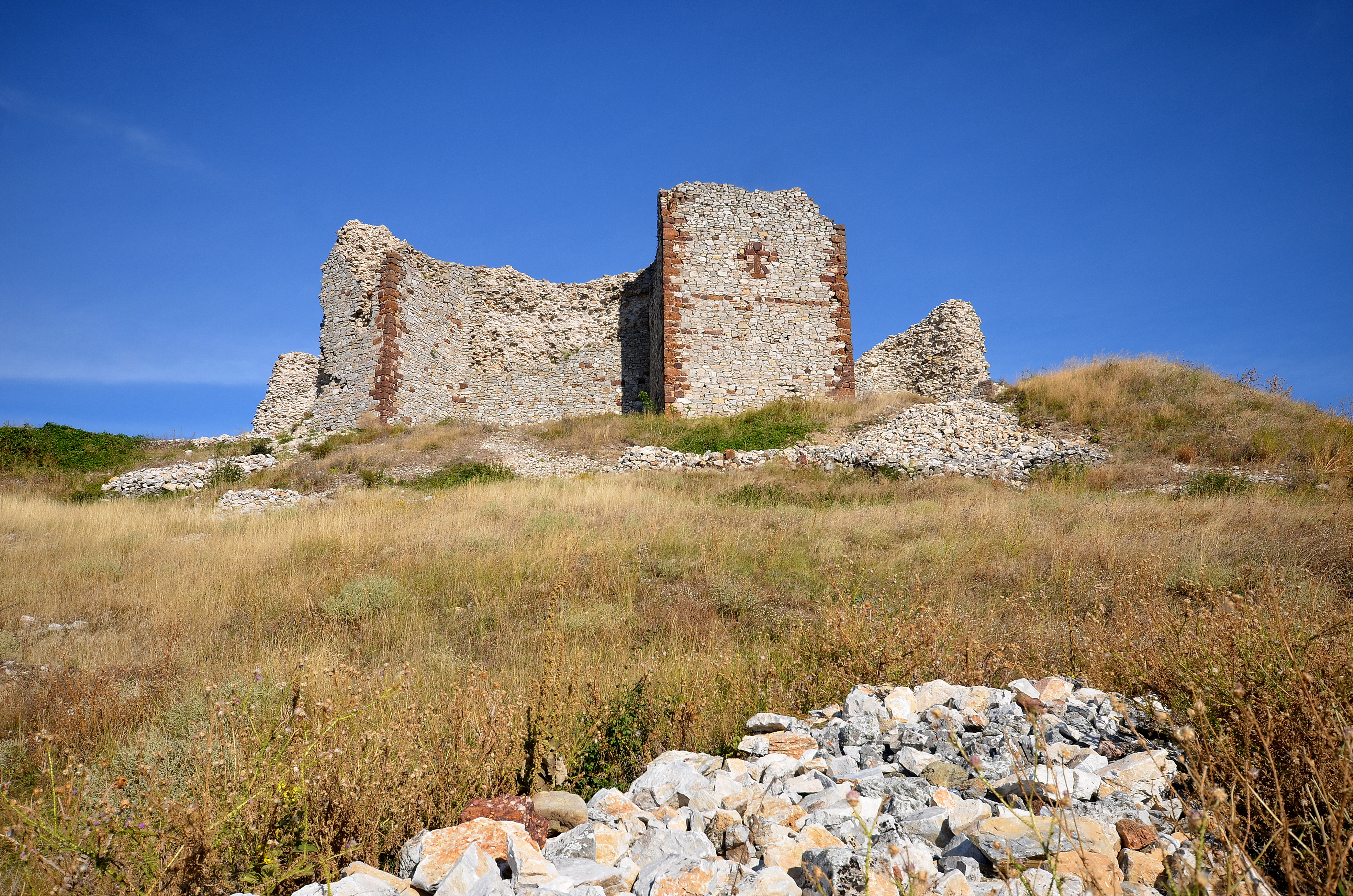
| Field | Value | |
|---|---|---|
| <!-- Basic info ----------------> | name | Novo Brdo |
| native_name | ||
| settlement_type | Town and municipality | |
| other_name | ||
| image_skyline | NovoBrdoKosovoAbove.jpg | |
| image_caption | View on Novo Brdo | |
| image_seal | Stema e Komunës Novobërdë.svg | |
| pushpin_map | Kosovo#Europe | |
| subdivision_type | Country | |
| subdivision_name | Kosovo | |
| subdivision_type1 | District | |
| subdivision_name1 | Pristina | |
| leader_title | Mayor | |
| leader_party | SL | |
| leader_name | Saša Milošević | |
| established_date | ||
| area_total_km2 | 204.25 | |
| <!-- ALL fields dealing with a measurements are subject to automatic unit conversion--> | area_land_km2 | |
| area_water_percent | ||
| population_as_of | 2024 | |
| population_total | 4495 | |
| population_footnotes | ||
| population_density_km2 | auto | |
| timezone | CET | |
| utc_offset | +1 | |
| timezone_DST | CEST | |
| utc_offset_DST | +2 | |
| coordinates | ||
| elevation_footnotes | tags-- | |
| elevation_m | 946 | |
| <!-- Area/postal codes & others --------> | postal_code_type | Postal code |
| postal_code | 16000 | |
| area_code | +381(0)38 | |
| registration_plate_type | Vehicle registration | |
| registration_plate | 01 | |
| website | ||
| parts | 26 | |
| parts_type | Settlements |
Novo Brdo (Ново Брдо), or Novobërda or Artana (Albanian indefinite form: Novobërdë or Artanë), is a town and municipality located in the Pristina district of Kosovo. According to the 2011 census, it has a population of 6,729 inhabitants. The center of the municipality is the village of Bostane. The region is especially known for its role in mining during medieval times, in particular after the construction of the Novo Brdo Fortress by Stefan Milutin (King of Serbia) to house Saxon miners who were brought in the region. According to the 2024 census, it has an Albanian majority.
Name
In Serbian (and also English) "Novo Brdo" is used, literally meaning "New Hill". The name was derived from the medieval Serbian mining town of Novo Brdo. In Albanian, "Novobërdë" or "Artanë" is used. It was known as Novar (نوار) or Novaberde (نواـبـرده) in Ottoman Turkish.
History
Middle Ages
Novo Brdo is an archaeological site. Novo Brdo was mentioned with its present name in historical documents as early as 1326. It served as the most important mining community in the Balkans during the 15th century. Previously it was known as Novus Mons or Novamonte in Latin and as Nyeuberghe in Saxon texts. The famous scribe Vladislav the Grammarian was born here.

Albanians settled Novo Brdo during the 13th to 14th century to work in the local mines, thus reinforcing the Albanian population in Kosovo. Subsequent waves of Catholic Albanians kept arriving in Novo Brdo up until the 17th century. Ragusan documents attest to the presence of a significant number of Albanians living in Novo Brdo throughout the 14th and early 15th centuries, including members of the Catholic Albanian clergy with names such as Gjergjash and Gjinko, Gjini, son of Gjergji, the presbyter (1382); the reverend Gjergj Gega, Nikollë Tanushi, Gjergj Andrea Pellini and Nikolla Progonovic. In the book of debtors belonging to Ragusan merchant Mihail Lukarevic, who resided in Novo Brdo during the 1430s, 150 Albanian household heads were mentioned as living in Novo Brdo with their families. They worked as miners, artisans and specialists in the mines of Novo Brdo. The anthroponomy of these figures is characteristically Albanian; distinctive Albanian names such as Gjon, Gjin, Tanush, Progon, Lek, Gjergj and Bibë are mentioned. Some families had a mixed Slav-Albanian anthroponomy - that is to say, a Slavic first name and an Albanian last name, or last names with Albanian patronyms and Slavic suffixes such as Gjonoviç, Gjinoviq, Progonoviq, Bushatoviq, Dodishiq, Kondiq, Lekiq and other such names. Many Albanian Catholic priests were registered as residing in Novo Brdo, as well as in towns like Janjevo, Trepça, Prizren and others. These Catholic Albanian priests served as the primary Catholic priests for the town of Novo Brdo.
It is estimated that during the 15th century, Novo Brdo had a population of 4 to 5 thousand people within the fortified city. Beyond the city walls, a network of satellite settlements housed a further 8 to 10 thousand people. Such a large settlement was unusual in Europe where 90 to 95% of all medieval European cities had populations of less than 2 thousand. At the first half of 15th century, Serbian Orthodox bishops of Lipjan resided in Novo Brdo. There were mines and smelting furnaces for iron, lead, gold and silver ores. Novo Brdo silver is known by its (; an alloy of silver with 1/6-1/3 gold). In 1450 the mines of Novo Brdo were producing about 6,000 kg of silver per year. The medieval settlement was an important producer of Serbian pottery and other goods. Despite a Serbian population within the city, merchants from the Republic of Ragusa managed international precious metal trade within Novo Brdo. Prior to the Ottoman conquest of the city, Novo Brdo was a Catholic stronghold within the region.

Novo Brdo was the last Serbian town to remain standing during the first Ottoman invasion. In 1439 the capital of Smederevo fell and Serbia resisted until finally Novo Brdo fell in 1441. Novo Brdo was by treaty restored to the Serbs in 1443. The fortress (named in Turkish Nobırda) came under siege for forty days by the Ottomans, before capitulating and becoming occupied by the Ottomans on 1 June 1455. This event is described by Konstantin Mihailović from Ostrovica near Novo Brdo, who was taken by the Ottomans along with some 300 other boys to be trained as Janissaries. All of the higher ranking Serbian officials were executed after the castle fell, with the younger men and boys being taken captive to serve in the Ottoman Army, and some 700 young Serbian women and girls being taken to be wives to Ottoman commanders. When the city fell to the Ottomans, it had an estimated population of about 40,000 people.
An Albanian village named Arbanas is mentioned in the village of Zebinca, south of Novo Brdo in 1545-1574. The village displayed inhabitants with Albanian-Slavic-Chrisitan names.
In the Ottoman Defter of 1591, the city of Novo Brdo itself was recorded within the Sanjak of Viçitrina - this defter included the household heads of the city. The city consisted of several Muslim neighbourhoods (Mahalla/Mëhalla); they were Xhamia Sherif (Sherif Mosque, 26 households), Kasap (11 households), Hamam (21 households), Darbbane (40 households) and Mehmed Çelebi (5 households). There were also 6 Jewish households, including 1 that hailed from Catalonia and 1 that hailed from Castille. Of the Christian neighbourhoods (Mahalla/Mëhalla), the following had inhabitants of mixed Albanian-Slavic/Orthodox anthroponomy: Sokraja (15 households), Pop Simoni (12 households), Çarshi (13) and Himandin (9). Slavic/Orthodox anthroponomy predominated in the following neighbourhoods: Sveti Petra (19 households), Sveti Nika (9 households), Marko Kërsti (26 households), Filip (9 households), Pop Krilovina (10 households), Kallogjer Gligorija (6 households), Kovaç Radosavi (16 households), Shagliçiq (8 households), Shuster (14 households) and Vuka Mrkshiq (8 households). Characteristic Albanian anthroponomy predominated in the following neighbourhoods: Protopop (9 households), Izllatar (9 households), Pop Grobani (Grubani) (5 households), Pop Bozha (4 households) and Kuriçka (13 households).
During the Great Turkish War, Albanian insurgents participated in a battle fought between the Austrian military unit commanded by Kutschenbach against the Ottomans in Novo Brdo on March 17, 1690, a battle won by the Austrians. Albanians were encouraged to begin the fight against the Ottomans and to intensify their attempts to strengthen their relations with the Albanian insurgents in Kosovo.
Modern

By the early 20th century, Novo Brdo's population dwindled, with most inhabitants moving to the more easily accessible area of Gjilan. In 1999, with the entry into Kosovo of KFOR and the United Nations Interim Administration Mission in Kosovo (UNMIK), the area had a small military outpost occupied by US soldiers, as well as a station of International Police and Kosovo Police.
According to the 2013 Brussels Agreement, the municipality was to become part of the Community of Serb Municipalities. Part of the agreement which pertained to the creation of the Association of Serbian municipalities was deemed unconstitutional by Kosovo's Constitutional Court and since then the agreement has been blocked.
Economy
There are two lead and zinc mines operating on the territory of Novo Brdo: Kišnica and Novo Brdo.
Demographics
|1948|3960 |1953|4548 |1961|5153 |1971|5384 |1981|4984 |1991|4611 |2011|6729 |2024|4495|source = Division of Kosovo According to the last official census done in 2011, the municipality has a population of 6,729 inhabitants. In 2020 estimate, the municipality had 7,121 inhabitants.
Settlements
Municipality of Novo Brdo consists of 26 settlements with following populations:
- Boljevce / Boleci, 72
- Bostane / Bostani, 487
- Bušince / Bushinca, 128
- Carevce / Careci, 27
- Draganac / Draganca, 17
- Izvor / Izvori, 442
- Jasenovik / Jasenoviku, 210
- Klobukar / Kllobukari, 114
- Koretište / Koretishti, 530
- Kosač / Kosaç, 175
- Gortnje Kusce / Kufca e Epërme, 890
- Labljane / Llabjani, 875
- Gornji Makreš / Makresh i Epërm, 58
- Donji Makreš / Makreshi i Poshtëm, 71
- Manišince / Manishinca, 67
- Mozgovo / Mazgova, uninhabited
- Miganovce / Miganoci, 34
- Novo Brdo / Novobërda, 183
- Paralovo / Parallova, 207
- Pasjak / Pasjaku, 1,176
- Prekovce / Prekoci, 214
- Stanišor / Stanishori, 320
- Straža / Strazha, 191
- Trnićevce / Tërniqeci, 50
- Tirince / Tirinca, 26
- Zebince / Zebinca, 165
Notable people
- Stefan Milutin (c. 1253–1321), King of Serbia and founder of Novo Brdo Fortress
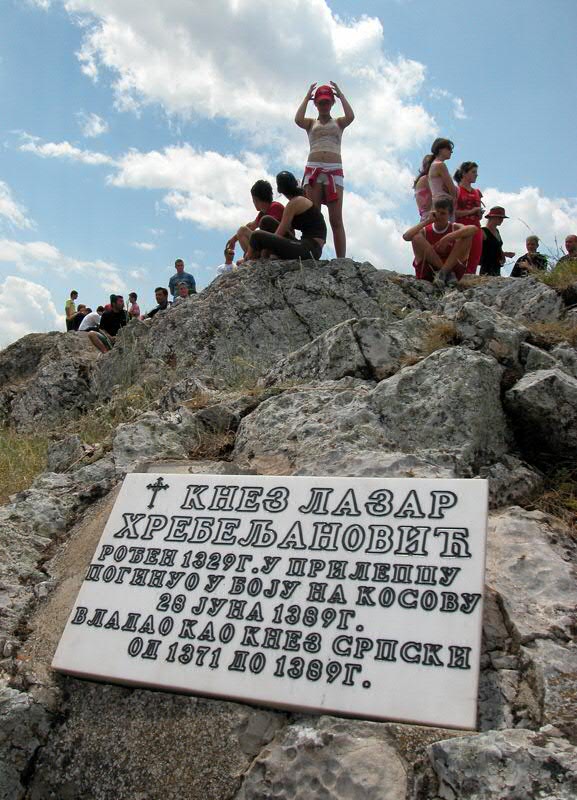
- Lazar of Serbia (c. 1329–15 June 1389) medieval Serbian prince, born in the fortress of Prilepac near Novo Brdo
- Dragana of Serbia (c. 1380s – 1395), Empress consort of Bulgaria, born in the Fortress of Prilepac
- Jelena Lazarević (1365/1366 – 1443) medieval noblewoman, born in the fortress of Prilepac
- Gjergj Pelini (fl. 1436–died 1463), Albanian Catholic priest and diplomat of Skanderbeg and Venice.
- Dimitrije Kantakouzenos (c. 1435–after 1487), Serbian writer and poet
- Vladislav the Grammarian (fl. 1456–1479) Bulgarian Orthodox monk, writer, historian and theologian
References
References
- "Rezultatet e Zgjedhjeve për Kryetar Komune 2025". [[Central Election Commission (Kosovo).
- "Population and housing census in Kosovo preliminary results - July 2024".
- "REZULTATET PËRFUNDIMTARE të dala nga regjistrimi i popullsisë 2024". Agjencia Statistikave të Kosovës.
- ["Municipality of Novo Brdo"](http://kk.rks-gov.net/novoberde/default.aspx?lang=en-US}}, {{cite web).
- Sevket Pamuk. (2000). "A monetary history of the Ottoman Empire".
- Rahmi Hüseyin Ünal. "BEÇİN 1997 KAZISI".
- Rob Pickard. (January 2008). "Analysis and Reform of Cultural Heritage Policies in South-East Europe". Council of Europe.
- (2019). "History of Law and Other Humanities.Views of the Legal World Across the Time". Dykinson.
- Rădvan, L.. (2010). "At Europe's Borders: Medieval Towns in the Romanian Principalities". Brill.
- (2024). "Journal of Medieval Military History: Volume XXII". The Boydell Press.
- (2008). "The Wars of the Balkan Peninsula: Their Medieval Origins". Scarecrow Press.
- Ducellier, Allain. (2006). "The Case for Kosova: Passage to Independence". Anthem Press.
- (1984). "Popullsia Shqiptare e Kosoves Gjate Shekujve XV XVI". 8 Nëntori.
- (1989). "Kosovo: Past and Present". Review of International Affairs.
- Popović, Marko. "Utvrdjenja srednjovekovnog grada Novog Brda/Fortifications of the Medieval Town of Novo Brdo (2020)".
- (2010). "Religion und Kultur im albanischsprachigen Südosteuropa". Peter Lang.
- Carter, F. W.. (1968-07-01). "Balkan Exports Through Dubrovnik 1358-1500: A Geographical Analysis". Journal of Croatian Studies.
- (2000). "Age, Marriage, and Politics in Fifteenth-century Ragusa". Oxford University Press.
- (2014). "Emrat e shqiptarëve në shek. XIII-XV në dritën e burimeve kishtare serbe". TENDA.
- (2014). "Emrat e shqiptarëve në shek. XIII-XV në dritën e burimeve kishtare serbe". TENDA.
- (1984). "Popullsia Shqiptare e Kosoves Gjate Shekujve XV-XVI". 8 Nëntori.
- (2020). "Spatial Conflicts and Divisions in Post-socialist Cities". Springer.
- "KOSOVO - THE UNFULFILLED BRUSSELS AGREEMENT". International Institute for Peace.
- "Novo Brdo/Novobërdë". OSCE.
- "Divisions of Kosovo".
This article was imported from Wikipedia and is available under the Creative Commons Attribution-ShareAlike 4.0 License. Content has been adapted to SurfDoc format. Original contributors can be found on the article history page.
Ask Mako anything about Novo Brdo — get instant answers, deeper analysis, and related topics.
Research with MakoFree with your Surf account
Create a free account to save articles, ask Mako questions, and organize your research.
Sign up freeThis content may have been generated or modified by AI. CloudSurf Software LLC is not responsible for the accuracy, completeness, or reliability of AI-generated content. Always verify important information from primary sources.
Report