From Surf Wiki (app.surf) — the open knowledge base
Novi Sad

| Field | Value |
|---|---|
| name | Novi Sad |
| native_name | sr-Cyrl |
| hu | |
| sk | |
| rsk | |
| native_name_lang | sr |
| official_name | City of Novi Sad |
| Град Нови Сад | |
| nickname | Serbian Athens |
| settlement_type | City |
| image_skyline | {{multiple image |
| border | infobox |
| perrow | 1/2/3/2/2 |
| total_width | 270 |
| align | center |
| caption_align | center |
| image1 | 20230429.Ansichten in Novi Sad.-039.jpg |
| caption1 | Freedom Square with Novi Sad City Hall |
| image2 | Matica Srpska - panoramio (2).jpg |
| caption2 | Matica srpska |
| image3 | Petrovaradinska tvrđava - panoramio (3).jpg |
| caption3 | Petrovaradin Fortress |
| image4 | Kula sa satom na Petrovaradinskoj tvrđavi.jpg |
| caption4 | Petrovaradin Clock Tower |
| image5 | Serbia-0268 - Name of Mary Parish Church (7344449164).jpg |
| caption5 | Name of Mary Church |
| image6 | Novi Sad 2010 (4824010316).jpg |
| caption6 | St. George's Cathedral |
| image7 | Vladičanski dvor Eparhije Bačke u Novom Sadu Srpske pravoslavne crkve 04.jpg |
| caption7 | Bishop's Palace |
| image8 | Novosadska sinagoga 02.jpg |
| caption8 | Novi Sad Synagogue |
| image_flag | Flag of Novi Sad.svg |
| image_shield | Coa of Novi Sad.svg |
| image_blank_emblem | Logo of Novi Sad.svg |
| blank_emblem_type | Logo of Novi Sad |
| pushpin_map_caption | Location within Serbia##Location with Vojvodina##Location within Europe |
| pushpin_relief | 1 |
| pushpin_map | Serbia#Serbia Vojvodina#Europe |
| subdivision_type | Country |
| subdivision_name | Serbia |
| subdivision_type1 | Province |
| subdivision_name1 | Vojvodina |
| subdivision_type2 | District |
| subdivision_name2 | South Bačka |
| leader_party | SNS |
| leader_title | Mayor |
| leader_name | Žarko Mićin |
| leader_title1 | Ruling parties |
| leader_name1 | SNS/SDPS/SPO–SPS/JS–SVM |
| established_title | Settled by Scordisci |
| established_date | 4th century B.C. |
| established_title1 | Founded |
| established_date1 | 1694 |
| established_title2 | City status |
| established_date2 | |
| area_rank | 36th in Serbia |
| area_total_km2 | 83 |
| area_urban_km2 | 222.66 |
| area_metro_km2 | 699 |
| population_as_of | 2022 |
| population_footnotes | |
| population_rank | 2nd in Serbia |
| total_type | City proper |
| population_total | 260,438 |
| population_density_km2 | auto |
| population_urban | 325,511 |
| population_density_urban_km2 | auto |
| population_metro | 372,136 |
| population_density_metro_km2 | auto |
| population_demonym | Novosađanin |
| (Новосађанин, m.) | |
| Novosađanka | |
| (Новосађанка, f.) (sr) | |
| timezone | CET |
| utc_offset | +01:00 |
| timezone_DST | CEST |
| utc_offset_DST | +02:00 |
| coordinates | |
| elevation_m | 80 |
| elevation_ft | 262 |
| blank_name_sec1 | Official languages |
| blank_info_sec1 | Serbian together with Hungarian, Slovak and Pannonian Rusyn |
| postal_code_type | Postal code |
| postal_code | 21000 |
| area_code_type | Area code |
| area_code | +381(0)21 |
| website | |
| registration_plate | NS |
hu sk rsk Град Нови Сад (Новосађанин, m.) Novosađanka (Новосађанка, f.) (sr)
Novi Sad (, ; see below for other names) is the second largest city in Serbia and the administrative center of the autonomous province of Vojvodina. It is located in the southern portion of the Pannonian Plain on the border of the Bačka and Syrmia geographical regions, lying on the banks of the Danube river, and facing the northern slopes of Fruška Gora. , the population of Novi Sad city proper stands at 260,438, its contiguous urban area has 325,511 inhabitants, and the population of its administrative area totals 372,136 people. It is the fifth largest city on the Danube river and the largest that is not a national capital.
Novi Sad was founded in 1694, when Serb merchants formed a colony across the Danube from the Petrovaradin Fortress, a strategic Habsburg military post. In subsequent centuries, it became an important trading, manufacturing and cultural centre, and has historically been dubbed the Serbian Athens. The city was heavily devastated in the 1848 Revolution, but was subsequently rebuilt and restored. Today, along with the Serbian capital city of Belgrade, Novi Sad is an industrial and financial center important to the Serbian economy.
Novi Sad was the European Youth Capital in 2019 and a European Capital of Culture in 2022. It became a UNESCO Creative City of Media Arts in 2023.
Etymology
The name Novi Sad means "new plantation" in Serbian. Its Latin name, stemming from the establishment of Habsburg city rights, is Neoplanta. The official names of Novi Sad in local administration are:
- / Novi Sad
In both Croatian and Romanian, which are official in provincial administration, the city is called Novi Sad. Historically, the city was called Neusatz and Neusatz an der Donau (translated as 'Novi Sad on the Danube') in German.
In its wider meaning, the name new plantation refers to the "City of Novi Sad", one of the city-level administrative units of Serbia, which includes Novi Sad proper on the left bank of the Danube, the towns of Sremska Kamenica and Petrovaradin on the right bank and the extensive suburbs of the left bank. Novi Sad can also refer strictly to only the urban areas of the city (Novi Sad proper and the towns of Sremska Kamenica and Petrovaradin), or only to the historical core on the left bank, i.e. Novi Sad proper excluding Sremska Kamenica and Petrovaradin.
History
Main article: History of Novi Sad
Older settlements
Flag of Hungary (13th century).svg Kingdom of Hungary 1000–1526
Ottoman Empire 1526–1687
Flag of the Habsburg Monarchy.svg Habsburg monarchy 1694–1804
Austrian Empire 1804–1867
Flag of Hungary (1896-1915; angels).svg Austro-Hungarian Empire 1867–1918
Kingdom of Serbia 1918
Flag of the Kingdom of Yugoslavia.svg Kingdom of Yugoslavia 1918–1941
Flag of Hungary (1920–1946).svg Kingdom of Hungary 1941–1944
SFR Yugoslavia 1944–1992
Serbia and Montenegro 1992–2006
Republic of Serbia 2006–
Human habitation in the territory of present-day Novi Sad has been traced as far back as the Stone Age. Several settlements and necropolises dating to 5000 BC were unearthed during the construction of a new boulevard in Avijatičarsko Naselje. A settlement was also identified on the right bank of the river Danube in present-day Petrovaradin.
In antiquity, the region was inhabited by Celtic tribes, most notably the Scordisci. Celts had been present in the area since the 4th century BC and founded the first fortress on the right bank of the Danube. Later, in the 1st century BC, the region was conquered by the Romans. During Roman rule, a larger fortress was built in the 1st century, named Cusum, and included in the Roman province of Pannonia.
In the 5th century, Cusum was devastated by Hunnic invasions. By the end of the century, the Byzantines had rebuilt the town and called it Petrikon or Petrikov () after Saint Peter. Slavic tribes such as the Severians, the Obotrites and the Serbs (including the subtribes of the Braničevci and the Timočani) settled the region around Novi Sad, mainly in the 6th and 7th centuries. The Serbs absorbed the aforementioned Slavic groups as well as the Paleo-Balkanic peoples of the region.
In the Middle Ages, the area was controlled by the Ostrogoths, Gepids, Avars, Franks, West Slavic groups, again by the Byzantines, and finally by the Hungarians. It was a part of the medieval Kingdom of Hungary from its foundation in 1000 until the Ottoman invasion in the 16th century. Hungarians began to settle in the area, which before that time had been mostly populated by Slavs. The earliest known mention was as the Hungarian variant Peturwarad or Pétervárad (Serbian: Petrovaradin/Петроварадин), derived from the Byzantine variant, found in documents from 1237. That year, several other settlements were mentioned as existing in the territory of modern-day urban Novi Sad.
From the 13th century to the 16th century, the following settlements existed in the urban territory of the modern-day Novi Sad:
- on the right bank of the Danube: Pétervárad () and Kamanc ().
- on the left bank of the Danube: Baksa or Baksafalva (), Kűszentmárton (), Bivalyos or Bivalo (), Vásárosvárad or Várad (), Zajol I (), Zajol II (), Bistritz (). Some other settlements existed in the suburbs of Novi Sad: Mortályos (Serbian: Mrtvaljoš), Csenei (), Keménd (), Rév ().
An etymology of settlement names reveals that some designations are of Slavic origin, which indicates that the areas were initially inhabited by Slavs, particularly the West Slavs. For example, Bivalo (Bivaljoš) had a large Slavic settlement dating from the 5th–6th centuries. Other names are of Hungarian origin (for example Bélakút, Kűszentmárton, Vásárosvárad, Rév), indicating that the settlements were inhabited by Hungarians before the Ottoman invasion in the 16th century. Some settlement names are of uncertain origin.
Tax records from 1522 show a mix of Hungarian and Slavic names among the inhabitants of these villages, including Slavic names like Bozso (Božo), Radovan, Radonya (Radonja), Ivo, etc. Following the Ottoman invasion in the 16th–17th centuries, some of these settlements were destroyed. Most of the surviving Hungarian inhabitants retreated from the area. Some of the settlements persisted under Ottoman rule and were populated by ethnic Serbs.
Between 1526 and 1687, the region was under Ottoman rule. In 1590, the population of all villages in the territory of present-day Novi Sad numbered 105 houses, inhabited exclusively by Serbs. Ottoman records mention only those who paid taxes, so the number of Serbs who lived in the area (for example, those that served in the Ottoman army) was likely larger than was recorded.
Founding of the city
.jpg)
Habsburg rule was aligned with the Roman Catholic doctrine and, as it took over this area near the end of the 17th century, the government prohibited people of Orthodox faith from residing in Petrovaradin. Unable to build homes there, the Serbs of the area founded a new settlement in 1694 on the left bank of the Danube. They initially called it the 'Serb city' (, ). Another name used for the settlement was Petrovaradinski Šanac. In 1718, the inhabitants of the village of Almaš were resettled to Petrovaradinski Šanac, where they founded Almaški Kraj ('the Almaš quarter').
According to 1720 data, the population of Ratzen Stadt was composed of 112 Serbian, 14 German, and 5 Hungarian houses. The settlement officially gained the present names Novi Sad and Újvidék (Neoplanta in Latin) in 1748 when it became a 'free royal city', in German language it was called Neusatz.
The edict that made Novi Sad a 'free royal city' was proclaimed on 1 February 1748. The edict reads:
In the 18th century, the Habsburg monarchy recruited Germans from the southern principalities of the Holy Roman Empire to relocate to the Danube valley. They wanted both to increase the population and to redevelop the river valley for agriculture, which had declined markedly under the Ottomans. To encourage such settlement, the government ensured that the German communities could practice their religion (mostly Catholicism) and use their original German dialect.
Habsburg monarchy
.jpg)
For much of the 18th and 19th centuries, Novi Sad remained the largest city inhabited by Serbs. The reformer of the Serbian language, Vuk Stefanović Karadžić, wrote in 1817 that Novi Sad was the 'largest Serb municipality in the world'. It was a cultural and political centre for Serbs (see also Serbian Revival), who did not have their own national state at the time. Due to its cultural and political influence, the city became known as the 'Serbian Athens' (Srpska Atina in Serbian). According to 1843 data, Novi Sad had 17,332 inhabitants, of whom 9,675 were Orthodox Christians, 5,724 Catholics, 1,032 Protestants, 727 Jews, and 30 adherents of the Armenian church. The largest ethnic group in the city were Serbs, and the second largest were Germans.

During the Revolution of 1848–49, Novi Sad was part of Serbian Vojvodina, a Serbian autonomous region within the Austrian Empire. In 1849, the Hungarian garrison, located at the Petrovaradin Fortress, bombarded and devastated the city, which lost much of its population. According to the 1850 census, there were only 7,182 citizens left in the city, compared to 17,332 in 1843. Marija Trandafil and her husband paid for some of the rebuilding including two churches. Between 1849 and 1860, Novi Sad was part of a separate Austrian crownland known as the Voivodeship of Serbia and Banat of Temeschwar. After the abolishment of this province, the city was included into the Batsch-Bodrog County. The post office was opened in 1853.
Following the compromise of 1867, Novi Sad was located within the Kingdom of Hungary, the Transleithania, which comprised half of the new Austro-Hungarian Empire. During this time, the Magyarization policy of the Hungarian government drastically altered the demographic structure of the city as the formerly predominantly Serbian population became one with a more mixed character. In 1880, 41.2% of the city's inhabitants used the Serbian language most frequently and 25.9% employed Hungarian. In the following decades, the percentage of Serbian-speakers decreased, while the number of Hungarian-speakers increased. According to the 1910 census, the city had 33,590 residents, of whom 13,343 (39.72%) spoke Hungarian, 11,594 (34.52%) Serbian, 5,918 (17.62%) German and 1,453 (4.33%) Slovak. It is not certain whether Hungarians or Serbs were the larger ethnic group in the city in 1910, since the various ethnic groups (Bunjevci, Romani, Jews, other South Slavic people, etc.) were classified in census results only according to the language they spoke.
Similar demographic changes can be seen in the religious structure: in 1870, the population of Novi Sad included 8,134 Orthodox Christians, 6,684 Catholics, 1,725 Calvinists, 1,343 Lutherans, and others. In 1910, the population included 13,383 Roman Catholics and 11,553 Orthodox Christians, while 3,089 declared themselves as Lutheran, 2,751 as Calvinist, and 2,326 as Jewish.
Serbia and Yugoslavia

On 25 November 1918, the Assembly of Serbs, Bunjevci and other Slavs of Vojvodina in Novi Sad proclaimed the union of the region of Vojvodina with the Kingdom of Serbia. From 1 December 1918, Novi Sad was part of the Kingdom of Serbs, Croats, and Slovenes; and in 1929, it became the capital of the Danube Banovina, a province of the newly named Kingdom of Yugoslavia. In 1921, the population of Novi Sad numbered 39,122 inhabitants, 16,293 of whom spoke the Serbian language, 12,991 Hungarian, 6,373 German, 1,117 Slovak, etc.
In 1941, Yugoslavia was invaded and partitioned by the Axis powers, and its northern parts, including Novi Sad, were annexed by Hungary. During World War II, about 5,000 citizens were murdered and many others were resettled. During the three days of the Novi Sad raid (21–23 January 1942) alone, Hungarian police killed 1,246 citizens, among them more than 800 Jews, and threw their corpses into the icy waters of the Danube.
The total death toll of the raid was around 2,500. Citizens of all nationalities—Serbs, Hungarians, Slovaks, and others—fought together against the Axis authorities. In 1975 the whole city was awarded the title People's Hero of Yugoslavia.
The Yugoslav Partisans of Syrmia and Bačka entered the city on 23 October 1944. During the military administration of Banat, Bačka and Baranja (17 October 1944 – 27 January 1945), the Partisans killed tens of thousands, mostly Serbs, Germans, and Hungarians, who were perceived as opponents to the new regime.
Novi Sad became part of the new Socialist Federal Republic of Yugoslavia. Since 1945, Novi Sad has been the capital of Vojvodina, a province of the Republic of Serbia. The city went through rapid industrialization and its population more than doubled in the period between World War II and the breakup of Yugoslavia in the early 1990s.

After 1992, Novi Sad became a part of the Federal Republic of Yugoslavia. Devastated by NATO bombardment during the Kosovo War of 1999, Novi Sad was left without any of its three Danube bridges (Žeželj Bridge, Varadin Bridge and Liberty Bridge), communications, water, and electricity. Residential areas were cluster-bombed several times while the oil refinery was bombarded daily, causing severe pollution and widespread ecological damage. In 2003, FR Yugoslavia was transformed into the state union of Serbia and Montenegro. These two states separated in June 2006 (following the May 2006 Montenegrin independence referendum), leaving Novi Sad part of the Republic of Serbia.
On 1 November 2024, the canopy of the main railway station in Novi Sad collapsed, killing sixteen people. The incident sparked a series of mass protests against government corruption.
During 2025, one million square meters of residential space were under construction simultaneously in Novi Sad, making the city the largest construction site in Serbia.
Geography
The city lies on the meander of the river Danube, which is only 350 meters wide beneath the marking stones of Petrovaradin. A section of the Danube-Tisza-Danube Canal marks the northern edge of the wider city centre. The main part of the city lies on the left bank of the Danube in the region of Bačka, while the smaller settlements of Petrovaradin and Sremska Kamenica lie on the right bank, in the region of Srem (Syrmia). The section situated on the left bank of the river lies on one of the southernmost and lowest parts of the Pannonian Plain, while Fruška Gora on the right bank is a horst mountain. Alluvial plains along the Danube are well-formed, especially on the left bank, and in some parts 10 km from the river. A large part of Novi Sad lies on a fluvial terrace with an elevation of between 80 and. The northern part of Fruška Gora is composed of massive landslide zones, although they are largely inactive with the exception of the Ribnjak neighbourhood between Sremska Kamenica and Petrovaradin Fortress.
The total land area of the city is 699 km², while its urban area spans 129.7 km².
Climate
Novi Sad has a humid subtropical climate (Köppen climate classification: Cfa) closely bordering on humid continental climate (Dfa) with a January mean of 0.7 °C. The city experiences four distinct seasons. Autumn is drier than spring, with long sunny and warm periods. Winter is not so severe, with an average of 22 days of complete sub-zero temperature, and averages 22 days of snowfall. January is the coldest month, with an average low of -2.5 °C. Spring is usually short and rainy, while summer arrives abruptly. The coldest temperature ever recorded in Novi Sad was -30.7 °C on 24 January 1963, and the hottest temperature ever recorded was 41.6 °C on 24 July 2007.
The east-southeasterly wind, known as Košava, blows from the Carpathians and brings clear and dry weather. It mostly blows in autumn and winter, in 2 to 3-day intervals. The average speed of Košava is 25 to, but gusts can sometimes reach up to 130 km/h. In wintertime, accompanied by snow storms, the winds can cause large snow-drifts. |Jan record high C = 18.9 |Feb record high C = 22.4 |Mar record high C = 30.0 |Apr record high C = 31.5 |May record high C = 34.2 |Jun record high C = 37.6 |Jul record high C = 41.6 |Aug record high C = 40.2 |Sep record high C = 37.4 |Oct record high C = 30.1 |Nov record high C = 26.9 |Dec record high C = 21.0 |year record high C = 41.6 |Jan record low C = -30.7 |Feb record low C = -28.6 |Mar record low C = -19.9 |Apr record low C = -6.2 |May record low C = -0.4 |Jun record low C = 0.2 |Jul record low C = 5.4 |Aug record low C = 6.9 |Sep record low C = -1.6 |Oct record low C = -6.4 |Nov record low C = -13.8 |Dec record low C = -24.0 |year record low C = -30.7 | archive-url = https://web.archive.org/web/20220415191235/https://www.hidmet.gov.rs/ciril/meteorologija/stanica_sr_novisad.php | archive-date = 15 April 2022 | access-date = 15 April 2022}}{{cite web | archive-url = https://web.archive.org/web/20220129035014/http://www.hidmet.gov.rs/eng/meteorologija/stanica_sr.php?moss_id=13168 | archive-date = 29 January 2022 | access-date = 25 February 2017 | access-date = 5 November 2017}}
Settlements

Novi Sad is a typical Central European town in terms of its architecture. The Town Hall and the Court House were built by Emmerich Kitzweger (1868–1917). During the 1848/1849 revolution, the town was heavily bombed. One third of all houses were destroyed and the city's population was reduced to half. Architecture from the 19th century dominates the city centre. Small, older houses used to surround the centre of town, but they are now being replaced by modern, multi-story buildings.
During the socialist period, new city blocks with wide streets and multi-story buildings were constructed around the city core. However, not many communist-style high-rise buildings were erected. The total number of apartment buildings, with ten or more floors, remained at about 50, the rest having mostly three to six floors. From 1962 to 1964, a new boulevard, today called Bulevar oslobođenja, was cut through the older neighbourhoods, establishing major communication lines. Several more boulevards were subsequently built in a similar manner, creating an orthogonal network which replaced the primarily radial structure of the old town. These interventions paved the way for a relatively unhampered growth of the city, which has almost tripled in population since the 1950s. Despite a huge increase in car ownership, traffic congestion is still relatively mild, apart from a few major arteries.
Neighbourhoods
Main article: Neighborhoods of Novi Sad


Some of the oldest neighbourhoods in the city are Stari Grad (Old Town), Rotkvarija, Podbara, and Salajka. The areas of Sremska Kamenica and Petrovaradin, located on the right bank of the Danube, were separate towns in the past, but today belong to the urban area of Novi Sad. Liman, as well as Bistrica, are neighbourhoods built during the 1960s, 1970s and 1980s, with contemporary style buildings and wide boulevards (Liman was divided into four sections, numbered I–IV).
New neighbourhoods, like Liman, Detelinara, and Bistrica, emerged from the fields and forests surrounding the city. Following World War II, tall residential buildings were constructed to house the huge influx of people leaving the country side. Many old houses in the city centre, from the Rotkvarija and Bulevar neighbourhoods, were torn down in the 1950s and 1960s, to be replaced by multi-story buildings. Since the city has experienced a major construction boom in the last 10 years, some neighbourhoods have completely been transformed.
Neighbourhoods with single-family homes are mostly located away from the city centre. Telep, situated in the southwest, and Klisa, in the north, are the oldest such neighborhoods. Adice and Veternik, both located west of the downtown area, have significantly expanded during the last 15 years, partly due to the influx of Serbian refugees fleeing the Yugoslav wars.
Suburbs
Some 43,000 inhabitants or 11.7% of the administrative city's total population resides in the 11 rural settlements, outside its urban area. Ledinci, Stari Ledinci, and Bukovac are all located on Fruška Gora slopes, with Stari Ledinci being the most isolated and least populated village. Towns and villages in the adjacent municipalities of Sremski Karlovci, Temerin, and Beočin share the same public transportation system and are economically tied to Novi Sad.

| Name | City municipality | Population |
|---|---|---|
| Begeč | Novi Sad | 3,005 |
| Budisava | 3,107 | |
| Bukovac | Petrovaradin | 3,636 |
| Čenej | Novi Sad | 1,942 |
| Futog | 18,011 | |
| Kać | 11,067 | |
| Kisač | 4,511 | |
| Kovilj | 5,151 | |
| Ledinci | Petrovaradin | 1,864 |
| Rumenka | Novi Sad | 6,300 |
| Stari Ledinci | Petrovaradin | 985 |
| Stepanovićevo | Novi Sad | 1,848 |
Demographics
|||1848|18530 |1900|28763 |1910|33089 |1921|39122 |1931|63985|1941|61731 |1948|69760 |1953|76752|1961|102469|1971|141375|1981|170020|1991|179626 |2002|191405 |2011|231798|2022|260438 | source = Novi Sad is the second largest city in Serbia, after Belgrade, and the largest city in Vojvodina. Its contiguous urban area (which include Novi Sad proper and adjacent settlements of Petrovaradin, Sremska Kamenica, Veternik, and Futog) has population of 325,551 inhabitants. Population of the administrative area of the city of Novi Sad stands at 368,967 inhabitants.
Since its founding, the population of the city has been constantly increasing, and in the last three decades in particular, it experienced rapid population growth. According to the 2022 census, 50.8% of the population of Novi Sad was not native to the city: 30.3% migrated to Novi Sad from rest of Serbia, 17.1% came from countries of former Yugoslavia (predominately Serbs from Bosnia and Herzegovina, Croatia, and Montenegro), while some 3.4% came from other countries.
Ethnic structure
Urban area of Novi Sad and all settlements in the city administrative area have an overwhelming ethnic Serb majority, with the exception of Kisač, which has an ethnic Slovak majority. The ethnic structure of population of Novi Sad administrative area (according to the 2022 census):
| Ethnicity | Population | Share |
|---|---|---|
| Serbs | 289,119 | 78.3% |
| Hungarians | 9,792 | 2.6% |
| Slovaks | 5,458 | 1.4% |
| Croats | 3,877 | 1% |
| Yugoslavs | 3,465 | 0.9% |
| Roma | 3,321 | 0.9% |
| Russians | 2,766 | 0.7% |
| Montenegrins | 2,225 | 0.6% |
| Rusyns | 1,836 | 0.5% |
| Others | 7,799 | 2.1% |
| Regional identity | 4,072 | 1.1% |
| Undeclared | 14,585 | 3.9% |
| Unknown | 20,652 | 5.6% |
Religious structure

Religious structure of population of the Novi Sad administrative area (according to the 2022 census):
| Religion | Adherents | Share |
|---|---|---|
| Orthodox | 282,829 | 76.6% |
| Catholic | 15,822 | 4.3% |
| Protestant | 6,567 | 1.7% |
| Muslim | 4,870 | 1.3% |
| Judaism | 66 | 0.01% |
| Atheist | 10,945 | 2.9% |
| Agnostic | 1,260 | 0.3% |
| Undeclared | 19,461 | 5.2% |
| Unknown | 24,156 | 6.5% |
Culture
.jpg)

In the 19th and early 20th century, Novi Sad was the capital of Serbian culture, earning it the nickname Serbian Athens. During that time, many Serbian novelists, poets, jurists, and publishers had lived or worked in Novi Sad at some point in their career, including Vuk Stefanović Karadžić, Mika Antić, Đura Jakšić and Jovan Jovanović Zmaj, among others. Matica srpska, the oldest cultural-scientific institution in Serbia, was moved from Budapest to Novi Sad in 1864, and now contains the second-largest library in the country, the Library of Matica srpska, with over 3.5 million volumes. The Serbian National Theatre, one of the oldest professional theatre among the South Slavs, was founded in Novi Sad in 1861.
Today, Novi Sad is the second largest cultural centre in Serbia, after Belgrade. Municipal officials have made the city more attractive with numerous cultural events and music concerts. Since 2000, Novi Sad is home to the EXIT festival, one of the biggest music summer festivals in Europe. Other important cultural events include the Sterijino pozorje theatre festival, Zmaj Children Games, International Novi Sad Literature Festival, Novi Sad Jazz Festival, and many others. Novi Sad also hosts a fashion show twice a year, attracting local and international designers. Called Serbia Fashion Week, the event also features the works of applied artists, musicians, interior decorators, multimedia experts and architects. In addition to the Serbian National Theatre, other prominent playhouses consist of the Novi Sad Theatre, Novi Sad Youth Theatre, and the Cultural Centre of Novi Sad. The Novi Sad Synagogue also houses many cultural events. Other cultural institutions include the Detachment of the Serbian Academy of Science and Art, Library of Matica Srpska, Novi Sad City Library and Azbukum. The city is also home to the Archives of Vojvodina. dating back to 1565.
Novi Sad has several folk song societies, which are known as kulturno-umetničko društvo or KUD. The best known societies in the city are: KUD Svetozar Marković, AKUD Sonja Marinković, SKUD Željezničar, FA Vila and the oldest SZPD Neven, established in 1892.
Ethnic minorities express their own traditions, folklore and songs through various societies such as the Hungarian MKUD Petőfi Sándor, Slovak SKUD Pavel Jozef Šafárik, and Pannonian Rusyn RKC Novi Sad.
Novi Sad was chosen to be the European Capital of Culture for 2021, however its mandate was moved to 2022 due to the COVID-19 pandemic. From this mandate, the industrial zone in Liman neighborhood was repurposed as an artist quarter known as Distrikt. Due the continued efforts of local artists, the city became a UNESCO Creative City of Media Arts in 2023.
Museums
File:Petrovaradinska tvrđava2312 36.jpg|City Museum of Novi Sad File:Галерија Матице Српске - спољашна згрда.jpg|Gallery of Matica Srpska File:Museum of Vojvodina in Novi Sad - street view.jpg|Museum of Vojvodina is an art and natural history museum File:Wiki.Vojvodina II Trg Galerija 198.jpg|The Gallery of Fine Arts – Gift Collection of Rajko Mamuzić
The city has several museums and galleries, the best known of which is the Museum of Vojvodina, founded in 1847, which houses a permanent collection of Serbian culture and life in Vojvodina since ancient times. The Museum of Novi Sad, located in the Petrovaradin Fortress, has a permanent collection featuring the history of the old fortress and the city.
The Gallery of Matica Srpska, established in 1847, is the largest and most respected exhibition space in the city, with two galleries in the city centre. Other museums include Museum of Contemporary Art of Vojvodina, The Gallery of Fine Arts – Gift Collection of Rajko Mamuzić and The Pavle Beljanski Memorial Collection, featuring one of the most extensive collections of Serbian art from the 1900s until the 1970s.
Tourism
.jpg)

Since the early 2000s, the number of tourists visiting Novi Sad has been steadily rising each year. During the annual EXIT music festival, the city is full of young people from all over Europe. In 2017, over 200,000 visitors from 60 countries came to the festival, attending about 35 concerts.
Other events include shows and congresses organized by Novi Sad Fair, a local management company, bringing in many businesspersons and entrepreneurs to the city. Novi Sad is home to the largest agricultural show in the region, having attracted 600,000 attendees in 2005. The tourist port, near Varadin Bridge in the city centre, welcomes cruise boats from across Europe that travel the Danube.
The most recognized structure in Novi Sad is the Petrovaradin Fortress, which dominates the skyline and also offers scenic views of the city. The nearby historic neighbourhood of Stari Grad has many monuments, museums, cafes, restaurants and shops. Also in the vicinity, is the Fruška Gora National Park, approximately 20 km from the city centre.
A total of 234,708 tourist arrivals with 567,926 overnight stays were recorded in 2023.
Cuisine
Typical Serbian food can be found in Novi Sad, including traditional dishes like ćevapi, burek, kajmak, kiseli kupus, kiflice and pasulj, as well as fish dishes, local cheeses and charcuterie. Restaurants and farmsteads offer fresh produce from local farmers and also regional vintages from Fruska Gora's wineries. Modern alternatives are available at some of the city's top restaurants, which prepare traditional fare with an updated twist. Pastry shops serve local specialties such as layered cakes made from ground nuts and cream, referred to as 'torta' in Serbian. Desserts also often include raspberries, one of the region's largest exports, and historic Dunavska Street is home to many ice cream parlors.
Index sandwich, named after university student index books, is a popular local street food since the 1980s. It is made out of a bread roll stuffed with melted cheese, ham, mushrooms and lashings of sauce.
Shopping
Retail activity in Novi Sad is concentrated in several modern shopping malls, the pedestrianised historic city centre, and traditional open-air green markets. Major shopping centres include Promenada Novi Sad, BIG Shopping Center Novi Sad, and Merkator, which primarily host international fast-fashion, sportswear, and electronics retailers.
The historic city centre contains pedestrian streets and smaller commercial passages that traditionally accommodated independent shops and artisan businesses, though their retail role has declined in recent decades. Souvenir shops mainly feature standardised products associated with local and regional motifs.
Traditional markets, including Futoška Market, Riblja Market, and Liman Market, remain important for the distribution of fresh produce and everyday goods, despite ongoing challenges related to infrastructure and modernisation.
SPENS center as large indoor complex featuring a variety of shops, bookstores, and gastronomy options. It hosts numerous retail outlets offering clothing, footwear, electronics, and everyday goods. The complex also includes cafés, restaurants, and small eateries, making it a destination for shopping and casual dining. With its wide range of services and stores, SPENS remains one of the most frequented commercial locations in the city.
Green areas and recreation
The parks and green areas of Novi Sad form an important part of the city’s urban and natural landscape, encompassing landscaped city parks, promenades, and protected natural areas. Among the most notable urban parks are Danube Park, Futoški Park, the Liman parks, and Kamenički Park, which play a significant recreational, ecological, and cultural role within the city.
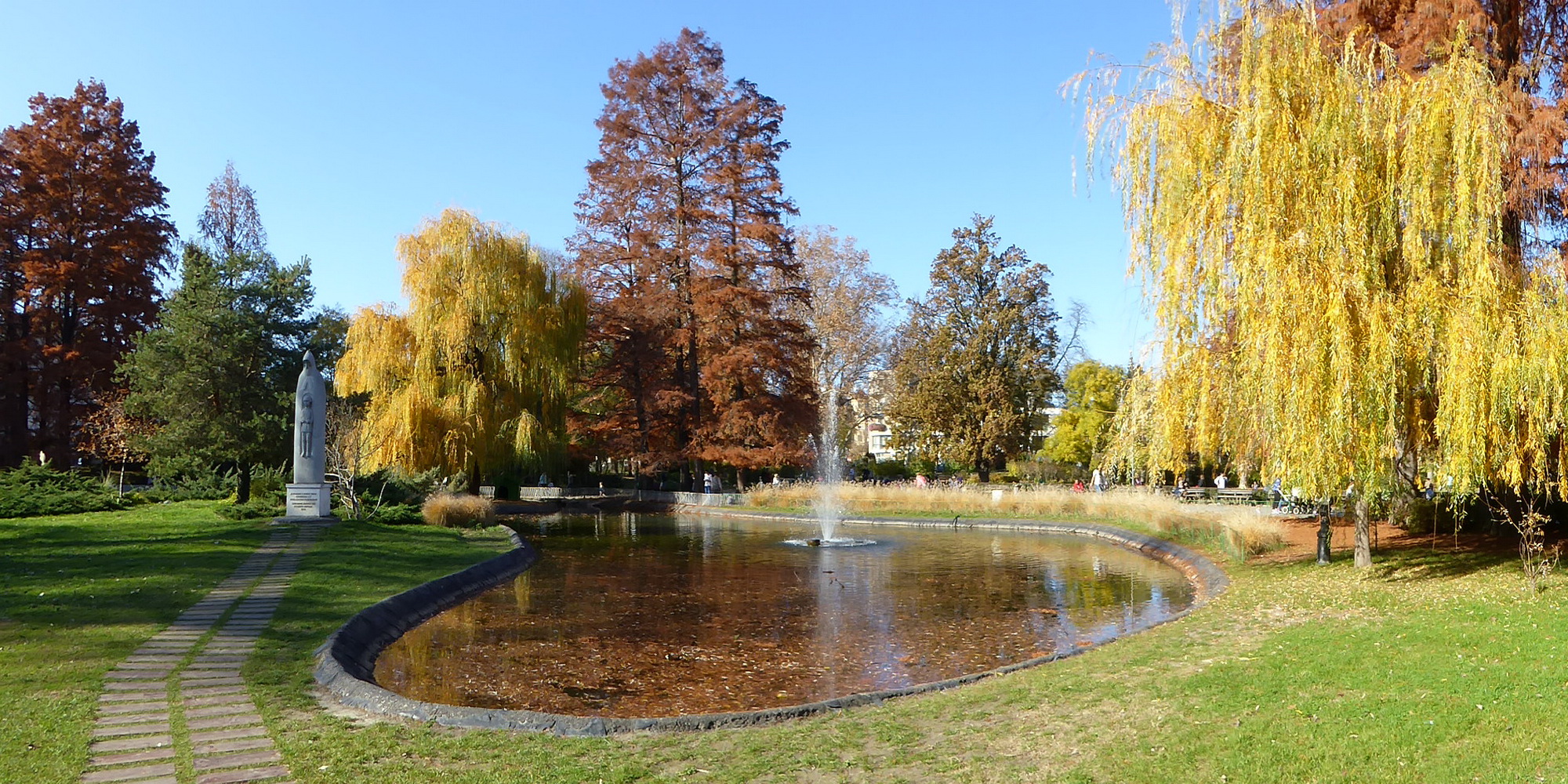
A distinct group of green spaces is located in the Petrovaradin area, including the parks and landscaped zones surrounding the Petrovaradin Fortress. These areas function as promenades and viewpoints overlooking the Danube and the city. Adjacent to the fortress is Molinarijev Park, a smaller green space closely connected to the historical setting of the fortification.
The wider area of Novi Sad also includes several valuable natural sites outside the urban core. The Fruška Gora National Park, located south of the city, represents a major natural and recreational area known for its forest ecosystems, vineyards, protected plant and animal species, and cultural and historical heritage. To the north and east of the city lies the Koviljsko-Petrovaradinski Rit Special Nature Reserve, a wetland area along the Danube that is of exceptional importance for biodiversity conservation, characterized by rich flora and fauna, particularly wetland bird species, fish, and floodplain habitats. Together, the city parks, Petrovaradin green areas, Fruška Gora, and the Koviljsko-Petrovaradinski Rit form the distinctive green belt of Novi Sad.
The inhabitants of Novi Sad engage in a wide range of recreational and leisure activities. With regards to team sports, football and basketball have the highest numbers of participants. Cycling is also popular due to the city's flat terrain and the extensive off-road network, found in nearby mountainous Fruška Gora. Hundreds of commuters cycle the roads, bike lanes and bike paths daily.
Proximity to the Fruška Gora National Park attracts many city dwellers on the weekends. They enjoy the numerous hiking trails, restaurants and monasteries located in and around the mountain area. Occurring on the first weekend of every May, the Fruška Gora Marathon lets hikers, runners and cyclists take advantage of the many hiking trails. During the summer months, citizens from Novi Sad visit Lake Ledinci in Fruška Gora, as well as the numerous beaches situated along the Danube, the largest being Štrand in the Liman neighbourhood. There are also several recreational marinas bordering the river.
Economy
Novi Sad is the economic centre of Vojvodina, the most fertile agricultural region in Serbia. The city also represents one of the largest economic and cultural hubs in Serbia.
Novi Sad had always been a developed city within the former Yugoslavia. In 1981, its GDP per capita was 172% of the Yugoslav average. During the 1990s, the city, like the rest of Serbia, was severely affected by an internationally imposed trade embargo and hyperinflation of the Yugoslav dinar. The embargo, along with economic mismanagement, led to a decay or demise of once important industrial combines, such as Novkabel (electric cable industry), Pobeda (metal industry), Jugoalat (tools), Albus and HINS (chemical industry). Practically the only viable large facilities remaining today are the oil refinery, located northeast of the city, and the thermal power plant.
The economy of Novi Sad has mostly recovered from that period and grown strongly since 2001, shifting from an industry-driven economy to the tertiary sector. The processes involved in privatizing state and society-owned enterprises, as well as strong private incentives, have increased the share of privately owned companies to over 95% in the district, with small and medium-size enterprises dominating the city's economic development.
The significance of Novi Sad as a financial centre is already proven, by being home to the national headquarters of numerous banks, such as Erste Bank, Vojvođanska banka, and Crédit Agricole; as well as the third largest insurance company in Serbia, DDOR Novi Sad. Furthermore, the city is home to major energy companies like Naftna Industrija Srbije oil company and Srbijagas gas company. It is also the seat of many farms for wheat production and trade. File:NIS-ova zgrada - panoramio (1).jpg|Petroleum Industry of Serbia headquarters File:Master Centar - panoramio.jpg|Novi Sad Fair Convention Center File:Novi Sad, Bulevar Oslobođenija, Aleksandar group.jpg|Aleksandar Bulevar Centar
Novi Sad is also a growing information technology centre within Serbia, second only to Belgrade. As many as 900 IT companies operate in Novi Sad out of a total of 2,500 registered in the territory of the Republic of Serbia with over 11,500 employees. As of September 2017, Novi Sad has one of 14 free economic zones established in Serbia.
The following table gives a preview of total number of registered people employed in legal entities per their core activity (as of 2022):
| Activity | Total |
|---|---|
| Agriculture, forestry and fishing | 1,633 |
| Mining and quarrying | 749 |
| Manufacturing | 25,675 |
| Electricity, gas, steam and air conditioning supply | 1,474 |
| Water supply; sewerage, waste management and remediation activities | 1,769 |
| Construction | 10,624 |
| Wholesale and retail trade, repair of motor vehicles and motorcycles | 28,527 |
| Transportation and storage | 8,904 |
| Accommodation and food services | 7,229 |
| Information and communication | 13,086 |
| Financial and insurance activities | 4,717 |
| Real estate activities | 845 |
| Professional, scientific and technical activities | 13,115 |
| Administrative and support service activities | 6,902 |
| Public administration and defense; compulsory social security | 8,080 |
| Education | 14,068 |
| Human health and social work activities | 12,752 |
| Arts, entertainment and recreation | 3,928 |
| Other service activities | 3,899 |
| Individual agricultural workers | 578 |
| Total | 168,556 |
Politics
Main article: Politics of Novi Sad, List of mayors of Novi Sad
Novi Sad is the administrative centre of the Autonomous Province of Vojvodina, and as such, home to Vojvodina's Government and Provincial Assembly.
The city's administrative bodies include the city assembly as the representative body, as well as the mayor and city government defining the executive bodies. The mayor and city assembly members are chosen through direct elections. The city assembly has 78 seats, while the city government consists of 11 members. The mayor and members of the city's assembly are elected to four-year terms. The city government is elected by the city assembly at the proposal of the mayor.
As of 2025, the mayor of Novi Sad is Žarko Mićin of the Serbian Progressive Party. While his party holds the majority of seats in the city assembly, the Socialist Party of Serbia, the Democratic Party of Serbia, as well as other parties and groups, are also represented.
The city of Novi Sad is divided into 47 local communities.
;City holidays
| 25 November | In 1918, the Assembly of Serbs, Bunjevci, and other Slavs of Vojvodina (Banat, Bačka and Baranja) in Novi Sad proclaimed the unification of Vojvodina region with the Kingdom of Serbia. |
|---|
The city commemorates the year 1694, when it was established.
;Coat of arms The design consists of three white towers placed in the centre, set against a blue sky. A white dove holding an olive branch flies above the larger middle tower. All three structures have rooftops with crenellations, as well as opened windows and closed gates. Below the towers lies a green background, with a wavy white line depicting the river Danube.
Society
Education
Main article: Education in Novi Sad
Novi Sad is one of the most important centres of higher education and research in Serbia, with four universities overall and numerous professional, technical, and private colleges and research institutes, including a law school with its own publication. The largest educational institution in the city is the University of Novi Sad, a public school established in 1960. , it has 14 faculties, 9 of which are located on the main university campus. It is attended by more than 50,000 students and has a total staff of nearly 5,000.
Business Academy University and EducoNS University are private schools also located in the city. Other educational institutions include Novi Sad Open University, offering professional courses in adult education, and the Protestant Theological Seminary.
, there are 37 elementary schools (33 public and 4 private) with about 26,000 students. The secondary school system consists of 25 vocational schools (12 public and 13 private) and 4 gymnasiums with almost 18,000 students.
Media
Novi Sad has one major daily newspaper, Dnevnik, and among the periodicals, the monthly magazine Vojvođanski magazin stands out. The city is also home to the regional public broadcaster, Radio Television of Vojvodina (RTV), and municipal public broadcaster, Novosadska televizija, as well as a few commercial TV stations such as Kanal 9, Panonija and RTV Most. Major local commercial radio stations include Radio AS FM and Radio 021.
Novi Sad is also known as a publishing centre. The most important publishing houses are Matica srpska, Stilos, and Prometej. Well-known journals, in literature and art, include Letopis Matice srpske, the oldest Serbian journal, Polja, which is issued by the Cultural Center of Novi Sad, and Zlatna greda, published by the Association of Writers of Vojvodina.
The city hosts an annual literature conference, Book Talk.
Sports
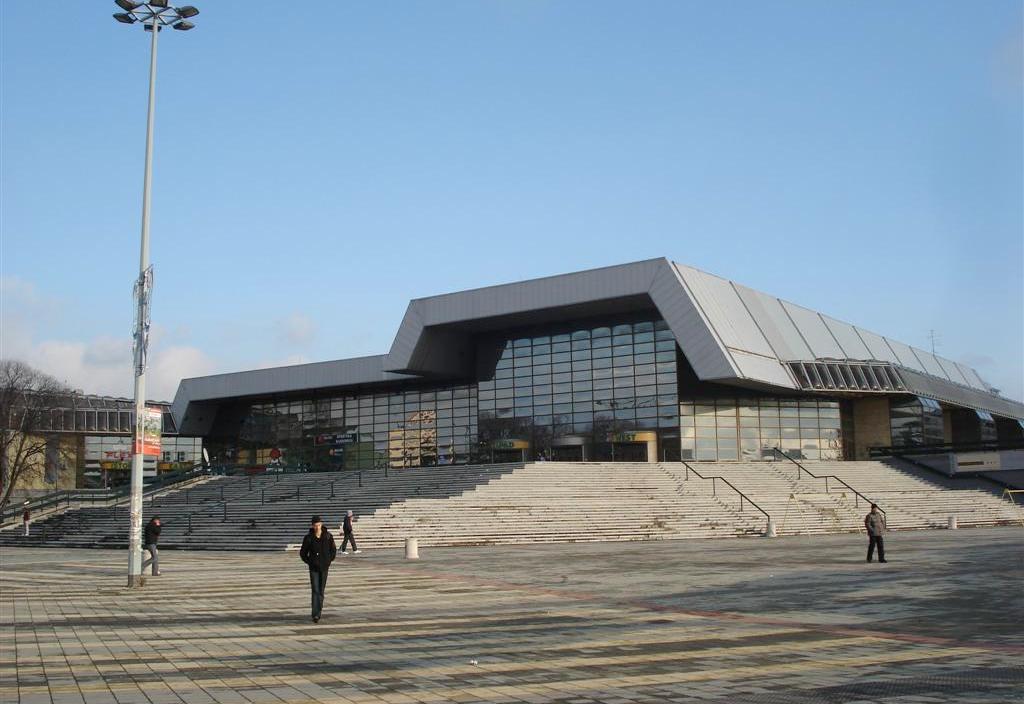

Founded in 1790, the *'City Marksmen Association''' became the first sporting organization in Novi Sad. Founded on 28 March 1885, VK Danubius 1885 is the oldest rowing club in former Yugoslavia. A more widespread interest in competitive sports developed after the *Municipal Association of Physical Culture'' was created in 1959 and when the SPENS Sports Center was built in 1981. Nowadays, about 220 sports organizations are active in Novi Sad.
Professional sports in Novi Sad mostly revolve around the Vojvodina multi-sport club. Having won two championships in 1966 and 1989, the FK Vojvodina football club represents the 3rd all-time best team in Serbia, right behind its two Belgrade rivals, Red Star and Partizan. With 13 championship titles, OK Vojvodina is the top volleyball team in the country. As for handball, RK Vojvodina has won the national championship on multiple occasions.
Athletes from Novi Sad had the honour of participating in the first Olympic Games in Athens. The largest number of Novi Sad competitors, to participate in the Olympics, was at the Atlanta Games. Eleven athletes won 6 medals there. Three also competed at the 1980 Moscow Games, while two participated in the 1976 Montreal Games and the 1956 Melbourne Games.
Many national and international competitions are held in the city. Novi Sad played host to the European and World Championships in table tennis in 1981 and the 29th Chess Olympiad in 1990. It also welcomed the European and World Championships in sambo, the Balkan and European Championships in judo, the 1987 final match of the Saporta Cup in European basketball, and the final tournament of the European volleyball cup. Furthermore, Novi Sad co-hosted the 2005 European Basketball Championship, as well as hosting the 2017 Volleyball World League matches. The year 2018 saw the city welcome the Senior European Fencing Championships and the European Senior Karate Championships.
The city also holds traditional sporting events such as the Novi Sad marathon, international swimming competitions and many other events. The very first 'MTB Petrovaradin Fortress Cup' took place in 2018, allowing national and regional cyclists to compete. It is also the first mountain bike competition to be held in Serbia.
| Club | Sport | Founded | League | Venue |
|---|---|---|---|---|
| VK Danubius | Rowing | 1885 | ||
| FK Vojvodina | Football | 1914 | Serbian Superliga | Karađorđe Stadium |
| RFK Novi Sad | Football | 1921 | Serbian League | Detelinara Stadium |
| FK Slavija Novi Sad | Football | 1926 | Salajka Stadium | |
| FK Kabel | Football | 1932 | Serbian League Vojvodina | FK Kabel Stadium |
| VK Vojvodina | Water polo | 1938 | Serbian League, Regional League A2 | Slana Bara Sports Center |
| OK Vojvodina | Volleyball | 1946 | Serbian volley league | SPENS Sports Center |
| KKK Vojvodina | Kayak and Canoe | 1947 | ||
| KK Vojvodina | Basketball | 1948 | League B | SPENS Sports Center |
| RK Vojvodina | Handball | 1949 | Handball League of Serbia | Slana Bara Sports Center |
| FK Proleter | Football | 1951 | Dissolved in 2022, merger with RFK Novi Sad | Slana Bara Stadium |
| HK Vojvodina | Ice hockey | 1957 | Serbian Hockey League | SPENS Sports Center |
| FK Mladost | Football | 1972 | Serbian First League | GAT Arena |
| ŽFK Fruškogorac | Women's football | 1998 | Druga Liga Srbije Sever | GAT Arena |
Transportation
Main article: Transport in Novi Sad

;Air transport Novi Sad currently does not have its own civil airport. The city is roughly a one-hour drive from Belgrade Nikola Tesla Airport, which connects it with capitals across Europe. The small Čenej Airfield to the north of the city is used for sporting and agricultural purposes. There are plans to upgrade it to serve for cargo and small-scale public transport, but the future of this initiative is uncertain.
;City transport

The main public transportation system in Novi Sad consists of bus lines, operated by the public company JGSP Novi Sad. There are twenty-one urban lines and thirty-five suburban lines, with the main bus terminal being at the northern end of the Liberation Boulevard (Bulevar oslobođenja) next to the Novi Sad railway station, in addition to a smaller terminal in the town center. There are numerous taxi companies serving the city.
The city used to have a tram system, but it was decommissioned in 1957.
;Rail and road transport Novi Sad lies on branch B of the Pan-European Corridor X. The A1 motorway connects the city with Subotica and Hungary to the north and the capital city of Belgrade to the south.
It runs parallel to the Budapest–Belgrade railroad, which connects it to major European cities. On 19 March 2022 the "Soko" (meaning "falcon") high-speed line between Novi Sad and Belgrade opened and runs with 18 departures daily. Its maximum speed is 200 km/h and the 75 kilometres between Belgrade and Novi Sad are covered in 35 minutes. Between Belgrade and Novi Sad there are a total of 60 departures per day. There are three types of trains in total. "Intercity" (SOKO), "Regio-ekspres" and "Regio". On 8 October 2025 the "Soko" high-speed line between Belgrade (via Novi Sad) and Subotica opened and runs with 9 departures daily. Its maximum speed is 200 km/h and the 108 kilometres between Novi Sad and Subotica are covered in 45 minutes.
Novi Sad is connected with Zrenjanin and Timișoara on the northeast and Ruma on south with a regional highway; there are plans to upgrade it to a motorway or an expressway, with a tunnel under the Fruška Gora shortcutting the Iriški Venac mountain pass.
.jpg)
Three bridges cross the Danube in Novi Sad (as of 2020): Liberty Bridge (Most Slobode) connects Sremska Kamenica with the city proper. Varadin Bridge (Varadinski most) and Žeželj Bridge (Žeželjev most), connects Petrovaradin with city centre, and used for railway and heavy truck traffic. Many bridges also span the Danube-Tisa-Danube canal, running north of the city centre. Currently, two bridges over the Danube are being built, along with two new railway bridges over the Danube-Tisa-Danube canal.
;Water transport The Port of Novi Sad is located on the outskirts of the city on Danube river. Since May 2019 it has been owned by DP WORLD from the UAE. With over a million tonnes of load turnover, it is the largest cargo port in Serbia.
International relations
Twin towns – sister cities
.jpg)
Novi Sad has relationships with several twin towns and twin cities. One of the main streets in its city centre is named after Modena in Italy; and likewise Modena has named a park in its town centre Parco di Piazza d'Armi Novi Sad. A city square near the Varadin Bridge is named after Dortmund in Germany; and likewise Dortmund has named a city square Platz von Novi Sad. The Novi Sad Friendship Bridge in Norwich, United Kingdom, by Buro Happold, was also named in honour of Novi Sad. As of October 2023, there plans to establish twin city cooperation with Klagenfurt and Busan.
Novi Sad is twinned with:
- EGY Alexandria, Egypt (2021)
- MNE Budva, Montenegro (1996)
- CHN Changchun, China (1981)
- USA Cleveland, Ohio, United States (2023)
- GRE Corfu, Greece (2017)
- GER Dortmund, Germany (1982)
- BLR Gomel, Belarus (2013)
- GRC Ilioupoli, Greece (1994)
- BIH Istočno Sarajevo, Bosnia and Herzegovina (2021)
- MKD Kumanovo, North Macedonia (2019)
- ITA Modena, Italy (1964)
- RUS Nizhny Novgorod, Russia (2006)
- UK Norwich, England, United Kingdom (1989)
- RUS Oryol, Russia (2017)
- HUN Pécs, Hungary (2009)
- IRI Shiraz, Iran (2023)
- FRA Taverny, France (2020)
- ROU Timișoara, Romania (2005)
- MNE Tivat, Montenegro (2023)
- MEX Toluca, Mexico (2015)
Partner cities
Most frequent cooperation is done with Budva, Dortmund, Taverny, Timișoara, Tivat and Ulm in the fields of culture, tourism and sports. Besides twin cities, Novi Sad has many signed agreements on joint cooperation with other cities, some of which could potential lead to twin city agreements. (see also: Politics of Novi Sad).
Novi Sad has signed agreements on joint cooperation with cities:
- BIH Banja Luka, Bosnia and Herzegovina (2006)
- FRA Enghien-les-Bains, France (2020)
- RUS Frunzensky District, Russia (2003)
- SWE Gothenburg, Sweden (2002)
- CHN Jinan, China (2025)
- SLO Kranj, Slovenia (2004)
- RUS Krasnodar, Russia
- UKR Lviv, Ukraine (1999)
- FRA Nant, France (2002)
- CRO Osijek, Croatia (2002)
- FRA Saint-Leu-la-Forêt, France (2020)
- HUN Szeged, Hungary (2001)
- BIH Tuzla, Bosnia and Herzegovina (2002)
- GER Ulm, Germany (2000)
Novi Sad is an associate member of Eurocities.
References
Bibliography
- Agneš Ozer, Petrovaradinska tvrđava – vodič kroz vreme i prostor, Novi Sad, 2002
- Agneš Ozer, Petrovaradin fortress – a guide through time and space, Novi Sad, 2002
- Boško Petrović – Živan Milisavac, Novi Sad – monografija, Novi Sad, 1987
- Branko Ćurčin, Slana Bara – nekad i sad, Novi Sad, 2002
- Branko Ćurčin, Novosadsko naselje Šangaj – nekad i sad, Novi Sad, 2004
- Đorđe Randelj, Novi Sad – slobodan grad, Novi Sad, 1997
- Jovan Mirosavljević, Brevijar ulica Novog Sada 1745–2001, Novi Sad, 2002
- Jovan Mirosavljević, Novi Sad – atlas ulica, Novi Sad, 1998
- Milorad Grujić, Vodič kroz Novi Sad i okolinu, Novi Sad, 2004
- Mirjana Džepina, Društveni i zabavni život starih Novosađana, Novi Sad, 1982
- Petar Jonović, Knjižare Novog Sada 1790–1990, Novi Sad, 1990
- Petar Jonović – Dr Milan Vranić – Dr Dušan Popov, Znameniti knjižari i izdavači Novog Sada, Novi Sad, 1993
- Radenko Gajić, Petrovaradinska tvrđava – Gibraltar na Dunavu, Novi Sad, 1994
- Veljko Milković, Petrovaradin kroz legendu i stvarnost, Novi Sad, 2001
- Veljko Milković, Petrovaradin i Srem – misterija prošlosti, Novi Sad, 2003
- Veljko Milković, Petrovaradinska tvrđava – podzemlje i nadzemlje, Novi Sad, 2005
- Veljko Milković, Petrovaradinska tvrđava – kosmički lavirint otkrića, Novi Sad, 2007
- Zoran Knežev, Novi Sad : Priče iz prošlosti, Novi Sad, 2017
- Zoran Knežev, Vojvodina : Hronike i legende, Novi Sad, 2018
- Zoran Knežev, Novi Sad : Kafanoloija i prostitucija, Novi Sad, 2018
- Zoran Knežev, Novi Sad: Prošlost u pričama, Novi Sad, 2019
- Zoran Knežev, Turistički vodič kroz stari Novi Sad, Novi Sad, 2019
- Zoran Knežev, Vojvodina: Kazivanja i sećanja, Novi Sad, 2021
- Zoran Rapajić, Novi Sad bez tajni, Beograd, 2002
- Zvonimir Golubović, Racija u Južnoj Bačkoj 1942. godine, Novi Sad, 1991
- 30 godina mesne zajednice "7. Juli" u Novom Sadu 1974–2004 – monografija, Novi Sad, 2004
- Enciklopedija Novog Sada, sveske 1–26, Novi Sad, 1993–2005
- Sveske za istoriju Novog Sada, sveske 4–5, Novi Sad, 1993–1994
- Ustav za čitaonicu srpsku u Novom Sadu, Novi Sad, 1993
References
- N/A, N/A. (25 December 2025). "ОПШТИНЕ И РЕГИОНИ У РЕПУБЛИЦИ СРБИЈИ 2025: Подаци по општинама и градовима". Републички завод за статистику [Statistical Office of the Republic of Serbia].
- "Статут Града Новог Сада". City of Novi Sad.
- Mishkova, Diana. (1 January 2009). "We, the people: politics of national peculiarity in Southeastern Europe". Central European University Press.
- "History of Novi Sad". Official Website of Novi Sad.
- "Esch, Kaunas and Novi Sad to be European Capitals of Culture in 2022". European Commission.
- "55 new cities join the UNESCO Creative Cities Network on World Cities Day".
- (31 October 2023). "Novi Sad u Uneskovoj Mreži kreativnih gradova sveta: "Srpska Atina" prva u ovom delu Evrope na Media Arts listi".
- (22 October 2008). "Statut Grada Novog Sada". Official Gazette of City of Novi Sad.
- "Jezici i pisma u službenoj upotrebi u statutima gradova i opština na teritoriji AP Vojvodine". Pokrajinski sekretarijat za obrazovanje, upravu i nacionalne zajednice.
- Javna medijska ustanova Radio-televizija Vojvodine. "Arheološko nalazište na četvrtoj trasi Bulevara Evrope". Radio-televizija Vojvodine.
- Sava S. Vujić – Bogdan M. Basarić, ''Severni Srbi (ne)zaboravljeni narod,'' Beograd, 1998, pg. 36
- Branko Ćurčin, [[Slana Bara]] nekad i sad, Novi Sad, 2002.
- Borovszky Samu: Magyarország vármegyéi és városai, Bács-Bodrog vármegye I.-II. kötet, Apolló Irodalmi és Nyomdai Részvénytársaság, 1909.
- Đorđe Randelj. (1997). "Novi Sad slobodan grad".
- "Национална Ревија - National Review".
- Triva Militar, Novi Sad na raskrsnici minulog i sadanjeg veka, Novi Sad, 2000, p. 320
- Triva Militar, Novi Sad na raskrsnici minulog i sadanjeg veka, Novi Sad, 2000, p. 317
- [http://mek.niif.hu/06700/06758/pdf/revai18_3.pdf Újvidék] {{Webarchive. link. (5 April 2023 . ''Révai nagy lexikona, vol. 18.'' p. 612. Hungarian Electronic Library. (in Hungarian))
- Agneš Ozer, Život i istorija u Novom Sadu, Novi Sad, 2005, p. 15
- David Cesarani. (1997). "Genocide and Rescue: The Holocaust in Hungary 1944". Berg Publishers.
- [[Enikő A. Sajti]]. (Spring 2006). "The Former 'Southlands' in Serbia: 1918–1947". The Hungarian Quarterly.
- Večernje Novosti, Utorak, 9. Jun 2009, strana 11, mapa masovnih grobnica u Srbiji
- (1 February 2025). "Thousands protest in Serbia to mark three months since deadly roof collapse". Al Jazeera.
- Polić, Drago. (2025-12-29). "Milion kvadrata, 382 gradilišta: Da li Novi Sad može da izdrži ovaj tempo gradnje?".
- Завод за урбанизам: "Еколошки Атлас Новог Сада" ("Ecological Atlas of Novi Sad"), page 14-15, 1994.
- "Novi Sad in numbers". City of Novi Sad.
- "Temperature, Climograph, Climate table for Novi Sad".
- (25 March 2025). "Novi Sad".
- (2023). "Novi Sad: Guide to Culture and Tourism". Impressum.
- (23 November 2022). "Novi Sad, a city to remember".
- "About Novi Sad". University of Novi Sad.
- "Data Collection in Novi Sad". Erasmus.
- "Age and sex - Data by settlements".
- "Age and sex - Data by settlements".
- "Попис становништва, домаћинстава и станова 2022. у Републици Србији". Republički zavod za statistiku.
- "Dissemination database search".
- (2010). "Critical Mass: Printmaking Beyond the Edge". A & C Black.
- (2014). "World Encyclopedia of Contemporary Theatre: Volume 1: Europe, Volume 1". Routledge.
- "Festivali, manifestacije, kulturne, cultural, music, muzicke".
- "Serbia Fashion Week".
- "Historical Archive Of Vojvodina - Novi Sad". Vojvodina Travel.
- (14 October 2016). "Novi Sad to be European Capital of Culture in 2021". European Commission.
- (10 January 2023). "Novi Sad: European Capital of Culture 2022".
- (2007). "Condition of the Cultural and Natural Heritage in the Balkan Region: Proceedings of the Regional Conference Held in Kladovo, Serbia from 23th to 27th October 2006, Volume 1". National Museum Belgrade.
- (1973). "Natural Resources and Beauties of the Socialist Republic of Serbia". Eksport-Press.
- "Музеј града Новог сада – Званична интернет презентација".
- "О колекцији".
- (4 July 2018). "Music festivals: What's the world's biggest?". BBC News.
- "EXIT Adventure: EXIT Festival, Serbia, 9 – 12 July 2015 / SEA DANCE Festival, Montenegro, 16 – 18 July 2015". EXIT Adventure: EXIT Festival, Serbia, 9–12 July 2015 / SEA DANCE Festival, Montenegro, 16–18 July 2015.
- "Novosadski sajam – News – Međunarodni poljoprivredni sajam videlo 600.000 posetilaca".
- (17 April 2018). "Word of Mouth: Novi Sad, Serbia".
- (4 May 2018). "CNN preporučio američkim turistima 11 destinacija u Srbiji".
- "Serbia: A country full of surprises".
- (2 May 2018). "The 10 Best Restaurants in Novi Sad, Serbia".
- (2 September 2017). "Danube city Novi Sad is the jewel in Serbia's crown".
- "An essential guide to Serbia's coolest city, Novi Sad - TV3 Xposé".
- (4 July 2018). "ISTRAŽUJEMO: Gde se u gradu jedu najbolji Index sendviči". mojnovisad.com.
- (1 May 2022). "OMILJENI ZALOGAJ NOVOSAĐANA: 10 lokala brze hrane u kojima možete da pojedete index sendvič". mojnovisad.com.
- (19 September 2022). "OMILJENA FAST FOOD HRANA: Evo šta Novosađani vole da jedu kad ne kuvaju". mojnovisad.com.
- "10 reasons why you should visit Novi Sad this year". bbc.com.
- https://novisad.travel/en/novi-sad-parks/
- [http://www.psdzeleznicarns.org.rs/frmaraton/fruskogorski_maraton.htm Fruška Gora Marathon] {{webarchive. link. (18 March 2009)
- (1984). "Atlas svijeta: Novi pogled na Zemlju". Sveučilišna naklada Liber.
- "Regional Chamber Of Commerce Novi Sad".
- [[National Bank of Serbia]] – [http://www.nbs.rs/english/banks/index.htm List of Banks]{{dead link. (November 2017)
- (3 September 2017). "Slobodne zone mamac za investitore". politika.rs.
- "MUNICIPALITIES AND REGIONS OF THE REPUBLIC OF SERBIA, 2023.". [[Statistical Office of the Republic of Serbia]].
- "О ГИК-у | Скупштина Града Новог Сада".
- (2025-02-24). "Жарко Мићин нови градоначелник Новог Сада – испред скупштине инциденти".
- "Mesne zajednice u Novom Sadu | Novi Sad".
- "Dan Novog Sada | Novi Sad".
- "Ministry of education, list of private universities and faculties".
- (2012). "O Univerzitetu". University of Novi Sad.
- "Institutions | StudyInSerbia". Studyinserbia.rs.
- "University business academy in Novi Sad".
- "Serbian statistical office".
- "Новосадска ТВ".
- [http://www.kanal9ns.com/ Kanal9ns.com] {{webarchive. link. (24 October 2010)
- "RTV Panonija".
- "TV MOST".
- "021 – Novosadski informativni portal".
- [[Laslo Blašković]]. "urednik POLjA". POLjA.
- "Drustvo knjizevnika Vojvodine – Íàñëîâíà -".
- "Конференција "Book Talk" крајем септембра у Новом Саду".
- "Историјат, danubius1885.org".
- "Istorijat – Rukometni klub Vojvodina".
- "Почетна – SPENS".
- "Cup Winners' Cup 1986–87".
- "53rd EKF Senior Championships Novi Sad, Serbia 10-13 May 2018 Bulletin Nr. 2".
- "Senior European Fencing Championship | Novi Sad 2018".
- "Britain's Kruse wins Shanghai title". BBC Sport.
- "FOTO: Održan prvi "MTB Petrovaradin Fortress cup" | (Vesti - 02.07.2018) Novi Sad".
- (20 January 2009). "Betonska pista i toranj neophodni za sletanje aviona". Danas.
- Vojvodine, Javna medijska ustanova JMU Radio-televizija. "Prohujalo vreme novosadskih tramvaja".
- (25 June 2016). "Новосадска хронологија".
- (9 April 2010). ""Poluautoput" Novi Sad – Temišvar?". B92.
- (7 June 2010). "Tunel kroz Frušku goru". Blic.
- "Rekordna godina Luke Novi Sad – U 2016. pretovareno 1.180.000 tona robe". ekapija.com.
- (27 May 2022). "Gradovi pobratimi: Predstavnici Novog Sada u poseti Dortmundu, trg u Novom Sadu nosiće ime Trg Dortmunda".
- (7 October 2023). "ТЕМА "ДНЕВНИКА": САРАДЊА КОЈОМ СТВАРАМО ИМИЏ У СВЕТУ Нови Сад има 24 побратима, ускоро још три".
- "Međunarodna saradnja". Novi Sad.
- (21 September 2021). "Gradovi pobratimi: Potpisan sporazum o saradnji između Novog Sada i Aleksandrije".
- (28 July 2022). "УПОЗНАЈМО ГРАДОВЕ ПОБРАТИМЕ НОВОГ САДА – АЛЕКСАНДРИЈА". gradskeinfo.rs.
- (22 January 2022). "УПОЗНАЈМО ГРАДОВЕ ПОБРАТИМЕ НОВОГ САДА − БУДВА". gradskeinfo.rs.
- (15 November 2021). "УПОЗНАЈМО ГРАДОВЕ ПОБРАТИМЕ НОВОГ САДА – ЧАНГЧУН, НР КИНА". gradskeinfo.rs.
- (3 November 2023). "Srpska Atina nastavlja da nižе pobratimstva i to sa tri kontinеnta! REKORDERI U JAČANjU SARADNjE: Grad Novi Sad ima čak 24 grada pobratima, poslеdnji u nizu Klivlеnd koji ima jaku srpsku dijasporu".
- (21 May 2017). "Нови Сад и Крф побратими и пријатељи".
- (6 November 2024). "Упознајмо градове побратиме Новог Сада – Крф". gradskeinfo.rs.
- (30 November 2021). "УПОЗНАЈМО ГРАДОВЕ ПОБРАТИМЕ НОВОГ САДА − ДОРТМУНД". gradskeinfo.rs.
- (30 April 2022). "УПОЗНАЈМО ГРАДОВЕ ПОБРАТИМЕ НОВОГ САДА – ГОМЕЉ". gradskeinfo.rs.
- (10 January 2022). "УПОЗНАЈМО ГРАДОВЕ ПОБРАТИМЕ НОВОГ САДА − ИЛИУПОЛИ". gradskeinfo.rs.
- (3 September 2022). "Upoznajemo gradove pobratime Novog Sada – Grad Istočno Sarajevo". vojvodinauzivo.rs.
- (10 November 2019). "Kumanovo i Novi Sad postali gradovi pobratimi". danas.rs.
- (23 February 2022). "УПОЗНАЈМО ГРАДОВЕ ПОБРАТИМЕ НОВОГ САДА – НИЖЊИ НОВГОРОД". gradskeinfo.rs.
- (7 November 2021). "УПОЗНАЈМО ГРАДОВЕ ПОБРАТИМЕ НОВОГ САДА – МОДЕНА". gradskeinfo.rs.
- (27 December 2021). "УПОЗНАЈМО ГРАДОВЕ ПОБРАТИМЕ НОВОГ САДА – НОРИЧ". gradskeinfo.rs.
- (1 February 2017). "Potpisan sporazum o saradnji sa Orelom". kanal9tv.com.
- (24 March 2022). "УПОЗНАЈМО ГРАДОВЕ ПОБРАТИМЕ ГРАДА НОВОГ САДА – ПЕЧУЈ". gradskeinfo.rs.
- (27 June 2023). "Novi Sad uspostavlja saradnju sa iranskim gradom Širazom". kanal9tv.com.
- (1 February 2022). "Нови Сад: 14 братских градова на три континента". gradskeinfo.rs.
- (25 May 2022). "The Ambassador of France Visits Novi Sad". novisadinvest.rs.
- "Novi Sad – Serbie". Taverny.
- (5 February 2022). "УПОЗНАЈМО ГРАДОВЕ ПОБРАТИМЕ НОВОГ САДА – ТЕМИШВАР". gradskeinfo.rs.
- (30 July 2024). "Француско – српско пријатељство на новосадски начин". gradskeinfo.rs.
- (7 July 2023). "Pobratimili se gradovi Tivat i Novi Sad". vijesti.me.
- (16 July 2023). "Upoznajmo gradove pobratime Novog Sada – Tivat". nsuzivo.rs.
- (12 April 2022). "УПОЗНАЈМО ГРАДОВЕ ПОБРАТИМЕ НОВОГ САДА – ТОЛУКА". gradskeinfo.rs.
- "Градови партнери". Administrative Office of the City of Banja Luka.
- (3 June 2021). "Vučević: Saradnja Novog Sada i Sankt Peterburga". rtv.rs.
- (2 June 2025). "NOVI SAD I ĐINAN PRODUBLJUJU SARADNJU: Stiže novi pešačko-biciklistički most preko Dunava! Mićin: Siguran sam u opipljive rezultate saradnje između dva grada". nsuzivo.rs.
- (1 February 2017). "Sporazum o saradnji Novog Sada i Ulma". rtv.rs.
- "EUROCITIES – the network of major European cities". Eurocities.
This article was imported from Wikipedia and is available under the Creative Commons Attribution-ShareAlike 4.0 License. Content has been adapted to SurfDoc format. Original contributors can be found on the article history page.
Ask Mako anything about Novi Sad — get instant answers, deeper analysis, and related topics.
Research with MakoFree with your Surf account
Create a free account to save articles, ask Mako questions, and organize your research.
Sign up freeThis content may have been generated or modified by AI. CloudSurf Software LLC is not responsible for the accuracy, completeness, or reliability of AI-generated content. Always verify important information from primary sources.
Report