From Surf Wiki (app.surf) — the open knowledge base
Nottingham High School
Independent public school in Nottingham, England

Independent public school in Nottingham, England
| Field | Value |
|---|---|
| name | Nottingham High School |
| logo | File:Nottingham High School 2007 shield device.svg |
| logo_size | 140px |
| logo_alt | Illustration of a silver heater-shaped shield bearing three naturally-coloured blackbirds. These face left, as if about to take flight. Two blackbirds are above the third to make a triangle. The shield has a red horizontal band with a golden ducal coronet on the left and right and an open book in the middle. The book has blank white pages, a red cover and gilded page edges. Below the shield is a parchment (curved like a smile, curled at each end, and centred) with an uppercase "Lauda Finem" in an old-fashioned serif font. The front of the parchment is yellow and the back red. |
| image | File:Nottingham High School 6501.jpg |
| image_size | 225px |
| alt | Photograph of a Gothic Revival building in grey slate, with walls of light brown and a pitched roof bearing algae. It has a wide chimney on each side, five large multi-segment windows on each storey on each section. The left and right sections have two and three storeys respectively, separated by a central protrusion with five storeys. The central section has two-storey bays window flanking an arched, elevated wooden door, above an outdoor double staircase with a simpler wooden door in the front. Above each bay window is a smaller window. Above these is a narrower section with three large multi-segment windows, above which is a yet narrower section forming a square tower and the highest storey. The tower is crenellated with one large multi-segment window, a flagpole with no flag in the centre, and a crenellated stone structure projecting from the right corner like a crow's nest, which could be used as a lookout. The building is fronted by a lawn between an embankment and a planted area. Steps down from the central part lead to a war memorial: a bronze statue of a First World War uniformed British soldier looking back and pointing up towards the left, atop a white stone plinth with a relief of Nottingham's heraldic achievement, an inscription on a plaque and a relief of the lozenge of Dame Agnes Mellers. The war memorial has stone steps on all four sides separating an outer circle of shrubbery. Below is a paved stone floor. |
| caption | South side of the school |
| motto | |
| motto_translation | Praise to the end |
| address | Waverley Mount |
| city | Nottingham |
| county | Nottinghamshire |
| postcode | NG7 4ED |
| country | England |
| coordinates | |
| type | Private day school |
| Public school | |
| established | |
| founders | Dame Agnes Mellers, Sir Thomas Lovell and King Henry VIII |
| local_authority | Nottingham City Council |
| urn | 122915 |
| head_label | Head |
| head | Headmaster of the Senior School: |
| Mr Paul Spedding | |
| Head of the Infant and Junior School: | |
| Angharad Simpson | |
| chair_label | Chairman of Governors |
| chair | Mr Steve Banks |
| staff | |
| enrolment | 1186 |
| gender | Co-educational since 2015; previously boys |
| lower_age | 4 |
| upper_age | 18 |
| houses | Senior: |
| Cooper's | |
| Maples' | |
| Mellers' | |
| White's | |
| Junior: | |
| Ball's | |
| Hardy's | |
| Tonkin's | |
| Trease's | |
| publication | Former Senior School: |
| Old Nottinghamian | |
| Former 'Junior School': | |
| Young Nottinghamian | |
| Former 'Lovell House': | |
| The Squirrel | |
| alumni | Old Nottinghamians |
| website |
Public school
Mr Paul Spedding Head of the Infant and Junior School: Angharad Simpson Cooper's Maples' Mellers' White's Junior: Ball's Hardy's Tonkin's Trease's Old Nottinghamian Former 'Junior School': Young Nottinghamian Former 'Lovell House': The Squirrel Nottingham High School is a private, coeducational day school in Nottingham, England, consisting of an infant and junior school (ages 4–11), and senior school (ages 11–18). It was founded in 1513 by Dame Agnes Mellers, as a free grammar school for boys, with a charter signed by Henry VIII. The school is a member of the Headmasters' and Headmistresses' Conference and has been coeducational since 2015.
There were 1186 students enrolled as at December 2025, of whom 262 were in the sixth form, studying for advanced certificate examinations. The school was inspected by the Independent Schools Inspectorate in 2019, where it achieved a rating of 'excellent' in all categories.
History
Foundation
In 1513, the "Free School" was founded by Dame Agnes Mellers, after the death of her husband Richard, partly in his memory, but also as atonement for wrongdoings against the people of Nottingham. To do so she enlisted help from Sir Thomas Lovell as governor of Nottingham Castle and Secretary to the Treasury. Through their combined efforts, Henry VIII sealed the school's foundation deed on the 22 November that year. It is unclear whether this was a new institution or an endowment of an existing school, of which records exist back to 1289.
In the foundation deed, Mellers provided for a commemoration service in St Mary's Church in the Lace Market "on the Feast of the Translation of St Richard of Chichester, namely 16 June" each year, With the exception of Nottingham Goose Fair, this is the most ancient ceremonial event still held in the city of Nottingham, and the oldest still largely in its original form (the Goose Fair now being a funfair rather than a livestock fair), although there seems to be no record of it being held between the mid-16th century and its revival in 1923. The formal procession seeks to symbolise the ancient links the school has with the Crown, the city and the church. The foundation deed also provides for distributing (out of a total sum of 20 shillings) certain monies to the lord mayor of Nottingham, vicar and others. and for the purchase of bread, cheese and ale for consumption by officials attending the service. Any balance remaining is required to be given to the poorest scholar, but now is given to a representative scholar of the school.
Coat of arms
The College of Arms granted the school a coat of arms in 1949, the full blazon being:
The motto, Lauda finem, is Latin for "praise [to] the end".
The arms incorporate those of the founder: the arms of the Mellers family were three blackbirds (or merles – an example of canting arms) – on a white field; Dame Agnes, being a woman, would have displayed them on a lozenge, not a shield. In 2007 the school unofficially introduced a new logo for more general use, a modified version of the shield that omits the lozenge and ermine field.
Remembrance Day service

An annual Remembrance Day service on 11 November is attended by the whole school with the headmaster, president of the Old Nottinghamians and the school captain placing wreaths at the war memorial. Scholars attend a morning special assembly usually in the Player Hall, at which a minute's silence is observed. Representatives of the school's Combined Cadet Force mark their respect with a parade around the main school building.
Premises
Location
Since 1868 the school has stood high on Waverley Mount to the north of the city centre, looking down towards its foundation site in St Mary's Church and later building in Stoney Street. The present site has undergone a long programme of building and development.
;Main building

An example of Gothic Revival architecture, the first school building on the present site, built between 1866 and 1867, was designed by Thomas Simpson. It consists of a tower and three wings: West Wing, Middle Corridor, and East Wing. West Wing houses classrooms for mathematics, English and geography. Housed in Middle Corridor are the learning support department, two ICT centres, two language laboratories, religious studies classrooms, two multi-purpose lecture theatres, the school library, and staff offices. East Wing contains the old gymnasium, the Player assembly hall and classrooms for modern languages, history, and classics. The school front and other features are Grade II listed.


;Tower Overlooking the city centre is the school tower, now used as a staff office. A school standard and the Union Flag are raised on it on special occasions, such as Founder's Day and the King's Official Birthday, and when a member of the school community has died.
;Additions To the west, the Founder Hall building was built in 1963 to mark the school's 450th anniversary. It includes the school's swimming pool and the Founder Hall itself, and acts as a performing venue to supplement the Player Hall. A drama studio was added in 2013 to mark the school's 500th anniversary.
The Simon Djanogly Science Building from 1984 is situated to the south west with 13 laboratories for all three sciences. A 25-yard CCF shooting range remains in the basement. The building was opened on 2 March 1984 by the Duke of Edinburgh.
In front of the science building is the music school, completed in 1997. This houses the Lady Carol Djanogly Recital Hall, the Jones Trust Music Room, a music technology studio, a resources centre, seven instrumental teaching rooms, and a larger brass teaching room, a percussion studio and a classroom for Infant and Junior School pupils.

In 1989 a sports hall was built on land to the north-east of the site formerly occupied by fives court and a shooting range. It contains an multi-purpose exercise hall and a fitness room for older pupils.
In the north-west corner is the Sir Harry Djanogly Art, Design and Technology Centre. The ground floor was built in the mid-1990s, and a first floor was added in the 2003/2004 academic year to accommodate modern facilities for the Art Department.
A new dining hall and sixth form centre were constructed in the West Quad in 2009.
;Lovell House Building Waverley House School, to the west of the main site, was purchased in 2008. Its buildings were refurbished and renamed the Lovell House Infant School. In 2013, this single-sex establishment was combined with the Junior School to form Nottingham High Infant and Junior School.
Playing field
The school's games field is not on the main site but at Valley Road, approximately 3 mi to the north. Historically farmland from as early as 1878, namely Harvey's Farm; then briefly Hucknall Road Farm in 1920, it was converted to use as a playing field around 1960. It features a number of rugby pitches and posts during winter, which are converted for athletics in the spring, with a running track and areas for shot put, javelin, discus, pole vault, hurdles and high jump. During the summer, the ground is used for cricket, with nets put up and squares re-established for the season. Tennis courts, netball courts, and an archery range are also located there. The pavilion has several changing rooms on the ground and first floors, and a refreshment area for staff and guests. Until 1897, boys played sports and had their PE lessons at the Forest Recreation Ground.
School organisation
The junior and senior schools both have four houses, each named after a person connected with the school. The house system plays an integral role in school life. House tutors provide pastoral care and support.
Junior school houses
The junior school's four houses are named after former pupils or staff who served with distinction in the First World War and were killed in action or died of their wounds. Ball's House recalls Albert Ball, a fighter pilot in the RFC and pupil at the school in 1907–1909, Hardy's House Theodore Hardy, an assistant master in 1891–1907 and a British Army chaplain in 1916–1918, Tonkin's House FC Tonkin, a former pupil who served in the King's Royal Rifle Corps, and Trease's House Reginald Trease, a pupil at the school in 1898–1905. The houses compete annually for a General Efficiency Cup donated in 1927 by William Crane.
Senior school houses
The four houses in the senior school are Mellers', named after the school's founder, Cooper's, named after Frederick Cooper, an artist who in 1872 donated almost 2 acre of land to the school, Maples', named after Samuel Maples, a former pupil who bequeathed £3,000 to fund scholarships in 1892, and White's, after Sir Thomas White, who endowed a charity to provide interest-free loans to "young men of good name and thrift" in the Midlands, some money from which was lent to the school in slightly questionable circumstances in the mid-19th century).
;Wheeler Cup Houses compete for the Wheeler Cup, which is awarded on the cumulative performance in competitions throughout the school year. These cover athletics, chess, hockey, cross country, rugby, bridge, shooting, swimming, cricket, general knowledge, verse recitation, singing, and individual music.
Curriculum
Nottingham High School offers a wide range of GCSE, Advanced Subsidiary-Level (AS-level) and General Certificate of Education Advanced-Level (GCE A-level) subjects. Many are also studied by younger pupils at the school in years seven and nine.
Sixth-form subjects include Ancient Greek, art, biology, chemistry, classical civilization, computer science, design and technology, drama, economics, English language, English literature, Extended Project Qualification (EPQ), French, further mathematics, geography, government and politics, German, history, Latin, mathematics, music, music technology, physical education, physics, psychology, religious studies, statistics, and Spanish.
All sixth-form students were expected to undertake the EPQ from 2010, but for students entering sixth form from 2019 it is optional.
Uniform
In years 7 to 11, the uniform consists of a black blazer with a badge bearing the arms of Dame Agnes Mellers (displayed on a lozenge), black trousers or a black skirt, a white shirt, black leather shoes, a house tie, and black or white socks. It is also possible to wear a jumper under the blazer. This is black with the school crest on the right chest. For those who have represented the school in sport, it may be black and red and bear the school coat of arms.
In the sixth form, students wear a black, grey or navy blue suit with a shirt of any colour but black.
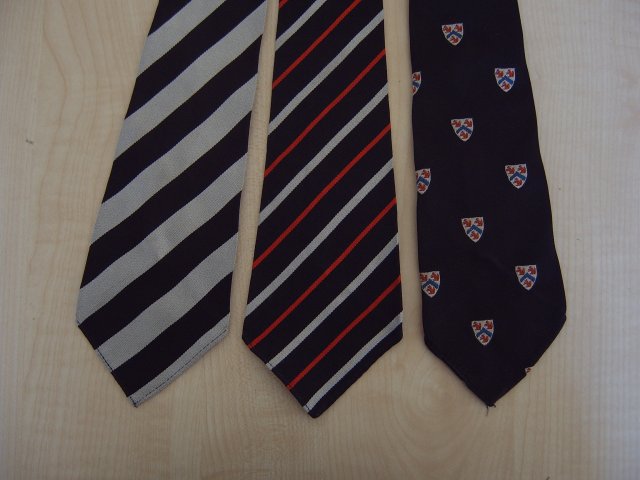
Ties are a feature of the school uniform and used to signify pupils' status within the school.
Special ties include:
- Foundation – A black tie bearing a red squirrel holding a ducal coronet (the crest from the school's coat of arms), presented on Founder's Day to pupils who have performed well in public examinations (at least ten grade As at GCSE or three As at A-Level), and to teachers on completing ten years' service
- Lovell Order – Black, bearing the arms of Sir Thomas Lovell, for those who have performed a special service, such as librarians, the choir, orchestra and band secretaries, society officials and the stage staff, and teachers completing twenty years' service
- Sports Colours – White with narrow diagonal black and yellow stripes, for high sporting achievement, such as first-team level (usually for sports, and occasionally chess, bridge and general knowledge teams)
- Music Colours – Similar to sports colours, first awarded in 2007 to mark outstanding contributions to school music
- Third XV – Black with orange stripes to members of the school rugby third XV
- Prefects – no longer awarded
- Officers – Black with red stripes, bordered by white bands with the school coat-of-arms at top, presented since 2005 to Officers of the School (School Captain, School Vice-Captains and House Captains)
- Quincentenary – Black with diagonal stripes and school coat-of-arms, designed by Young Enterprise Team Sterling, sold to pupils and Old Nottinghamians to mark the 500th anniversary of the School
Fees
The school charges admission fees. About a tenth of pupils are supported by bursaries or scholarships giving a reduction of between 10 and 100 per cent, depending on family income.
Media
Some of a 1990 episode of the TV series "Boon", starring Michael Elphick, was filmed at the school, with some pupils as extras. The story was entitled "Bully Boys", the sixth episode of the fifth series, broadcast on 30 October 1990. The main playground, the Bridge Library (now the library reception), and the Valley Road playing fields were shown.
Kevin Fear (the then school's headmaster) and certain boys, were filmed by ITV for a news story shown as part of the news programme "ITV News Central". Filming took place at several school locations, including the headmaster's office, various classrooms and the Lower School Library. The news was that the school had announced it would admit girls – for the first time in its 500-year history – from 2015/2016.
List of masters
| Date | Name | College | Notes |
|---|---|---|---|
| 1513–1528 | John Smith | BCanL (Cambridge) | |
| 1528–1539 | Robert Calton | ||
| 1539–1563 | George Somer | ||
| 1563–1565 | Henry Cockrame | BCanL (Oxford) | |
| 1565–1575 | Brian Garnet | ||
| 1575–1584 | John Depup | MA (Trinity College, Cambridge) | * |
| 1584–1587 | Robert Ableson | BA (Queens' College, Cambridge) | |
| 1587–1592 | Christopher Heylowe | MA (St John's College, Cambridge) | * |
| 1592–1607 | John Lowe | BA (Caius College, Cambridge) | * |
| 1607–1616 | Thomas Soresbie | MA (Queen's College, Oxford) | † |
| 1616–1628 | Robert Theobald | MA (Trinity College, Cambridge) | * |
| 1628–1657 | Thomas Leake | MA (St John's College, Cambridge) | † |
| 1657–1664 | Henry Pitts | MA (Pembroke College, Cambridge) | * |
| 1664 | Henry Watkinson | (St John's College, Cambridge) | * |
| 1664–1672 | Samuel Birch | MA (Emmanuel College, Cambridge) | * |
| 1672–1688 | Jeremiah Cudworth | MA (Christ's College, Cambridge) | * |
| 1688–1691 | Gowin Knight | MA (Christ Church, Oxford) | † |
| 1691–1707 | Edward Griffith | MA (Queens' College, Cambridge) | * |
| 1707–1720 | Richard Johnson | BA (St John's College, Cambridge) | * |
| 1718–1719 | William Smeaton | MA (Queens' College, Cambridge) | * |
| 1719 | William Saunders | MA (Trinity Hall, Cambridge) | * |
| N/A | Thomas Miles | MA (Clare College, Cambridge) | ‡ |
| 1720–1722 | John Womack | BA (Corpus Christi College, Cambridge) | † |
| 1722–1731 | John Swaile | MA (Cambridge) | † |
| 1731 | Edward Chappell | MA (Jesus College, Cambridge) | * |
| 1731–1758 | John Henson | (Sidney Sussex College, Cambridge) | † |
| 1758–1793 | Timothy Wylde | * | |
| 1793–1806 | John Challand Forrest | MA (Queens' College, Cambridge) | † |
| 1806–1819 | John Toplis | MA, BD (Queens' College, Cambridge) | * |
| 1819–1833 | Robert Wood | MA, DD (St John's College, Cambridge) | * |
| 1833–1860 | William Butler | MA (Queen's College, Oxford) | * |
| 1861–1868 | Frederick Teeling Cusins | MA (St John's College, Cambridge) | * |
| 1868–1884 | Robert Dixon | MA, LLD (St John's College, Cambridge) | * |
| 1884–1901 | James Gow | MA, LittD (Trinity College, Cambridge) | * |
| 1901–1925 | George Sherbrooke Turpin | MA (St John's College, Cambridge); DSc (London) | * |
| 1925–1953 | Cedric Lawton Reynolds | MA (Clare College, Cambridge) | * |
| 1954–1970 | Kenneth Robert Imeson | MA (Sidney Sussex College, Cambridge) | * |
| 1970–1995 | Dennis Trevor Witcombe | OBE; MA, BLitt (St John's College, Oxford); PhD (Manchester) | * |
| 1995–2007 | Christopher Stuart Parker | CBE; BA (Bristol); FRSA | * |
| 2007–2025 | Kevin David Fear | BA (Southampton) | * |
- Resigned or retired
† Died in office
‡ Never assumed post
Brian Garnet (headmaster 1565 – c. 1575) is notable as the father of the Jesuit priest Henry Garnet, who was executed for his involvement in the Gunpowder Plot.
Notable alumni
All former pupils and staff members are granted the title "Old Nottinghamian". For more than a century, the Old Nottinghamians' Society has existed continuously, with its origins dating back to 1897, at which time it was called the NHS Dinner Committee. Between 1902 and 1961 it was known as the Nottingham High School Old Boys' Society.
Arts
- Michael Eaton (b. 1954), writer
- Christopher Hogwood (1941–2014), classical musician, harpsichordist, scholar and conductor
- Thomas Cecil Howitt (1889–1968), architect responsible for the design of the Nottingham Council House
- D. H. Lawrence (1885–1930), writer and publisher
- Nicholas McGegan (b. 1950), classical musician, conductor
- Geoffrey Trease (1909–1998), author
Academia and religion
- Eric Abbott (1906–1984), Warden of Keble College, Oxford; Dean of Westminster
- Michael Argyle (1925-2002), social psychologist
- Samuel Ayscough (1745–1804), index compiler
- Ben G. Davis (b. 1970), chemist and fellow of Pembroke College, Oxford
- Henry Garnet (1555–1606), Jesuit priest executed 1606 for his complicity in the Gunpowder Plot
- John K. Inglis (died 2011), biologist, writer and lecturer
- Frank Byron Jevons (1858–1936), Vice-Chancellor of the University of Durham
- Robert Mcfarlane (b. 1976), travel writer and fellow of Emmanuel College, Cambridge
- Victor Mundella (1866–1939), Physicist and Principal of Sunderland Technical College
- Thomas Wingate Todd (1885–1938), anthropologist, orthodontist
- R. M. W. Dixon (b. 1939), linguist
Armed forces
- Albert Ball (1896–1917), the first Royal Flying Corps to be awarded the Victoria Cross
- Theodore Hardy (1863–1918), NHS schoolmaster, non-combatant chaplain in the Great War, awarded the Victoria Cross
Media and entertainment
-
Kenneth Adam (1908–1978), Controller of the BBC
-
Malcolm Balen (living), author and broadcaster
-
Raymond Buckland (1934–2017), author and occultist
-
Michael Bywater (b. 1953), writer and broadcaster
-
Jonathan Charles (b.1964), BBC Foreign Correspondent
-
Leslie Crowther (1933–1996), comedian and quiz show host
-
Trevor Dann (b. 1951), broadcaster and producer of the 1985 Live Aid concert
-
David Leigh (b. 1946), investigative journalist and investigative executive editor for The Guardian
-
Arun Maini (b. 1995), technology YouTuber 'Mrwhosetheboss'
-
Keith Mansfield (b. 1965), writer
-
Simon Miller (living), writer/director
-
Chris Moncrieff (1931–2019), Press Association political journalist
-
Andrew Nickolds (1949–2022), writer
-
Tim Royes (1964–2007), music video director and editor
-
Daniel Storey (living), writer and broadcaster
-
Jonny Sweet (b. 1985), comedian and actor
-
Michael Watts (1938–2018), journalist and broadcaster
Civil and diplomatic service
- Alan Charlton (b. 1952), British ambassador to Brazil
- Peter Gregson (1936–2015), permanent secretary of the Department of Trade and Industry
- Richard Lloyd-Jones (b. 1933), permanent secretary of the Welsh Office
- Lord Richardson of Duntisborne, governor of the Bank of England from 1973 until 1983
- Douglas Wass (1923–2017), sometime permanent secretary of the Treasury and Head of the Home Civil Service
- Geoffrey Owen Whittaker (1932–2015), governor of Anguilla 1987–1989
Commerce
- Jesse Boot later Lord Trent (1850–1931), founder of the chemist chain Boots (now the Boots Group)
- Roger Carr (b. 1946), knight, businessman
- John Player (d. 1884), tobacconist (John Player & Sons), after whom the school's Player Hall is named
Law
- Sir Roderic Wood (b. 1951), High Court judge
Politics
- Ed Balls (born 1967), former Labour MP, secretary of state for children, schools and families, economic secretary to the treasury and shadow chancellor of the exchequer
- Jonathan Bullock (born 1963), former Brexit Party member of the European Parliament for the East Midlands constituency
- Kenneth Clarke (born 1940), independent Member of Parliament, former Conservative Lord Chancellor and justice secretary, chancellor of the exchequer and home secretary
- Ed Davey (born 1965), MP, Liberal Democrat Member of Parliament, minister in the Department for Business, Innovation and Skills and leader of the Liberal Democrats
- David Frost (b. 1965), British politician, diplomat and civil servant
- Geoff Hoon (born 1953), former Member of Parliament, secretary of state for Transport, minister of state for Europe, secretary of state for defence and leader of the House of Commons
- Sir James Lester (1932–2021), Conservative politician
- Piers Merchant (1951–2009), former Conservative Member of Parliament and former general secretary of UKIP
- James Morris (born 1967), MP, Conservative Member of Parliament
Science and technology
- Ben G. Davis (b. 1970), University of Oxford
- Thomas Hawksley (1807–1893), civil engineer and chief engineer at the Nottingham Waterworks Company
- J. P. Knight (1828–1886), inventor of the traffic light
- Frank Nabarro (1916–2006), solid-state physicist
Sport
- Patrick Bamford (b. 1993), footballer
- Charles Caborn (b. 1856, death date unknown), footballer for Nottingham Forest who appeared in their first FA Cup match.
- Anuj Dal (b. 1996), professional cricketer
- Anthony Douglas (b. 1985), Olympic short track speed skater
- Henry Groves (1896–1992), cricketer
- Graham Harding (b. 1966), cricketer
- David Haywood (b. 1945), cricketer
- Sam King (b. 2003), professional cricketer
- Tom Threlfall (b. 2005), Leicester tigers rugby player
- Alex Lewington (b. 1991), rugby union player
- Leonard Lindley (1861–1915), footballer and cricketer, brother of Tinsley
- Tinsley Lindley (1865–1940), international footballer and cricketer, brother of Leonard
- Henry Nwume (b. 1977), professional rugby union player and bobsleigh Olympian
- Anthony Palfreman (b. 1946), cricketer and cricket administrator
- Reg Simpson (1920–2013), England cricketer
- Greig Tonks (b. 1989), rugby union player
- Andy Turner (b. 1980), professional Olympic sprint hurdler
References
References
- (29 June 2007). "Carpe diem – adopt a motto like Gordon Brown". [[The Daily Telegraph]].
- (19 March 2025). "Nottingham private school headmaster steps down amid 'financial challenges'". [[Nottingham Post]].
- "Key Information and Policies - Nottingham High School".
- (2014). "Co-education Proposals Potential Questions". Nottingham High School.
- "Old Nottinghamians".
- "Nottingham High School – Fees". Nottingham High School.
- "Our History - Nottingham High School".
- "Nottingham High School Turns Co-Ed".
- "Nottingham High School".
- "Nottingham High School :: Independent Schools Inspectorate".
- Adam W. Thomas, ''A History of Nottingham High School, 1513–1953'' Nottingham: J. and H. Bell Ltd, 1957.
- Stuart Brocklehurst, ''Nottingham High School: A Brief History'', Nottingham, 1989.
- Radford, Sue. (2013). "'Picture 500 Years' – artist's comment". Nottingham High School.
- Founder's Day Programme of Events, Annual Publication, Nottingham High School Archives
- "Nottingham High School – Remembrance Day 2010". Nottinghamhigh.co.uk.
- Cedric L. Reynolds, "The Buildings of Nottingham High School", ''[[Thoroton Society of Nottinghamshire. Transactions of the Thoroton Society]]'' Vol. 57 (1953) pp. 33–42.
- Teece, Ray. "Nottingham Buildings: Nottingham High School". Teece, Ray.
- "Nottingham High School – Opening of the Les Wilkinson Drama studio". Nottinghamhigh.co.uk.
- "Nottingham High School – Shooting". Nottinghamhigh.co.uk.
- "Nottingham High School – The Lady Carol Djanogly Music School". Nottinghamhigh.co.uk.
- "Map".
- "Map".
- "Map".
- "Nottingham High School - Valley Road Sports Field". Nottinghamhigh.co.uk.
- "Nottingham High School – Pastoral Care". Nottinghamhigh.co.uk.
- [http://www.nottinghamhigh.co.uk/junior-school/daily-life/care/houseinformation/] {{webarchive. link. (9 October 2009)
- "Nottingham High School - Curriculum Overview". Nottinghamhigh.co.uk.
- "Nottingham High School". Nottinghamhigh.co.uk.
- "Nottingham High School – School Uniform and Sports Kit". Nottinghamhigh.co.uk.
- "Nottingham High School - Bursaries". Nottingham High School.
- (3 April 2014). "Boys school to admit girls for first time in 500 years". ITV.
- (19 March 2025). "Nottingham private school headmaster steps down amid 'financial challenges'". [[Nottingham Post]].
- "About us". Nottingham High School.
- "Famous Musical Alumni". Nottingham High School.
- Hogwood, Christopher. "Curriculum Vitae".
- "Howitt, (Thomas) Cecil". [[Oxford University Press]].
- "Nottingham - Experience Nottinghamshire". Visitnottingham.com.
- McGegan, Nicholas. "Quick Nic Facts".
- (21 December 2018). "Nottingham chef Laurence Henry is crowned MasterChef: The Professionals champion 2018". [[Local World]].
- (20 December 2018). "All you need to know about Nottingham chef Laurence Henry". [[Local World]].
- Henry Richard Tedder (1885), "Ayscough, Samuel", Leslie Stephen, ed., ''Dictionary of National Biography''. 2. London: Smith, Elder & Co.
- "Davis, Prof. Benjamin Guy, (b. 8 August 1970), Professor of Chemistry, University of Oxford, since 2005; Fellow, Pembroke College, Oxford, since 2001 {{pipe}} Who's WHO & WHO WAS WHO".
- (14 June 2013). "Five of the best: Old boys who learnt the ropes at historic High School". [[Nottingham Post]].
- "Biography of R. M. W. Dixon". The Cairns Institute, [[James Cook University]].
- "Balen's open dialogue". www.somethingjewish.co.uk.
- Knowles, George. "Raymond Buckland". Controverscial.Com.
- "Nottinghamshire Notables". Nottingham City Council.
- (25 November 2019). "Chris Moncrieff obituary". The Guardian.
- (20 December 2022). "Andrew Nickolds obituary".
- "Norman Turner". Telegraph.
- 'Wood, Hon. Sir Roderic (Lionel James)', Who's Who 2014, A & C Black, an imprint of Bloomsbury Publishing plc, 2014
- "Sam Karim QC (Sheikh M S Karim)".
- (February 2019). "About Jonathan Bullock MEP". EASIserv.
- link. (11 March 2008 Daily Telegraph 13 October 1996. Accessed 11 August 2007.)
- [http://www.libdems.org.uk/party/people/mr-edward-davey.0016.html] {{webarchive. link. (12 July 2007)
- "Geoff Hoon". The Guardian.
- (12 February 2010). "A biography of Ashfield MP Geoff Hoon". Nottingham Post.
- Porter, Andrew. (10 October 2008). "Geoff Hoon interview". Telegraph.
- Dan van der Vat. (23 September 2009). "Piers Merchant obituary". The Guardian.
- McKittrick, David. (3 October 2009). "Piers Merchant: Tory MP whose career ended when he was caught having an affair with a teenage Soho nightclub hostess - Obituaries - News". The Independent.
- "BBC Politics 97". [[BBC News Online]].
- "DAVIS, Prof. Benjamin Guy".
- Anon. (2009). "Benjamin G. Davis". [[Angewandte Chemie]].
- (2010). "Future Visions of Chemistry: Ben Davis". [[ChemistryViews]].
- (2009). "Frank Reginald Nunes Nabarro MBE. 7 March 1916 – 20 July 2006". [[Biographical Memoirs of Fellows of the Royal Society]].
- (2 February 2012). "Patrick Bamford's Chelsea move a sign of times". BBC Sport.
- (21 September 2017). "Alex Lewington inspired by Greig Tonks as he seeks England call". [[Newsquest.
- Ferguson, David. (21 January 2014). "Greig Tonks has Scotland stand-off spot in sight". The Scotsman.
- (14 May 2010). "Grieg Tonks leaves Nottingham to become a Saint". Nottingham Post.
- "'Andy Turner inspires pupils' says former PE teacher". Local World.
- Turnbull, Simon. (2011-01-23). "Andy Turner: I'd rather be hurdling tackles - Profiles - People". The Independent.
- "Nottingham High School - ON Commonwealth Games". Nottinghamhigh.co.uk.
This article was imported from Wikipedia and is available under the Creative Commons Attribution-ShareAlike 4.0 License. Content has been adapted to SurfDoc format. Original contributors can be found on the article history page.
Ask Mako anything about Nottingham High School — get instant answers, deeper analysis, and related topics.
Research with MakoFree with your Surf account
Create a free account to save articles, ask Mako questions, and organize your research.
Sign up freeThis content may have been generated or modified by AI. CloudSurf Software LLC is not responsible for the accuracy, completeness, or reliability of AI-generated content. Always verify important information from primary sources.
Report