From Surf Wiki (app.surf) — the open knowledge base
Notitia Urbis Constantinopolitanae
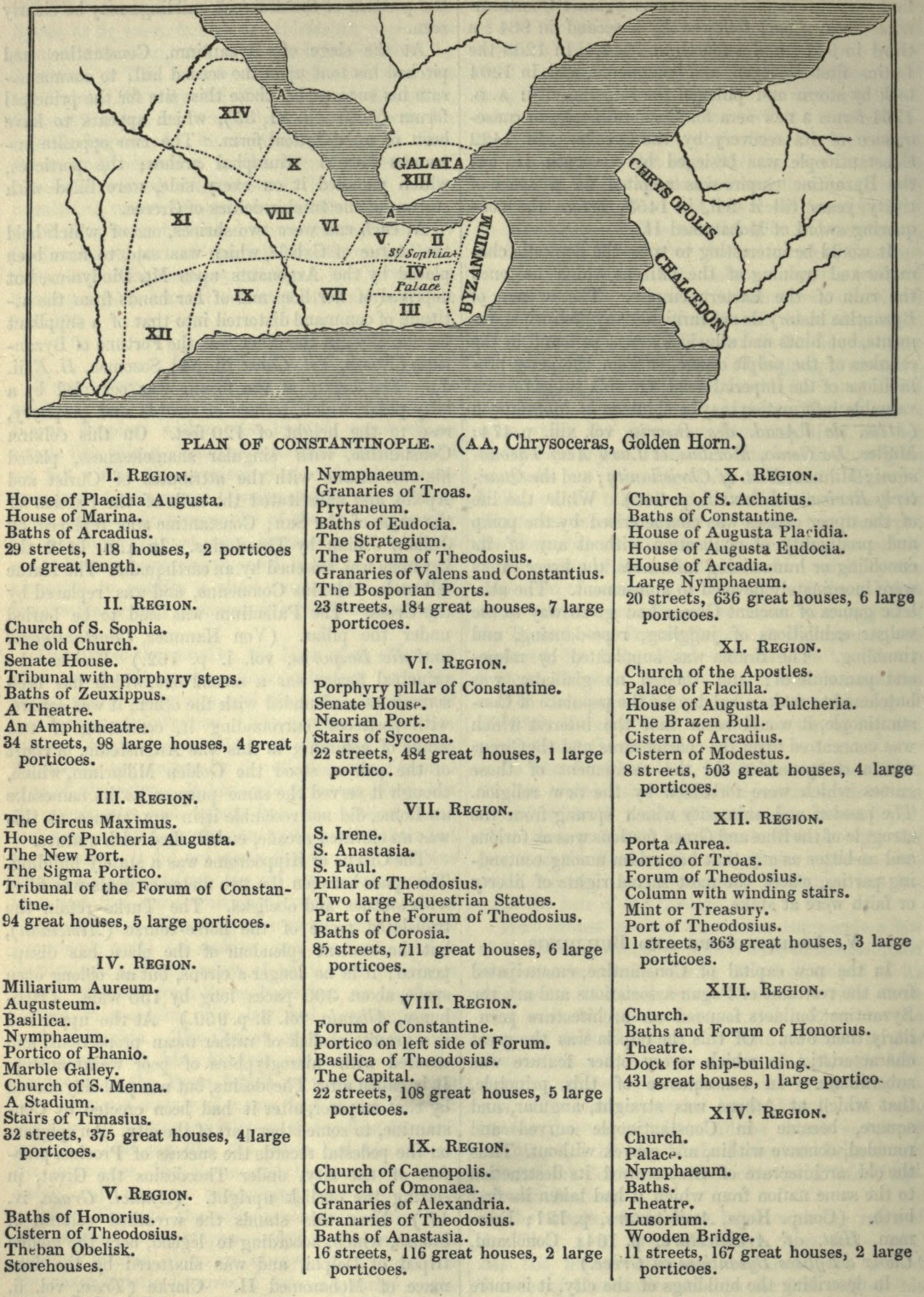
The Notitia Urbis Constantinopolitanae is an ancient "regionary", i.e., a list of monuments, public buildings and civil officials in Constantinople during the mid-5th century (between 425 and the 440s), during the reign of the emperor Theodosius II. The text lists the fourteen regions in which Constantinople was divided, along with the major public buildings such as fora, theatres, churches, palaces, baths and cisterns. It also lists the number of "houses" (domus), although there is uncertainty over the exact meaning of the term. Finally, the list includes the civil officials of each region, including the curators, the heads of the associations (collegia) and the heads of neighbourhoods (vicomagistri).
The Latin text of the Notitia Urbis Constantinopolitanae was published by Otto Seeck, as an appendix to his edition of the Notitia Dignitatum (1876). The first English translation by John Matthews was published in 2012 in the book Two Romes: Rome and Constantinople in Late Antiquity edited by Lucy Grig and Gavin Kelly. The Notitia Urbis was probably written between 447 and 450 and goes back to official sources. Although the simple lists are not always easy to understand, the Notitia Urbis helps to know what the city must have looked like before Justinian's building program.
Bibliography
This article was imported from Wikipedia and is available under the Creative Commons Attribution-ShareAlike 4.0 License. Content has been adapted to SurfDoc format. Original contributors can be found on the article history page.
Ask Mako anything about Notitia Urbis Constantinopolitanae — get instant answers, deeper analysis, and related topics.
Research with MakoFree with your Surf account
Create a free account to save articles, ask Mako questions, and organize your research.
Sign up freeThis content may have been generated or modified by AI. CloudSurf Software LLC is not responsible for the accuracy, completeness, or reliability of AI-generated content. Always verify important information from primary sources.
Report