From Surf Wiki (app.surf) — the open knowledge base
North Jersey
Northern portions of the U.S. state of New Jersey
Northern portions of the U.S. state of New Jersey
| Field | Value |
|---|---|
| official_name | North Jersey |
| subdivision_type | Country |
| subdivision_name | United States |
| subdivision_type1 | State |
| subdivision_name1 | New Jersey |
| subdivision_type2 | Largest cities |
| subdivision_name2 | Newark and Jersey City |
| subdivision_type3 | Counties |
| subdivision_name3 | {{Collapsible list |
| established_title | |
| unit_pref | |
| elevation_ft | 1,803 |
| population_total | 3,905,478 |
| population_as_of | 2024 |
| population_density_sq_mi | auto |
| timezone | EST |
| utc_offset | −5 |
| timezone_DST | EDT |
| utc_offset_DST | −4 |
| postal_code_type |
|Bergen |Essex |Hudson |Morris |Passaic |Sussex |Warren
North Jersey, also known as Northern New Jersey, comprises the northern portions of the U.S. state of New Jersey between the upper Delaware River and the Atlantic Ocean. As a distinct toponym, North Jersey is a colloquial one rather than an administrative one, reflecting geographical and perceived cultural and other differences between it and the southern part of the state.
North Jersey is characterized by its position, both geographically and culturally, within the greater New York City metropolitan area, as well as its high economic output, including its regional economic engines of Paramus in Bergen County, which had $6 billion in annual retail sales as of 2018 and Jersey City, whose financial district has been nicknamed "Wall Street West", Newark Liberty International Airport in Newark, and Port Newark–Elizabeth Marine Terminal.
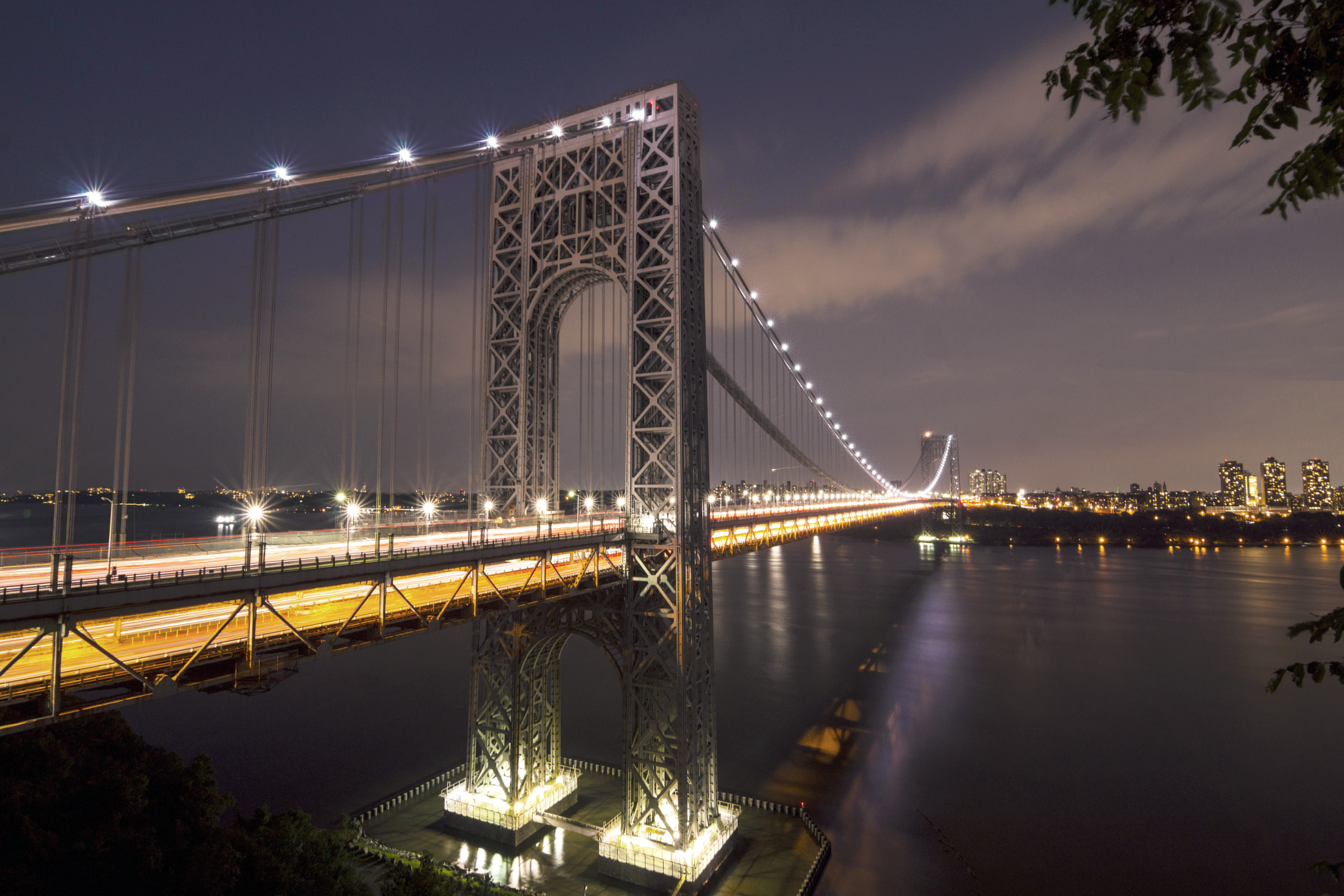
Bergen County is the most populous county in both North Jersey and the state and serves as the western terminus for the George Washington Bridge, the world's busiest motor vehicle bridge, which connects Fort Lee, New Jersey to Upper Manhattan in New York City. Newark, located in Essex County, is New Jersey's most populous city. Jersey City and Paterson, located in Hudson and Passaic counties, in North Jersey are the second and third most populous cities in the region and the state after Newark.
The exact definition of which counties constitute North Jersey is a subject of debate. Definitions of the North Jersey region of the state most consistently include Bergen, Essex, Hudson, Morris, Passaic, Sussex, and Warren counties, though definitions of North Jersey frequently vary and may include other New Jersey counties in the New York metropolitan area that are sometimes differentiated as or considered Central Jersey, including Middlesex County, Union County, Monmouth County, Somerset County, Hunterdon County and Mercer County.
Geography


Geologically, North Jersey is largely in the Piedmont Province, the Highlands Province, and the Ridge and Valley Province. Depending on definitions, some are counted as being in the Atlantic coastal plain.
North Jersey has a Humid Continental Climate (Dfb) by Köppen.
Definitions
One particular definition of North Jersey includes all points in New Jersey north of I-295 in the western part of the state and all points north of I-195 in the eastern part of the state. Another definition uses the old 1956-era 201 telephone area code, not the modern 201 area code, and all its additions, as this area code loosely included all of New Jersey north of Trenton. Some residents of the northern tier of counties use a narrower definition, counting only that area north of the mouth of the Raritan River. Conversely, people in South Jersey and within the Philadelphia metropolitan area, when using a two-portion approach that excludes Central Jersey as a separate category, may define North Jersey as consisting of Ocean County and every county north of it, essentially placing all New Jersey counties that are within the New York metropolitan area under the definition of North Jersey. The state is also sometimes described as having North Jersey and South Jersey separated from each other by Central Jersey.
Further subdivision
In 2008, the New Jersey State Department of Tourism divided the state into six tourist regions with the Gateway and Skylands regions included in North Jersey.
Counties most consistently defined as North Jersey counties
The following counties are most consistently considered North Jersey:
- Bergen County
- Essex County
- Hudson County
- Morris County
- Passaic County
- Sussex County
- Warren County
- Union County is sometimes considered as a transitional county between North Jersey and Central Jersey, or it may be grouped entirely with one of the two regions
History
North Jersey was the site of some of the earliest European settlements in what would become the United States of America. Its colonial history started after Henry Hudson sailed through Newark Bay in 1609. Although Hudson was British, he worked for the Netherlands, so he claimed the land for the Dutch as part of the provincial colony of New Netherland, with original settlements centered in Bergen in today's Hudson County. In 1664, the region became part of the Province of New Jersey.
During the American Revolutionary War, New Jersey was a strategic location between New York City, and the Continental Congress in Philadelphia. Important materials necessary to the war effort were sometimes produced in North Jersey, and the Continental Army made its home in North Jersey for part of the war. George Washington, commanding general of the Continental Army, maintained his headquarters at Ford Mansion in Morristown for part of the Revolutionary War, from December 1779 to June 1780. In the northwestern part of the state, iron mines and foundries supplied raw material for the Continental Army's guns and ammunition.
The American Industrial Revolution started by the founding of the North Jersey town of Paterson. Today, the United States and the world enjoy the fruit born of seeds planted in North Jersey during the Industrial Revolution. Alexander Hamilton, Secretary for the Treasury and President of the Bank of New York during the end of the eighteenth century, selected the Great Falls area, also known as the Passaic Falls, for an ambitious experiment. He promoted the natural power of the Great Falls as an excellent location for textile mills and other manufacturers.
Paterson attracted skilled craftsmen and engineers from Europe to run the mills and produced a large concentration of creative and able people. During the mid-nineteenth century, many of the engines and materials that would be used to colonize a continent were made here. Thomas Edison installed one of the first hydroelectric power plants in the world, which still provides electricity today, using the Great Falls as an energy source.
In West Orange, Edison created the first technical research and development facility with his invention factory. Electric light, improved motion pictures, and sound recording, were among the hundreds of inventions produced here.
Demographics
The seven counties that are most commonly included in North Jersey have an estimated total population of 3,905,478 as of 2024; this rises to 4,499,638 with the inclusion of Union County. As of the 2000 U.S. Census, the demographics of all the seven main counties combined are 66.8% White, 18.5% Hispanic or Latino, 15.4% African American, 6.6% Asian, 0.2% Native American, and 0.1% Pacific Islander.
Population
| 2017 Rank | Municipality | County | Population in | Population in | Municipal |
|---|---|---|---|---|---|
| 1 | Newark | Essex | 285,154 | 277,140 | City |
| 2 | Jersey City | Hudson | 270,753 | 247,597 | City |
| 3 | Paterson | Passaic | 148,678 | 146,199 | City |
| 4 | Clifton | Passaic | 86,607 | 84,136 | City |
| 5 | Passaic | Passaic | 71,247 | 69,781 | City |
| 6 | Union City | Hudson | 70,387 | 66,455 | City |
| 7 | Bayonne | Hudson | 67,186 | 63,024 | City |
| 8 | East Orange | Essex | 65,378 | 64,270 | City |
| 9 | North Bergen | Hudson | 63,659 | 60,773 | Township |
| 10 | Hoboken | Hudson | 55,131 | 50,005 | City |
| 11 | Wayne | Passaic | 55,072 | 54,717 | Township |
| 12 | Irvington | Essex | 54,865 | 53,926 | Township |
| 13 | West New York | Hudson | 54,227 | 49,708 | Town |
| 14 | Parsippany-Troy Hills | Morris | 53,201 | 53,238 | Township |
| 15 | Bloomfield | Essex | 50,970 | 47,315 | Township |
| 16 | West Orange | Essex | 48,425 | 46,207 | Township |
| 17 | Hackensack | Bergen | 45,248 | 43,010 | City |
| 18 | Kearny | Hudson | 42,670 | 40,648 | Town |
| 19 | Teaneck | Bergen | 41,311 | 39,776 | Township |
| 20 | Montclair | Essex | 39,227 | 37,669 | Township |
| 21 | Fort Lee | Bergen | 37,907 | 35,345 | Borough |
| 22 | Belleville | Essex | 36,498 | 35,926 | Township |
| 23 | Fair Lawn | Bergen | 33,710 | 32,457 | Borough |
| 24 | Garfield | Bergen | 32,393 | 30,487 | City |
| 25 | City of Orange | Essex | 30,813 | 30,134 | Township |
| 26 | Livingston | Essex | 30,142 | 29,366 | Township |
| Rank | County | Population in 2022 | County seat | Area |
|---|---|---|---|---|
| 1 | Bergen | 952,997 | Hackensack | 234 sq mi |
| 2 | Essex | 849,477 | Newark | 126 sq mi |
| 3 | Hudson | 703,366 | Jersey City | 47 sq mi |
| 4 | Passaic | 513,936 | Paterson | 185 sq mi |
| 5 | Morris | 511,151 | Morristown | 469 sq mi |
| 6 | Sussex | 146,084 | Newton | 521 sq mi |
| 7 | Warren | 110,926 | Belvidere | 358 sq mi |
Professional sports fans
Sports allegiances are often divided between the northern and southern portions of the state. The 2009 World Series divided the people of New Jersey, because South Jersey residents generally root for the Philadelphia Phillies, while North Jersey residents usually root for the New York Yankees or the New York Mets. A similar trend exists for most other major sports, with North Jersey residents supporting the Brooklyn Nets or the New York Knicks in basketball, the New Jersey Devils, or the New York Rangers in hockey, the New York Red Bulls or New York City FC in soccer, and the New York Giants or the New York Jets in football.
Dialect
Main article: New Jersey English dialects
Notable North Jerseyans
- People from Bergen County
- People from Essex County
- People from Hudson County
- People from Morris County
- People from Passaic County
- People from Sussex County
- People from Warren County
References and footnotes
References
- (28 March 2008). "Drawing the line: Talking with the blogger behind "Where is the Line Between North & South Jersey?"".
- Mikle, Jean. (March 31, 2008). "An invisible boundary divides N.J.". [[Home News Tribune]].
- Allison Pries. (March 10, 2019). "Inside the N.J. town where retail spending beats Hollywood and tourism rivals Disney". New Jersey On-Line LLC.
- [https://cms.dot.gov/sites/dot.gov/files/docs/NJ%20Jersey%20City.pdf A Vision for Smart Transit in Jersey City] {{Webarchive. link. (2016-12-26 , [[United States Department of Transportation]], February 4, 2016. Accessed May 5, 2019. "Development along the Hudson River waterfront led to the development of the 'Wall Street West' financial district, one of the largest centers of banking and finance in the nation.")
- (April 24, 2015). "Here are the North, Central and South Jersey borders as determined by you (INTERACTIVE)". NJ.com.
- (2008). "New Jersey Travel Destinations (map)".
- "A short history of New Jersey".
- "History of Northern New Jersey - rt23.com".
- [https://www2.census.gov/programs-surveys/popest/tables/2020-2022/counties/totals/co-est2022-pop-34.xlsx Annual Estimates of the Resident Population for Minor Civil Divisions in New Jersey: April 1, 2020 to July 1, 2022], [[United States Census Bureau]]. Accessed January 19, 2024.
This article was imported from Wikipedia and is available under the Creative Commons Attribution-ShareAlike 4.0 License. Content has been adapted to SurfDoc format. Original contributors can be found on the article history page.
Ask Mako anything about North Jersey — get instant answers, deeper analysis, and related topics.
Research with MakoFree with your Surf account
Create a free account to save articles, ask Mako questions, and organize your research.
Sign up freeThis content may have been generated or modified by AI. CloudSurf Software LLC is not responsible for the accuracy, completeness, or reliability of AI-generated content. Always verify important information from primary sources.
Report