From Surf Wiki (app.surf) — the open knowledge base
Non-photo blue
Shade of blue not detected by film
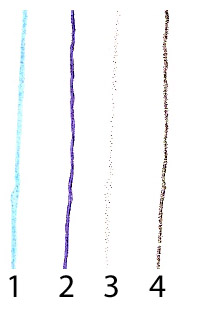
Shade of blue not detected by film
| Field | Value |
|---|---|
| title | Non-photo blue |
| spelling | colour |
| hex | A4DDED |
| isccname | Very light greenish blue |
Non-photo blue (or non-repro blue) is a common tool in the graphic design and print industry, being a particular shade of blue that cannot be detected by graphic arts camera film. This allows layout editors to write notes to the printer on the print flat (the image that is to be photographed and sent to print) which will not show in the final form. It also allows artists to lay down sketch lines without the need to erase after inking.
Change in function
More recently, with digital scanning and image manipulation, non-photo blue fulfills its function in a different way. The artist can do their sketch and inking in the traditional manner and scan the page. Most scanners will detect the light blue lines. However, shifting to greyscale and increasing the contrast and brightness of the scanned image causes the blue to disappear. Another common approach involves replacing the blue channel with another channel – typically the red channel. The exact processes may differ depending on the scanner, settings and image-editing software, but the concept remains the same.
Black ink
The difference between the non-photo blue and black ink is great enough that digital image manipulation can separate the two easily. If a black-and-white bitmap setting is scanned in, the exposure or threshold number can be set high enough to detect the black ink or dark images being scanned, but low enough to leave out the non-photo blue. On a threshold scale of 0–255, this number would be approximately 140. Only with a considerably low threshold setting will the blue be detected; this however may greatly distort black lines and add a lot of noise and black speckles, making the image potentially almost unrecognizable. Scanning in black-and-white makes it possible for the non-photo blue still to serve its original purpose, as notes and rough sketching lines can be placed throughout the image being scanned and remain undetected by the scan head.
References
References
- Colleen Doran. (8 November 2007). "Manga Pro Superstar Workshop: How to Create and Sell Comics and Graphic Novels". IMPACT.
- Freddie E Williams II. (1 September 2009). "The DC Comics Guide to Digitally Drawing Comics". Random House Digital, Inc..
This article was imported from Wikipedia and is available under the Creative Commons Attribution-ShareAlike 4.0 License. Content has been adapted to SurfDoc format. Original contributors can be found on the article history page.
Ask Mako anything about Non-photo blue — get instant answers, deeper analysis, and related topics.
Research with MakoFree with your Surf account
Create a free account to save articles, ask Mako questions, and organize your research.
Sign up freeThis content may have been generated or modified by AI. CloudSurf Software LLC is not responsible for the accuracy, completeness, or reliability of AI-generated content. Always verify important information from primary sources.
Report