From Surf Wiki (app.surf) — the open knowledge base
Nobel Foundation
Private institution managing the finances and administration of the Nobel Prizes
Private institution managing the finances and administration of the Nobel Prizes
| Field | Value |
|---|---|
| name | Nobel Foundation |
| logo | Nobelstiftung logo.svg |
| logo_size | 120px |
| logo_caption | The Nobel Foundation crest |
| size | 150px |
| formation | |
| headquarters | Stockholm, Sweden |
| website |
The Nobel Foundation is a private institution founded on 29 June 1900 to manage the finances and administration of the Nobel Prizes. | access-date = 2010-12-19 | access-date = 2010-12-19
It also holds Nobel Symposia on important breakthroughs in science and topics of cultural or social significance.
History
Main article: Alfred Nobel
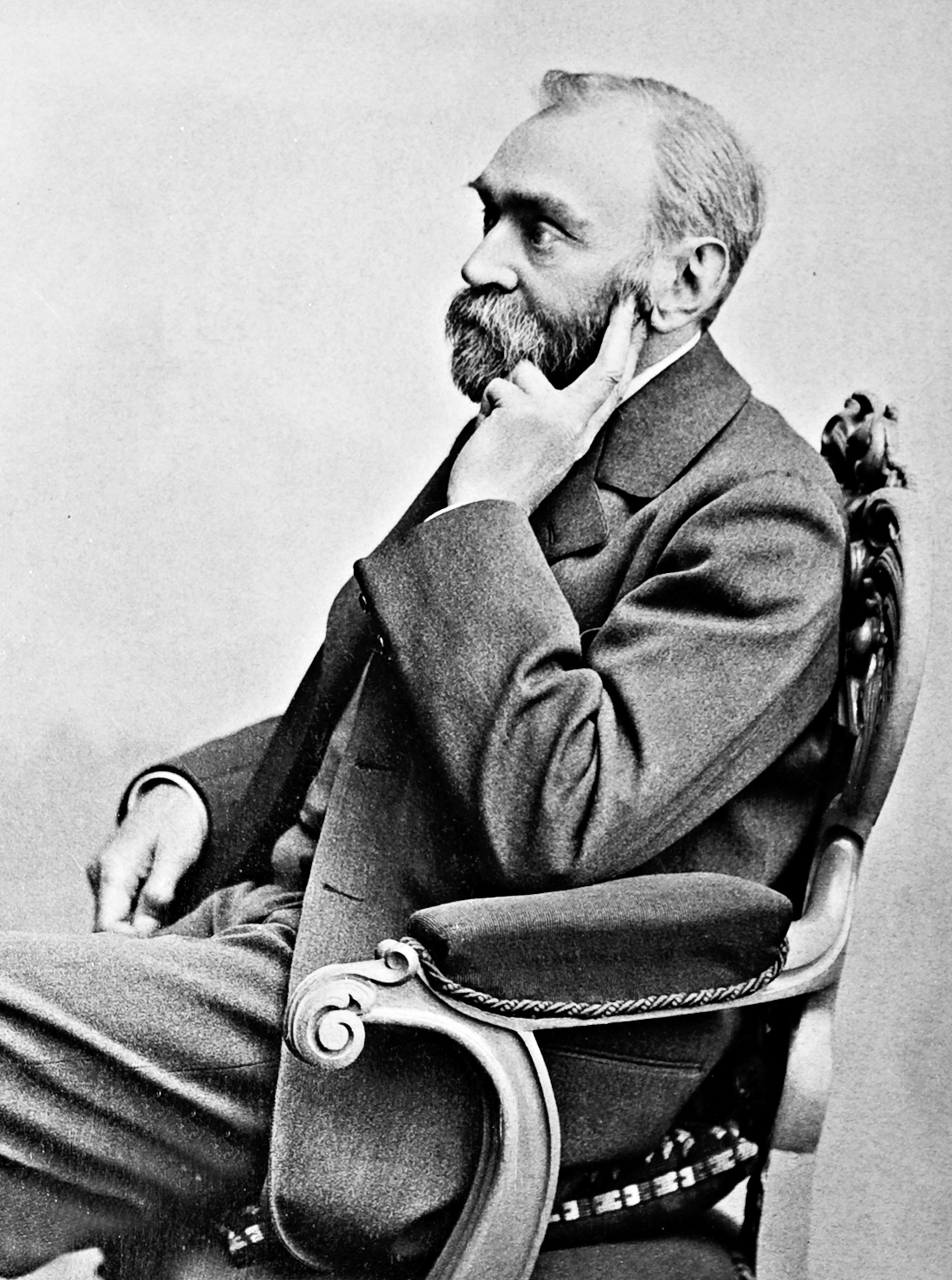
Alfred Nobel (; born 21 October 1833, in Stockholm, Sweden) was a chemist, engineer, innovator, armaments manufacturer and the inventor of dynamite. He owned Bofors, a major armaments manufacturer, which he had redirected from its original business as an iron and steel mill. Nobel held 355 different patents, dynamite being the most famous. Nobel amassed a sizeable personal fortune during his lifetime, thanks mostly to this invention. In 1896 Nobel died of a stroke in his villa in San Remo, Italy, where he had lived his final years.
Nobel's will expressed a request, to the surprise of many, that his money be used for prizes in physics, chemistry, peace, physiology or medicine and literature. Though Nobel wrote several wills during his lifetime, the last was written a little over a year before he died, and signed at the Swedish-Norwegian Club in Paris on 27 November 1895. Nobel bequeathed 94% of his total assets, 31 million Swedish kronor, to establish and endow the five Nobel Prizes.
The capital shall be invested by my executors in safe securities and shall constitute a fund, the interest on which shall be annually distributed in the form of prizes to those who, during the preceding year, shall have conferred the greatest benefit on mankind. The said interest shall be divided into five equal parts, which shall be apportioned as follows: one part to the person who shall have made the most important discovery or invention within the field of physics; one part to the person who shall have made the most important chemical discovery or improvement; one part to the person who shall have made the most important discovery within the domain of physiology or medicine; one part to the person who shall have produced in the field of literature the most outstanding work of an idealistic tendency; and one part to the person who shall have done the most or the best work for fraternity among nations, for the abolition or reduction of standing armies and for the holding and promotion of peace congresses.
The prizes for physics and chemistry shall be awarded by the Swedish Academy of Sciences; that for physiological or medical works by Karolinska Institutet in Stockholm; that for literature by the Academy in Stockholm; and that for champions of peace by a committee of five persons to be elected by the Norwegian Storting. It is my expressed wish that in awarding the prizes no consideration whatever shall be given to the nationality of the candidates, so that the most worthy shall receive the prize, whether he be Scandinavian or not."|20|20|Alfred Nobel, Alfred Nobel's Will}}
The executors of his will were Ragnar Sohlman and Rudolf Lilljequist who formed the Nobel Foundation to take care of Nobel's fortune and organize the prizes. Although Nobel's will established the prizes, his plan was incomplete and, because of various other hurdles, it took five years before the Nobel Foundation could be established and the first prizes could be awarded on 10 December 1901 to, among others, Wilhelm Conrad Röntgen. At the end of 2024, the Foundation's investment capital amounted to 6.6 billion Swedish kroner, or about $US 700 million.
The Nobel Foundation
The Nobel Foundation was founded as a private organisation on 29 June 1900 specifically to manage the finances and administration of the Nobel Prizes.{{cite web| first = Birgitta| last = Lemmel| title = The Nobel Foundation: A Century of Growth and Change| publisher = Nobel Foundation| date = 2007-06-29| url = http://nobelprize.org/nobelfoundation/history/lemmel/index.html| access-date = 2007-10-30 |archive-url = https://web.archive.org/web/20071026032605/http://nobelprize.org/nobelfoundation/history/lemmel/index.html |archive-date=2007-10-26}} It is based on Nobel's last will and testament. Soon thereafter they appointed the members of the Norwegian Nobel Committee that was to award the Peace Prize. Shortly after, the other prize-awarding organizations followed; Karolinska Institutet on 7 June, the Swedish Academy on 9 June and the Royal Swedish Academy of Sciences on 11 June. In 1900 the Nobel Foundation's newly created statutes were promulgated by King Oscar II.
In 1905 the union between Sweden and Norway was dissolved which meant the responsibility for awarding Nobel Prizes was split between the two countries. The Norwegian Nobel Committee continued to select the recipient of the Peace Prize, while Swedish bodies select the other prize recipients.
In accordance with Nobel's will, the primary task of the Nobel Foundation is to manage the fortune Nobel left after him in a fund. The Nobel Foundation invests money to maintain a funding base for the prizes and the administrative activities. The Nobel Foundation is exempt from all taxes in Sweden (since 1946) and from investment taxes in the United States (since 1953). At the beginning of the 1980s the award money was 1 million SEK but in 2008 the award money had increased to 10 million SEK.
According to the statutes of the Nobel Foundation, the Board of Directors will have its registered office in Stockholm. The Board consists of seven members and two deputies, Swedish or Norwegian citizens elected by the trustees of the prize-awarding institutions, and it chooses a Chairman, Vice-Chairman, and Executive Director from among its members. The prize-awarding institutions are the Royal Swedish Academy of Sciences, the Nobel Assembly at the Karolinska Institute, the Swedish Academy and the Norwegian Nobel Committee.
Nobel Symposia
In 1965, the foundation initiated the Nobel Symposia, a program that holds symposia "devoted to areas of science where breakthroughs around the world are occurring or deal with other topics of primary cultural or social significance." The symposia has covered topics such as prostaglandins, chemical kinetics, diabetes mellitus, string theory, cosmology, and the Cold War in the 1980s. The Nobel Symposium Committee consists of members from the Nobel Committees in Chemistry, Literature, Peace, Physics, and Physiology or Medicine; the Prize Committee for Economics; the Bank of Sweden Tercentenary Foundation; and the Wallenberg Foundation.
Other Nobel prizes announced by members of the Nobel family
In 2007, the Nobel Charitable Trust, founded by Michael Nobel, Gustaf Nobel, Peter Nobel, and Philip Nobel, announced their plans to establish a new Nobel prize, the Michael Nobel Energy Award, that will award innovations in alternative energy technology. It would be the first new Nobel prize established by the Nobel family since Alfred Nobel established his prizes. However, it would be awarded by the Nobel Charitable Trust and not by the Nobel Foundation, although both are organisations founded by the Nobel family.
The plan was announced at nanoTX 07. The Nobel Foundation quickly reacted by threatening legal action for "clear misuse of the reputation and goodwill of the Nobel Prize and the associations of integrity and eminence that has been created over time and through the efforts of the Nobel Committees". The director, Michael Sohlman, of the Nobel Foundation and the elected head of the Nobel family disapproved to the institution of the so-called 'Dr. Michael Nobel Award' as well as the Nobel Charitable Trust (NCT) and Nobel Family Benevolent society.
Notes
References
References
- "Nobelstiftelsen Verksamhetsberättelse 2013". Nobel Foundation.
- (2001-12-08). "Biography of Alfred Nobel – Succeed through Studying Biographies". School for Champions.
- (23 June 2016). "Alfred Nobel's final years in Sanremo".
- "Si-Facts_FS15b_ENG.bak".
- AFP, [http://www.thelocal.se/14776/20091005/ "Alfred Nobel's last will and testament"] {{webarchive. link. (9 October 2009 , ''[[The Local]]''(5 October 2009): accessed 14 January 2009.)
- "History – Historic Figures: Alfred Nobel (1833–1896)". BBC.
- "Guide to Nobel Prize".
- (1981). "The Nobel Foundation and its Role for Modern Day Science".
- [http://nobelprize.org/alfred_nobel/will/index.html "The Will of Alfred Nobel"], Nobel Foundation. Retrieved 6 November 2007.
- [[Alfred Nobel]]. [http://nobelprize.org/alfred_nobel/will/will-full.html "Alfred Nobel's Will"], Nobel Foundation. Retrieved 15 February 2007. ([[English language. English version]]).
- [http://www.britannica.com/EBchecked/topic/416856/Nobel-Prize "Nobel Prize]" (2007), in ''[[Encyclopædia Britannica]]''. Retrieved 15 January 2009, from ''Encyclopædia Britannica'': {{quote. After Nobel's death, the Nobel Foundation was set up to carry out the provisions of his will and to administer his funds. In his will, he had stipulated that four different institutions—three Swedish and one Norwegian—should award the prizes. From Stockholm, the Royal Swedish Academy of Sciences confers the prizes for physics, chemistry, and economics, the Karolinska Institute confers the prize for physiology or medicine, and the Swedish Academy confers the prize for literature. The Norwegian Nobel Committee based in Oslo confers the prize for peace. The Nobel Foundation is the legal owner and functional administrator of the funds and serves as the joint administrative body of the prize-awarding institutions, but it is not concerned with the prize deliberations or decisions, which rest exclusively with the four institutions.
- "All Nobel Laureates". Nobel Foundation.
- (January 2018). The History Channel]]''. Retrieved 30 July 2006.
- "The Nobel Foundations' 2024 asset management and earnings". NobelPrize.org.
- "The Nobel Foundation – History". Nobel Foundation.
- (1999-10-13). "Nobel Prize History –". Infoplease.com.
- Encyclopædia Britannica. "Nobel Foundation (Scandinavian organization) – Britannica Online Encyclopedia".
- (September 2023}} The Nobel Foundation is not involved in the process of selecting the Nobel laureates.{{cite book). "The Nobel prize: a history of genius ... – Google Böcker". Arcade.
- (2008-12-31). "The Nobel Foundation – Financial Management". Nobel Foundation.
- [http://nobelprize.org/nobelfoundation/history/images/2008_diagram.gif] {{webarchive. link. (25 June 2009)
- "Statutes of the Nobel Foundation". NobelPrize.org.
- Nobel, Philip. (2007-10-09). "Michael Nobel Energy Award". PRBuzz.com.
- Nobel, Philip. (2007-10-09). "Statement from the Nobel Charitable Trust Foundation regarding the Michael Nobel Energy Award". I-Newswire.com.
- nanoPRwire. (2007-09-24). "Michael Nobel Relieved of nanoTX'07 Activities After Protest from Nobel Foundation and Family Society". [[Nano Science and Technology Institute]].
- Feder, Barnaby J.. (2007-10-18). "The Nobel Prize That Wasn't". The New York Times.

This article was imported from Wikipedia and is available under the Creative Commons Attribution-ShareAlike 4.0 License. Content has been adapted to SurfDoc format. Original contributors can be found on the article history page.
Ask Mako anything about Nobel Foundation — get instant answers, deeper analysis, and related topics.
Research with MakoFree with your Surf account
Create a free account to save articles, ask Mako questions, and organize your research.
Sign up freeThis content may have been generated or modified by AI. CloudSurf Software LLC is not responsible for the accuracy, completeness, or reliability of AI-generated content. Always verify important information from primary sources.
Report