From Surf Wiki (app.surf) — the open knowledge base
NMDA receptor antagonist
Class of anesthetics
Class of anesthetics
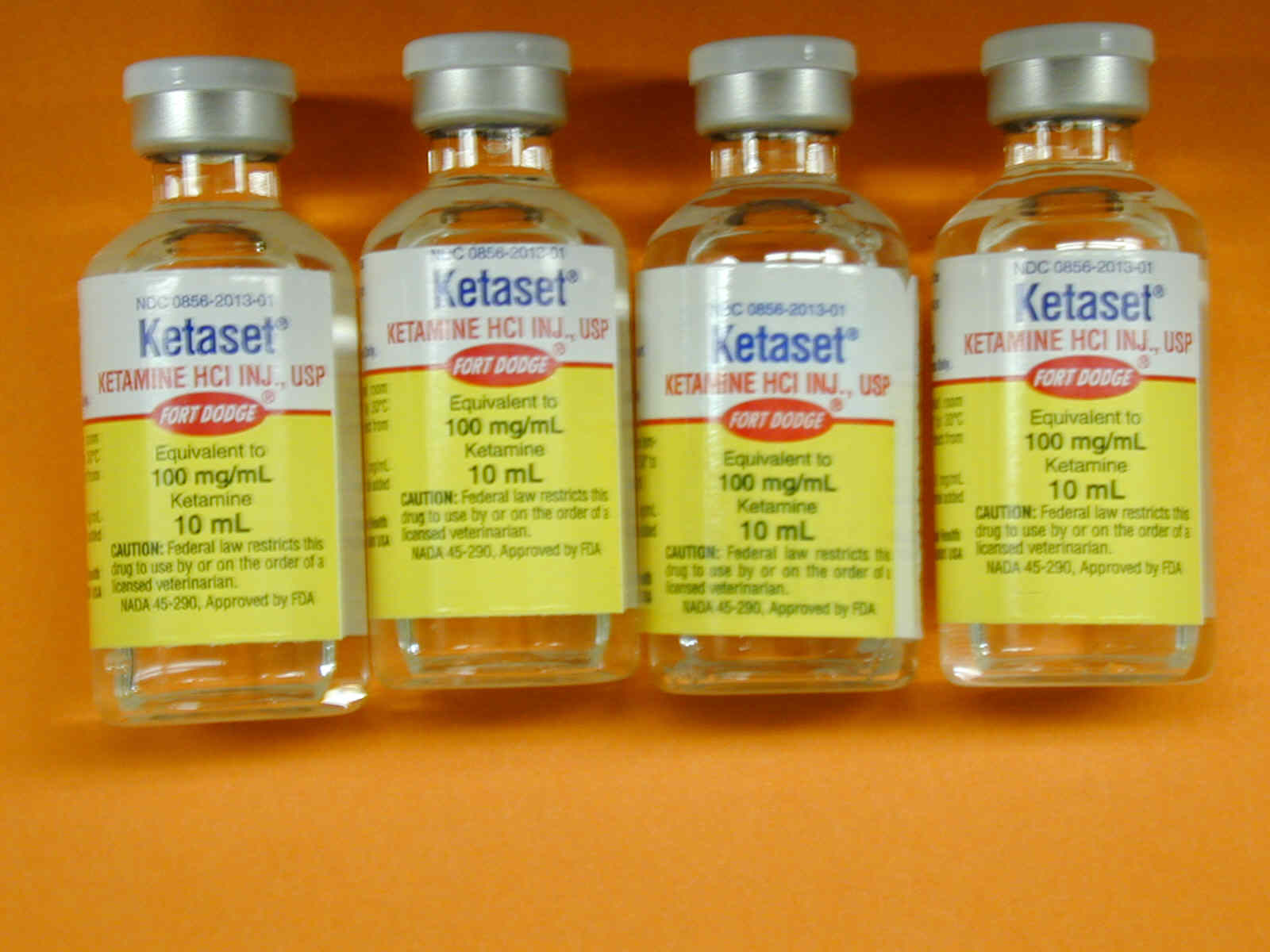
NMDA receptor antagonists are a class of drugs that work to antagonize, or inhibit the action of, the N-Methyl-D-aspartate receptor (NMDAR). They are commonly used as anesthetics for humans and animals; the state of anesthesia they induce is referred to as dissociative anesthesia.
Several synthetic opioids function additionally as NMDAR-antagonists, such as pethidine, levorphanol, methadone, dextropropoxyphene, tramadol, and ketobemidone.
Some NMDA receptor antagonists, such as ketamine, dextromethorphan (DXM), phencyclidine (PCP), methoxetamine (MXE), and nitrous oxide (N2O) are sometimes used recreationally for their dissociative, hallucinogenic, and euphoriant properties. When used recreationally, they are classified as dissociative drugs.
Uses and effects
NMDA receptor antagonists induce a state called dissociative anesthesia, marked by catalepsy, amnesia, and analgesia. Ketamine is a favored anesthetic for emergency patients with unknown medical history and in the treatment of burn victims because it depresses breathing and circulation less than other anesthetics. Dextrorphan, a metabolite of dextromethorphan (one of the most commonly used cough suppressants in the world), is known to be an NMDA receptor antagonist.
Numerous detrimental symptoms are linked to depressed NMDA receptor function. For example, NMDA receptor hypofunction that occurs as the brain ages may be partially responsible for memory deficits associated with aging. Schizophrenia may also have to do with irregular NMDA receptor function (the glutamate hypothesis of schizophrenia). Increased levels of another NMDA antagonist, kynurenic acid, may aggravate the symptoms of schizophrenia, according to the "kynurenic hypothesis". NMDA receptor antagonists can mimic these problems, sometimes inducing "psychotomimetic" side effects, i.e., symptoms resembling psychosis. Such side effects caused by NMDA receptor inhibitors include hallucinations, paranoid delusions, confusion, difficulty concentrating, agitation, alterations in mood, nightmares, catatonia, ataxia, anesthesia, and learning and memory deficits.
Because of these psychotomimetic effects, NMDA receptor antagonists, especially phencyclidine, ketamine, and dextromethorphan, are used as recreational drugs. At subanesthetic doses, these drugs have mild stimulant effects and, at higher doses, begin inducing dissociation and hallucinations, though these effects and the strength thereof vary from drug to drug.
Most NMDA receptor antagonists are metabolized in the liver. Frequent administration of most NMDA receptor antagonists can lead to tolerance, whereby the liver will more quickly eliminate NMDA receptor antagonists from the bloodstream.
NMDA receptor antagonists are also under investigation as antidepressants. Ketamine has been demonstrated to produce lasting antidepressant effects after administration in a clinical setting. In 2019, esketamine, an NMDA antagonizing enantiomer of ketamine, was approved for use as an antidepressant in the United States. In 2022, Auvelity was approved by the FDA for the treatment of depression. This combination medication contains dextromethorphan, an NMDA receptor antagonist.
Neurotoxicity
Main article: Olney's lesions
Olney's lesions involve mass vacuolization of neurons observed in rodents. However, many suggest that this is not a valid model of human use, and studies conducted on primates have shown that use must be heavy and chronic to cause neurotoxicity. A 2009 review found no evidence of ketamine-induced neuron death in humans. However, temporary and permanent cognitive impairments have been shown to occur in long-term or heavy human users of the NMDA antagonists PCP and ketamine. A large-scale, longitudinal study found that current frequent ketamine users have modest cognitive deficits, while infrequent or former heavy users do not. Many drugs have been found that lessen the risk of neurotoxicity from NMDA receptor antagonists. Centrally acting alpha 2 agonists such as clonidine and guanfacine are thought to most directly target the etiology of NMDA neurotoxicity. Other drugs acting on various neurotransmitter systems known to inhibit NMDA antagonist neurotoxicity include: anticholinergics, diazepam, barbiturates, ethanol, 5-HT2A serotonin receptor agonists, anticonvulsants, and muscimol.
Potential for treatment of excess excitotoxicity
Since NMDA receptor overactivation is implicated in excitotoxicity, NMDA receptor antagonists have held much promise for the treatment of conditions that involve excitotoxicity, including benzodiazepine withdrawal, traumatic brain injury, stroke, and neurodegenerative diseases such as Alzheimer's, Parkinson's, and Huntington's. This is counterbalanced by the risk of developing Olney's lesions, and studies have started to find agents that prevent this neurotoxicity. Most clinical trials involving NMDA receptor antagonists have failed due to unwanted side effects of the drugs; since the receptors also play an important role in normal glutamatergic neurotransmission, blocking them causes side-effects. These results have not yet been reproduced in humans, however. Mild NMDA receptor antagonists like amitriptyline have been found to be helpful in benzodiazepine withdrawal.
Mechanism of action
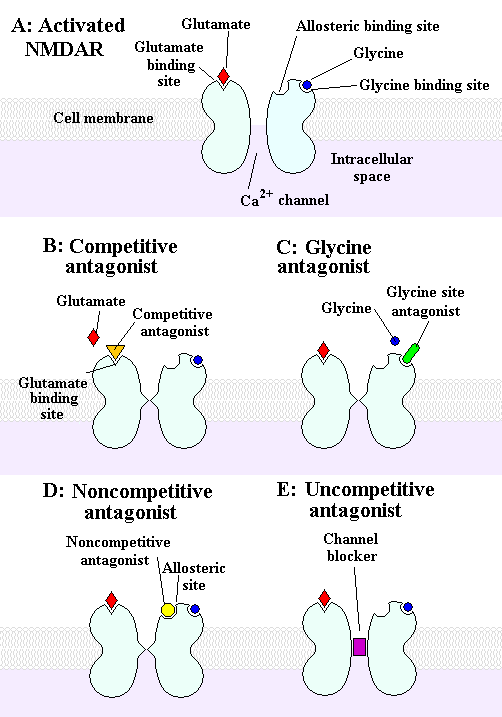
The NMDA receptor is an ionotropic receptor that allows for the transfer of electrical signals between neurons in the brain and in the spinal column. For electrical signals to pass, the NMDA receptor must be open. To remain open, glutamate and glycine must bind to the NMDA receptor. An NMDA receptor that has glycine and glutamate bound to it and has an open ion channel is called "activated."
Chemicals that deactivate the NMDA receptor are called antagonists. NMDAR antagonists fall into four categories: Competitive antagonists block binding to neurotransmitter glutamate sites; glycine antagonists block binding to glycine sites; noncompetitive antagonists inhibit binding to NMDARs allosteric sites; and uncompetitive antagonists block binding to a site within the ion channel.
Examples
Competitive antagonists
- AP5 (APV, R-2-amino-5-phosphonopentanoate).
- AP7 (2-amino-7-phosphonoheptanoic acid).
- CGP-37849
- CPPene (3-[(R)-2-carboxypiperazin-4-yl]-prop-2-enyl-1-phosphonic acid).
- Selfotel: an anxiolytic, anticonvulsant but with possible neurotoxic effects.
Uncompetitive channel blockers
- 3-MeO-PCP: an analogue of PCP
- 8A-PDHQ: a high affinity PCP structural analogue.
- Amantadine: used for treating Parkinson's disease, influenza, and Alzheimer's disease.
- Atomoxetine: a norepinephrine reuptake inhibitor used in the treatment of ADHD.
- AZD6765.
- Agmatine: Blocks NMDA receptors and other cation ligand-gated channels. Can also potentiate opioid analgesia.
- Argiotoxin: polyamine toxins produced by the orb-weaver spider (*Araneus gemma *and Argiope lobata)
- Chloroform: an early anesthetic.
- Cyclopropane: an early anesthetic.
- Delucemine: also an SSRI with neuroprotective properties.
- Desflurane: an inhalational anesthetic.
- Dextrallorphan: a more potent analogue of dextromethorphan.
- Dextromethorphan: an antitussive found in OTC cough medicines.
- Dextrorphan: active metabolite of dextromethorphan.
- Dextromethadone: (S)-enantiomer of the drug methadone that has low affinity for opioid receptors and exhibits rapid antidepressant effects in animal models.
- Diphenidine: a designer drug and PCP analogue sold on the internet.
- Dizocilpine (MK-801): an experimental drug used in scientific research.
- Ethanol: also known as alcohol, a widely used intoxicant.
- Eticyclidine: a slightly more potent dissociative anesthetic than phencyclidine but with greater nausea/unpleasant taste, that was discontinued early in its development due to these digestive complaints.
- F-17475: an analgesic with ketamine-like discriminative stimulus effects in rodents
- Gacyclidine: an experimental drug developed for neuroprotection and is being studied for the treatment of tinnitus.
- Halothane: an inhalational anesthetic.
- Isoflurane: an inhalational anesthetic.
- Ketamine: a dissociative hallucinogen with antidepressant properties used as an anesthetic in humans and animals, a possible treatment in bipolar disorder patients with treatment-resistant depression, and used recreationally for its effects on the CNS.
- Magnesium.
- Memantine: treatment for Alzheimer's disease.
- Methoxetamine: a novel designer drug sold on the internet.
- Methoxydine: 4-MeO-PCP.
- Minocycline.
- Neramexane: a memantine analogue with nootropic, antidepressant properties. Also a nicotinic acetylcholine antagonist.
- Nitromemantine: a novel memantine derivative.
- Nitrous oxide: used for anesthesia, particularly in dentistry.
- PD-137889: Potent NMDA receptor antagonist with roughly 30 times the potency of ketamine. Substitutes for PCP in animal studies.
- Phencyclidine: a dissociative anesthetic previously used in medicine, but its development was discontinued in the 1960s in favor of its successor ketamine due to its relatively high incidence of psychotomimetic effects. Abused recreational and legally controlled in most countries.
- Remacemide: a low affinity antagonist also a sodium-channel blocker.
- Rolicyclidine: a less potent analogue of phencyclidine, but seems to be seldom, if ever, abused.
- Sevoflurane: an inhalational anesthetic.
- Tenocyclidine: an analogue of phencyclidine that is more potent.
- Tiletamine: an animal anesthetic.
- Eliprodil: an anticonvulsant drug with neuroprotective properties.
- Etoxadrol: a potent dissociative similar to PCP.
- Dexoxadrol: similar to etoxadrol.
- WMS-2539: potent fluorinated derivative of dexoxadrol.
- NEFA: a moderate affinity antagonist.
Non-competitive antagonists
- Aptiganel (Cerestat, CNS-1102): binds the Mg2+ binding site within the channel of the NMDA receptor.
- HU-211: an enantiomer of the potent cannabinoid HU-210 which lacks cannabinoid effects and instead acts as a potent non-competitive NMDA antagonist.
- Huperzine A.
- Dipeptide D-Phe-L-Tyr. weakly inhibit NMDA/Gly-induced currents possibly by ifenprodil-like mechanism.
- Ibogaine: a naturally occurring alkaloid found in plants of the family Apocynaceae. Has been used, albeit with limited evidence, to treat opioid and other addictions.
- Remacemide: principle metabolite is an uncompetitive antagonist with a low affinity for the binding site.
- Rhynchophylline an alkaloid, found in Kratom and Rubiaceae.
- Gabapentin: a calcium α2δ ligand that is commonly used in diabetic neuropathy.
Glycine antagonists
These drugs act at the glycine binding site:
- Rapastinel (GLYX-13) (weak partial agonist; IA = ~20%).
- NRX-1074 (weak partial agonist).
- 7-Chlorokynurenic acid.
- 4-Chlorokynurenine (AV-101) (prodrug for 7-chlorokynurenic acid).
- 5,7-Dichlorokynurenic acid.
- Kynurenic acid (a naturally occurring antagonist).
- TK-40 (competitive antagonist at the GluN1 glycine binding site).
- 1-Aminocyclopropanecarboxylic acid (ACPC).
- L-Phenylalanine. a naturally occurring amino acid (equilibrium dissociation constant (KB) from Schild regression is 573 μM).
- Xenon: an anesthetic.
Potencies
Uncompetitive channel blockers
| Compound | IC50 (nM) | Ki (nM) |
|---|---|---|
| (+)-MK-801 | 4.1 | 2.5 |
| Chlorophenidine | 14.6 | 9.3 |
| Diphenidine | 28.6 | 18.2 |
| Methoxyphenidine | 56.5 | 36.0 |
| Phencyclidine | 91 | 57.9 |
| Ketamine | 508.5 | 323.9 |
| Paracetamol | 59421 | 37841 |
References
References
- (February 1971). "Dissociative anesthesia". JAMA.
- (2006). "Ketamine may be the first choice for anesthesia in burn patients". Journal of Burn Care & Research.
- (December 2003). "Use of ketamine in severe status asthmaticus in intensive care unit". Iranian Journal of Allergy, Asthma, and Immunology.
- (2006). "Comparative efficacy and tolerability of pholcodine and dextromethorphan in the management of patients with acute, non-productive cough: a randomized, double-blind, multicenter study". Treatments in Respiratory Medicine.
- (2001). "NMDA receptor regulation of memory and behavior in humans". Hippocampus.
- (April 2005). "Modulators of the glycine site on NMDA receptors, D-serine and ALX 5407, display similar beneficial effects to clozapine in mouse models of schizophrenia". Psychopharmacology.
- (September 2007). "The kynurenic acid hypothesis of schizophrenia". Physiology & Behavior.
- (March 1995). "Clinical experience with excitatory amino acid antagonist drugs". Stroke.
- (September 2003). "Novel treatment of excitotoxicity: targeted disruption of intracellular signalling from glutamate receptors". Biochemical Pharmacology.
- (2002). "CNS Neuroprotection". Springer.
- (November 1992). "The NMDA-receptor antagonist CPP abolishes neurogenic 'wind-up pain' after intrathecal administration in humans". Pain.
- (April 1996). "Effects of the novel NMDA-receptor antagonist SDZ EAA 494 on memory and attention in humans". Psychopharmacology.
- (January 2003). "Ketamine associated psychedelic effects and dependence". Singapore Medical Journal.
- (September 1999). "The preoperative administration of intravenous dextromethorphan reduces postoperative morphine consumption". Anesthesia and Analgesia.
- (December 1992). "Metabolism of ketamine stereoisomers by human liver microsomes". Anesthesiology.
- (September 1978). "The development of tolerance to ketamine in rats and the significance of hepatic metabolism". British Journal of Pharmacology.
- (24 March 2020}}{{dead link). "FDA approves new nasal spray medication for treatment-resistant depression; available only at a certified doctor's office or clinic".
- (June 1989). "Pathological changes induced in cerebrocortical neurons by phencyclidine and related drugs". Science.
- (1994). "Brain Edema IX". Acta Neurochirurgica. Supplementum.
- (March 2014). "Chronic ketamine exposure induces permanent impairment of brain functions in adolescent cynomolgus monkeys". Addiction Biology.
- (July 2007). "Ketamine-induced neuronal cell death in the perinatal rhesus monkey". Toxicological Sciences.
- (August 2009). "Ketamine and neurotoxicity: clinical perspectives and implications for emergency medicine". Annals of Emergency Medicine.
- (January 2010). "Consequences of chronic ketamine self-administration upon neurocognitive function and psychological wellbeing: a 1-year longitudinal study". Addiction.
- (December 1991). "NMDA antagonist neurotoxicity: mechanism and prevention". Science.
- (November 2004). "In the adult CNS, ethanol prevents rather than produces NMDA antagonist-induced neurotoxicity". Brain Research.
- (January 1998). "Serotonergic agents that activate 5HT2A receptors prevent NMDA antagonist neurotoxicity". Neuropsychopharmacology.
- (23 August 2002). "Antiepileptic drugs and agents that inhibit voltage-gated sodium channels prevent NMDA antagonist neurotoxicity". Molecular Psychiatry.
- (December 2003). "Muscimol prevents NMDA antagonist neurotoxicity by activating GABAA receptors in several brain regions". Brain Research.
- (April 2001). "Neuroprotective agents in traumatic brain injury". Expert Opinion on Investigational Drugs.
- (June 2006). "The chemical biology of clinically tolerated NMDA receptor antagonists". Journal of Neurochemistry.
- (September 2006). "New targets for pharmacological intervention in the glutamatergic synapse". European Journal of Pharmacology.
- (December 2006). "Ghrelin modulates the activity and synaptic input organization of midbrain dopamine neurons while promoting appetite". The Journal of Clinical Investigation.
- (June 1992). "Injections of the NMDA-antagonist D-2-amino-7-phosphonoheptanoic acid (AP-7) into the nucleus accumbens of rats enhance switching between cue-directed behaviours in a swimming test procedure". Behavioural Brain Research.
- (April 1990). "CGP 37849 and CGP 39551: novel and potent competitive N-methyl-D-aspartate receptor antagonists with oral activity". British Journal of Pharmacology.
- (March 1996). "Effects of 7-nitroindazole, NG-nitro-L-arginine, and D-CPPene on harmaline-induced postural tremor, N-methyl-D-aspartate-induced seizures, and lisuride-induced rotations in rats with nigral 6-hydroxydopamine lesions". European Journal of Pharmacology.
- [http://www.clinicaltrials.gov/ct/show/NCT00188383?order=4 "Effects of N-Methyl-D-Aspartate (NMDA)-Receptor Antagonism on Hyperalgesia, Opioid Use, and Pain After Radical Prostatectomy"], University Health Network, Toronto, September 2005
- "MedlinePlus Drug Information: Amantadine." [https://www.medlineplus.gov/druginfo/meds/a682064.html MedlinePlus website] Accessed 29 May 2007
- (May 2010). "Atomoxetine acts as an NMDA receptor blocker in clinically relevant concentrations". British Journal of Pharmacology.
- (February 1988). "Dextrorphan and dextromethorphan, common antitussives, are antiepileptic and antagonize N-methyl-D-aspartate in brain slices". Neuroscience Letters.
- European Patent 0346791 1,2-Diarylethylamines for Treatment of Neurotoxic Injury.
- (October 1993). "Neuronal vacuolization and necrosis induced by the noncompetitive N-methyl-D-aspartate (NMDA) antagonist MK(+)801 (dizocilpine maleate): a light and electron microscopic evaluation of the rat retrosplenial cortex". Experimental Neurology.
- Mila, M.. (2015). "Society for Neuroscience - 45th Annual Meeting. Chicago, Illinois, USA - October 17-21, 2015: F-17475 IS SAFER AND MORE POTENT THAN KETAMINE IN POSTOPERATIVE PAIN". Drugs of the Future.
- (October 8, 2021). "Intratympanic Administration of OTO-313 Reduces Tinnitus in Patients With Moderate to Severe, Persistent Tinnitus: A Phase 1/2 Study". Ovid Technologies (Wolters Kluwer Health).
- (February 1985). "Quantitative studies on some antagonists of N-methyl D-aspartate in slices of rat cerebral cortex". British Journal of Pharmacology.
- (May 2006). "What's new in clinical pharmacology and therapeutics". WMJ.
- (May 2017). "Minocycline targets multiple secondary injury mechanisms in traumatic spinal cord injury". Neural Regeneration Research.
- (July 2013). "Aβ induces astrocytic glutamate release, extrasynaptic NMDA receptor activation, and synaptic loss". Proceedings of the National Academy of Sciences of the United States of America.
- (2006). "Anaesthetic drugs: linking molecular actions to clinical effects". Current Pharmaceutical Design.
- (1998). "Comparison of anesthetic and cardiorespiratory effects of diazepam-butorphanol-ketamine, acepromazine-butorphanol-ketamine, and xylazine-butorphanol-ketamine in ferrets". [[Journal of the American Animal Hospital Association]].
- (November 2010). "Synthesis and SAR studies of chiral non-racemic dexoxadrol analogues as uncompetitive NMDA receptor antagonists". Bioorganic & Medicinal Chemistry.
- (November 1993). "The non-psychotropic cannabinoid (+)-(3S,4S)-7-hydroxy-delta 6- tetrahydrocannabinol 1,1-dimethylheptyl (HU-211) attenuates N-methyl-D-aspartate receptor-mediated neurotoxicity in primary cultures of rat forebrain". Neuroscience Letters.
- (2001). "Huperzine A, a nootropic alkaloid, inhibits N-methyl-D-aspartate-induced current in rat dissociated hippocampal neurons". Neuroscience.
- (2014). "Huperzine A: Is it an Effective Disease-Modifying Drug for Alzheimer's Disease?". Frontiers in Aging Neuroscience.
- (September 2008). "[+]-Huperzine A treatment protects against N-methyl-D-aspartate-induced seizure/status epilepticus in rats". Chemico-Biological Interactions.
- (2019). "Short peptide with an inhibitory activity on the NMDA/Gly-induced currents". SAR and QSAR in Environmental Research.
- (May 1994). "The putative anti-addictive drug ibogaine is a competitive inhibitor of [3H]MK-801 binding to the NMDA receptor complex". Psychopharmacology.
- (March 2013). "Ibogaine in the treatment of substance dependence". Current Drug Abuse Reviews.
- (February 2006). "Glutamate-based therapeutic approaches: clinical trials with NMDA antagonists". Current Opinion in Pharmacology.
- (1990). "7-Chlorokynurenate Blocks NMDA Receptor-Mediated Neurotoxicity in Murine Cortical Culture". The European Journal of Neuroscience.
- (February 2000). "Differential effects of NMDA-receptor antagonists on long-term potentiation and hypoxic/hypoglycaemic excitotoxicity in hippocampal slices". Neuropharmacology.
- (2000). "Effects of kynurenic acid as a glutamate receptor antagonist in the guinea pig". European Archives of Oto-Rhino-Laryngology.
- (November 2013). "Crystal structure and pharmacological characterization of a novel N-methyl-D-aspartate (NMDA) receptor antagonist at the GluN1 glycine binding site". The Journal of Biological Chemistry.
- (2002). "Specific inhibition of N-methyl-D-aspartate receptor function in rat hippocampal neurons by L-phenylalanine at concentrations observed during phenylketonuria". Molecular Psychiatry.
- (February 2005). "Long-term changes in glutamatergic synaptic transmission in phenylketonuria". Brain.
- (March 2010). "Competitive inhibition at the glycine site of the N-methyl-D-aspartate receptor mediates xenon neuroprotection against hypoxia-ischemia". Anesthesiology.
- (2016). "Pharmacological Investigations of the Dissociative 'Legal Highs' Diphenidine, Methoxphenidine and Analogues". PLOS ONE.
This article was imported from Wikipedia and is available under the Creative Commons Attribution-ShareAlike 4.0 License. Content has been adapted to SurfDoc format. Original contributors can be found on the article history page.
Ask Mako anything about NMDA receptor antagonist — get instant answers, deeper analysis, and related topics.
Research with MakoFree with your Surf account
Create a free account to save articles, ask Mako questions, and organize your research.
Sign up freeThis content may have been generated or modified by AI. CloudSurf Software LLC is not responsible for the accuracy, completeness, or reliability of AI-generated content. Always verify important information from primary sources.
Report